
Test Security Considerations in the Dynamic Learning Maps
- Slides: 9
Test Security Considerations in the Dynamic Learning Maps System: Consortium Perspective Meagan Karvonen The present publication was developed under grant 84. 373 X 100001 from the U. S. Department of Education, Office of Special Education Programs. The views expressed herein are solely those of the author(s), and no official endorsement by the U. S. Department should be inferred.
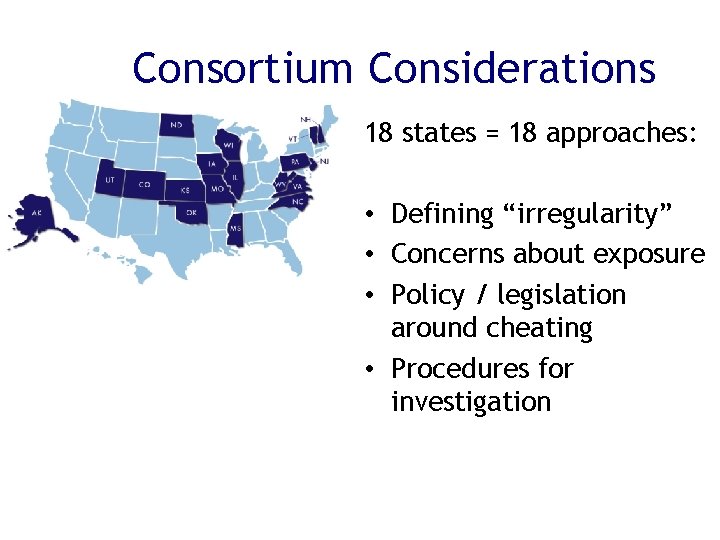
Consortium Considerations 18 states = 18 approaches: • Defining “irregularity” • Concerns about exposure • Policy / legislation around cheating • Procedures for investigation
Topics • System design to prevent problems and minimize impact • Training • Administration • Trust but verify 3
System Design Exposure • Many testlets to make a test • Multiple linkage levels & adaptive • Very few materials need to be printed, even for teacheradministered testlets • Secure browser 4
System Design Disincentive • Instructionally embedded: teacher choice of Essential Element & linkage level • Adaptive in response to student performance 5
Training • All test administrators complete training annually • Entire module on test security – Consortium standards (shall nots) – Integrity during the assessment process – Post-test quiz (80% to pass) • Other modules that promote fidelity – Procedures for administering testlets – Accessibility decisions 6
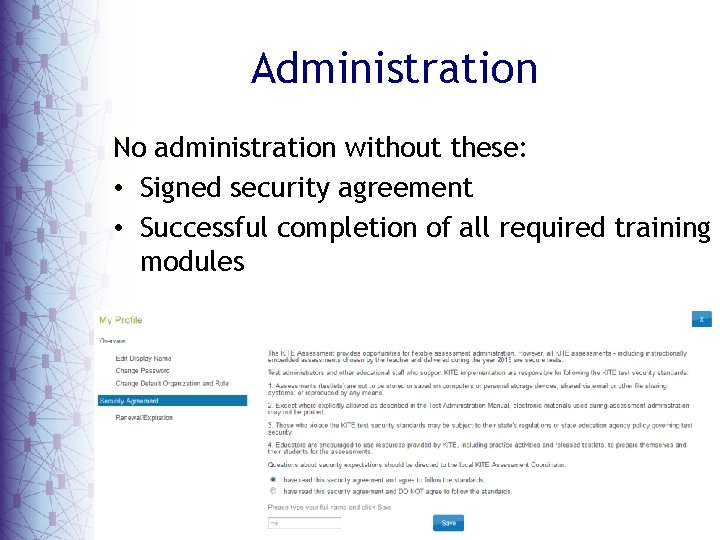
Administration No administration without these: • Signed security agreement • Successful completion of all required training modules 7
Administration • Instructions in Test Administration Manual (e. g. , appropriate setting for testing) • Testlet Information Pages (TIPs) • Instructions inside teacheradministered testlets 8
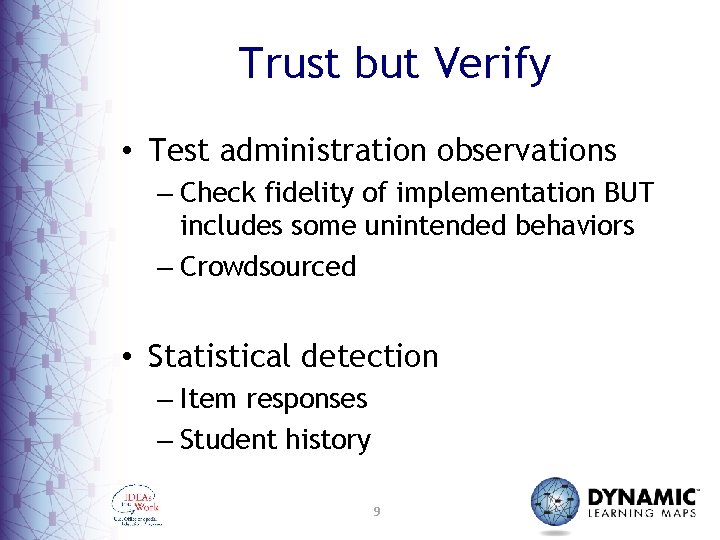
Trust but Verify • Test administration observations – Check fidelity of implementation BUT includes some unintended behaviors – Crowdsourced • Statistical detection – Item responses – Student history 9