
TEST 8 Std 3 Obj 2 Review What

TEST 8: Std. 3, Obj. 2 Review
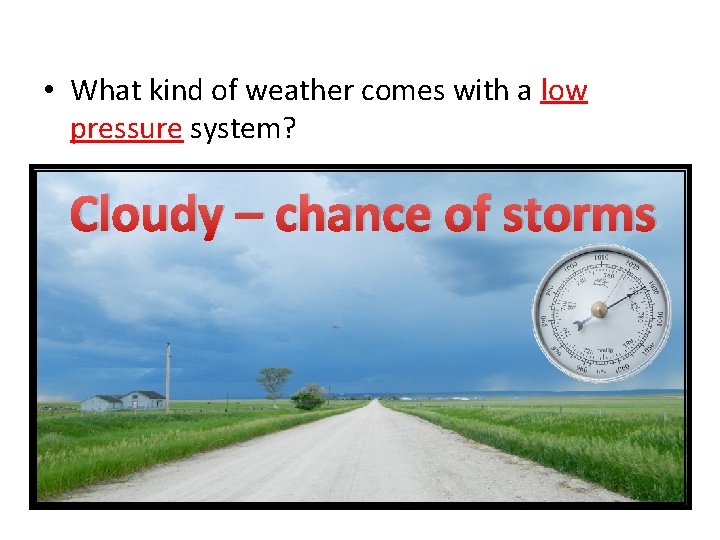
• What kind of weather comes with a low pressure system? Cloudy – chance of storms

• What instrument measures air pressure? Barometer
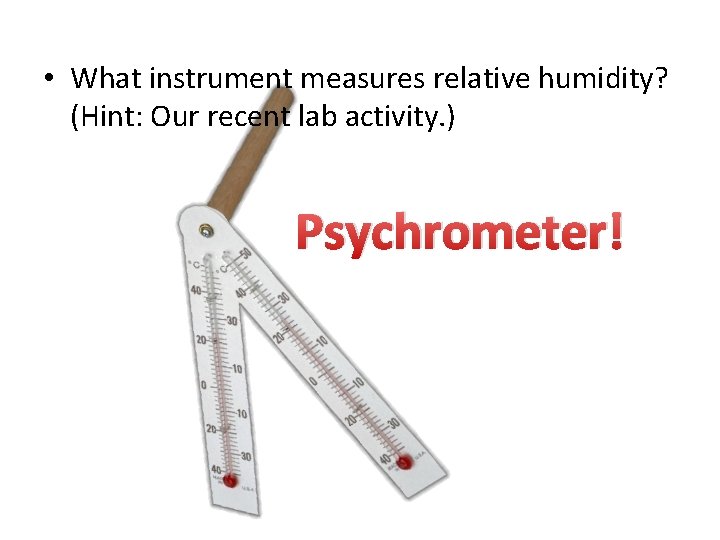
• What instrument measures relative humidity? (Hint: Our recent lab activity. ) Psychrometer!
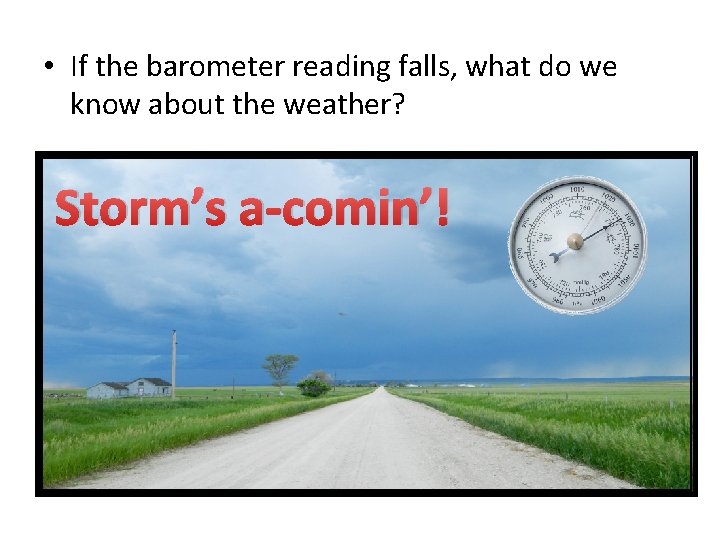
• If the barometer reading falls, what do we know about the weather? Storm’s a-comin’!
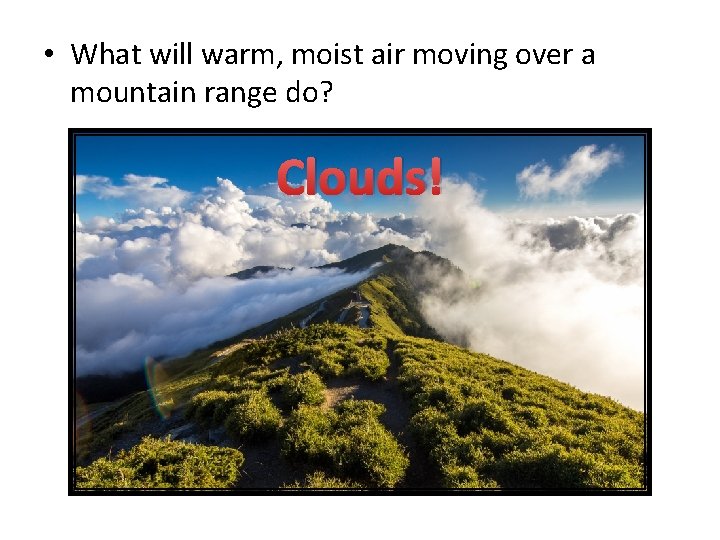
• What will warm, moist air moving over a mountain range do? Clouds!
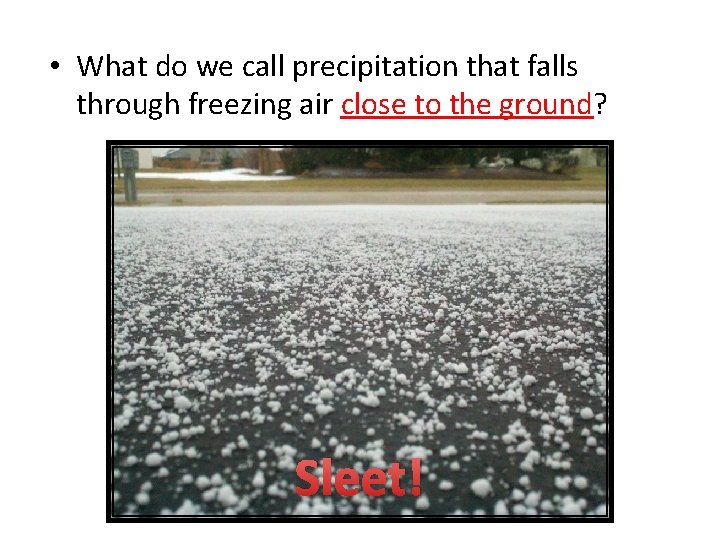
• What do we call precipitation that falls through freezing air close to the ground? Sleet!
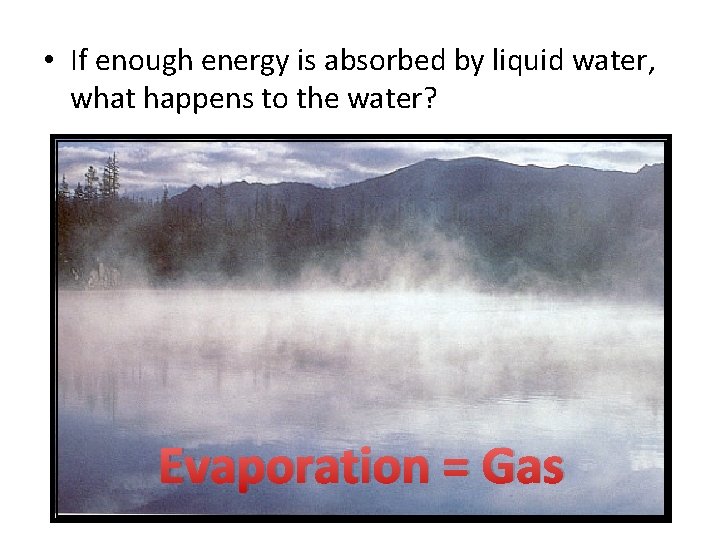
• If enough energy is absorbed by liquid water, what happens to the water? Evaporation = Gas
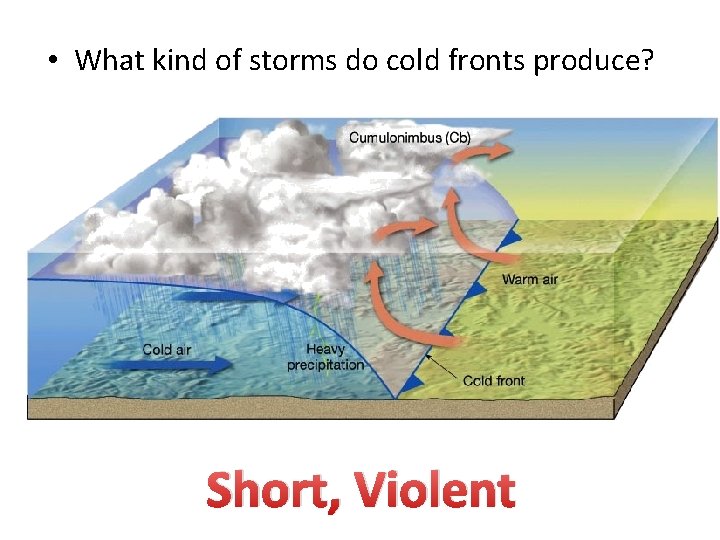
• What kind of storms do cold fronts produce? Short, Violent
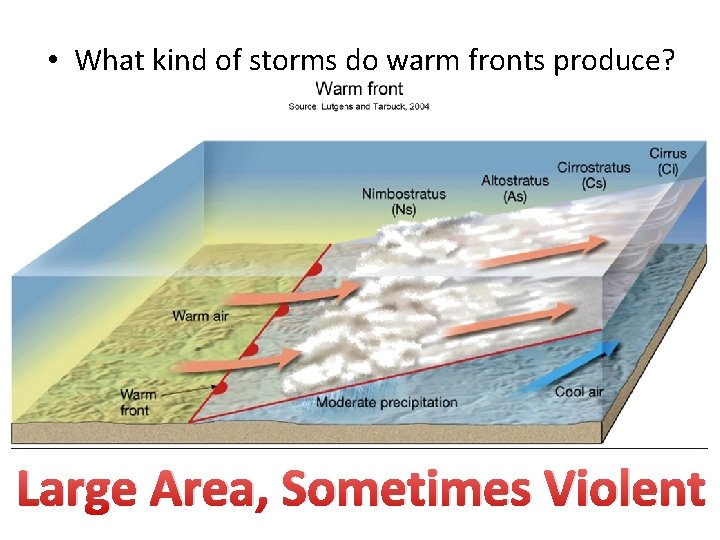
• What kind of storms do warm fronts produce? Large Area, Sometimes Violent
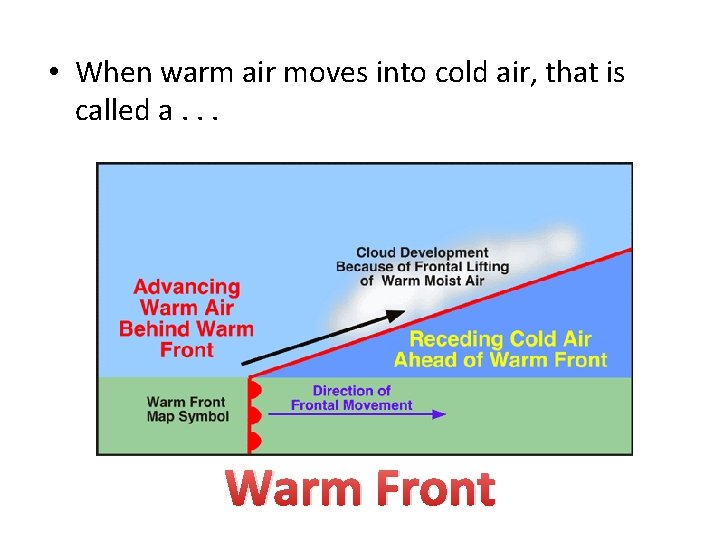
• When warm air moves into cold air, that is called a. . . Warm Front
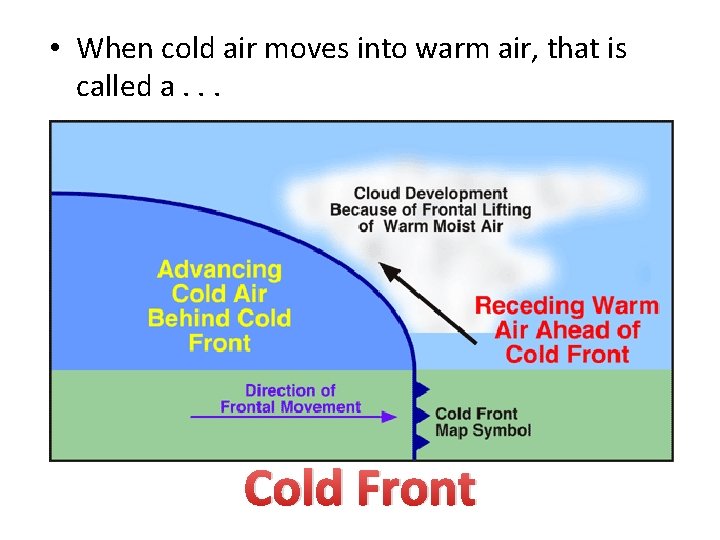
• When cold air moves into warm air, that is called a. . . Cold Front
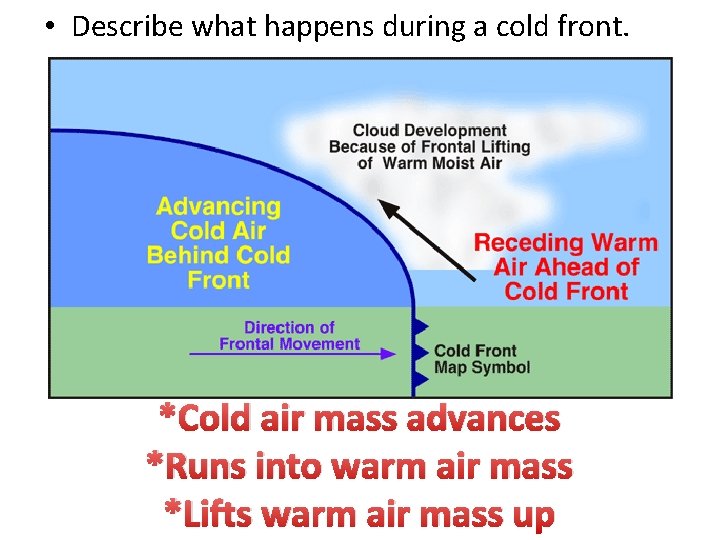
• Describe what happens during a cold front. *Cold air mass advances *Runs into warm air mass *Lifts warm air mass up
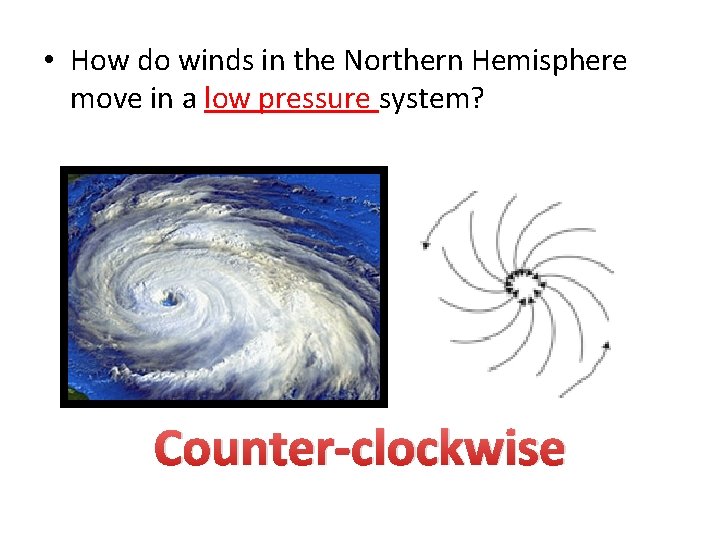
• How do winds in the Northern Hemisphere move in a low pressure system? Counter-clockwise
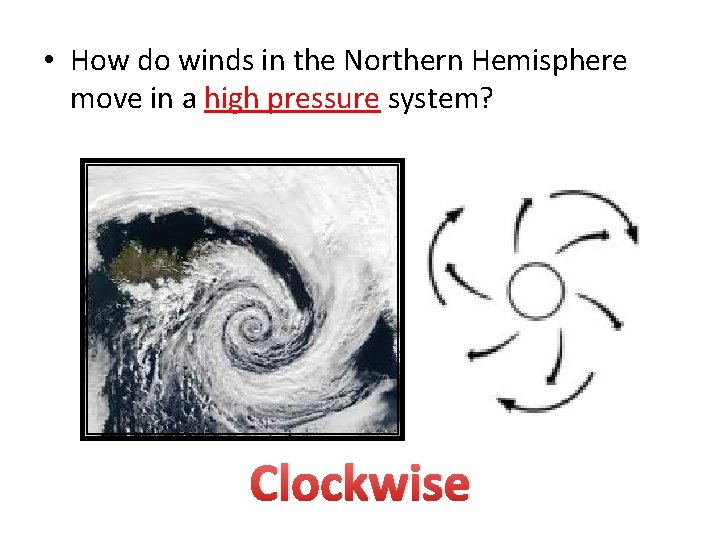
• How do winds in the Northern Hemisphere move in a high pressure system? Clockwise
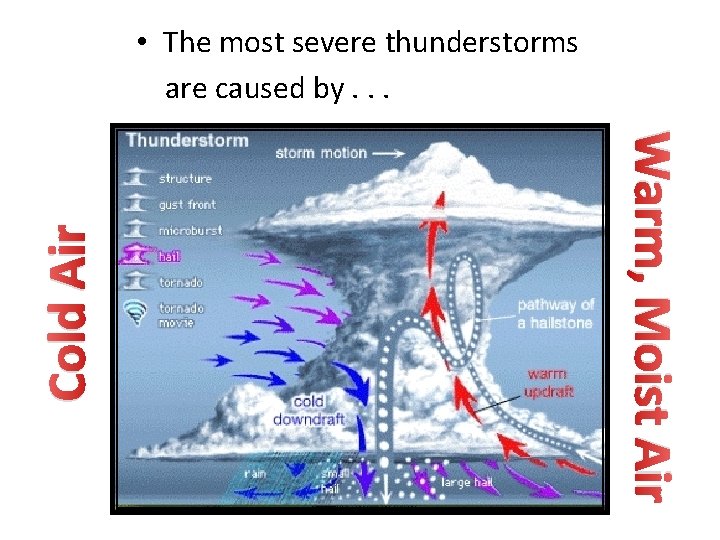
Warm, Moist Air Cold Air • The most severe thunderstorms are caused by. . .
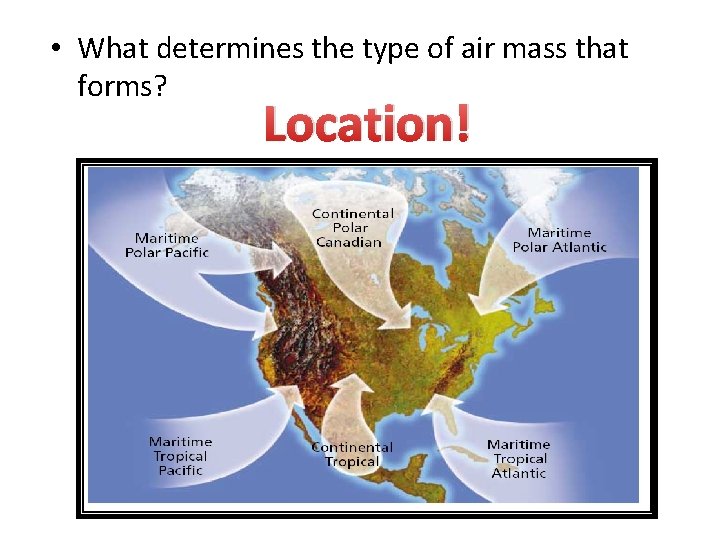
• What determines the type of air mass that forms? Location!
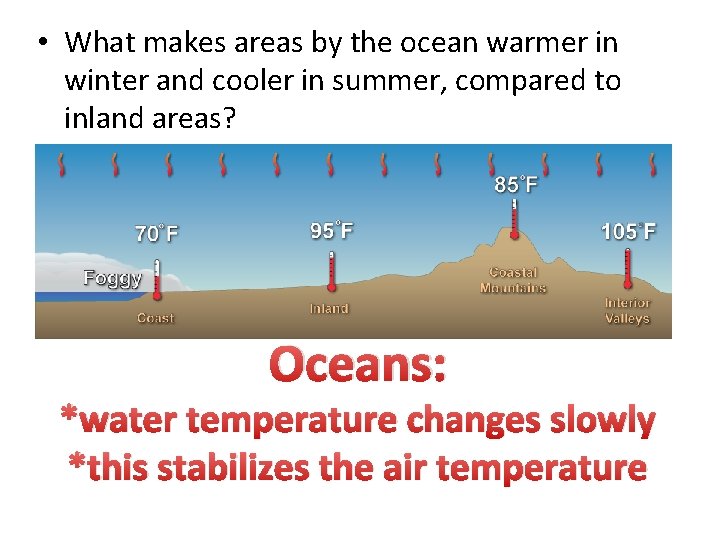
• What makes areas by the ocean warmer in winter and cooler in summer, compared to inland areas? Oceans: *water temperature changes slowly *this stabilizes the air temperature
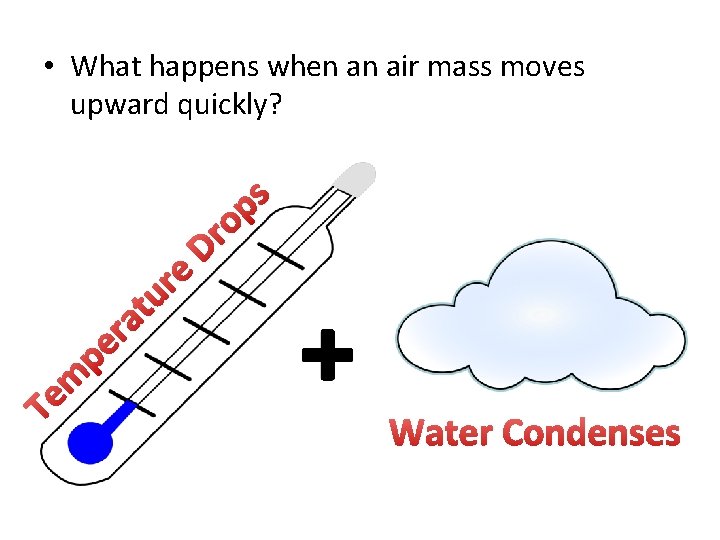
• What happens when an air mass moves upward quickly? e r u p T m e o r D s p t a r e Water Condenses
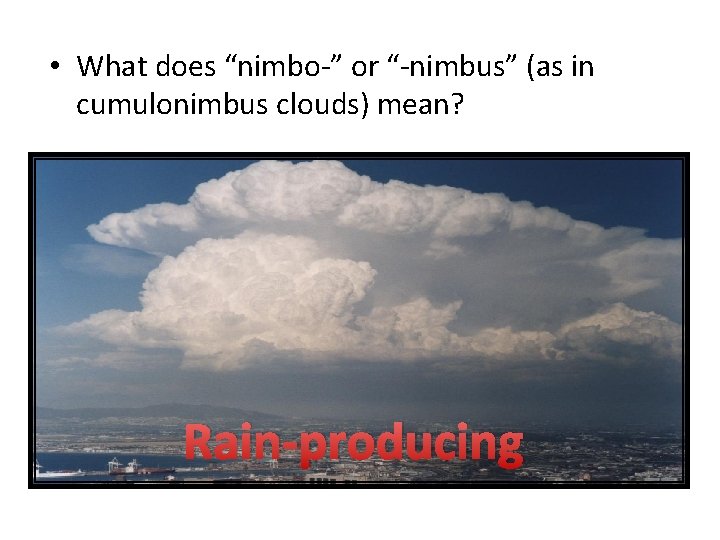
• What does “nimbo-” or “-nimbus” (as in cumulonimbus clouds) mean? Rain-producing
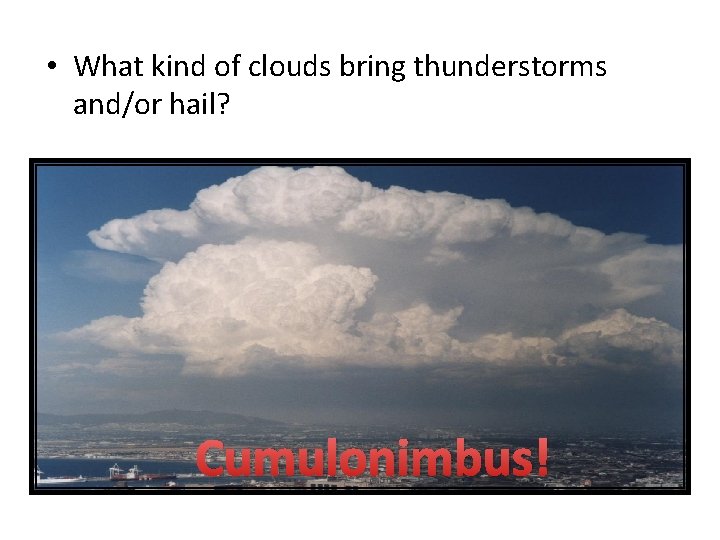
• What kind of clouds bring thunderstorms and/or hail? Cumulonimbus!
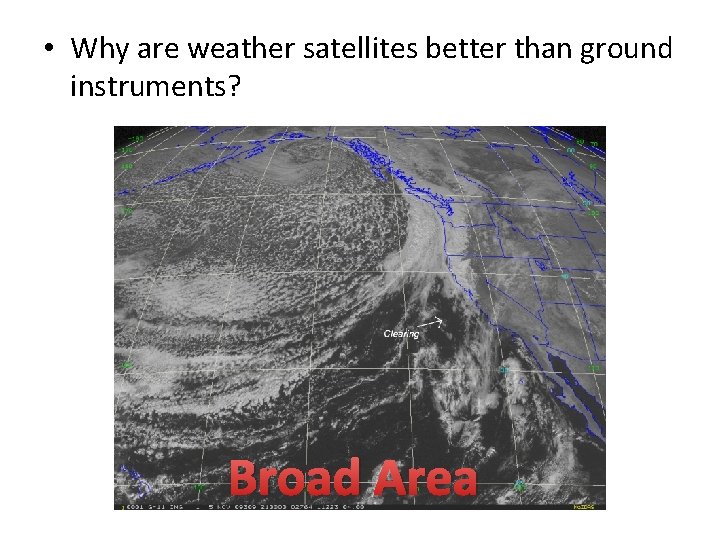
• Why are weather satellites better than ground instruments? Broad Area

• What information can Doppler radar give us? Location, Extent, Movement
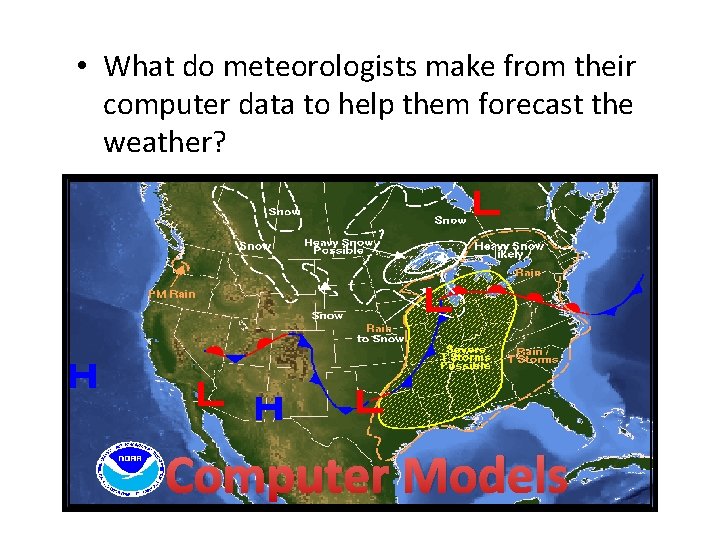
• What do meteorologists make from their computer data to help them forecast the weather? Computer Models
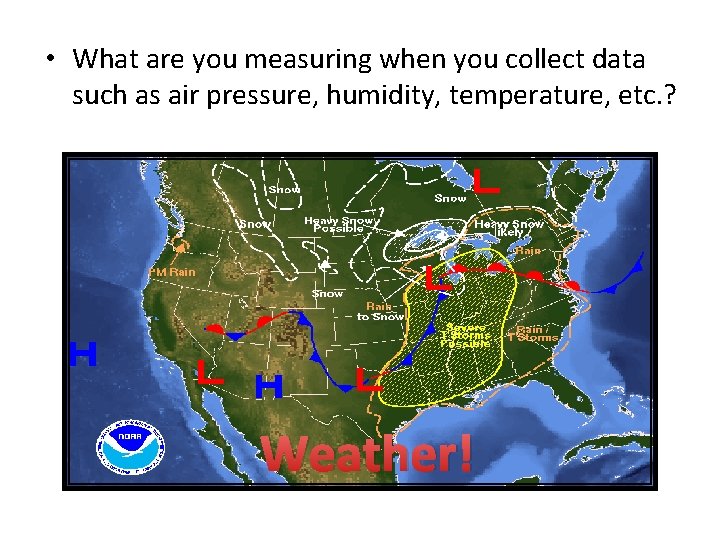
• What are you measuring when you collect data such as air pressure, humidity, temperature, etc. ? Weather!
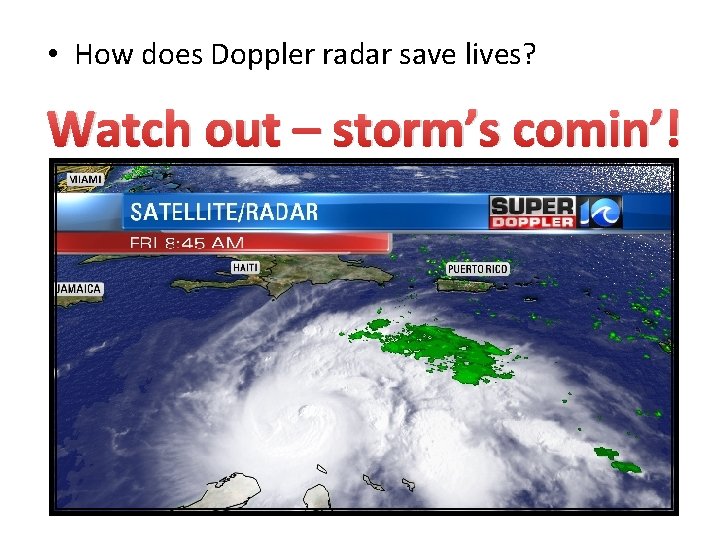
• How does Doppler radar save lives? Watch out – storm’s comin’!
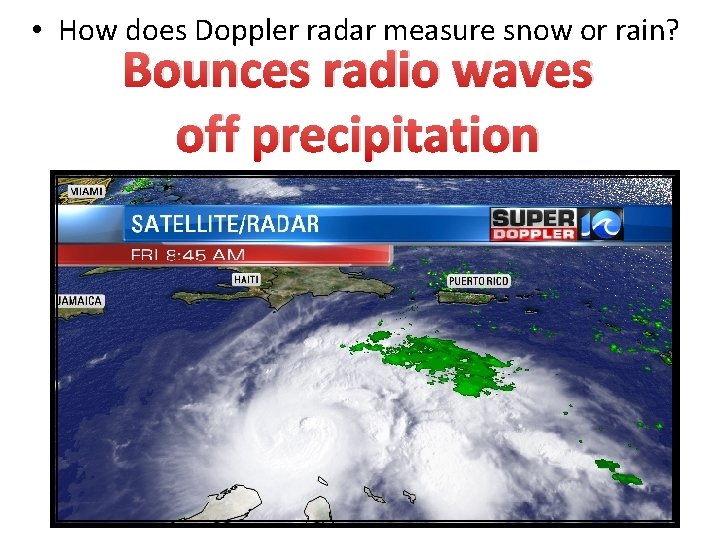
• How does Doppler radar measure snow or rain? Bounces radio waves off precipitation
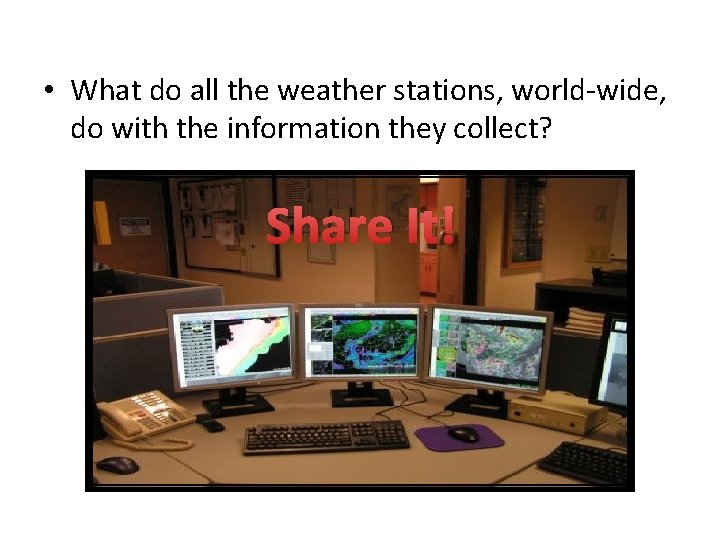
• What do all the weather stations, world-wide, do with the information they collect? Share It!
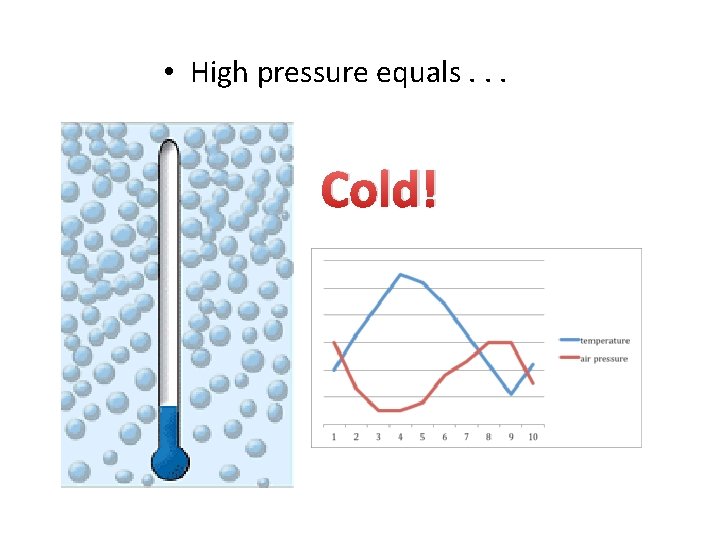
• High pressure equals. . . Cold!
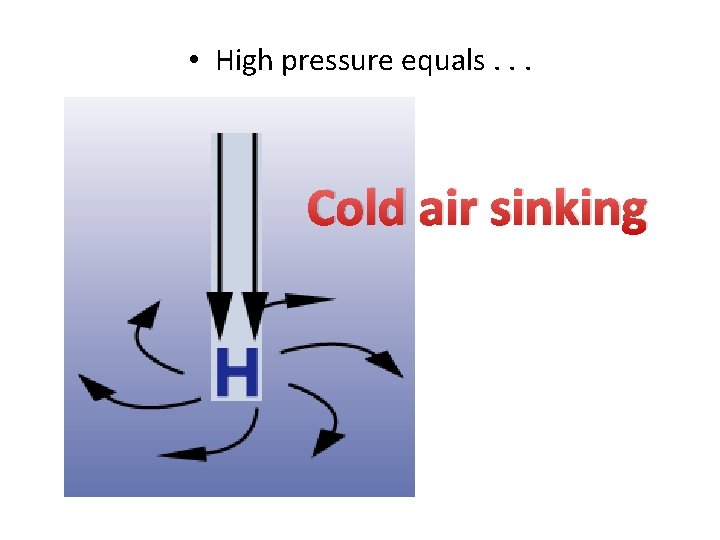
• High pressure equals. . . Cold air sinking
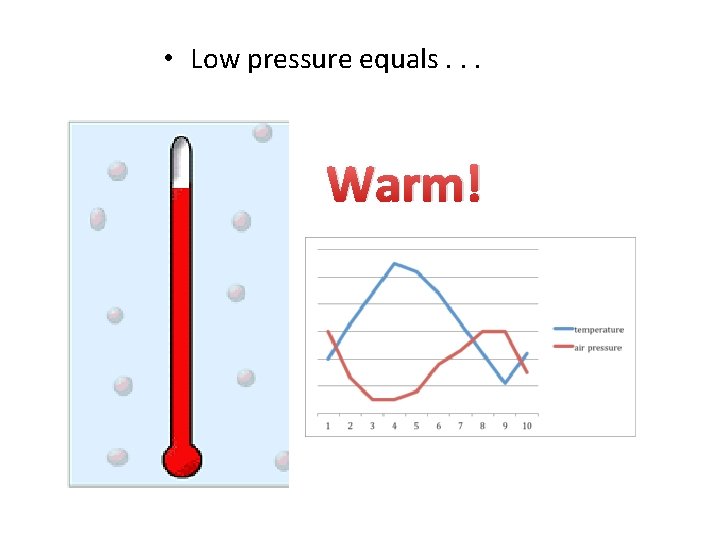
• Low pressure equals. . . Warm!
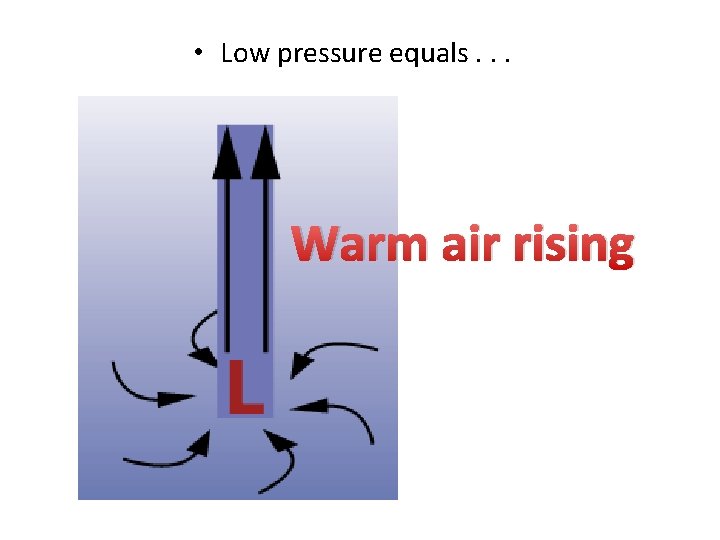
• Low pressure equals. . . Warm air rising
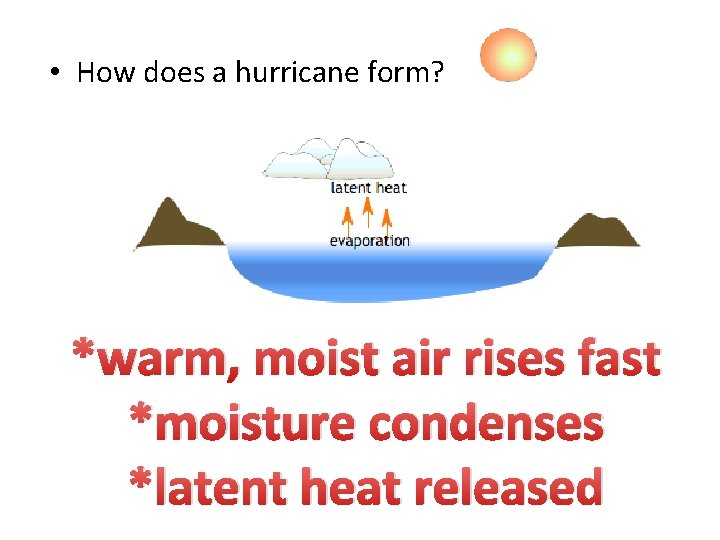
• How does a hurricane form? *warm, moist air rises fast *moisture condenses *latent heat released
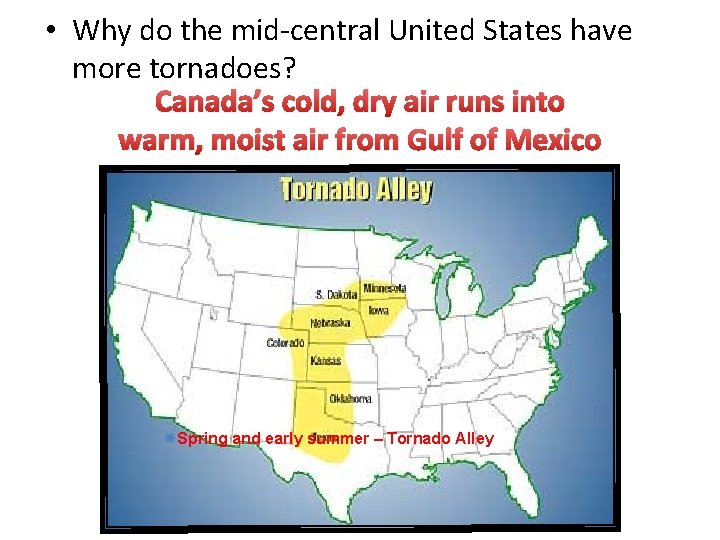
• Why do the mid-central United States have more tornadoes? Canada’s cold, dry air runs into warm, moist air from Gulf of Mexico Spring and early summer – Tornado Alley
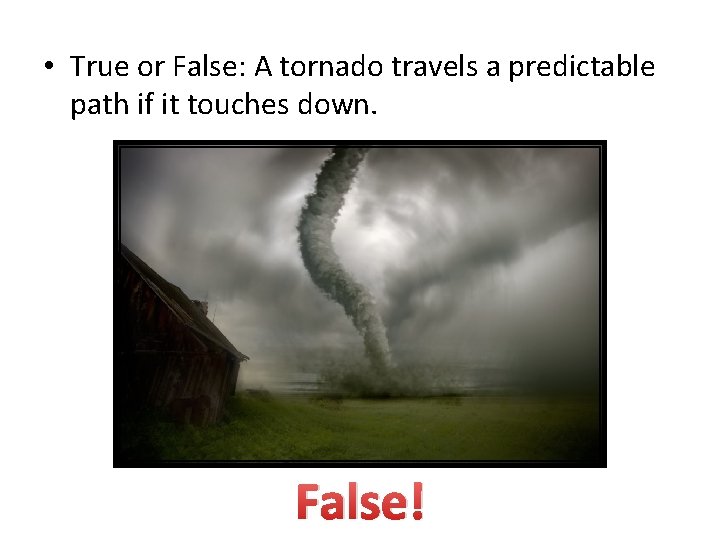
• True or False: A tornado travels a predictable path if it touches down. False!
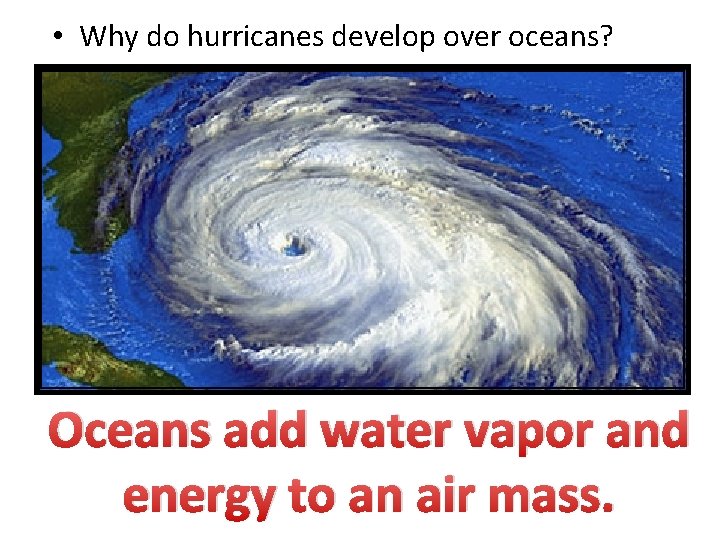
• Why do hurricanes develop over oceans? Oceans add water vapor and energy to an air mass.
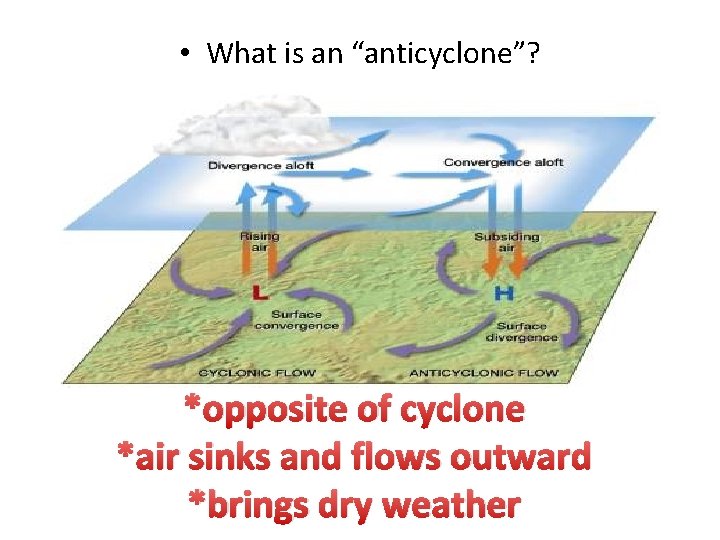
• What is an “anticyclone”? *opposite of cyclone *air sinks and flows outward *brings dry weather
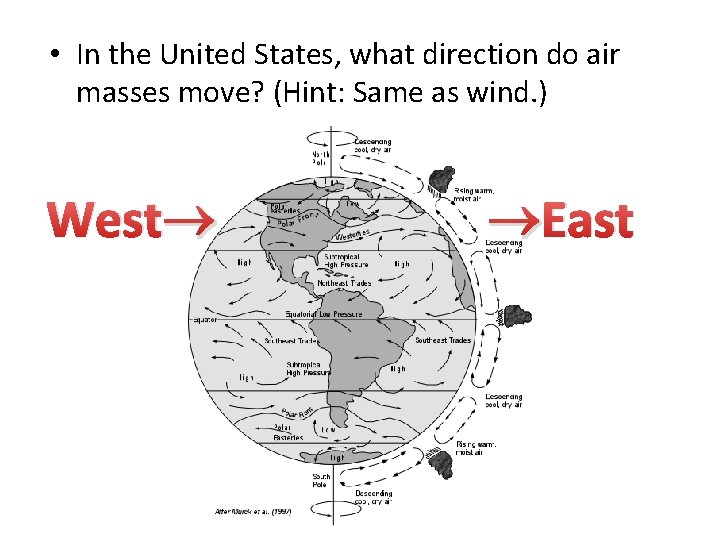
• In the United States, what direction do air masses move? (Hint: Same as wind. ) West East
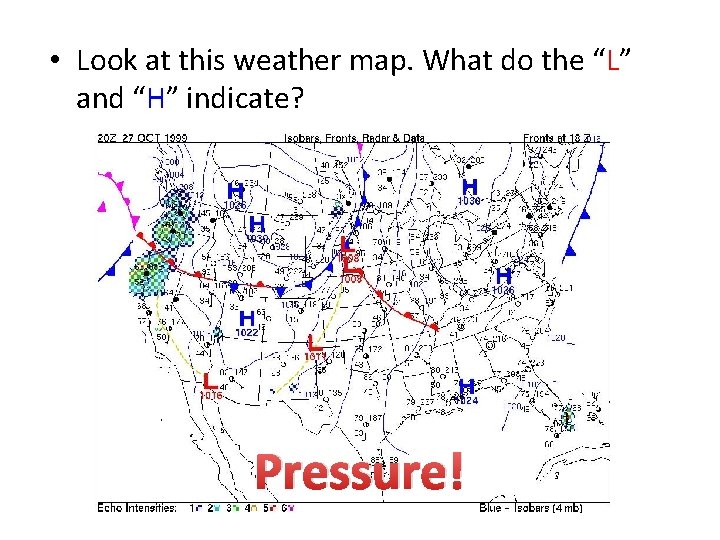
• Look at this weather map. What do the “L” and “H” indicate? Pressure!
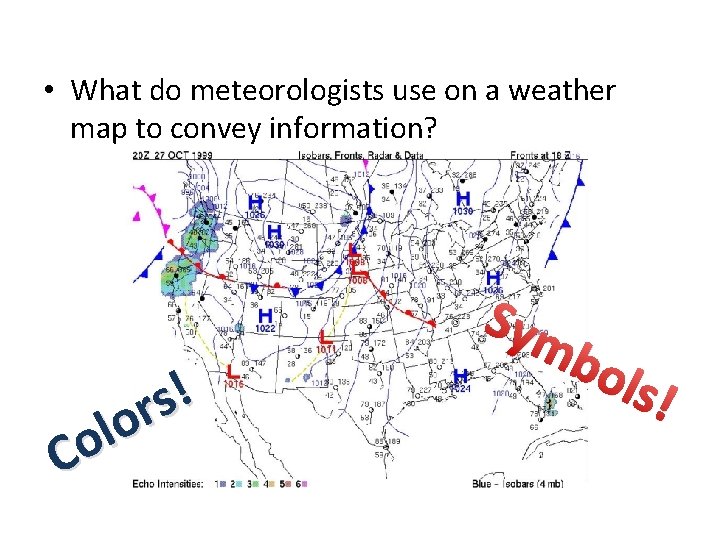
• What do meteorologists use on a weather map to convey information? ! s r o l Co Sym bol s!
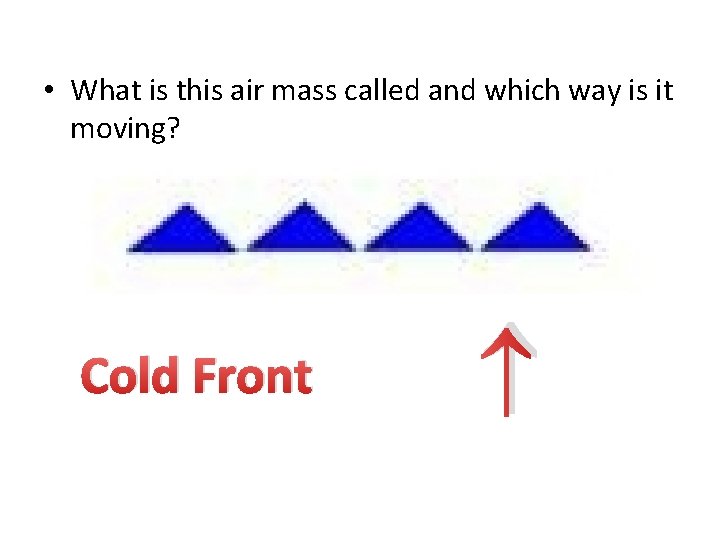
Cold Front • What is this air mass called and which way is it moving?
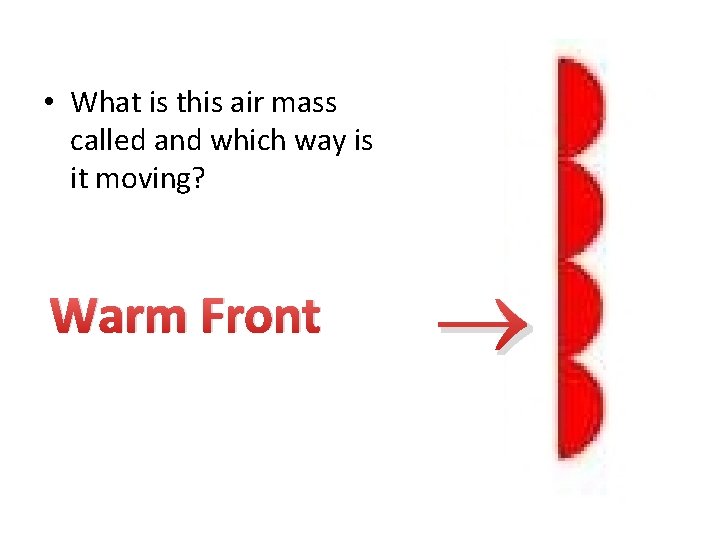
• What is this air mass called and which way is it moving? Warm Front
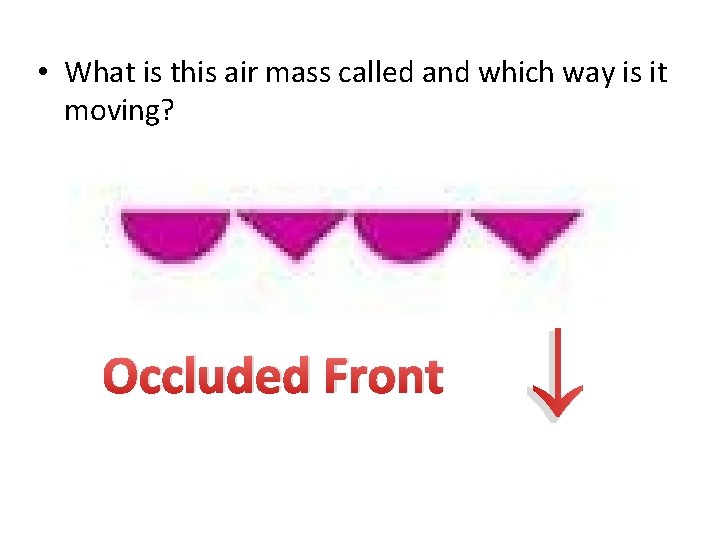
• What is this air mass called and which way is it moving? Occluded Front
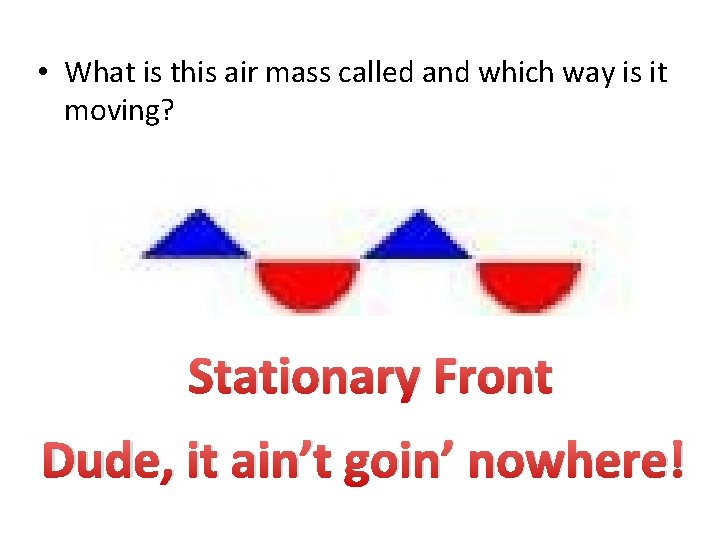
• What is this air mass called and which way is it moving? Stationary Front Dude, it ain’t goin’ nowhere!
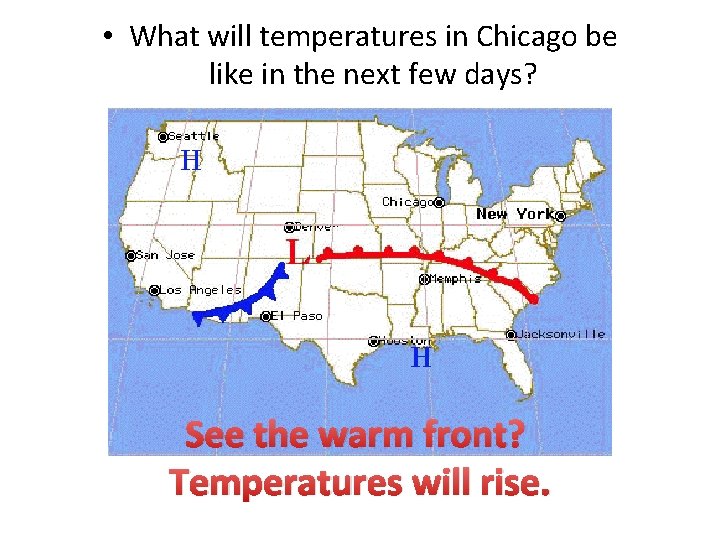
• What will temperatures in Chicago be like in the next few days? See the warm front? Temperatures will rise.
- Slides: 45