
Test 2 revision Landforms created by waves 1

Test 2 revision
Landforms created by waves 1 - created by erosion: - Headlands and bays - Wave-cut platform - Cave, arch, stack and stump 2 - created by deposition: - Beach - Spit - Salt marsh
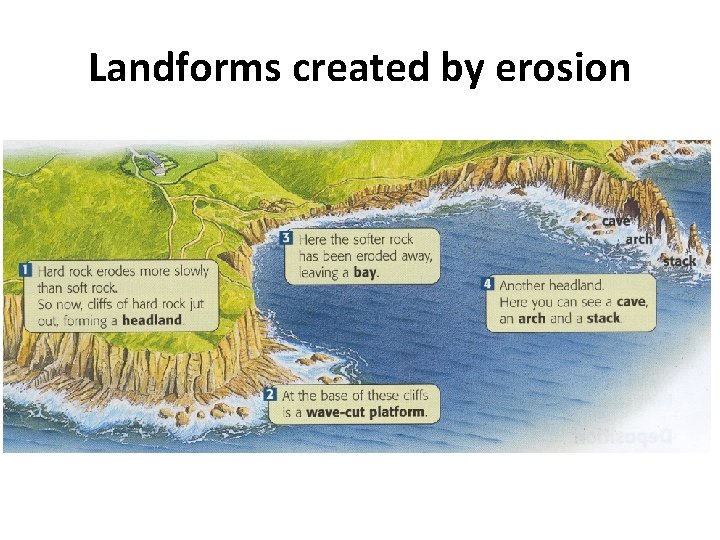
Landforms created by erosion
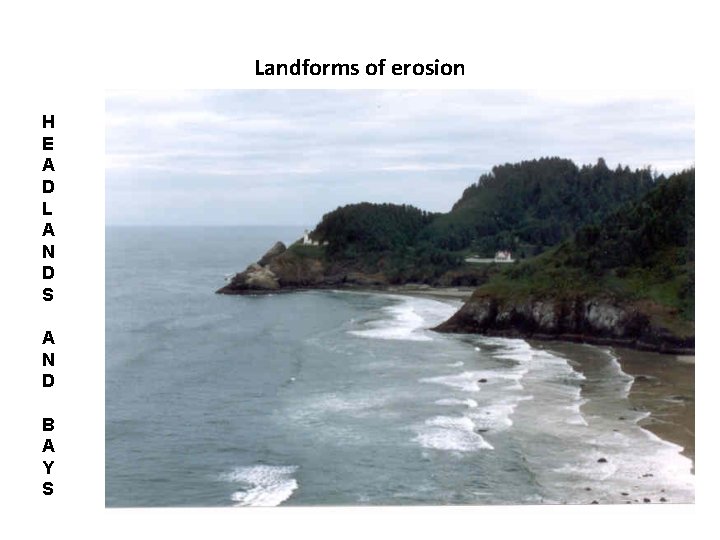
Landforms of erosion H E A D L A N D S A N D B A Y S
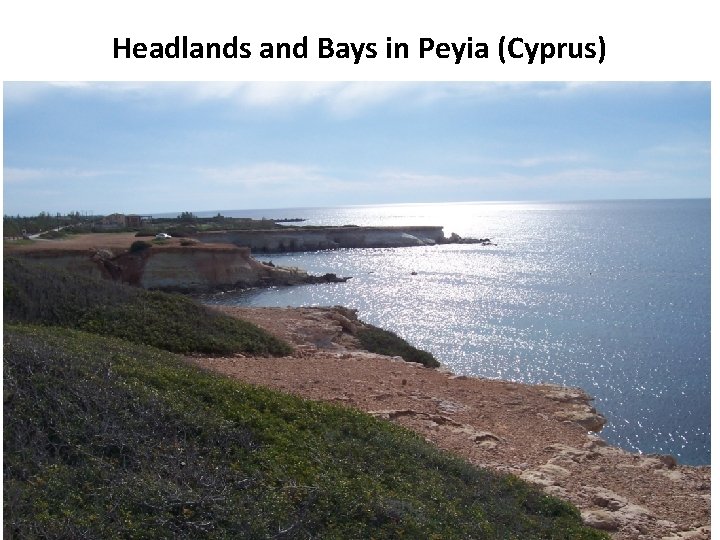
Headlands and Bays in Peyia (Cyprus)
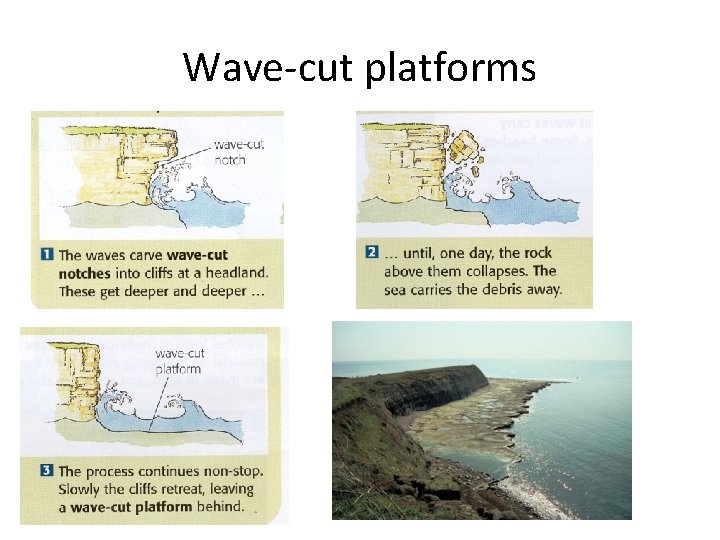
Wave-cut platforms
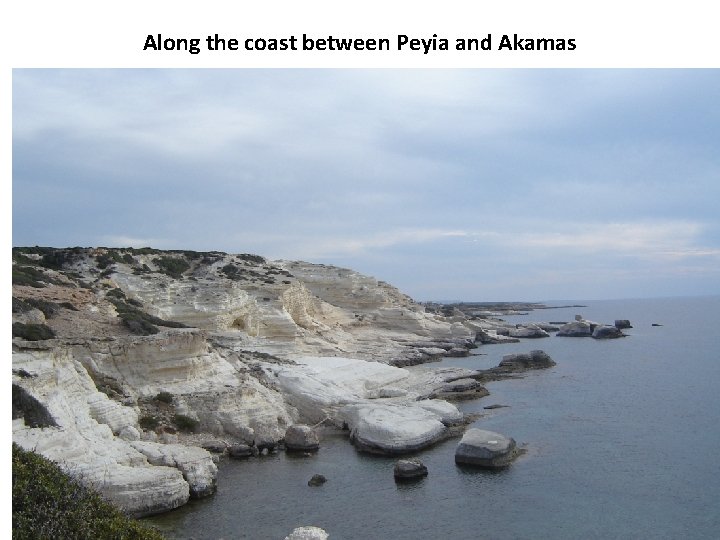
Along the coast between Peyia and Akamas
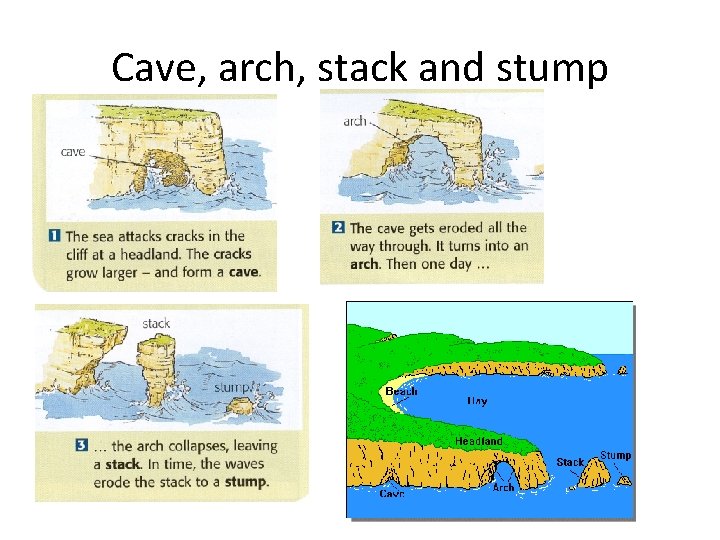
Cave, arch, stack and stump
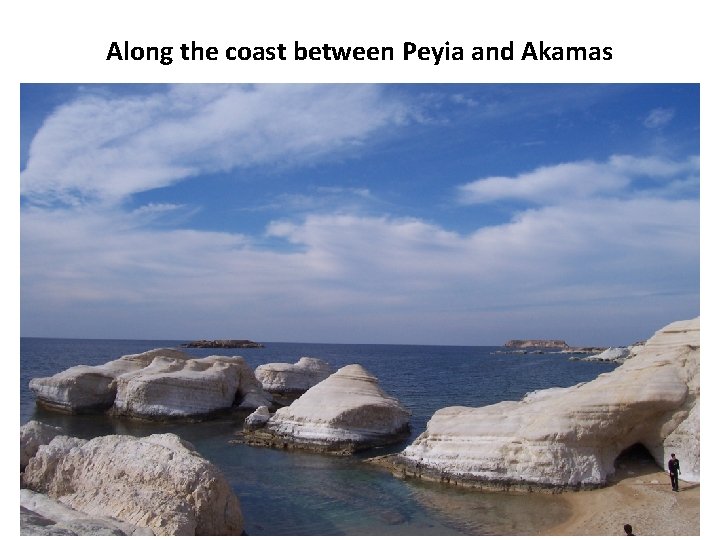
Along the coast between Peyia and Akamas
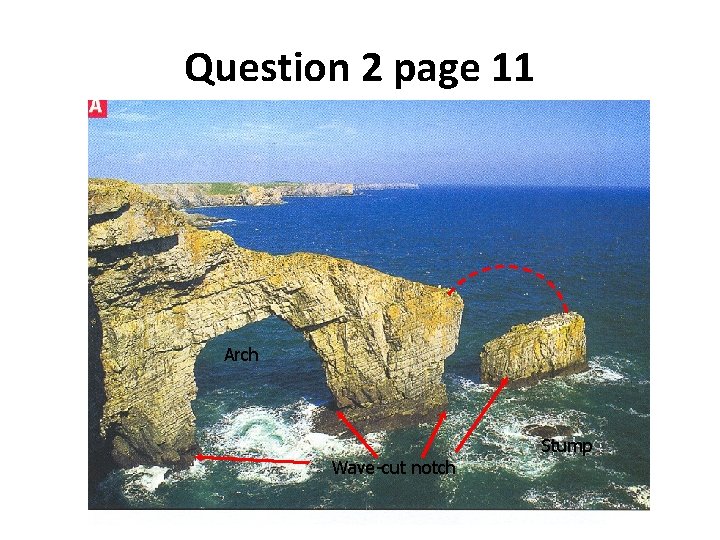
Question 2 page 11 Arch Stump Wave-cut notch
2 b: • The waves erode cracks in the cliff at a headland. • The cracks grow larger and form a cave. • The cave gets eroded all the way through. It turns into an arch. 2 d: It will get completely eroded away.
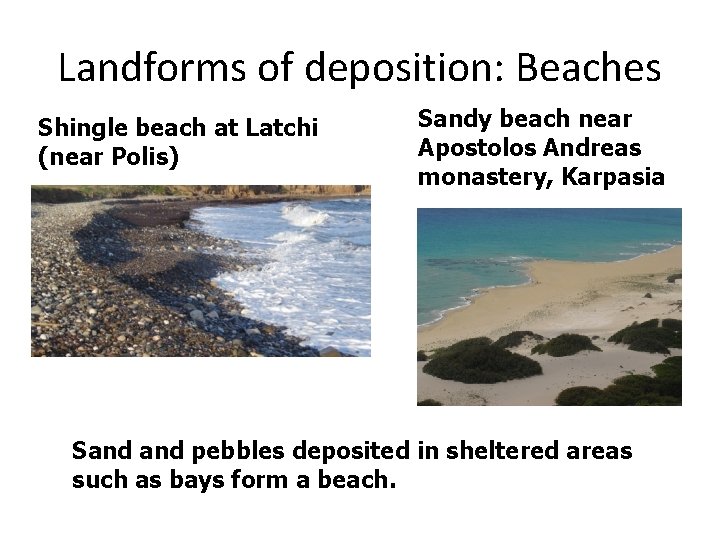
Landforms of deposition: Beaches Shingle beach at Latchi (near Polis) Sandy beach near Apostolos Andreas monastery, Karpasia Sand pebbles deposited in sheltered areas such as bays form a beach.
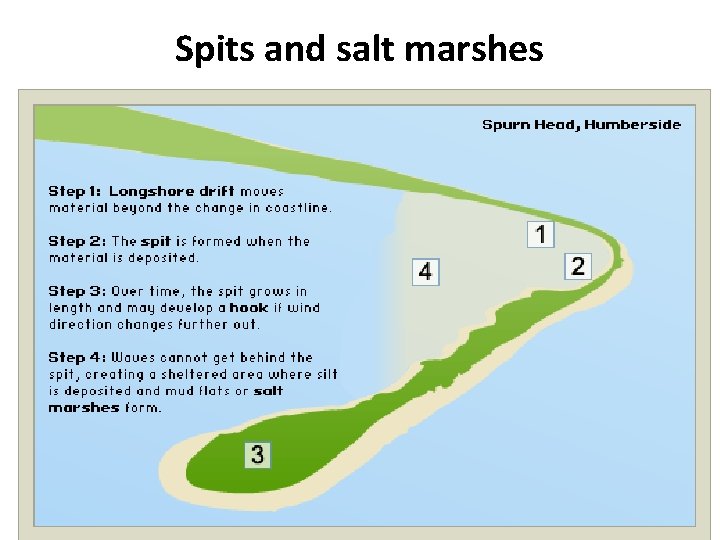
Spits and salt marshes
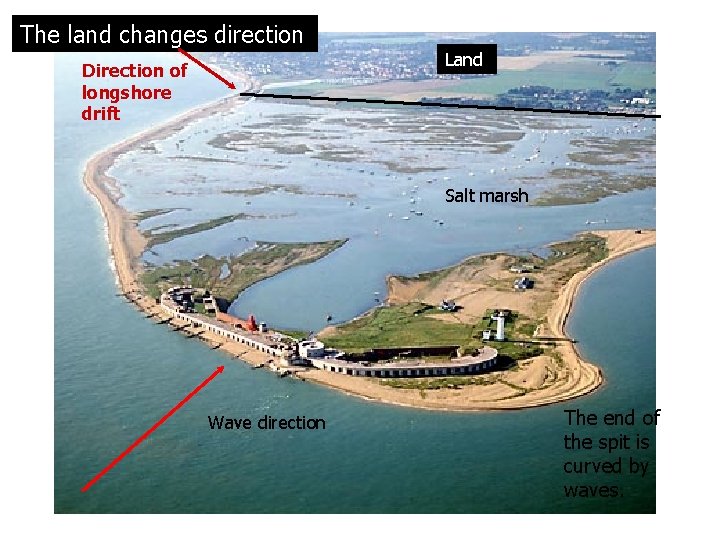
The land changes direction. Direction of longshore drift Land Salt marsh Wave direction The end of the spit is curved by waves.
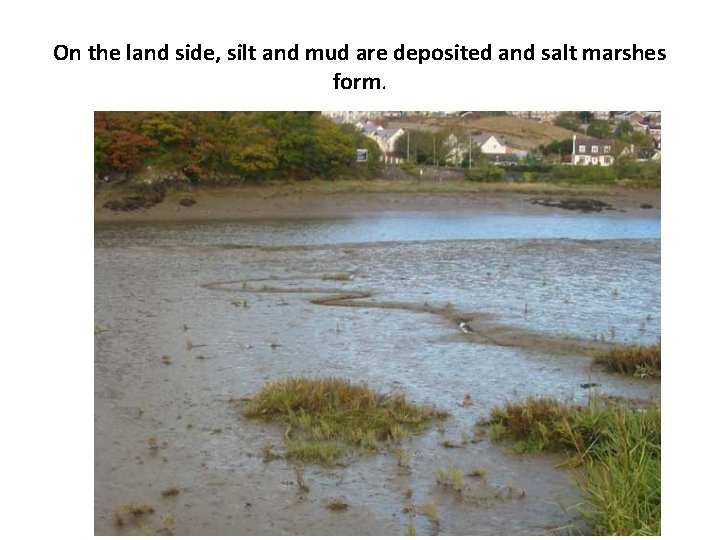
On the land side, silt and mud are deposited and salt marshes form.
ANSWER • Worksheet 2 • Questions 1 to 4 page 55
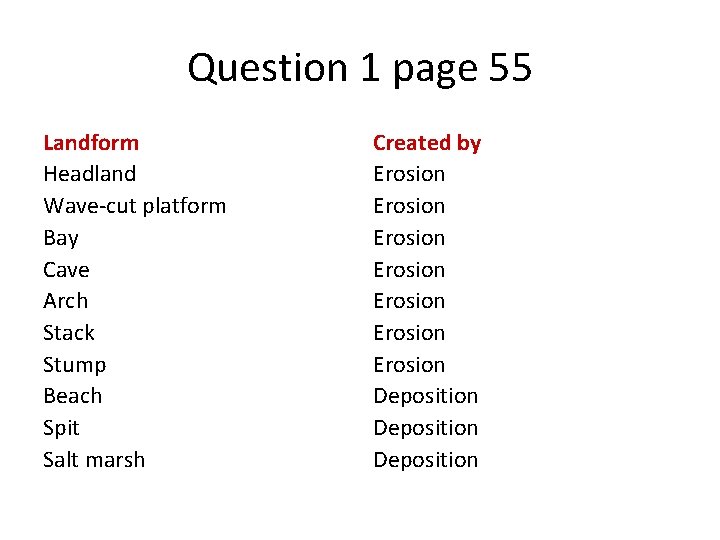
Question 1 page 55 Landform Headland Wave-cut platform Bay Cave Arch Stack Stump Beach Spit Salt marsh Created by Erosion Erosion Deposition
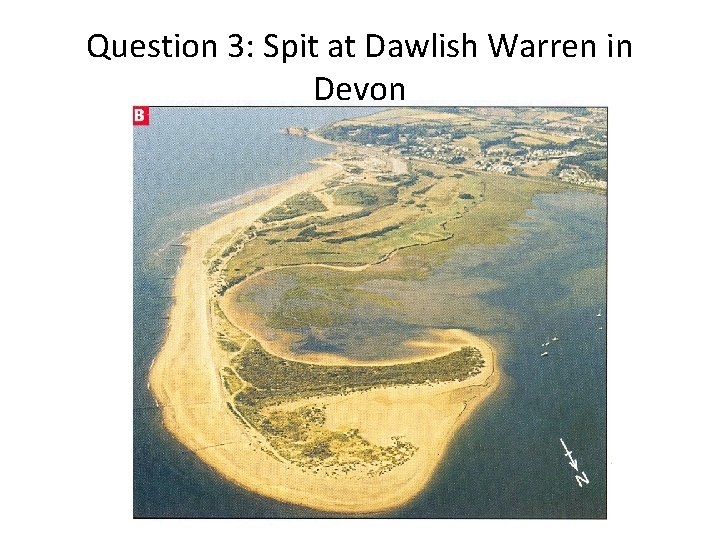
Question 3: Spit at Dawlish Warren in Devon
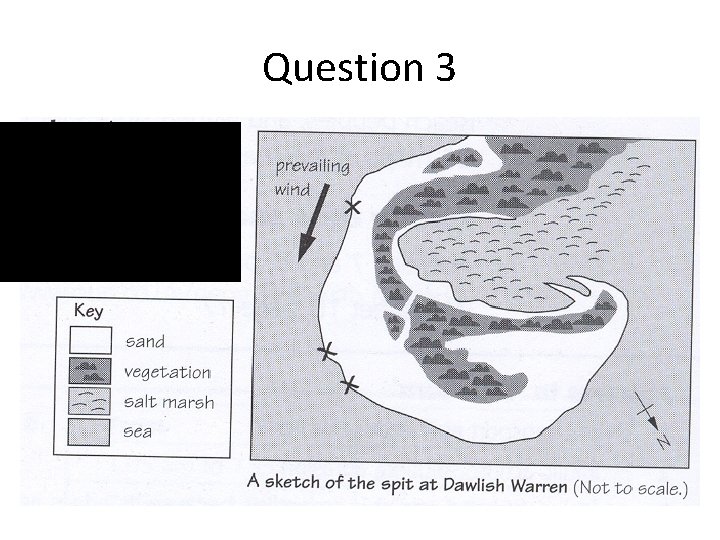
Question 3
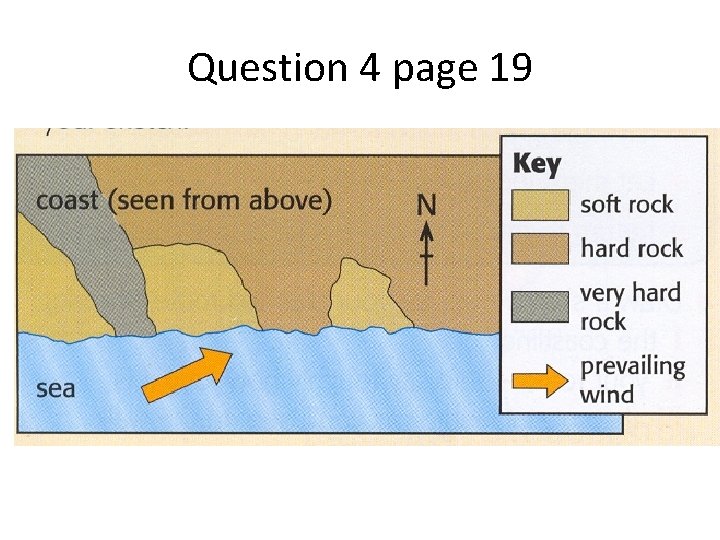
Question 4 page 19
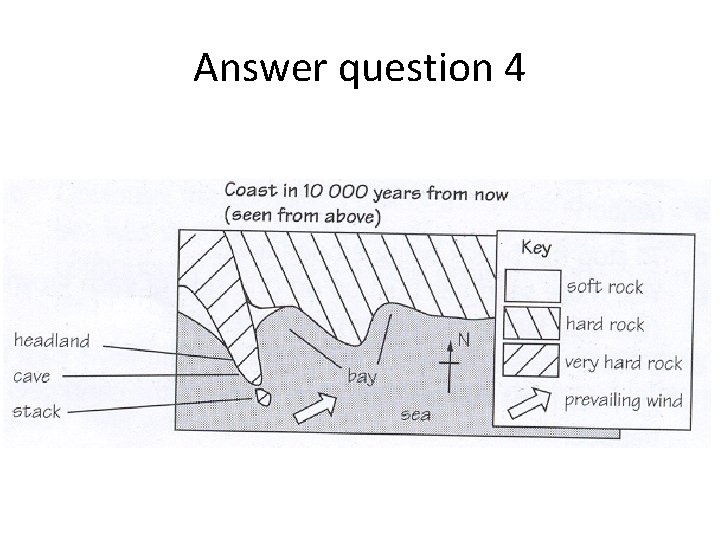
Answer question 4
How can we stop coastal erosion? Erosion wears away the coast and may cause big problems to people who live along the coast. Erosion may destroy beaches and cliffs. In Cyprus: If the coast was eroded by waves, what would disappear? 1 - Larnaca airport 23 -
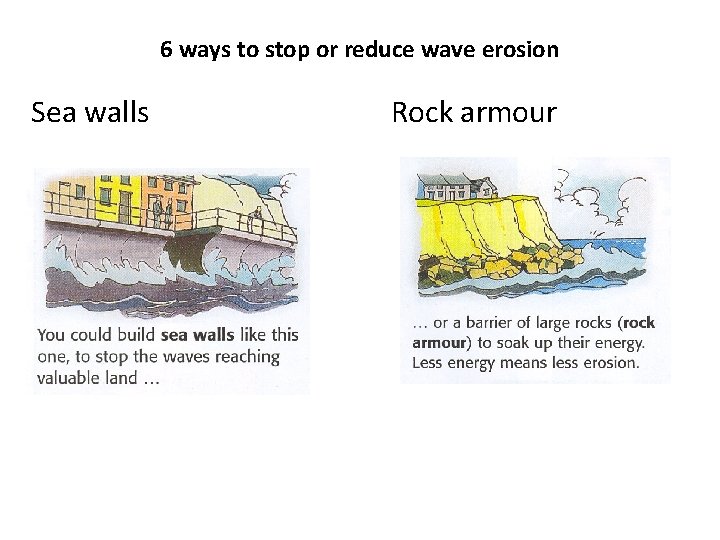
6 ways to stop or reduce wave erosion Sea walls Rock armour
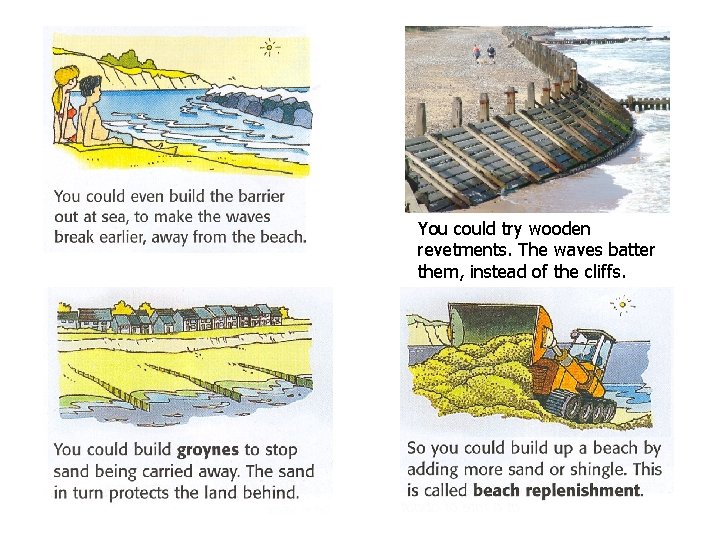
You could try wooden revetments. The waves batter them, instead of the cliffs.
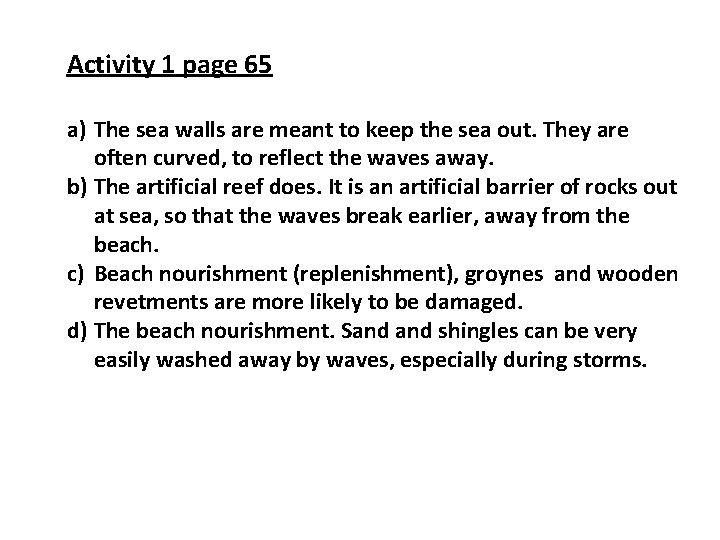
Activity 1 page 65 a) The sea walls are meant to keep the sea out. They are often curved, to reflect the waves away. b) The artificial reef does. It is an artificial barrier of rocks out at sea, so that the waves break earlier, away from the beach. c) Beach nourishment (replenishment), groynes and wooden revetments are more likely to be damaged. d) The beach nourishment. Sand shingles can be very easily washed away by waves, especially during storms.
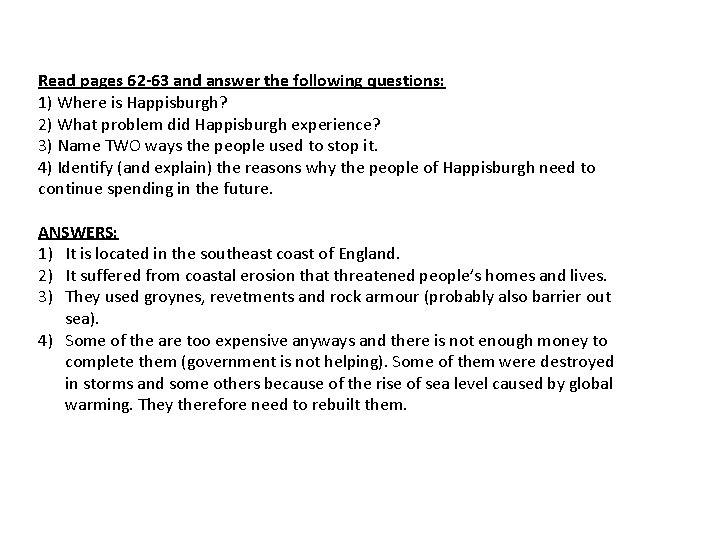
Read pages 62 -63 and answer the following questions: 1) Where is Happisburgh? 2) What problem did Happisburgh experience? 3) Name TWO ways the people used to stop it. 4) Identify (and explain) the reasons why the people of Happisburgh need to continue spending in the future. ANSWERS: 1) It is located in the southeast coast of England. 2) It suffered from coastal erosion that threatened people’s homes and lives. 3) They used groynes, revetments and rock armour (probably also barrier out sea). 4) Some of the are too expensive anyways and there is not enough money to complete them (government is not helping). Some of them were destroyed in storms and some others because of the rise of sea level caused by global warming. They therefore need to rebuilt them.
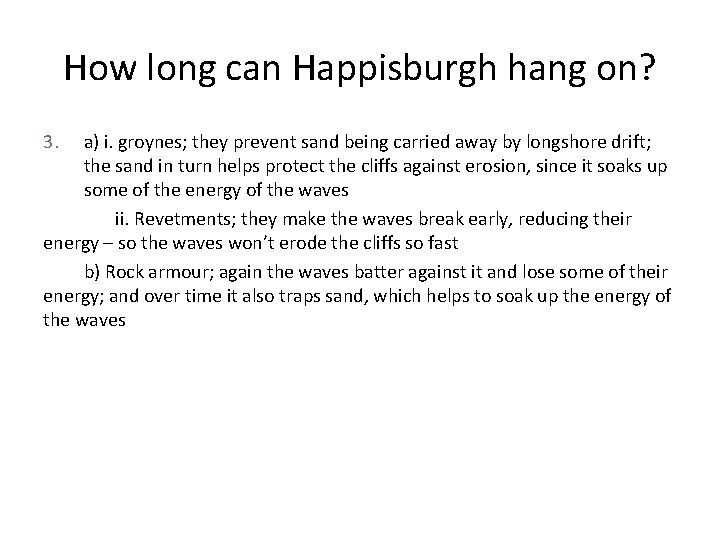
How long can Happisburgh hang on? 3. a) i. groynes; they prevent sand being carried away by longshore drift; the sand in turn helps protect the cliffs against erosion, since it soaks up some of the energy of the waves ii. Revetments; they make the waves break early, reducing their energy – so the waves won’t erode the cliffs so fast b) Rock armour; again the waves batter against it and lose some of their energy; and over time it also traps sand, which helps to soak up the energy of the waves
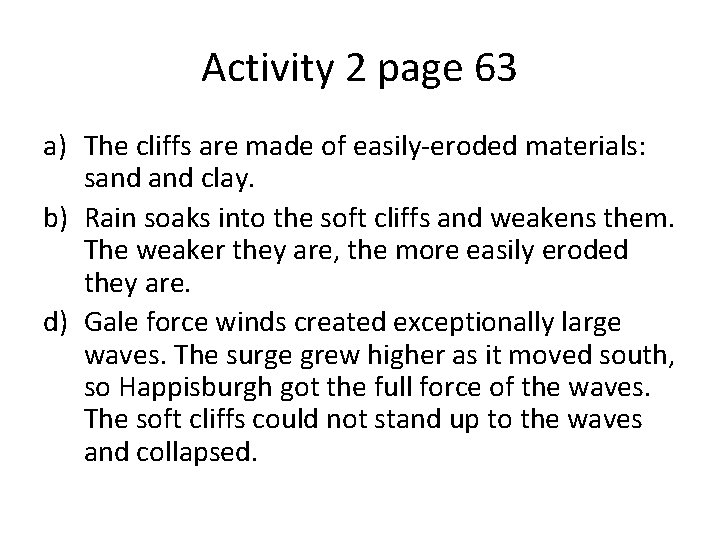
Activity 2 page 63 a) The cliffs are made of easily-eroded materials: sand clay. b) Rain soaks into the soft cliffs and weakens them. The weaker they are, the more easily eroded they are. d) Gale force winds created exceptionally large waves. The surge grew higher as it moved south, so Happisburgh got the full force of the waves. The soft cliffs could not stand up to the waves and collapsed.
Exercise 4 page 63 a. q q q q b. Changes between 1996 and 2007 Happisburgh: Beach road got shorter Bryony’s house is right on the edge of the cliff. Several houses further inland disappeared/demolished A group of buildings that stood on the cliff edge have also gone The revetments appear to be in worse shape The groynes have disappeared. There is rock armour (placed in 2007 ) The caravan park is much closer the sea i. the barriers have not prevented erosion. Even where the revetments appear undamaged, some land has gone (eg. At the caravan park). However, they do appear to have slowed down erosion (wherever there are no barriers /damaged barriers there is a big chunk of land lost!)
Activity 5 page 63 It is most likely that the church will be lost 7 years later (around 2021).
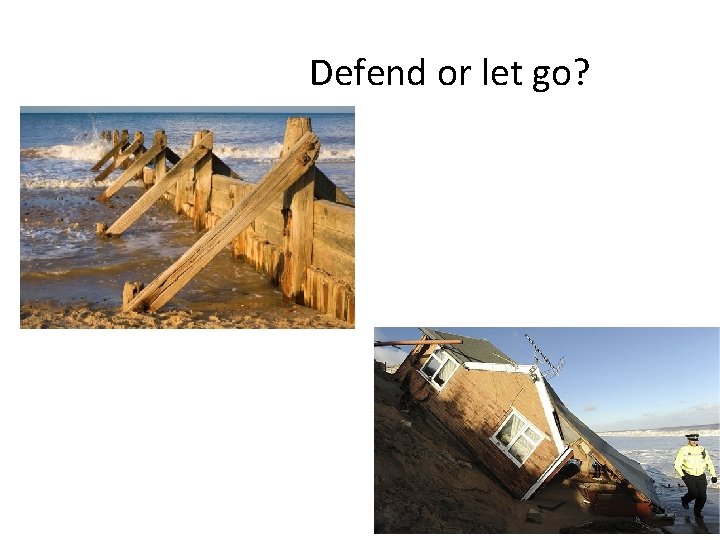
Defend or let go?
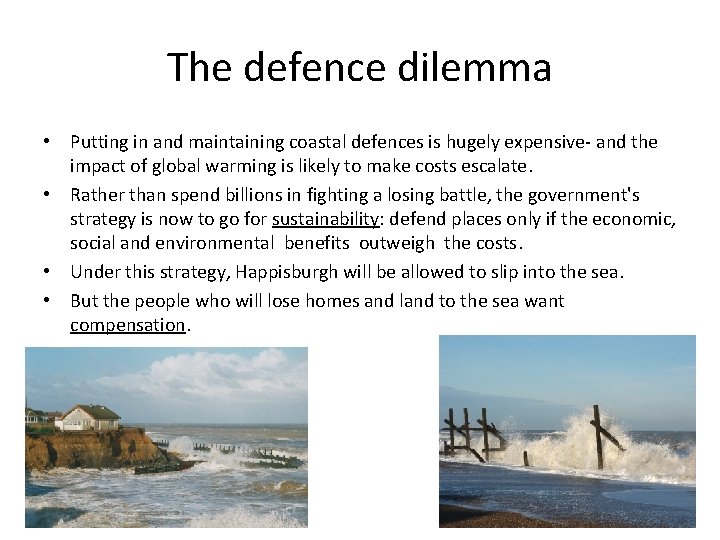
The defence dilemma • Putting in and maintaining coastal defences is hugely expensive- and the impact of global warming is likely to make costs escalate. • Rather than spend billions in fighting a losing battle, the government's strategy is now to go for sustainability: defend places only if the economic, social and environmental benefits outweigh the costs. • Under this strategy, Happisburgh will be allowed to slip into the sea. • But the people who will lose homes and land to the sea want compensation.
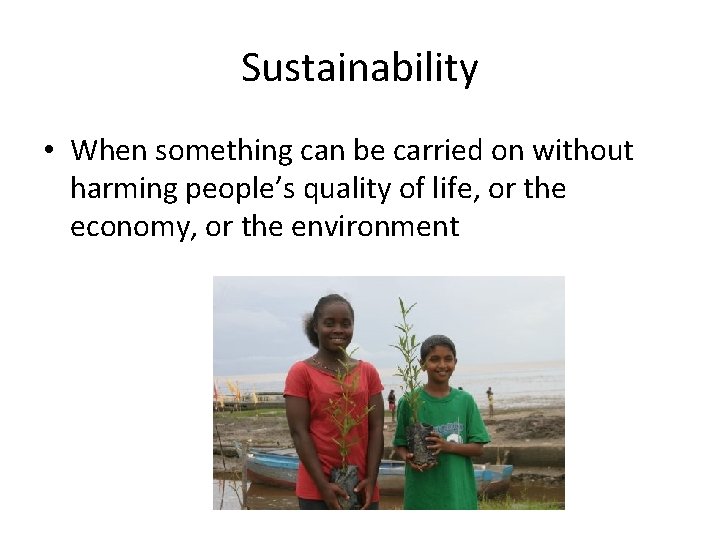
Sustainability • When something can be carried on without harming people’s quality of life, or the economy, or the environment
Compensation • Money you receive to make up for a loss or harm you suffered
- Slides: 35