
Tessellation s A Tessellation is a repeating pattern
- Slides: 51
Tessellation s
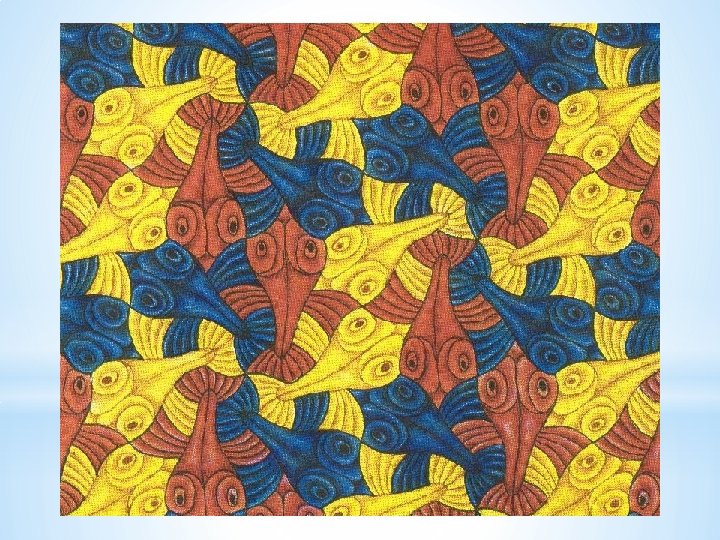
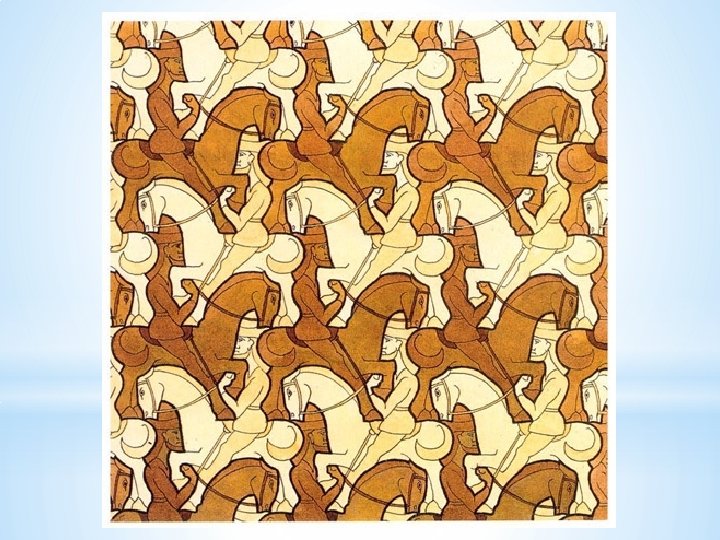
A Tessellation is a repeating pattern of closed shapes that covers a surface with no gaps and no overlaps.
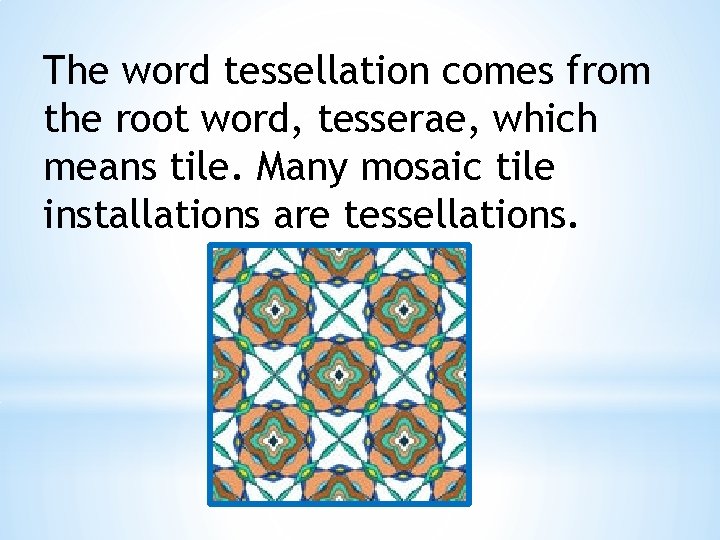
The word tessellation comes from the root word, tesserae, which means tile. Many mosaic tile installations are tessellations.
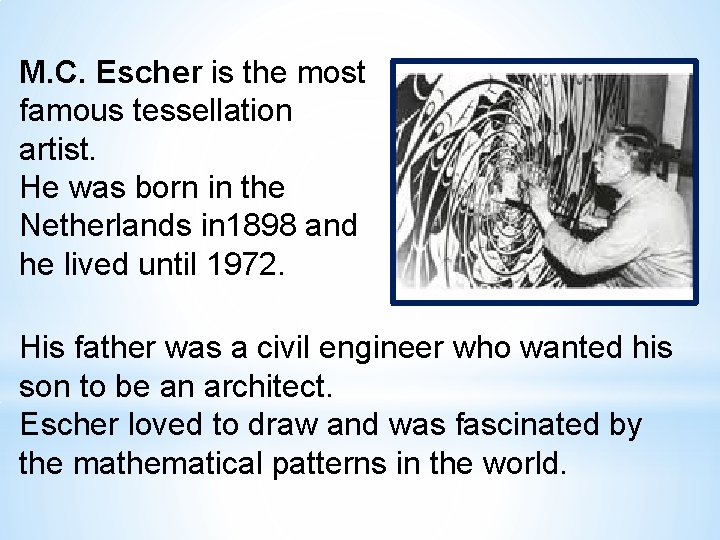
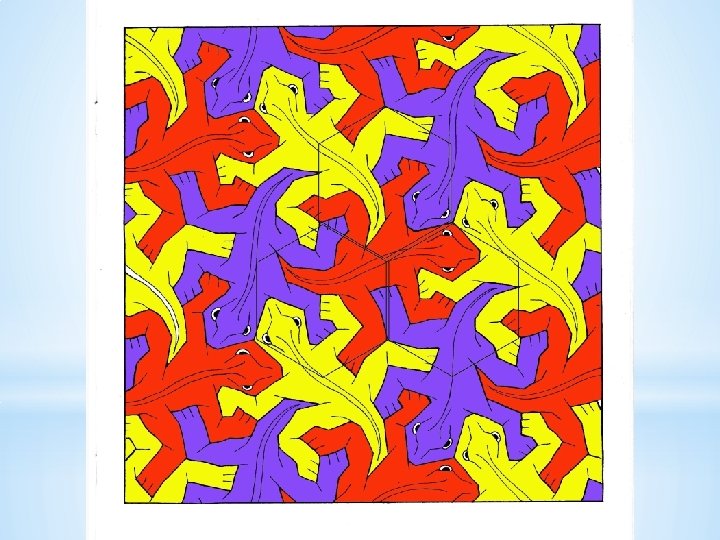
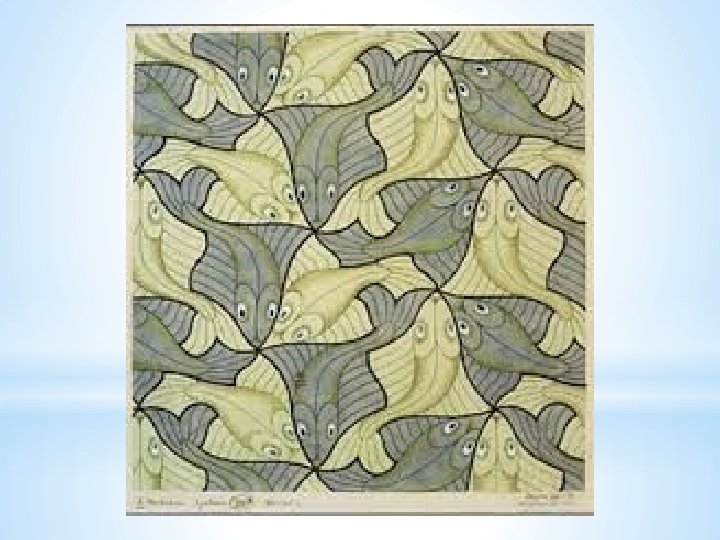
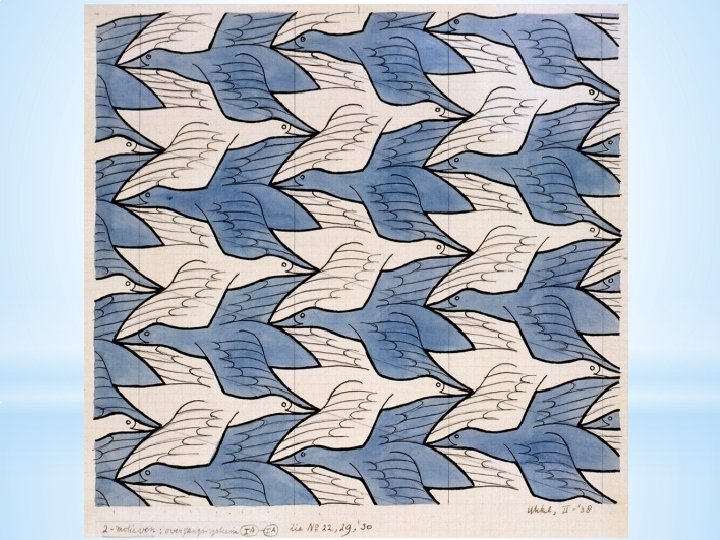
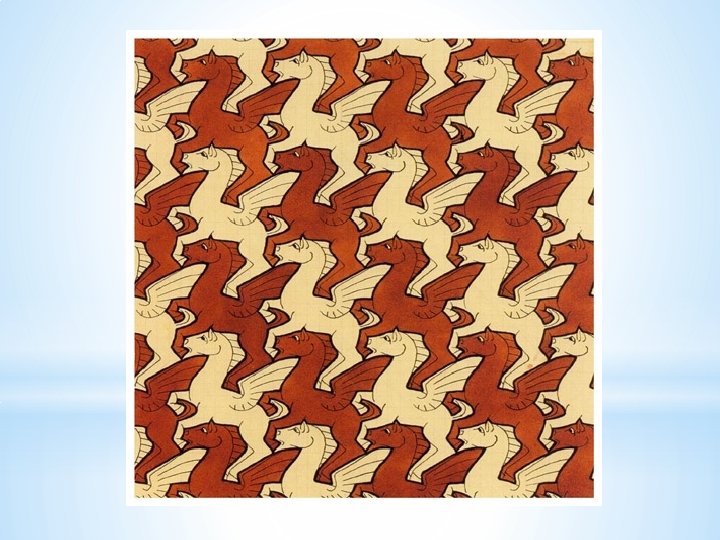
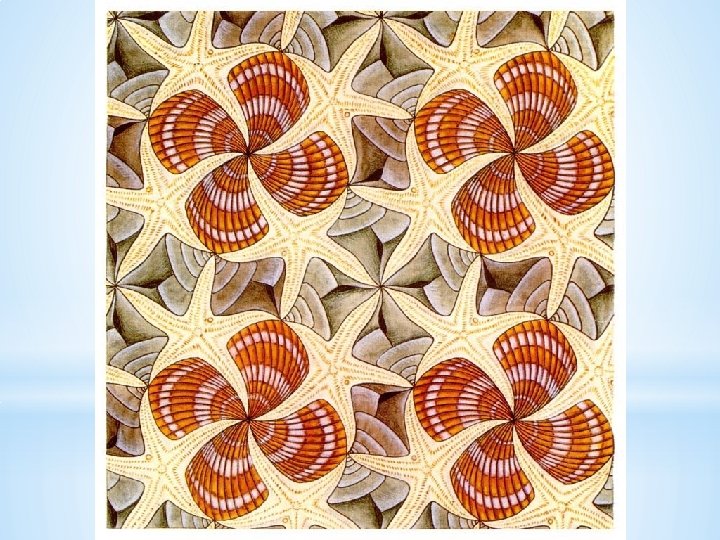
M. C. Escher is the most famous tessellation artist. He was born in the Netherlands in 1898 and he lived until 1972. His father was a civil engineer who wanted his son to be an architect. Escher loved to draw and was fascinated by the mathematical patterns in the world.
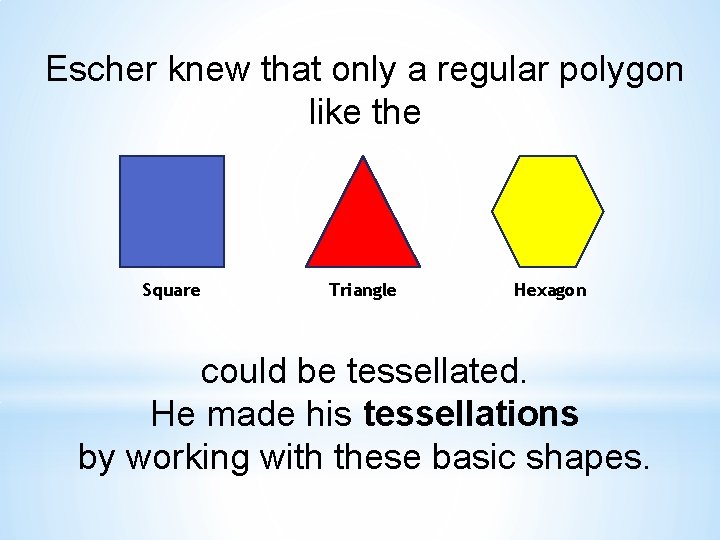
Escher knew that only a regular polygon like the Square Triangle Hexagon could be tessellated. He made his tessellations by working with these basic shapes.
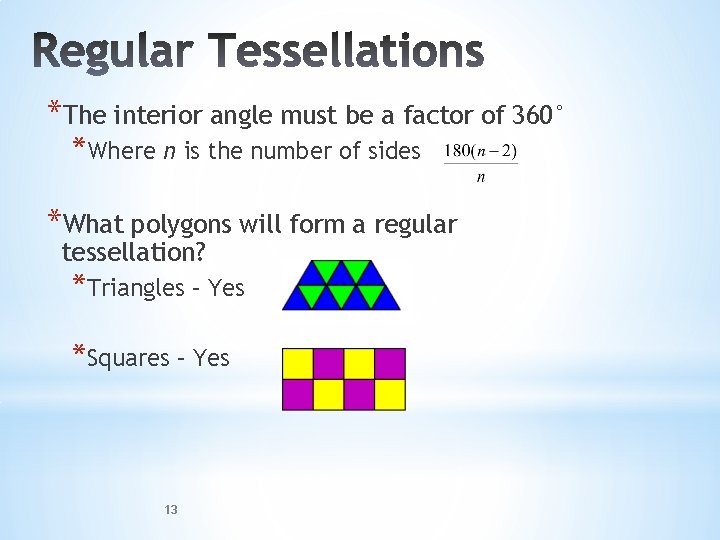
*The interior angle must be a factor of 360° *Where n is the number of sides *What polygons will form a regular tessellation? *Triangles – Yes *Squares – Yes 13
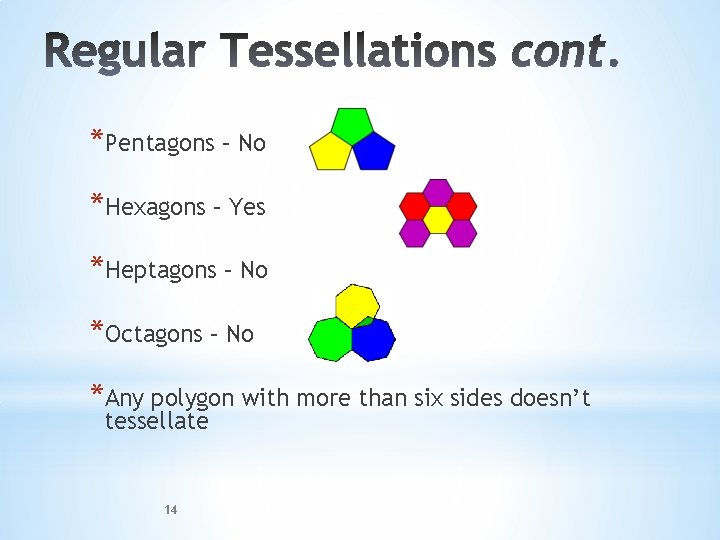
*Pentagons – No *Hexagons – Yes *Heptagons – No *Octagons – No *Any polygon with more than six sides doesn’t tessellate 14
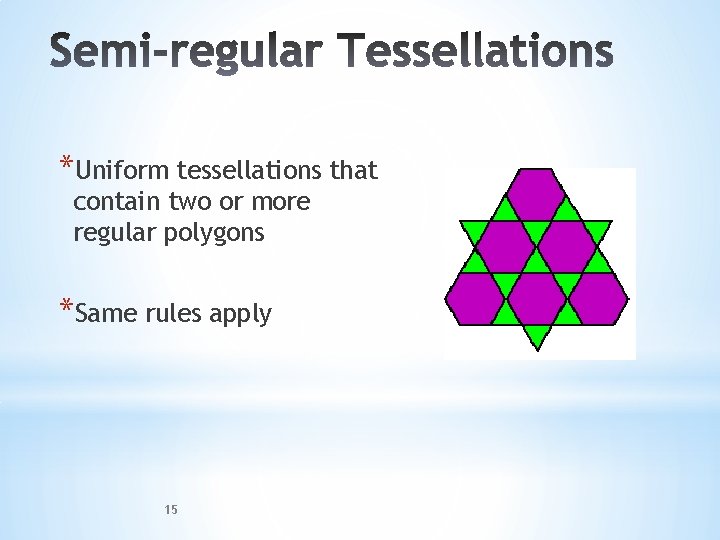
*Uniform tessellations that contain two or more regular polygons *Same rules apply 15
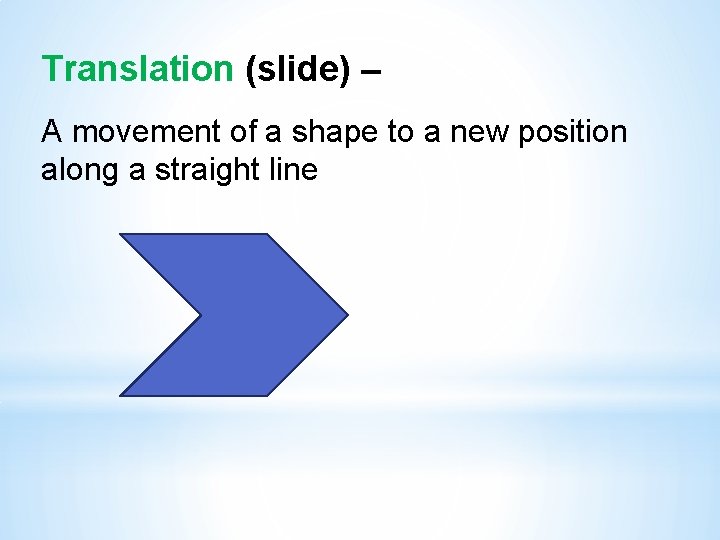
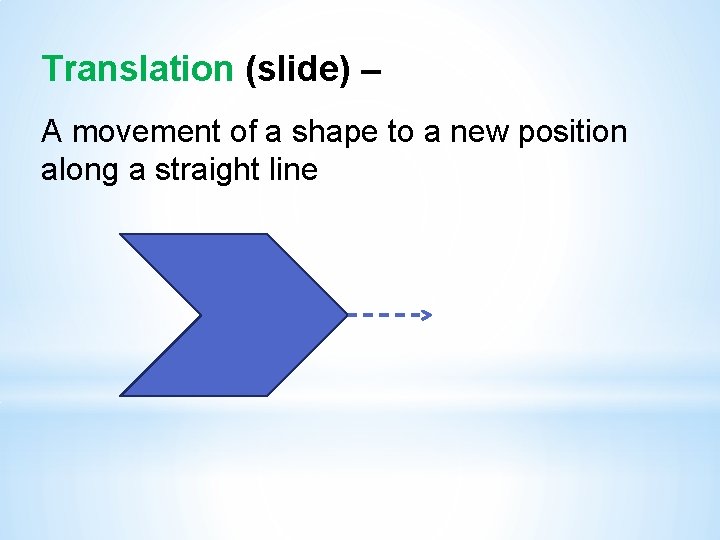
Translation (slide) – A movement of a shape to a new position along a straight line
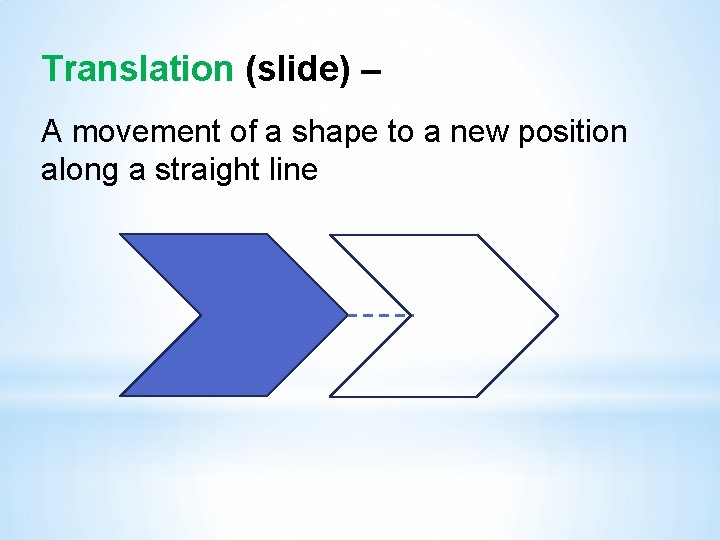
Translation (slide) – A movement of a shape to a new position along a straight line
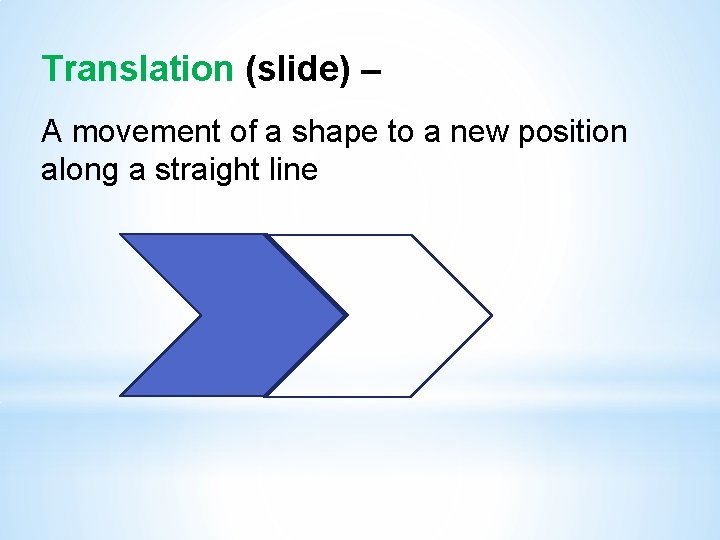
Translation (slide) – A movement of a shape to a new position along a straight line
Translation (slide) – A movement of a shape to a new position along a straight line
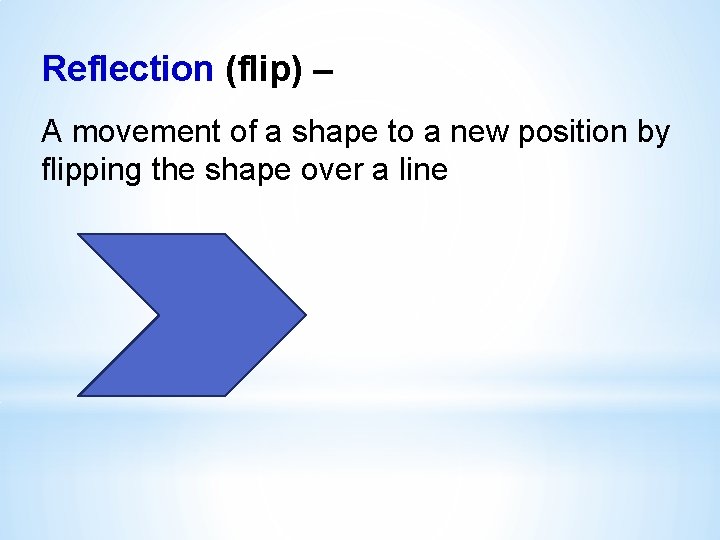
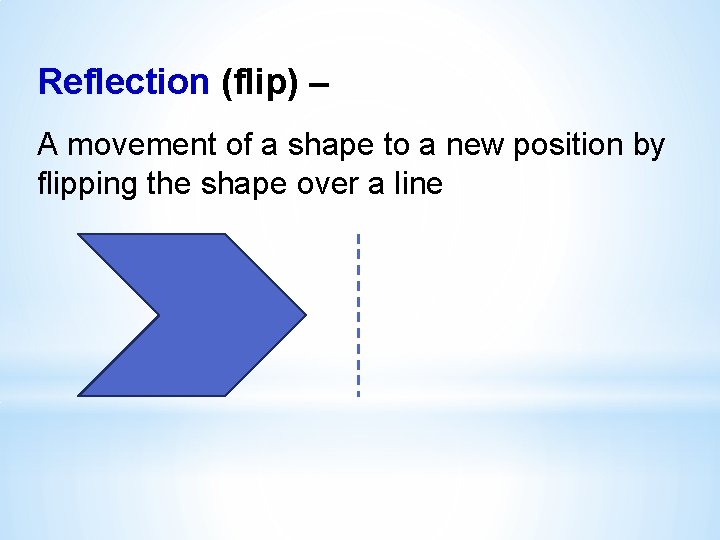
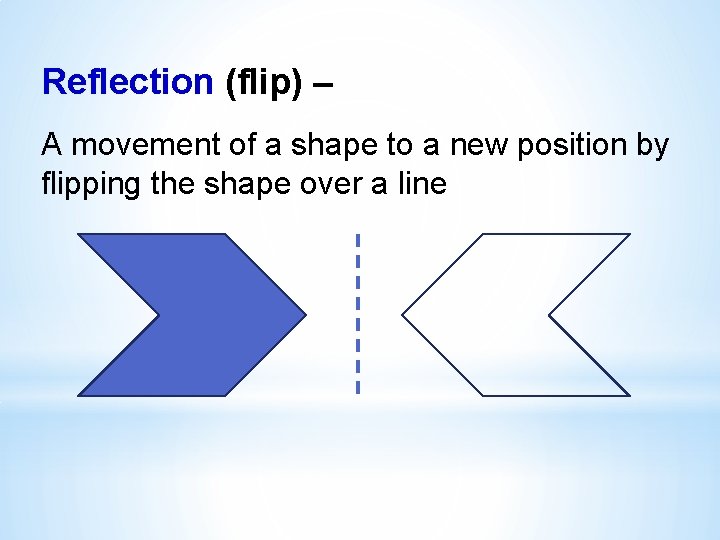
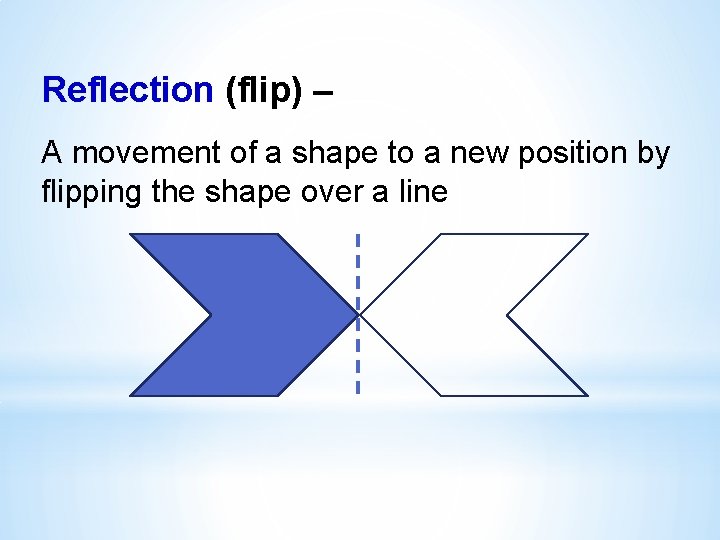
Reflection (flip) – A movement of a shape to a new position by flipping the shape over a line
Reflection (flip) – A movement of a shape to a new position by flipping the shape over a line
Reflection (flip) – A movement of a shape to a new position by flipping the shape over a line
Reflection (flip) – A movement of a shape to a new position by flipping the shape over a line
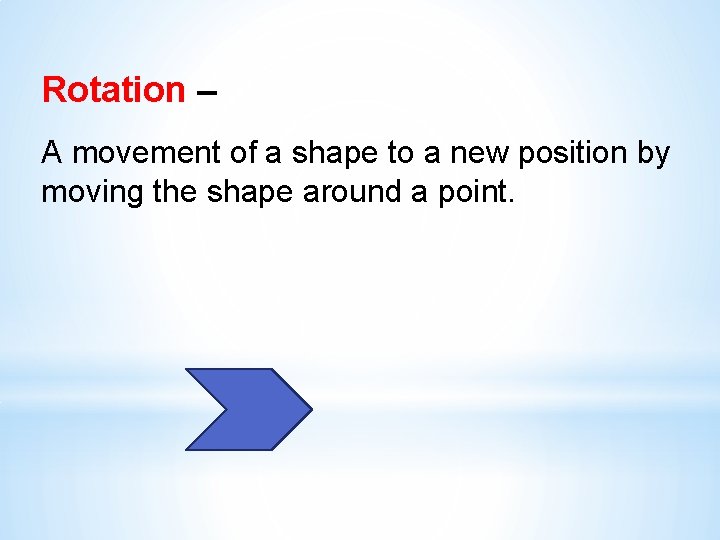
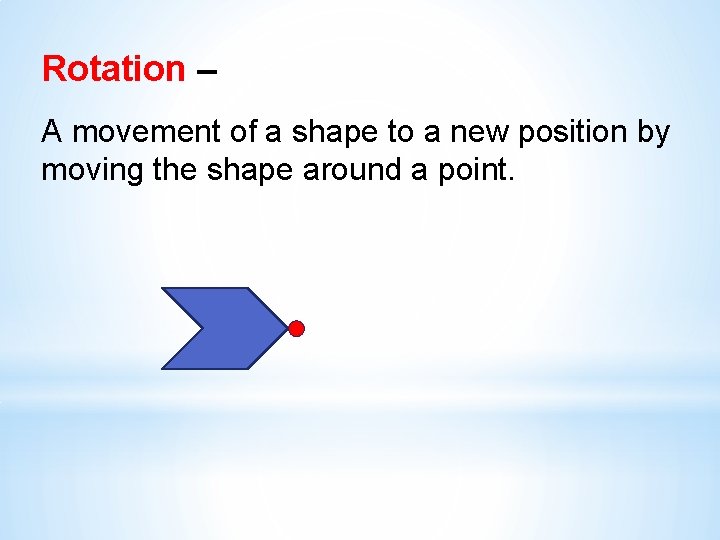
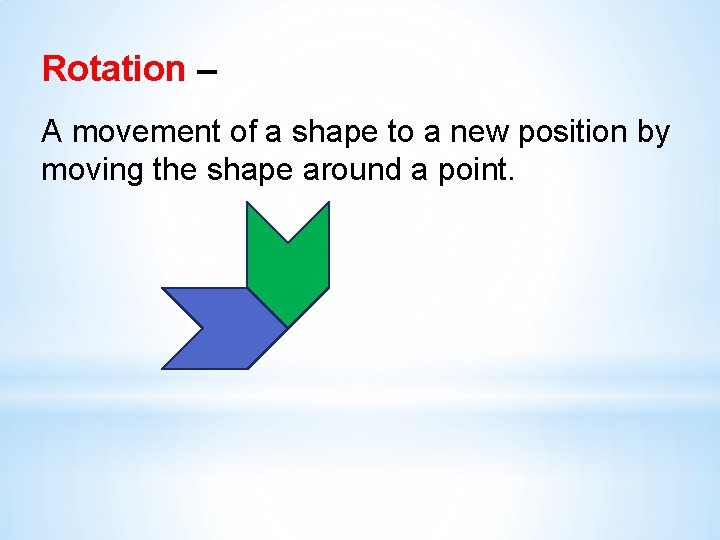
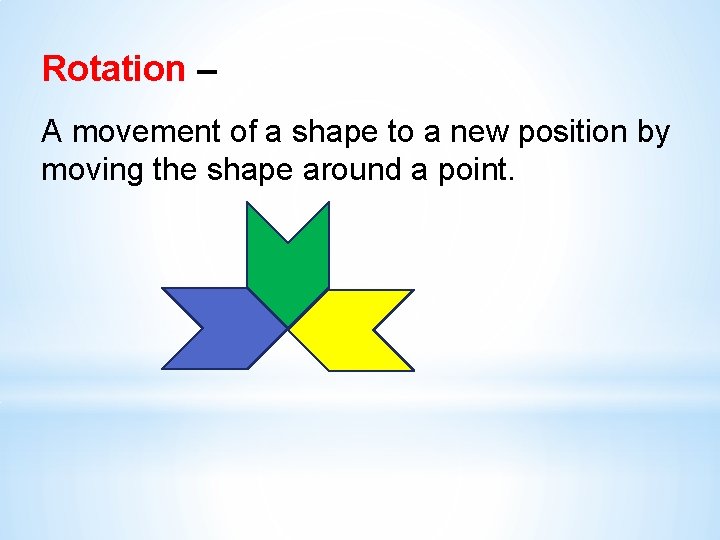
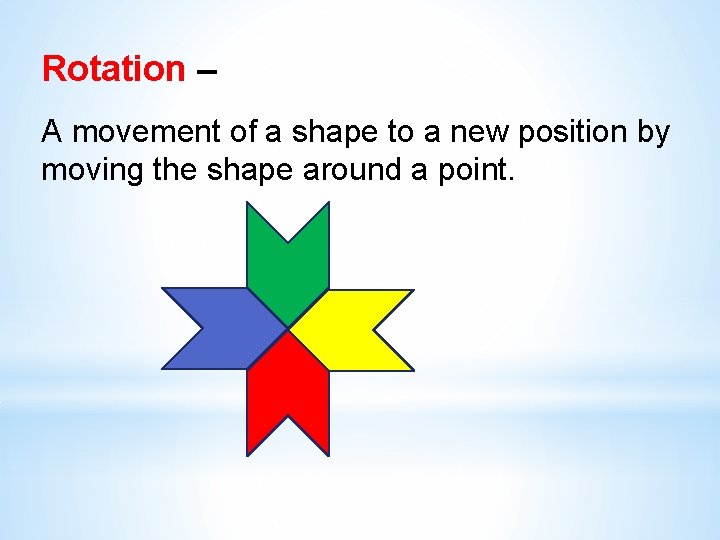
Rotation – A movement of a shape to a new position by moving the shape around a point.
Rotation – A movement of a shape to a new position by moving the shape around a point.
Rotation – A movement of a shape to a new position by moving the shape around a point.
Rotation – A movement of a shape to a new position by moving the shape around a point.
Rotation – A movement of a shape to a new position by moving the shape around a point.
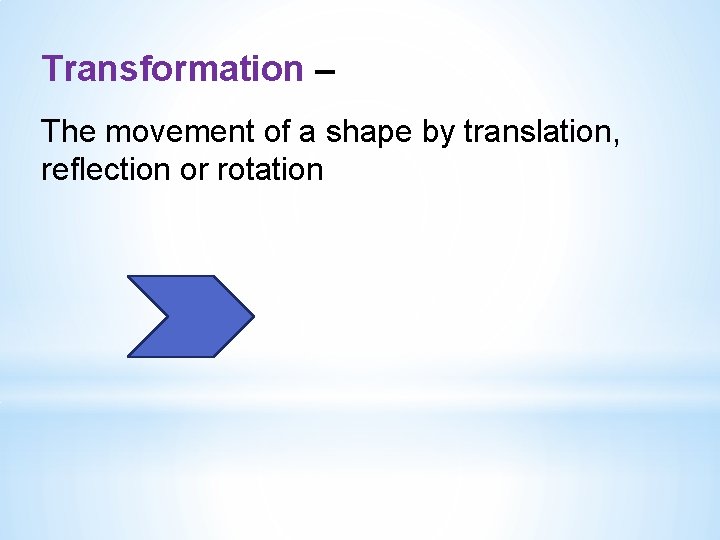
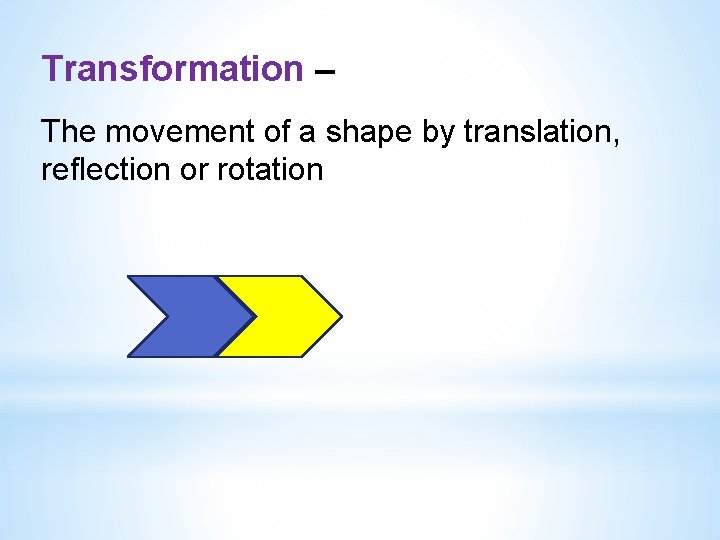
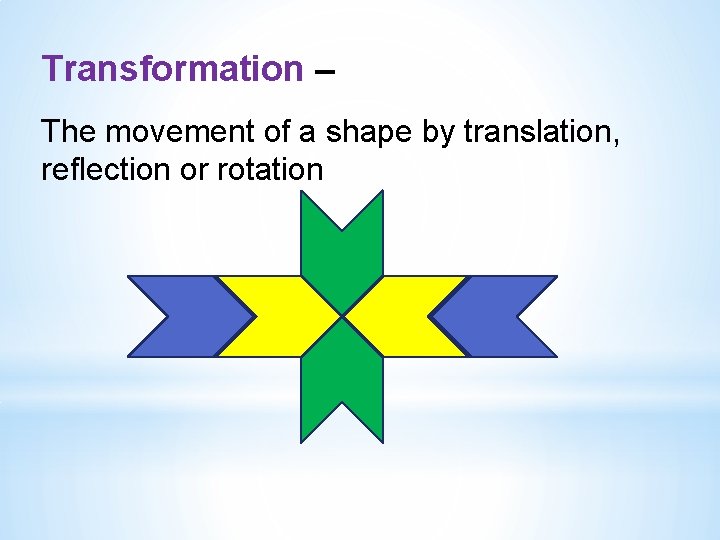
Transformation – The movement of a shape by translation, reflection or rotation
Transformation – The movement of a shape by translation, reflection or rotation
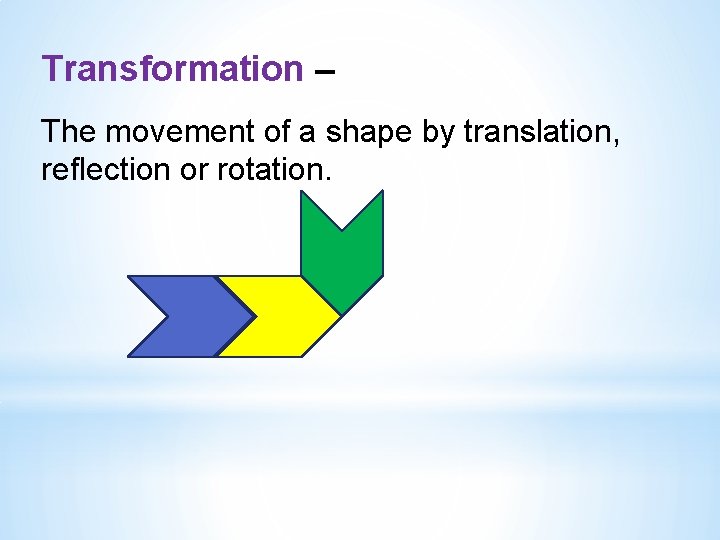
Transformation – The movement of a shape by translation, reflection or rotation.
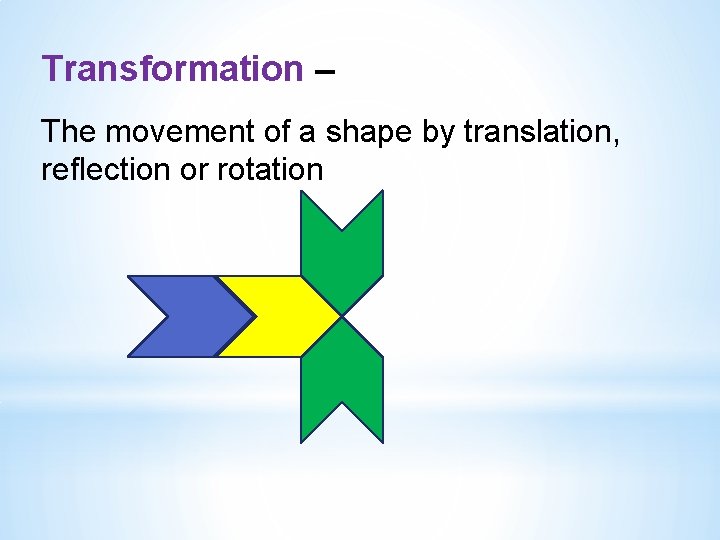
Transformation – The movement of a shape by translation, reflection or rotation
Transformation – The movement of a shape by translation, reflection or rotation
Creating Your Own (An Example) • You will be given 3 methods. • You must complete 2 tessellations using two different methods. • Your final products must be neat, colorful, creative. • You must turn in the stencil you use to complete the tessellation.
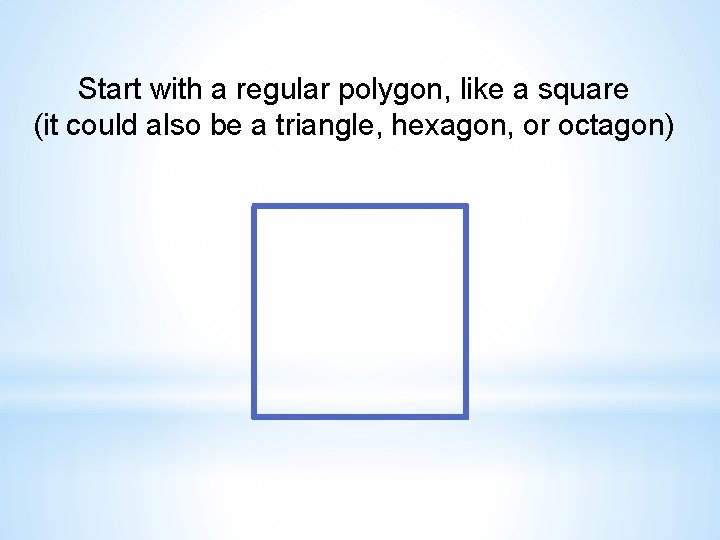
Start with a regular polygon, like a square (it could also be a triangle, hexagon, or octagon)
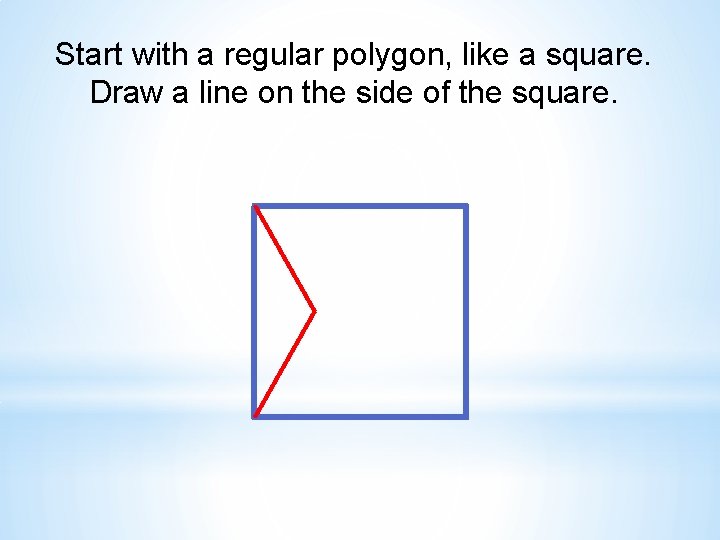
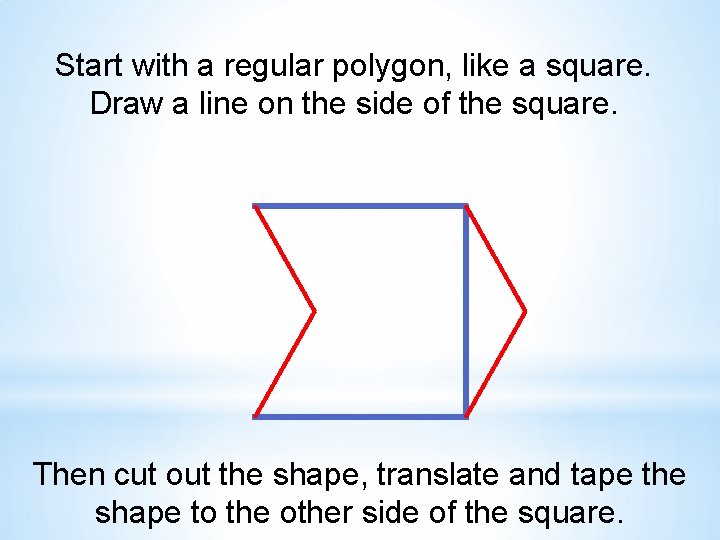
Start with a regular polygon, like a square. Draw a line on the side of the square.
Start with a regular polygon, like a square. Draw a line on the side of the square. Then cut out the shape, translate and tape the shape to the other side of the square.
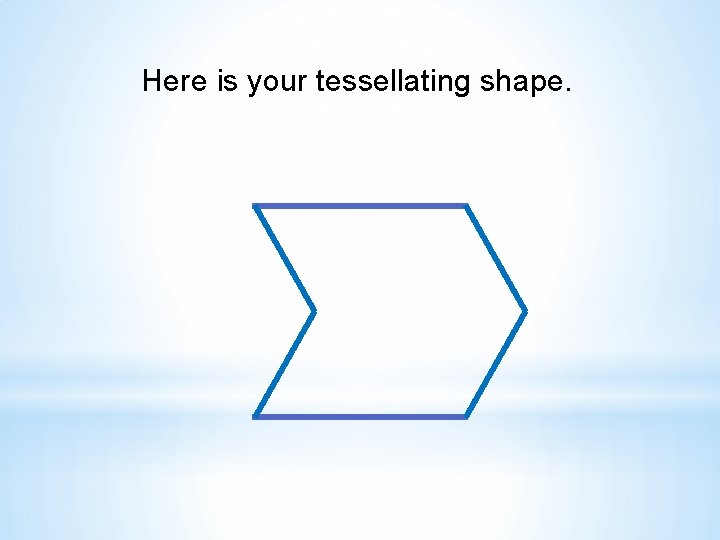
Here is your tessellating shape.
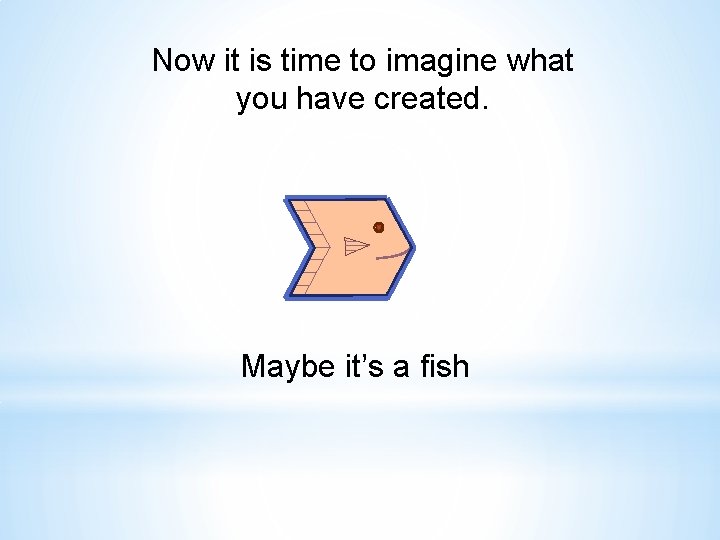
Now it is time to imagine what you have created. Maybe it’s a fish
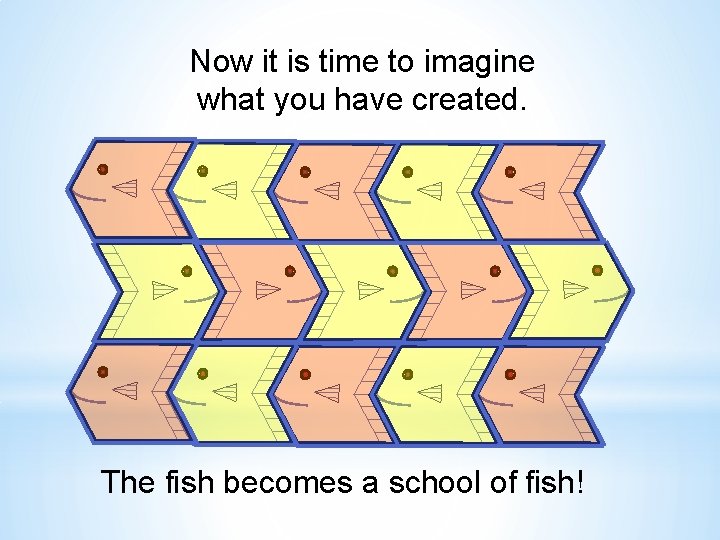
Now it is time to imagine what you have created. The fish becomes a school of fish!
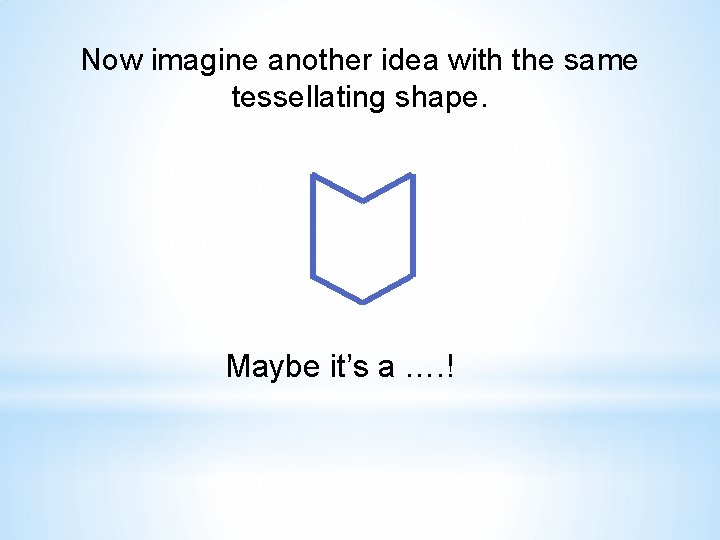
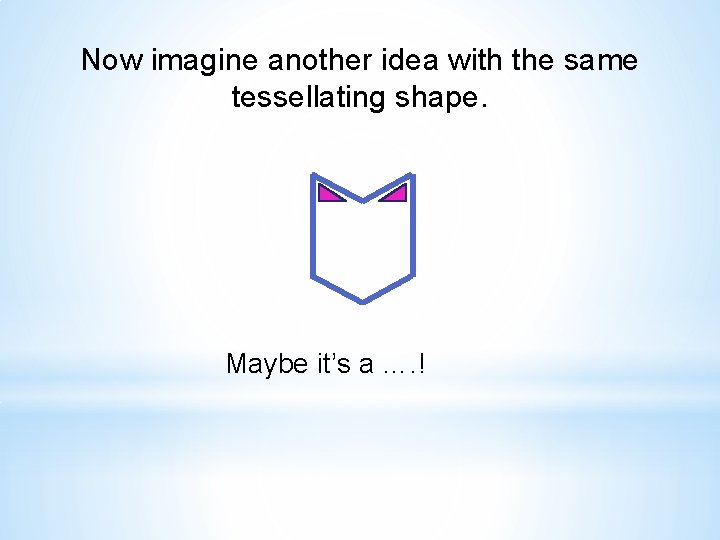
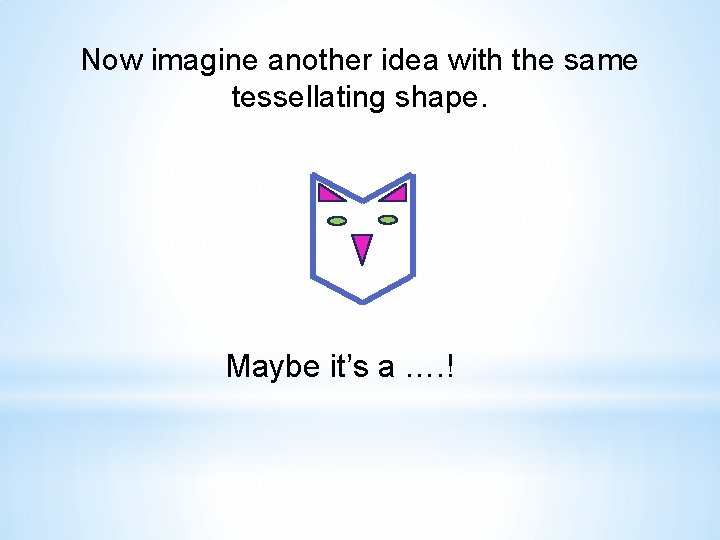
Now imagine another idea with the same tessellating shape. Maybe it’s a …. !
Now imagine another idea with the same tessellating shape. Maybe it’s a …. !
Now imagine another idea with the same tessellating shape. Maybe it’s a …. !
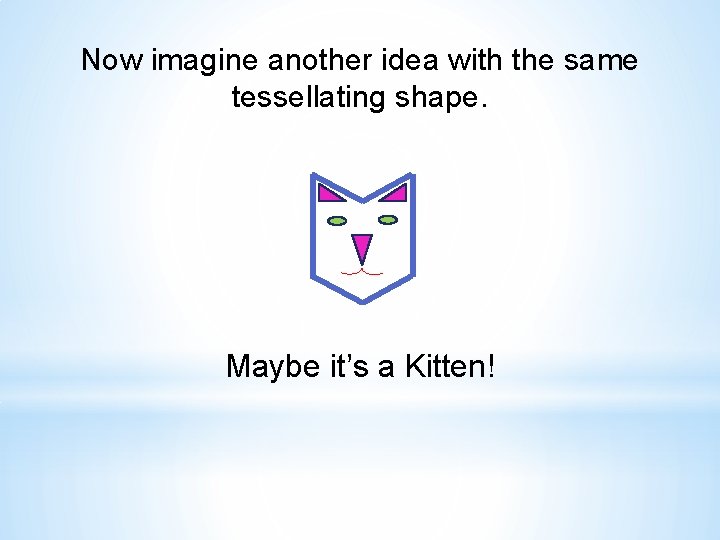
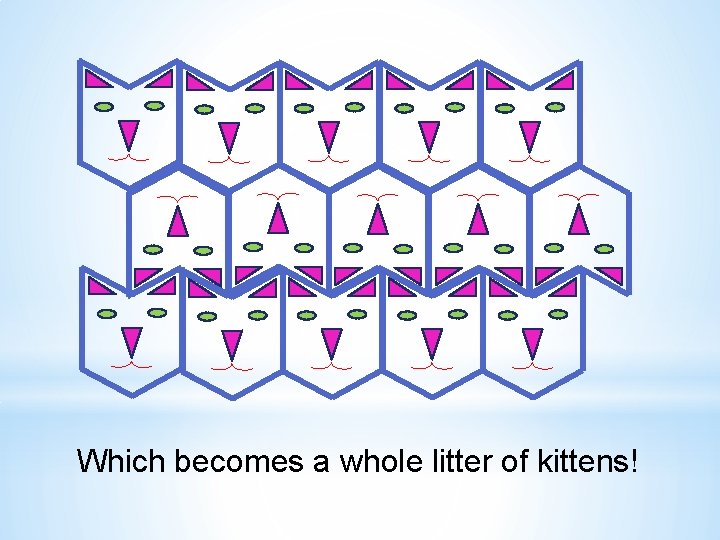
Now imagine another idea with the same tessellating shape. Maybe it’s a Kitten!
Which becomes a whole litter of kittens!
Practice with your team. 1’s Draw the line on one side of the square. 2’s Cut the shape out carefully. 3’s Translate it and tape it to the other side of the square. 4’s What can it be? Share with the class.
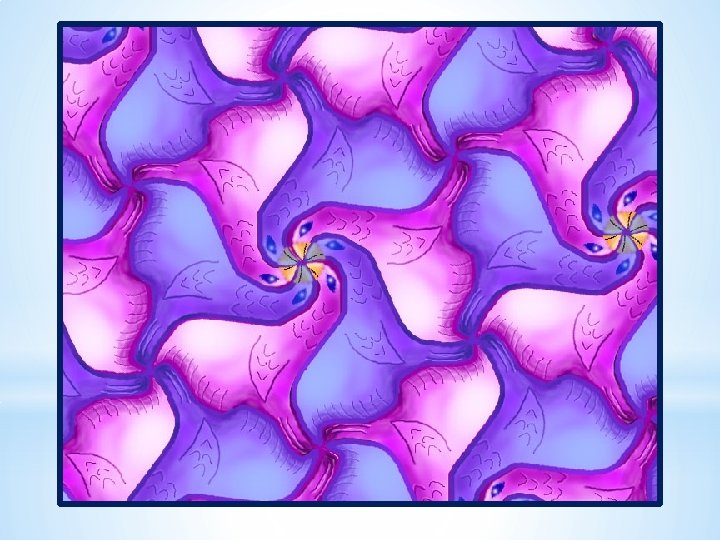
Examples