
Tertiary Structure of Proteins The tertiary structure defines
- Slides: 9
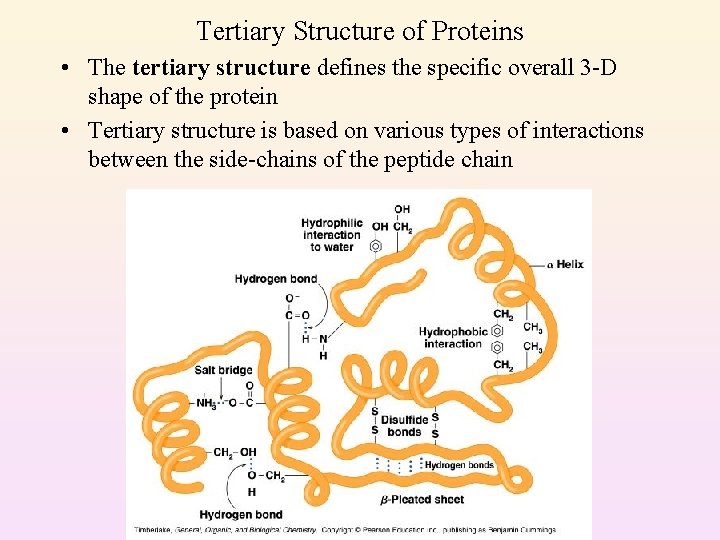
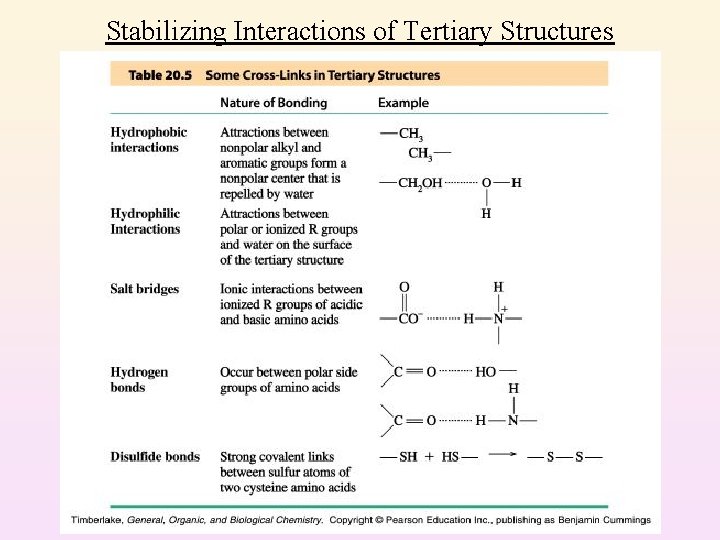
Tertiary Structure of Proteins • The tertiary structure defines the specific overall 3 -D shape of the protein • Tertiary structure is based on various types of interactions between the side-chains of the peptide chain
Stabilizing Interactions of Tertiary Structures
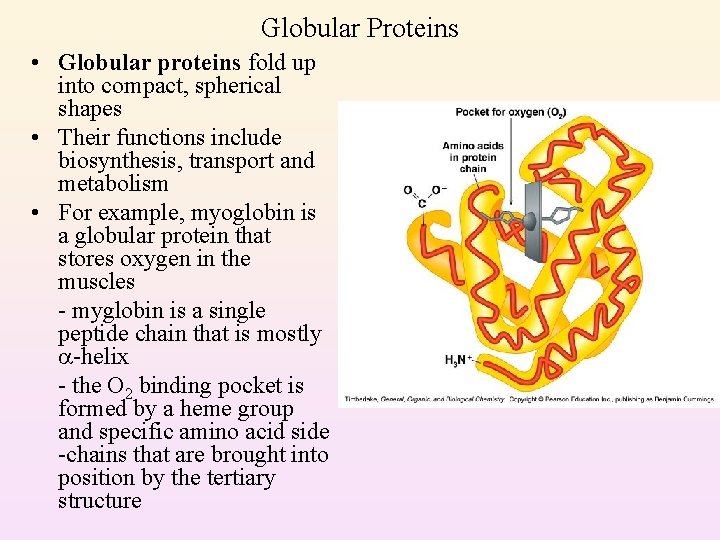
Globular Proteins • Globular proteins fold up into compact, spherical shapes • Their functions include biosynthesis, transport and metabolism • For example, myoglobin is a globular protein that stores oxygen in the muscles - myglobin is a single peptide chain that is mostly -helix - the O 2 binding pocket is formed by a heme group and specific amino acid side -chains that are brought into position by the tertiary structure
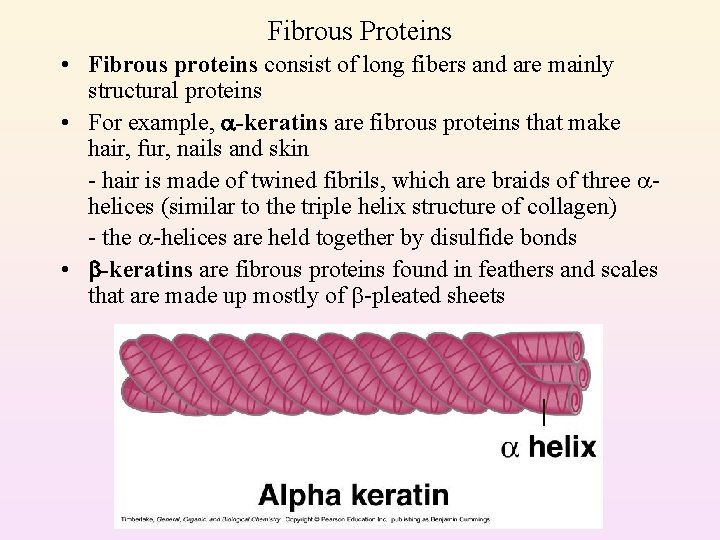
Fibrous Proteins • Fibrous proteins consist of long fibers and are mainly structural proteins • For example, -keratins are fibrous proteins that make hair, fur, nails and skin - hair is made of twined fibrils, which are braids of three helices (similar to the triple helix structure of collagen) - the -helices are held together by disulfide bonds • -keratins are fibrous proteins found in feathers and scales that are made up mostly of -pleated sheets
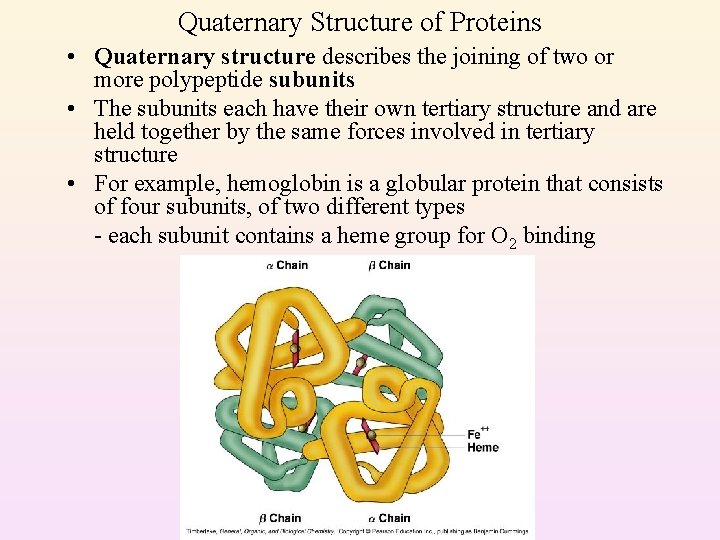
Quaternary Structure of Proteins • Quaternary structure describes the joining of two or more polypeptide subunits • The subunits each have their own tertiary structure and are held together by the same forces involved in tertiary structure • For example, hemoglobin is a globular protein that consists of four subunits, of two different types - each subunit contains a heme group for O 2 binding
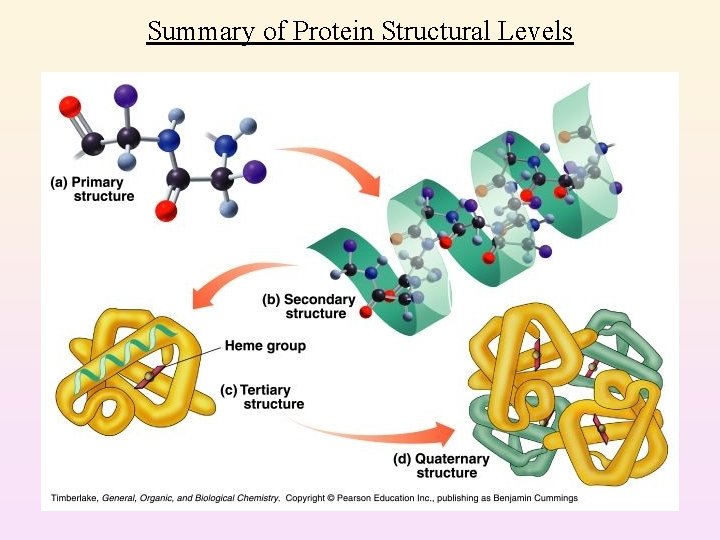
Summary of Protein Structural Levels
Hydrolysis of Peptides and Proteins • Peptide bonds are amide bonds and are resistant to hydrolysis • However, they can be hydrolyzed with enzymes or with strong acid or base and heat • Proteins are hydrolyzed in the stomach with both acid (HCl) and enzymes (such as pepsin) - the amino acids are then absorbed in the intestines and used to synthesize new proteins • Below is the acid hydrolysis of the dipeptide Ala-Ser to form the amino acids alanine and serine
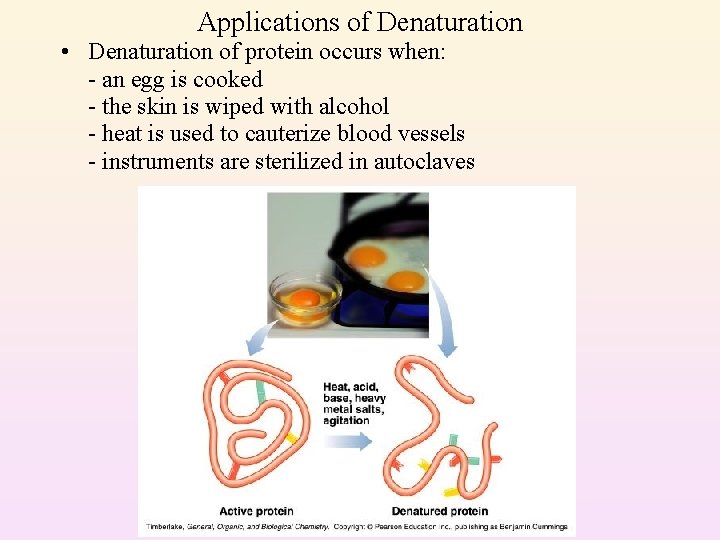
Denaturation of Proteins • Denaturation causes proteins to lose their 3 -D structure and so they lose their function • Denaturation involves the disruption of cross-linking in the secondary, tertiary and quaternary protein structures • Heat and organic compounds disrupt H-bonding and hydrophobic interactions • Acids and bases disrupt H-bonding between polar R groups and break ionic bonds • Heavy metal ions break S-S bonds by reacting with the sulfur • Agitation such as whipping stretches chains, disrupting all types of cross-linking
Applications of Denaturation • Denaturation of protein occurs when: - an egg is cooked - the skin is wiped with alcohol - heat is used to cauterize blood vessels - instruments are sterilized in autoclaves