
Terrestrial Planetary Geology Venus VENUS Earths nearly Twin


- Slides: 16
Terrestrial Planetary Geology: Venus
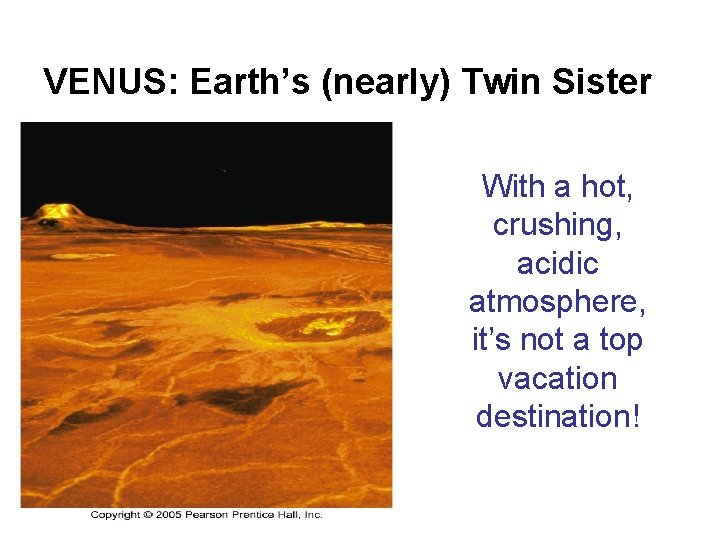
VENUS: Earth’s (nearly) Twin Sister With a hot, crushing, acidic atmosphere, it’s not a top vacation destination!
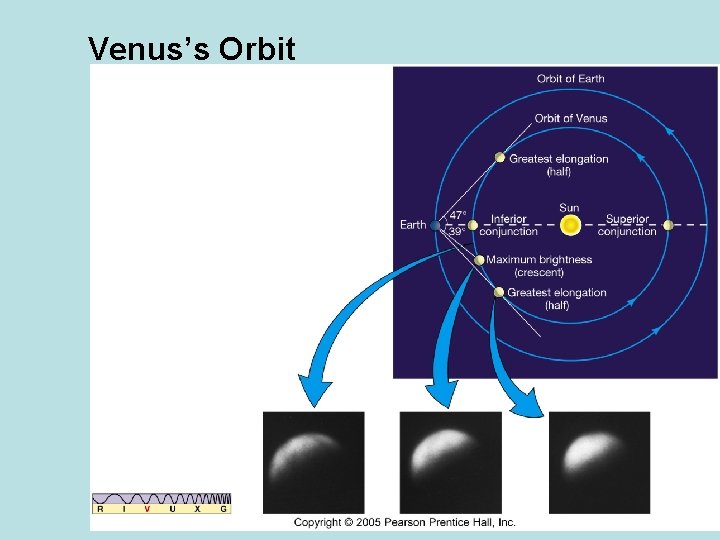
Basic Venusian Data • Mass is 0. 815 Earth’s (via artificial satelites) Radius is 6052 km or 0. 95 of Earth (via angular diameter at conjunction) Density is 5. 2 g/cm 3 or 0. 94 of Earth. • As seen from Earth: Venus's surface is invisible in the visible band: completely cloud shrouded. Always within 47 degrees of the Sun: greatest elongation, so NEVER seen more than about 3 hours after dusk or 3 hours before dawn (I. e. never at midnight here).
Venus’s Orbit
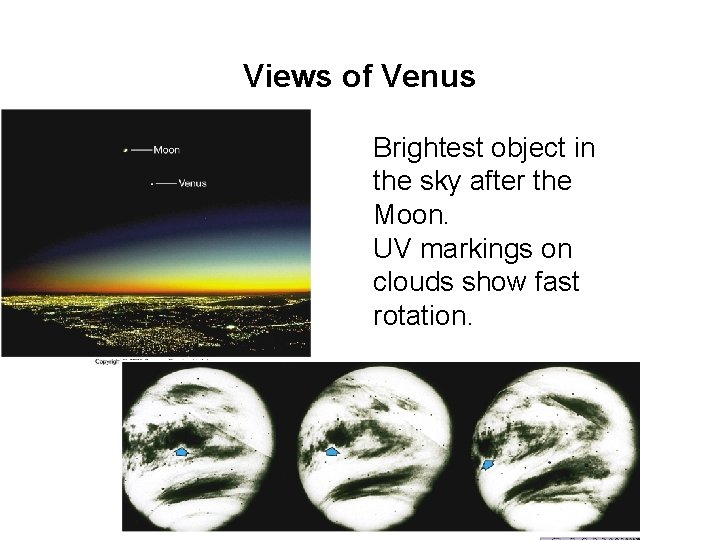
Views of Venus Brightest object in the sky after the Moon. UV markings on clouds show fast rotation.
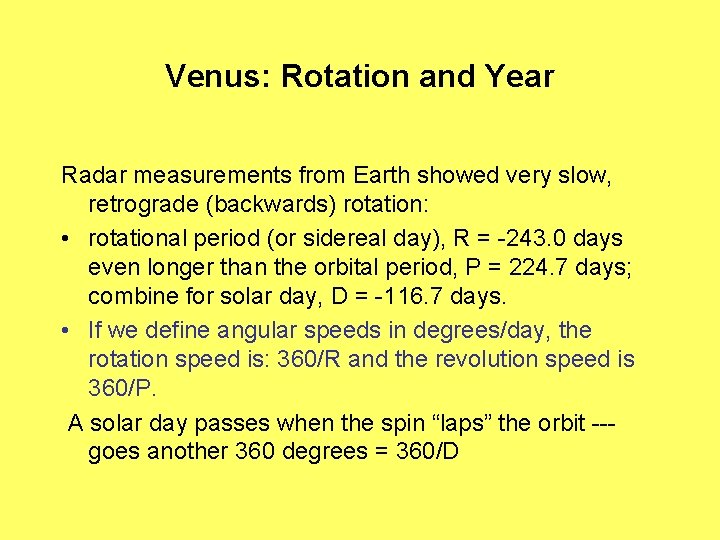
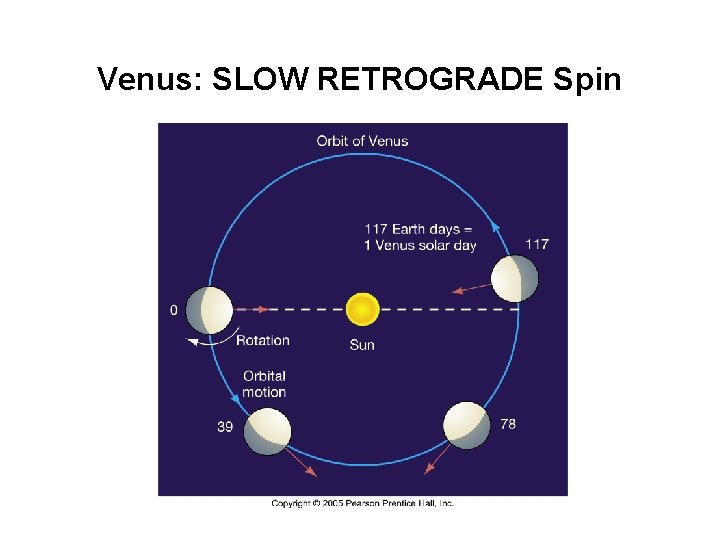
Venus: Rotation and Year Radar measurements from Earth showed very slow, retrograde (backwards) rotation: • rotational period (or sidereal day), R = -243. 0 days even longer than the orbital period, P = 224. 7 days; combine for solar day, D = -116. 7 days. • If we define angular speeds in degrees/day, the rotation speed is: 360/R and the revolution speed is 360/P. A solar day passes when the spin “laps” the orbit --goes another 360 degrees = 360/D
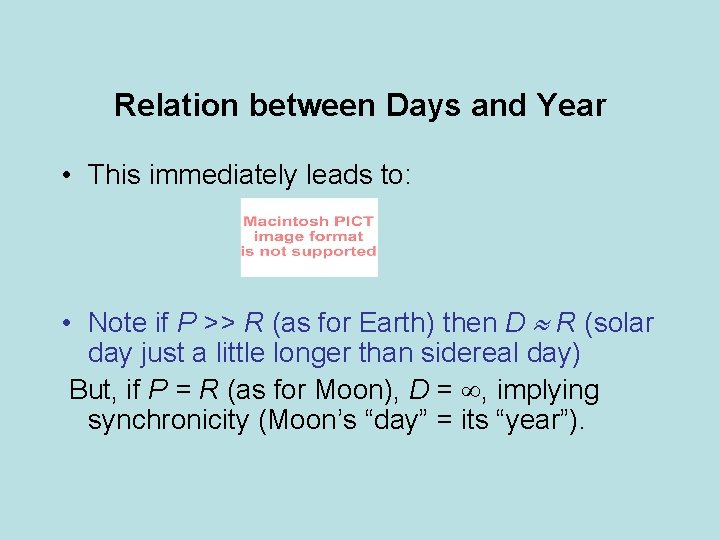
Relation between Days and Year • This immediately leads to: • Note if P >> R (as for Earth) then D R (solar day just a little longer than sidereal day) But, if P = R (as for Moon), D = , implying synchronicity (Moon’s “day” = its “year”).
Venus: SLOW RETROGRADE Spin
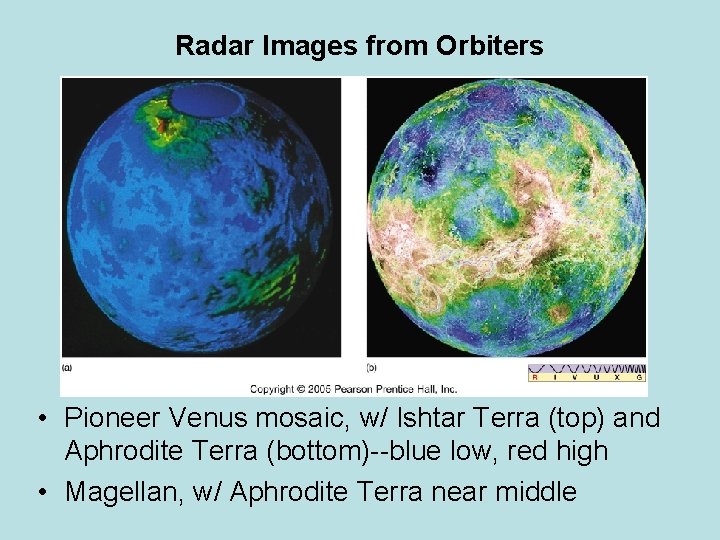
Venus as “Seen” from Earth & Space Radar from Earth could also reveal crude topography: • the relative elevation of large portions of the surface via reflection times; relative roughness of the surface via reflection strengths. • SPACE MISSIONS HAVE TOLD US MUCH MORE, via DETAILED RADAR MAPING Venera (USSR), Mariner 10 & 11, Pioneer Venus & Magellan (USA) • Two “continents”: Ishtar Terra, Aphrodite Terra (but only about 8% of surface area) lowlands have modest elevation changes compared to Earth but Maxwell Montes rises 14 km above lowest depressions.
Radar Images from Orbiters • Pioneer Venus mosaic, w/ Ishtar Terra (top) and Aphrodite Terra (bottom)--blue low, red high • Magellan, w/ Aphrodite Terra near middle
ACTIVITY ON VENUS Many shield Volcanoes are seen via radar images. • Lots of lava domes and lava flows seen A few large upwellings: coronae • Some good evidence for current volcanism: Fluctuations in SO 2 concentrations radio energy bursts -- lightning No evidence for tectonic motions. • Many craters, many the calderas of dead volcanoes. Impact craters too, but lots fewer than Mercury or Moon and none smaller than 3 km across -- pretty big meteoroids burn up in Venus's atm. and sulfuric acid rain and heavy winds fast erosion.
Lava Domes and Lava Flows
A Corona and Impact Craters Corona Aime: 300 km diameter; Crater Mead: 280 km diam.
Internal Structure • Probably very similar to Earth, with partially molten Fe/Ni core. • BUT NO MEASUREABLE MAGNETIC FIELD: WHY? • because of much slower rotation, despite likely liquid magnetic material. ALSO, a little less internal heat and a hotter surface less convection. So no current tectonic motions, despite likely currently active volcanoes.
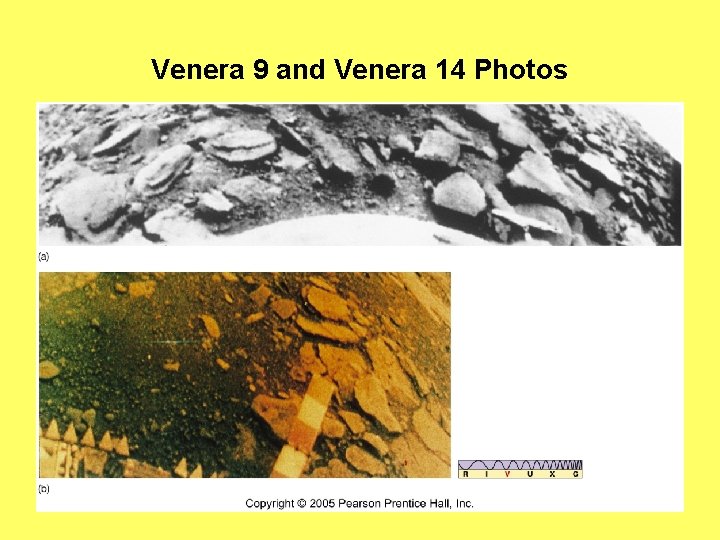
SPACECRAFT LANDED ON VENUS Measured atmospheric composition, wind speeds, etc. • 6 VENERA LANDERS came close and 3 landed and sent back data. • They took photographs in (the very low) visible light on the surface of Venus and analyzed rocks. most basalt (volcanic); some ancient granite some sharp edged, relatively young; many small & rounded, erosion
Venera 9 and Venera 14 Photos