
Terrestrial Biomes What is a biome Prentice Hall
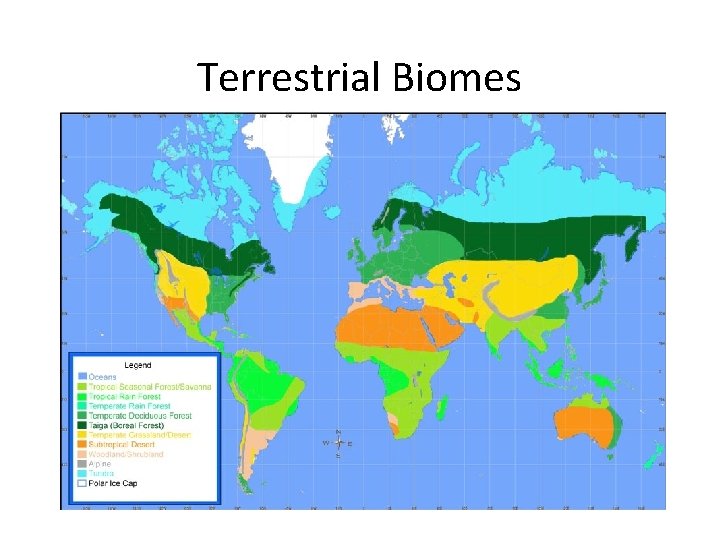
Terrestrial Biomes
What is a biome? • Prentice Hall: ‘A complex of terrestrial communites that covers a large area and is charaxterised by certain soil and climate conditions, and particular assemblages of plants and animals’ • NASA Earth Observatory: ‘ A community of plants and animals living together in a certain kind of climate’http: //earthobservatory. nasa. gov/Experiments/Biome/index. php • National Geographic : A specific geographical area notable for the species living therehttp: //education. nationalgeographic. com/education/encyclopedia/biome /? ar_a=1 • The world’s major communities, classified according to the predominant vegetation and characterised by adaptations of organisms to that particular environment Campbell, N. A. 1996. Biology, 4 th Edition. The Benjamin/Cummings Publishing Company, Inc. , Menlo Park, California.
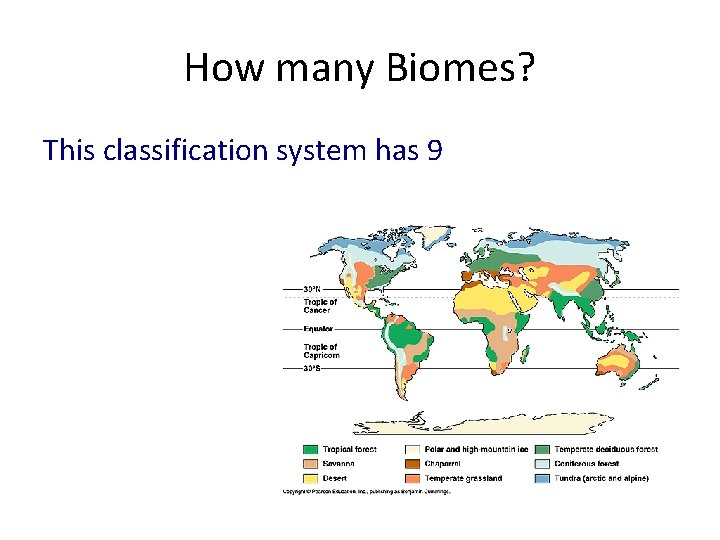
How many Biomes? This classification system has 9

How many Biomes? This classification system has 10
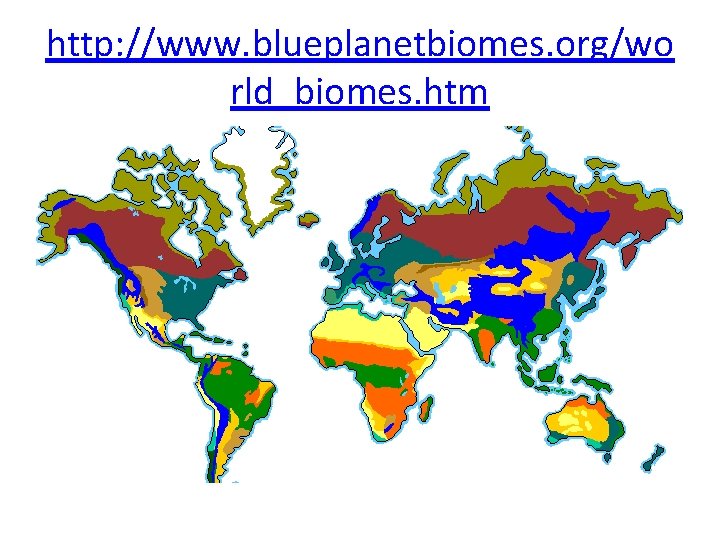
http: //www. blueplanetbiomes. org/wo rld_biomes. htm

How many Biomes? This classification system has 53, just for the USA!
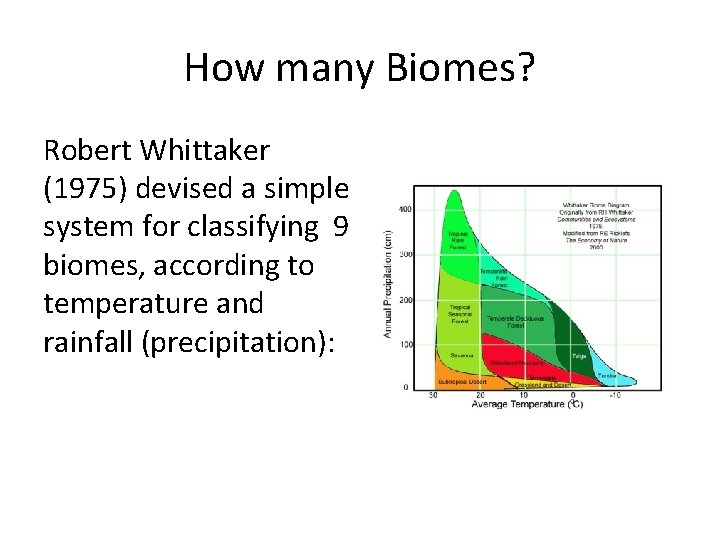
How many Biomes? Robert Whittaker (1975) devised a simple system for classifying 9 biomes, according to temperature and rainfall (precipitation):
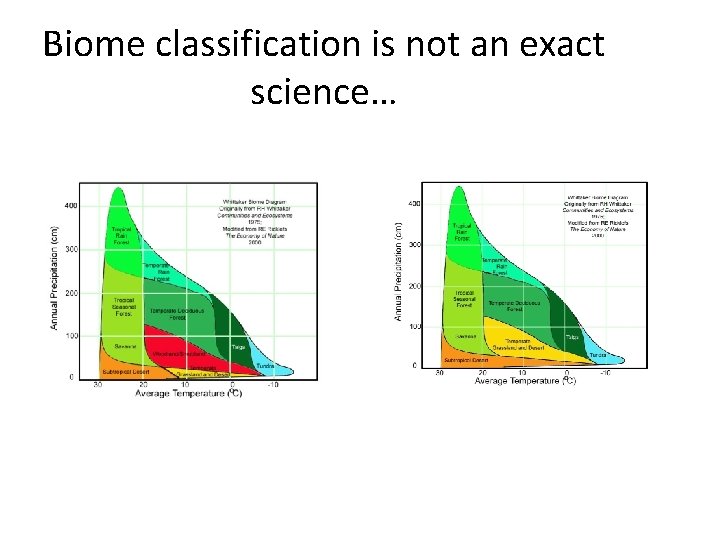
Biome classification is not an exact science…
Is a biome the same as an ecosystem?
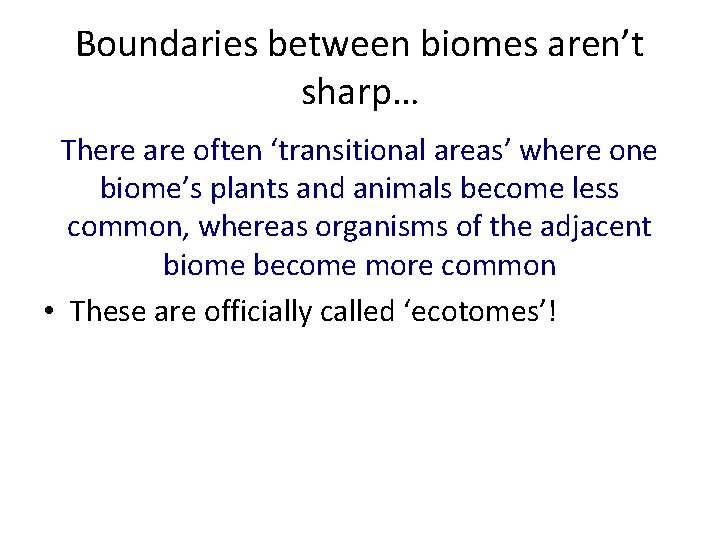
Boundaries between biomes aren’t sharp… There are often ‘transitional areas’ where one biome’s plants and animals become less common, whereas organisms of the adjacent biome become more common • These are officially called ‘ecotomes’!
Within a single biome, there may be significant ecological variation This may be associated with changes in microclimate, due to differences in exposure or elevation above sea level… Welcome to 5 - biome city
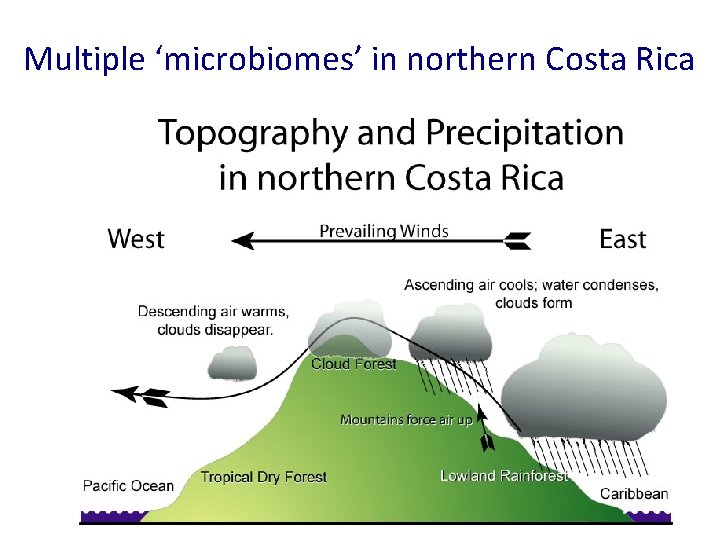
Multiple ‘microbiomes’ in northern Costa Rica
Is a biome the same as an ecosystem? • Of course not! • Each biome consists of many ecosystems, whose communities have adapted to the small differences in climate and the environment inside the biome
…so what factors ‘define’ a biome? Climatic factors: including… – Rainfall – Temperature – Humidity – Latitude – Geography – particularly altitude (elevation), proximity to the ocean, global wind currents, ocean currents – ‘Climax’ community determined by ecological succession
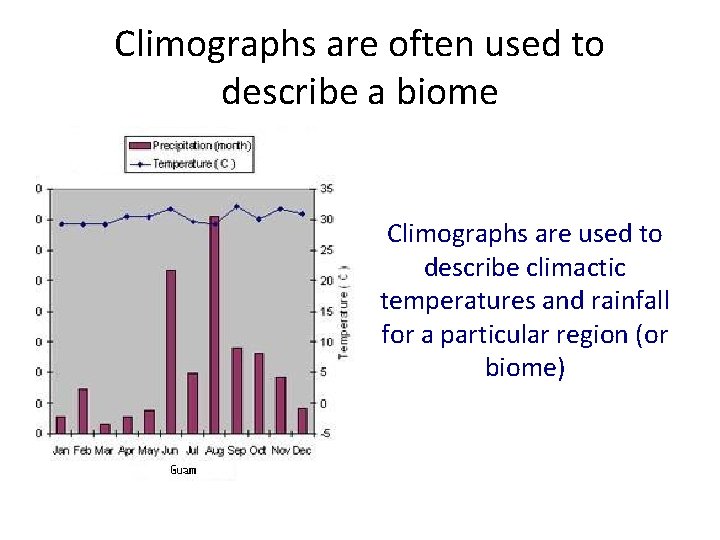
Climographs are often used to describe a biome Climographs are used to describe climactic temperatures and rainfall for a particular region (or biome)
To really understand a biome, you must understand: 1. The climate of the region (particularly annual temperature and rainfall patterns) 2. The location and typical geography of the biome 3. The special adaptations of the vegetation found there 4. The niches and interactions of the animals found there, along with their physical and behavioural adaptations to their environment
Your Biome Assignment
- Slides: 17