
Terrestrial Biomes APES 1 2 Forest biomes n
+ Terrestrial Biomes APES 1. 2
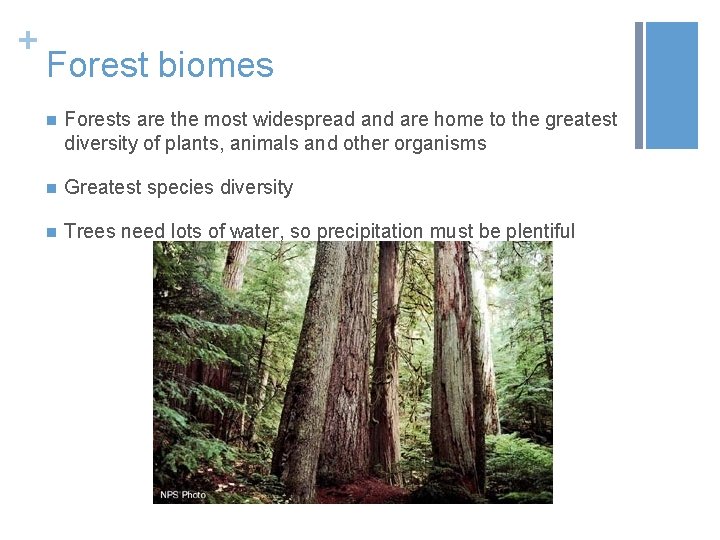
+ Forest biomes n Forests are the most widespread and are home to the greatest diversity of plants, animals and other organisms n Greatest species diversity n Trees need lots of water, so precipitation must be plentiful
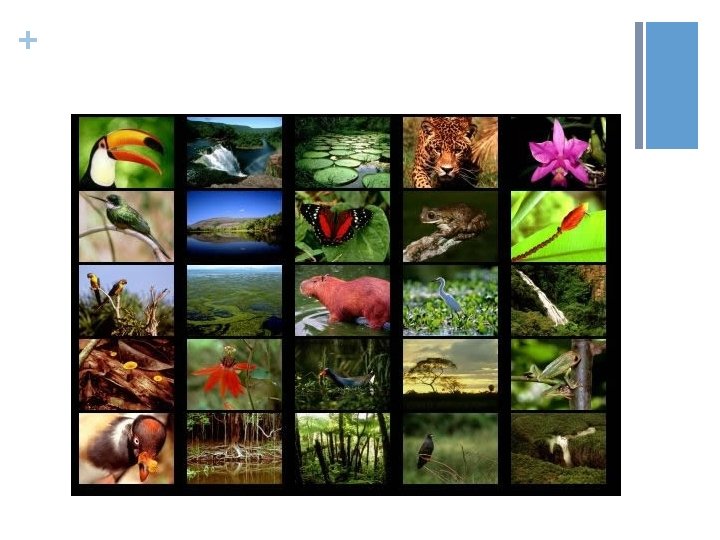
+ Tropical Rain Forests n Tropical rain forests are located in a belt around the equator n They help regulate world climate and play vital roles in the nitrogen, oxygen and carbon cycles n Humid and warm and get around 200 -450 cm of rain a year n Strong sunlight year round n Ideal for a wide variety of plans and animals
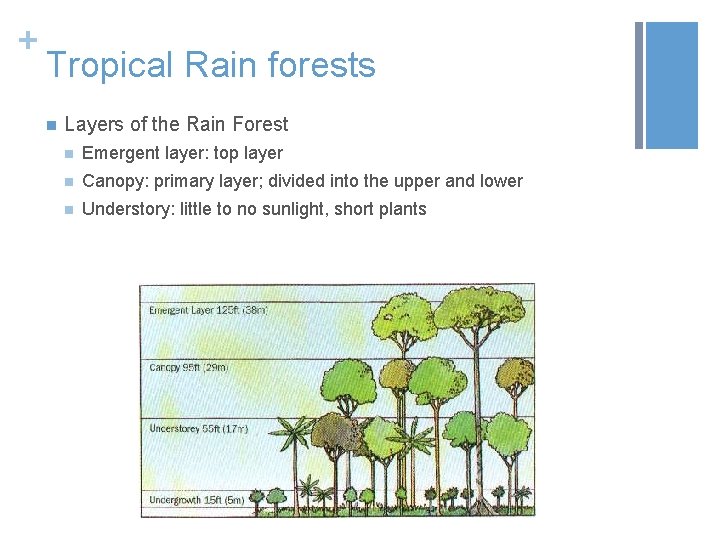
+ Tropical Rain forests n Layers of the Rain Forest n Emergent layer: top layer n Canopy: primary layer; divided into the upper and lower n Understory: little to no sunlight, short plants
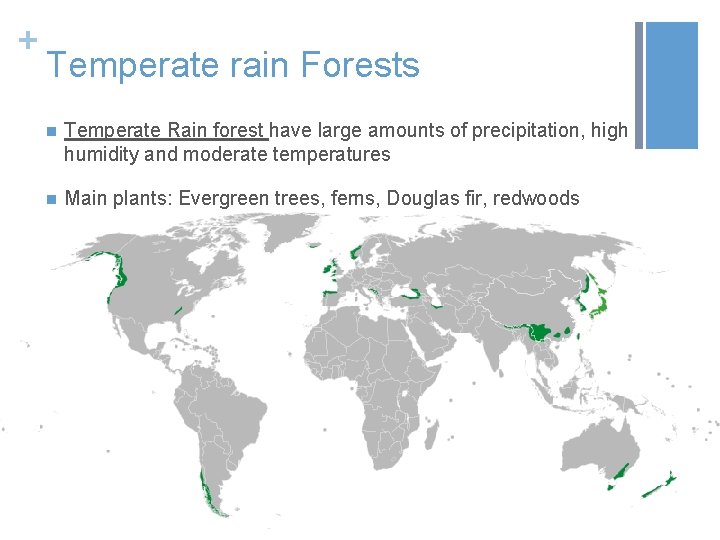
+ Temperate rain Forests n Temperate Rain forest have large amounts of precipitation, high humidity and moderate temperatures n Main plants: Evergreen trees, ferns, Douglas fir, redwoods
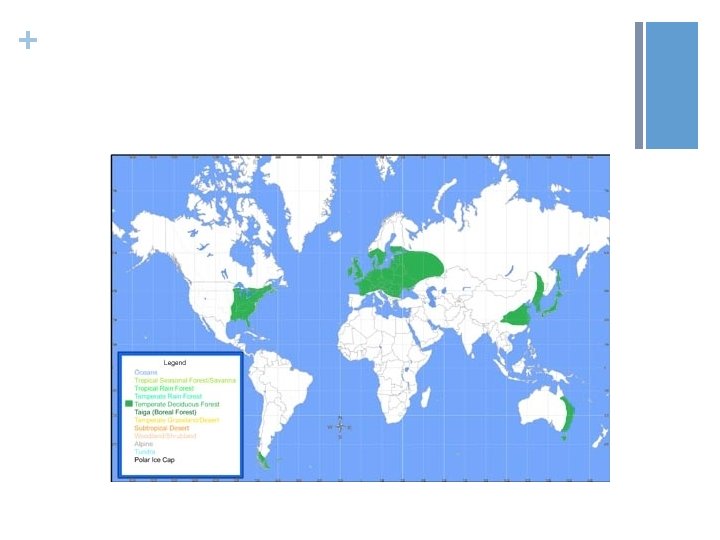
+ Temperate Deciduous Forests n Temperate deciduous forests: trees drop their leaves each fall n Located between 30 o to 50 o north latitudes n Seasons – temperatures range from below freezing to 35 o. C n Plants: grow in layers like the tropical rain forest – includes maples, oaks, birch, shrubs, ferns, mosses n Animas – bears, squirrels, deer, birds (migrate south)
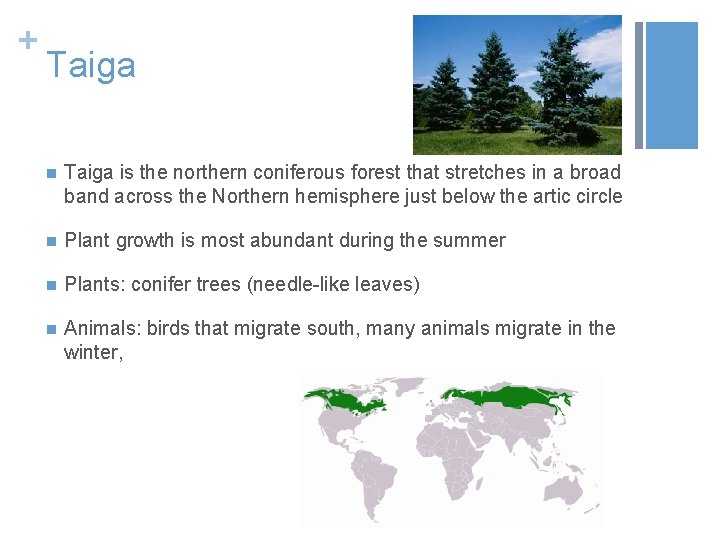
+ Taiga n Taiga is the northern coniferous forest that stretches in a broad band across the Northern hemisphere just below the artic circle n Plant growth is most abundant during the summer n Plants: conifer trees (needle-like leaves) n Animals: birds that migrate south, many animals migrate in the winter,
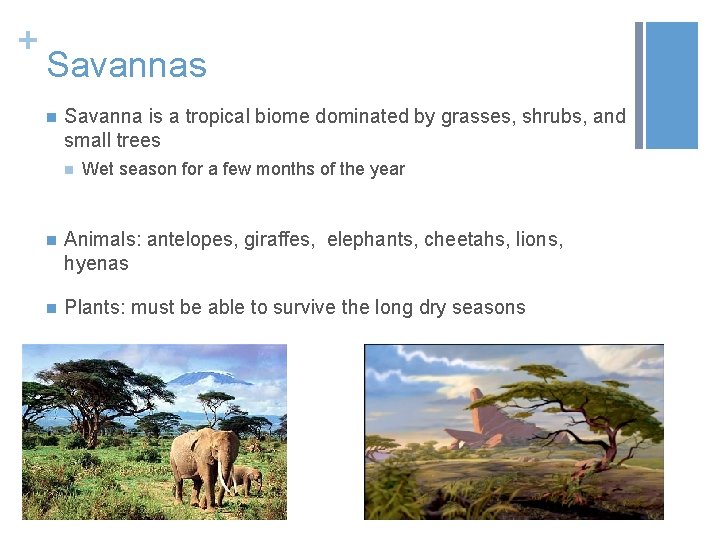
+ Savannas n Savanna is a tropical biome dominated by grasses, shrubs, and small trees n Wet season for a few months of the year n Animals: antelopes, giraffes, elephants, cheetahs, lions, hyenas n Plants: must be able to survive the long dry seasons
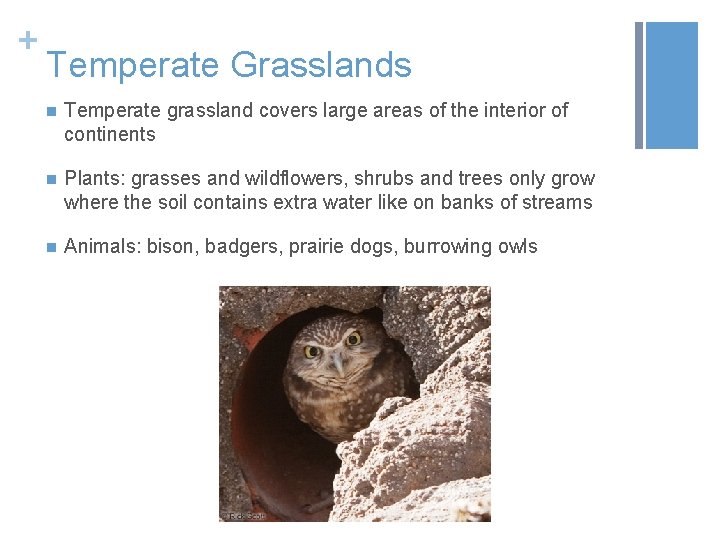
+ Temperate Grasslands n Temperate grassland covers large areas of the interior of continents n Plants: grasses and wildflowers, shrubs and trees only grow where the soil contains extra water like on banks of streams n Animals: bison, badgers, prairie dogs, burrowing owls
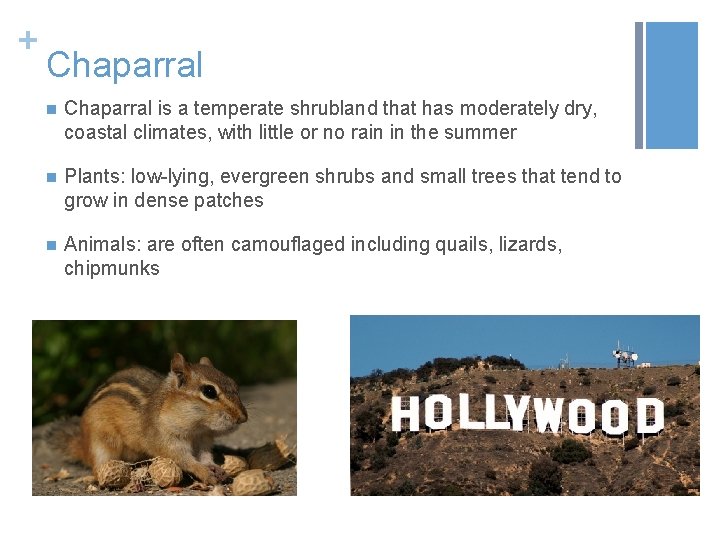
+ Chaparral n Chaparral is a temperate shrubland that has moderately dry, coastal climates, with little or no rain in the summer n Plants: low-lying, evergreen shrubs and small trees that tend to grow in dense patches n Animals: are often camouflaged including quails, lizards, chipmunks
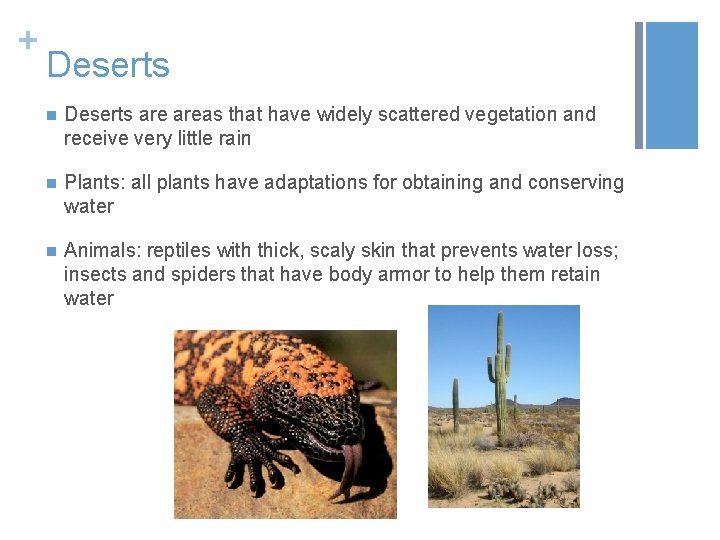
+ Deserts n Deserts areas that have widely scattered vegetation and receive very little rain n Plants: all plants have adaptations for obtaining and conserving water n Animals: reptiles with thick, scaly skin that prevents water loss; insects and spiders that have body armor to help them retain water
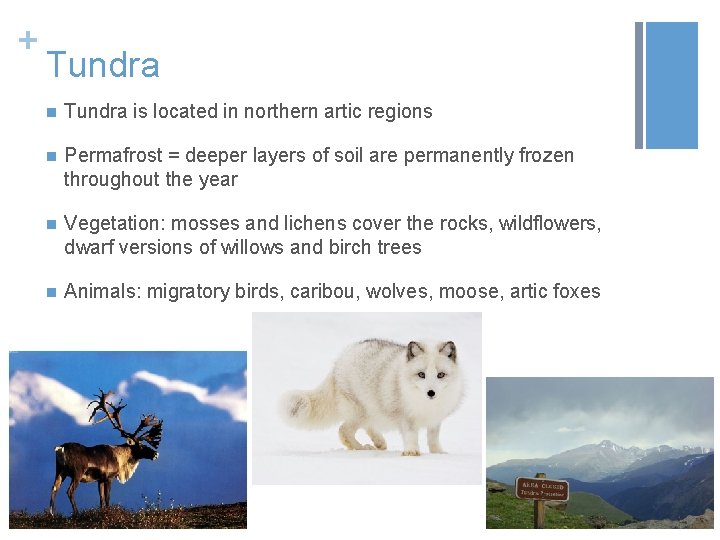
+ Tundra n Tundra is located in northern artic regions n Permafrost = deeper layers of soil are permanently frozen throughout the year n Vegetation: mosses and lichens cover the rocks, wildflowers, dwarf versions of willows and birch trees n Animals: migratory birds, caribou, wolves, moose, artic foxes
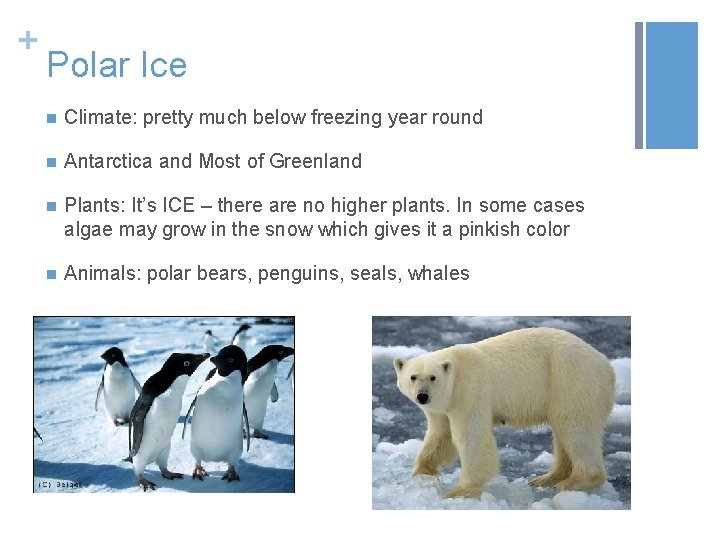
+ Polar Ice n Climate: pretty much below freezing year round n Antarctica and Most of Greenland n Plants: It’s ICE – there are no higher plants. In some cases algae may grow in the snow which gives it a pinkish color n Animals: polar bears, penguins, seals, whales
- Slides: 15