
Terminology of Health Education and Health Promotion Professor

- Slides: 63
Terminology of Health Education and Health Promotion Professor Jin-Ding Lin, Ph. D. School of Public Health National Defense Medical Center 1
Section I: List of Basic Terms Sources: Health Promotion Glossary, World Health Organization Geneva, 1998 2
Health is defined in the WHO constitution of 1948 as: A state of complete physical, social and mental well-being, and not merely the absence of disease or infirmity. Within the context of health promotion, health has been considered less as an abstract state and more as a means to an end which can be expressed in functional terms as a resource which permits people to lead an individually, socially and economically productive life. Health is a resource for everyday life, not the object of living. It is a positive concept emphasizing social and personal resources as well as physical capabilities. Reference: Ottawa Charter for Health Promotion. WHO, Geneva, 1986 3
Health promotion is the process of enabling people to increase control over, and to improve their health. Ottawa Charter for Health Promotion. WHO, Geneva, 1986 4
Health for All The attainment by all the people of the world of a level of health that will permit them to lead a socially and economically productive life. Glossary of Terms used in Health for All series. WHO, Geneva, 1984 5
Public health The science and art of promoting health, preventing disease, and prolonging life through the organized efforts of society. Adapted from the “Acheson Report”, London, 1988 New public health Ecological public health 6
Primary health care is essential health care made accessible at a cost a country and community can afford, with methods that are practical, scientifically sound and socially acceptable. Alma Ata Declaration, WHO, Geneva, 1978 7
Disease prevention covers measures not only to prevent the occurrence of disease, such as risk factor reduction, but also to arrest its progress and reduce its consequences once established. Adapted from Glossary of Terms used in Health for All series. WHO, Geneva, 1984 8
Health education comprises consciously constructed opportunities for learning involving some form of communication designed to improve health literacy, including improving knowledge, and developing life skills which are conducive to individual and community 9
Section II: Extended List of Terms 10
Advocacy for health A combination of individual and social actions designed to gain political commitment, policy support, social acceptance and systems support for a particular health goal or programme. Reference: Report of the Inter-Agency Meeting on Advocacy Strategies for Health and Development: Development Communication in Action. WHO, Geneva, 1995 11
Alliance An alliance for health promotion is a partnership between two or more parties that pursue a set of agreed upon goals in health promotion. 12
Community A specific group of people, often living in a defined geographical area, who share a common culture, values and norms, are arranged in a social structure according to relationships which the community has developed over a period of time. Members of a community gain their personal and social identity by sharing common beliefs, values and norms which have been developed by the community in the past and may be modified in the future. They exhibit some awareness of their identity as a group, and share common needs and a commitment to meeting them. 13
Community action for health refers to collective efforts by communities which are directed towards increasing community control over the determinants of health, and thereby improving health. 14
Determinants of health The range of personal, social, economic and environmental factors which determine the health status of individuals or populations. 15
Empowerment for health In health promotion, empowerment is a process through which people gain greater control over decisions and actions affecting their health. 16
Enabling In health promotion, enabling means taking action in partnership with individuals or groups to empower them, through the mobilization of human and material resources, to promote and protect their health. 17
Epidemiology is the study of the distribution and determinants of healthstates or events in specified populations, and the application of this study to the control of health problems. Reference: Last, JM. Dictionary of Epidemiology. UK, 1988 18
Social epidemiology is the study of health and illness in populations which is informed by a social, psychological, economic and public policy information, and uses that information in the definition of public health problems and proposal of solutions. 19
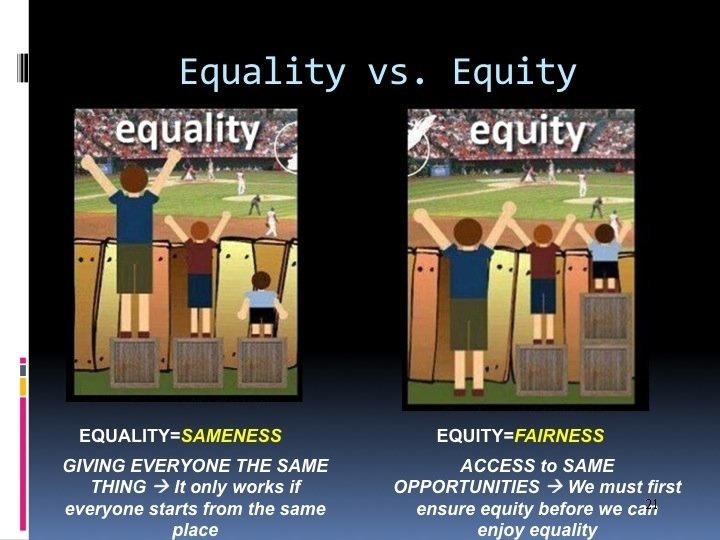
Equity in health Equity means fairness. Equity in health means that people’s needs guide the distribution of opportunities for wellbeing. Reference: Equity in health and health care. WHO, Geneva, 1996 20
21
Health behavior Any activity undertaken by an individual, regardless of actual or perceived health status, for the purpose of promoting, protecting or maintaining health, whether or not such behavior is objectively effective towards that end. Reference: Health Promotion Glossary, 1986 22
Health communication is a key strategy to inform the public about health concerns and to maintain important health issues on the public agenda. The use of the mass and multi media and other technological innovations to disseminate useful health information to the public, increases awareness of specific aspects of individual and collective health as well as importance of health in development. Reference: adapted from Communication, Education and Participation: A Framework and Guide to Action. WHO (AMRO/PAHO), Washington, 23 1996
Health development is the process of continuous, progressive improvement of the health status of individuals and groups in a population. Reference: Terminology Information System. WHO, Geneva, 1997 24
Health expectancy is a population based measure of the proportion of expected life span estimated to be healthful and fulfilling, or free of illness, disease and disability according to social norms and perceptions and professional standards. 25
Health gain is a way to express improved health outcomes. It can be used to reflect the relative advantage of one form of health intervention over another in producing the greatest health gain. 26
Health goals summarize the health outcomes which, in the light of existing knowledge and resources, a country or community might hope to achieve in a defined time period. 27
Health indicator A health indicator is a characteristic of an individual, population, or environment which is subject to measurement (directly or indirectly) and can be used to describe one or more aspects of the health of an individual or population (quality, quantity and time). 28
Health literacy represents the cognitive and social skills which determine the motivation and ability of individuals to gain access to, understand use information in ways which promote and maintain good health. 29
Health outcomes A change in the health status of an individual, group or population which is attributable to a planned intervention or series of interventions, regardless of whether such an intervention was intended to change health status. 30
Health policy A formal statement or procedure within institutions (notably government) which defines priorities and the parameters for action in response to health needs, available resources and other political pressures. 31
Health promoting hospitals A health promoting hospital does not only provide high quality comprehensive medical and nursing services, but also develops a corporate identity that embraces the aims of health promotion, develops a health promoting organizational structure and culture, including active, participatory roles for patients and all members of staff, develops itself into a health promoting physical environment and actively cooperates with its community. Reference: based on Budapest Declaration on Health Promoting Hospitals. WHO, (EURO), Copenhagen, 1991 32
Health promoting schools A health promoting school can be characterized as a school constantly strengthening its capacity as a healthy setting for living, learning and working. Reference: Promoting health through schools. Report of a WHO Expert Committee on Comprehensive School Health Education and Promotion. WHO Technical Report Series N° 870. WHO, Geneva, 1997 33
Health promotion evaluation is an assessment of the extent to which health promotion actions achieve a “valued” outcome. 34
Health promotion outcomes are changes to personal characteristics and skills, and/or social norms and actions, and/or organizational practices and public policies which are attributable to a health promotion activity. 35
Health sector The health sector consists of organized public and private health services (including health promotion, disease prevention, diagnostic, treatment and care services), the policies and activities of health departments and ministries, health related non-government organizations and community groups, and professional associations. Reference: adapted from Glossary of Terms used in Health for All series N° 9. WHO, Geneva, 1984 36
Health status A description and/or measurement of the health of an individual or population at a particular point in time against identifiable standards, usually by reference to health indicators. Reference: adapted from Glossary of Terms used in Health for All series N° 9. WHO, Geneva, 1984 37
Health targets state, for a given population, the amount of change (using a health indicator) which could be reasonably expected within a defined time period. Targets are generally based on specific and measurable changes in health outcomes, or intermediate health outcomes. 38
Healthy cities A healthy city is one that is continually creating and improving those physical and social environments and expanding those community resources which enable people to mutually support each other in performing all the functions of life and in developing to their maximum potential. Reference: Terminology for the European Conference on Health, Society and Alcohol: A glossary with equivalents in French, German and Russian. WHO (EURO), Copenhagen, 1995 39
Healthy islands A healthy island is one that is committed to and involved in a process of achieving better health and quality of life for its people, and healthier physical and social environments in the context of sustainable development. Reference: adapted from Yanuca Island Declaration. WHO (WPRO), Manila, 1995 40
Healthy public policy is characterized by an explicit concern for health and equity in all areas of policy, and by an accountability for health impact. The main aim of healthy public policy is to create a supportive environment to enable people to lead healthy lives. Such a policy makes healthy choices possible or easier for citizens. It makes social and physical environments health enhancing. Reference: Adelaide Recommendations on Healthy Public Policy. WHO, Geneva, 1988 41
Infrastructure for health promotion Those human and material resources, organizational and administrative structures, policies, regulations and incentives which facilitate an organized health promotion response to public health issues and challenges. 42
Intermediate health outcomes are changes in the determinants of health, notably changes in lifestyles, and living conditions which are attributable to a planned intervention or interventions, including health promotion, disease prevention and primary health care. 43
Intersectoral collaboration A recognized relationship between part or parts of different sectors of society which has been formed to take action on an issue to achieve health outcomes or intermediate health outcomes in a way which is more effective, efficient or sustainable than might be achieved by the health sector acting alone. Reference: modified from Intersectoral Action for Health: A Cornerstone for Health for All in the 21 st Century. WHO, Geneva, 1997 44
Investment for health refers to resources which are explicitly dedicated to the production of health and health gain. They may be invested by public and private agencies as well as by people as individuals and groups. Investment for health strategies are based on knowledge about the determinants of health and seek to gain political commitment to healthy public policies. 45
Life skills are abilities for adaptive and positive behavior, that enable individuals to deal effectively with the demands and challenges of everyday life. Reference: Life skills education in schools. WHO, Geneva, 1993 46
Lifestyle (lifestyles conducive to health) Lifestyle is a way of living based on identifiable patterns of behavior which are determined by the interplay between an individual’s personal characteristics, social interactions, and socioeconomic and environmental living conditions. 47
Living conditions are the everyday environment of people, where they live, play and work. These living conditions are a product of social and economic circumstances and the physical environment – all of which can impact upon health – and are largely outside of the immediate control of the individual. 48
Mediation In health promotion, a process through which the different interests (personal, social, economic) of individuals and communities, and different sectors (public and private) are reconciled in ways that promote and protect health. 49
Network A grouping of individuals, organizations and agencies organized on a non hierarchical basis around common issues or concerns, which are pursued proactively and systematically, based on commitment and trust. 50
Partnership for health promotion A partnership for health promotion is a voluntary agreement between two or more partners to work cooperatively towards a set of shared health outcomes. 51
Quality of life is defined as individual’s perceptions of their position in life in the context of the culture and value system where they live, and in relation to their goals, expectations, standards and concerns. It is a broad ranging concept, incorporating in a complex way a person’s physical health, psychological state, level of independence, social relationships, personal beliefs and relationship to salient features of the environment. Reference: Quality of Life Assessment. The WHOQOL Group, 1994. What Quality of Life? The WHOQOL Group. In: World Health Forum. WHO, Geneva, 1996. 52
Re-orienting health services Health services re-orientation is characterized by a more explicit concern for the achievement of population health outcomes in the ways in which the health system is organized and funded. This must lead to a change of attitude and organization of health services, which focuses on the needs of the individual as a whole person, balanced against the needs of population groups. Reference: adapted from Ottawa Charter for Health Promotion. WHO, Geneva, 1986 53
Risk behavior Specific forms of behavior which are proven to be associated with increased susceptibility to a specific disease or illhealth. 54
Risk factor Social, economic or biological status, behaviors or environments which are associated with or cause increased susceptibility to a specific disease, ill health, or injury. 55
Self help In the context of health promotion, actions taken by lay persons (i. e. non health professionals) to mobilize the necessary resources to promote, maintain or restore the health of individuals or communities. 56
Settings for health The place or social context in which people engage in daily activities in which environmental, organizational and personal factors interact to affect health and well-being. 57
Social capital represents the degree of social cohesion which exists in communities. It refers to the processes between people which establish networks, norms, and social trust, and facilitate co-ordination and co-operation for mutual benefit. 58
Social networks Social relations and links between individuals which may provide access to or mobilization of social support for health. 59
Social responsibility for health is reflected by the actions of decision makers in both public and private sector to pursue policies and practices which promote and protect health. Reference: The Jakarta Declaration on Leading Health Promotion into the 21 st Century. WHO, Geneva, 1997 60
Social support That assistance available to individuals and groups from within communities which can provide a buffer against adverse life events and living conditions, and can provide a positive resource for enhancing the quality of life. 61
Supportive environments for health offer people protection from threats to health, and enable people to expand their capabilities and develop self reliance in health. They encompass where people live, their local community, their home, where they work and play, including people’s access to resources for health, and opportunities for empowerment. Reference: adapted from Sundsvall Statement on Supportive Environments for Health. WHO, Geneva, 1991 62
Sustainable development is defined as development that meets the needs of the present without compromising the ability of future generations to meet their own needs (WCED 1987). It incorporates many elements, and all sectors, including the health sector, which must contribute to achieve it. Reference: Our common future: Report of the World Commission on Environment and Development (WCED), 1987. Health and Environment in Sustainable Development. Five years after the Earth Summit. WHO, Geneva, 1997 63