
Tenth lecture Principles of radiation protection IExternal radiation

- Slides: 8
Tenth lecture
Principles of radiation protection I-External radiation hazard: when dealing with a source of radiation outside the body. II-Internal radiation hazard: is the source of radiation deposited within the body.
I-Protection from external Radiation hazards is provided by employing one or more of the following three principles: (1)-Time (2)-Distance (3)-Shielding
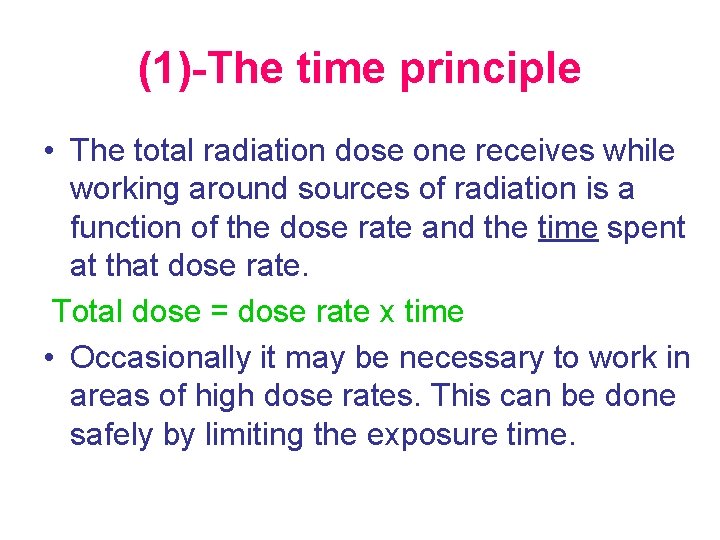
(1)-The time principle • The total radiation dose one receives while working around sources of radiation is a function of the dose rate and the time spent at that dose rate. Total dose = dose rate x time • Occasionally it may be necessary to work in areas of high dose rates. This can be done safely by limiting the exposure time.
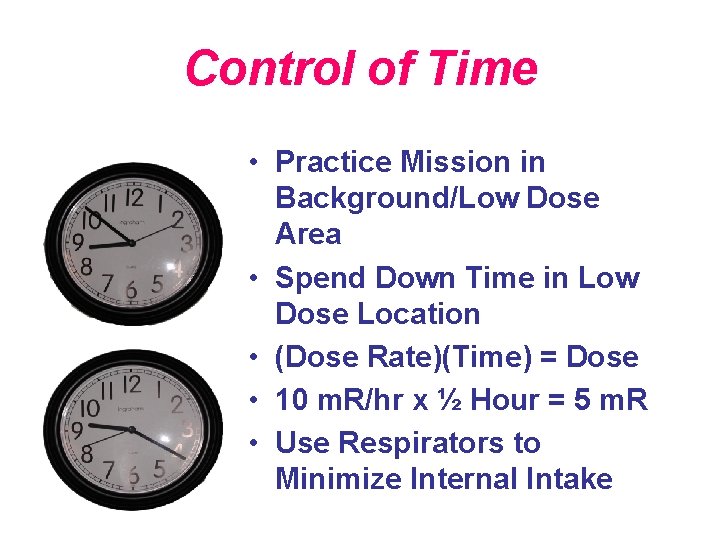
Control of Time • Practice Mission in Background/Low Dose Area • Spend Down Time in Low Dose Location • (Dose Rate)(Time) = Dose • 10 m. R/hr x ½ Hour = 5 m. R • Use Respirators to Minimize Internal Intake
(2)-The distance principle • Distance is very effective at reducing the dose rate due to a radiation source external to the body. • Control of Distance • Remote operation – manipulating devices, remote handling tools • Moving away from Sources – remain near a source only when necessary – treat medical needs of patient/victim first • Secure and Remove Other Radiation Sources – waste containers at Hot Zone/Cold Zone
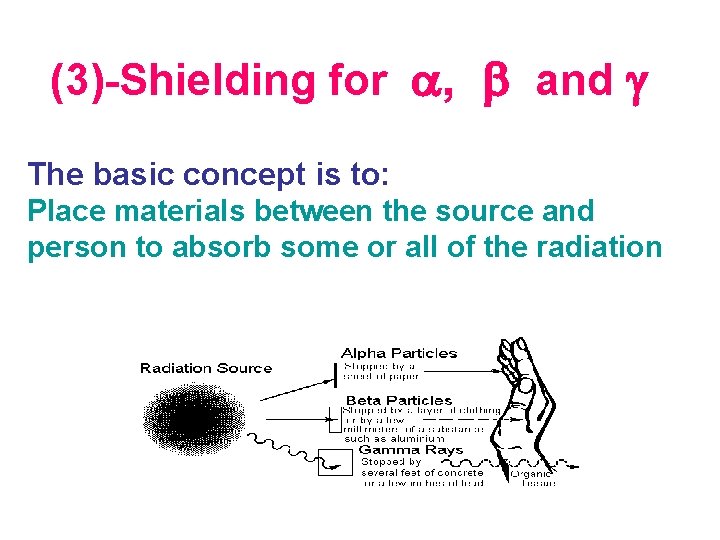
(3)-Shielding for , and The basic concept is to: Place materials between the source and person to absorb some or all of the radiation
(3)-Shielding for , and · radiation: no shield required for external exposures; clothing, dead skin layer stops ’s, · radiation: ranges of meters in air; some can penetrate dead skin layer; thin plexiglass shields adequate, bunker gear effective for low energy · x and radiation: highly penetrating, best shields are dense materials (lead), vehicles can be used as shields