
TENSES review This learning is addressed to the
- Slides: 15
TENSES review This learning is addressed to the third year of Senior High School students. By SUNARTO SMA Negeri 1 Slawi
purpose After having this tenses review learning, we don’t have to memorize all the names and structures of tenses.
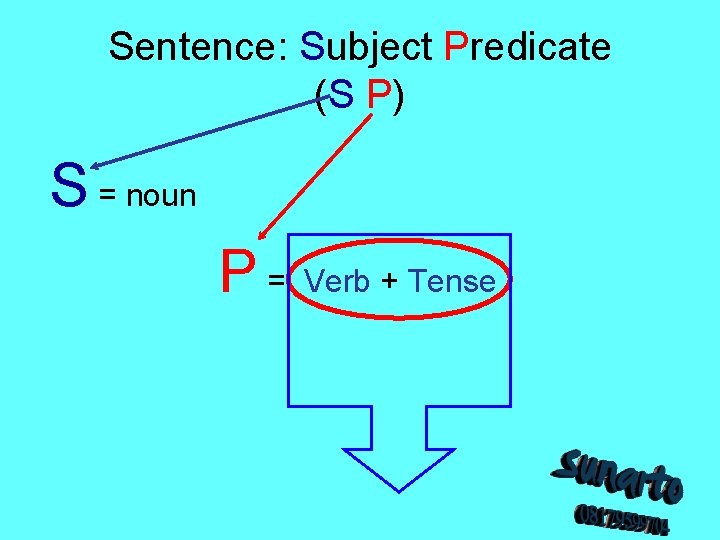
Sentence: Subject Predicate (S P) S = noun P = Verb + Tense
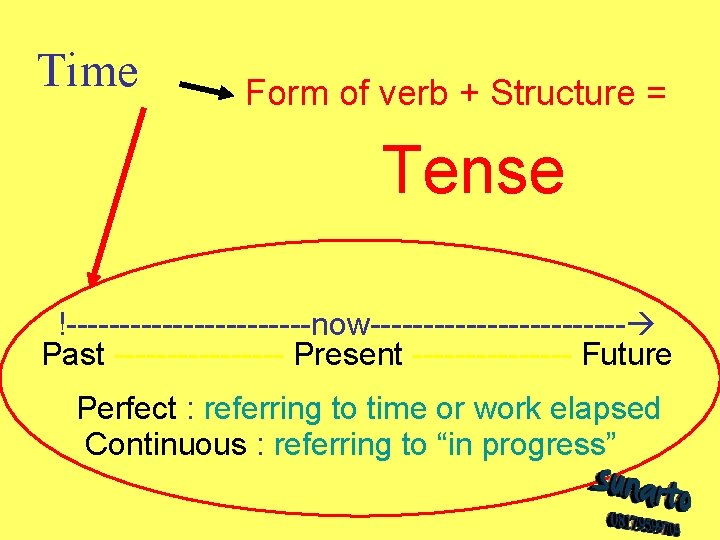
Time Form of verb + Structure = Tense !------------now------------ Past -------- Present -------- Future Perfect : referring to time or work elapsed Continuous : referring to “in progress”
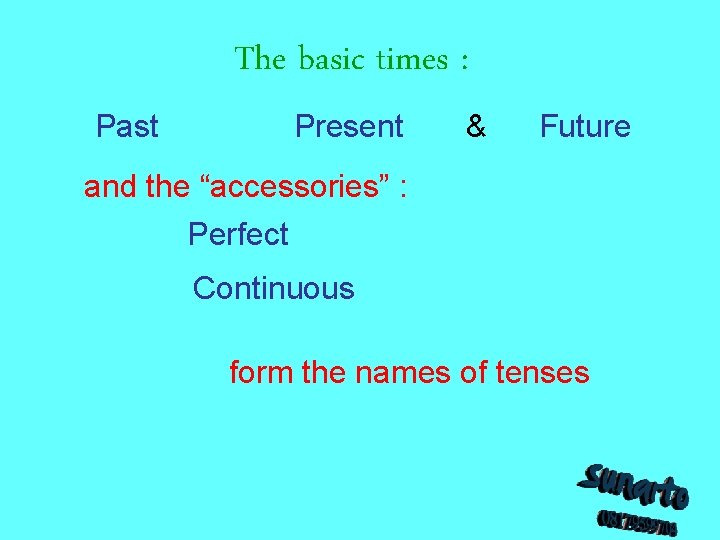
The basic times : Past ------ Present -----&---- Future and the “accessories” : Perfect Continuous form the names of tenses
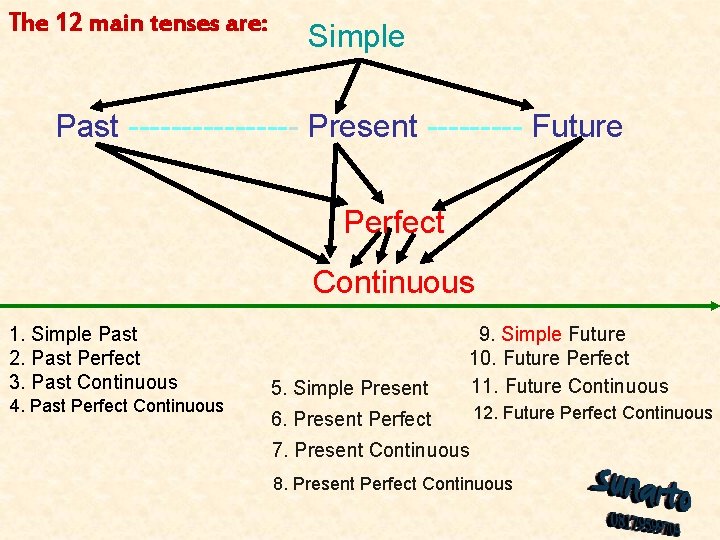
The 12 main tenses are: Simple Past -------- Present ----- Future Perfect Continuous 1. Simple Past 2. Past Perfect 3. Past Continuous 4. Past Perfect Continuous 5. Simple Present 9. Simple Future 10. Future Perfect 11. Future Continuous 6. Present Perfect 12. Future Perfect Continuous 7. Present Continuous 8. Present Perfect Continuous
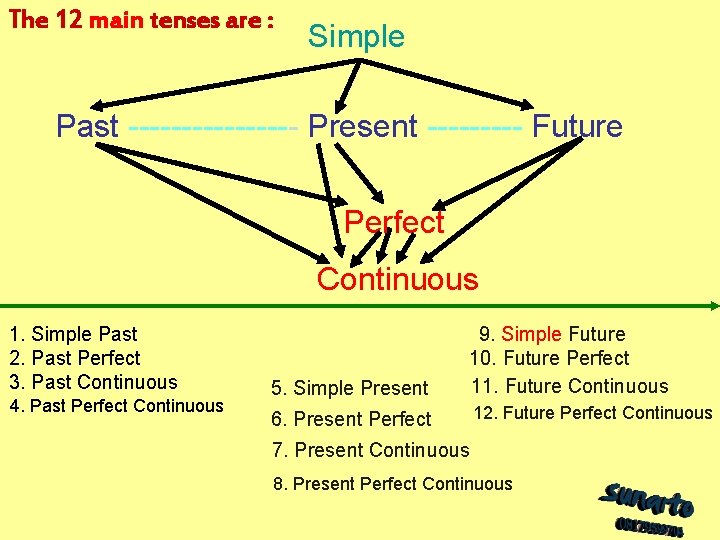
The 12 main tenses are : Simple Past -------- Present ----- Future Perfect Continuous 1. Simple Past 2. Past Perfect 3. Past Continuous 4. Past Perfect Continuous 5. Simple Present 9. Simple Future 10. Future Perfect 11. Future Continuous 6. Present Perfect 12. Future Perfect Continuous 7. Present Continuous 8. Present Perfect Continuous
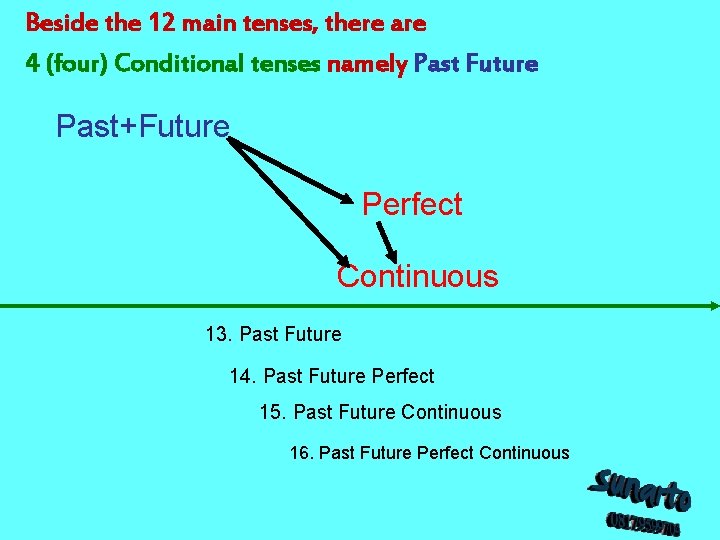
Beside the 12 main tenses, there are 4 (four) Conditional tenses namely Past Future Past+Future Perfect Continuous 13. Past Future 14. Past Future Perfect 15. Past Future Continuous 16. Past Future Perfect Continuous
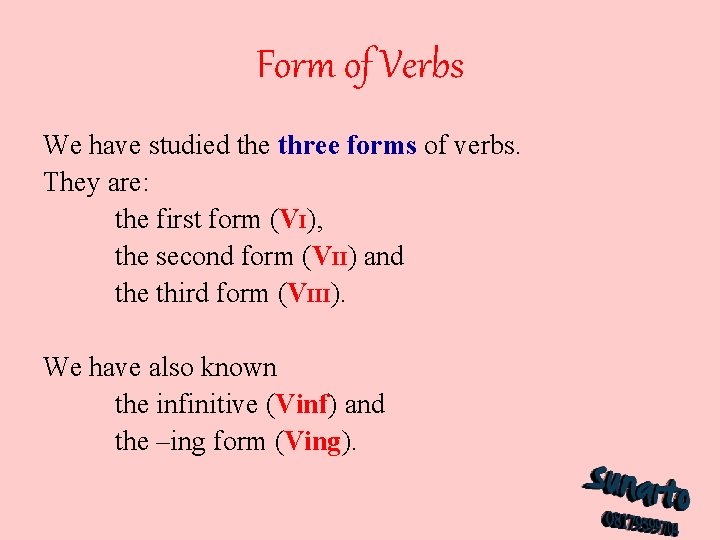
Form of Verbs We have studied the three forms of verbs. They are: the first form (VI), the second form (VII) and the third form (VIII). We have also known the infinitive (Vinf) and the –ing form (Ving).
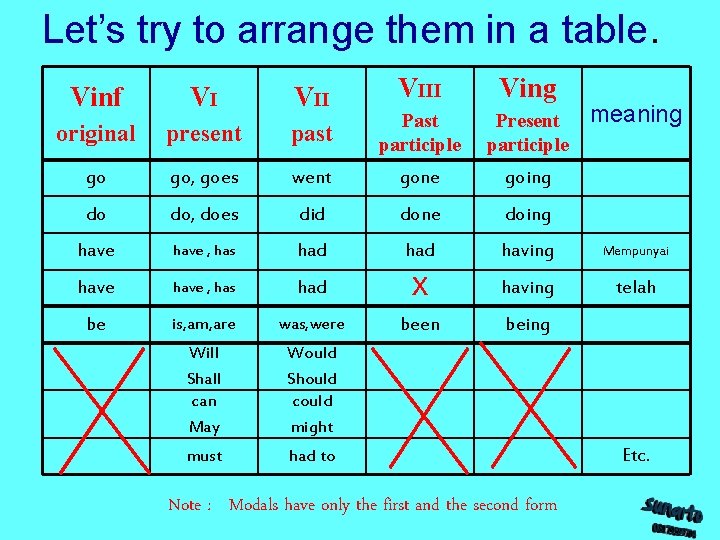
Let’s try to arrange them in a table. VIII Ving past Past participle Present participle go, goes went gone going do do, does did done doing have , has had having Mempunyai have , has had X having telah be is, am, are was, were been being Will Shall can May Would Should could might must had to Vinf VI VII original present go Note : Modals have only the first and the second form meaning Etc.
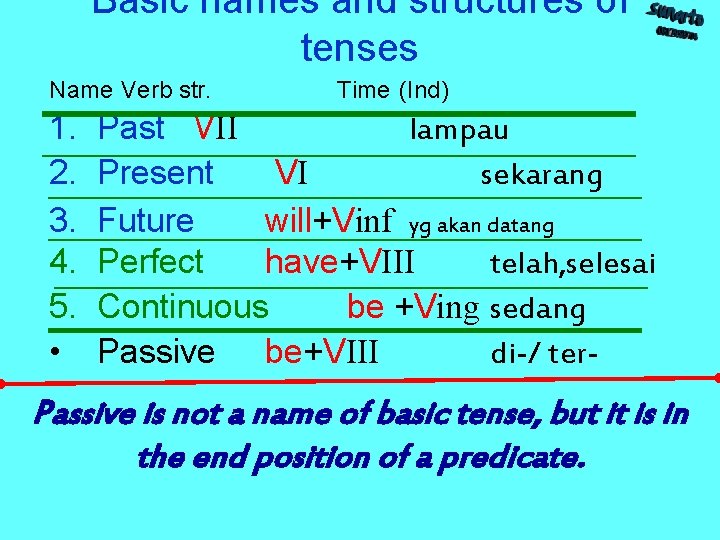
Basic names and structures of tenses Name Verb str. 1. 2. 3. 4. 5. • Time (Ind) Past VII lampau Present VI sekarang Future will+Vinf yg akan datang Perfect have+VIII telah, selesai Continuous be +Ving sedang Passive be+VIII di-/ ter- Passive is not a name of basic tense, but it is in the end position of a predicate.
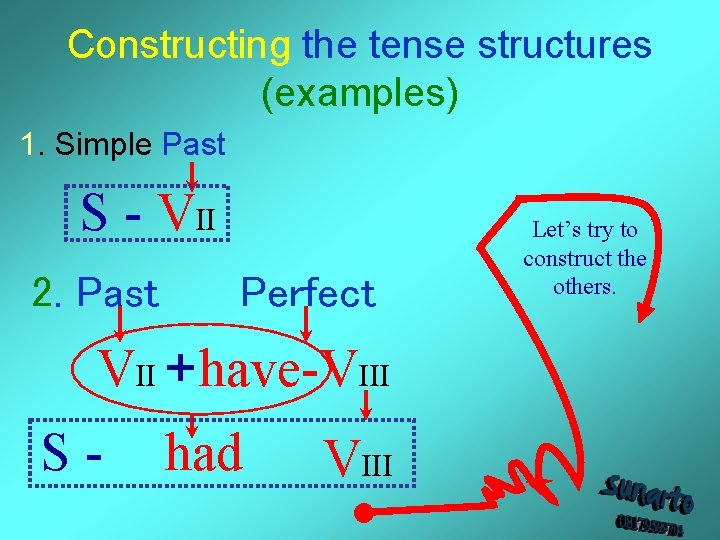
Constructing the tense structures (examples) 1. Simple Past S - VII 2. Past Perfect VII +have-VIII S- had VIII Let’s try to construct the others.
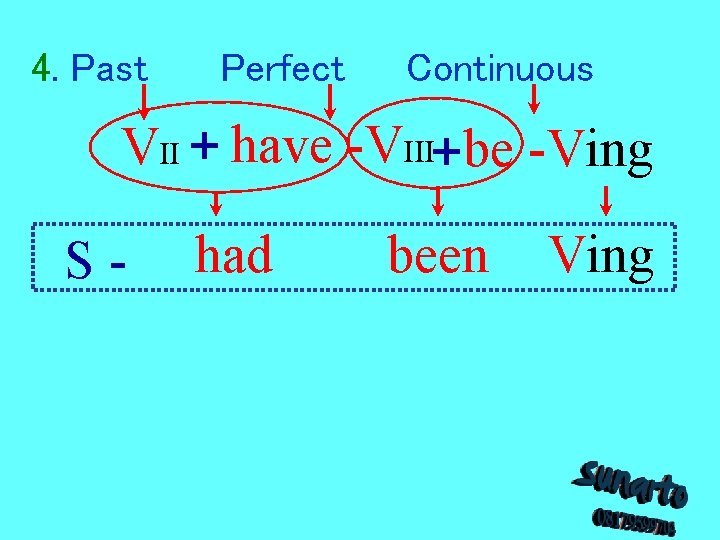
4. Past Perfect Continuous VII + have -VIII+be -Ving S- had been Ving
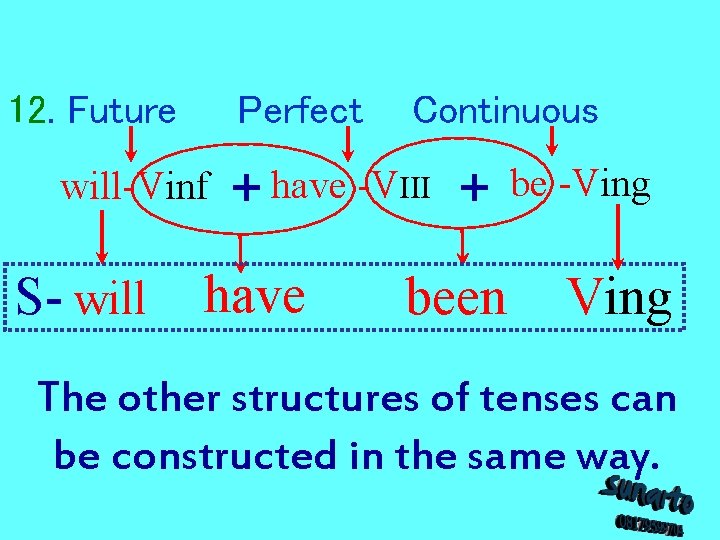
12. Future Perfect will-Vinf S- will Continuous + have -VIII + have been be -Ving The other structures of tenses can be constructed in the same way.
The next steps • Using the time deciding the tense. • Analyzing sentences. will be presented in the next learning Wassalam. Sunarto sunarto_mandong@yahoo. co. id, sun_man@yahoo. com, sunartomandong@gmail. com 08179599704