
Tennessee FFA Poultry CDE Components of the CDE



- Slides: 32
Tennessee FFA Poultry CDE
Components of the CDE � Production Hens � Broiler Breeders � Interior Quality � Further Processed Meats Factors � Exterior Quality Factors � Parts ID � Carcass Class � RTC’s � Test � Team Activity
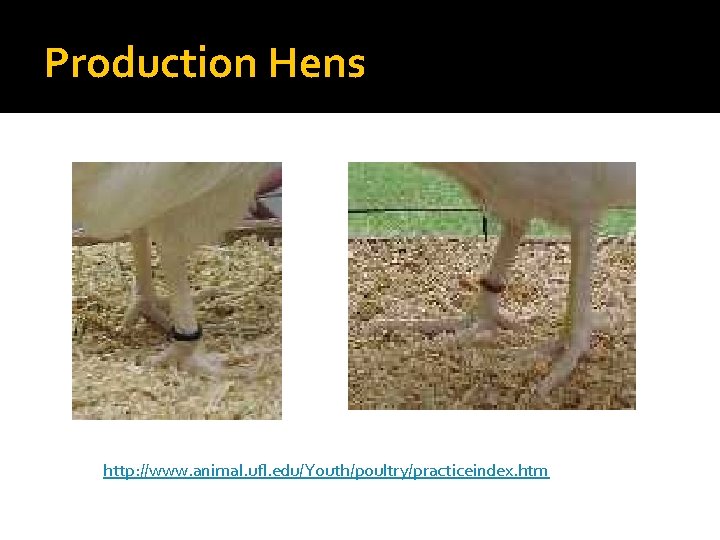
Production Hen Class �Primary focus is pigment loss and handling qualities �LOOK AT PIGMENT 95% of time �Abdomen should be soft, pliable �Pelvic bones should be 3 fingers wide by 4 fingers deep! �Hens can be removed from cage to be evaluated
Pigment Loss �Vent �Eye ring �Ear ring �Beak 1/3 �Beak 2/3 �Beak entire �Bottom of feet �Shanks �Hocks �Toes
Production Hens http: //www. animal. ufl. edu/Youth/poultry/practiceindex. htm
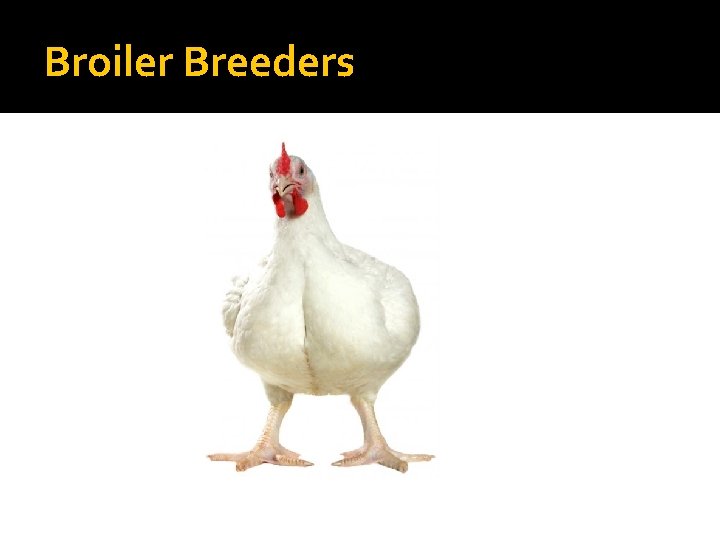
Broiler Breeders
Broiler Breeders – Cull/Keep � Keep 4…. . Cull 4!!! � Automatic Disqualifications Black feathers on wing, tail or saddle feathers—MALES ONLY. Crooked beak Crooked toes!! 90 degree turn or more!! Careful Green or black shanks Blind in one or both eyes Crooked Keel Bone Swollen Hocks Crippled
Broiler Breeders (continued) �SIZE DOES MATTER!!!!! the better!!! The bigger the bird, �Want LONG and WIDE Breast �Birds are handled in cages!!! �Top four birds will have a score of 50 when combined.
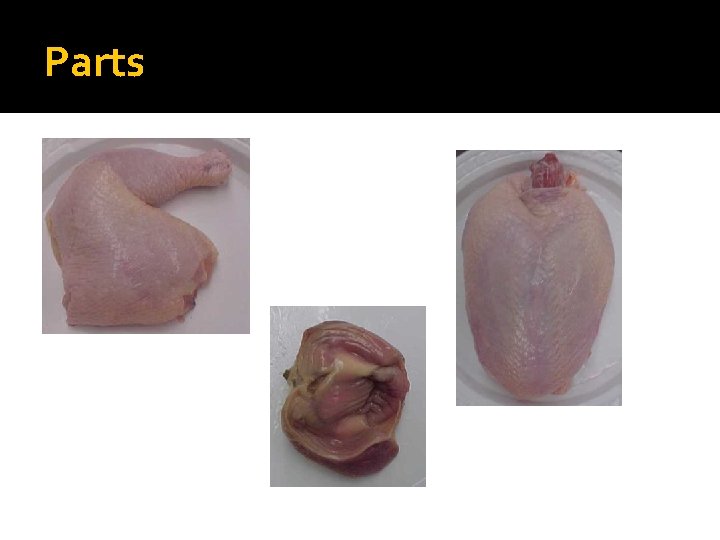
Parts ID �It takes about 7 carcasses to get each cut �Make cuts and then freeze and thaw �If cuts get ripe, dip them in a bleach and water solution and then refreeze! �Pictures are OK but real parts are better �Knowing bone structure helps with ID!
Parts
Parts
Parts ID Hyperlink to some parts on internet http: //www. animal. ufl. edu/Youth/poultry/show me/4 hpartsid. htm
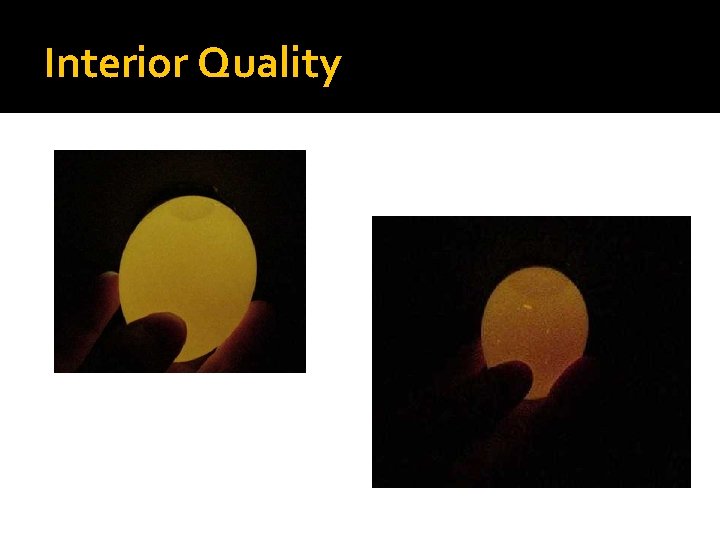
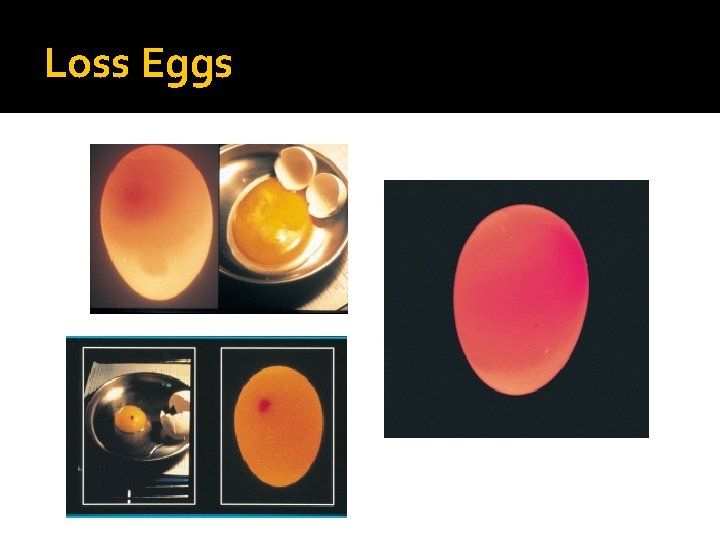
Interior Egg Quality �Quality of interior is based on air cell size �AA, A, B, Loss! AA – Dime A – Nickel B - Quarter �Yolk size and shape can also help detect quality �Losses will be blood spots and/or meat spots. Cracked eggs are too hard to monitor!
Interior Quality
Loss Eggs
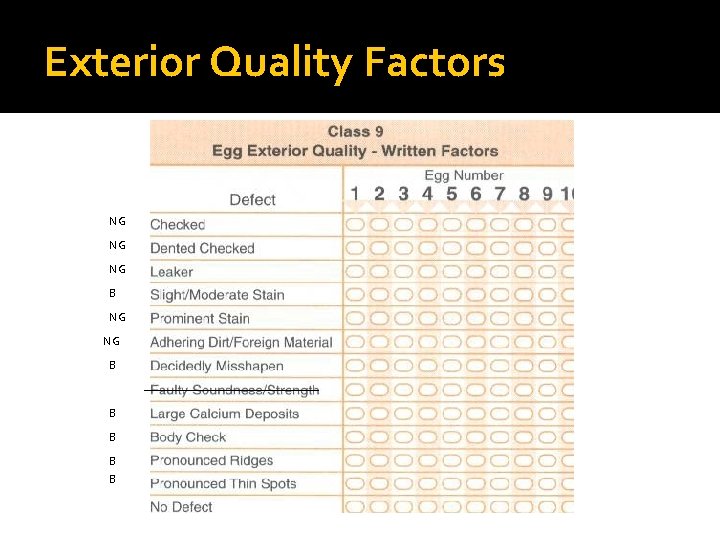
Exterior Quality Factors NG NG NG B B B
Exterior Quality GRADING �Exterior quality is based on shell quality �Stains 1/32 of shell or less – B Over 1/32 of shell – NG ▪ Stains cannot be washed off!!! Coffee is great to make stains if you have to! �Adhering Material Any foreign material that is attached to the shell ▪ Manure, Blood, Fly Spots, Dirt, Shells, Albumen, Yolk
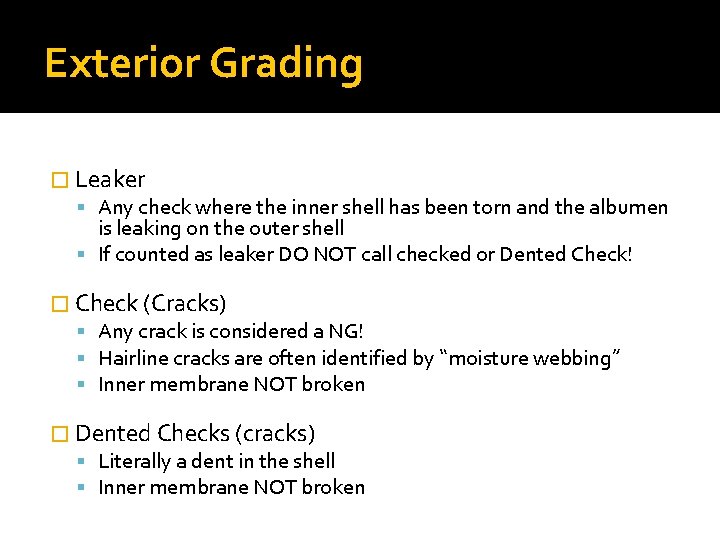
Exterior Grading � Leaker Any check where the inner shell has been torn and the albumen is leaking on the outer shell If counted as leaker DO NOT call checked or Dented Check! � Check (Cracks) Any crack is considered a NG! Hairline cracks are often identified by “moisture webbing” Inner membrane NOT broken � Dented Checks (cracks) Literally a dent in the shell Inner membrane NOT broken
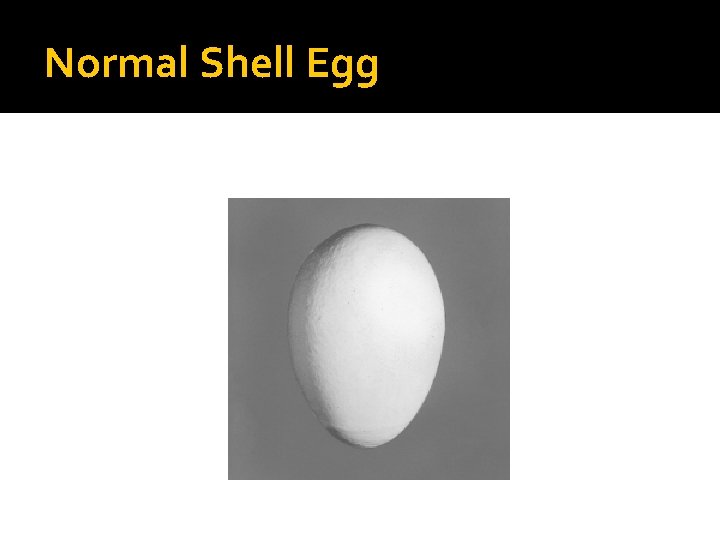
Normal Shell Egg
Abnormal Shape
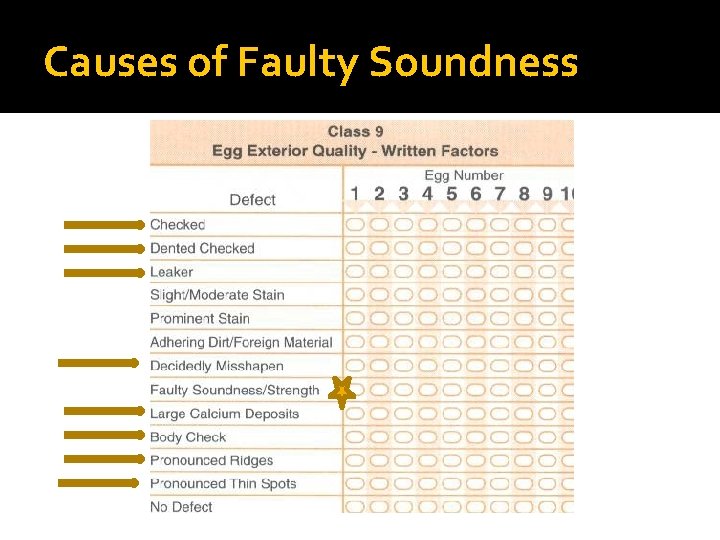
Causes of Faulty Soundness
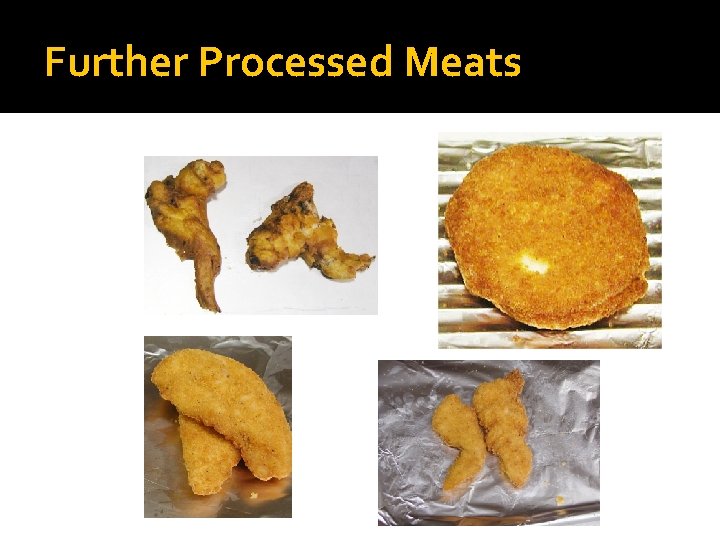
Further Processed Meats
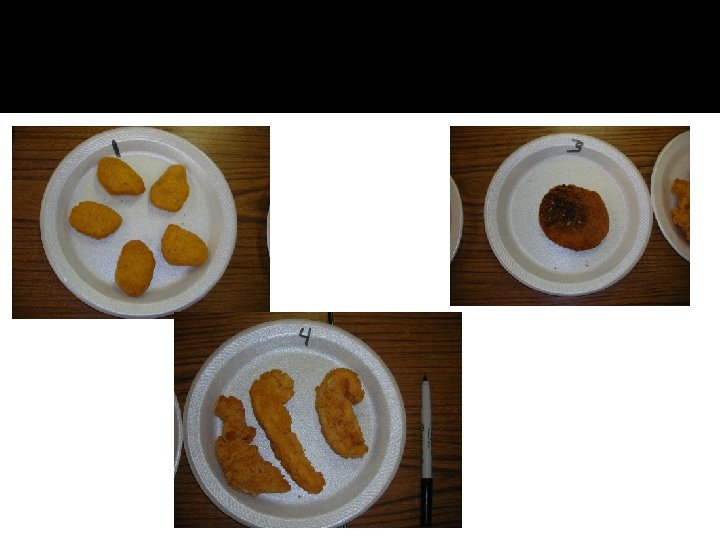
Further Processed Products �Broken Any product that is broken �Coating Voids Patties Tenders Wings Nuggets �Foreign Material – NG Shells, hair, bone fragment, staples/metal, etc
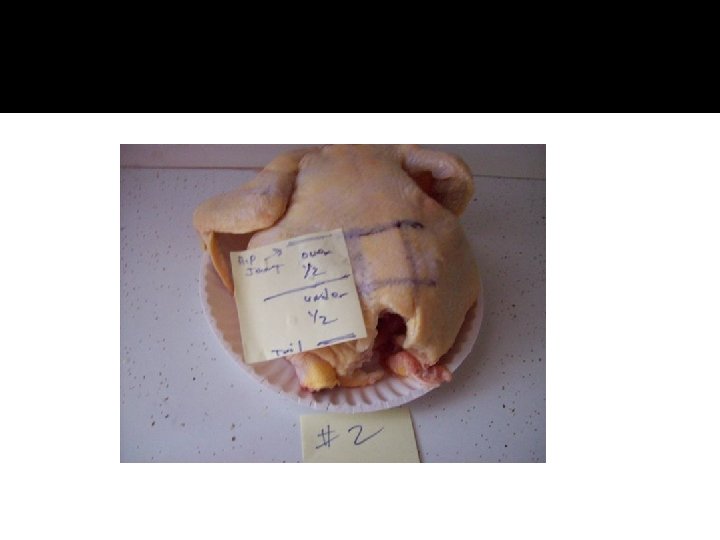
Ready to Cook Grading �Exposed Flesh ▪ A (Parts) ▪ A (Whole birds) ▪ up to ¼” on meaty parts (breast and legs) ▪ Up to 1. 5” on non-meaty parts ▪ B (Whole birds and parts) ▪ Up to 1/3 of each individual part of the bird ▪ C (Whole birds and parts) ▪ Unlimited. You can literally remove ALL skin!!! ▪ Exposed flesh WILL NOT MAKE A “NG”
Ready to Cook Grading GRADES A-B-C � Missing Parts A ▪ Wing tips and tail B ▪ Wing tips and Flat ▪ Square cut that goes ½ way to hips C ▪ Entire Wing ▪ Square that extends to but NOT beyond the hip bones NON GRADABLE NG ▪ Square cut of cut that extends past hip bones ▪ ANY MISSING FLESH on Breast, Back or Legs ▪ Watch for cut on keel bone tip ▪ Watch for cuts on V of neck! ▪ Watch for missing Oyster Muscle
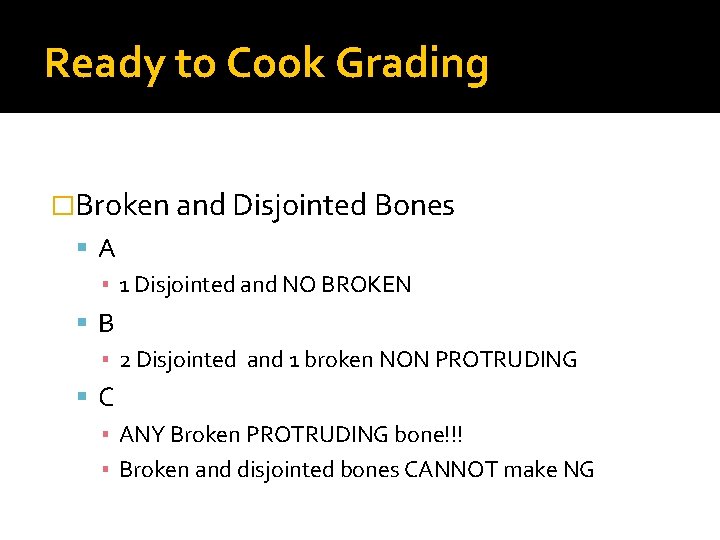
Ready to Cook Grading �Broken and Disjointed Bones A ▪ 1 Disjointed and NO BROKEN B ▪ 2 Disjointed and 1 broken NON PROTRUDING C ▪ ANY Broken PROTRUDING bone!!! ▪ Broken and disjointed bones CANNOT make NG
Carcass Placing. Class �Turkeys or Chickens Grade birds first and place by grades If graded the same, place by size!!!!! WIDE and SQUARE breasts are best SIZE, SIZE!!!!!
Test �ALL QUESTIONS will come from Poultry Manual available from National FFA! � 30 questions worth 5 points each! � 5 -6 “Math Problems” � 2 -3 vocabulary �Odd and Even years use different segments of the book
Team Problem �MATH, MATH!!! �DO NOT forget calculators