
TEN TENETS OF BEHAVIO R LAURA A RIFFEL
TEN TENETS OF BEHAVIO R LAURA A. RIFFEL, PH. D.
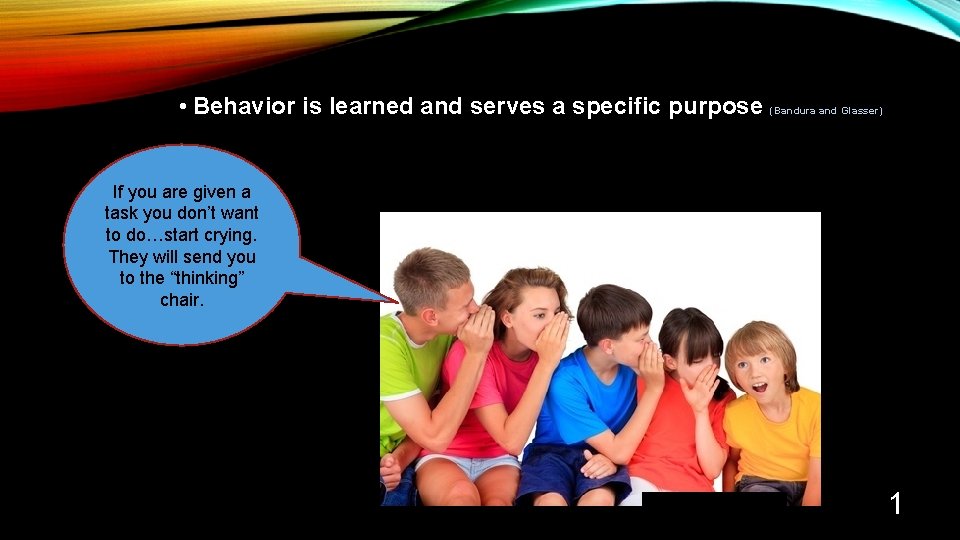
• Behavior is learned and serves a specific purpose (Bandura and Glasser) If you are given a task you don’t want to do…start crying. They will send you to the “thinking” chair. Handout pg 1 Page 7 1
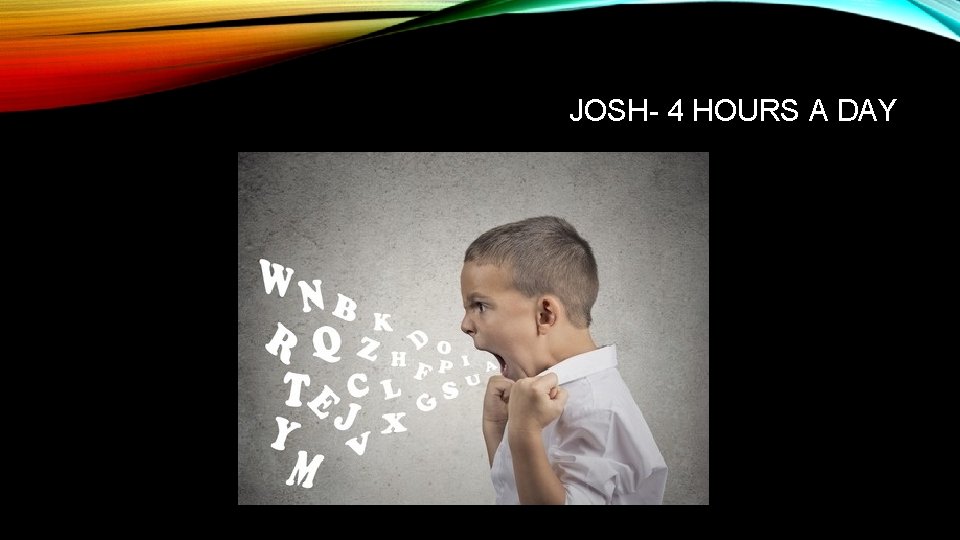
JOSH- 4 HOURS A DAY Behavior Doctor Seminars ™®© FY 17
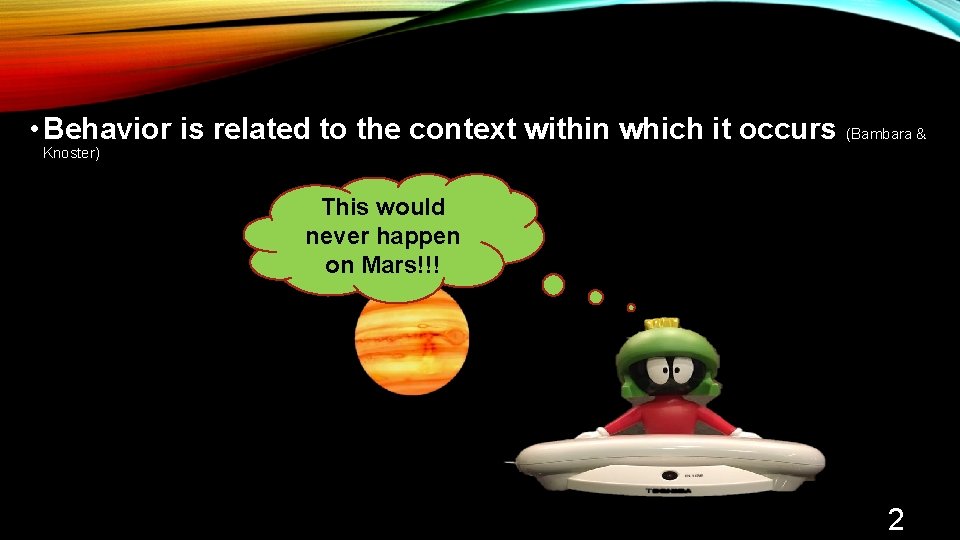
• Behavior is related to the context within which it occurs (Bambara & Knoster) This would never happen on Mars!!! Royalty free pic from clipartbest. com Handout pg 1 Page 7 2
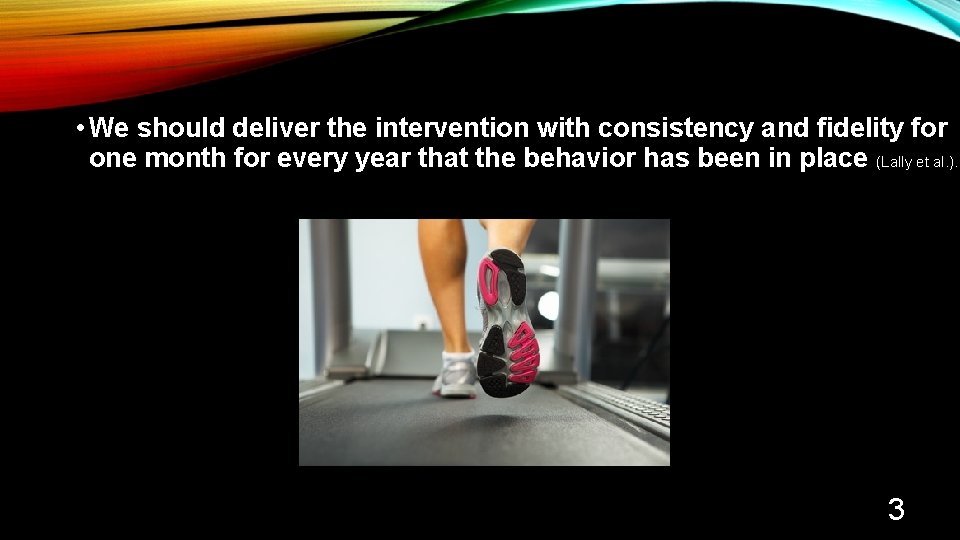
• We should deliver the intervention with consistency and fidelity for one month for every year that the behavior has been in place (Lally et al. ). Handout pg 1 Page 7 3
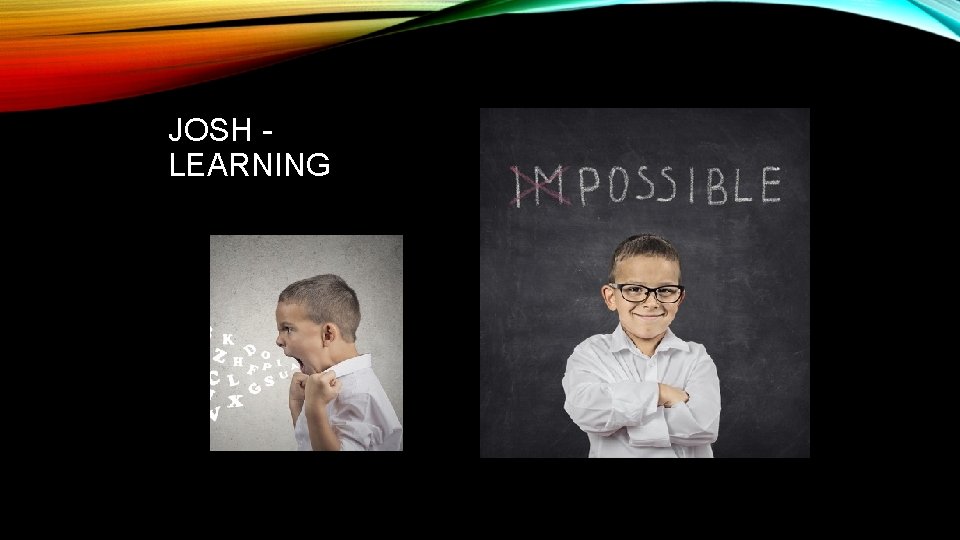
JOSH - LEARNING Behavior Doctor Seminars ™®© FY 17
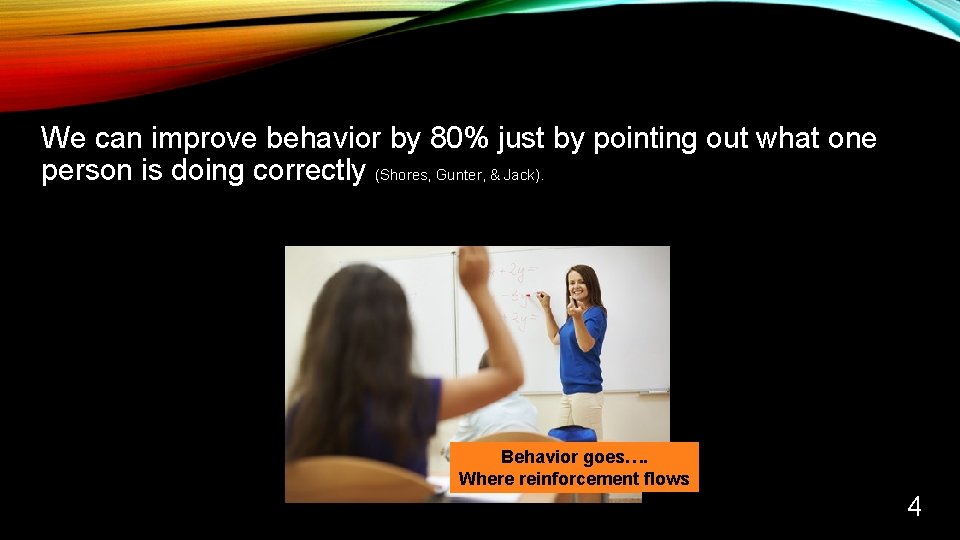
We can improve behavior by 80% just by pointing out what one person is doing correctly (Shores, Gunter, & Jack). Behavior goes…. Where reinforcement flows Handout pg 1 Page 7 4
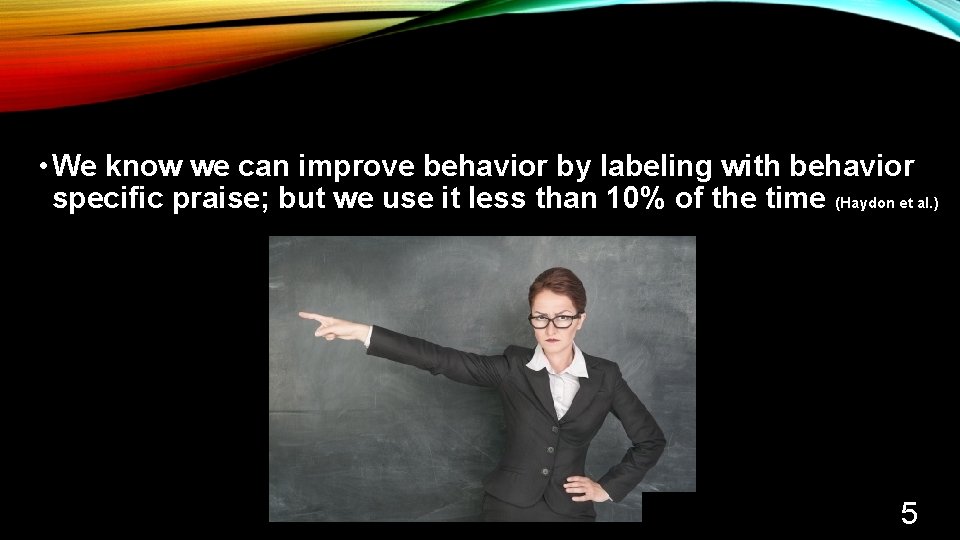
• We know we can improve behavior by labeling with behavior specific praise; but we use it less than 10% of the time (Haydon et al. ) Handout pg 1 Page 7 5

NYC PRESCHOOL FOR CHILDREN Behavior Doctor Seminars ™®© FY 17
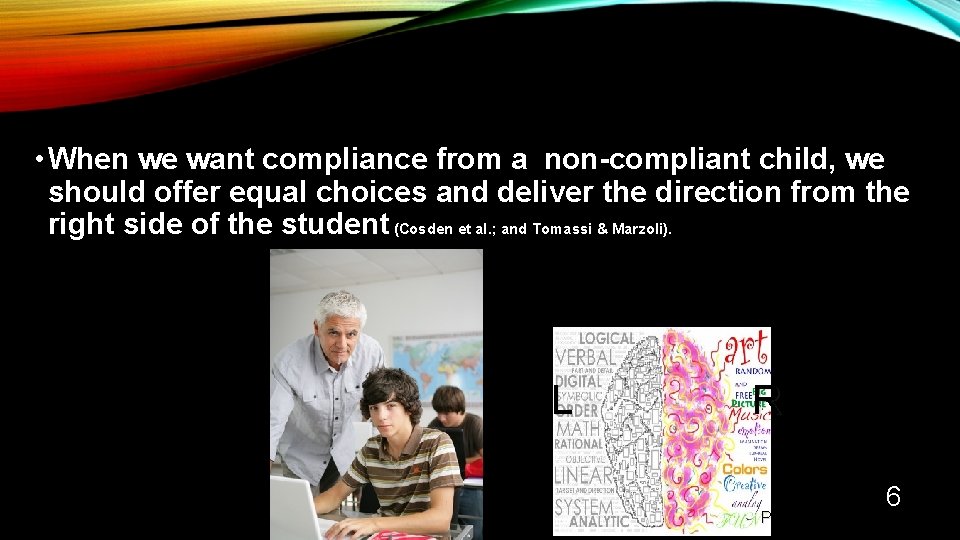
• When we want compliance from a non-compliant child, we should offer equal choices and deliver the direction from the right side of the student (Cosden et al. ; and Tomassi & Marzoli). L R Page 7 6
CORTEZ, COLORADO Behavior Doctor Seminars ™®© FY 17
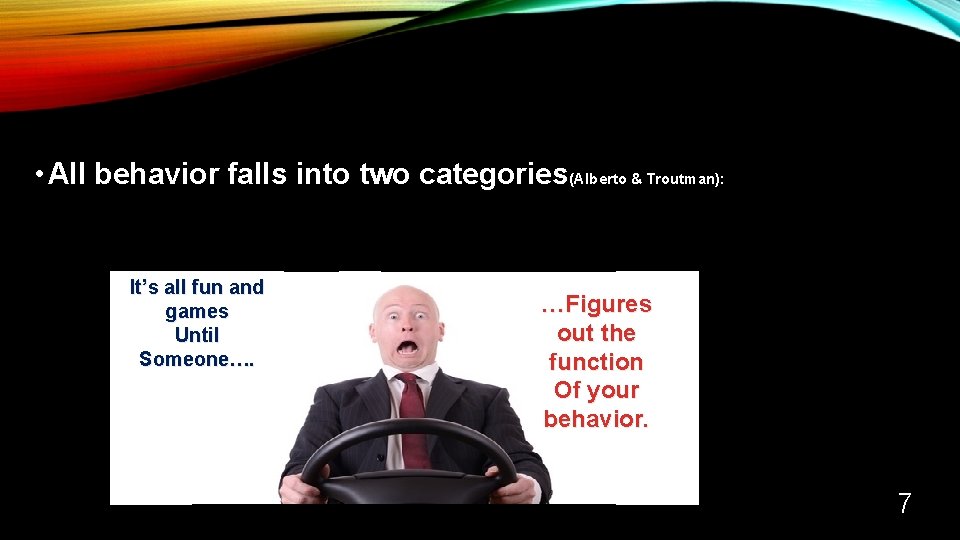
• All behavior falls into two categories(Alberto & Troutman): It’s all fun and games Until Someone…. …Figures out the function Of your behavior. Page 7 7
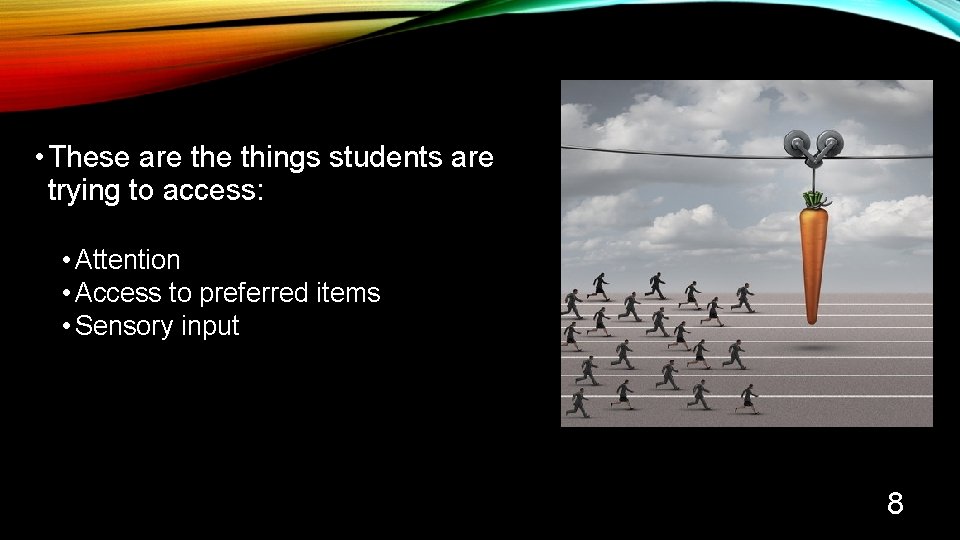
• These are things students are trying to access: • Attention • Access to preferred items • Sensory input Handout pg 1 Page 7 8
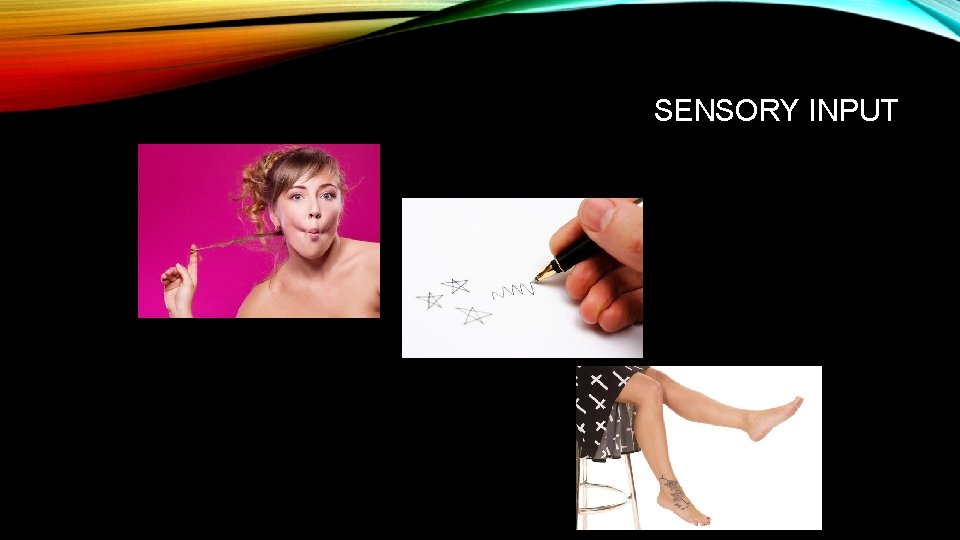
SENSORY INPUT Behavior Doctor Seminars ™®© FY 17
• These are things students are trying to escape: • Work/Tasks • Attention (Adults-Peers) • Pain (Physical or Emotional) • Sensory Overload Page 7 9
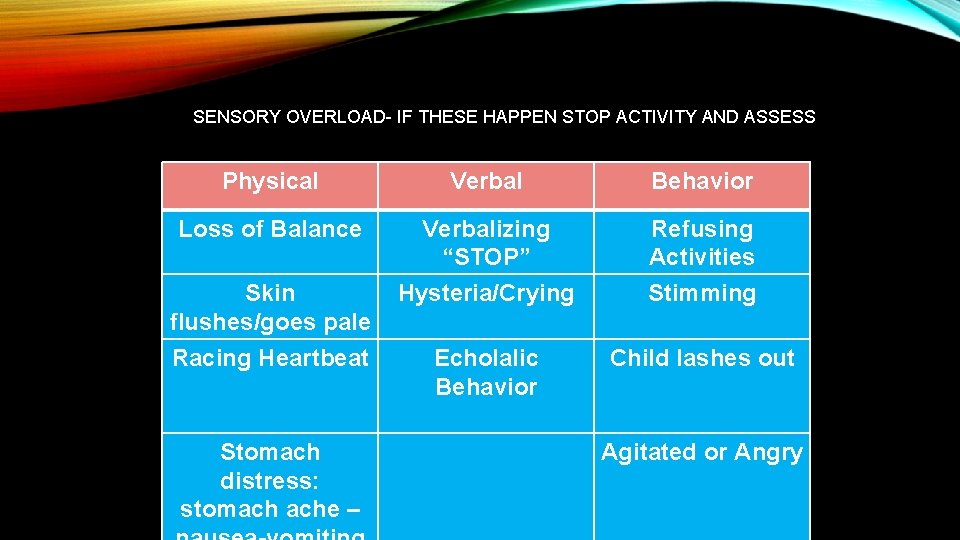
SENSORY OVERLOAD- IF THESE HAPPEN STOP ACTIVITY AND ASSESS Physical Verbal Behavior Loss of Balance Verbalizing “STOP” Hysteria/Crying Refusing Activities Stimming Echolalic Behavior Child lashes out Skin flushes/goes pale Racing Heartbeat Stomach distress: stomach ache – Behavior Doctor Seminars ™®© FY 17 Agitated or Angry
• Whenever a behavior happens, it is your reaction that determines whether you see it again or not. We have to change our behavior (Alberto & Troutman). . Handout pg 1 Page 7 10
JAY AND THE PANCAKES Behavior Doctor Seminars ™®© FY 17
TEST TO SEE IF IT IS A REAL INTERVENTION 1. Did it stop the behavior? 2. Was it proactive: not reactive? 3. Were there changes to the environment to set the student up for success? 4. Was a replacement behavior taught? 5. Did the team feed the replacement behavior and extinguish the target behavior? 6. Was it delivered long enough with consistency and fidelity?
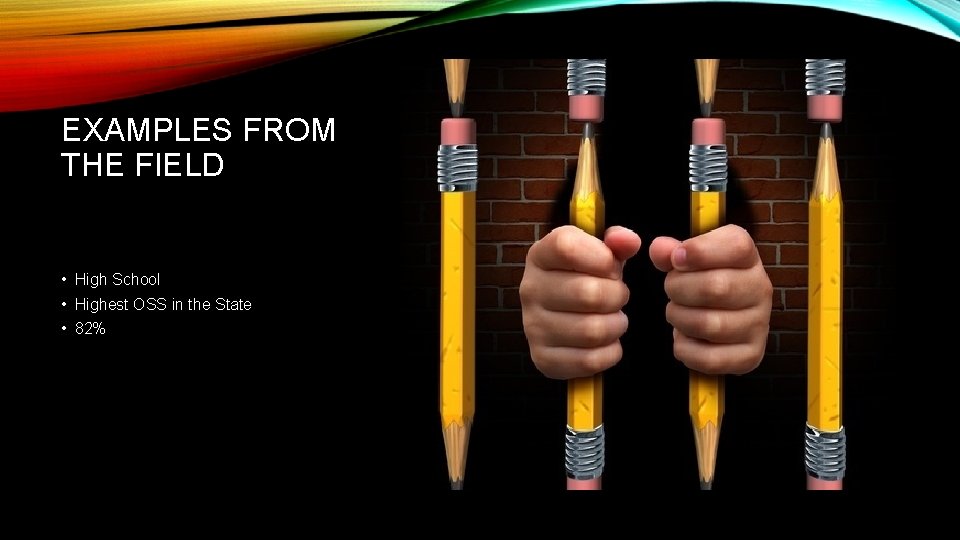
EXAMPLES FROM THE FIELD • High School • Highest OSS in the State • 82%
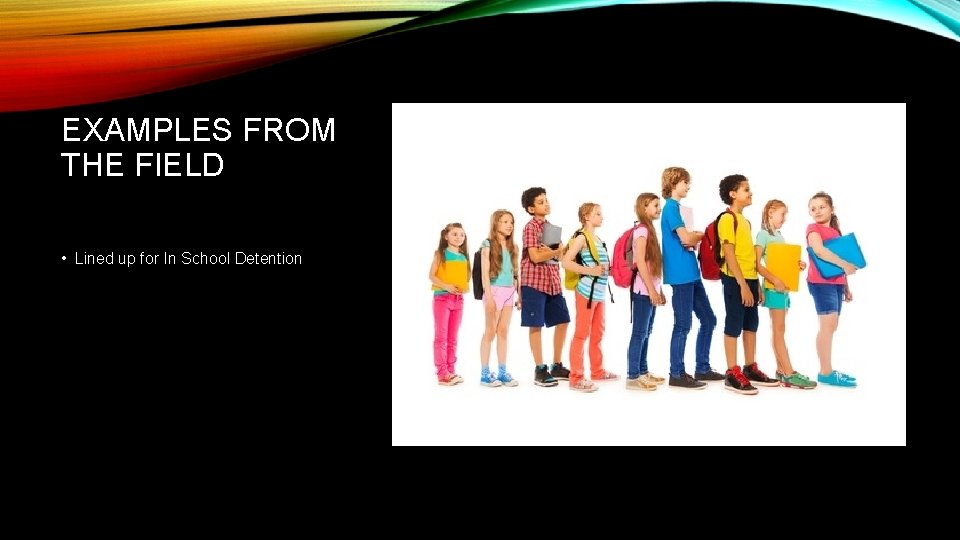
EXAMPLES FROM THE FIELD • Lined up for In School Detention
TEST TO SEE IF IT IS A REAL INTERVENTION 1. Did it stop the behavior? 2. Was it proactive: not reactive? 3. Were there changes to the environment to set the student up for success? 4. Was a replacement behavior taught? 5. Did the team feed the replacement behavior and extinguish the target behavior? 6. Was it delivered long enough with consistency and fidelity?
Why You Are Like a Dolphin Laura A. Riffel, Ph. D.
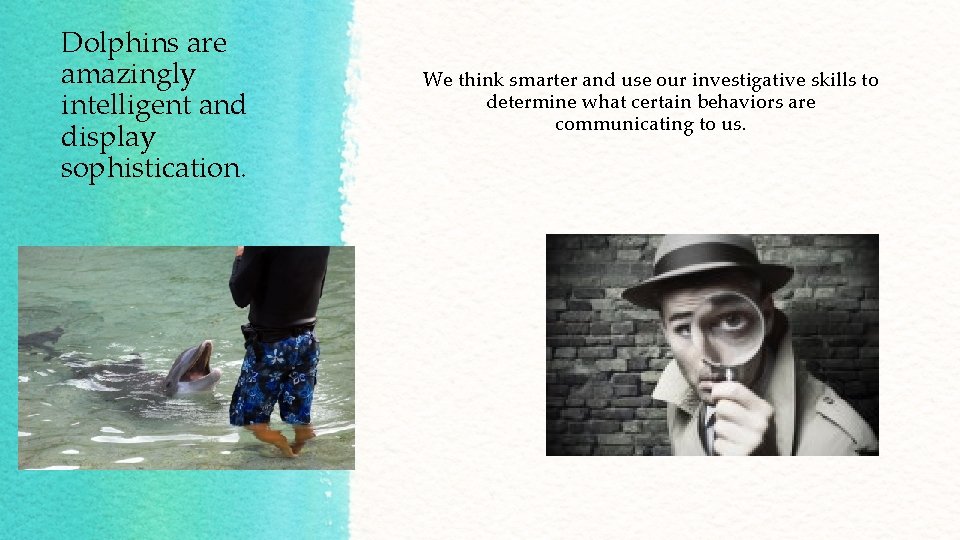
Dolphins are amazingly intelligent and display sophistication. We think smarter and use our investigative skills to determine what certain behaviors are communicating to us.
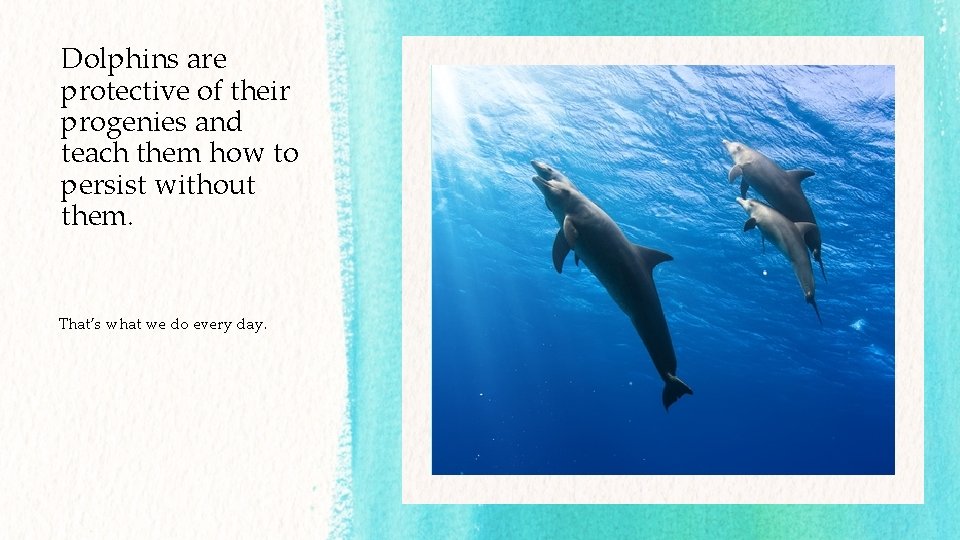
Dolphins are protective of their progenies and teach them how to persist without them. That’s what we do every day.
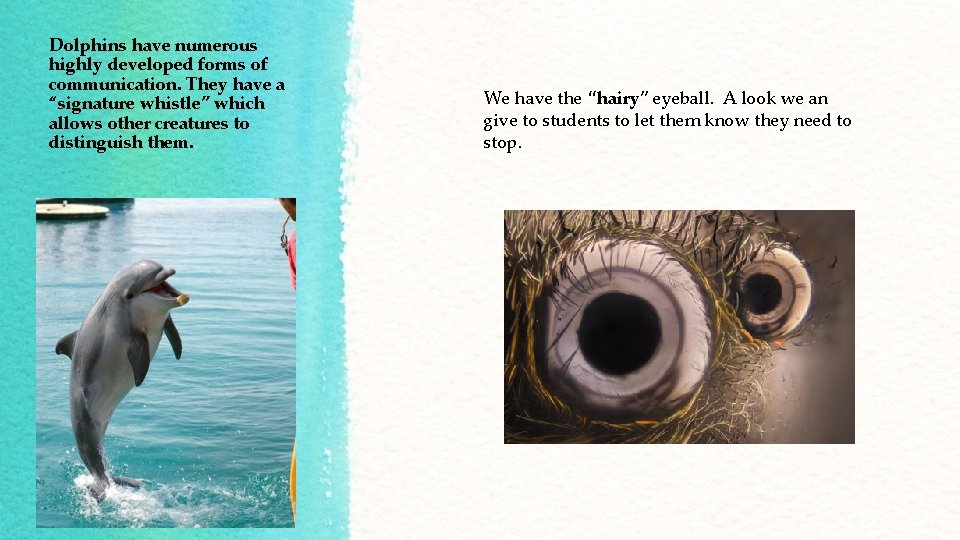
Dolphins have numerous highly developed forms of communication. They have a “signature whistle” which allows other creatures to distinguish them. We have the “hairy” eyeball. A look we an give to students to let them know they need to stop.
Dolphins are philanthropic animals. They are known to stay and help injured creatures, even helping them to the surface to breathe. Their empathy also extends across the species-barrier. There are many reports of dolphins assisting humans and even whales. Educators will: • Spend their own money • Give up their lunch time • Stay after school • Come to school early • Stay up all night working on a project • Research topics • Think about all “their” kids at night • Lose sleep All for the sake of making the lives of students better.
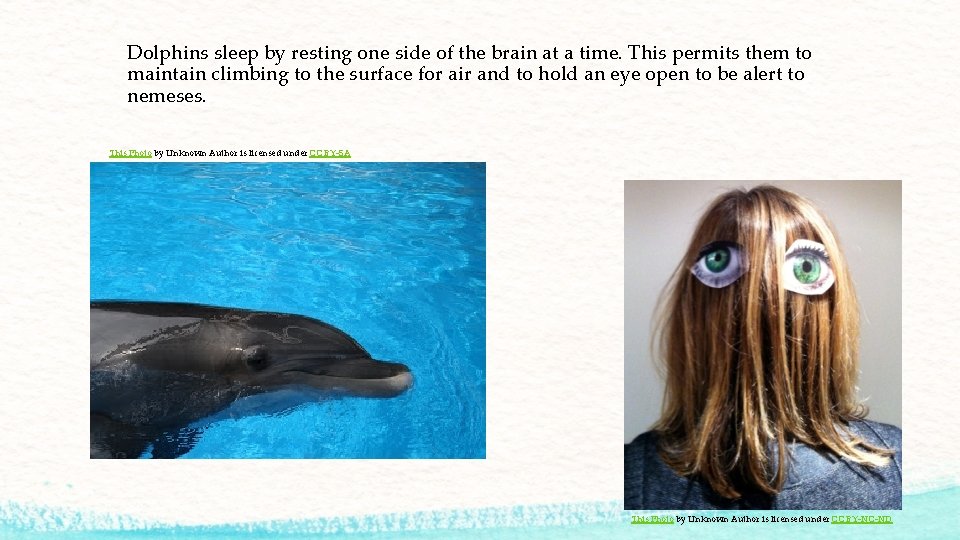
Dolphins sleep by resting one side of the brain at a time. This permits them to maintain climbing to the surface for air and to hold an eye open to be alert to nemeses. This Photo by Unknown Author is licensed under CC BY-SA This Photo by Unknown Author is licensed under CC BY-NC-ND
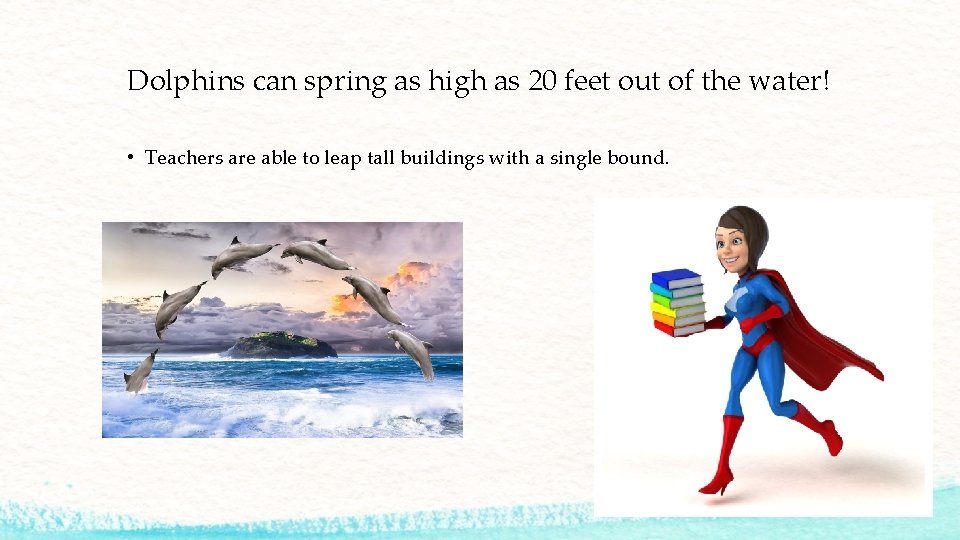
Dolphins can spring as high as 20 feet out of the water! • Teachers are able to leap tall buildings with a single bound.
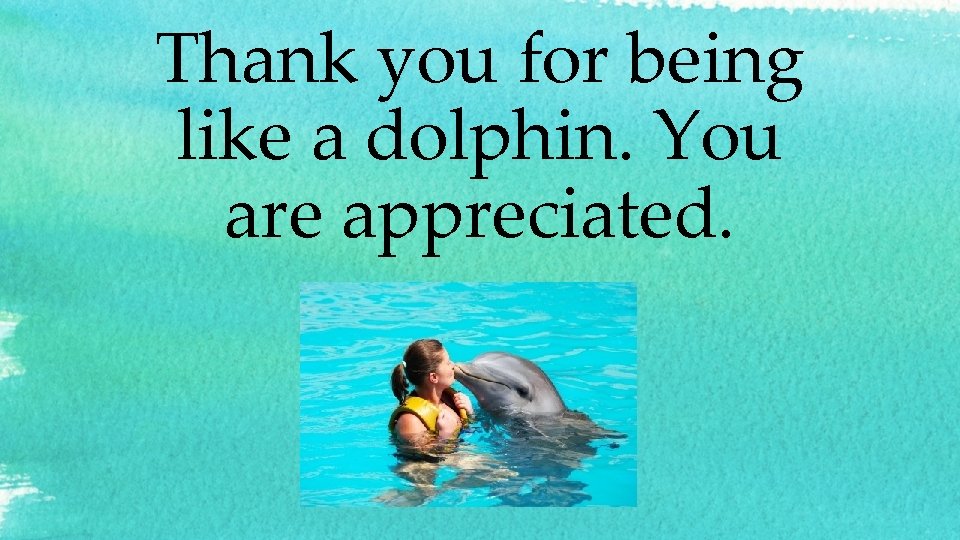
Thank you for being like a dolphin. You are appreciated.
REFERENCES • Alberto, P. A. , & Troutman, A. C. (1990). Applied behavior analysis for teachers (Third Edition). New York: Macmillan Publishing Company. • Alberto, P. , & Troutman, A. (2003). Applied behavior analysis for teachers (6 th ed. ). Upper Saddle River, NJ: Merrill Prentice -Hall. • Bambara, L. M. , & Knoster, T. P. (1995). Guidelines: Effective behavioral support. Pennsylvania Department of Education: Bureau of Special Education. • Bandura, A. (1969 a). Principles of behavior modification. New York: Holt, Rinehart & Winston. • Cosden, M. , Gannon, C. , & Haring, T. G. (1995). Teacher-control versus student-control over choice of tasks and reinforcement for students with severe behavior problems. Journal of Behavioral Education, 5, 11 -27. • Haydon, T. , Conroy, M. , Sindelar, P. , Scott, T. M. , Brian, & Marie, A. (2010). Comparison of Three Types of Opportunities to Respond on Student Academic and Social Behaviors, Journal of Emotional and Behavioral. • Lally, P. , Van Jaarsveld, C. H. M. , Potts, H. , & Wardle, J. (2010). How are habits formed: Modeling habit formation in the real world. European Journal of Social Psychology, 40, 998– 1009. doi: 10. 1002/ejsp. 674. • Marzoli D & Tommasi L (2009). Side biases in humans (Homo sapiens); three ecological studies on hemispheric asymmetries. Naturwissenschaften. DOI 10. 1007/s 00114 -009 -0571 -4. • Shores, R. E. , Gunter, P. L. , & Jack, S. L. (1993). Classroom management strategies: Are they setting events for coercion? Behavioral Disorders, 18, 92– 102.
PICTURES • All pictures were purchased through 123 rf. com with the exception of Marvin the Martian owned by Laura Riffel
- Slides: 32