
Ten Nonprofit Funding Models October 6 2009 Paradox
Ten Nonprofit Funding Models October 6, 2009
Paradox. . . so much time, so little money TBG 091609 -SSIR. Foster 2
Our fundraising strategy used to be ‘let’s raise more money this year than last’ and we were always unsure where we’d be. Then we got serious in thinking about our model and identified an ongoing type of government funding that was a good match for our work: While it required some program changes to work, we now predictably cover 70% of our costs in any locality through this approach. - Earl Martin Phalen, co-founder of BELL TBG 091609 -SSIR. Foster 3
Why it’s so hard achieve. . . • Our inclinations • Conventional wisdom • Tough economic times TBG 091609 -SSIR. Foster 4
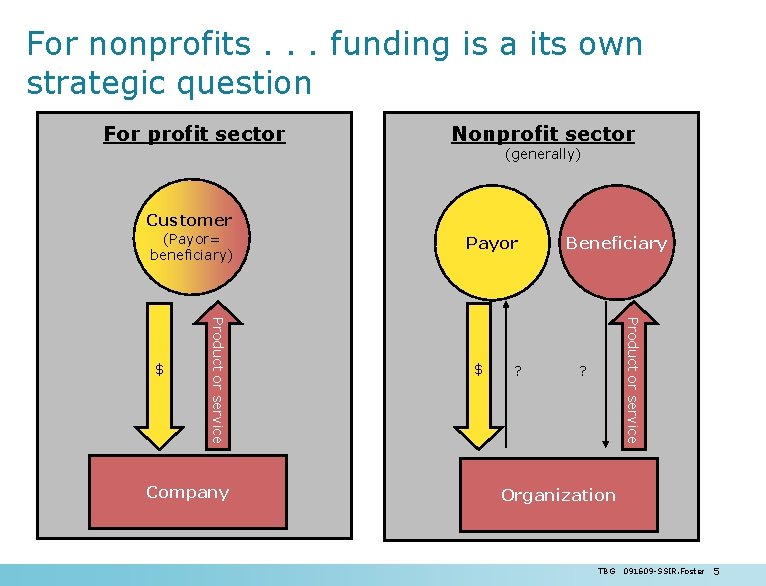
For nonprofits. . . funding is a its own strategic question For profit sector Nonprofit sector (generally) Customer ? Beneficiary Product or service $ Company Payor $ (Payor= beneficiary) ? Organization TBG 091609 -SSIR. Foster 5
What we know. . . • Realism is important • At scale. . . robust funding is generally concentrated in one source • Natural matches will dictate a few paths • Organizational capabilities are required TBG 091609 -SSIR. Foster 6
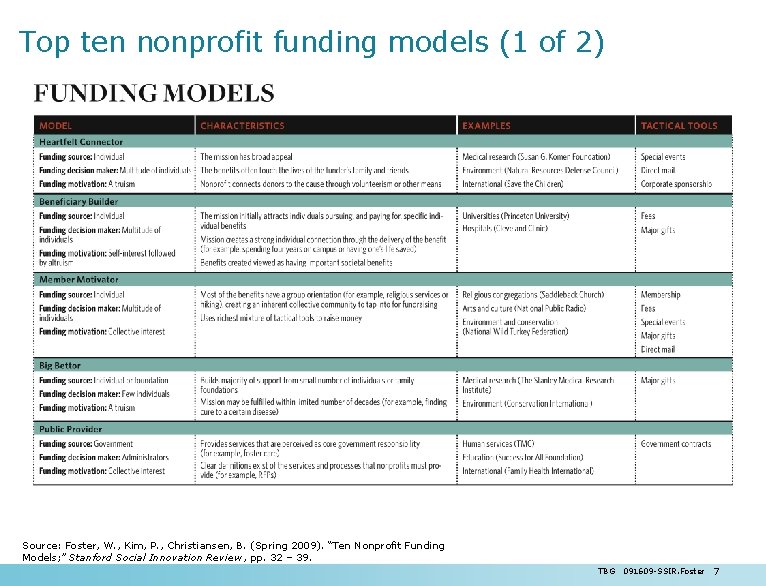
Top ten nonprofit funding models (1 of 2) Source: Foster, W. , Kim, P. , Christiansen, B. (Spring 2009). “Ten Nonprofit Funding Models; ” Stanford Social Innovation Review, pp. 32 – 39. TBG 091609 -SSIR. Foster 7
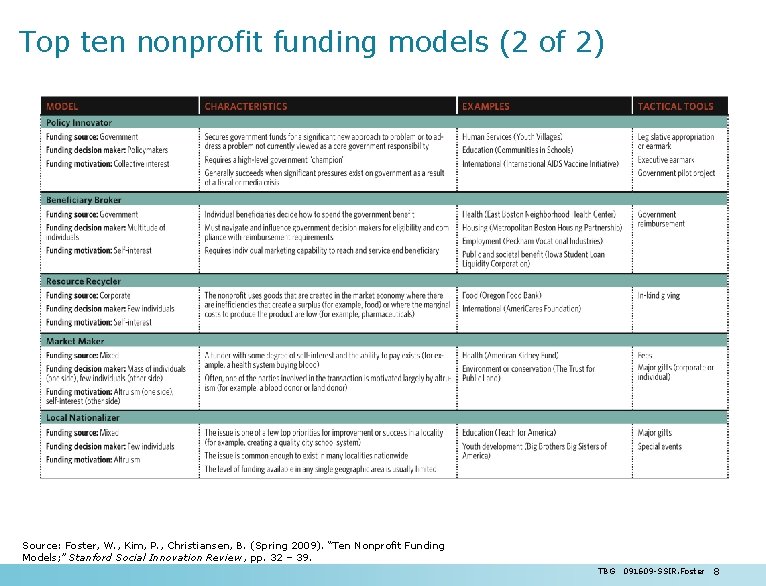
Top ten nonprofit funding models (2 of 2) Source: Foster, W. , Kim, P. , Christiansen, B. (Spring 2009). “Ten Nonprofit Funding Models; ” Stanford Social Innovation Review, pp. 32 – 39. TBG 091609 -SSIR. Foster 8
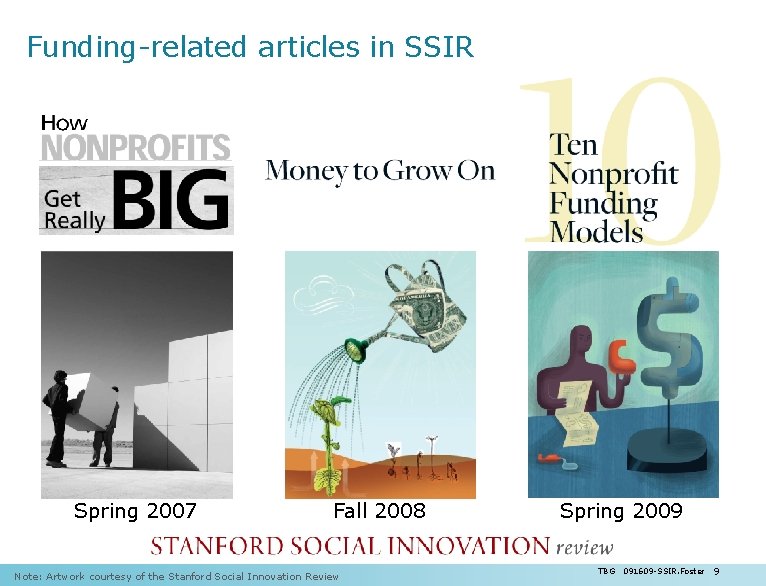
Funding-related articles in SSIR Spring 2007 Fall 2008 Note: Artwork courtesy of the Stanford Social Innovation Review Spring 2009 TBG 091609 -SSIR. Foster 9
- Slides: 9