
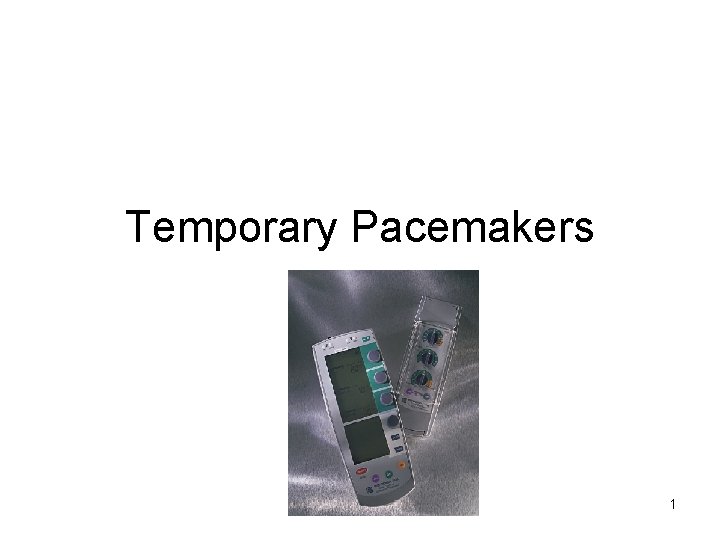
Temporary Pacemakers 1 Principles of Pacing Temporary pacing


- Slides: 45
Temporary Pacemakers 1
Principles of Pacing • Temporary pacing types – Transcutaneous • Emergency use with external pacing/defib unit – Transvenous • Emergency use with external pacemaker – Epicardial • Wires sutured to right atrium & right ventricle • Atrial wires exit on the right of the sternum • Ventricular wires exit on the left of the sternum 2
Principles of Pacing • Modes of Pacing – Atrial pacing • Intact AV conduction system required – Ventricular pacing • Loss of atrial kick • Discordant ventricular contractions • Sustains cardiac output – Atrial/Ventricular pacing • Natural pacing • Atrial-ventricular synchrony 3
4
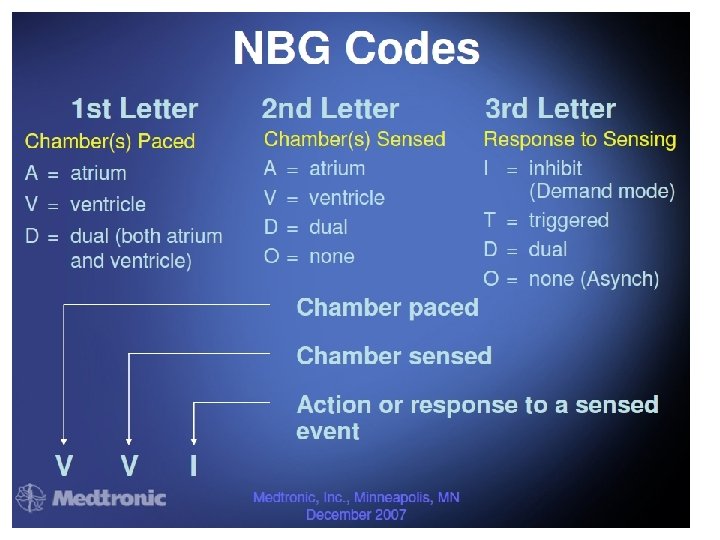
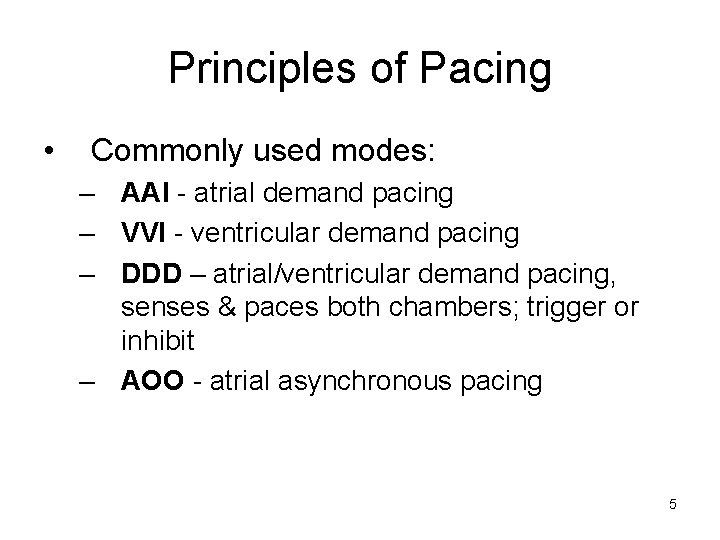
Principles of Pacing • Commonly used modes: – AAI - atrial demand pacing – VVI - ventricular demand pacing – DDD – atrial/ventricular demand pacing, senses & paces both chambers; trigger or inhibit – AOO - atrial asynchronous pacing 5
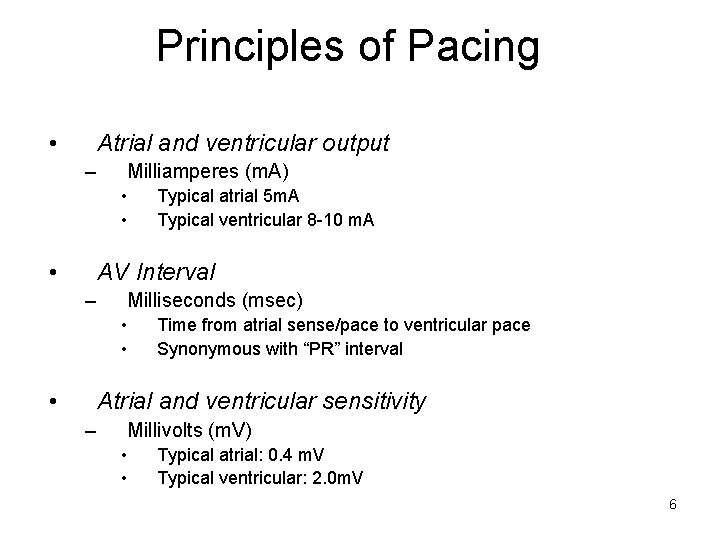
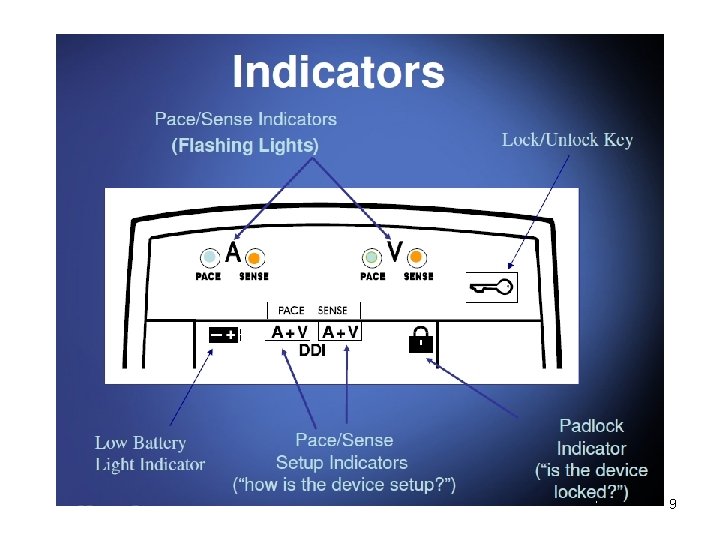
Principles of Pacing • Atrial and ventricular output – Milliamperes (m. A) • • • Typical atrial 5 m. A Typical ventricular 8 -10 m. A AV Interval – Milliseconds (msec) • • • Time from atrial sense/pace to ventricular pace Synonymous with “PR” interval Atrial and ventricular sensitivity – Millivolts (m. V) • • Typical atrial: 0. 4 m. V Typical ventricular: 2. 0 m. V 6
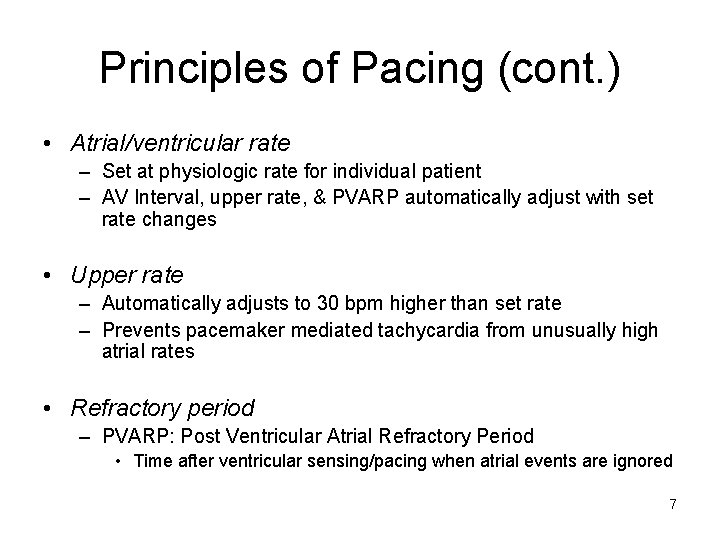
Principles of Pacing (cont. ) • Atrial/ventricular rate – Set at physiologic rate for individual patient – AV Interval, upper rate, & PVARP automatically adjust with set rate changes • Upper rate – Automatically adjusts to 30 bpm higher than set rate – Prevents pacemaker mediated tachycardia from unusually high atrial rates • Refractory period – PVARP: Post Ventricular Atrial Refractory Period • Time after ventricular sensing/pacing when atrial events are ignored 7
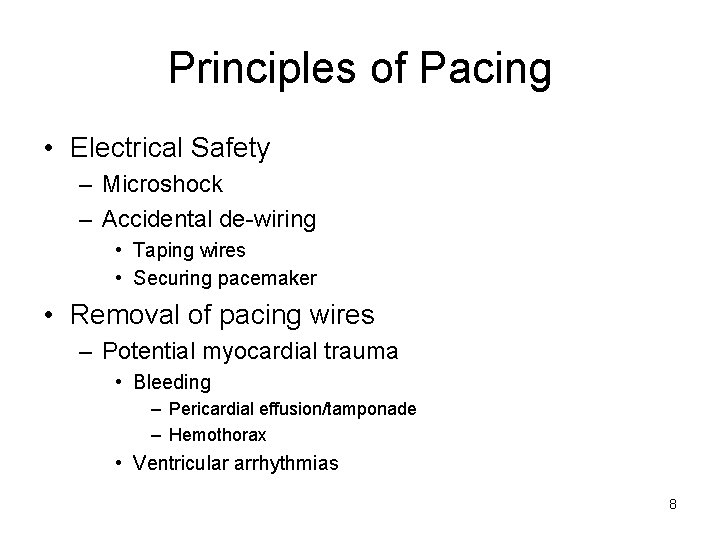
Principles of Pacing • Electrical Safety – Microshock – Accidental de-wiring • Taping wires • Securing pacemaker • Removal of pacing wires – Potential myocardial trauma • Bleeding – Pericardial effusion/tamponade – Hemothorax • Ventricular arrhythmias 8
9
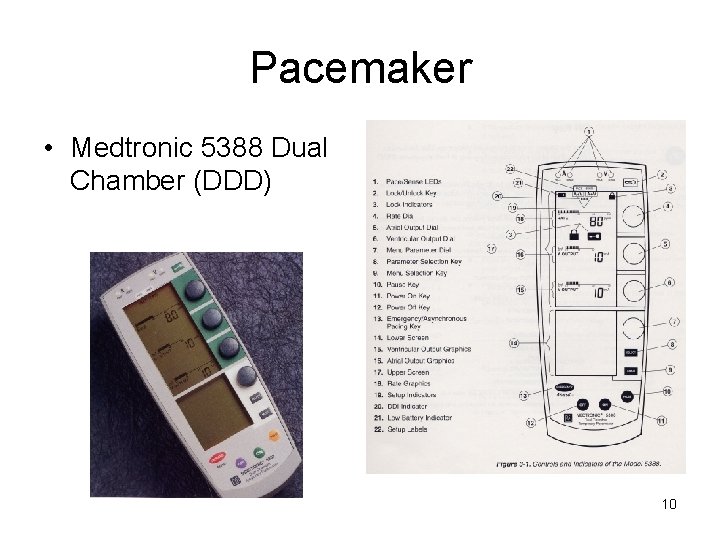
Pacemaker • Medtronic 5388 Dual Chamber (DDD) 10
Pacemaker ECG Strips • Every pacer spike should have a following p-wave or QRS complex 11
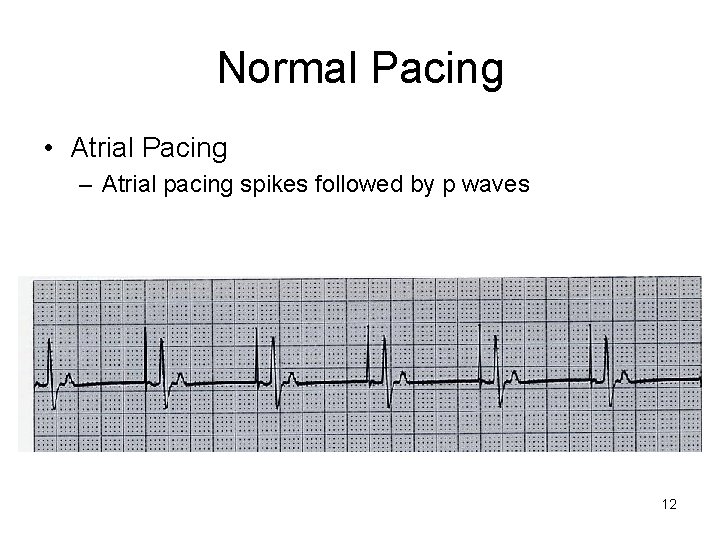
Normal Pacing • Atrial Pacing – Atrial pacing spikes followed by p waves 12
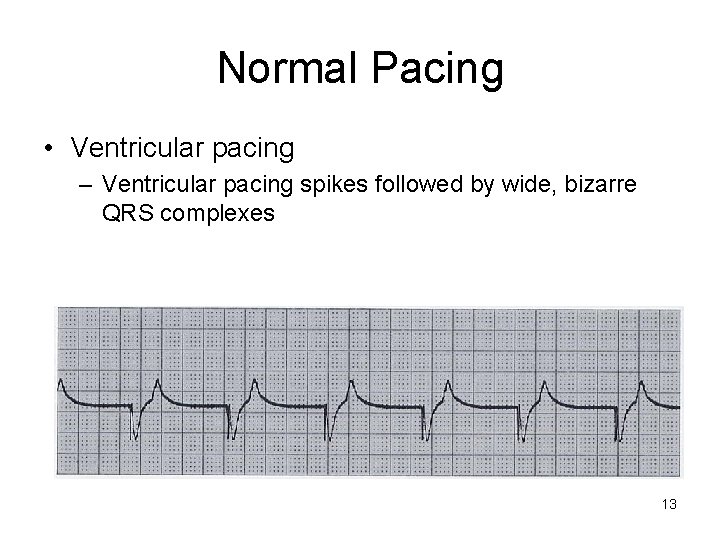
Normal Pacing • Ventricular pacing – Ventricular pacing spikes followed by wide, bizarre QRS complexes 13
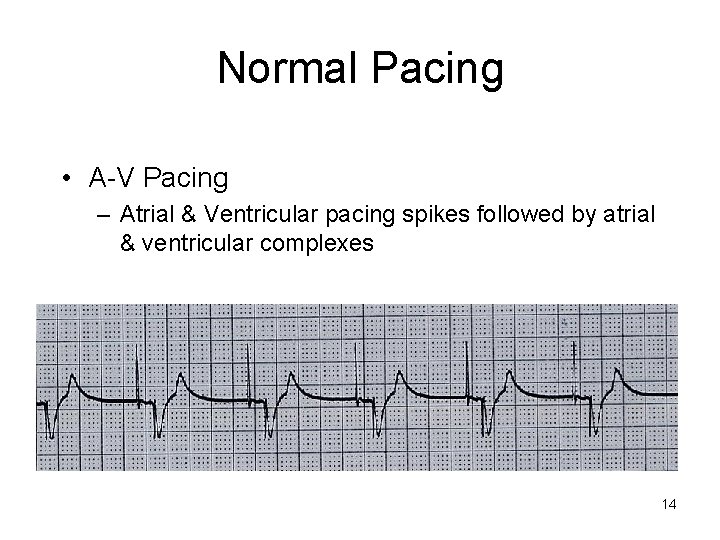
Normal Pacing • A-V Pacing – Atrial & Ventricular pacing spikes followed by atrial & ventricular complexes 14
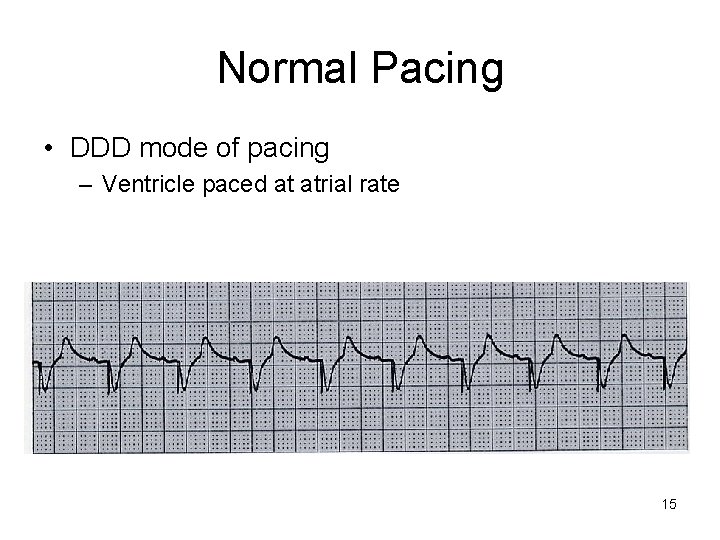
Normal Pacing • DDD mode of pacing – Ventricle paced at atrial rate 15
Stimulation Threshold testing • Stimulation threshold (output) – Definition: Minimum current necessary to capture & stimulate the heart – Testing • • Set pacer rate 10 ppm faster than patient’s HR Decrease m. A until capture is lost Increase output until capture is regained (threshold capture) Output setting to be 2 x’s threshold capture – Example: Set output at 10 m. A if capture was regained at 5 m. A 16
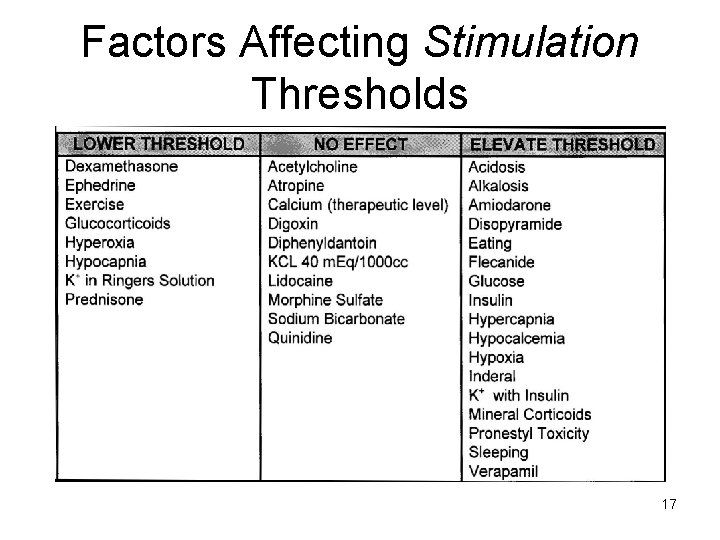
Factors Affecting Stimulation Thresholds 17
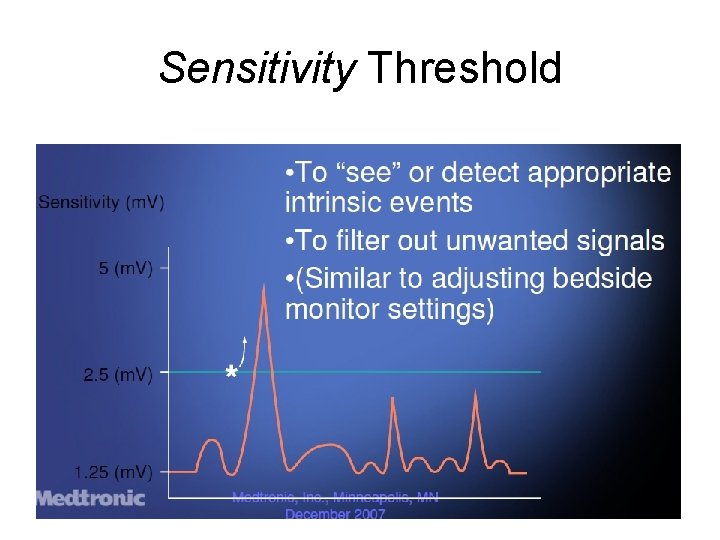
Sensitivity Threshold 18
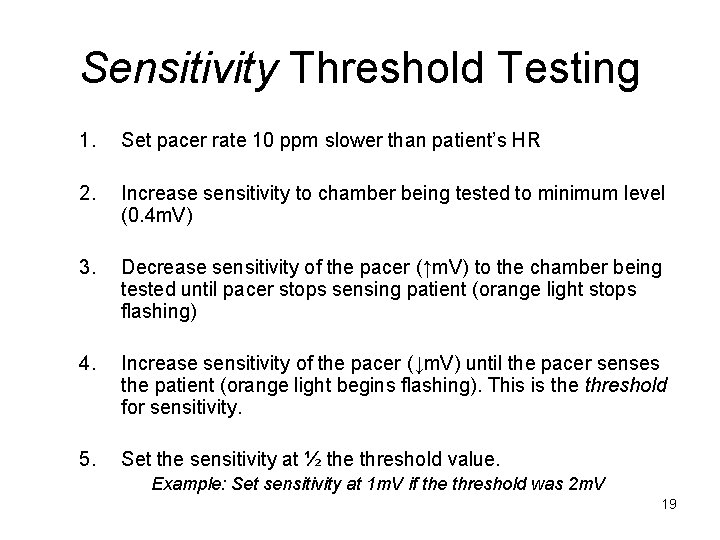
Sensitivity Threshold Testing 1. Set pacer rate 10 ppm slower than patient’s HR 2. Increase sensitivity to chamber being tested to minimum level (0. 4 m. V) 3. Decrease sensitivity of the pacer (↑m. V) to the chamber being tested until pacer stops sensing patient (orange light stops flashing) 4. Increase sensitivity of the pacer (↓m. V) until the pacer senses the patient (orange light begins flashing). This is the threshold for sensitivity. 5. Set the sensitivity at ½ the threshold value. Example: Set sensitivity at 1 m. V if the threshold was 2 m. V 19
Failure to CAPTURE • Atrial non-capture – Atrial pacing spikes are not followed by P waves 20
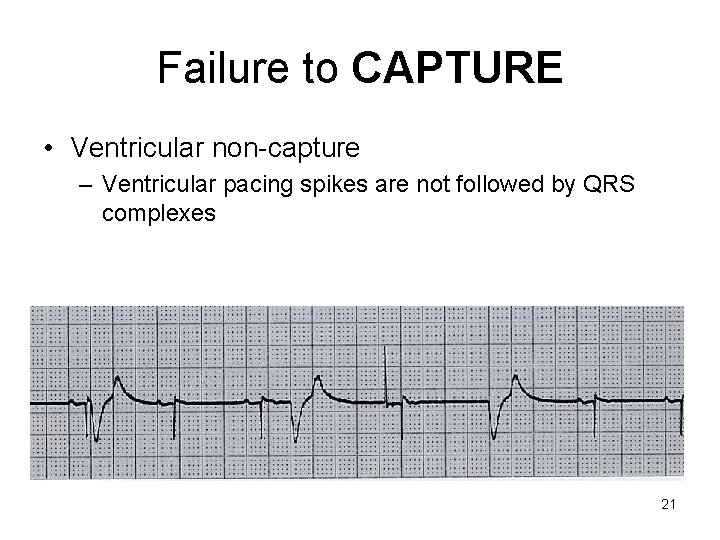
Failure to CAPTURE • Ventricular non-capture – Ventricular pacing spikes are not followed by QRS complexes 21
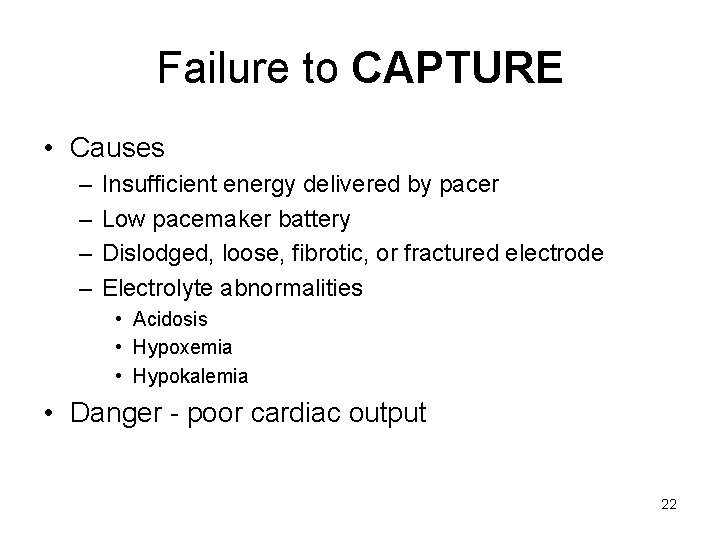
Failure to CAPTURE • Causes – – Insufficient energy delivered by pacer Low pacemaker battery Dislodged, loose, fibrotic, or fractured electrode Electrolyte abnormalities • Acidosis • Hypoxemia • Hypokalemia • Danger - poor cardiac output 22
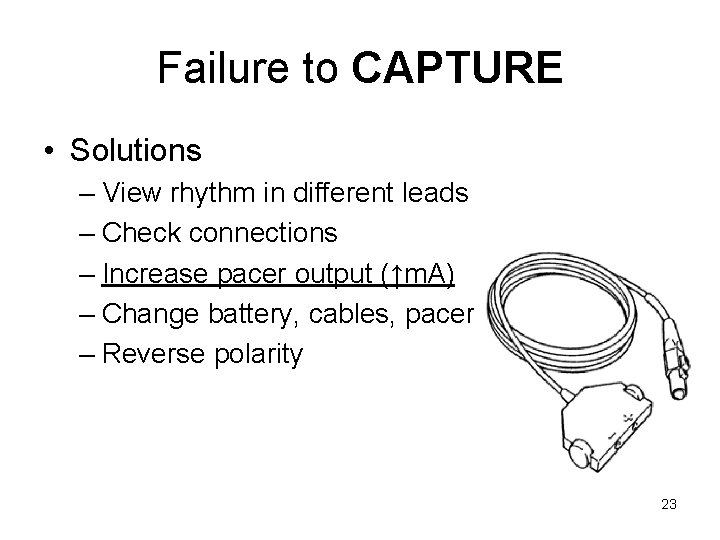
Failure to CAPTURE • Solutions – View rhythm in different leads – Check connections – Increase pacer output (↑m. A) – Change battery, cables, pacer – Reverse polarity 23
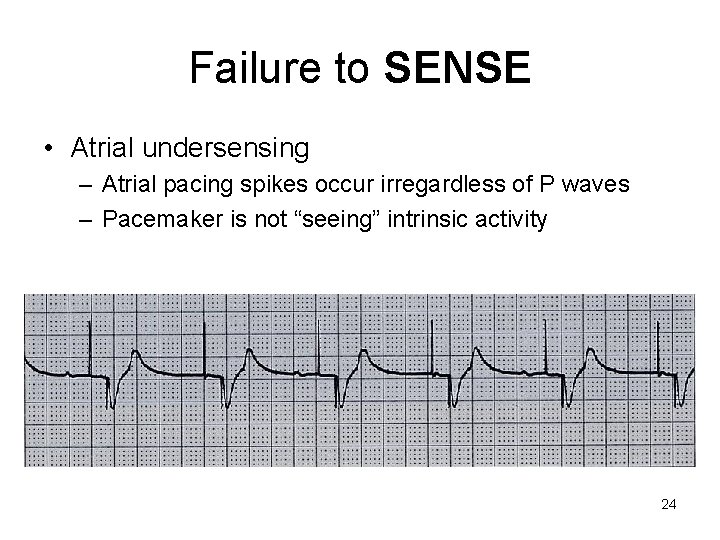
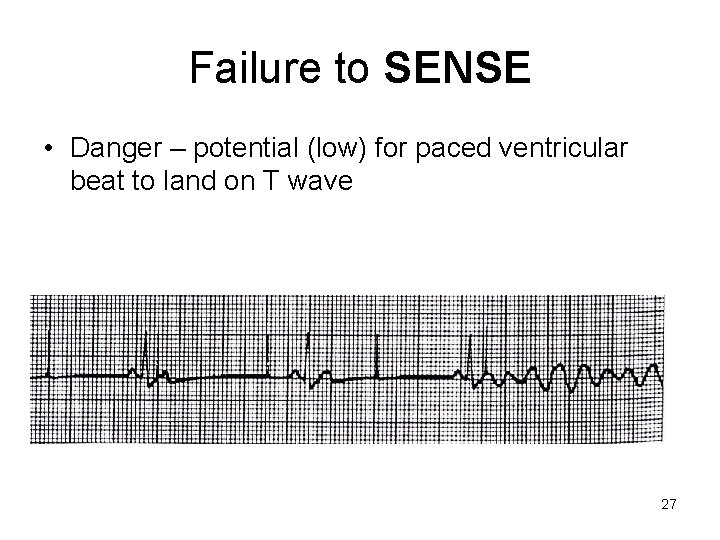
Failure to SENSE • Atrial undersensing – Atrial pacing spikes occur irregardless of P waves – Pacemaker is not “seeing” intrinsic activity 24
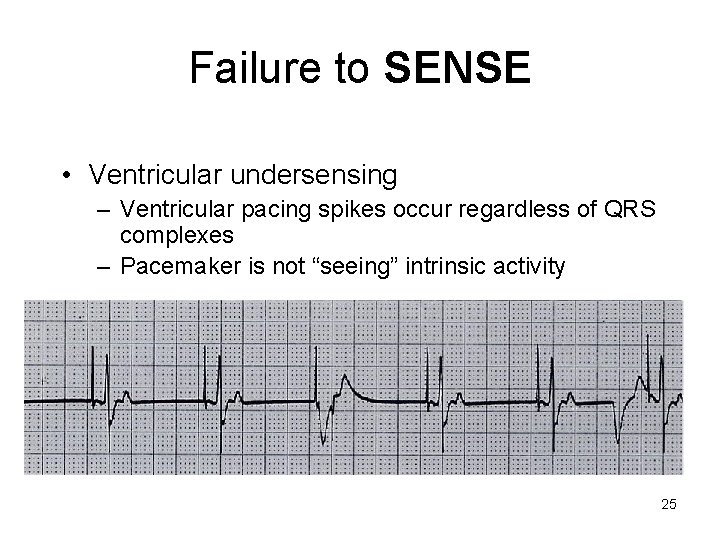
Failure to SENSE • Ventricular undersensing – Ventricular pacing spikes occur regardless of QRS complexes – Pacemaker is not “seeing” intrinsic activity 25
Failure to SENSE • Causes – Pacemaker not sensitive enough to patient’s intrinsic electrical activity (m. V) – Insufficient myocardial voltage – Dislodged lead – Electrolyte abnormalities – Low battery – Malfunction of pacemaker 26
Failure to SENSE • Danger – potential (low) for paced ventricular beat to land on T wave 27
Failure to SENSE • Solution – Increase pacemaker’s sensitivity (↓m. V) – View rhythm in different leads – Check connections – Reverse polarity – Change cables, battery, pacemaker – Check electrolytes 28
Oversensing • Causes – Pacemaker inhibited due to sensing of “P” waves & “QRS” complexes that do not exist – Pacemaker too sensitive – Pacemaker failure • Danger - heart block, asystole 29
Oversensing • Solution – Decrease pacemaker sensitivity (↑m. V) – View rhythm in different leads – Check connections – Change cables, battery, pacemaker – Reverse polarity 30
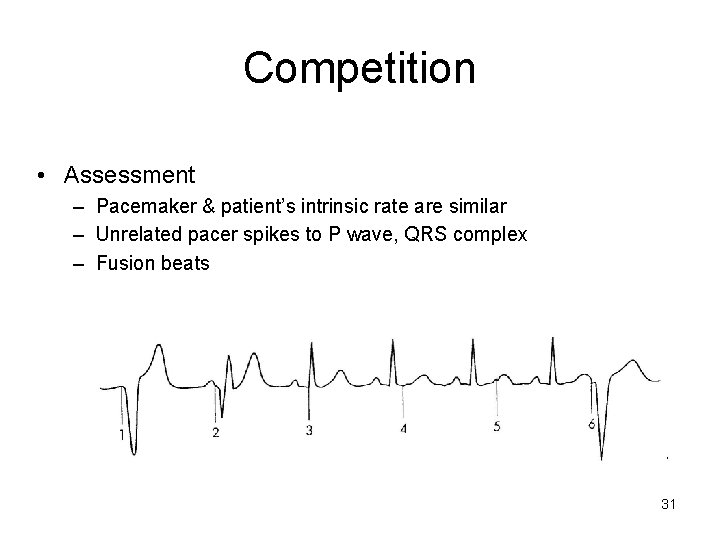
Competition • Assessment – Pacemaker & patient’s intrinsic rate are similar – Unrelated pacer spikes to P wave, QRS complex – Fusion beats 31
Competition • Causes – – Asynchronous pacing Failure to sense Mechanical failure: wires, bridging cables, pacemaker Loose connections • Danger – Impaired cardiac output – Potential (low) for paced ventricular beat to land on T wave 32
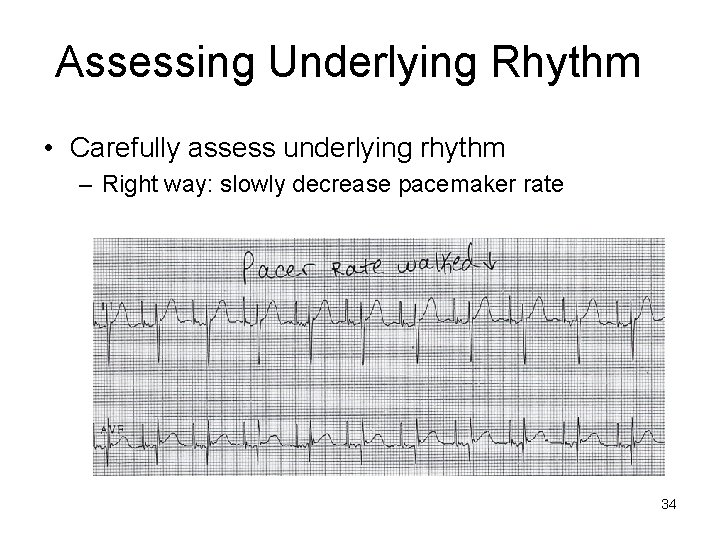
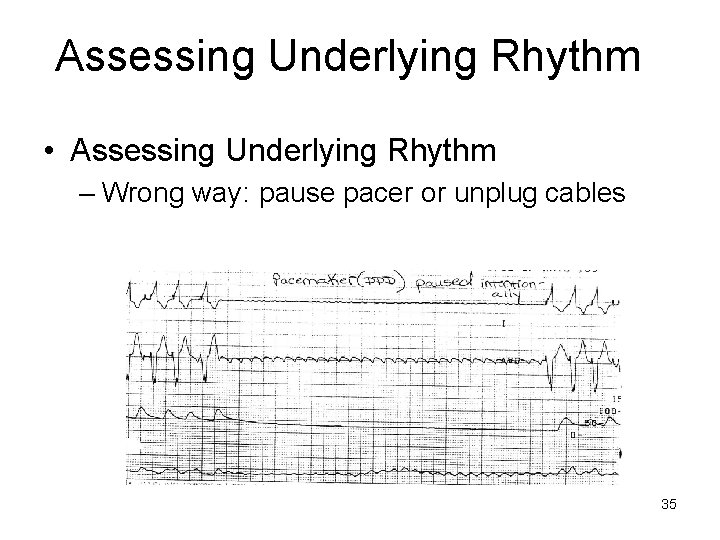
Competition • Solution – Assess underlying rhythm • Slowly turn pacer rate down – Increase pacemaker rate – Troubleshoot as for failure to sense 33
Assessing Underlying Rhythm • Carefully assess underlying rhythm – Right way: slowly decrease pacemaker rate 34
Assessing Underlying Rhythm • Assessing Underlying Rhythm – Wrong way: pause pacer or unplug cables 35
TEST…. . 36
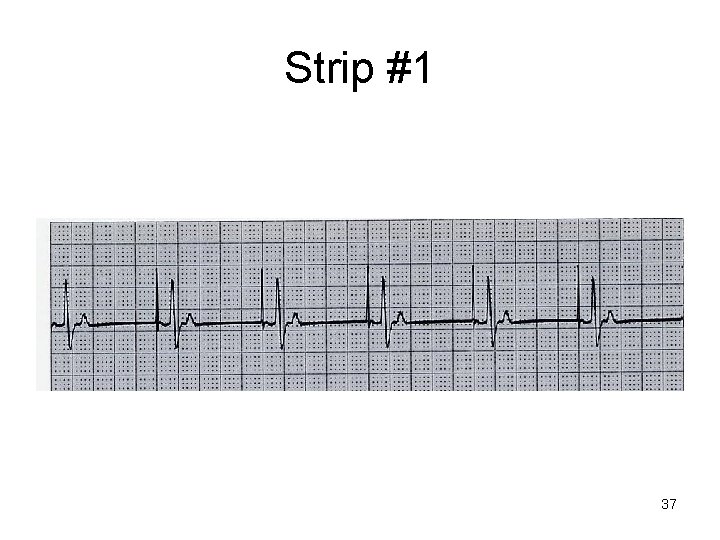
Strip #1 37
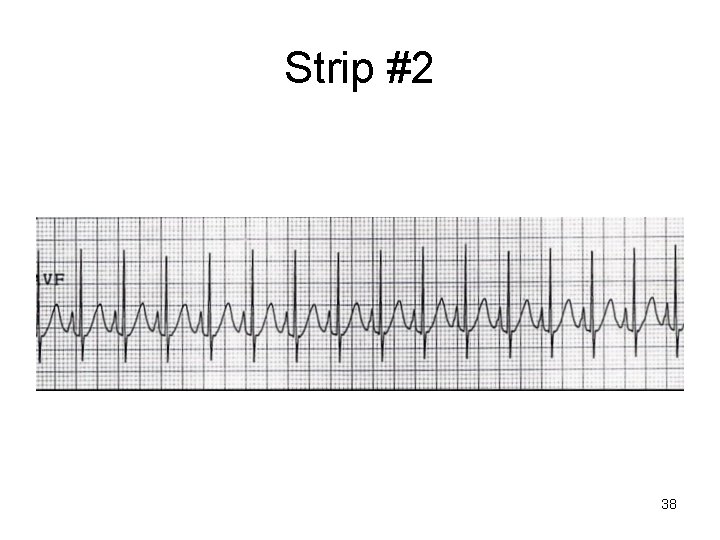
Strip #2 38
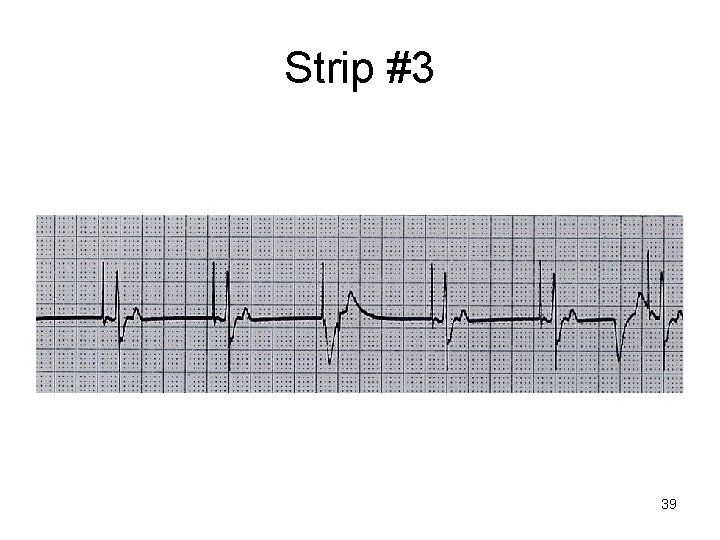
Strip #3 39
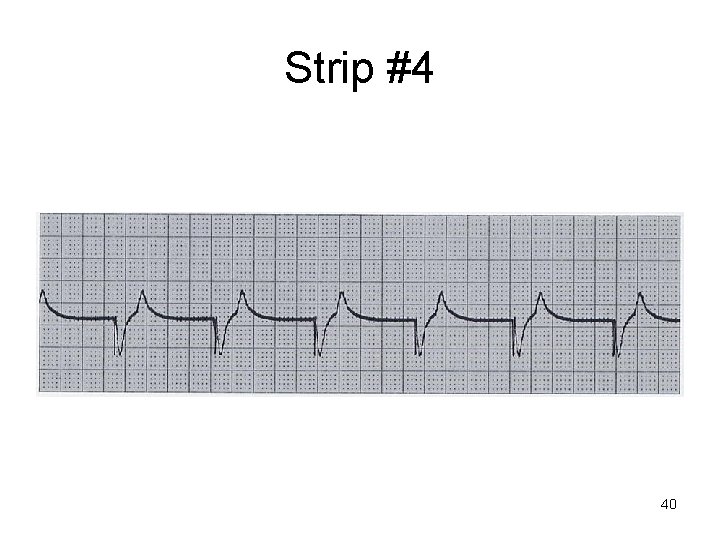
Strip #4 40
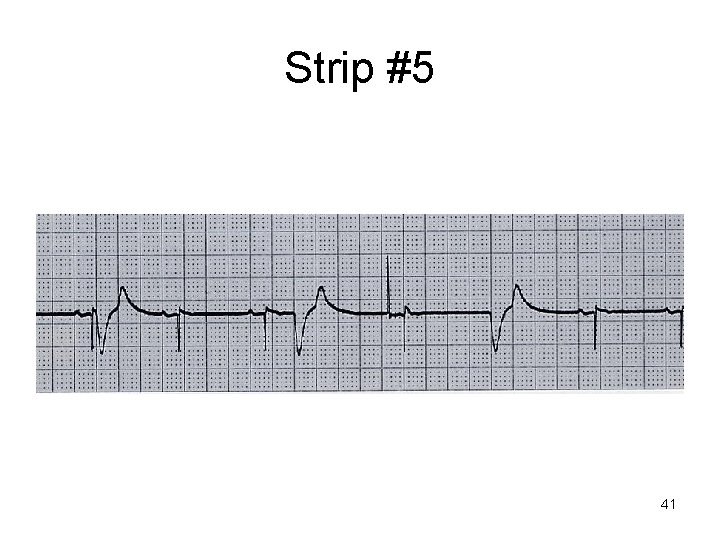
Strip #5 41
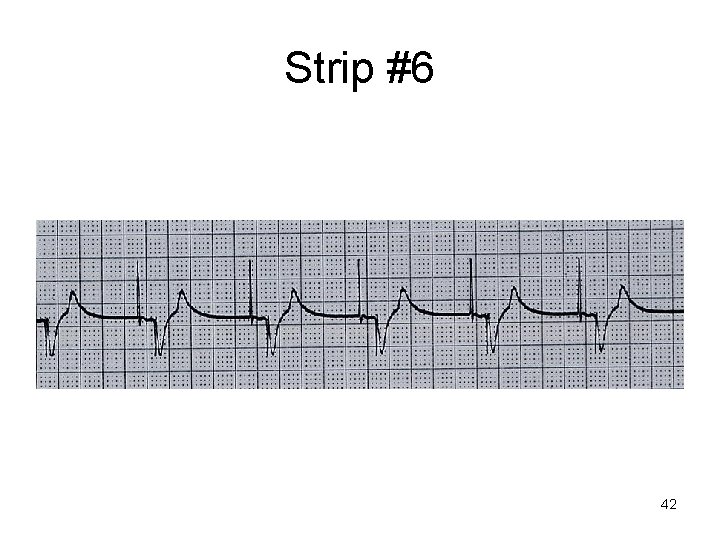
Strip #6 42
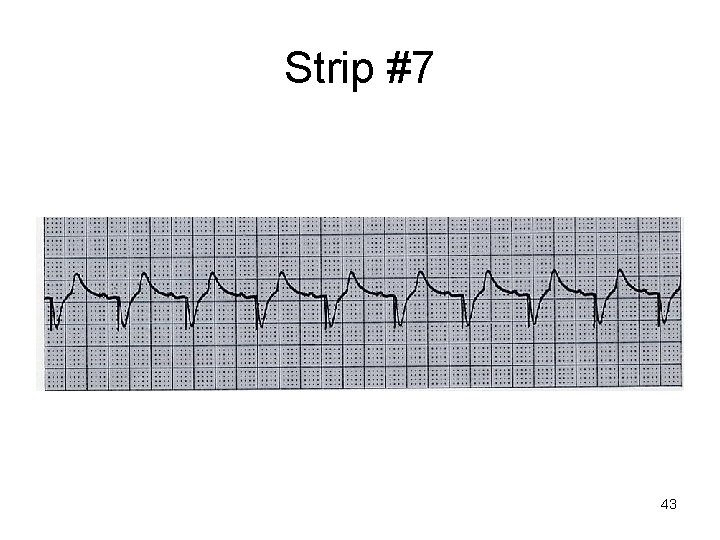
Strip #7 43
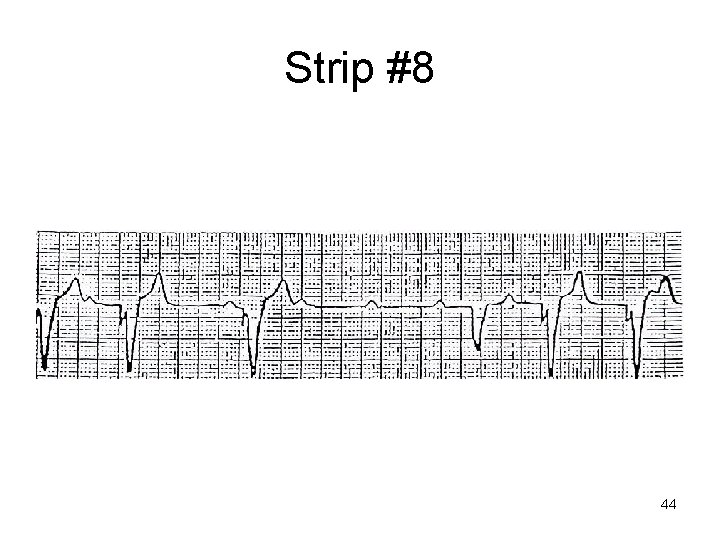
Strip #8 44
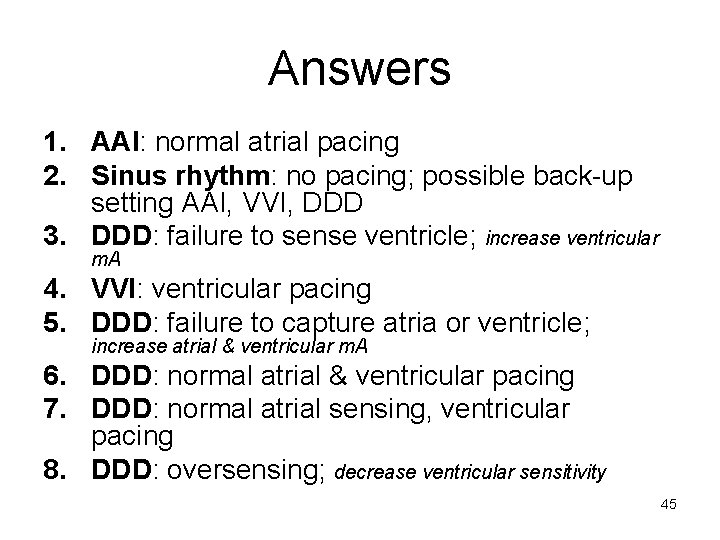
Answers 1. AAI: normal atrial pacing 2. Sinus rhythm: no pacing; possible back-up setting AAI, VVI, DDD 3. DDD: failure to sense ventricle; increase ventricular m. A 4. VVI: ventricular pacing 5. DDD: failure to capture atria or ventricle; increase atrial & ventricular m. A 6. DDD: normal atrial & ventricular pacing 7. DDD: normal atrial sensing, ventricular pacing 8. DDD: oversensing; decrease ventricular sensitivity 45