
Temporary Grain Storage Modified by the GA Agriculture
Temporary Grain Storage Modified by the GA Agriculture Education Curriculum Office July 2002
Minimize Need to Add Dry Grain Storage n Livestock feeders: consider silage, ground ear corn, or high-moisture corn n Consider selling standing crop to neighboring livestock feeders n Harvest ear corn n Rent space at elevator n Rent space from neighbor
Factors to Consider for Grain Storage Facilities n Protection from precipitation & soil moisture n Pressure exerted by dry grain n Aeration n Grain handling n Protection from birds and rodents n Economics
Costs for Storing Grain n Ownership costs for facilities & equipment n Interest on value of grain n Extra shrink & drying costs n Dry matter losses during handling & storage n Electricity n Labor
Possible Temporary Storage Facilities n Flat storage buildings n Upright or tower silos n Remodeled corn cribs n Commercial plastic bins n Outdoor piles

Flat Storage
Flat Storage n Remove residues from previous use n Reinforce or don’t pile against walls n Don’t pile grain over lower truss chord n Estimate capacity n Need good drainage, sound roof, vapor barrier in floor
Flat Storage continued n Consider grain handling – Can use augers for filling – Can use skid loaders, vacuum-type conveyors, or augers for unloading n Install aeration – Keep duct length less than 100 ft. – Match duct layout to pile shape – Watch for condensation under roof
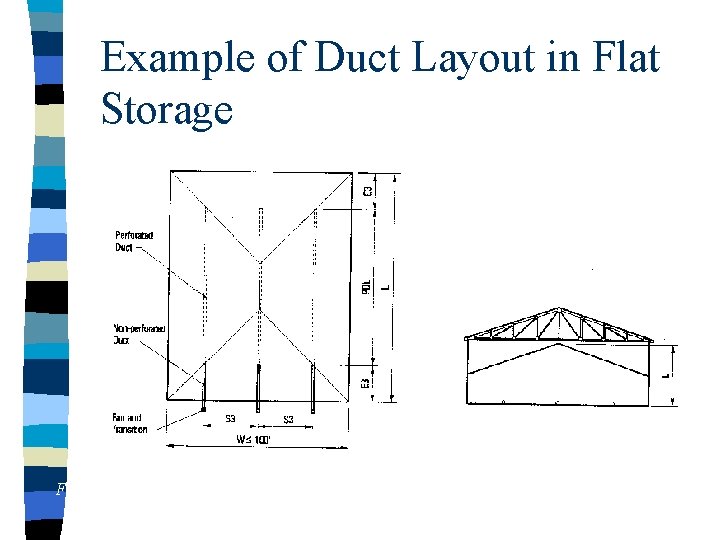
Example of Duct Layout in Flat Storage From MWPS-29, Dry Grain Aeration Systems Design Handbook
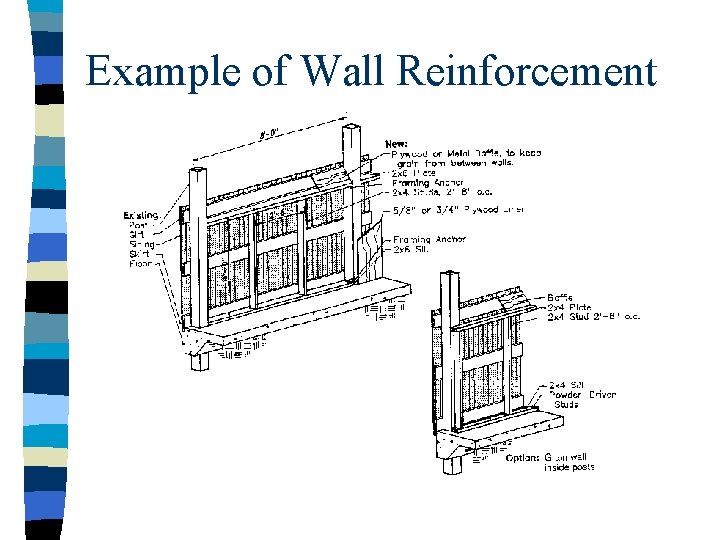
Example of Wall Reinforcement Figure from NDSU AE-84, Temporary Grain Storage
Tower Silos n Check condition and spacing of steel hoops – This is critical; some silos have failed n Patch cracks and leaks in walls & roof – More important for longer-term storage n Install simple aeration duct at bottom, vent at top
Tower Silos continued n Silos are hard to fill – Don’t run cash grain through silage blower – Could use auger through side door – Pneumatic conveyor might be best choice n Unload silos from center to avoid uneven wall pressures
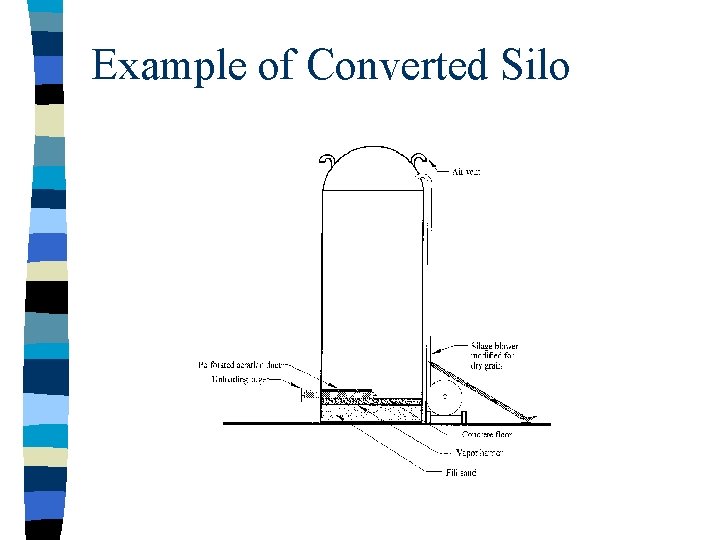
Example of Converted Silo
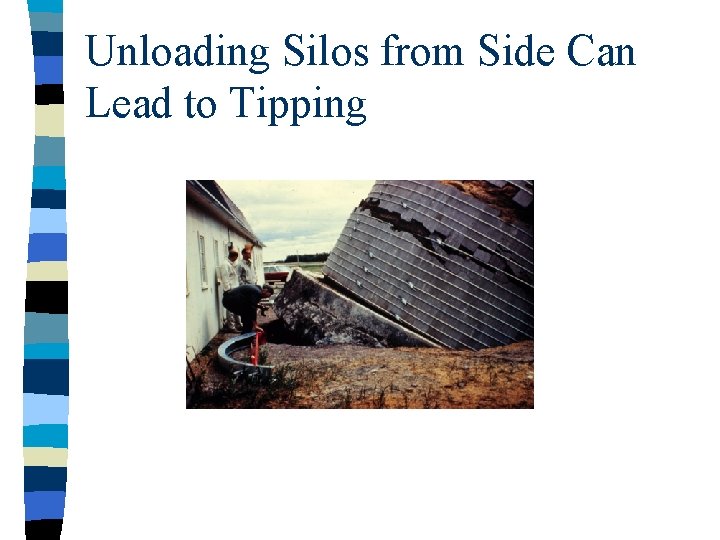
Unloading Silos from Side Can Lead to Tipping
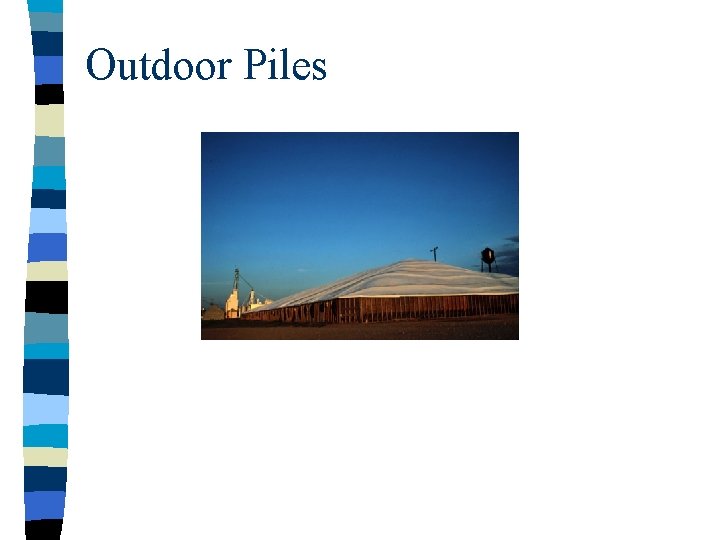
Outdoor Piles
Outdoor Piles n Use as a last resort n Protect bottom grain from soil, gravel, and moisture n Manage fines n Aerate n Cover n Move as soon as possible
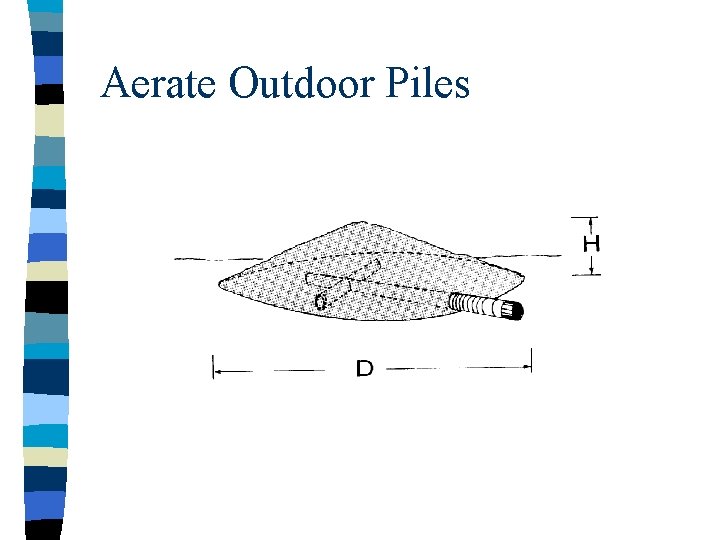
Aerate Outdoor Piles
Managing Temporary Storage n Fill last when weather is cooler n Make sure grain is dry enough – Do not try to dry grain in temp. storage n Consider cleaning grain before storing it n Aerate n Check frequently n Move as soon as possible
Handle Grain Safely n Watch for overhead powerlines when moving equipment n Stay away from PTO shafts and auger intakes n Set up equipment to minimize need to back vehicles into place n Keep kids away from grain facilities
Handle Grain Safely continued n Wear respirators designed for toxic dusts when working around moldy grain n Be aware of suffocation hazards when working around caked or bridged moldy grain
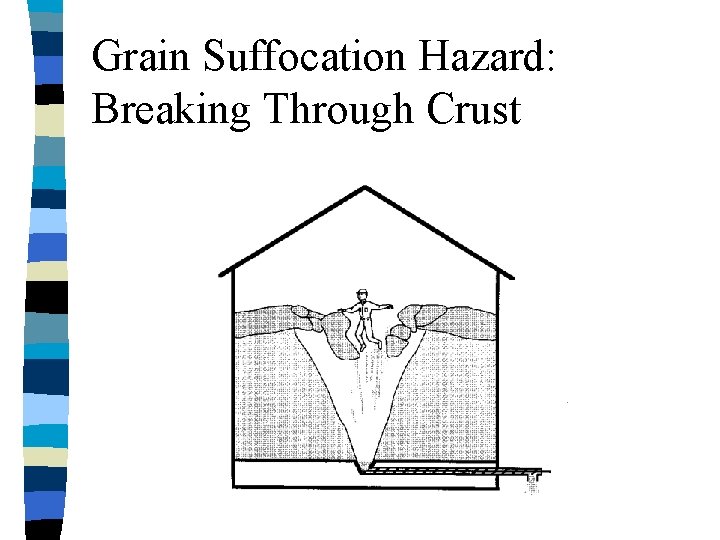
Grain Suffocation Hazard: Breaking Through Crust
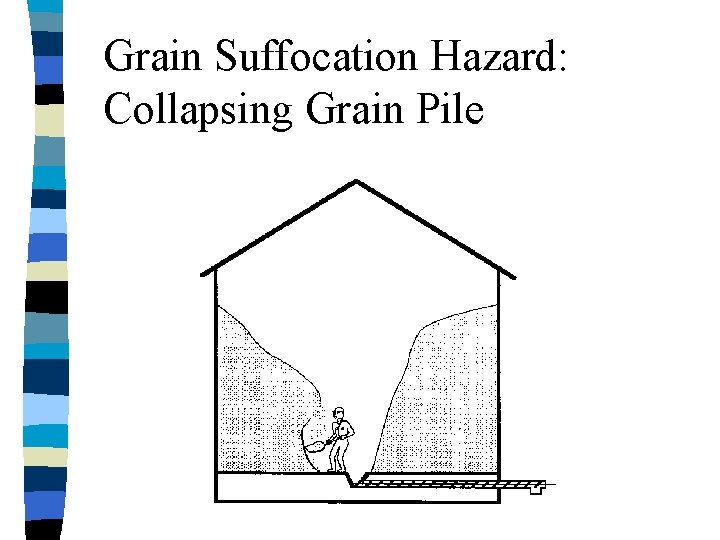
Grain Suffocation Hazard: Collapsing Grain Pile
- Slides: 22