
Temporary Devices as Bridge to More Permanent MCS
Temporary Devices as Bridge to More Permanent MCS J. Eduardo Rame University of Pennsylvania 16 May 2015
Synthesis and Overview The transition to durable mechanical circulatory support is difficult, with challenges post-cardiotomy to right ventricular adaptation to left sided support. The presence of cardiogenic shock is known to present additional and sometimes prohibitive risk. The use of Temporary Circulatory Support (TCS) devices can mitigate the risk of this transition. 1. Cardiogenic Shock and Consideration for EARLY Extracorporeal Support 2. Case Presentation: Recovery on HMII LVAD after Resussitation with Percutaneous LVAD, ECMO in postpartum shock 3. TCS as a Bridge to Durable Mechanical Suppot: Data from the Interagency Registry for Mechanical Circulatory Support (INTERMACS)
Cardiogenic Shock: A Spectrum of Perfusion • Spectrum: Low cardiac output state with organ hypoperfusion, but with systolic blood pressure >90 mm. Hg in response to inotropes without the use of an IABP • Spectrum: Profound hypoperfusion with cardiac index <1. 8 l/min/m 2 with mean blood pressure <65 mm. Hg and unresponsive to inotropes—catecholamine refractory.
End-Organ Dysfunction: Pathogenesis • Cellular and tissue-level hypoxia – Trans-organ gradient (MAP – CVP) of perfusion – Factor of an elevated CVP – congested organs are not well perfused even with MAPs> 60 mm – Metabolic Shift to Glucose under hypoxic conditions is adaptive but once liver failure with failed gluconeogenesis - Energetic Failure – Remember the RV: needs preload, reduced afterload, but a good MAP to maintain function – Failing RV Glucose dependent and PERFUSION Dependent
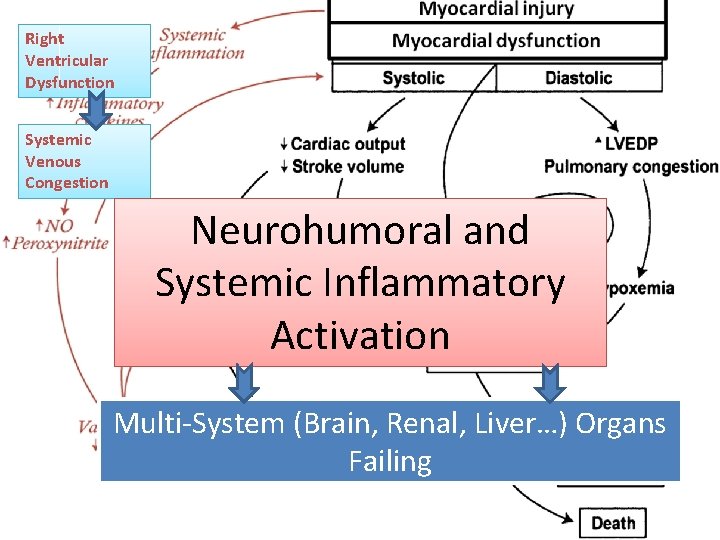
Right Ventricular Dysfunction Systemic Venous Congestion Neurohumoral and Systemic Inflammatory Activation Multi-System (Brain, Renal, Liver…) Organs Failing
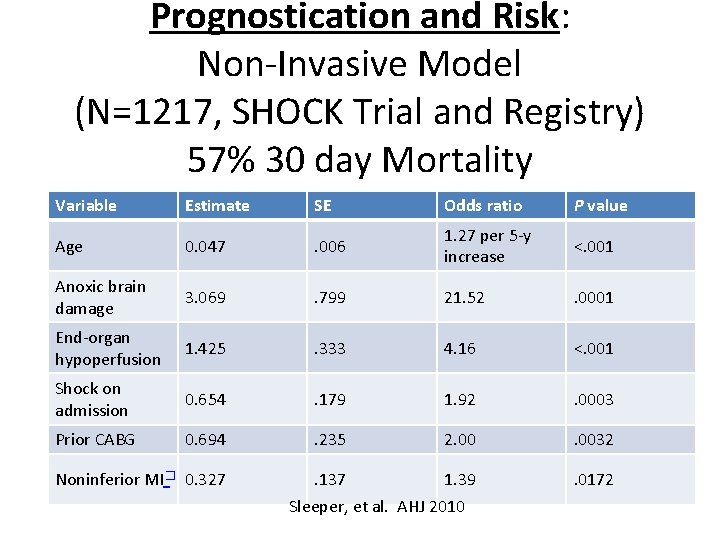
Prognostication and Risk: Non-Invasive Model (N=1217, SHOCK Trial and Registry) 57% 30 day Mortality Variable Estimate SE Odds ratio P value Age 0. 047 . 006 1. 27 per 5 -y increase <. 001 Anoxic brain damage 3. 069 . 799 21. 52 . 0001 End-organ hypoperfusion 1. 425 . 333 4. 16 <. 001 Shock on admission 0. 654 . 179 1. 92 . 0003 Prior CABG 0. 694 . 235 2. 0032 Noninferior MI� 0. 327 . 137 1. 39 . 0172 Sleeper, et al. AHJ 2010
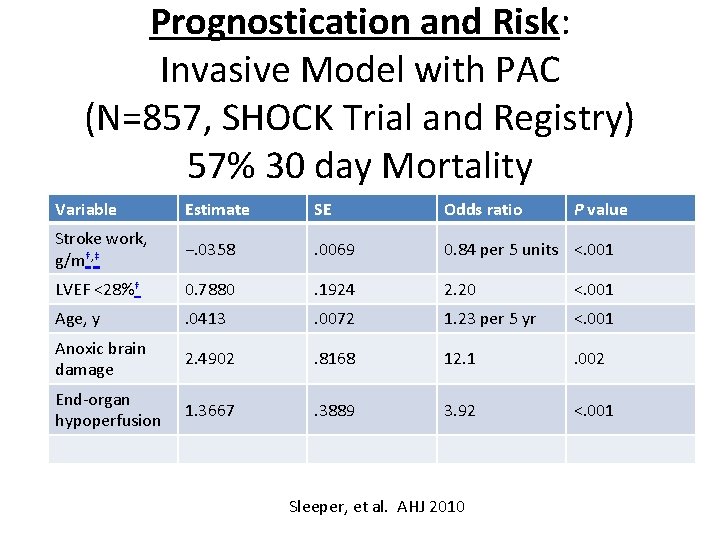
Prognostication and Risk: Invasive Model with PAC (N=857, SHOCK Trial and Registry) 57% 30 day Mortality Variable Estimate SE Odds ratio Stroke work, g/m†, ‡ −. 0358 . 0069 0. 84 per 5 units <. 001 LVEF <28%† 0. 7880 . 1924 2. 20 <. 001 Age, y . 0413 . 0072 1. 23 per 5 yr <. 001 Anoxic brain damage 2. 4902 . 8168 12. 1 . 002 End-organ hypoperfusion 1. 3667 . 3889 3. 92 <. 001 Sleeper, et al. AHJ 2010 P value
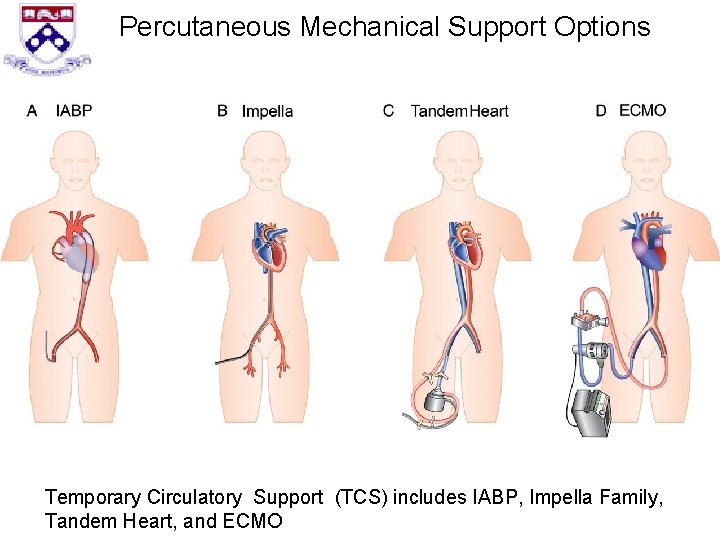
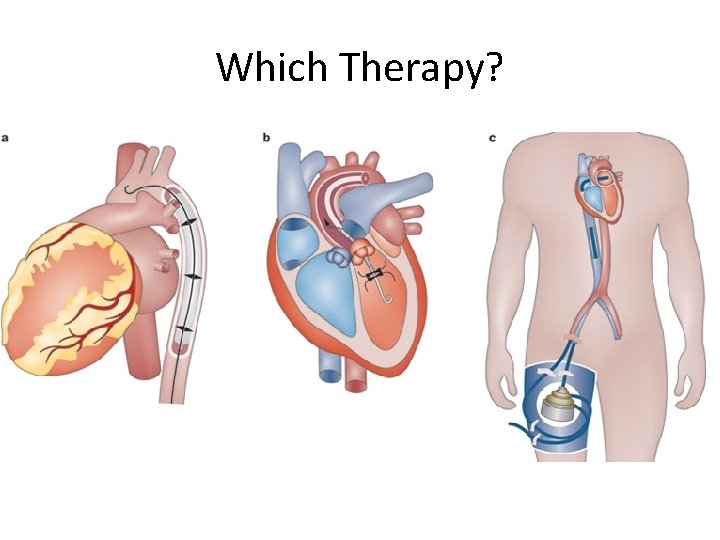
Percutaneous Mechanical Support Options Temporary Circulatory Support (TCS) includes IABP, Impella Family, Tandem Heart, and ECMO
CASE Presentation: Peripartum Cardiomyopathy in Cardiogenic Shock • 19 y/o Female Presented 3 weeks after a well-tolerated CSection with fulminant cardiogenic shock (12/5/2012) – Asysolic Arrest – Severe Cardiomyopathy – Depressed mentation – Metabolic Acidosis • Failed Impella with Hypotension and ongoing multi-organ system failure (30 Levophed, 10 Epi, 300 Neo, 0, 08 Vasopressin, Milrinone) – ATN (Gross Hemolysis in Urine) – Acute Liver Injury with Necrosis – Pulmonary Edema

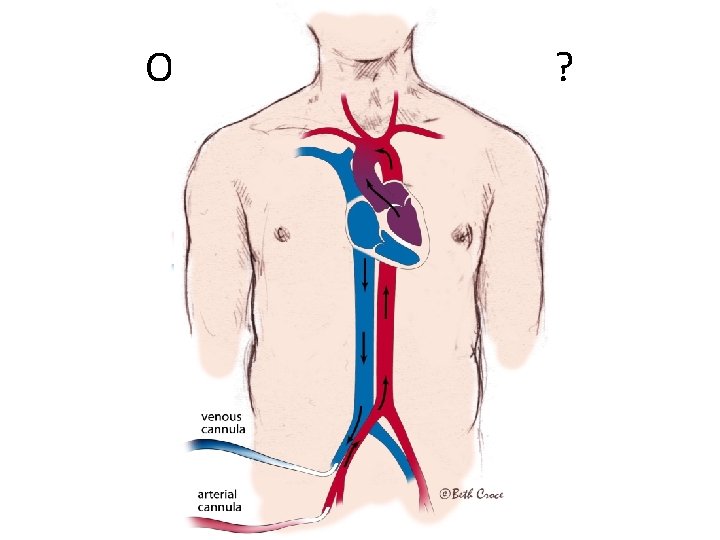
ECMO : 12/6 • 12/06/2012 Placed on VA ECMO in the OR with 5. 5 L/min flow • A Heart. Port Swan suction catheter was advanced into the PA which provided an additional 600 m. L of flow and drainage leading to a total flow of 6. 2 liters at 4700 rpm. CVP was approximately 18 -20 The patient began to diurese in OR and the acidosis began to be corrected with ECMO in the OR. • All drips were removed except for milrinone and 2 of epinephrine • Over the next week -- She improved from all end-organ perspectives except renal ( Serum creatinine rose to 7 requiring CRRT) – Neurologically intact – Pulmonary edema resolved but could not be extubated -- ? Pneumonia/pneumonitis – Echocardiogram : LVEF < 10% with evidence of Non-Compaction – WBC persistently in the 50, 000 – no fevers but persistently tachycardic
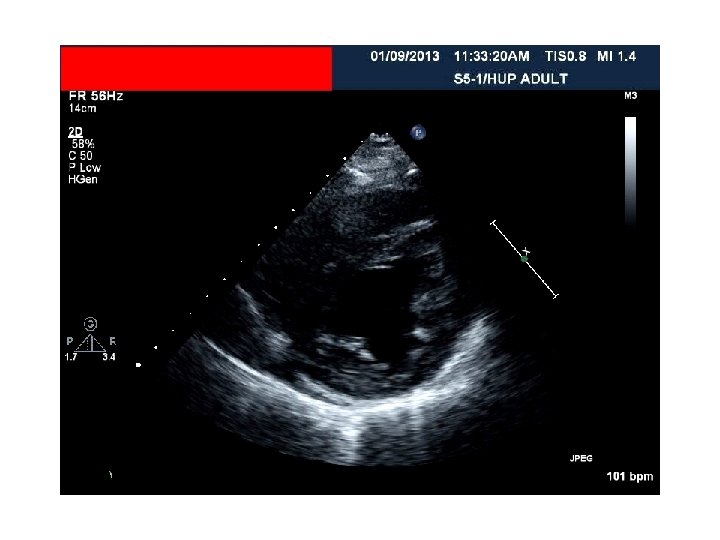
12/13/2012: HM II Implant • There was heavy trabeculation of the apex and this was excised aggressively. • Pataient was easily weaned from cardiopulmonary bypass to LVAD support and RV function was normal. Flows were approximately 4. 2 liters on 8600 rpm with the CVP in the single digits. • Clinical Improvement Post-implant was marked – Renal Function Recovered (2 week CRRT) – She did require Tracheostomy for a slower vent wean (deconditioned/recovery from Pneumonia) – LVEF Improved [ Results of Myocardial Core – mild Lymphocytic Carditis without Necrosis/Fibrosis consistent with Peripartum CM]
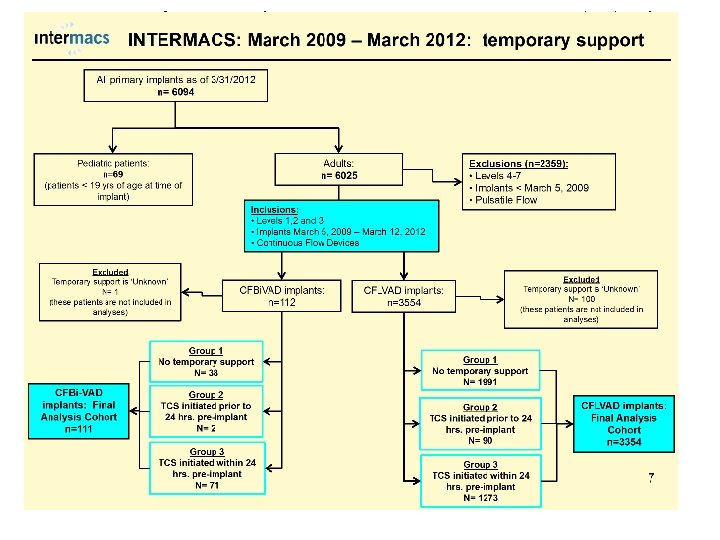
Outcomes after Ventricular Assist Device Support in Patients Bridged with Temporary Circulatory Support: Analysis from INTERMACS S Shreenivas 1, K Hudock 2, S Myers 3 A Acker 4, P Atluri 4, M Acker 4, El-Banayosy A 5, FD Pagani 6, P Bonde 7, Francisco Arabia, JK Kirklin 5, JE Rame 1 Hypothesis: The Use of TCS as a bridge to permanent MCS can allow patients with end-organ dysfunction due to cardiogenic shock to have satisfactory outcomes after VAD therapy.
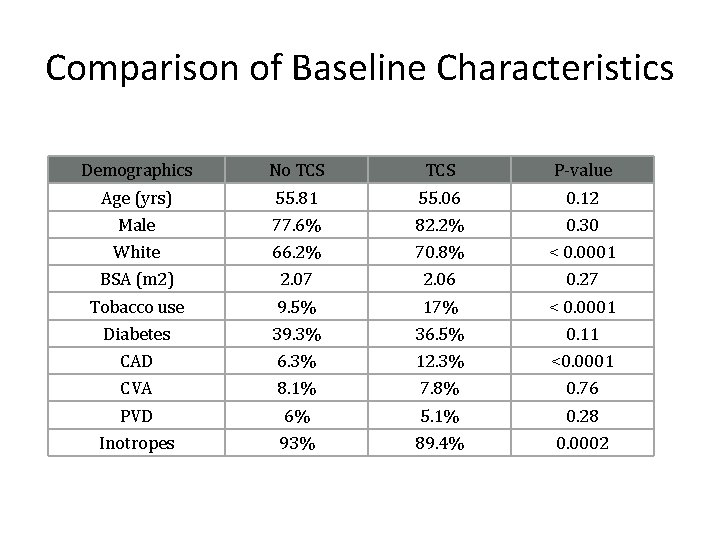
Comparison of Baseline Characteristics Demographics No TCS P-value Age (yrs) 55. 81 55. 06 0. 12 Male 77. 6% 82. 2% 0. 30 White 66. 2% 70. 8% < 0. 0001 BSA (m 2) 2. 07 2. 06 0. 27 Tobacco use 9. 5% 17% < 0. 0001 Diabetes 39. 3% 36. 5% 0. 11 CAD 6. 3% 12. 3% <0. 0001 CVA 8. 1% 7. 8% 0. 76 PVD 6% 5. 1% 0. 28 Inotropes 93% 89. 4% 0. 0002
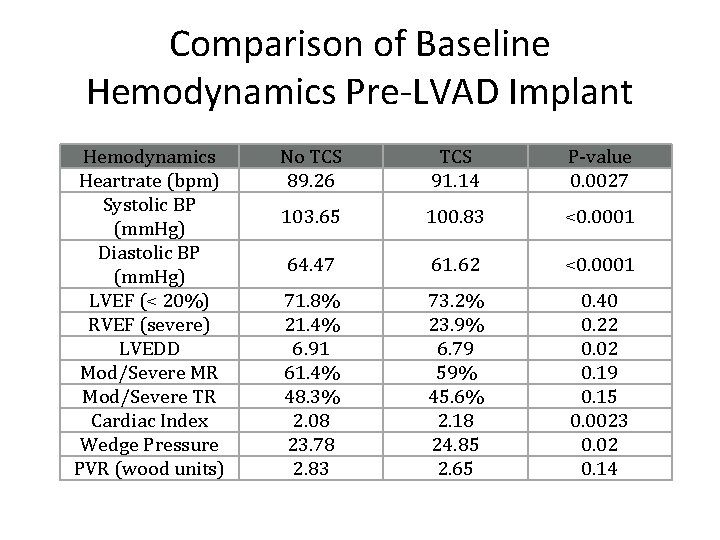
Comparison of Baseline Hemodynamics Pre-LVAD Implant Hemodynamics Heartrate (bpm) Systolic BP (mm. Hg) Diastolic BP (mm. Hg) LVEF (< 20%) RVEF (severe) LVEDD Mod/Severe MR Mod/Severe TR Cardiac Index Wedge Pressure PVR (wood units) No TCS 89. 26 TCS 91. 14 P-value 0. 0027 103. 65 100. 83 <0. 0001 64. 47 61. 62 <0. 0001 71. 8% 21. 4% 6. 91 61. 4% 48. 3% 2. 08 23. 78 2. 83 73. 2% 23. 9% 6. 79 59% 45. 6% 2. 18 24. 85 2. 65 0. 40 0. 22 0. 02 0. 19 0. 15 0. 0023 0. 02 0. 14
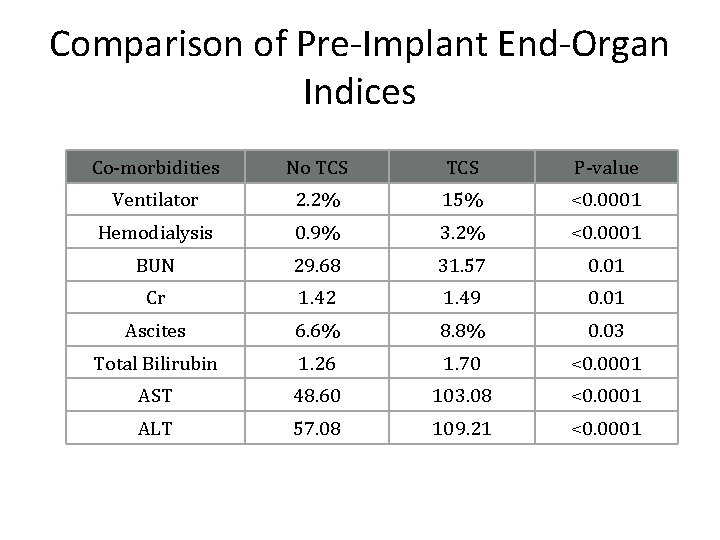
Comparison of Pre-Implant End-Organ Indices Co-morbidities No TCS P-value Ventilator 2. 2% 15% <0. 0001 Hemodialysis 0. 9% 3. 2% <0. 0001 BUN 29. 68 31. 57 0. 01 Cr 1. 42 1. 49 0. 01 Ascites 6. 6% 8. 8% 0. 03 Total Bilirubin 1. 26 1. 70 <0. 0001 AST 48. 60 103. 08 <0. 0001 ALT 57. 08 109. 21 <0. 0001
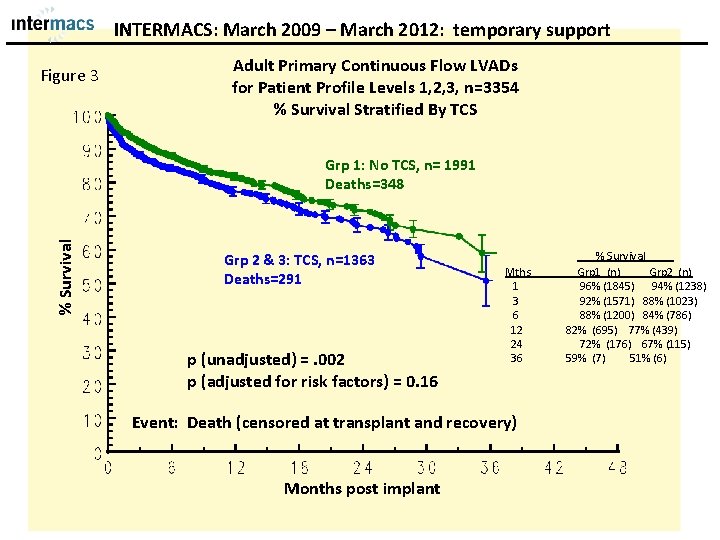
INTERMACS: March 2009 – March 2012: temporary support Figure 3 Adult Primary Continuous Flow LVADs for Patient Profile Levels 1, 2, 3, n=3354 % Survival Stratified By TCS % Survival Grp 1: No TCS, n= 1991 Deaths=348 Grp 2 & 3: TCS, n=1363 Deaths=291 p (unadjusted) =. 002 p (adjusted for risk factors) = 0. 16 % Survival Mths Grp 1 (n) Grp 2 (n) 1 96% (1845) 94% (1238) 3 92% (1571) 88% (1023) 6 88% (1200) 84% (786) 12 82% (695) 77% (439) 24 72% (176) 67% (115) 36 59% (7) 51% (6) Event: Death (censored at transplant and recovery) Months post implant
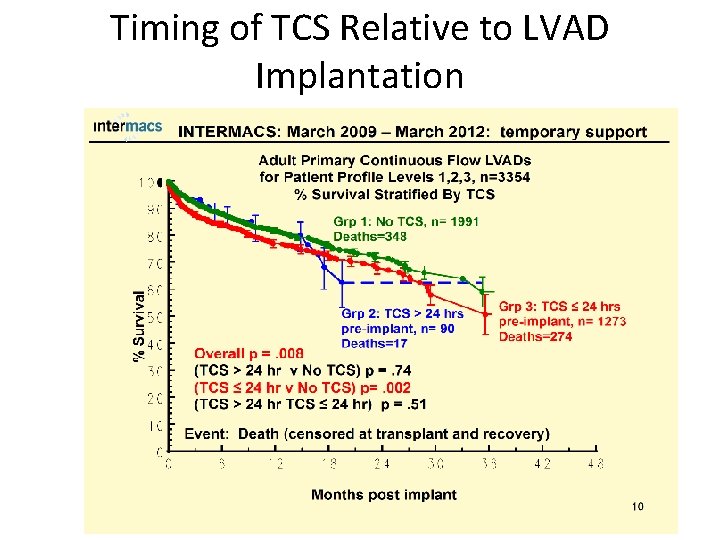
Timing of TCS Relative to LVAD Implantation
Which Therapy?
Or Is it Time for ECMO ?
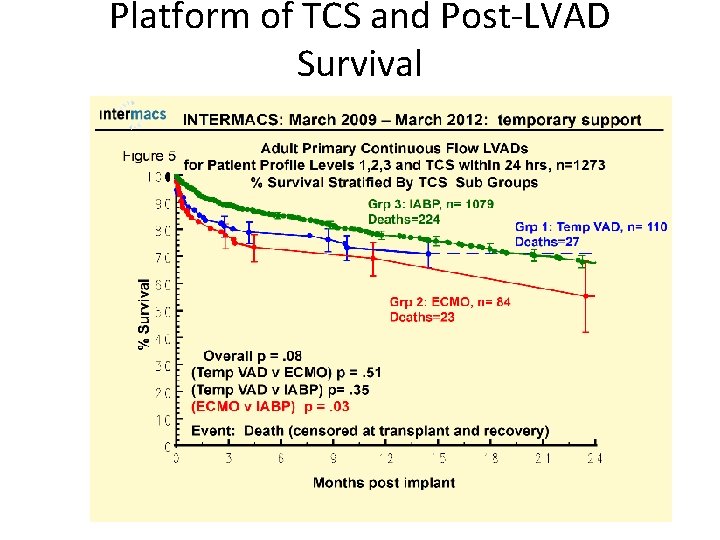
Platform of TCS and Post-LVAD Survival
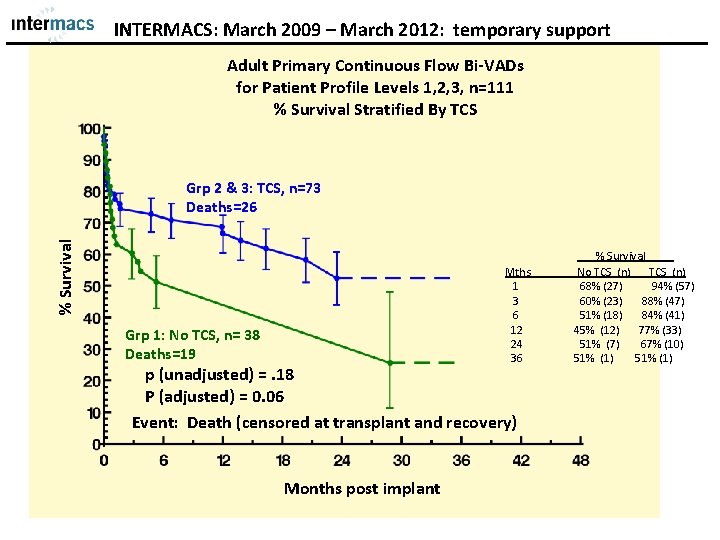
INTERMACS: March 2009 – March 2012: temporary support Adult Primary Continuous Flow Bi-VADs for Patient Profile Levels 1, 2, 3, n=111 % Survival Stratified By TCS % Survival Grp 2 & 3: TCS, n=73 Deaths=26 % Survival Mths No TCS (n) 1 68% (27) 94% (57) 3 60% (23) 88% (47) 6 51% (18) 84% (41) 12 45% (12) 77% (33) 24 51% (7) 67% (10) 36 51% (1) Grp 1: No TCS, n= 38 Deaths=19 p (unadjusted) =. 18 P (adjusted) = 0. 06 Event: Death (censored at transplant and recovery) Months post implant
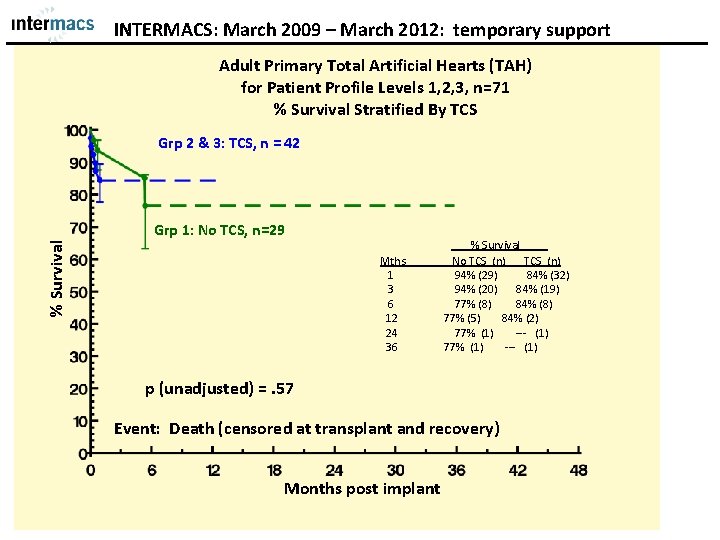
INTERMACS: March 2009 – March 2012: temporary support Adult Primary Total Artificial Hearts (TAH) for Patient Profile Levels 1, 2, 3, n=71 % Survival Stratified By TCS Grp 2 & 3: TCS, n = 42 % Survival Grp 1: No TCS, n=29 % Survival Mths No TCS (n) 1 94% (29) 84% (32) 3 94% (20) 84% (19) 6 77% (8) 84% (8) 12 77% (5) 84% (2) 24 77% (1) --- (1) 36 77% (1) --- (1) p (unadjusted) =. 57 Event: Death (censored at transplant and recovery) Months post implant
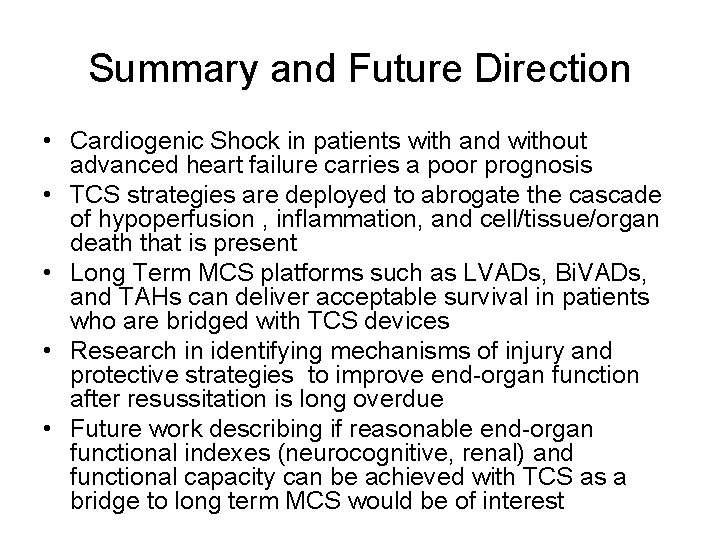
Summary and Future Direction • Cardiogenic Shock in patients with and without advanced heart failure carries a poor prognosis • TCS strategies are deployed to abrogate the cascade of hypoperfusion , inflammation, and cell/tissue/organ death that is present • Long Term MCS platforms such as LVADs, Bi. VADs, and TAHs can deliver acceptable survival in patients who are bridged with TCS devices • Research in identifying mechanisms of injury and protective strategies to improve end-organ function after resussitation is long overdue • Future work describing if reasonable end-organ functional indexes (neurocognitive, renal) and functional capacity can be achieved with TCS as a bridge to long term MCS would be of interest
Acknowledgements • • • Satya Shreenivas David Naftel Susan Myers Frank Pagani Jim Kirklin Francisco Arabia Aly El-Banayosi Alexandra Acker Michael Acker Pavan Atluri • Pascal Le. Prince

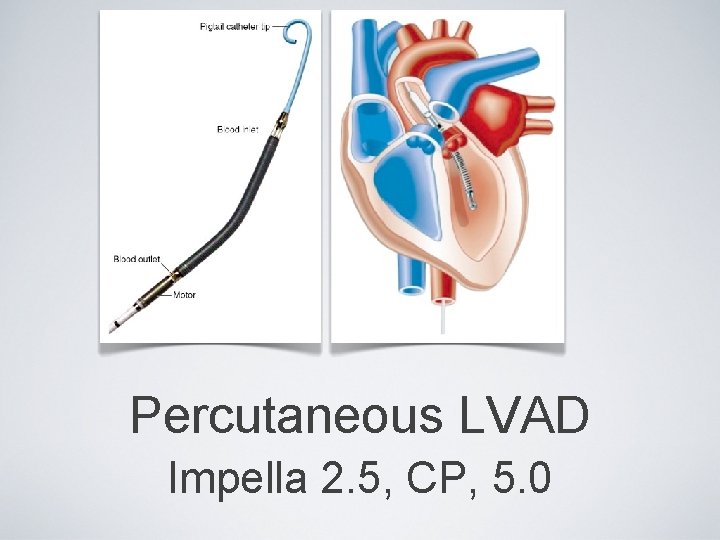
Percutaneous LVAD Impella 2. 5, CP, 5. 0
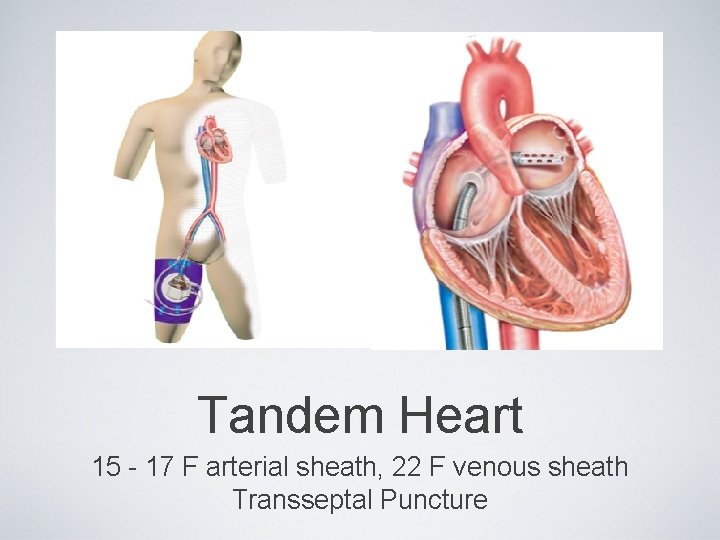
Tandem Heart 15 - 17 F arterial sheath, 22 F venous sheath Transseptal Puncture
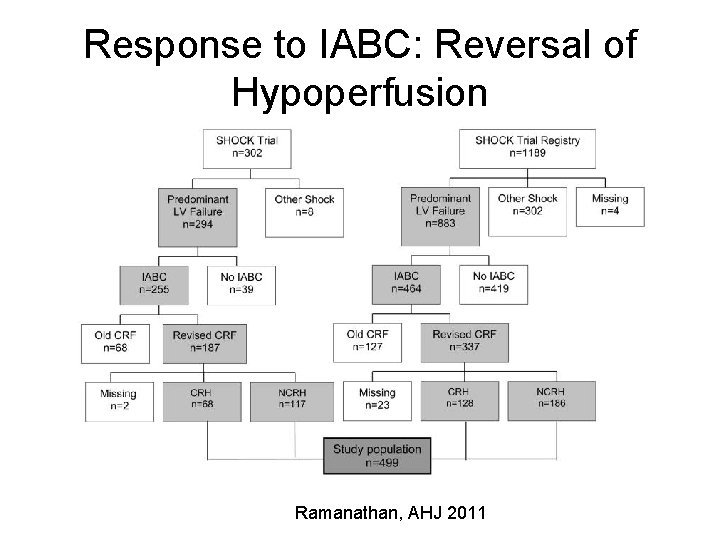
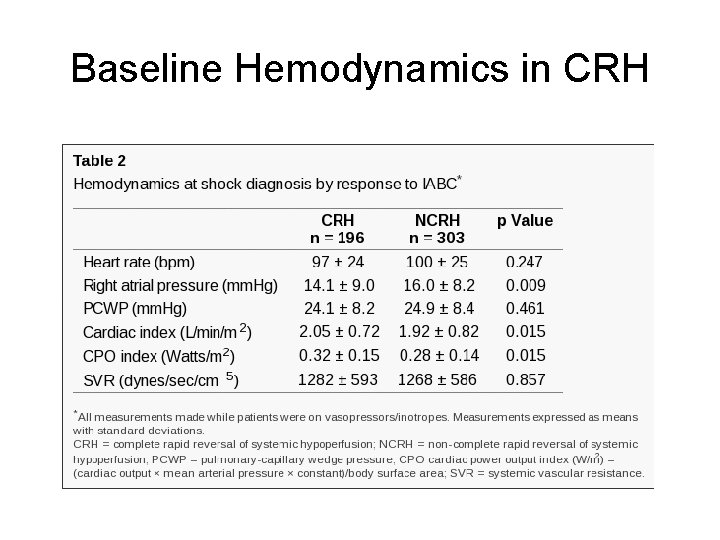
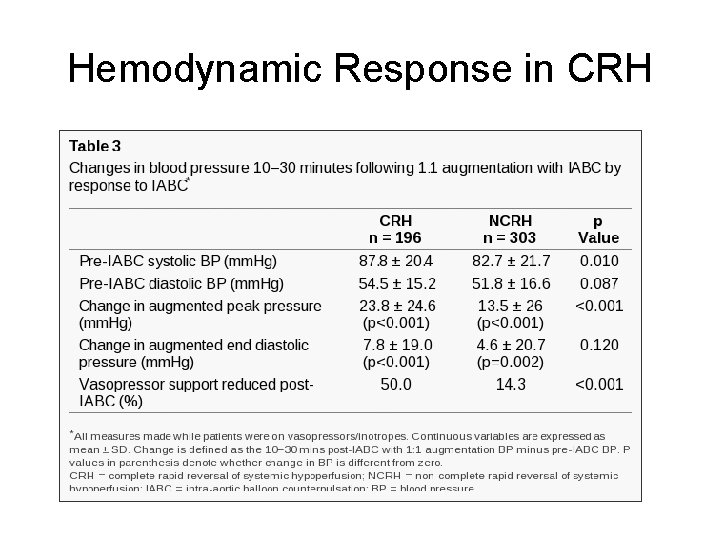
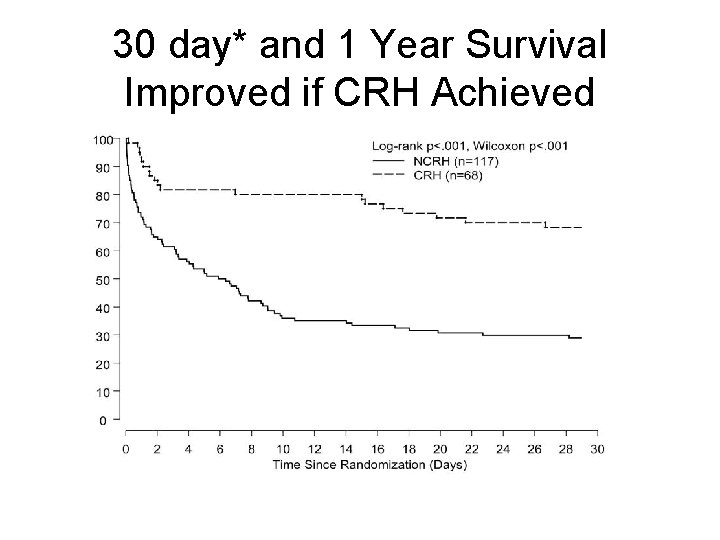
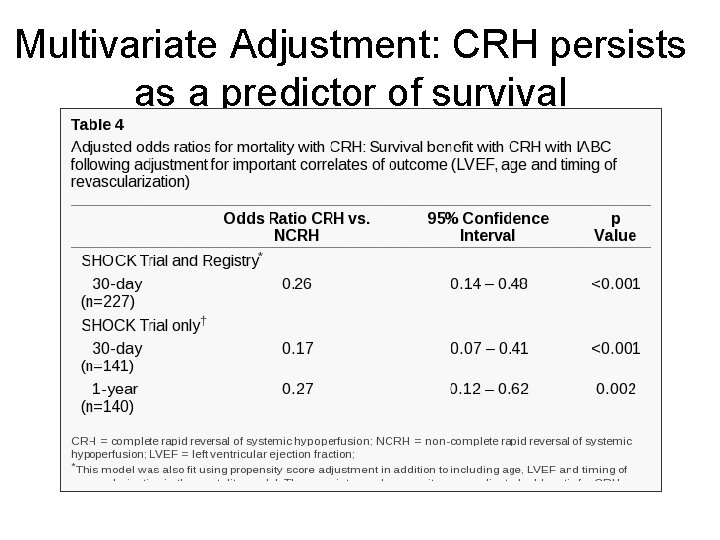
Response to IABC: Reversal of Hypoperfusion Ramanathan, AHJ 2011
Baseline Hemodynamics in CRH
Hemodynamic Response in CRH
30 day* and 1 Year Survival Improved if CRH Achieved
Multivariate Adjustment: CRH persists as a predictor of survival
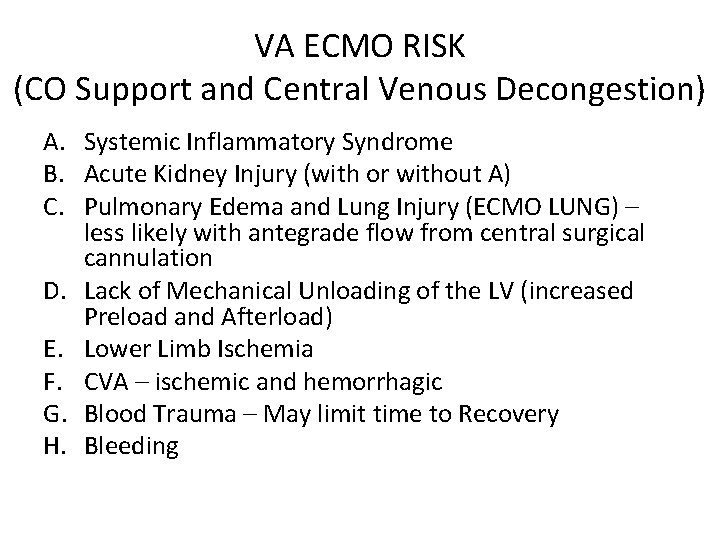
VA ECMO RISK (CO Support and Central Venous Decongestion) A. Systemic Inflammatory Syndrome B. Acute Kidney Injury (with or without A) C. Pulmonary Edema and Lung Injury (ECMO LUNG) – less likely with antegrade flow from central surgical cannulation D. Lack of Mechanical Unloading of the LV (increased Preload and Afterload) E. Lower Limb Ischemia F. CVA – ischemic and hemorrhagic G. Blood Trauma – May limit time to Recovery H. Bleeding
- Slides: 35