
TEMPORAL DISPLACEMENTS NEW EVIDENCE ON THE BINDING PROBLEM
TEMPORAL DISPLACEMENTS: NEW EVIDENCE ON THE BINDING PROBLEM Ekaterina Pechenkova Moscow State University
Binding Problem: how does the brain bind different types of information within unitary percepts of objects and scenes? Aspects of the Binding Problem: units of binding (features, objects, locations) binding mechanism
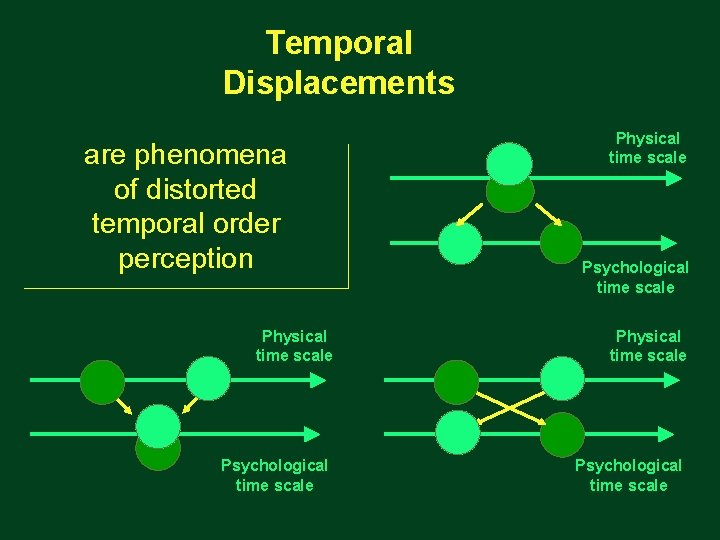
Temporal Displacements Physical time scale are phenomena of distorted temporal order perception Physical time scale Psychological time scale Physically: Psychologically: Physical simultaneous successive time scale event 1 Psychological event 2 time scale
Temporal displacements of at least one kind (distortions of simultaneous synthesis) are certainly binding errors. Thus, these phenomena may serve as new evidence on the famous “binding problem” and as a promising tool for studying binding mechanisms. Distortions of simultaneous synthesis emerge from accomplishment of a task demanding for a conjunction of events. Example of a task: to identify an event simultaneous with alarm clock ringing.
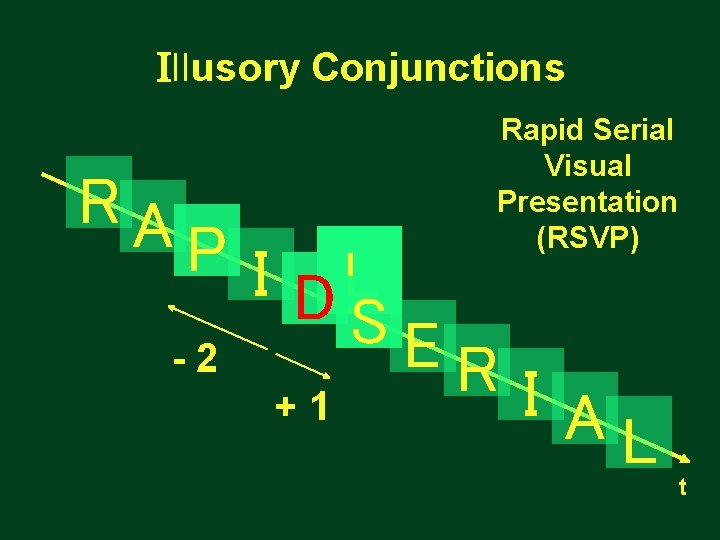
Illusory Conjunctions RA Rapid Serial Visual Presentation (RSVP) PI D A R P S E L I DS ER -2 IA +1 L t
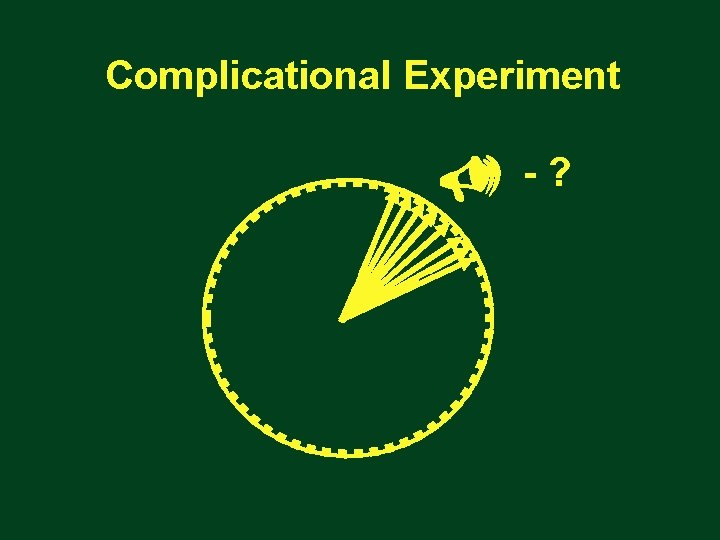
Complicational Experiment -?
Hypothesis Temporal displacements can be produced at least at two different levels of binding – feature integration level, producing both normal percepts of objects and illusory conjunctions, and object binding level, producing both normal percepts of scenes and temporal displacements of events occurring to different objects (including events from different modalities).
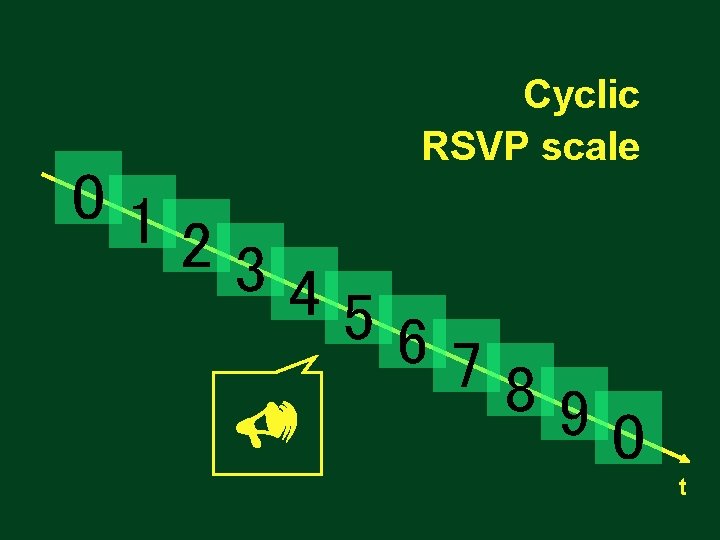
Cyclic RSVP scale 01 23 45 67 Key 8 90 event 5 t
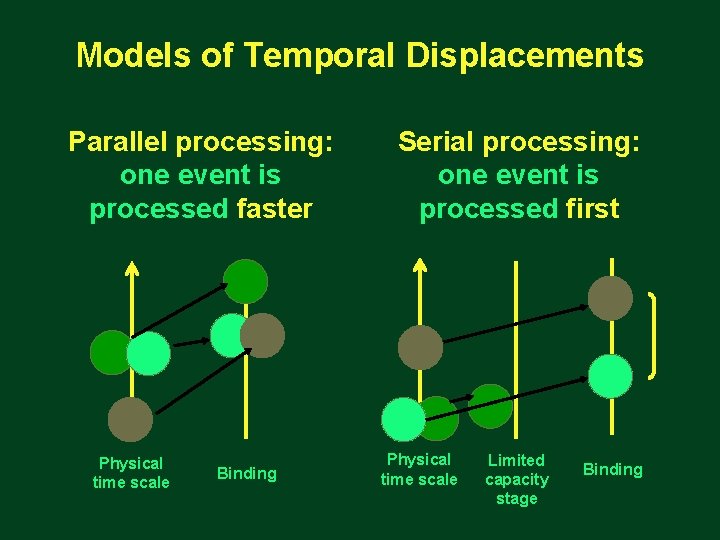
Models of Temporal Displacements Parallel processing: one event is processed faster Physical time scale Binding Serial processing: one event is processed first Physical time scale Limited capacity stage Binding
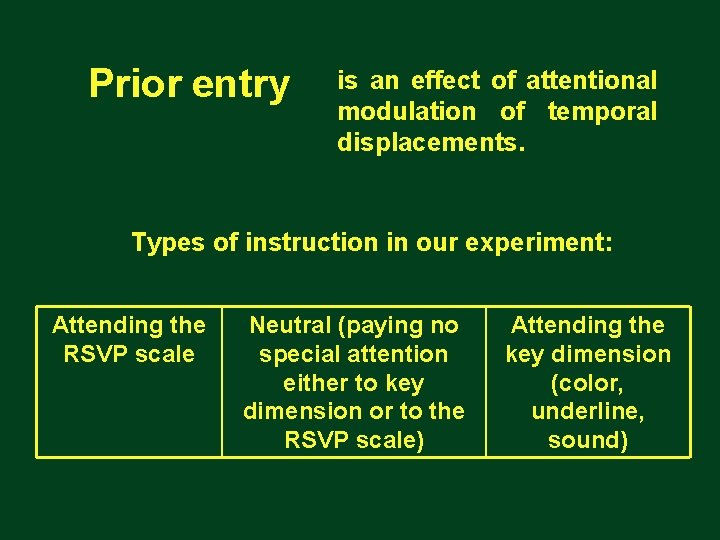
Prior entry is an effect of attentional modulation of temporal displacements. Types of instruction in our experiment: Attending the RSVP scale Neutral (paying no special attention either to key dimension or to the RSVP scale) Attending the key dimension (color, underline, sound)
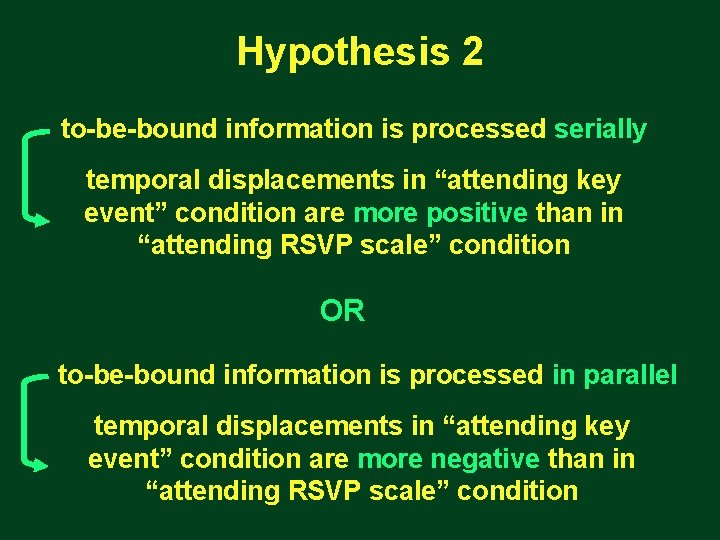
Hypothesis 2 to-be-bound information is processed serially temporal displacements in “attending key event” condition are more positive than in “attending RSVP scale” condition OR to-be-bound information is processed in parallel temporal displacements in “attending key event” condition are more negative than in “attending RSVP scale” condition
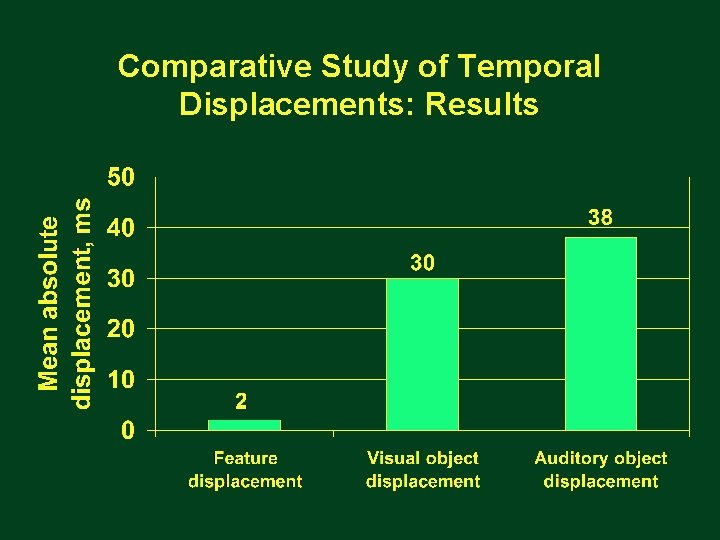
Comparative Study of Temporal Displacements: Results
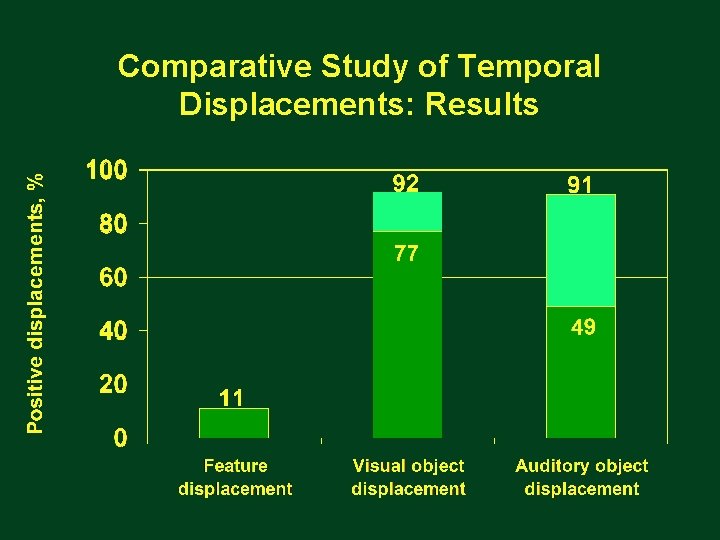
Comparative Study of Temporal Displacements: Results
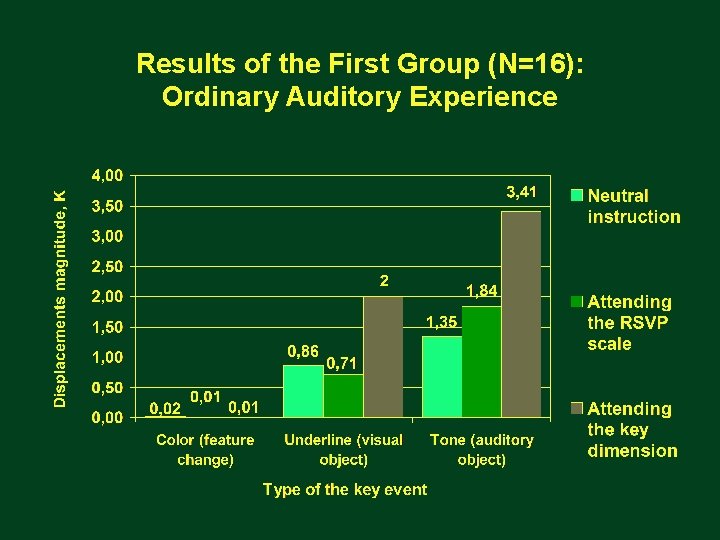
Results of the First Group (N=16): Ordinary Auditory Experience
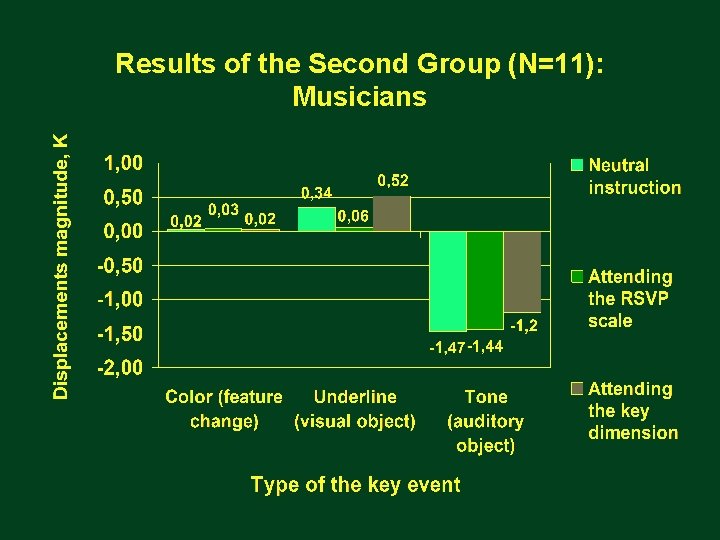
Results of the Second Group (N=11): Musicians
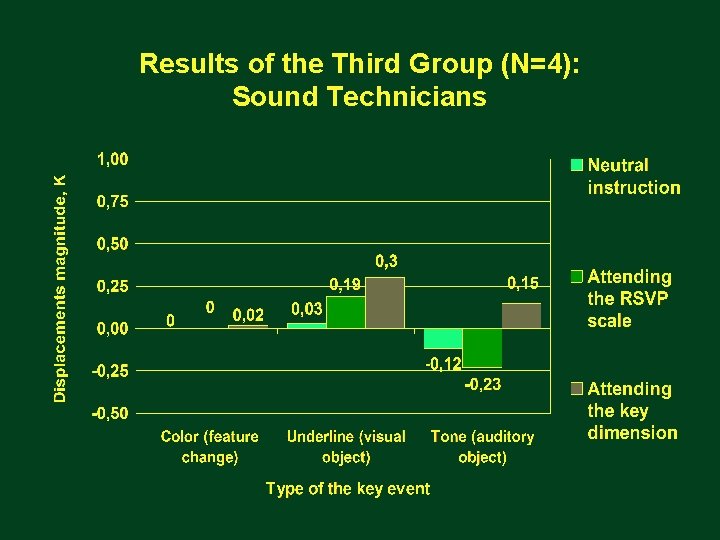
Results of the Third Group (N=4): Sound Technicians
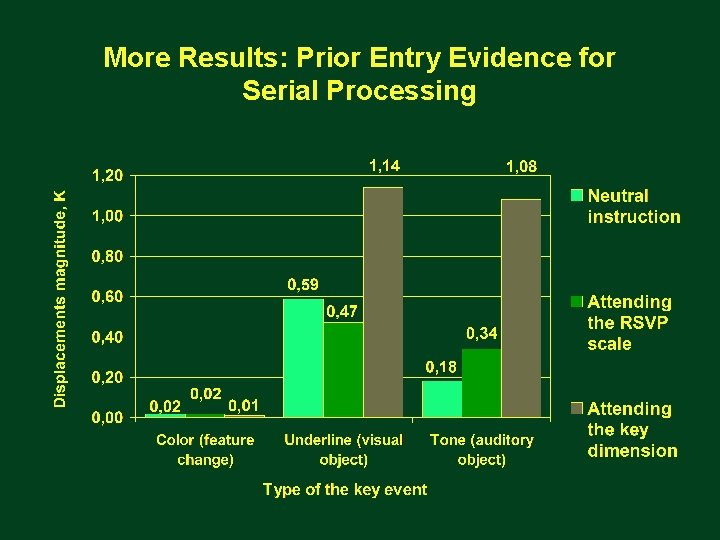
More Results: Prior Entry Evidence for Serial Processing
Conclusions A comparative study of temporal displacements under uniformed RSVP conditions has revealed that there at least two binding levels in human perceptual system — feature binding and object binding — each producing its own type of displacements. The object binding level is much more vulnerable to distortion than the feature integration level. Whether the key event and the to-be-reported event belong to the same or to different objects is a crucial factor for predicting magnitude of temporal displacement.
Conclusions Temporal displacement data imply serial rather than parallel processing of to-bebound information at least at the object binding level. But, taking into account the previous data we can conclude that a new hybrid model of binding should be elaborated, assimilating evidence for both serial processing and two binding levels statements.
- Slides: 19