
Temporal Classification and Change Detection May 6 IKONOS

- Slides: 26
Temporal Classification and Change Detection
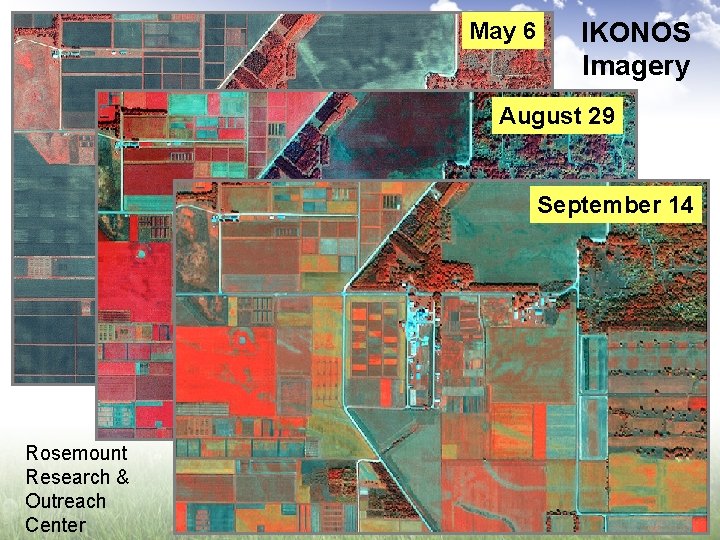
May 6 IKONOS Imagery August 29 September 14 Rosemount Research & Outreach Center
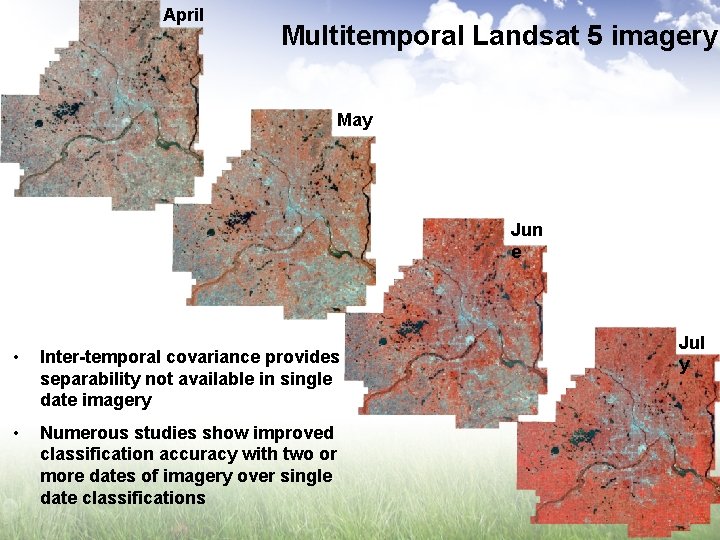
April Multitemporal Landsat 5 imagery May Jun e • Inter-temporal covariance provides separability not available in single date imagery • Numerous studies show improved classification accuracy with two or more dates of imagery over single date classifications Jul y
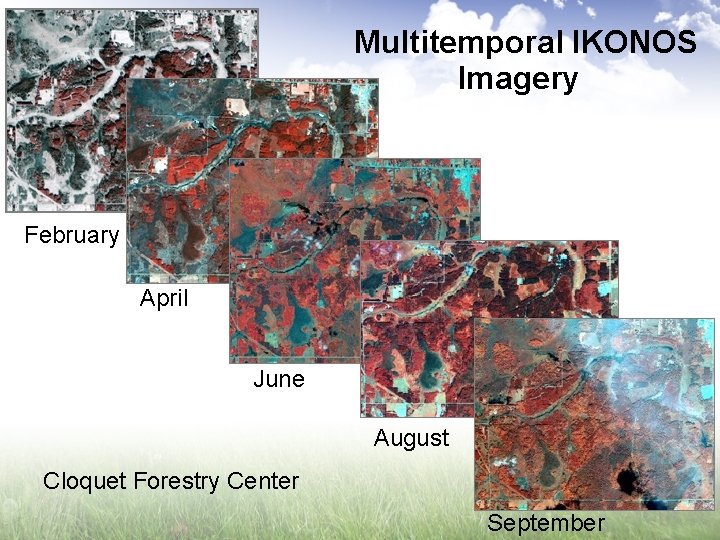
Multitemporal IKONOS Imagery February April June August Cloquet Forestry Center September
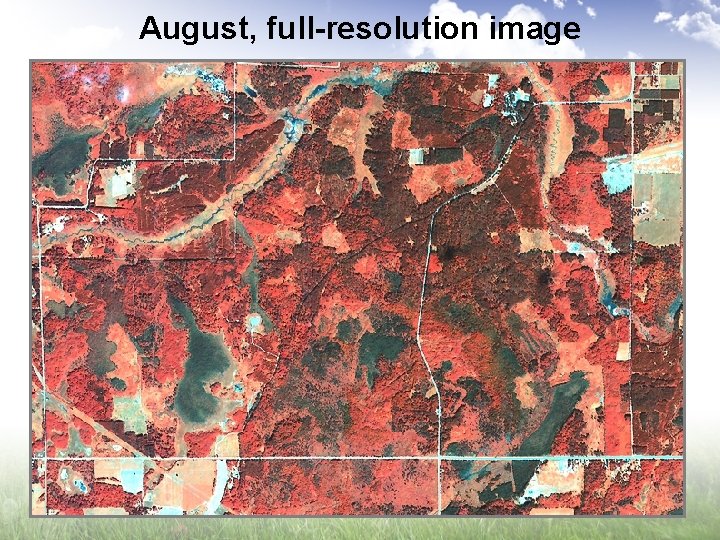
August, full-resolution image
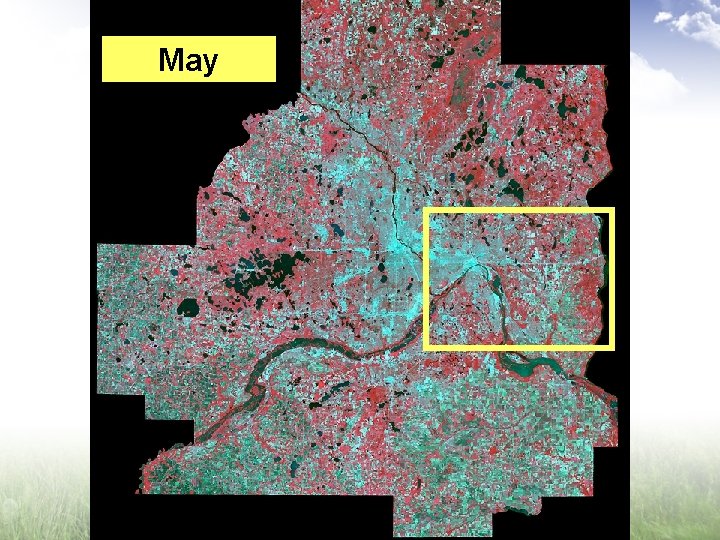
May
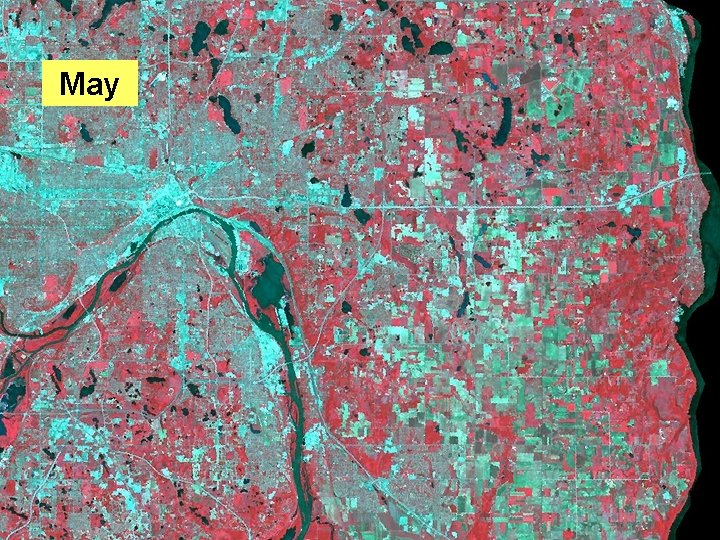
May
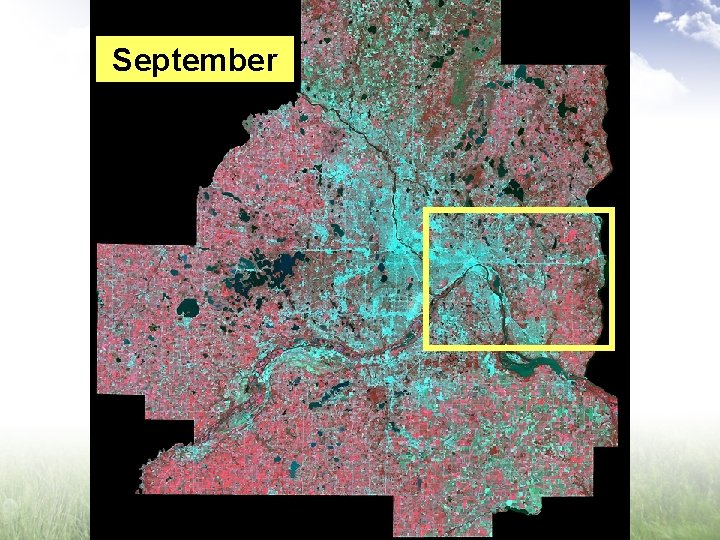
September
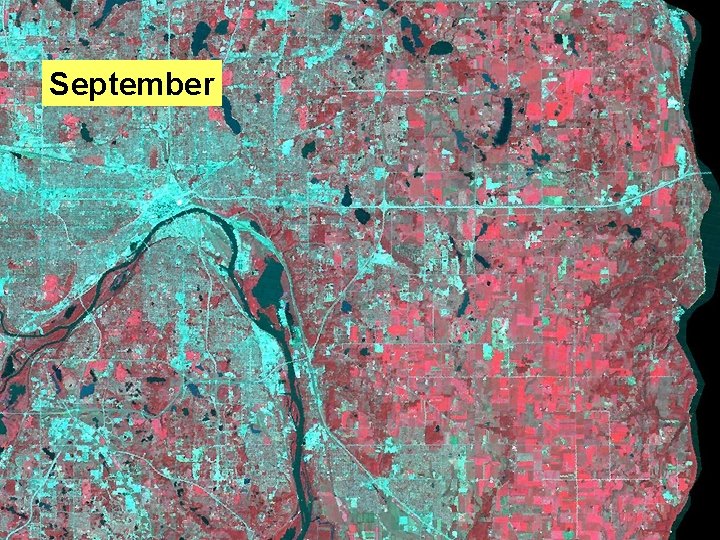
September
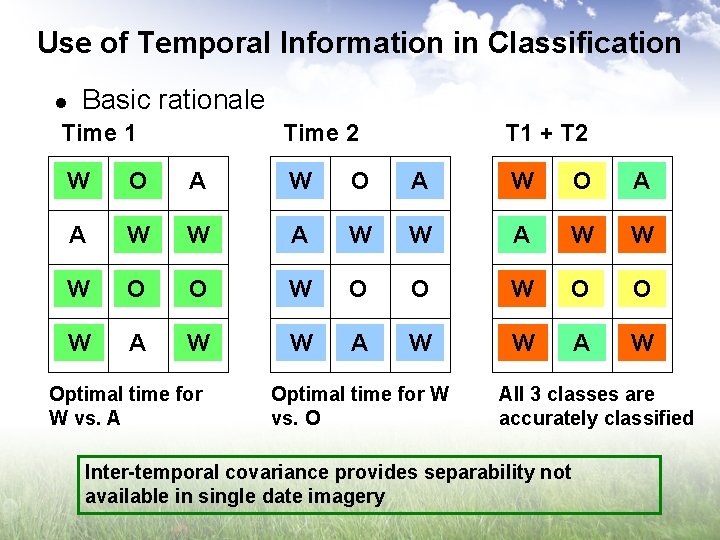
Use of Temporal Information in Classification l Basic rationale Time 1 T 1 + T 2 Time 2 W O A A W W W O O W A W Optimal time for W vs. A Optimal time for W vs. O All 3 classes are accurately classified Inter-temporal covariance provides separability not available in single date imagery
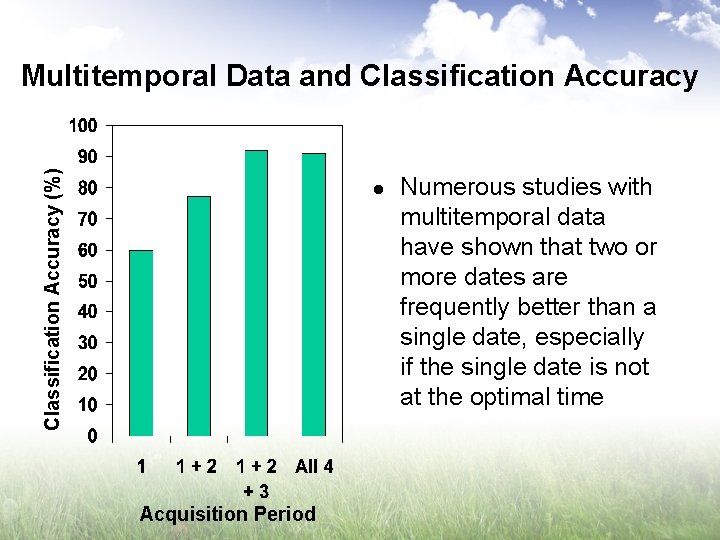
Classification Accuracy (%) Multitemporal Data and Classification Accuracy l Acquisition Period Numerous studies with multitemporal data have shown that two or more dates are frequently better than a single date, especially if the single date is not at the optimal time
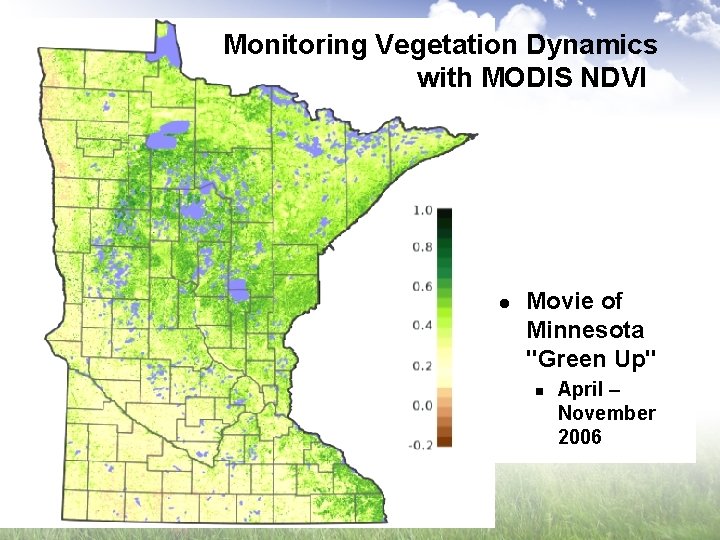
Monitoring Vegetation Dynamics with MODIS NDVI l Movie of Minnesota "Green Up" n April – November 2006
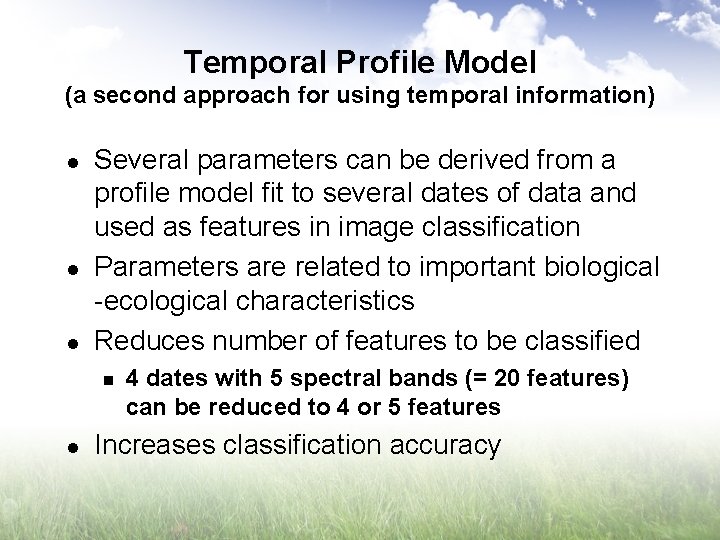
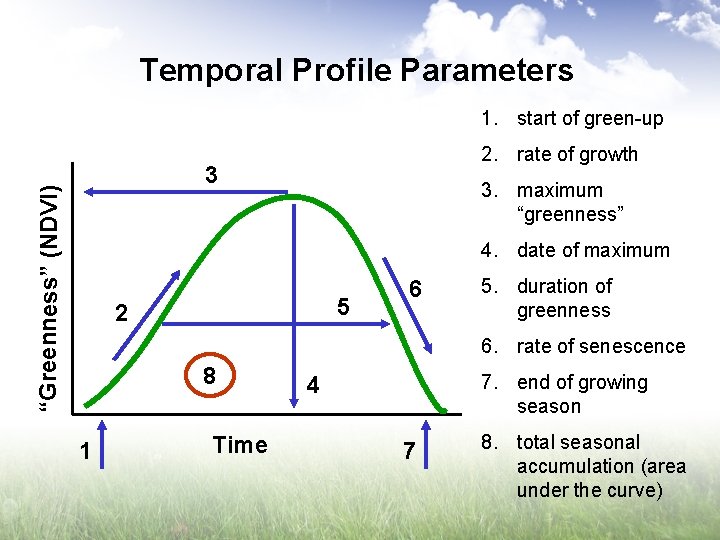
Temporal Profile Model (a second approach for using temporal information) l l l Several parameters can be derived from a profile model fit to several dates of data and used as features in image classification Parameters are related to important biological -ecological characteristics Reduces number of features to be classified n l 4 dates with 5 spectral bands (= 20 features) can be reduced to 4 or 5 features Increases classification accuracy
Temporal Profile Parameters 1. start of green-up 2. rate of growth “Greenness” (NDVI) 3 3. maximum “greenness” 4. date of maximum 5 2 6 5. duration of greenness 6. rate of senescence 8 1 Time 7. end of growing season 4 7 8. total seasonal accumulation (area under the curve)
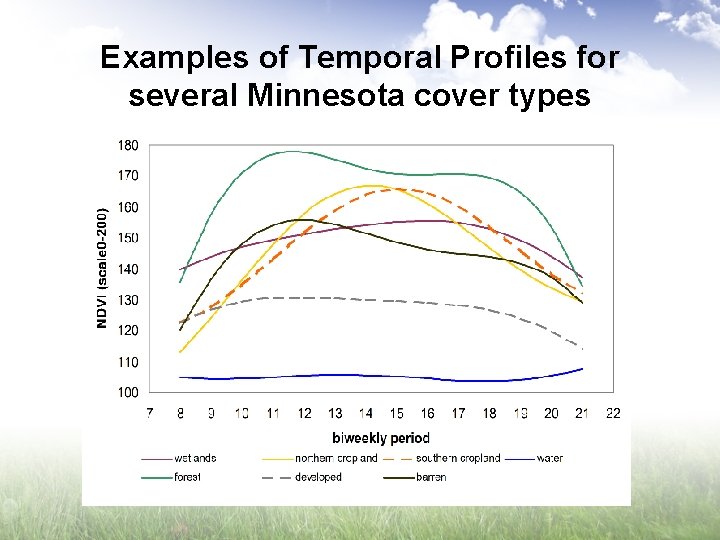
Examples of Temporal Profiles for several Minnesota cover types
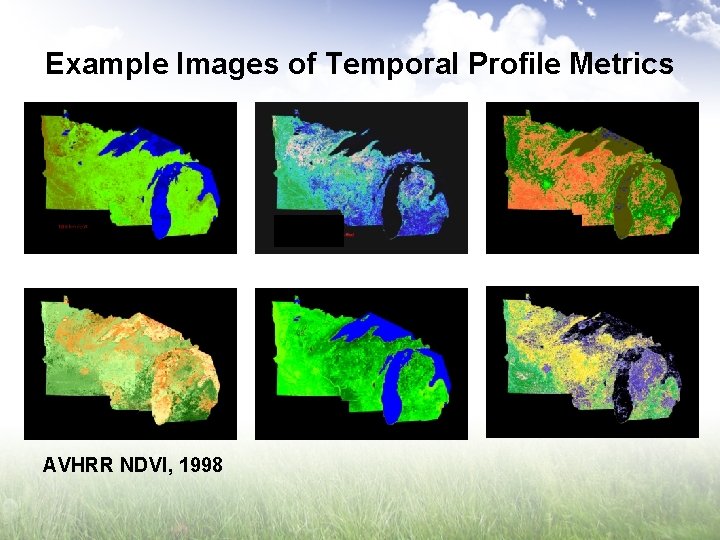
Example Images of Temporal Profile Metrics Start Date (1) Time of Peak (4) AVHRR NDVI, 1998 Rate of Growth (2) Duration (5) Maximum (3) Senescence Rate (6)
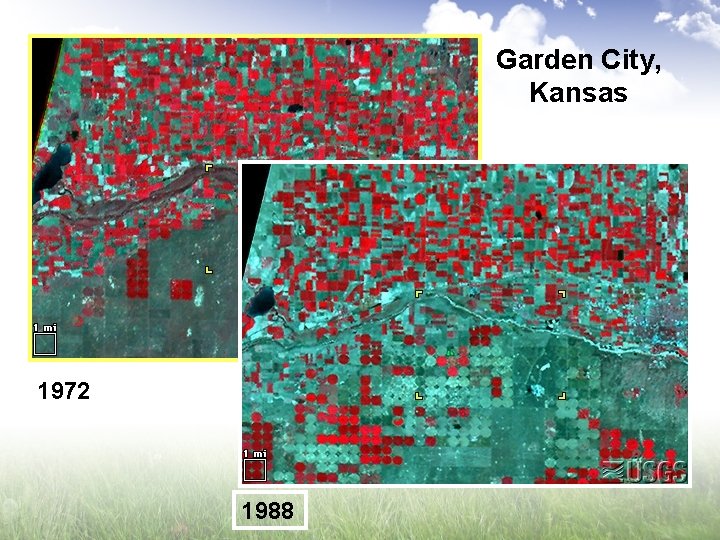
Garden City, Kansas 1972 1988
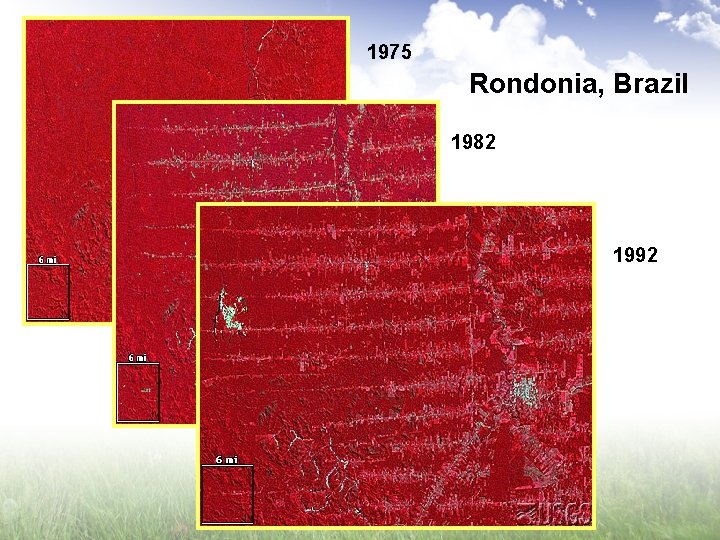
1975 Rondonia, Brazil 1982 1992
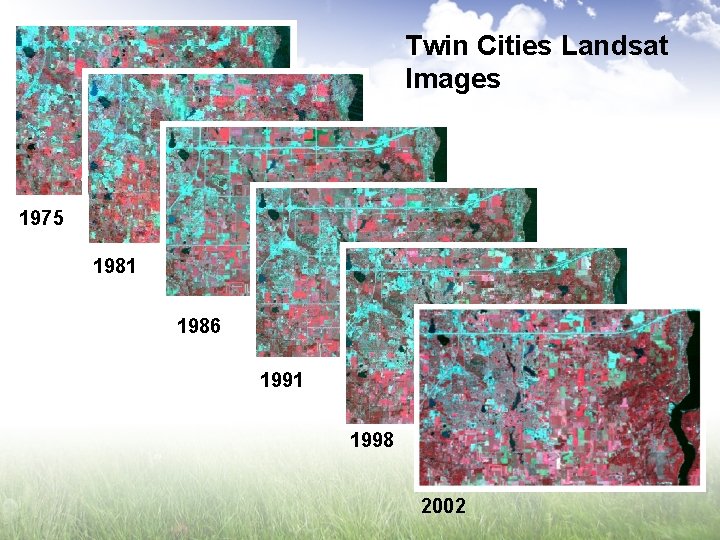
Twin Cities Landsat Images 1975 1981 1986 1991 1998 2002
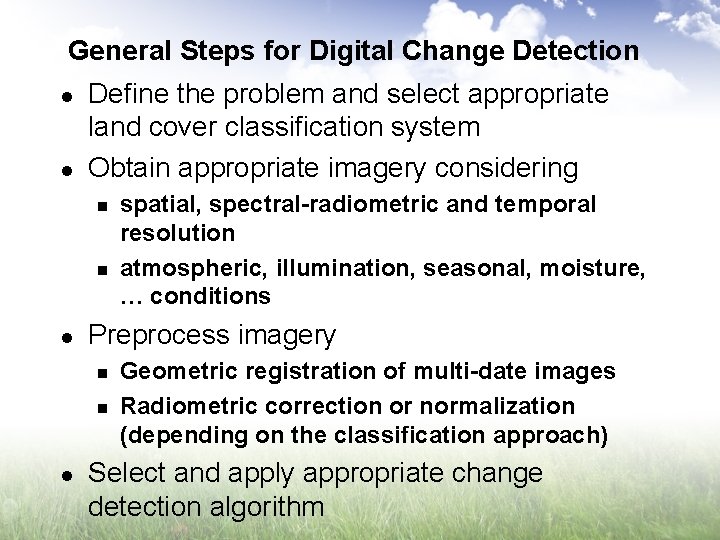
General Steps for Digital Change Detection l l Define the problem and select appropriate land cover classification system Obtain appropriate imagery considering n n l Preprocess imagery n n l spatial, spectral-radiometric and temporal resolution atmospheric, illumination, seasonal, moisture, … conditions Geometric registration of multi-date images Radiometric correction or normalization (depending on the classification approach) Select and apply appropriate change detection algorithm
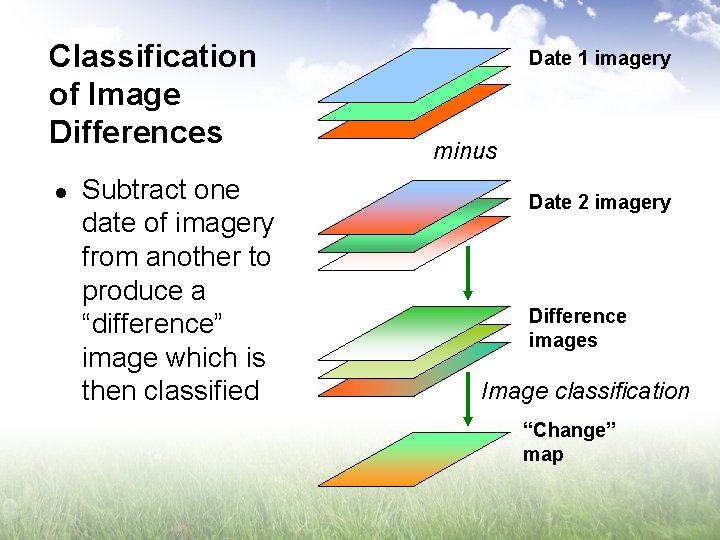
Classification of Image Differences l Subtract one date of imagery from another to produce a “difference” image which is then classified Date 1 imagery minus Date 2 imagery Difference images Image classification “Change” map
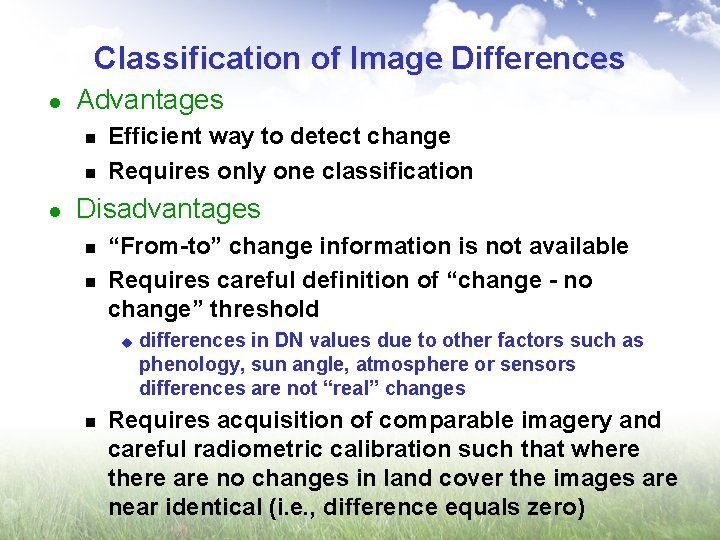
Classification of Image Differences l Advantages n n l Efficient way to detect change Requires only one classification Disadvantages n n “From-to” change information is not available Requires careful definition of “change - no change” threshold u n differences in DN values due to other factors such as phenology, sun angle, atmosphere or sensors differences are not “real” changes Requires acquisition of comparable imagery and careful radiometric calibration such that where there are no changes in land cover the images are near identical (i. e. , difference equals zero)
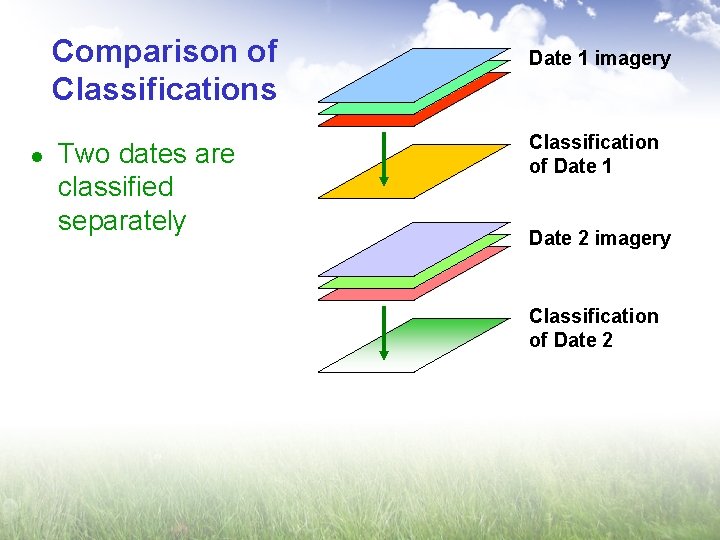
Comparison of Classifications l Two dates are classified separately Date 1 imagery Classification of Date 1 Date 2 imagery Classification of Date 2
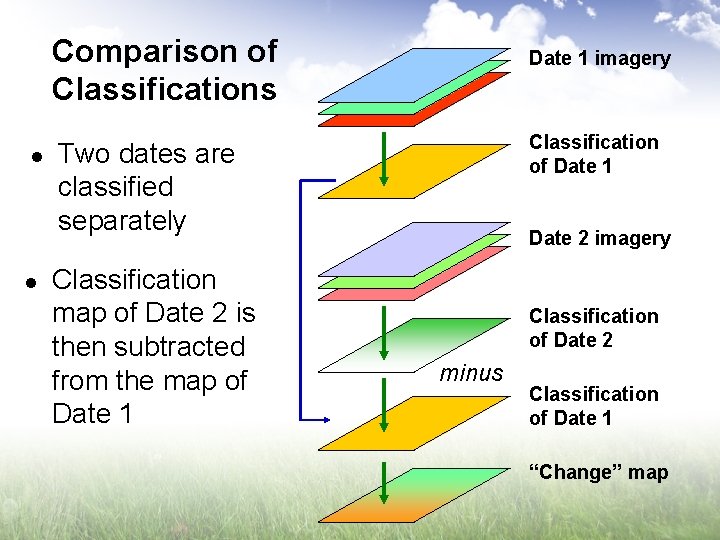
Comparison of Classifications l l Date 1 imagery Classification of Date 1 Two dates are classified separately Classification map of Date 2 is then subtracted from the map of Date 1 Date 2 imagery Classification of Date 2 minus Classification of Date 1 “Change” map
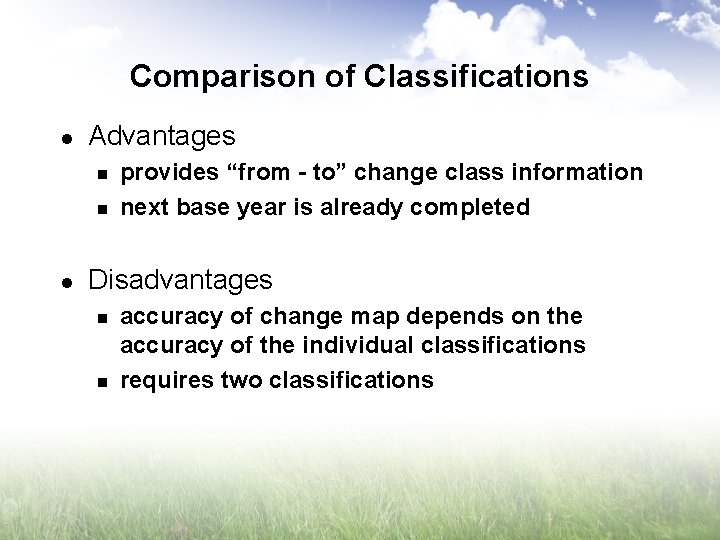
Comparison of Classifications l Advantages n n l provides “from - to” change class information next base year is already completed Disadvantages n n accuracy of change map depends on the accuracy of the individual classifications requires two classifications
Summary l Multitemporal data, typically at different times of the year, can be used to increase classification accuracy and specificity n l l but does require acquiring and processing additional dates of data Data acquired over different years can be used to detect and classify changes in land cover and use Pre-classification vs. Post-classification change detection (from-to info).