
TEMPLATES ACKNOWLEDGEMENT THE SLIDES ARE PREPARED FROM SLIDES
- Slides: 7
TEMPLATES ACKNOWLEDGEMENT: THE SLIDES ARE PREPARED FROM SLIDES PROVIDED BY NANCY M. AMATO AND JORY DENNY 1
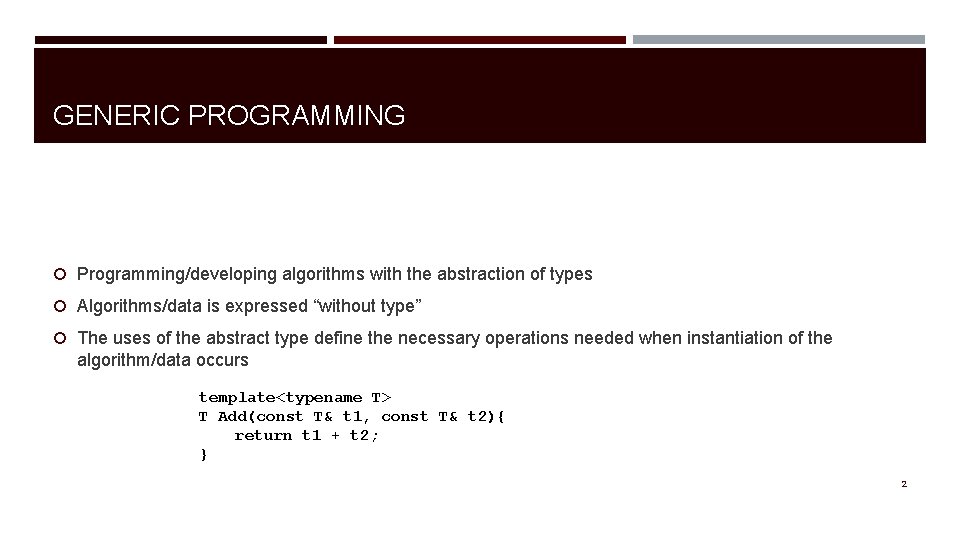
GENERIC PROGRAMMING Programming/developing algorithms with the abstraction of types Algorithms/data is expressed “without type” The uses of the abstract type define the necessary operations needed when instantiation of the algorithm/data occurs template<typename T> T Add(const T& t 1, const T& t 2){ return t 1 + t 2; } 2
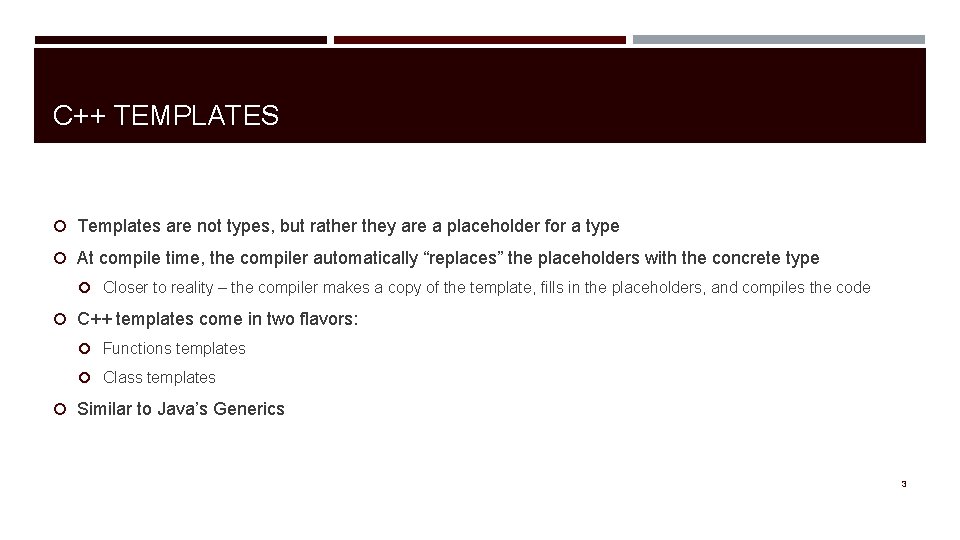
C++ TEMPLATES Templates are not types, but rather they are a placeholder for a type At compile time, the compiler automatically “replaces” the placeholders with the concrete type Closer to reality – the compiler makes a copy of the template, fills in the placeholders, and compiles the code C++ templates come in two flavors: Functions templates Class templates Similar to Java’s Generics 3
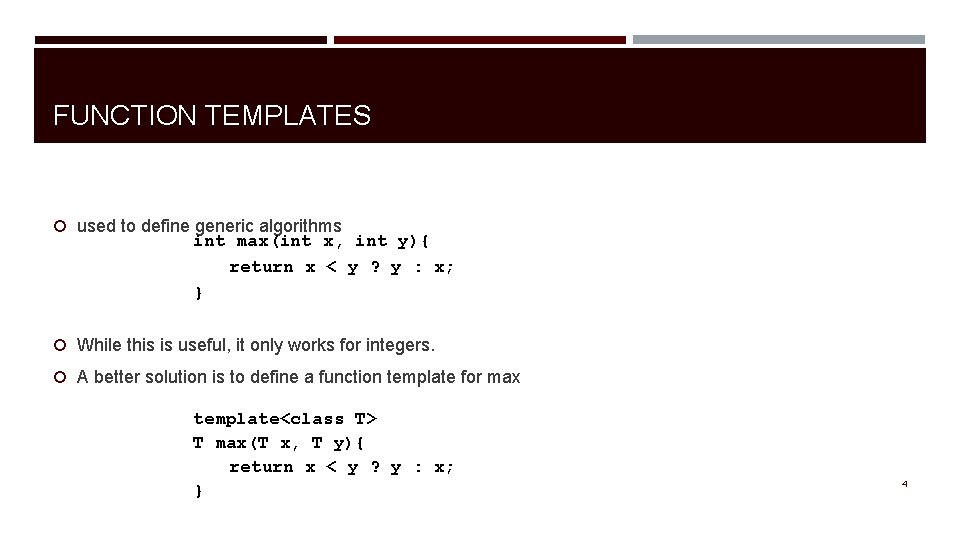
FUNCTION TEMPLATES used to define generic algorithms int max(int x, int y){ return x < y ? y : x; } While this is useful, it only works for integers. A better solution is to define a function template for max template<class T> T max(T x, T y){ return x < y ? y : x; } 4
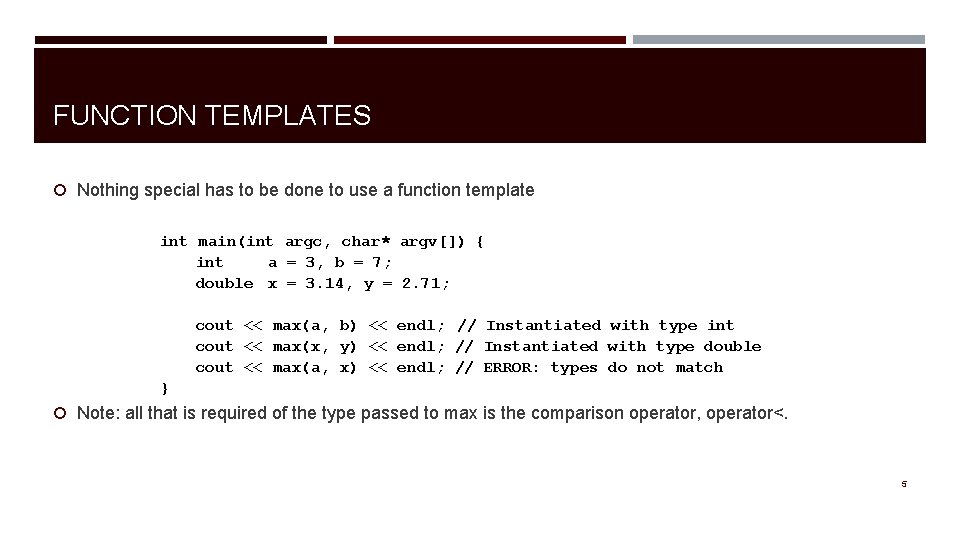
FUNCTION TEMPLATES Nothing special has to be done to use a function template int main(int argc, char* argv[]) { int a = 3, b = 7; double x = 3. 14, y = 2. 71; cout << max(a, b) << endl; // Instantiated with type int cout << max(x, y) << endl; // Instantiated with type double cout << max(a, x) << endl; // ERROR: types do not match } Note: all that is required of the type passed to max is the comparison operator, operator<. 5
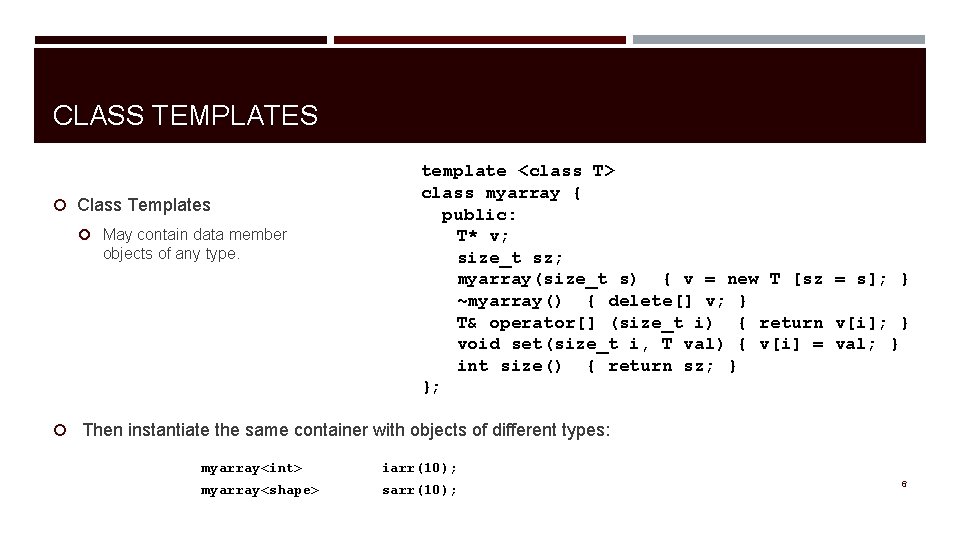
CLASS TEMPLATES Class Templates May contain data member objects of any type. template <class T> class myarray { public: T* v; size_t sz; myarray(size_t s) { v = new T [sz = s]; } ~myarray() { delete[] v; } T& operator[] (size_t i) { return v[i]; } void set(size_t i, T val) { v[i] = val; } int size() { return sz; } }; Then instantiate the same container with objects of different types: myarray<int> iarr(10); myarray<shape> sarr(10); 6
THE SKIES ARE THE LIMIT! Templates have an extreme amount of uses Can many template parameters Specialized templates for specific types Variadics 7