
TEMPLATE Facilitating an 8 D Workshop Skills Checklist
- Slides: 2
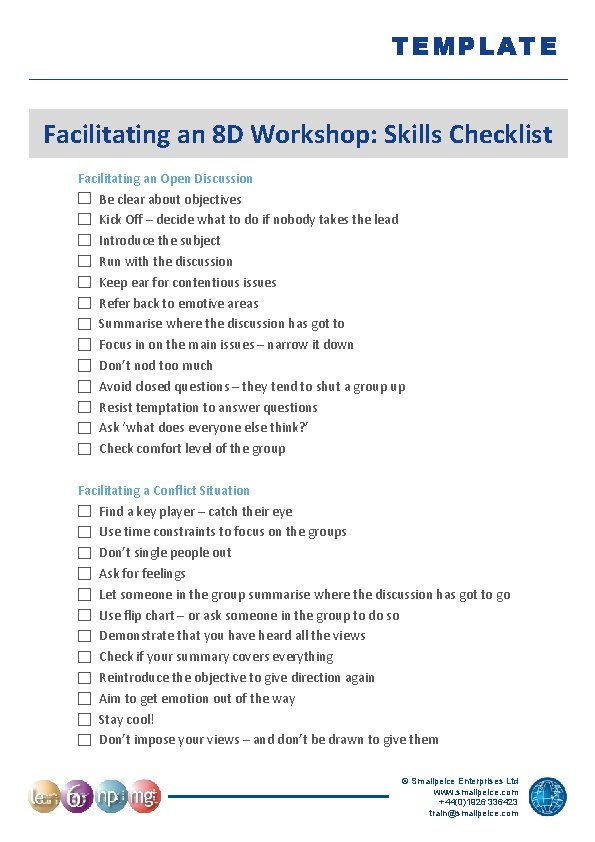
TEMPLATE Facilitating an 8 D Workshop: Skills Checklist Facilitating an Open Discussion Be clear about objectives Kick Off – decide what to do if nobody takes the lead Introduce the subject Run with the discussion Keep ear for contentious issues Refer back to emotive areas Summarise where the discussion has got to Focus in on the main issues – narrow it down Don’t nod too much Avoid closed questions – they tend to shut a group up Resist temptation to answer questions Ask ‘what does everyone else think? ’ Check comfort level of the group Facilitating a Conflict Situation Find a key player – catch their eye Use time constraints to focus on the groups Don’t single people out Ask for feelings Let someone in the group summarise where the discussion has got to go Use flip chart – or ask someone in the group to do so Demonstrate that you have heard all the views Check if your summary covers everything Reintroduce the objective to give direction again Aim to get emotion out of the way Stay cool! Don’t impose your views – and don’t be drawn to give them © Smallpeice Enterprises Ltd www. smallpeice. com +44(0)1926 336423 train@smallpeice. com
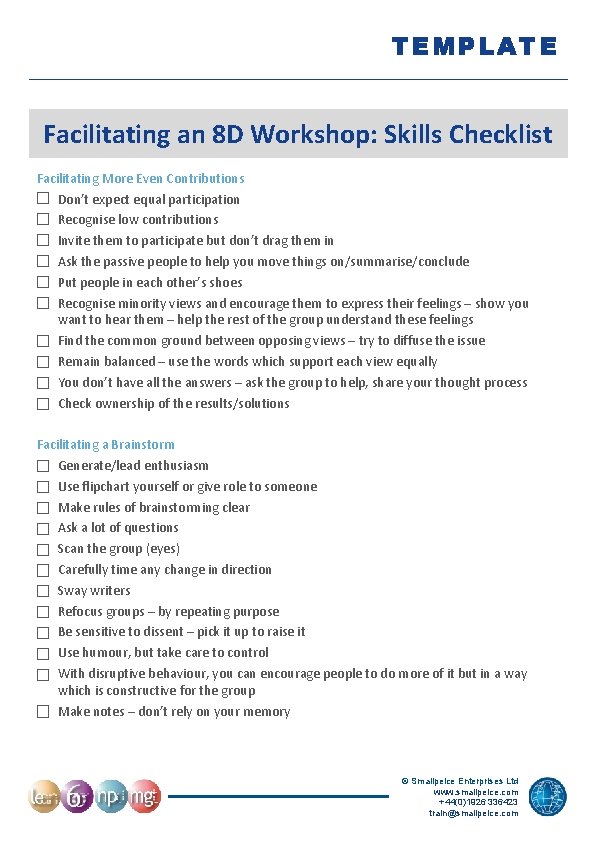
TEMPLATE Facilitating an 8 D Workshop: Skills Checklist Facilitating More Even Contributions Don’t expect equal participation Recognise low contributions Invite them to participate but don’t drag them in Ask the passive people to help you move things on/summarise/conclude Put people in each other’s shoes Recognise minority views and encourage them to express their feelings – show you want to hear them – help the rest of the group understand these feelings Find the common ground between opposing views – try to diffuse the issue Remain balanced – use the words which support each view equally You don’t have all the answers – ask the group to help, share your thought process Check ownership of the results/solutions Facilitating a Brainstorm Generate/lead enthusiasm Use flipchart yourself or give role to someone Make rules of brainstorming clear Ask a lot of questions Scan the group (eyes) Carefully time any change in direction Sway writers Refocus groups – by repeating purpose Be sensitive to dissent – pick it up to raise it Use humour, but take care to control With disruptive behaviour, you can encourage people to do more of it but in a way which is constructive for the group Make notes – don’t rely on your memory © Smallpeice Enterprises Ltd www. smallpeice. com +44(0)1926 336423 train@smallpeice. com