
Temperature Stress in Plants What is Stress External

- Slides: 53
Temperature Stress in Plants
What is Stress? ? External conditions that adversely affect growth, development or productivity. Stress trigger a wide range of plant responses • Altered gene expression • Cellular metabolism • Changes in growth rates and crop yields
Types of stress • Biotic- imposed by other organisms • Abiotic- arising from an excess or deficit in the physical or chemical environment - Biotic and abiotic stresses can reduce average plant productivity by 65% to 87% depending upon the crop.
Plant response to abiotic stress: Arising from an excess or deficit in the physical or chemical environment
Environmental conditions that can cause stress • • • Water-logging Drought High or low temperature Excessive soil salinity Inadequate mineral in the soil Too much or too little light
Stress resistance mechanisms • Avoidance mechanism - prevents exposure to stress • Tolerance mechanism - permit the plant to withstand stress • Acclimation - alter their physiology in response stress
Heat stress or high temperature stress The typical stress response to stress is a decrease in the synthesis of normal proteins, accompanied by an accelerated transcription and translation of new proteins known as heat shock proteins.
Heat shock q. May arise in leaves - when transpiration is insufficient - when stomata are partially or fully closed and irradiance is high q. May arise in germinating seedlings - when the soil is warmed by the sun q. May arise in organs with reduced capacity for transpiration e. g. fruits
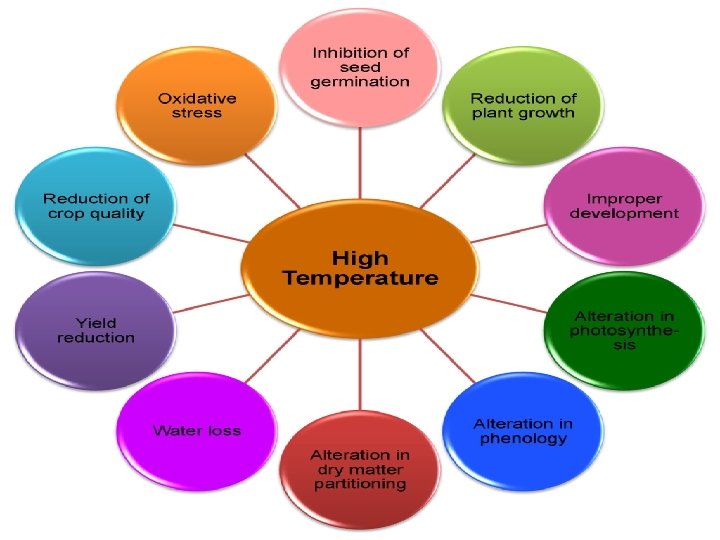
Effect of High Temperature on Plants
Effect on growth Ø Reduced germination percentage, Ø Plant emergence, Ø Abnormal seedlings, Ø Poor seedling vigor, Ø Reduced radicle and plumule growth of geminated seedlings
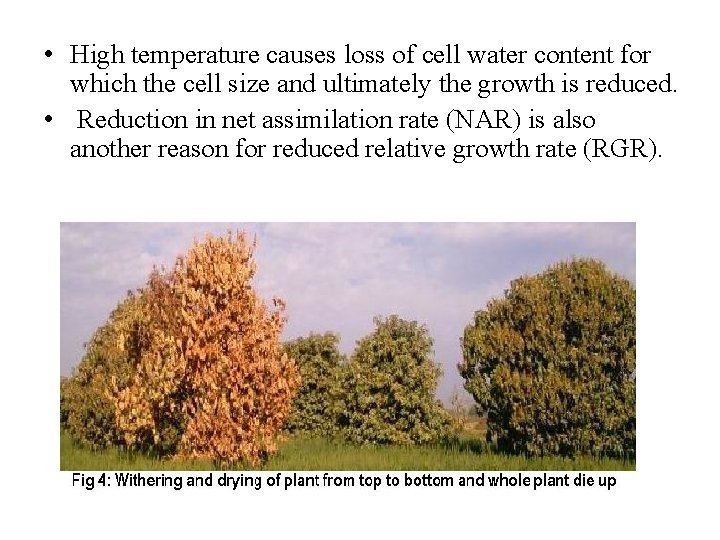
• High temperature causes loss of cell water content for which the cell size and ultimately the growth is reduced. • Reduction in net assimilation rate (NAR) is also another reason for reduced relative growth rate (RGR).
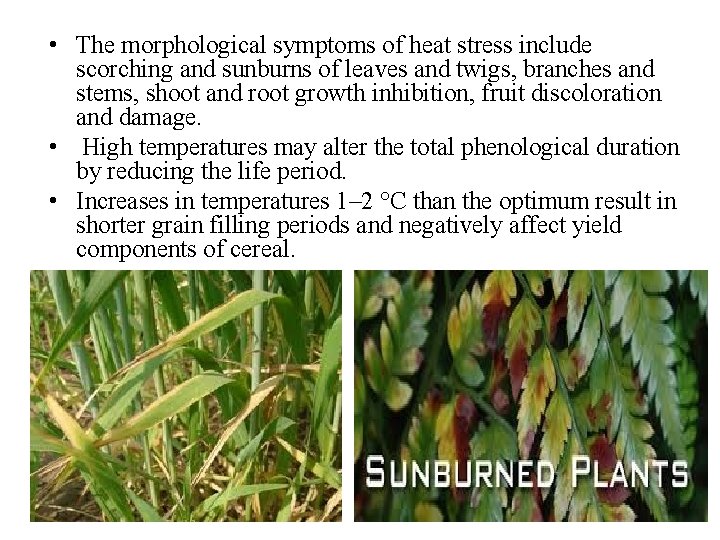
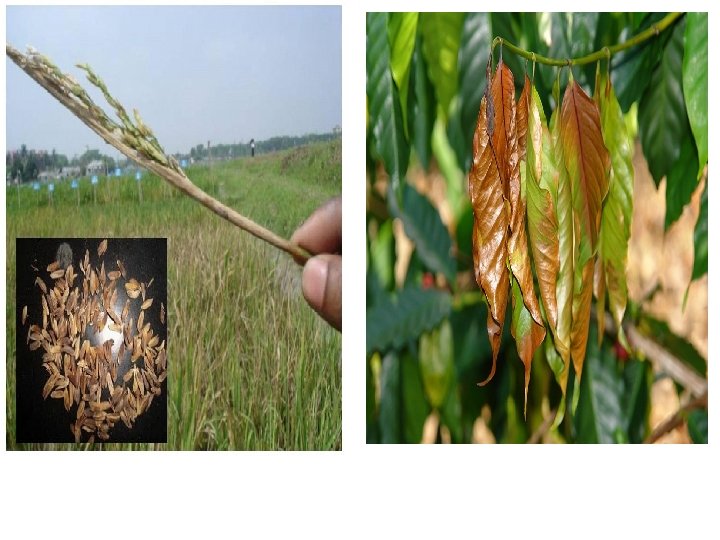
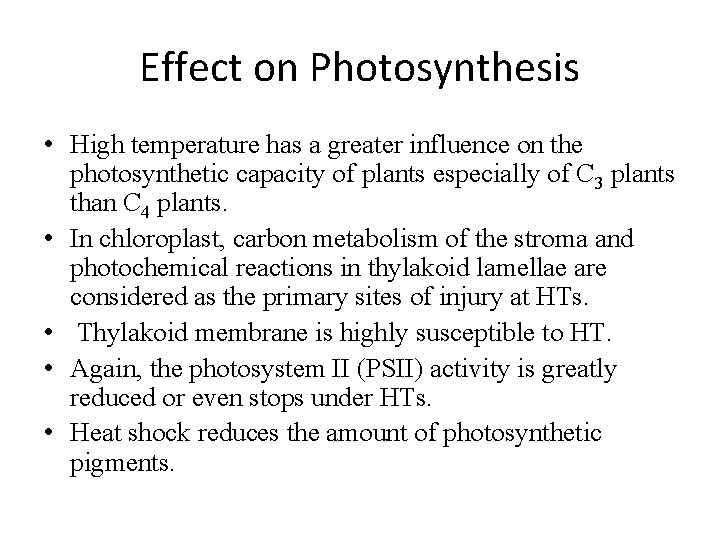
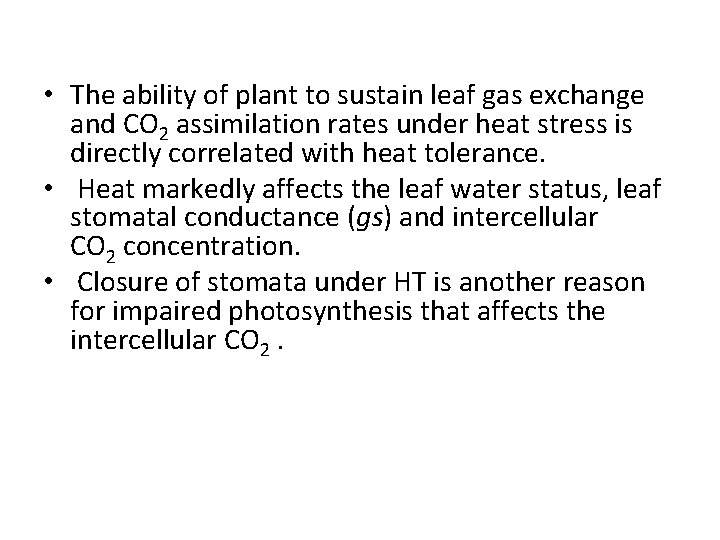
• The morphological symptoms of heat stress include scorching and sunburns of leaves and twigs, branches and stems, shoot and root growth inhibition, fruit discoloration and damage. • High temperatures may alter the total phenological duration by reducing the life period. • Increases in temperatures 1– 2 °C than the optimum result in shorter grain filling periods and negatively affect yield components of cereal.
Effect on Photosynthesis • High temperature has a greater influence on the photosynthetic capacity of plants especially of C 3 plants than C 4 plants. • In chloroplast, carbon metabolism of the stroma and photochemical reactions in thylakoid lamellae are considered as the primary sites of injury at HTs. • Thylakoid membrane is highly susceptible to HT. • Again, the photosystem II (PSII) activity is greatly reduced or even stops under HTs. • Heat shock reduces the amount of photosynthetic pigments.
• The ability of plant to sustain leaf gas exchange and CO 2 assimilation rates under heat stress is directly correlated with heat tolerance. • Heat markedly affects the leaf water status, leaf stomatal conductance (gs) and intercellular CO 2 concentration. • Closure of stomata under HT is another reason for impaired photosynthesis that affects the intercellular CO 2.
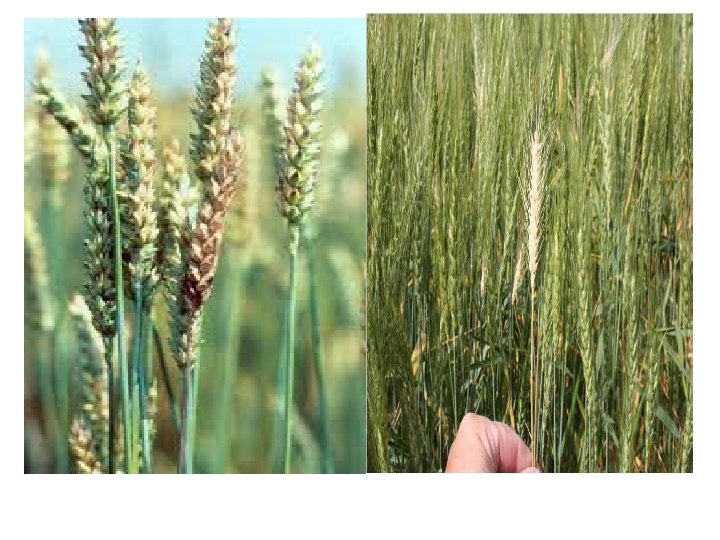
Effect on Reproductive Development • During reproduction, a short period of heat stress can cause significant decrease in floral buds. • Heat spell at reproductive developmental stages plant may produces no flowers or flowers may not produce fruit or seed.
• • The reasons for increasing sterility under abiotic stress conditions including The HT are impaired meiosis in both male and female organs Impaired pollen germination and pollen tube growth Reduced ovule viability, Reduced number of pollen grains retained by the stigma, Disturbed fertilization processes, Obstacle in growth of the endosperm, Unfertilized embryo.
Effect on Yield • Higher temperatures affect the grain yield mostly through affecting phenological development processes. • Heat induced yield reduction was documented in many cultivated crops including cereals (e. g. , rice, wheat, barley, sorghum, maize), pulse (e. g. , chickpea, cowpea), oil yielding crops (mustard, canola) and so on.
Plant Adaptation to Heat Stress Living organisms can be classified into three groups, subject to the preferred temperature of growth. There are (a) Psychrophiles: which grow optimally at low temperature ranges between 0 and 10 °C; (b) Mesophyles: which favor moderate temperature and grow well between 10 and 30 °C e. g. water lily, pond weed (c) Thermophyles: which grow well between 30 and 65 °C or even higher
Survival in hot, dry environments can be achieved in a variety of ways, by combinations of adaptations. Plant adaptation to heat stress includes avoidance and tolerance mechanisms which employ a number of strategies.
Avoidance Mechanisms Under HT conditions, plants exhibit various mechanisms for surviving which include • Long-term evolutionary phenological and morphological adaptations and short-term avoidance or acclimation mechanisms such as changing leaf orientation, transpirational cooling, or • Alteration of membrane lipid compositions • Closure of stomata and reduced water loss, increased stomatal and trichomatous densities, and larger xylem vessels are common heat induced features in plant.
• Plants growing in a hot climate avoid heat stress by reducing the absorption of solar radiation. • This ability is supported by the presence of small hairs (tomentose) that form a thick coat on the surface of the leaf as well as cuticles, protective waxy covering. • In such plants, leaf blades often turn away from light and orient themselves parallel to sun rays (paraheliotropism). Solar radiation may also be reduced by rolling leaf blades. Plants with small leaves are also more likely to avoid heat stress: they evacuate heat to ambient more quickly due to smaller resistance of the air boundary layer in comparison with large leaves.
Tolerance Mechanisms • Heat tolerance is generally defined as the ability of the plant to grow and produce economic yield under HT. • This is a highly specific trait, and closely related species, even different organs and tissues of the same plant, may vary significantly in this respect.
Some major tolerance mechanism, including o Ion transporters, o Late embryogenesis abundant (LEA) proteins, osmoprotectants, o Antioxidant defense, and o Factors involved in signaling cascades and transcriptional control are essentially significant to counteract the stress effects.
• In case of sudden heat stress, short term response, i. e. , leaf orientation, transpirational cooling and changes in membrane lipid composition are more important for survival. • Different tissues in plants show variations in terms of developmental complexity, exposure and responses towards the prevailing or applied stress types. • The stress responsive mechanism is established by an initial stress signal that may be in the form of ionic and osmotic effect or changes in the membrane fluidity. This helps to reestablish homeostasis and to protect and repair damaged proteins and membranes.
Practices to overcome Heat Stress • Water regularly and deeply. • Mulch the soil with at least three inches of organic mulch to reduce moisture loss and help regulate soil temperature. • Soils rich in organic matter retained more water and dry out more slowly than low organic matter soils.
Use of Mulching and Shade Cloth to Protect Plants in Hot and Dry Weather • Mulching is very effective in retaining moisture in the soil and keeping it cool. • Covering pot plants or areas of the garden with 50 -70 per cent shade cloth is also very effective for protecting plant vegetation from heat and drying from. • On very hot days, a thick blanket of good quality mulch (3 -6 inches thick; 7 -10 cm) will keep the soil temperatures down by 5 -10 degrees.
Low Temperature Stress
Stress • In biology the any change in environmental condition which reduce or adversely effect the growth and development of plant. e. g • Drought, heat, salt , pest and disease.
Chilling Temperature • Chilling temperatures are too low for normal growth but not low enough for ice to form. Typically, tropical and sub-tropical species are susceptible to chilling injury. Among • crops, maize, bean, rice, tomato, cucumber, sweet potato, and cotton are chilling sensitive.
Chilling injury • When plant growing relatively 25 -35°C and cooled to 10 -15°C chilling injury occurs. E. g • Cold shock, sudden exposure to low temperature.
Cont………. • In cold weather, non adapted plant show changes • Changes in consistency of membrane. • Under freezing condition, crystals are built in the intercellular.
Classification of plants response to Low temperature • Chilling Sensitive plants: ü Seriously injured by temp. above 0°C and below 15°C. • Chilling resistant plants: ü Able to tolerate low temperature stress ü Seriously injured when ice form in tissues
• Frost resistant plants: ü Tolerate exposure to very low temperature (-50°C to -100°C), even immersed in liquid N 2.
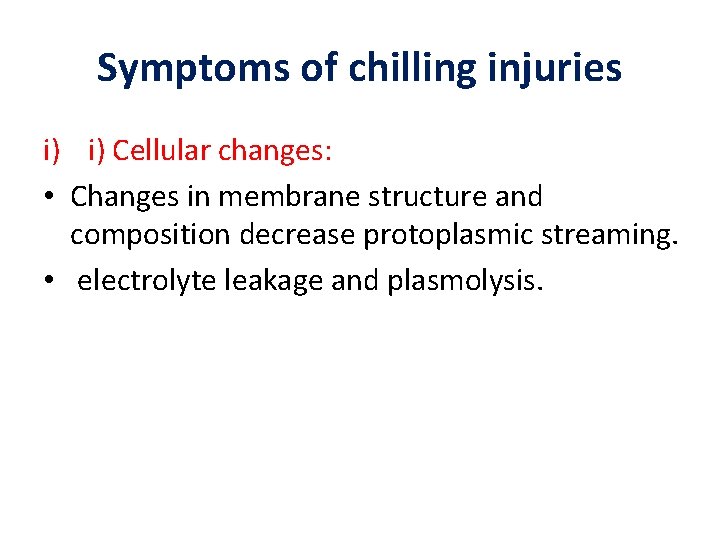
Symptoms of chilling injuries i) i) Cellular changes: • Changes in membrane structure and composition decrease protoplasmic streaming. • electrolyte leakage and plasmolysis.
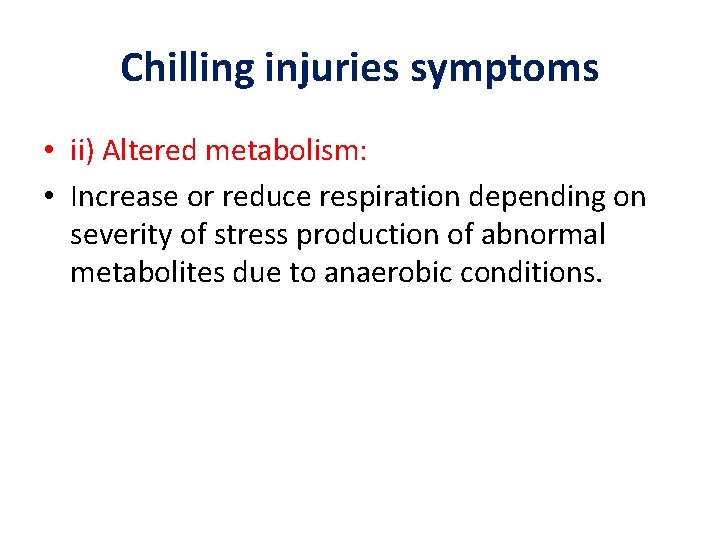
Chilling injuries symptoms • ii) Altered metabolism: • Increase or reduce respiration depending on severity of stress production of abnormal metabolites due to anaerobic conditions.
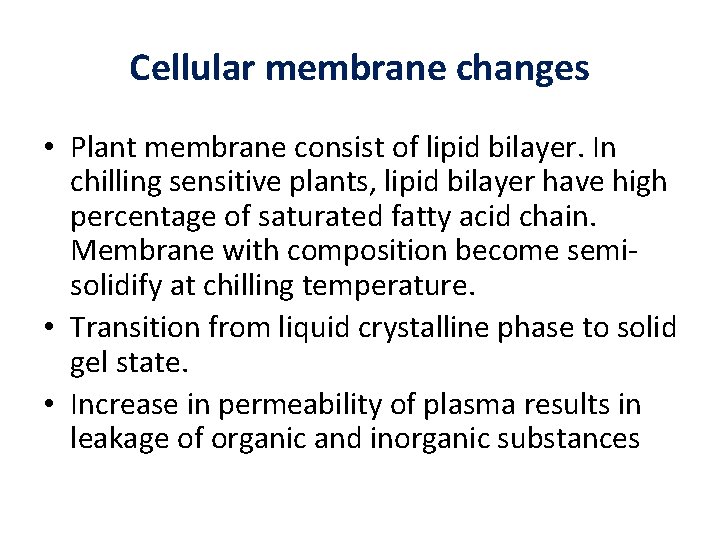
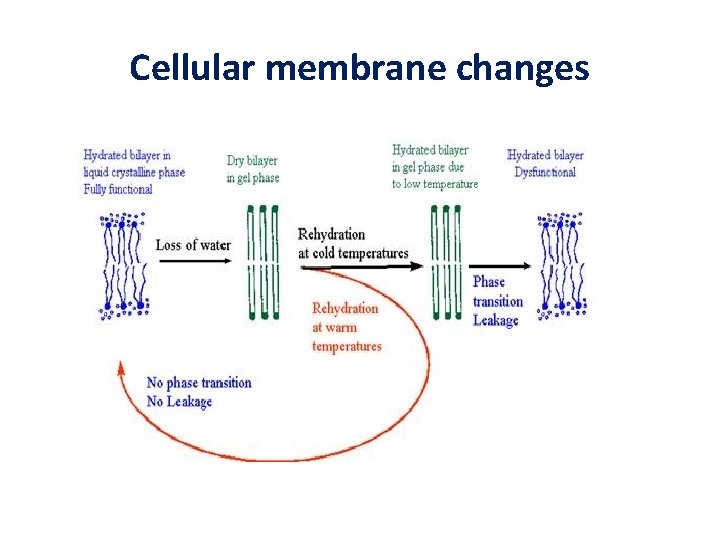
Cellular membrane changes • Plant membrane consist of lipid bilayer. In chilling sensitive plants, lipid bilayer have high percentage of saturated fatty acid chain. Membrane with composition become semisolidify at chilling temperature. • Transition from liquid crystalline phase to solid gel state. • Increase in permeability of plasma results in leakage of organic and inorganic substances
Cellular membrane changes
• Formation of crystalline deposits in root, epidermal, mesophyll and vascular cells leading to tonoplast disruption. • Tonoplast disruption is irreversible. • During hardening lipids accumulates in cytoplasm.
Cytological changes • Swelling of plastids membrane and mitochondrial membrane. • Swelling of chloroplast thylakoids. • Decrease in size and number of grain. • Mitochondria with reduce cristae and transparent matrix. • Swelling and disintegration of dictyosomes.
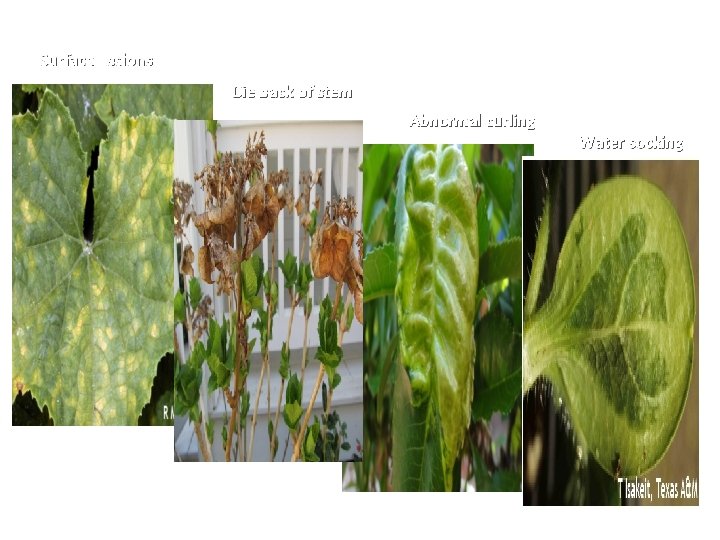
Common symptoms • • Reduce plant growth and health. Surface lesions on leaves and fruits. Abnormal curling , crinkling of leaves. Water socking of tissues. Cracking, splitting and die back of stem. Internal discoloration. Failure to ripened early. Loss of vigor.
Surface Lesions Die back of stem Abnormal curling Water socking
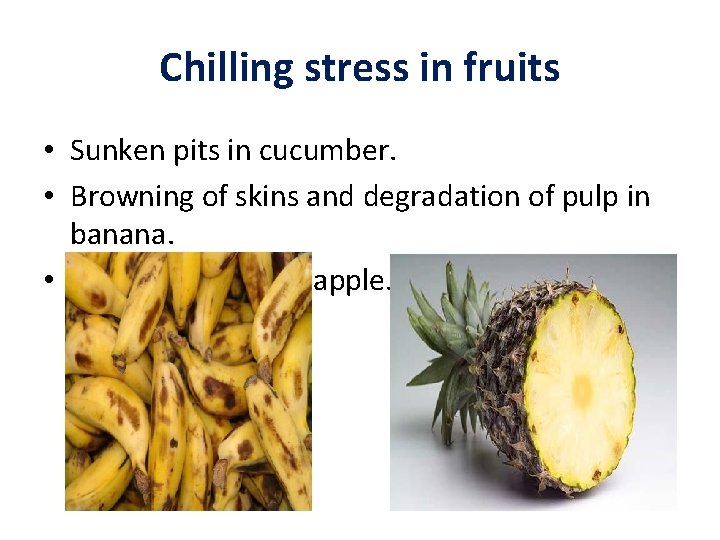
Chilling stress in fruits • Sunken pits in cucumber. • Browning of skins and degradation of pulp in banana. • Black heart of pineapple.
Freezing injury • Freezing injury occurs at Temperature below freezing point of water. • Freezing injury can be from two sources. ü Freezing of soil water: • Water present in soil available to plant freezes at -2°C, and not available to plant. ü Freezing of fluid in plants: • It make disruption of cell structure and its function.
Two types of freezing occur in plant cells • Vitrification: ü Solidification of cellular content. • Crystallization/ ice formation: ü Ice formation in intracellular or intercellular.
Strategies taken by plants • Stress Avoidance ü Some succulents ü ü Many annuals Supper cooling • Stress Tolerance ü Cold acclimation in plants is a complex process involving changes in the expression of numerous coldresponsive (COR) genes This results in modification of plant cell structural, biochemical, and photosynthetic properties that facilitate an increase in the plant’s freezing stress tolerance. ü
The adaptation of plant cells to low temperature is • Based on their ability to maintain saturation of fatty acid in membrane lipids, thus modifying membrane fluidity. • Chilling-resistant plants have a greater abundance of unsaturated fatty acids and it has been shown that the proportion of unsaturated fatty acids increases during acclimation to cold temperature.
• This modification allows membranes to remain fluid by lowering the temperature. Thus, desaturation of fatty acids provides protection against damage from chilling temperatures.
Approaches to Combat chilling stress • i) Resistant cultivars usage (Alfalfa) • Herbs, ground shrubs, low Leaf Area , high root/shoot ratio. • Cold adapted plants tend to be slow growing. • Store sugar in underground tissues. Ø Have C 3 mode of p/s.
• ii) Low temperature Hardening/Acclimation. • when plants are exposure to low temperature Slowly and gradually for a period. • iii) Mulching , warming of plant artificially. • iv) Application of glycine betaine (GB) to plants could improve tolerance to stress caused by chilling.