
Temperature regulation is controlled by the autonomic nervous
Temperature regulation is controlled by the autonomic nervous system. Today we are looking at blood glucose regulation, which is controlled by the endocrine system (hormones). How are these two systems different?
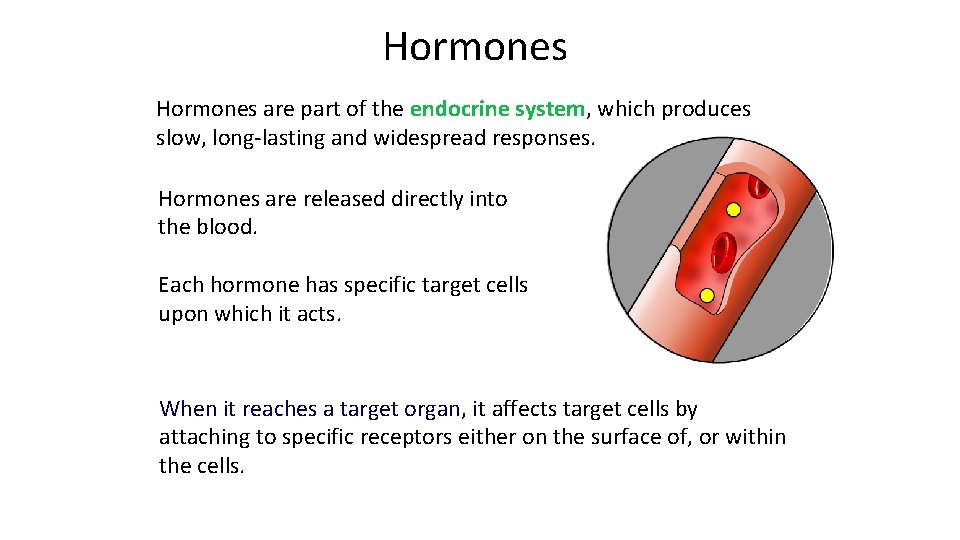
Hormones are part of the endocrine system, which produces slow, long-lasting and widespread responses. Hormones are released directly into the blood. Each hormone has specific target cells upon which it acts. When it reaches a target organ, it affects target cells by attaching to specific receptors either on the surface of, or within the cells.

The second messenger model • Adrenaline and glucagon are hormones that increase blood glucose levels • They both use the second messenger action – they have an effect inside a cell without entering it
Blood Glucose Regulation • Why is it important? • How do we do it?
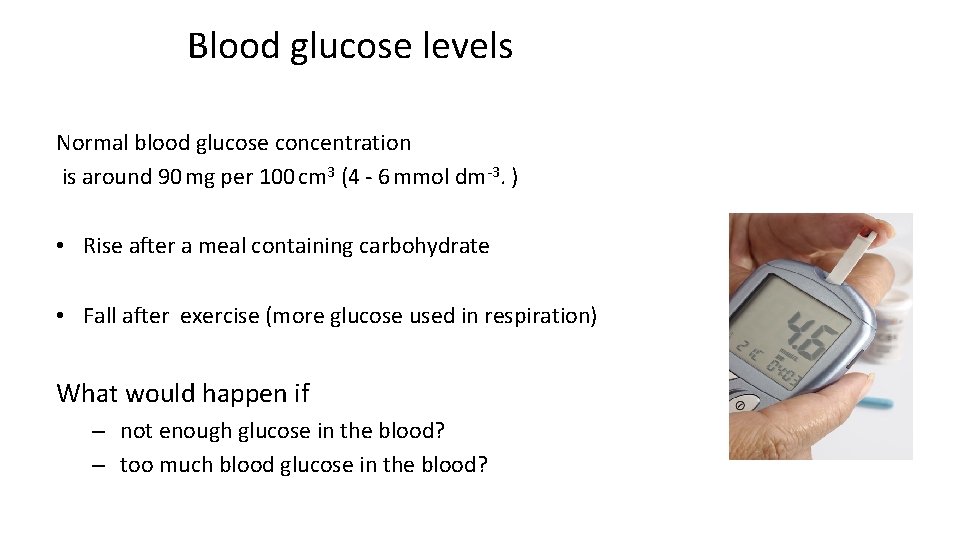
Blood glucose levels Normal blood glucose concentration is around 90 mg per 100 cm 3 (4 - 6 mmol dm-3. ) • Rise after a meal containing carbohydrate • Fall after exercise (more glucose used in respiration) What would happen if – not enough glucose in the blood? – too much blood glucose in the blood?
Blood glucose levels • Too low = cells deprived of energy and die (brain cells particularly vulnerable) • Too high = osmotic problems/ dehydration Q: How is excess glucose stored by animals (in plants it is stored as starch? )
Sources of blood glucose • • Diet - product of digestion of carbohydrates Breakdown of glycogen in the liver and the muscles- glycogenolysis. (Glycogen was stored by process of glycogenesis) Production of new glucose from non-carbohydrates (e. g. amino acids and glycerol)- gluconeogenesis.
Control of blood glucose • Is a negative feedback process • If the blood glucose levels get too high or too low, then the changes are detected by the α and βcells in the islets of Langerhans of the pancreas.
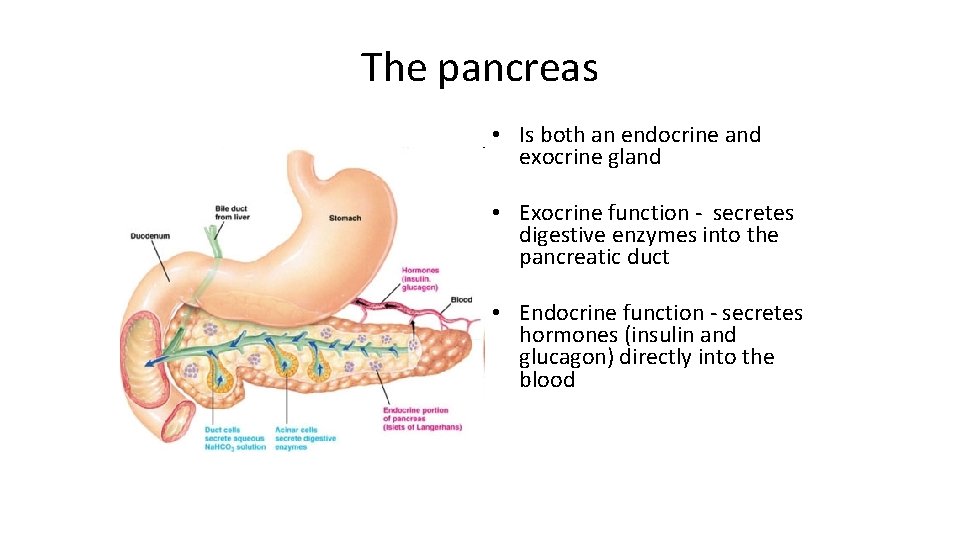
The pancreas • Is both an endocrine and exocrine gland • Exocrine function - secretes digestive enzymes into the pancreatic duct • Endocrine function - secretes hormones (insulin and glucagon) directly into the blood
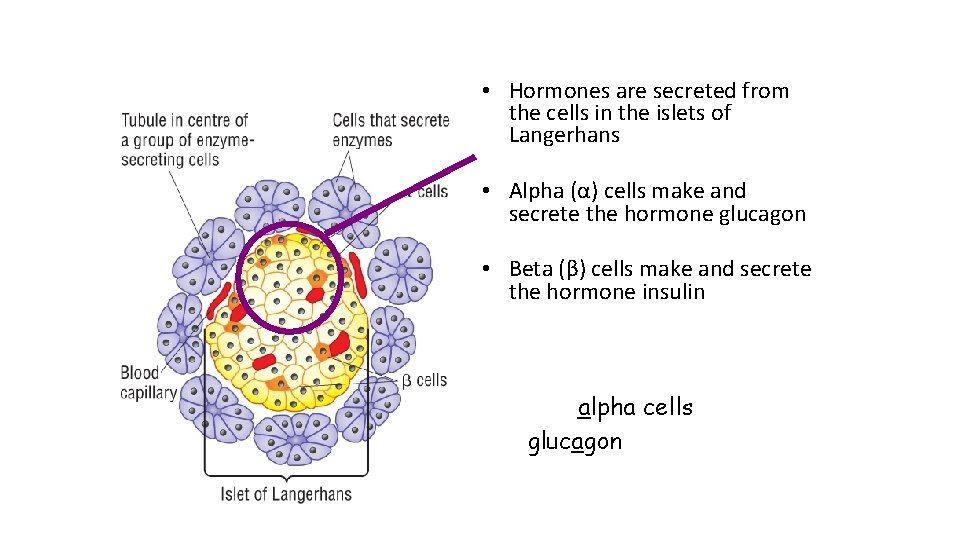
• Hormones are secreted from the cells in the islets of Langerhans • Alpha (α) cells make and secrete the hormone glucagon • Beta (β) cells make and secrete the hormone insulin alpha cells glucagon
• blood glucose control and diabetes
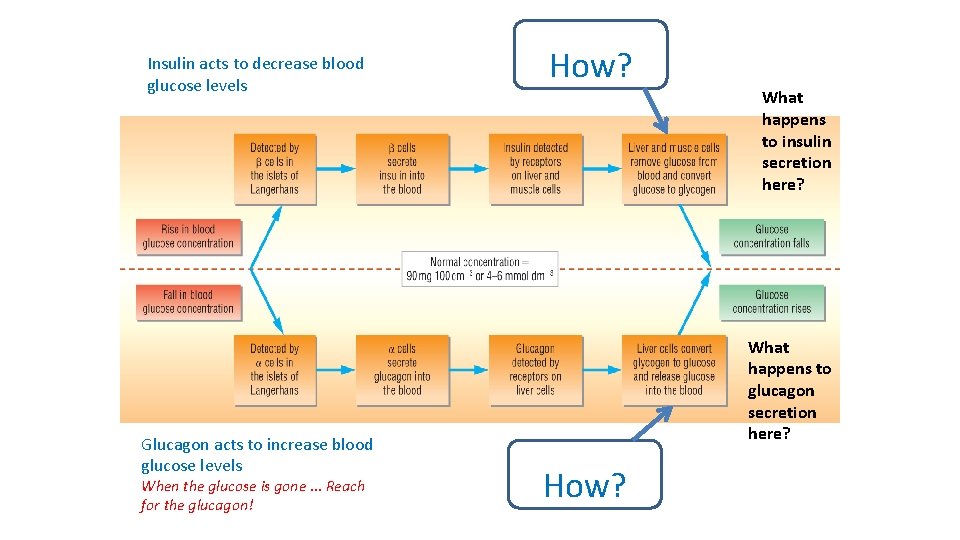
Insulin acts to decrease blood glucose levels Glucagon acts to increase blood glucose levels When the glucose is gone. . . Reach for the glucagon! How? What happens to insulin secretion here? What happens to glucagon secretion here? How?
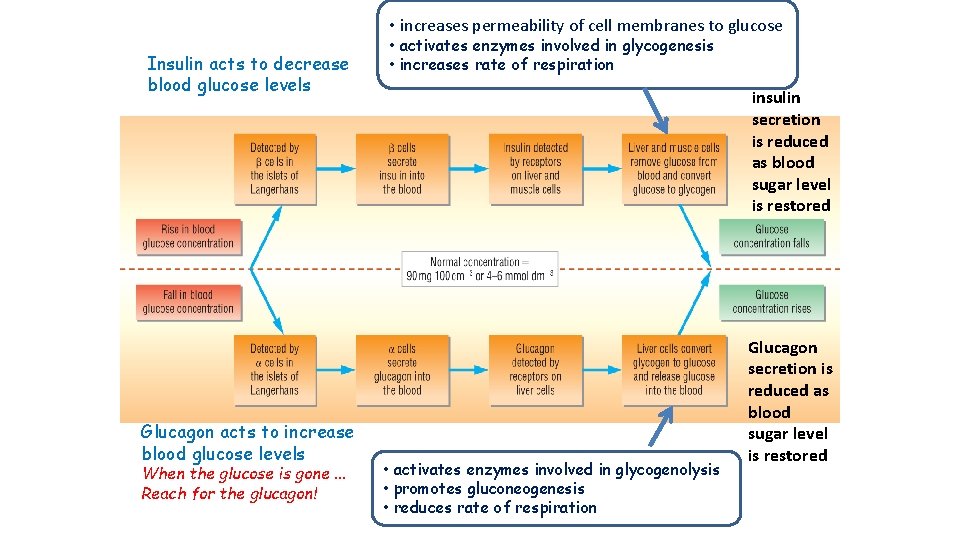
• increases permeability of cell membranes to glucose Insulin acts to decrease blood glucose levels Glucagon acts to increase blood glucose levels When the glucose is gone. . . Reach for the glucagon! • activates enzymes involved in glycogenesis • increases rate of respiration insulin secretion is reduced as blood sugar level is restored • activates enzymes involved in glycogenolysis • promotes gluconeogenesis • reduces rate of respiration Glucagon secretion is reduced as blood sugar level is restored
Diabetes • Type 1 (insulin dependent) – body unable to produce insulin maybe due to immune system destroying ß cells • Type 2 (insulin independent) – normally due to glycoprotein receptors on body cells being lost or losing their responsiveness to insulin
- Slides: 14