
Temperature regulation How does our body control its
Temperature regulation How does our body control its internal temperature? Launchpad! Sport Science CD-ROM
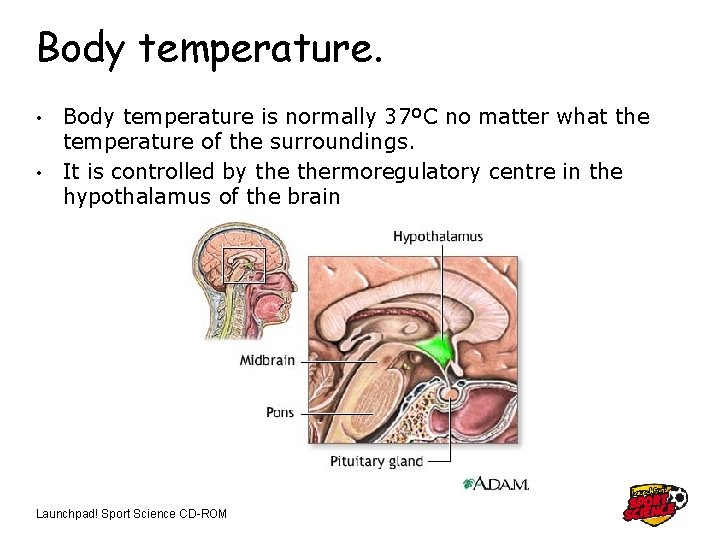
Body temperature is normally 37ºC no matter what the temperature of the surroundings. • It is controlled by thermoregulatory centre in the hypothalamus of the brain • Launchpad! Sport Science CD-ROM
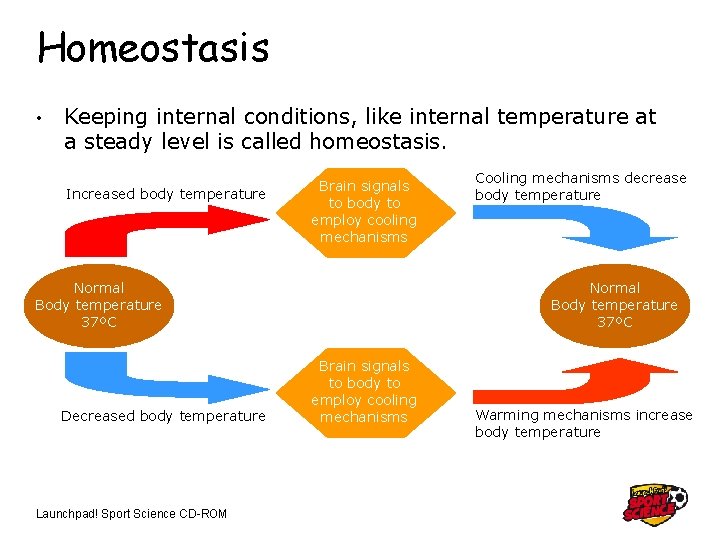
Homeostasis • Keeping internal conditions, like internal temperature at a steady level is called homeostasis. Increased body temperature Brain signals to body to employ cooling mechanisms Normal Body temperature 37ºC Decreased body temperature Launchpad! Sport Science CD-ROM Cooling mechanisms decrease body temperature Normal Body temperature 37ºC Brain signals to body to employ cooling mechanisms Warming mechanisms increase body temperature

The Thermoregulatory Centre The thermoregulatory centre in the hypothalamus detects when blood temperature flowing through it increases or decreases. • Nerves also send information from skin receptors about temperature. • Launchpad! Sport Science CD-ROM
Launchpad! Sport Science CD-ROM
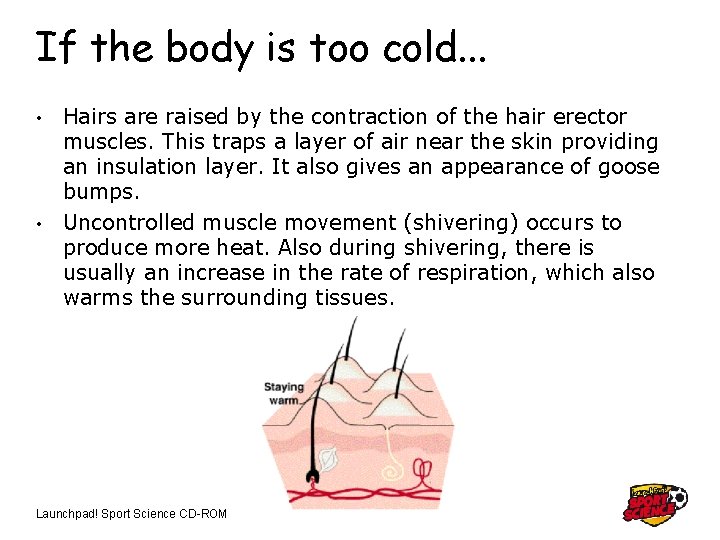
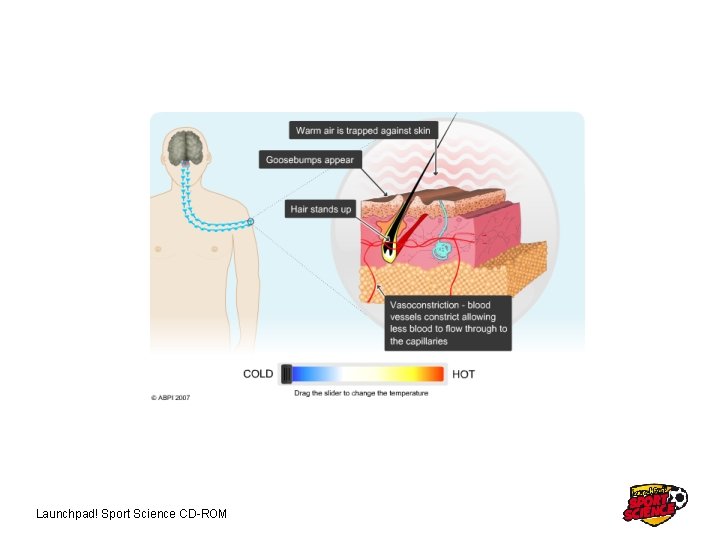
If the body is too cold. . . Hairs are raised by the contraction of the hair erector muscles. This traps a layer of air near the skin providing an insulation layer. It also gives an appearance of goose bumps. • Uncontrolled muscle movement (shivering) occurs to produce more heat. Also during shivering, there is usually an increase in the rate of respiration, which also warms the surrounding tissues. • Launchpad! Sport Science CD-ROM
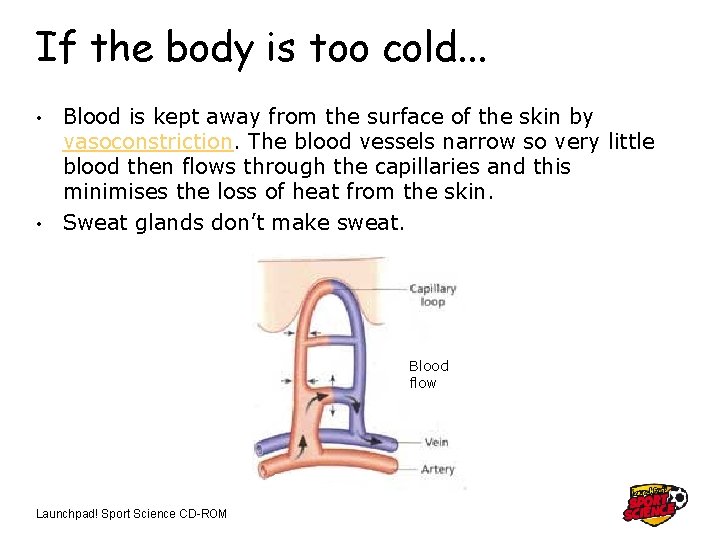
If the body is too cold. . . Blood is kept away from the surface of the skin by vasoconstriction. The blood vessels narrow so very little blood then flows through the capillaries and this minimises the loss of heat from the skin. • Sweat glands don’t make sweat. • Blood flow Launchpad! Sport Science CD-ROM
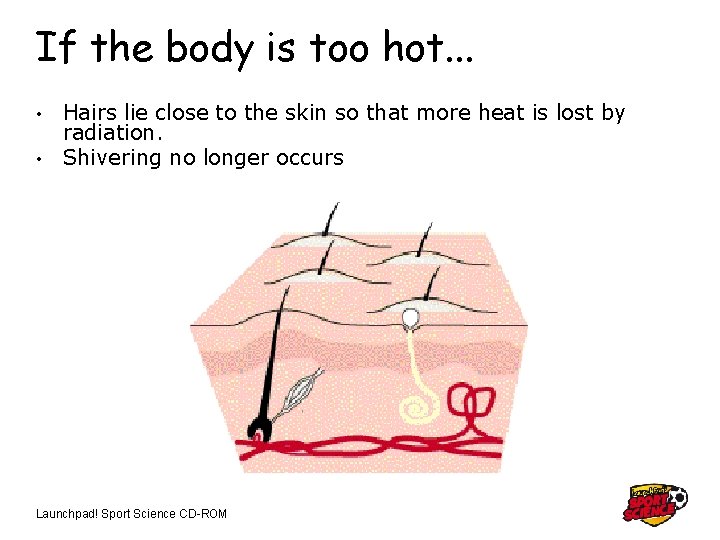
If the body is too hot. . . Hairs lie close to the skin so that more heat is lost by radiation. • Shivering no longer occurs • Launchpad! Sport Science CD-ROM

If the body is too hot… Blood vessels leading to the skin capillaries dilate, known as vasodilation. This allows lots of blood to flow near the surface and heat is lost through the skin by convection and radiation. • Sweat glands make sweat. It is produced by the sweat glands and pours out onto the surface of the skin. Here the water evaporates, which removes heat from the skin therefore cooling the skin down. • Heat loss Blood flow Launchpad! Sport Science CD-ROM

So can you remember all that? Launchpad! Sport Science CD-ROM
- Slides: 10