
Temperature Heat and Expansion Temperature Most materials expand
- Slides: 15
Temperature, Heat, and Expansion
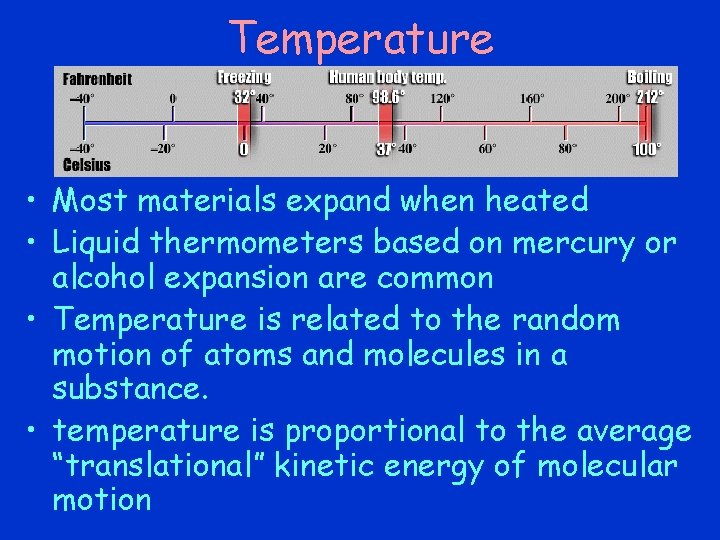
Temperature • Most materials expand when heated • Liquid thermometers based on mercury or alcohol expansion are common • Temperature is related to the random motion of atoms and molecules in a substance. • temperature is proportional to the average “translational” kinetic energy of molecular motion
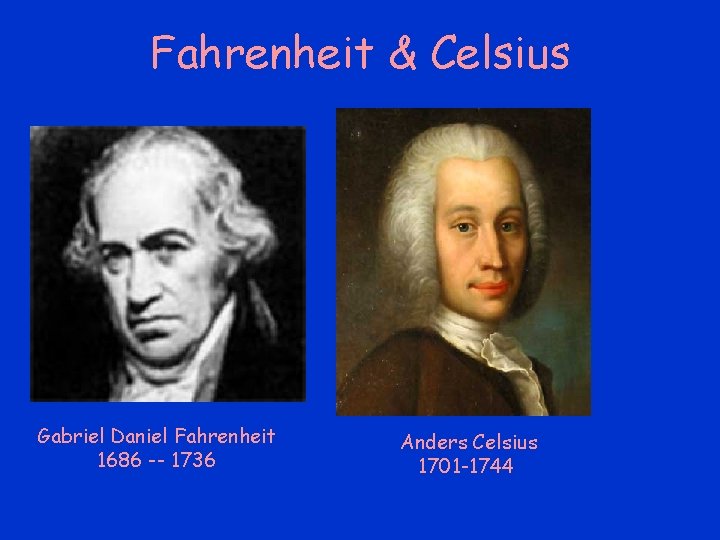
Fahrenheit & Celsius Gabriel Daniel Fahrenheit 1686 -- 1736 Anders Celsius 1701 -1744
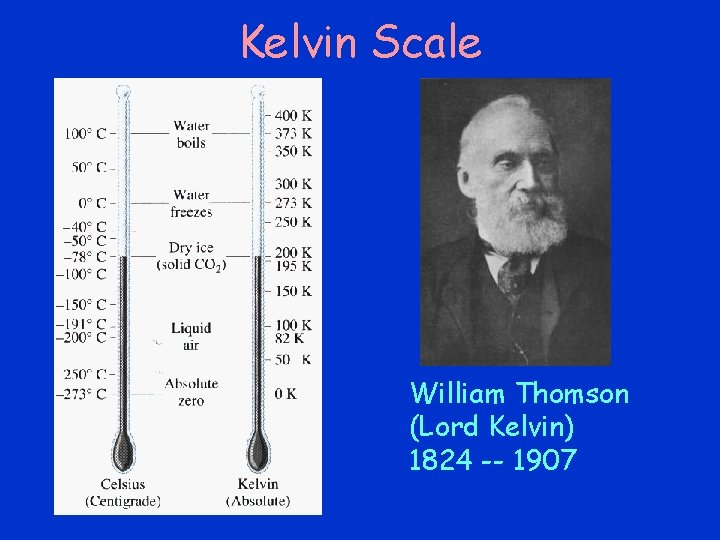
Kelvin Scale William Thomson (Lord Kelvin) 1824 -- 1907
Heat • energy transferred from one thing to another because of a temperature difference between the things is called heat • Heat is energy in transit – matter does NOT contain heat
Internal Energy • Internal energy -- grand total of all energies inside a substance. – translational kinetic energy of jostling molecules in a substance – rotational kinetic energy of molecules – kinetic energy due to internal movements of atoms within molecules – potential energy due to the forces between molecules. • So a substance does not contain heat —it contains internal energy.
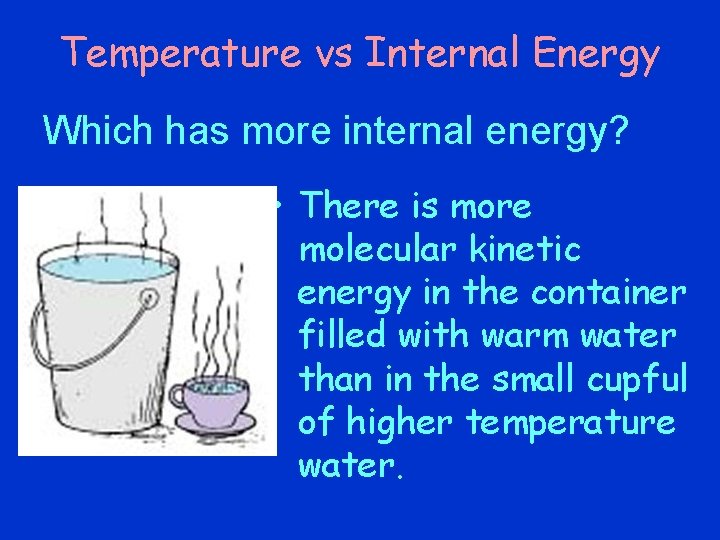
Temperature vs Internal Energy Which has more internal energy? • There is more molecular kinetic energy in the container filled with warm water than in the small cupful of higher temperature water.
Heat in Joules • heat is the flow of energy from one thing to another due to a temperature difference • heat is measured in joules • 1 Joule = energy required (or work done) in lifting 1 N (100 grams) 1 meter.
Definition of calorie • in the US, calorie is more common • calorie is defined as the amount of heat required to change the temperature of 1 gram of water by 1 Celsius degree • 1 calorie = 4. 184 J
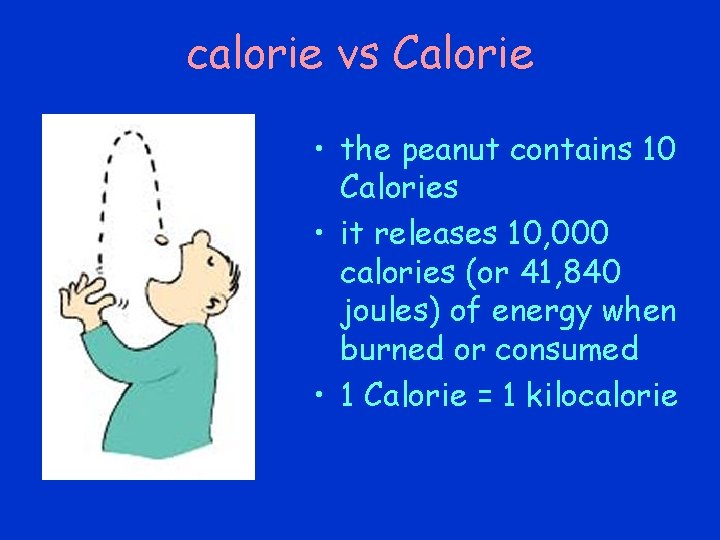
calorie vs Calorie • the peanut contains 10 Calories • it releases 10, 000 calories (or 41, 840 joules) of energy when burned or consumed • 1 Calorie = 1 kilocalorie
Question • An iron thumbtack and a big iron bolt are removed from a hot oven. They are red hot and have the same temperature. When dropped into identical containers of water of equal temperature, which one raises the water temperature more?
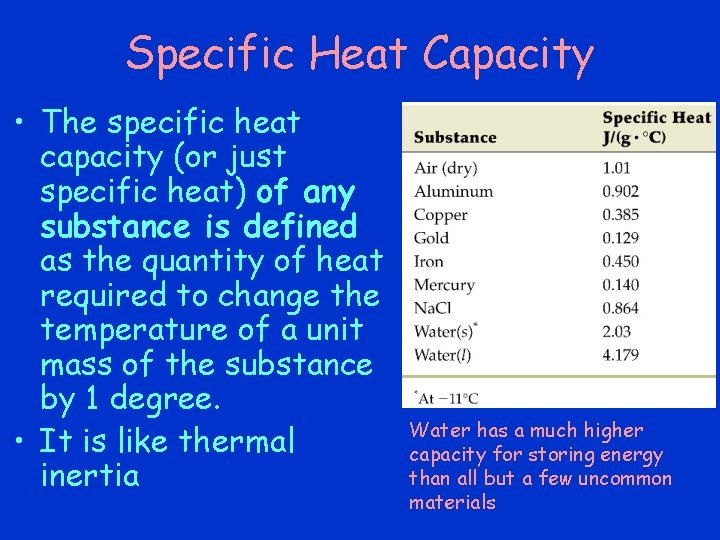
Specific Heat Capacity • The specific heat capacity (or just specific heat) of any substance is defined as the quantity of heat required to change the temperature of a unit mass of the substance by 1 degree. • It is like thermal inertia Water has a much higher capacity for storing energy than all but a few uncommon materials
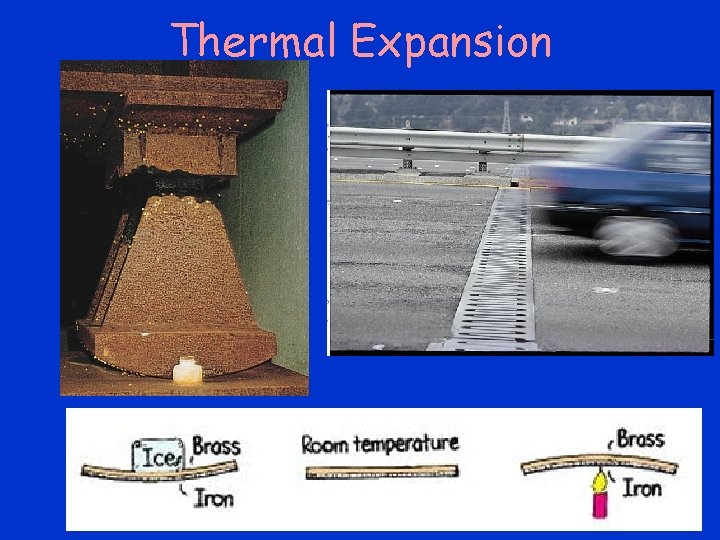
Thermal Expansion
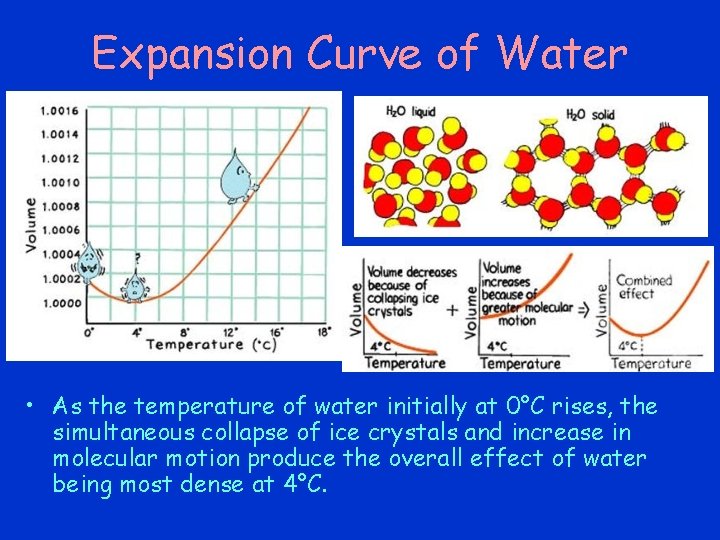
Expansion Curve of Water • As the temperature of water initially at 0°C rises, the simultaneous collapse of ice crystals and increase in molecular motion produce the overall effect of water being most dense at 4°C.
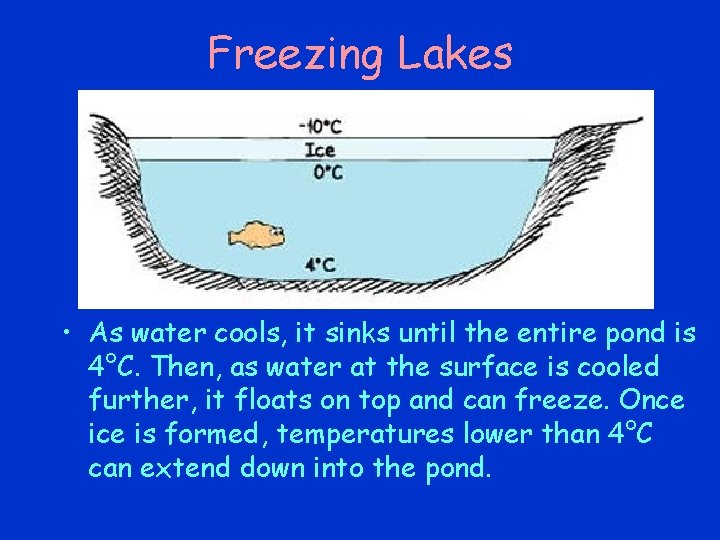
Freezing Lakes • As water cools, it sinks until the entire pond is 4°C. Then, as water at the surface is cooled further, it floats on top and can freeze. Once is formed, temperatures lower than 4°C can extend down into the pond.