
TELLING THE TIME How to tell time in
- Slides: 17
TELLING THE TIME How to tell time in English
DAYS OF THE WEEK v Monday v Saturday v Tuesday v Sunday v Wednesday v Thursday v Friday Remember to Always use a CAPITAL LETTER for the days of the week.
MONTHS OF THE YEAR v January v June v November v February v July v December v March v August v April v September v May v October
PREPOSITIONS v For single days and dates we use On. For example: v For months we use in. For example: v I was born in September. I was born on the 26 th of this month. But we say: My birthday is on September the 7 th.
BRITISH ENGLISH v In British English the day v Example is usually put before the Sunday, the 11 th of March, month. If you wish, you can 2012 add the ending of the ordinal (The preposition of before the month number. is usually dropped. )
AMERICAN ENGLISH v In American English the v Example: month is usually put before the Sunday, March the 11 th, day. If you wish, you can put 2012 the definite article before the day. It is common to write a comma before the year.
ORDINAL NUMBERS v What are they? We use them to tell the order of things. • First, Second , Third, Fourth, Fifth, Sixth, Seventh, Eighth, Ninth tenth. • 1 st 2 nd, 3 rd, 4 th, 5 th, 6 th, 8 th, 9 th, 10 th v How to form them? v Easy: Just add TH to the cardinal number. • Four + th= Fourth • Eleven + th= Eleventh v But there are some exceptions! • one - first • two - second • three - third • five - fifth • eight - eighth • nine - ninth • twelve - twelfth
USING DIGITS v You can also write the date by using numbers only. v Be Carefull: : 5/10/04 usually means 5 October 2004 in British English and May 10, 2004 in American English. To avoid any possible confusion, you should spell out the month or use the abbreviation. v Example: What day is that? 10/09/12 Or 09 -10 -12.
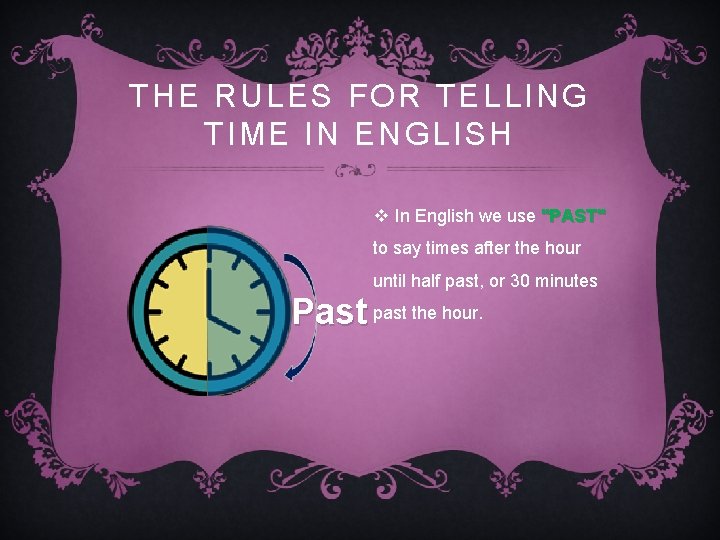
THE RULES FOR TELLING TIME IN ENGLISH v In English we use "PAST" to say times after the hour until half past, or 30 minutes Past past the hour.
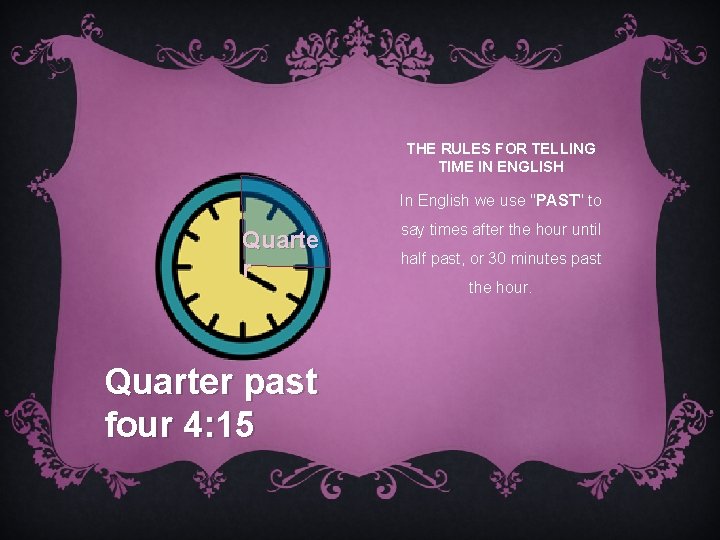
THE RULES FOR TELLING TIME IN ENGLISH In English we use "PAST" to Quarte r Quarter past four 4: 15 say times after the hour until half past, or 30 minutes past the hour.
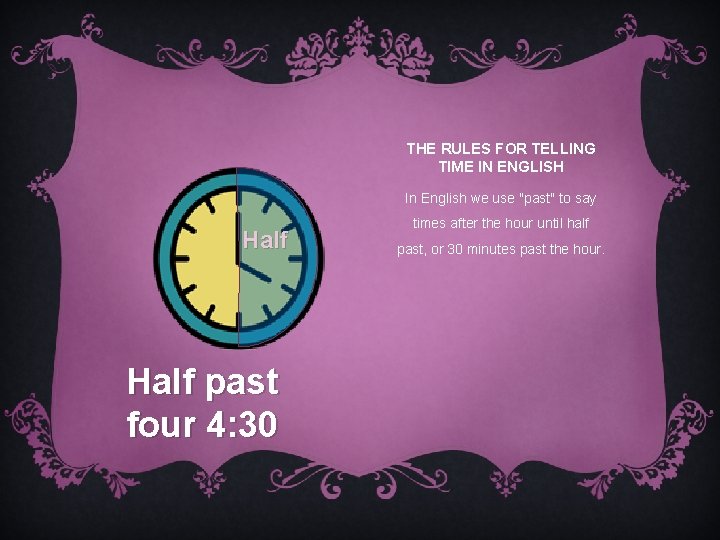
THE RULES FOR TELLING TIME IN ENGLISH In English we use "past" to say Half past four 4: 30 times after the hour until half past, or 30 minutes past the hour.
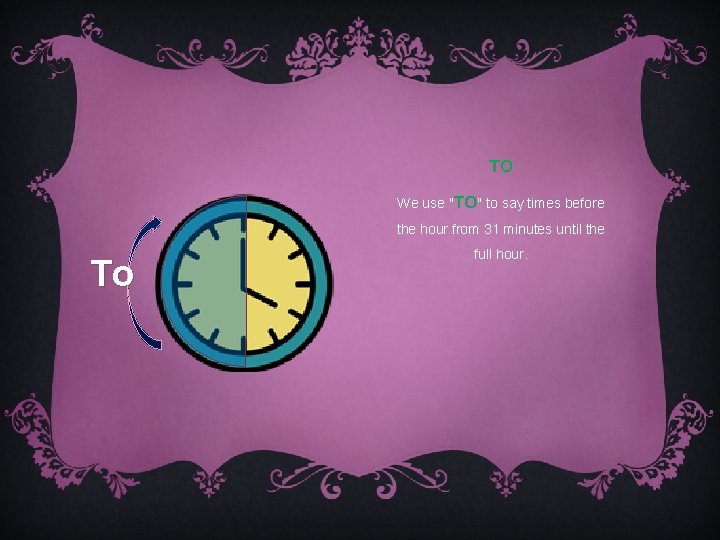
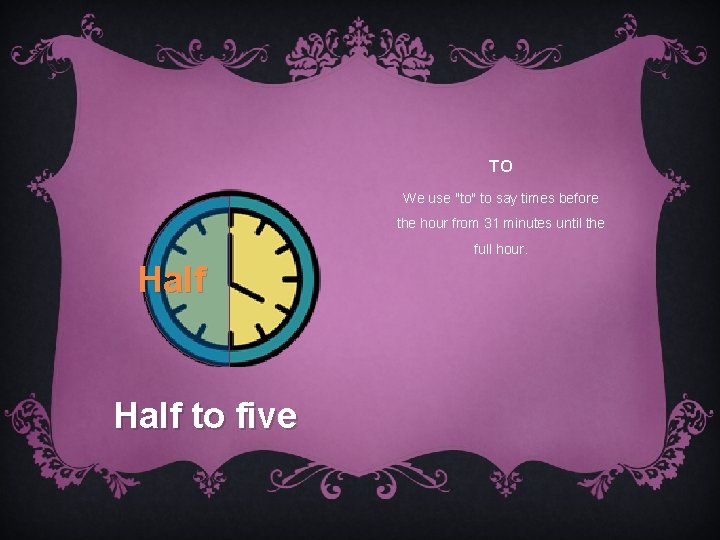
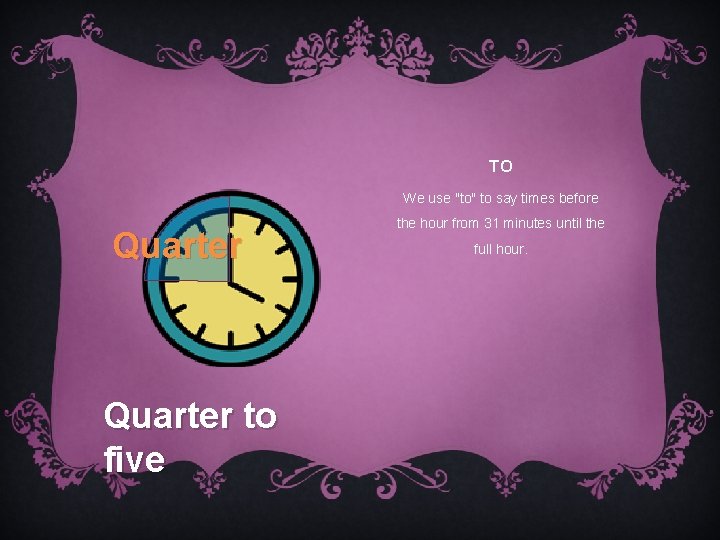
TO We use "TO" to say times before the hour from 31 minutes until the To full hour.
TO We use "to" to say times before the hour from 31 minutes until the full hour. Half to five
TO We use "to" to say times before Quarter to five the hour from 31 minutes until the full hour.
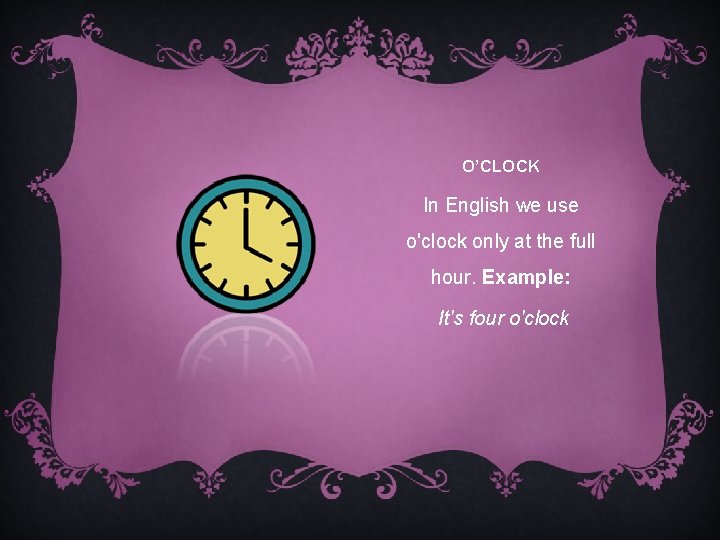
O’CLOCK In English we use o'clock only at the full hour. Example: It's four o'clock
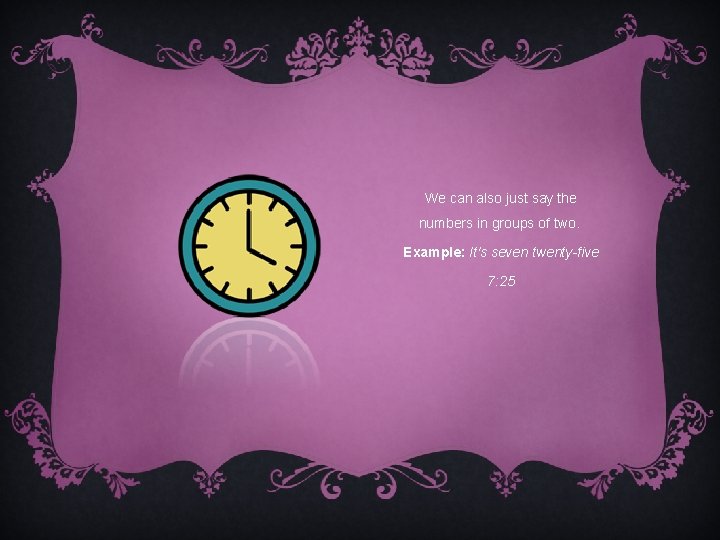
We can also just say the numbers in groups of two. Example: It's seven twenty-five 7: 25
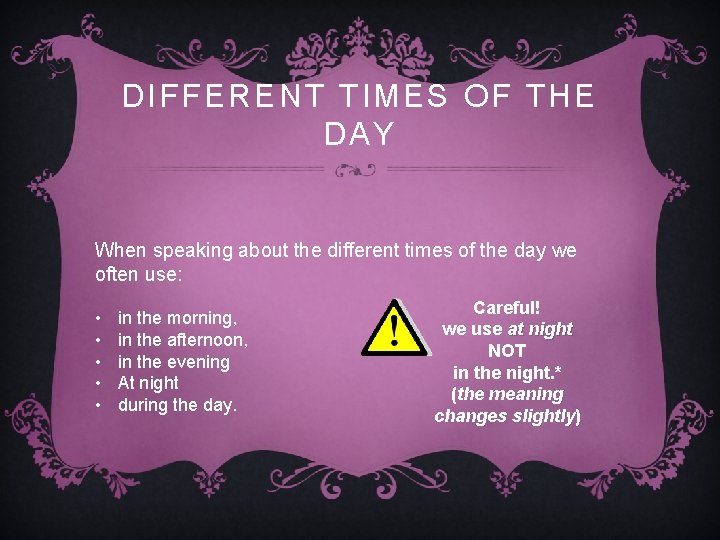
DIFFERENT TIMES OF THE DAY When speaking about the different times of the day we often use: • • • in the morning, in the afternoon, in the evening At night during the day. Careful! we use at night NOT in the night. * (the meaning changes slightly)