
Tell Me What You Mean by Dizzy n
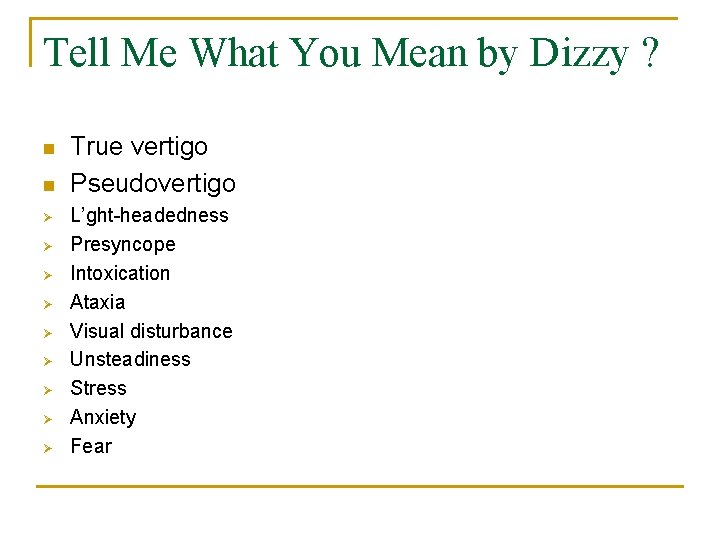
Tell Me What You Mean by Dizzy ? n n Ø Ø Ø Ø Ø True vertigo Pseudovertigo L’ght-headedness Presyncope Intoxication Ataxia Visual disturbance Unsteadiness Stress Anxiety Fear
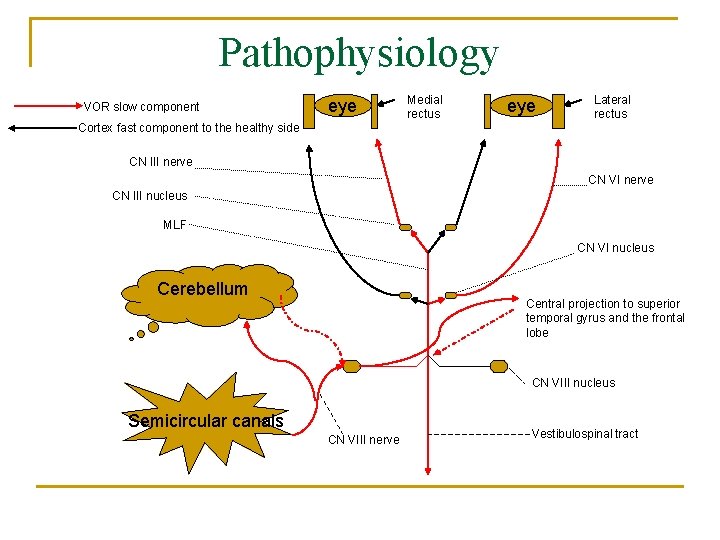
Pathophysiology VOR slow component eye Medial rectus eye Lateral rectus Cortex fast component to the healthy side CN III nerve CN VI nerve CN III nucleus MLF CN VI nucleus Cerebellum Central projection to superior temporal gyrus and the frontal lobe CN VIII nucleus Semicircular canals CN VIII nerve Vestibulospinal tract
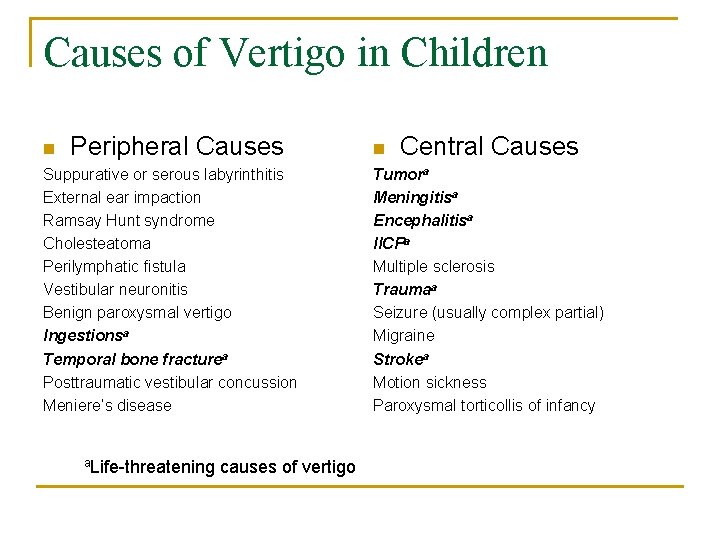
Causes of Vertigo in Children n Peripheral Causes Suppurative or serous labyrinthitis External ear impaction Ramsay Hunt syndrome Cholesteatoma Perilymphatic fistula Vestibular neuronitis Benign paroxysmal vertigo Ingestionsa Temporal bone fracturea Posttraumatic vestibular concussion Meniere’s disease a. Life-threatening causes of vertigo n Central Causes Tumora Meningitisa Encephalitisa IICPa Multiple sclerosis Traumaa Seizure (usually complex partial) Migraine Strokea Motion sickness Paroxysmal torticollis of infancy
Common Causes of Vertigo n n n n Suppurative or serous labyrinthitis Benign paroxysmal vertigo Migraine Vestibular neuronitis Ingestions Seizure Motion sickness
Common Causes of Pseudovertigo n n n n Depression Anxiety Hyperventilation Orthostatic hypotension Hypertension Heat stroke Arrythmia Cardiac disease Anemia Hypoglycemia Pregnancy Ataxia Visual disturbance
Infections n n Direct invasion Inflammatory toxins Cholesteatoma Viral vestibular neuronitis Nystagmus Lie motionless 1 -3 weeks prednisolone
Migraine n n n 19% of classic migraine patients in their aura Basilar migraine Migraine equivalent (without pain) D/D: brain stem or cerebellar mass, hemorrhage, and infarction MRI
Benign Paroxysmal Vertigo n n n n Most common in children between 1 and 5 years Recurrent attack Sudden onset Brief episode : few minutes Sweating, pallor, emesis, and nystagmus EEG – normal Neurological examination – normal
Ototoxic Drugs n n n n Aminoglycoside Antibiotics Furosemide Ethacrynic acid Streptomycin Minocycline Salicylates Ethanol

Post-Traumatic Vertigo n n Temporal bone fracture Vertigo, hearing loss, hemotympanum Other subtle causes : trauma-induced seizure, migraine, or a postconcussion syndrome Whiplash ingury
Seizure n Vestibular seizure (seizure cause vertigo) 3. EEG – abnormal Sudden onset, withor thiout associated s/s Followed by loss or alteration of consciousness n Vestibulogenic seizure (“reflex” seizure) 1. 2.
Motion Sickness n n A miss-match in information provided to the brain by visual and vestibular systems during unfamiliar rotation and acceleration. Vertigo, nausea/vomit , and nystagmus
Meniere’s Disease n n n Uncommon in children younger than 10 years Episodic attacks of vertigo, hearing loss, tinnitus, nystagmus, and automatic symptoms Between episodes, patients may complain of impaired balance Endolymphatic hydrops May evolve to permanent hearing loss
Perilymphatic Fistula n n An opening in the round or oval window Trauma, infection, or a sudden change of CSF pressure Suggested by sudden onset of vertigo associated with flying, scuba diving, severe straining, heavy lifting, coughing, or sneezing. Hennebert test by pneumatic otoscopy
Multiple Sclerosis n n Demyelination in the brainstem causing vertigo Ataxia Optic neuritis Nystagmus more predominant than vertigo
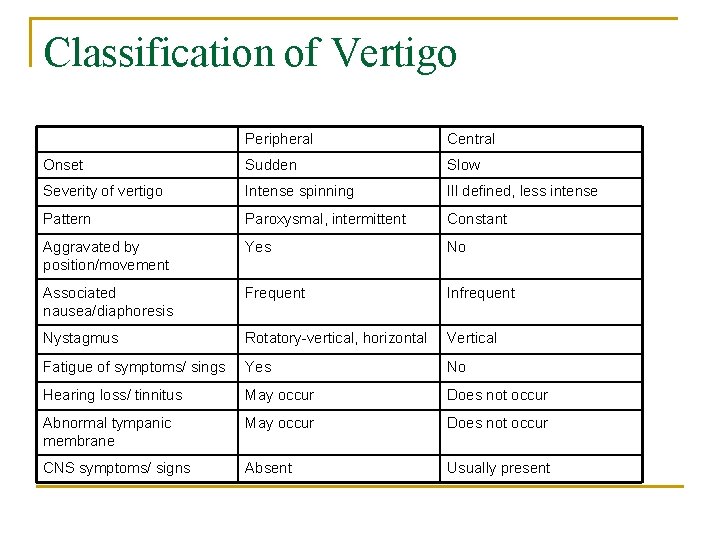
Classification of Vertigo Peripheral Central Onset Sudden Slow Severity of vertigo Intense spinning Ill defined, less intense Pattern Paroxysmal, intermittent Constant Aggravated by position/movement Yes No Associated nausea/diaphoresis Frequent Infrequent Nystagmus Rotatory-vertical, horizontal Vertical Fatigue of symptoms/ sings Yes No Hearing loss/ tinnitus May occur Does not occur Abnormal tympanic membrane May occur Does not occur CNS symptoms/ signs Absent Usually present
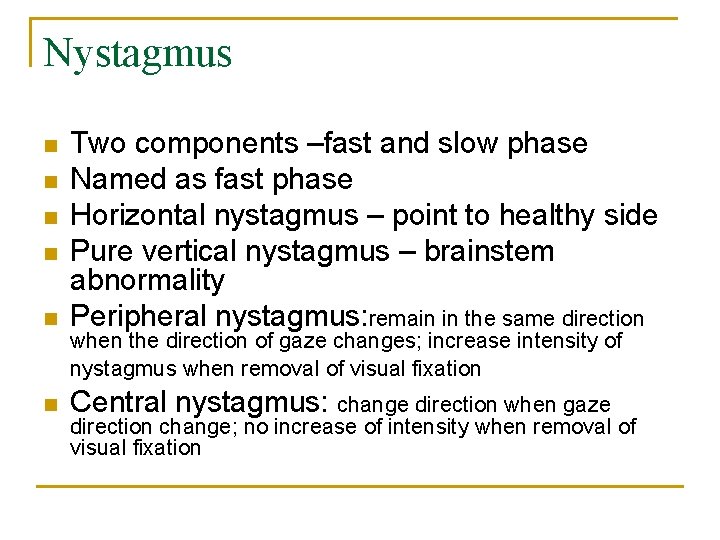
Nystagmus n Two components –fast and slow phase Named as fast phase Horizontal nystagmus – point to healthy side Pure vertical nystagmus – brainstem abnormality Peripheral nystagmus: remain in the same direction n Central nystagmus: change direction when gaze n n when the direction of gaze changes; increase intensity of nystagmus when removal of visual fixation direction change; no increase of intensity when removal of visual fixation
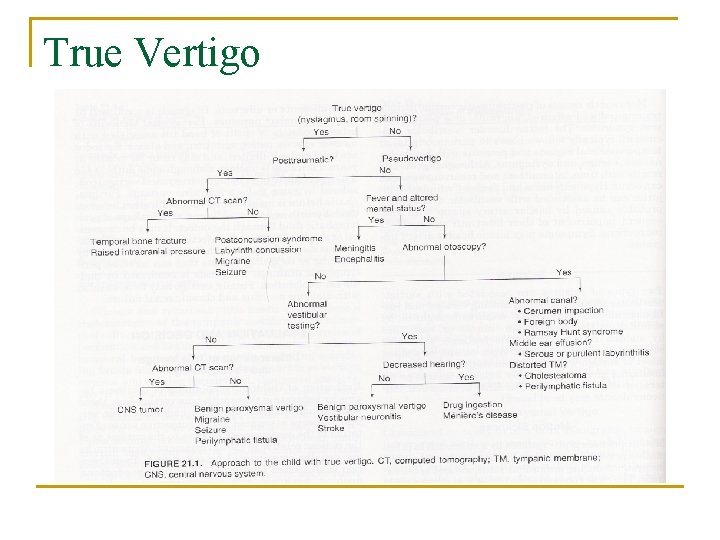
True Vertigo
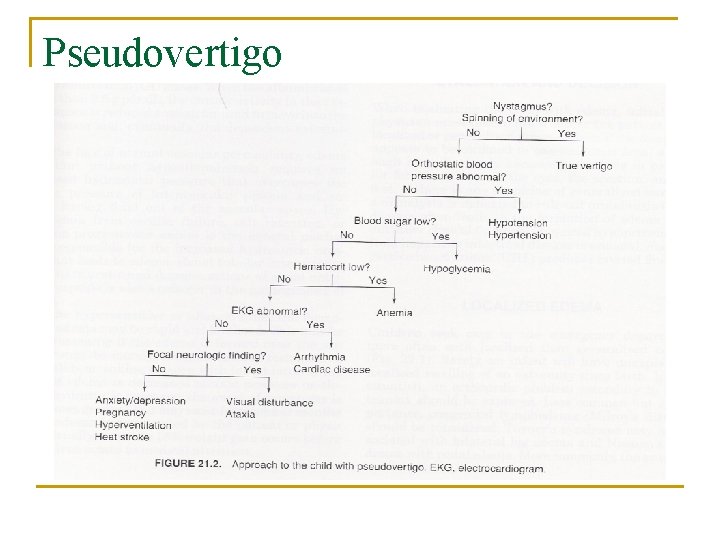
Pseudovertigo
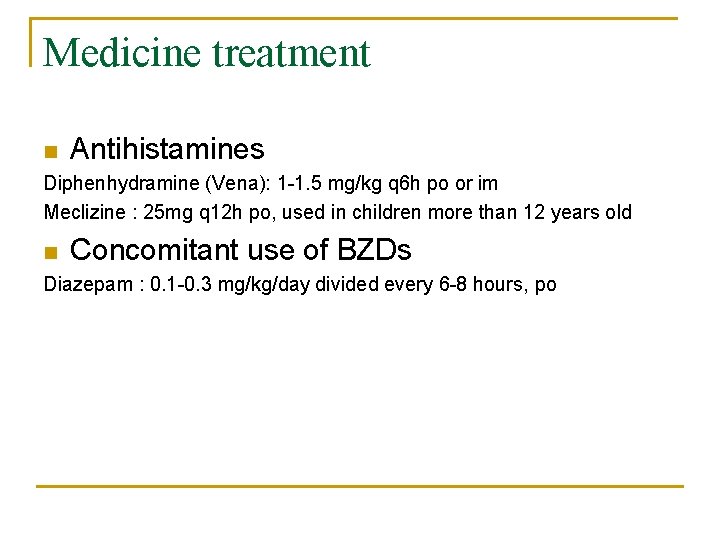
Medicine treatment n Antihistamines Diphenhydramine (Vena): 1 -1. 5 mg/kg q 6 h po or im Meclizine : 25 mg q 12 h po, used in children more than 12 years old n Concomitant use of BZDs Diazepam : 0. 1 -0. 3 mg/kg/day divided every 6 -8 hours, po
Thanks a lot !! n Let your patients complaining vertigo leave ER only when they could walk by their self and have no neurological signs and symptoms.
- Slides: 22