
Telescopes Objectives To know the general types of
Telescopes
Objectives • To know the general types of telescopes and the advantages and disadvantages of each one. • To know the primary parts and functions of each part of a telescope. • To know the importance of the diameter of the objective and to know how the magnification of a telescope is related to the focal lengths of the objective and eyepiece. • To know the advantages and disadvantages of earth and space-based telescopes.
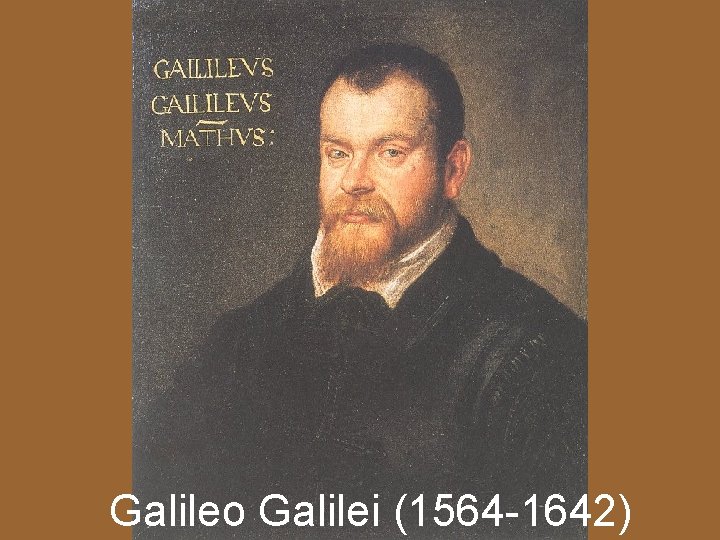
Galileo Galilei (1564 -1642)
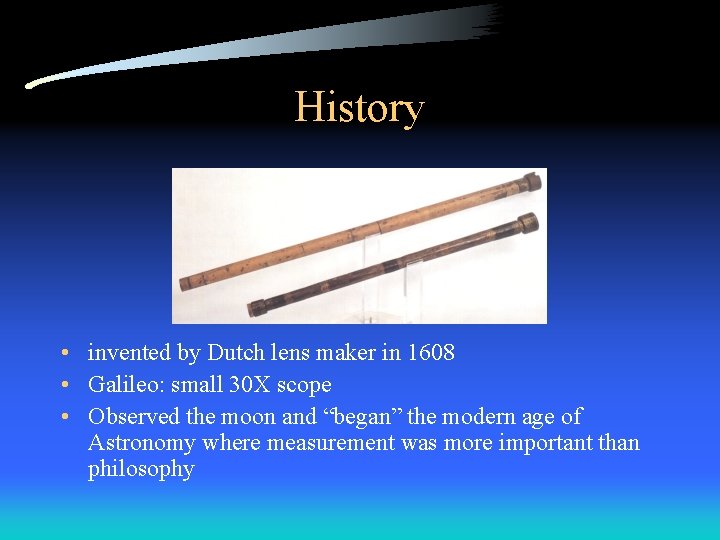
History • invented by Dutch lens maker in 1608 • Galileo: small 30 X scope • Observed the moon and “began” the modern age of Astronomy where measurement was more important than philosophy
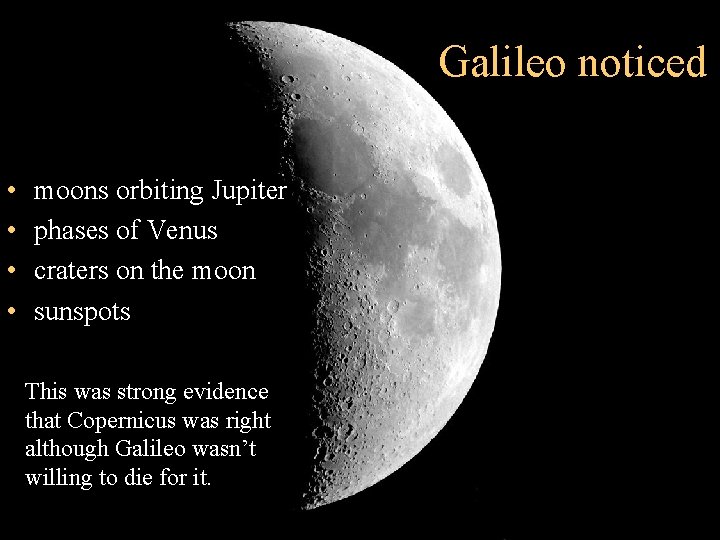
Galileo noticed • • moons orbiting Jupiter phases of Venus craters on the moon sunspots This was strong evidence that Copernicus was right although Galileo wasn’t willing to die for it.
How a telescope works • gathers light through the objective (mirror or lens) – bigger is better because it gathers more light – ability to see faint objects • focuses light • viewed through an eyepiece (changing the eyepiece changes the magnification)
General types of telescopes • Refracting (objective is a lens) • Reflecting (objective is a mirror) – Newtonian – Cassegrain
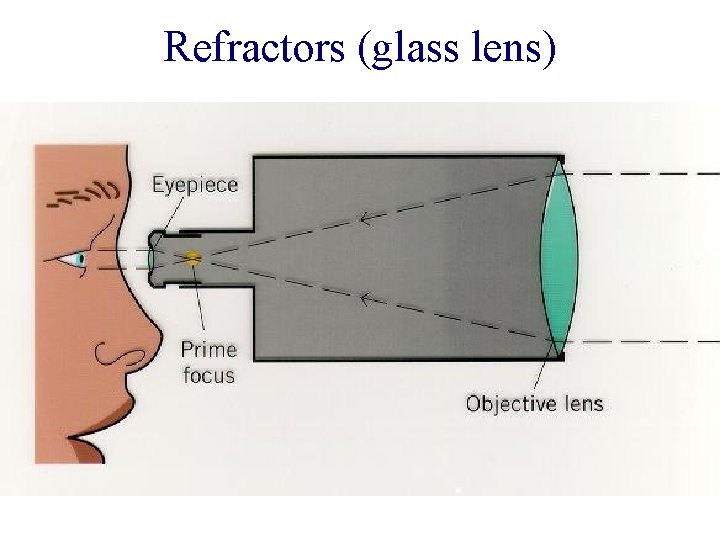
Refractors (glass lens)
Advantages and Disadvantages • Easy to use and reliable • Excellent for lunar, planetary. • More expensive • Heavier, longer and bulkier than equivalent Newtonians and Cassegrain. • Color aberration (fuzzy rainbows) due to colors of light bending different amounts.

Reflectors (mirror)
Advantages and disadvantages • Lowest cost • Reasonably compact and portable. • Excellent for faint deep sky objects such as remote galaxies, nebulae and star clusters. • Reasonably good for lunar and planetary work. • Low in optical aberrations. • More fragile • Large (over 8") are bulky, heavy and tend to be expensive.
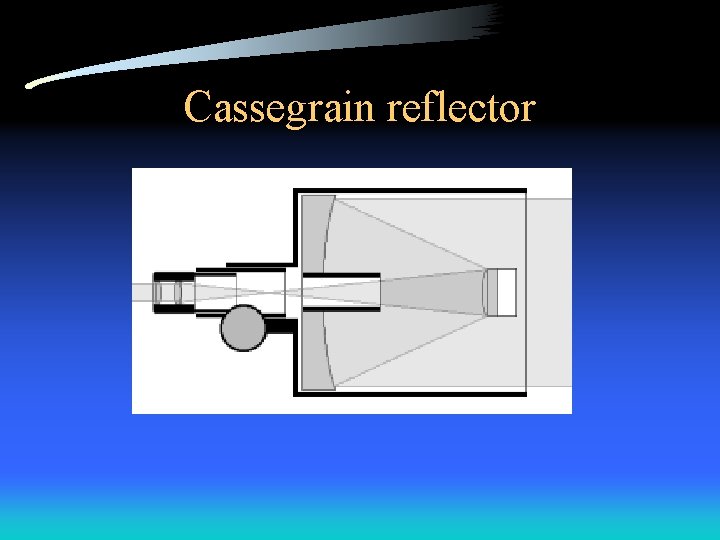
Cassegrain reflector
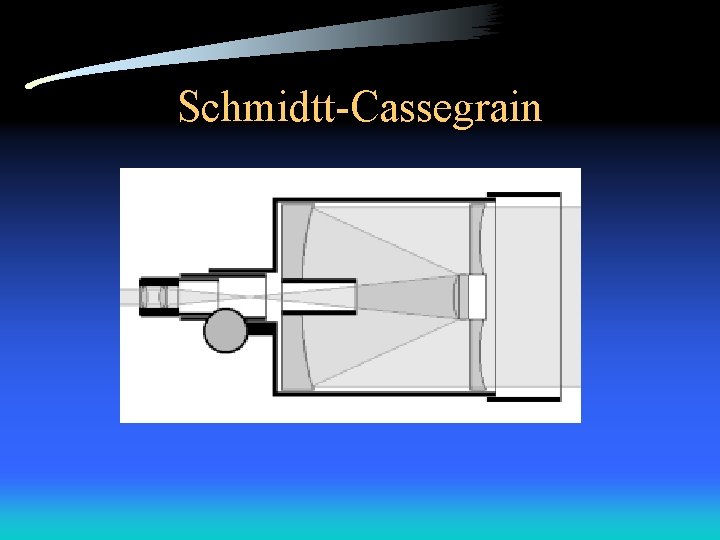
Schmidtt-Cassegrain
Problems with earth-based telescopes • Earth’s atmosphere reflects certain wavelengths – x-rays, gamma rays and most UV light is not transmitted by our atmosphere • Earth’s atmosphere blurs images – the bending of light by the atmosphere depends on the temperature of the “air” – “twinkling” (shimmering) effect • “Light pollution” • Solution? Put the telescope in space.
Disadvantages of space-based telescopes • Expensive to launch and maintain • Difficult to repair • Low lifetime
Examples of space-based telescopes • Hubble Space Telescope – 3 times better resolution – can see fainter objects • Chandra X-ray Observatory • Compton Gamma-Ray Observatory
- Slides: 16