
Telepresence Interoperability Protocol TIP Overview for IMTC Super
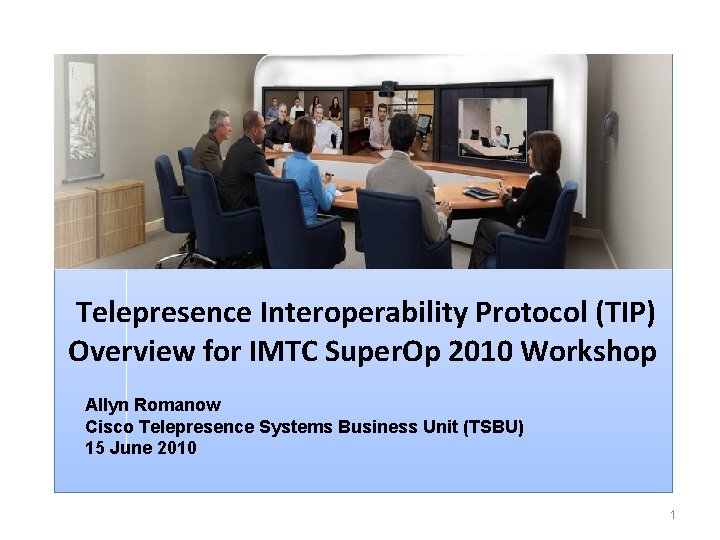
Telepresence Interoperability Protocol (TIP) Overview for IMTC Super. Op 2010 Workshop Allyn Romanow Cisco Telepresence Systems Business Unit (TSBU) 15 June 2010 1
Agenda § § § What is TIP? Background Interesting Features Documentation Current status 2
What is TIP? § Telepresence Interoperability Protocol § Immediate interoperability with Cisco WHILE working on an industry standard § Signaling media and media control – Controls media – Identifies positions and lots of functions – Uses RTCP for signaling instead of SIP/SDP 3

Use Cases, Point to Point and Multi-point Call Agent TIP Point-to-point Calls Call Agent TIP MCU Multipoint Calls
Background § Cisco opened up TIP to kick start multi-vendor, multi-screen interoperability while IMTC, the industry work on a suite of standards http: //www. cisco. com/go/tip § Spec (v 6, v 7) and profile(s) § TIP Library Open Source project to launch by 1 July http: //tiprotocol. sourceforge. net § Cisco to transfer ownership of TIP and Library to IMTC to own, govern, change control 5
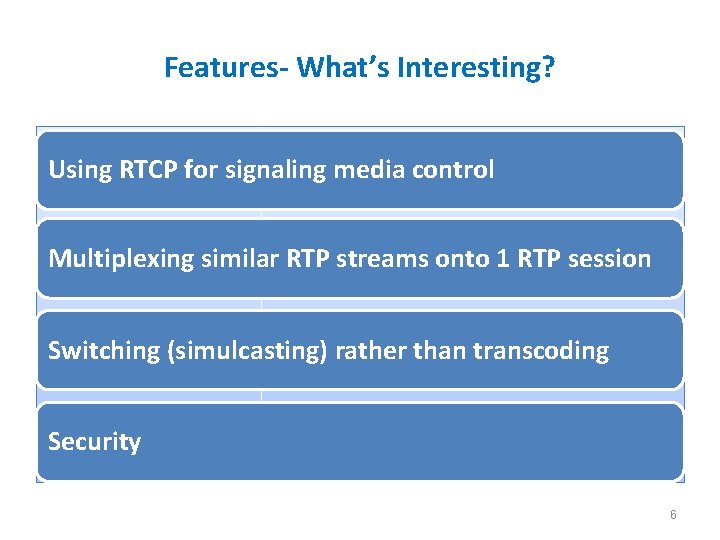
Features- What’s Interesting? Using RTCP for signaling media control Multiplexing similar RTP streams onto 1 RTP session Switching (simulcasting) rather than transcoding Security 6
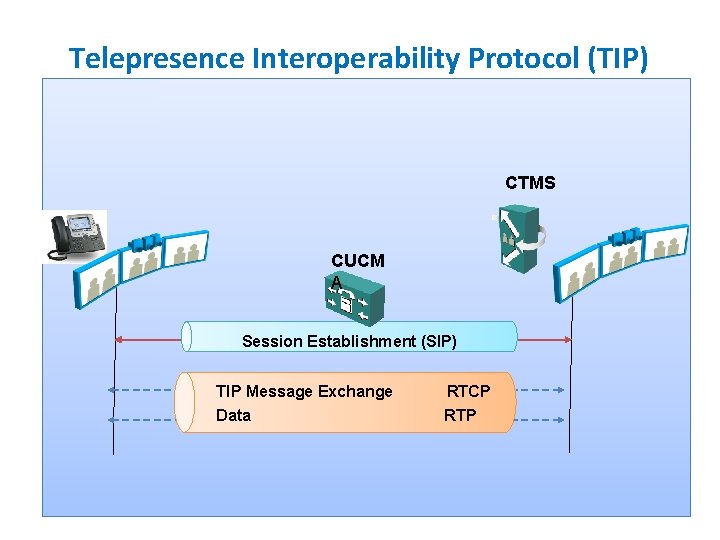
Telepresence Interoperability Protocol (TIP) CTMS CUCM A Session Establishment (SIP) TIP Message Exchange Data RTCP RTP
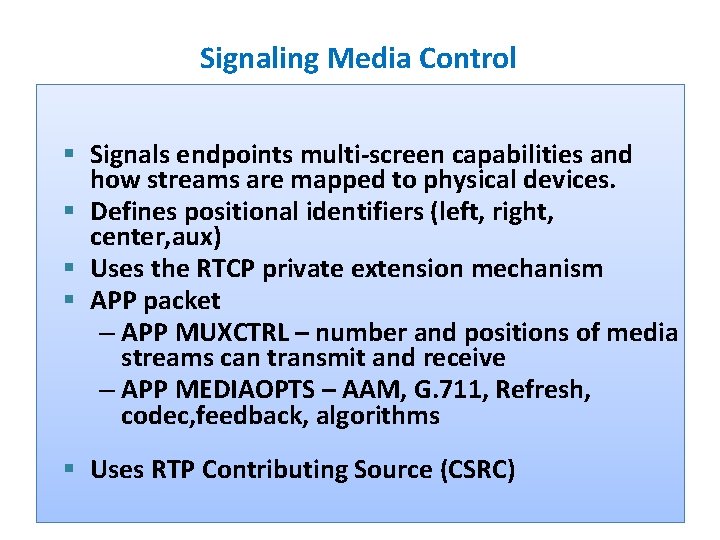
Signaling Media Control § Signals endpoints multi-screen capabilities and how streams are mapped to physical devices. § Defines positional identifiers (left, right, center, aux) § Uses the RTCP private extension mechanism § APP packet – APP MUXCTRL – number and positions of media streams can transmit and receive – APP MEDIAOPTS – AAM, G. 711, Refresh, codec, feedback, algorithms § Uses RTP Contributing Source (CSRC)
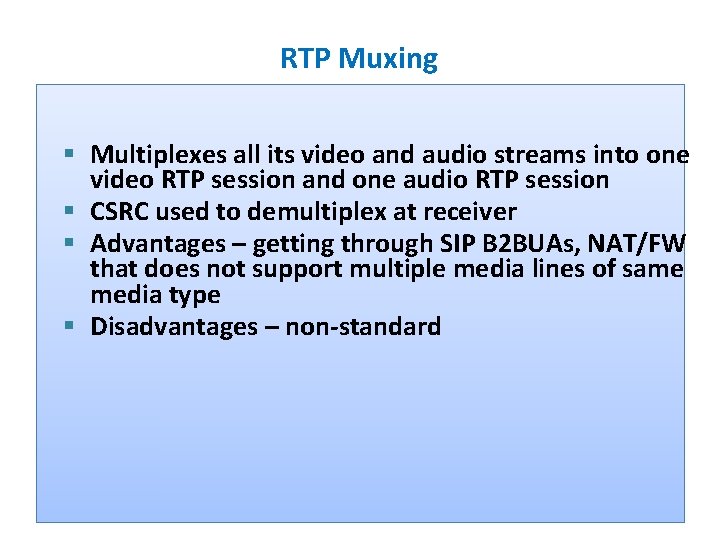
RTP Muxing § Multiplexes all its video and audio streams into one video RTP session and one audio RTP session § CSRC used to demultiplex at receiver § Advantages – getting through SIP B 2 BUAs, NAT/FW that does not support multiple media lines of same media type § Disadvantages – non-standard
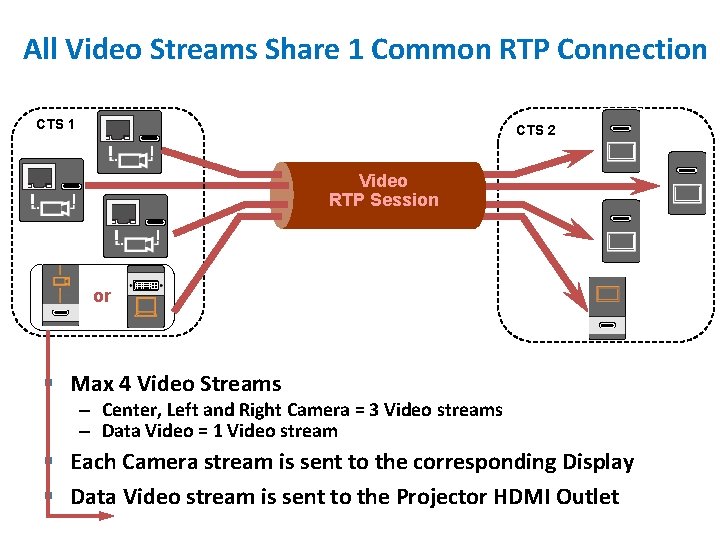
All Video Streams Share 1 Common RTP Connection CTS 1 CTS 2 Video RTP Session or § Max 4 Video Streams – Center, Left and Right Camera = 3 Video streams – Data Video = 1 Video stream § Each Camera stream is sent to the corresponding Display § Data Video stream is sent to the Projector HDMI Outlet
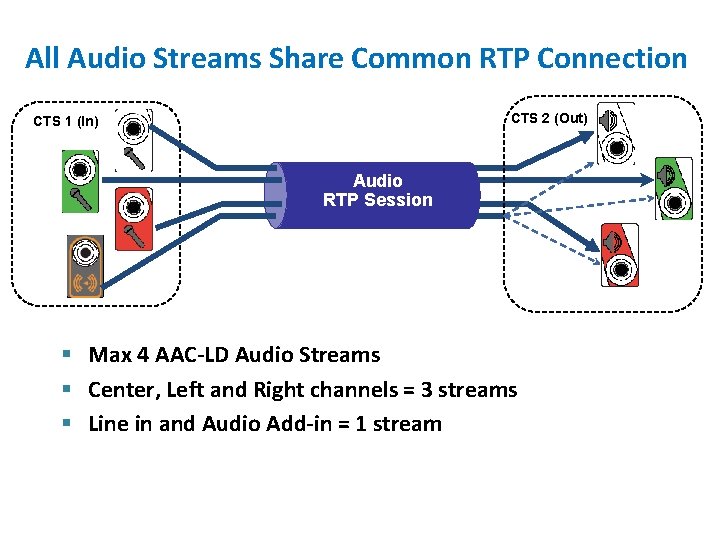
All Audio Streams Share Common RTP Connection CTS 2 (Out) CTS 1 (In) Audio RTP Session § Max 4 AAC-LD Audio Streams § Center, Left and Right channels = 3 streams § Line in and Audio Add-in = 1 stream
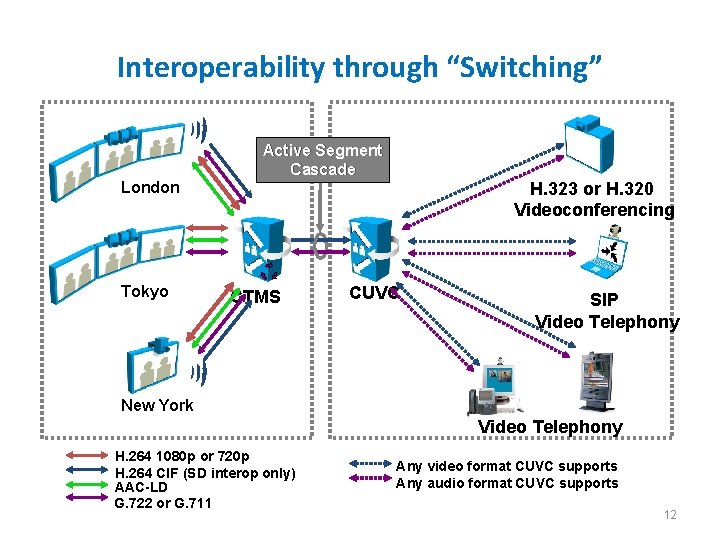
Interoperability through “Switching” London Tokyo Active Segment Cascade CTMS H. 323 or H. 320 Videoconferencing CUVC SIP Video Telephony New York Video Telephony H. 264 1080 p or 720 p H. 264 CIF (SD interop only) AAC-LD G. 722 or G. 711 Any video format CUVC supports Any audio format CUVC supports 12
Security (in v 7) § Encryption (SRTP) with these key exchange approaches § Point-to-point: Keys negotiated through DTLS (TLS over UDP) in-band within the RTP media stream [RFC 5764] § Point-to-multipoint: EKT (Encrypted Key Transport)
Current Status § Becomes part of IMTC July 31 § New IMTC working group- TIP AG – Process for making changes to spec – Interop testing – Co-chairs § Source license management

Questions?
TIP Capabilities § 1080 p at 30 fps, or 780 p § AUX/collaboration screen, w/ maximum fps indication (1, 5 or 30 fps) § Audio Activity Metric (for multipoint switching) § Enhanced Codec capability/profile negotiation, such as CABAC, LTRP, GDR and IDR, etc. § TIP feedback is ACK centric
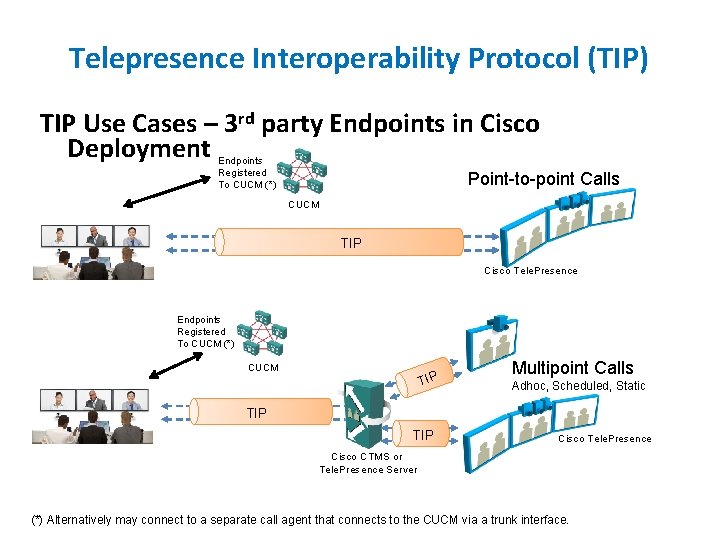
Telepresence Interoperability Protocol (TIP) TIP Use Cases – 3 rd party Endpoints in Cisco Deployment Endpoints Registered To CUCM (*) Point-to-point Calls CUCM TIP Cisco Tele. Presence Endpoints Registered To CUCM (*) CUCM TIP Multipoint Calls Adhoc, Scheduled, Static TIP Cisco Tele. Presence Cisco CTMS or Tele. Presence Server (*) Alternatively may connect to a separate call agent that connects to the CUCM via a trunk interface.
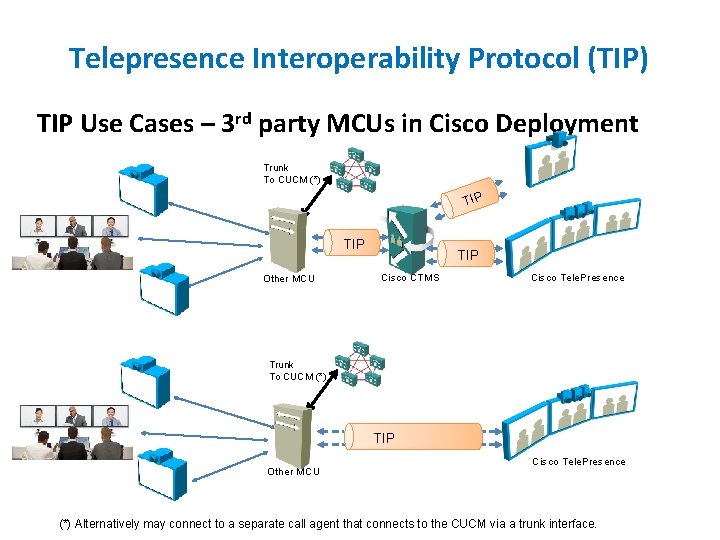
Telepresence Interoperability Protocol (TIP) TIP Use Cases – 3 rd party MCUs in Cisco Deployment Trunk To CUCM (*) TIP Other MCU TIP Cisco CTMS Cisco Tele. Presence Trunk To CUCM (*) TIP Other MCU Cisco Tele. Presence (*) Alternatively may connect to a separate call agent that connects to the CUCM via a trunk interface.
- Slides: 19