
Teleportation Teleportation 2 bits BELL MEASUREMENT Bell States
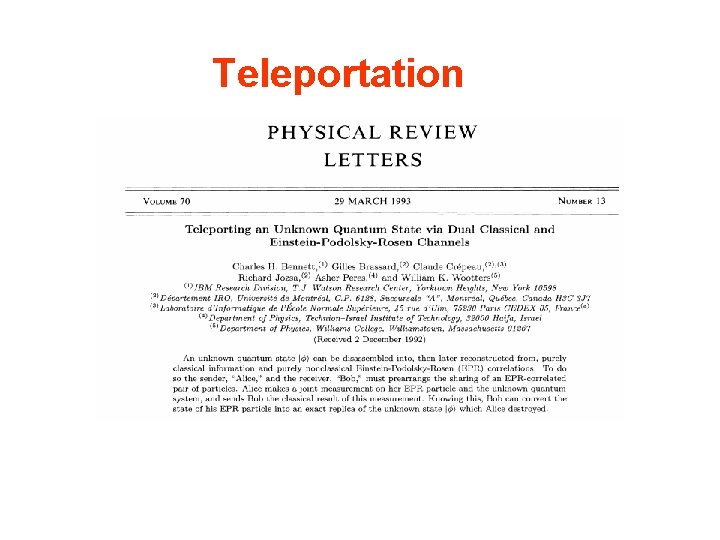
Teleportation
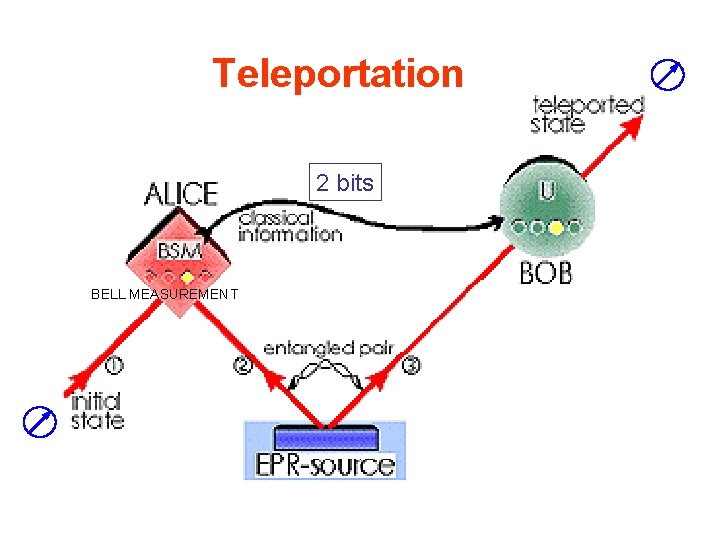
Teleportation 2 bits BELL MEASUREMENT
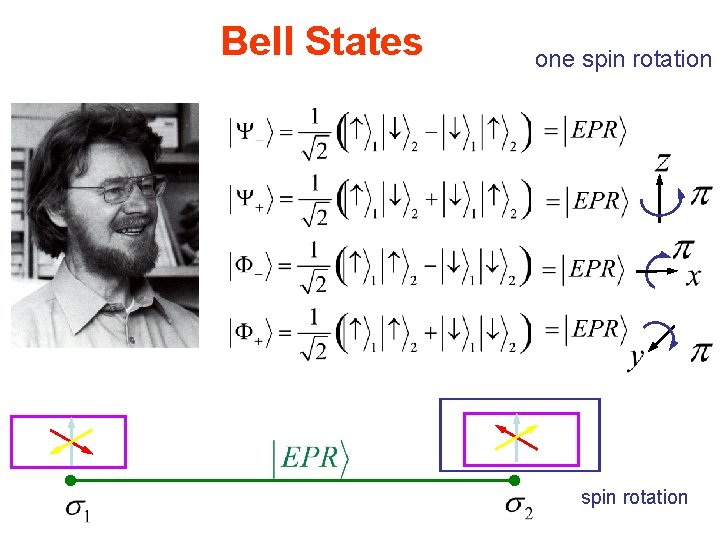
Bell States one spin rotation
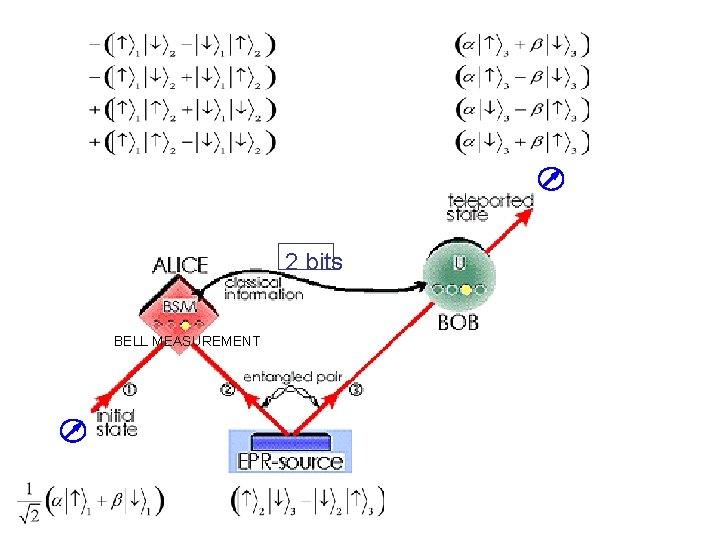
2 bits BELL MEASUREMENT
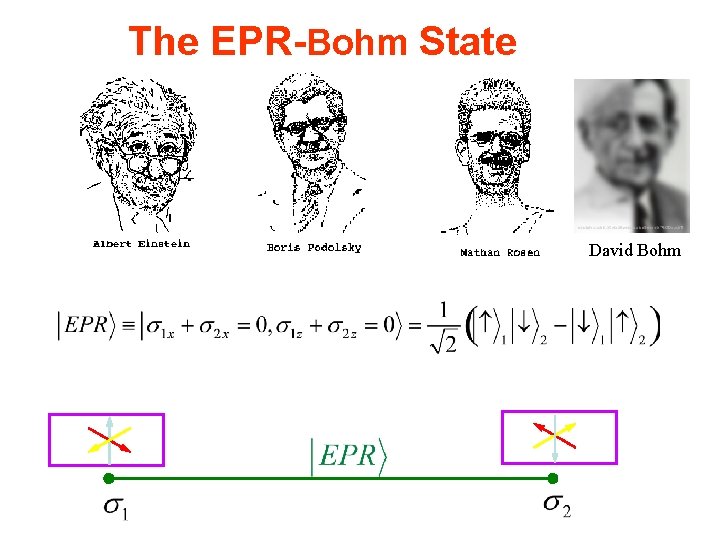
The EPR-Bohm State David Bohm
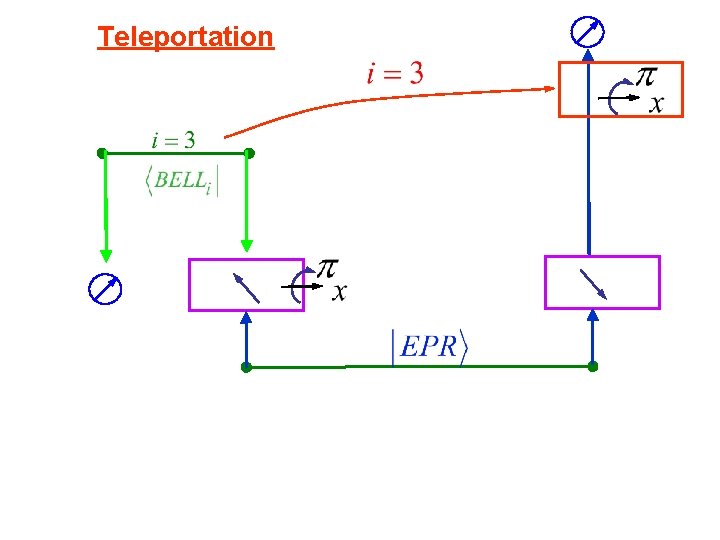
Teleportation
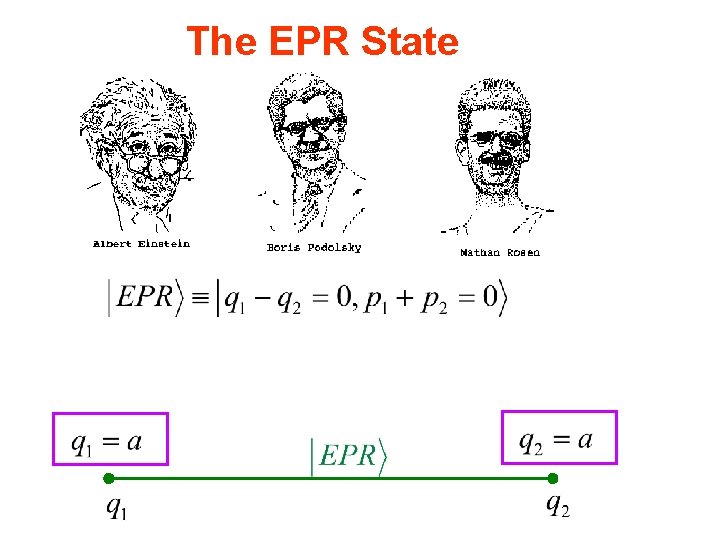
The EPR State
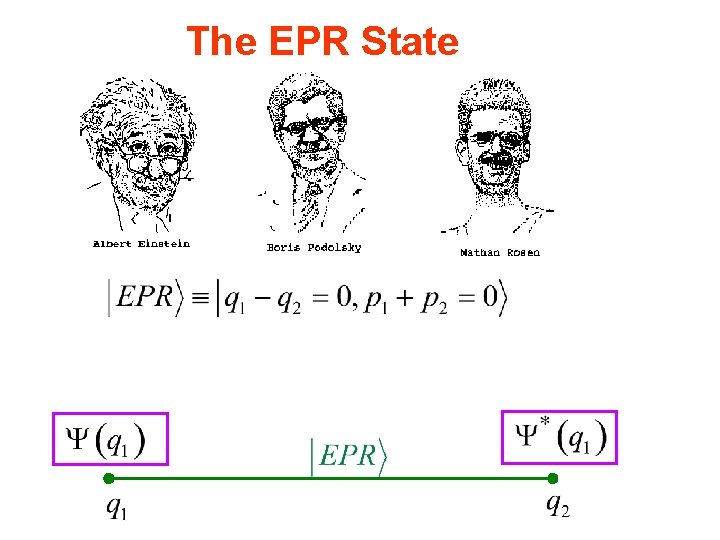
The EPR State
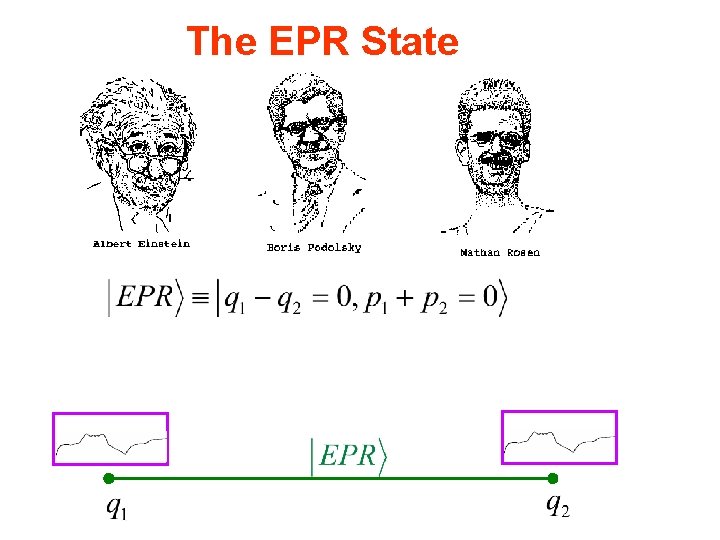
The EPR State
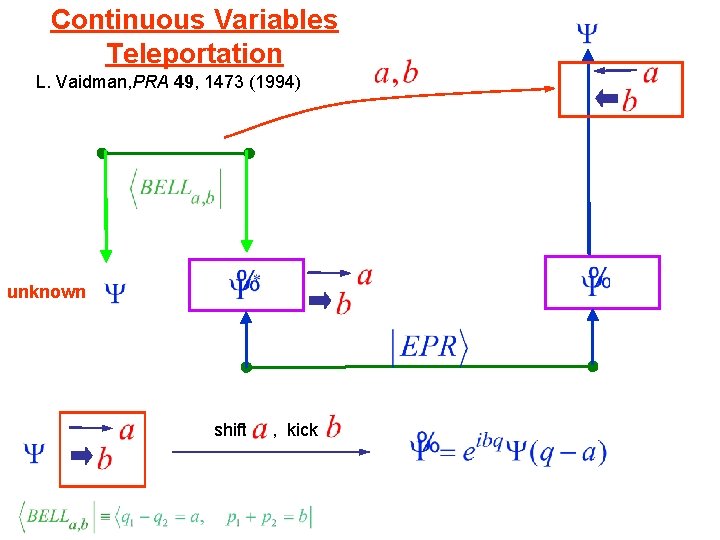
Continuous Variables Teleportation L. Vaidman, PRA 49, 1473 (1994) unknown shift , kick
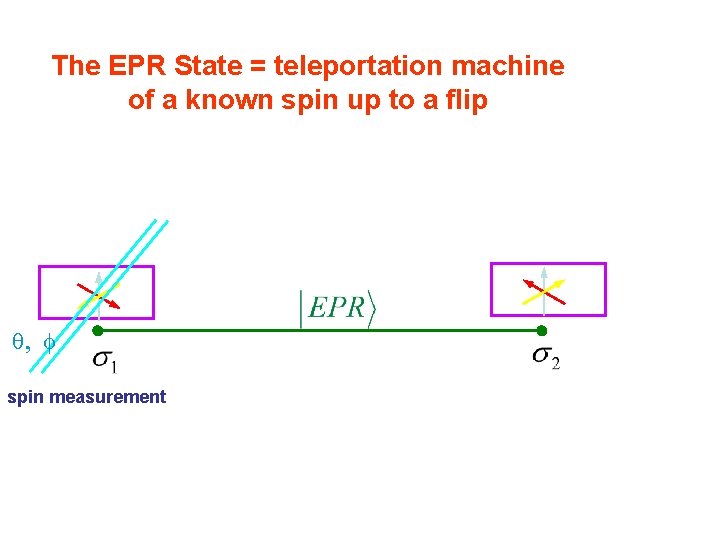
The EPR State = teleportation machine of a known spin up to a flip q, f spin measurement
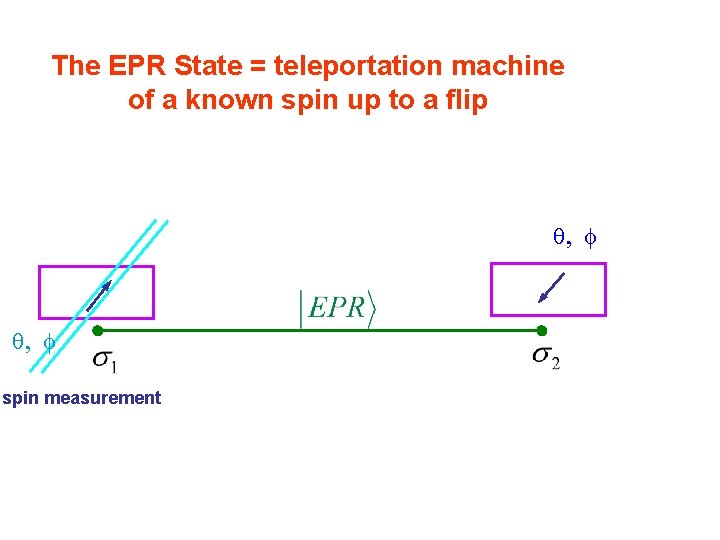
The EPR State = teleportation machine of a known spin up to a flip q, f spin measurement
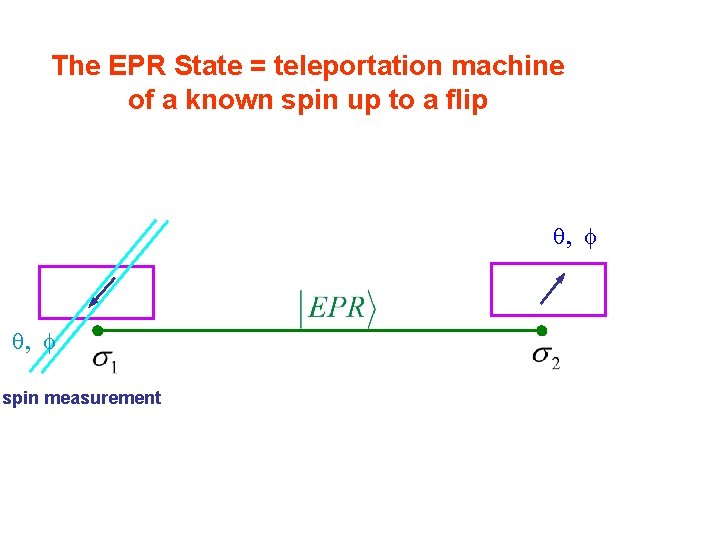
The EPR State = teleportation machine of a known spin up to a flip q, f spin measurement
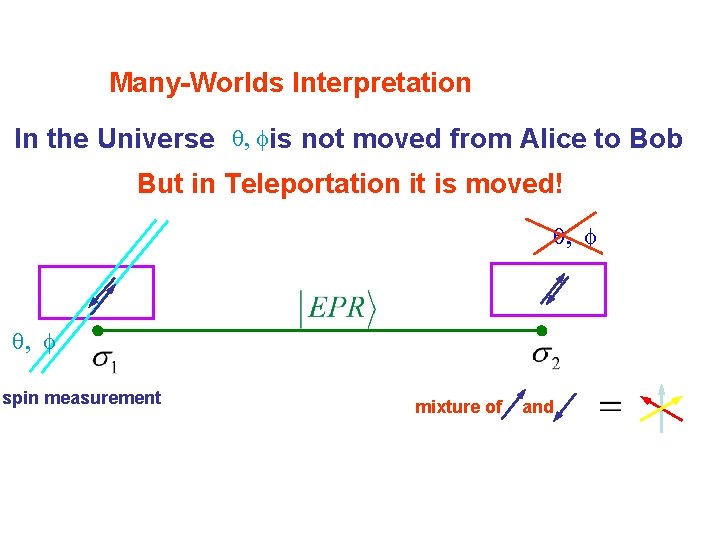
Many-Worlds Interpretation In the Universe q, fis not moved from Alice to Bob But in Teleportation it is moved! q, f spin measurement mixture of and
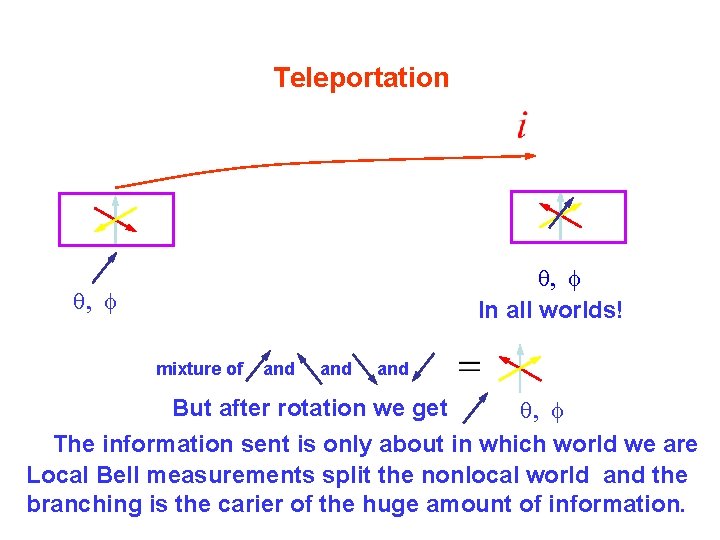
Teleportation q, f In all worlds! q, f mixture of and and But after rotation we get q, f The information sent is only about in which world we are Local Bell measurements split the nonlocal world and the branching is the carier of the huge amount of information.
Why teleportation is possible? We cannot measure (scan) Ψ Too much information to send We cannot clone Ψ We do not scan Ψ We do not clone Ψ
Why teleportation is possible? We cannot measure (scan) Ψ Too much information to send We cannot clone Ψ We do not scan Ψ We do not clone Ψ Most of information is in branching of the world


Paradoxes in the context of the Aharonov-Bohm and the Aharonov-Casher effects
Mach Zehnder Interferometer
Mach Zehnder Interferometer
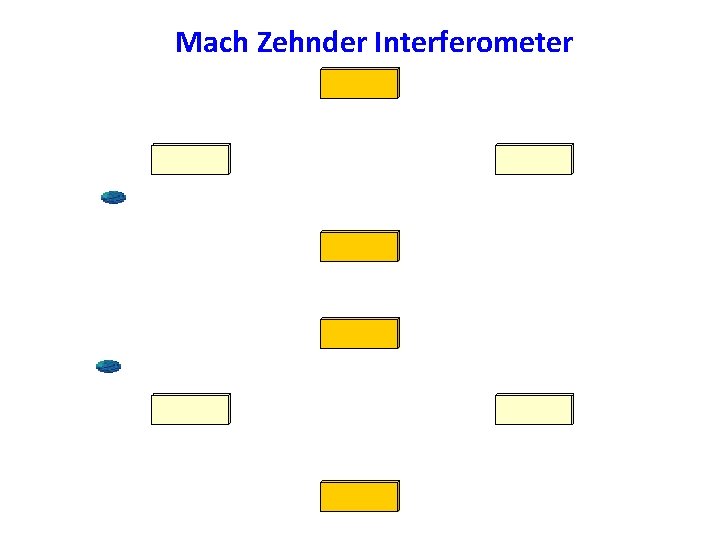
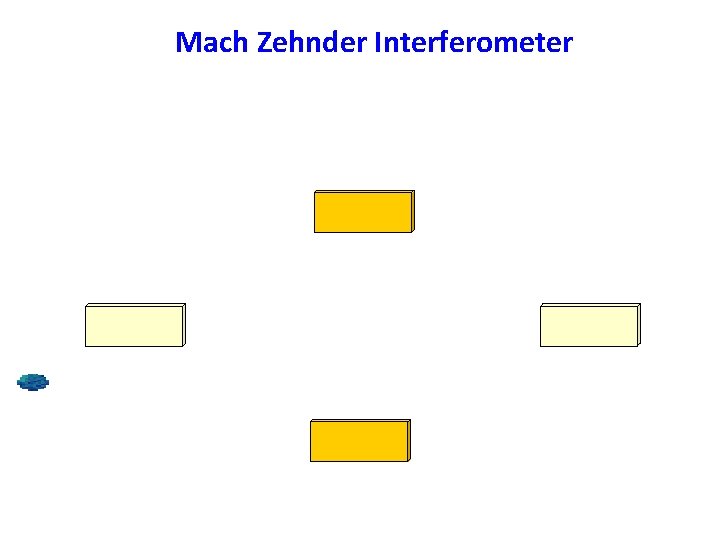
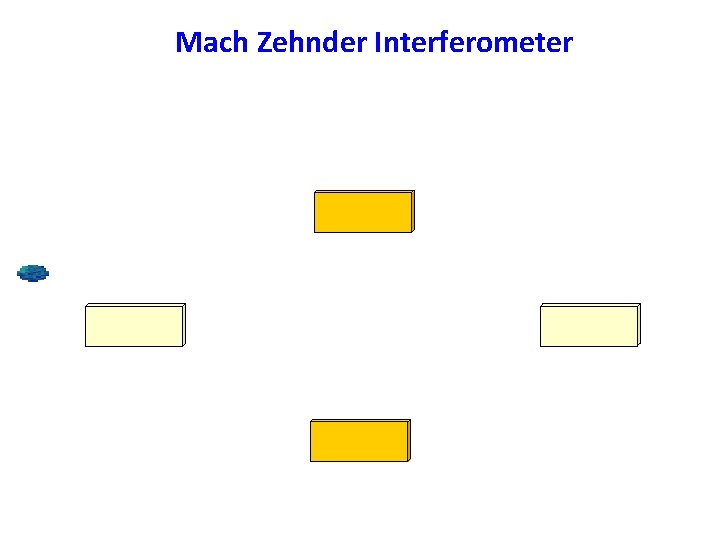
Mach Zehnder Interferometer
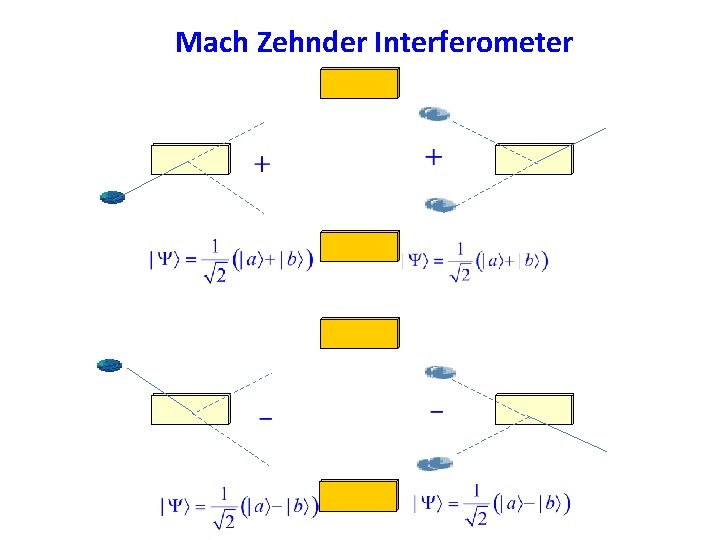
Mach Zehnder Interferometer
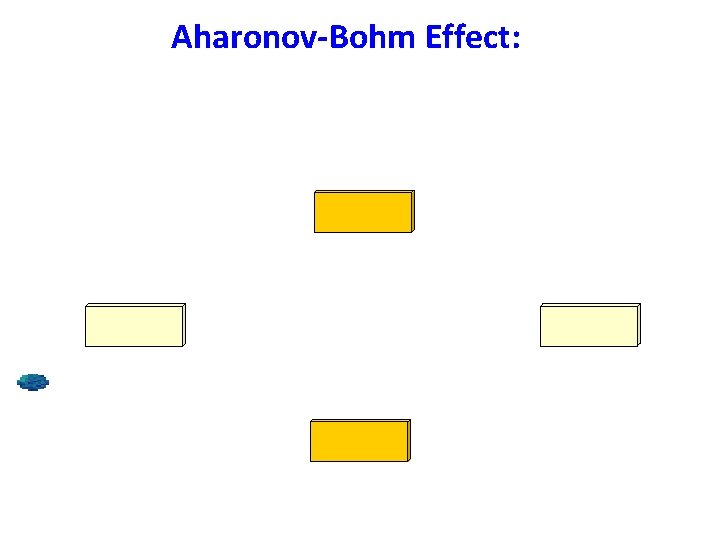
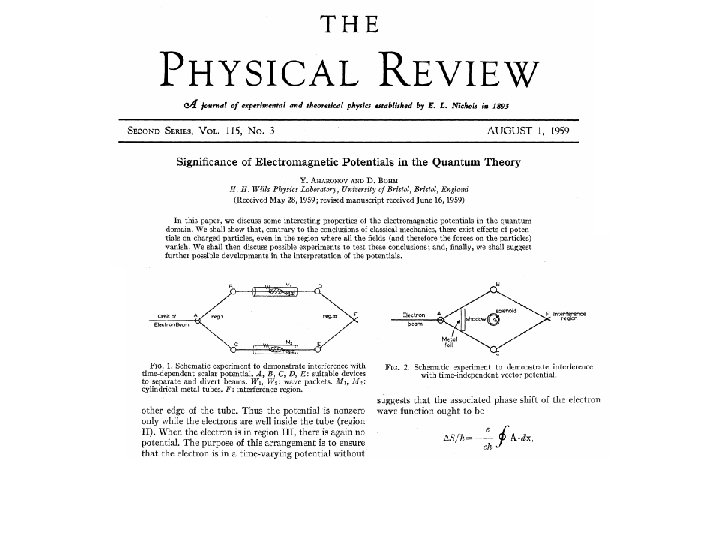
Aharonov-Bohm Effect:
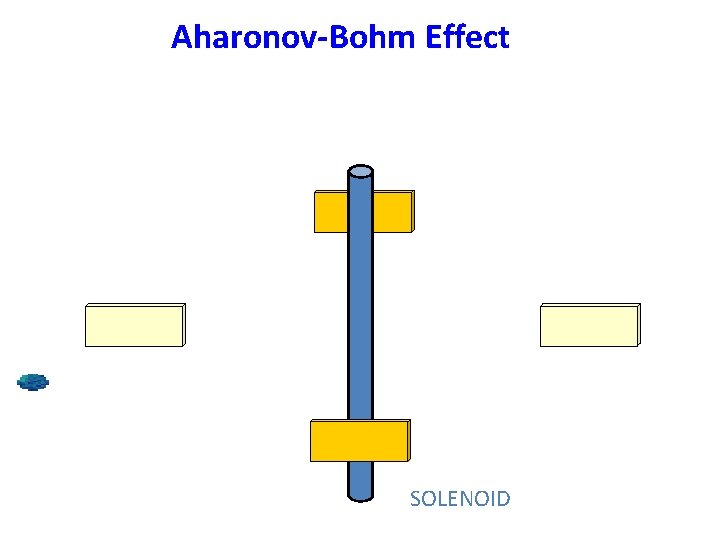
Aharonov-Bohm Effect SOLENOID
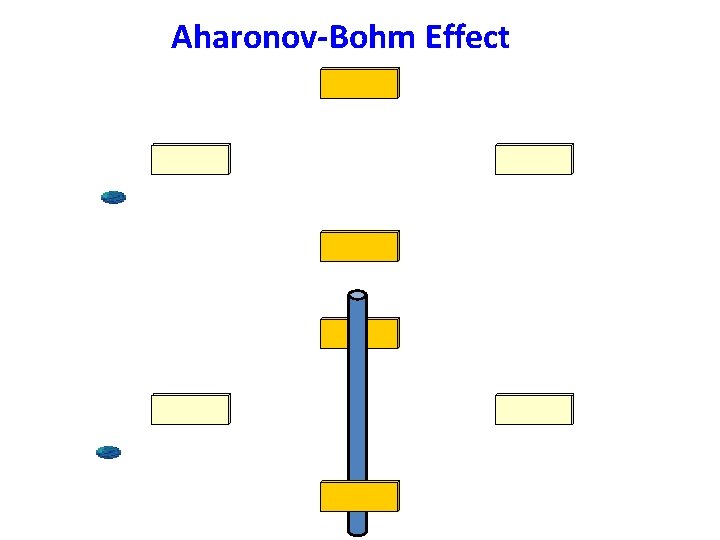
Aharonov-Bohm Effect
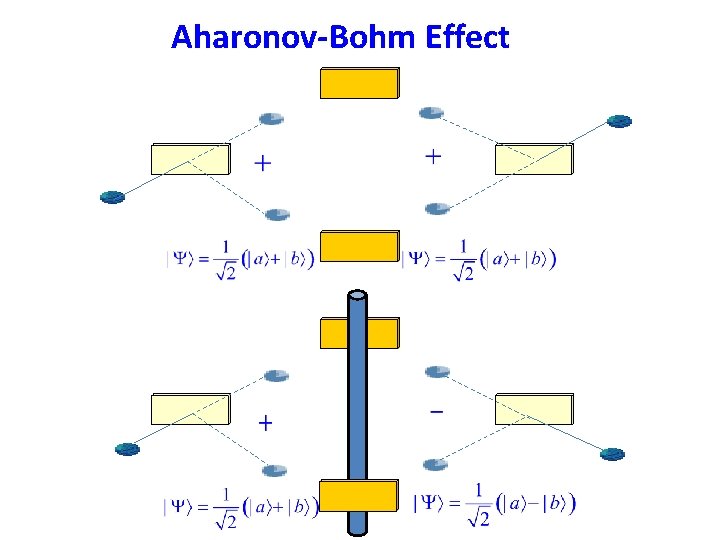
Aharonov-Bohm Effect
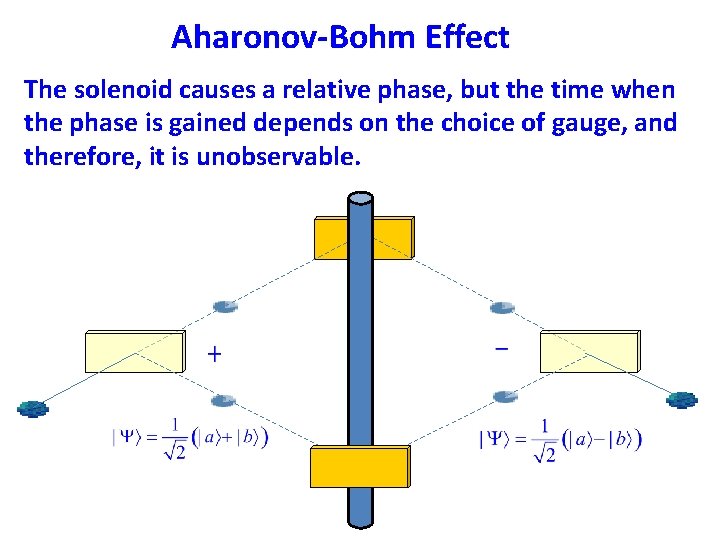
Aharonov-Bohm Effect The solenoid causes a relative phase, but the time when the phase is gained depends on the choice of gauge, and therefore, it is unobservable.
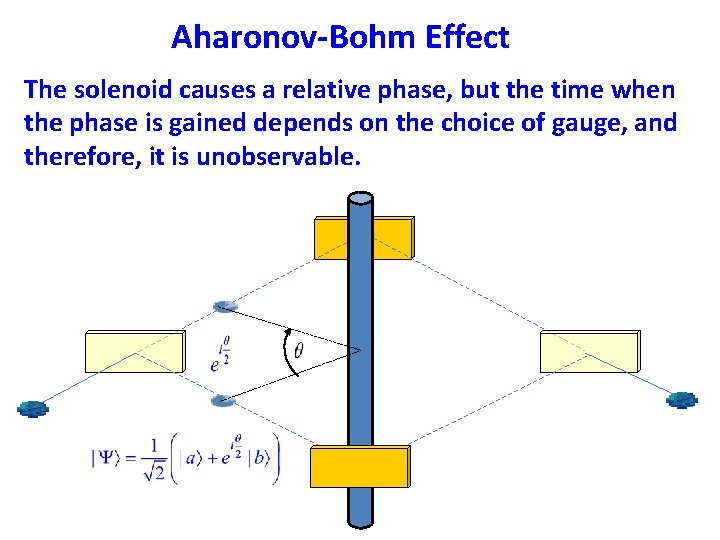
Aharonov-Bohm Effect The solenoid causes a relative phase, but the time when the phase is gained depends on the choice of gauge, and therefore, it is unobservable.
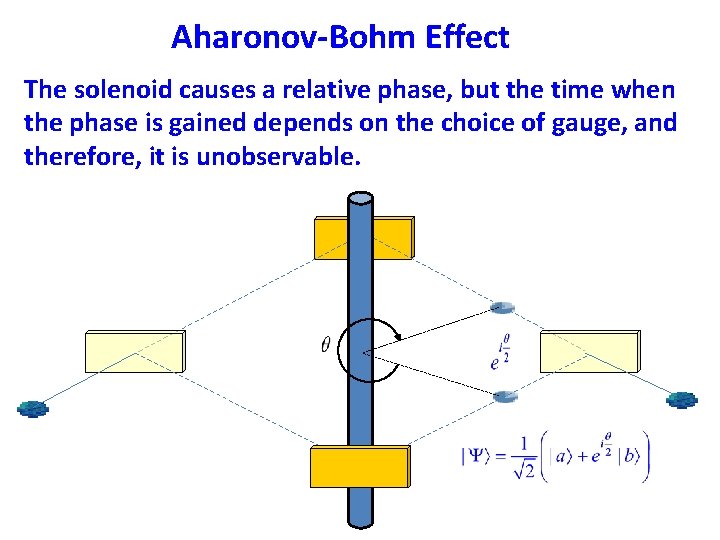
Aharonov-Bohm Effect The solenoid causes a relative phase, but the time when the phase is gained depends on the choice of gauge, and therefore, it is unobservable.
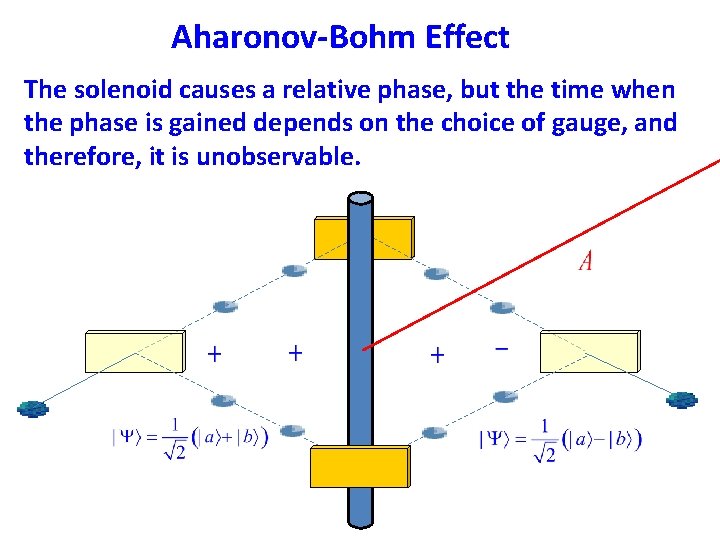
Aharonov-Bohm Effect The solenoid causes a relative phase, but the time when the phase is gained depends on the choice of gauge, and therefore, it is unobservable.
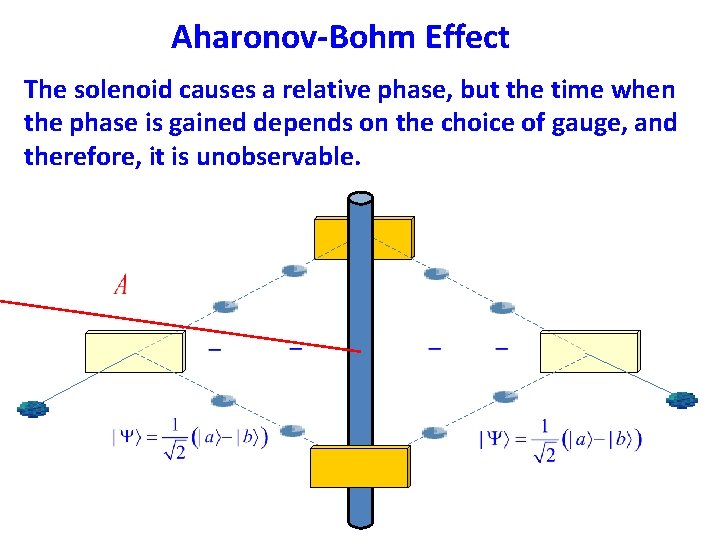
Aharonov-Bohm Effect The solenoid causes a relative phase, but the time when the phase is gained depends on the choice of gauge, and therefore, it is unobservable.
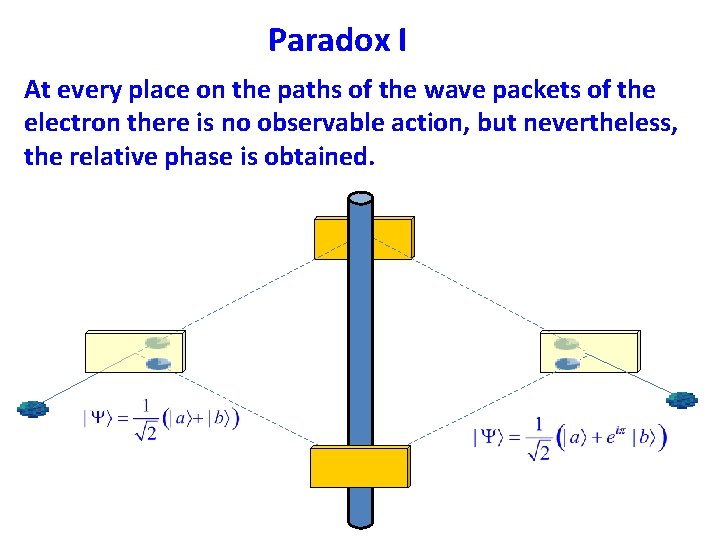
Paradox I At every place on the paths of the wave packets of the electron there is no observable action, but nevertheless, the relative phase is obtained.
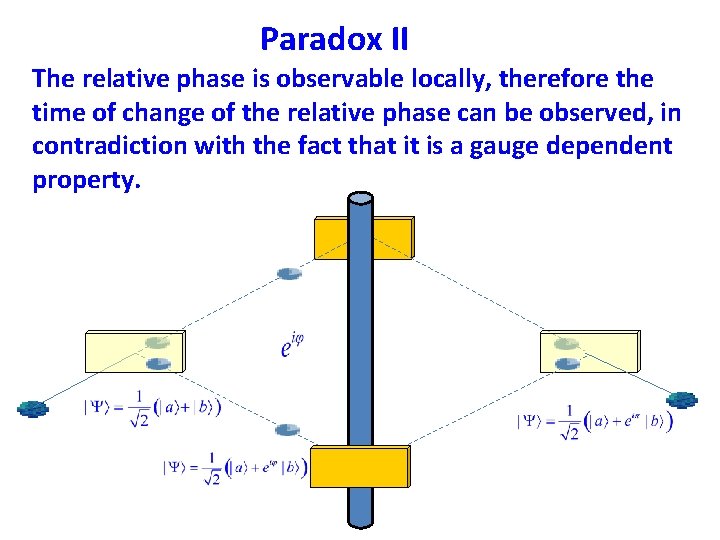
Paradox II The relative phase is observable locally, therefore the time of change of the relative phase can be observed, in contradiction with the fact that it is a gauge dependent property.
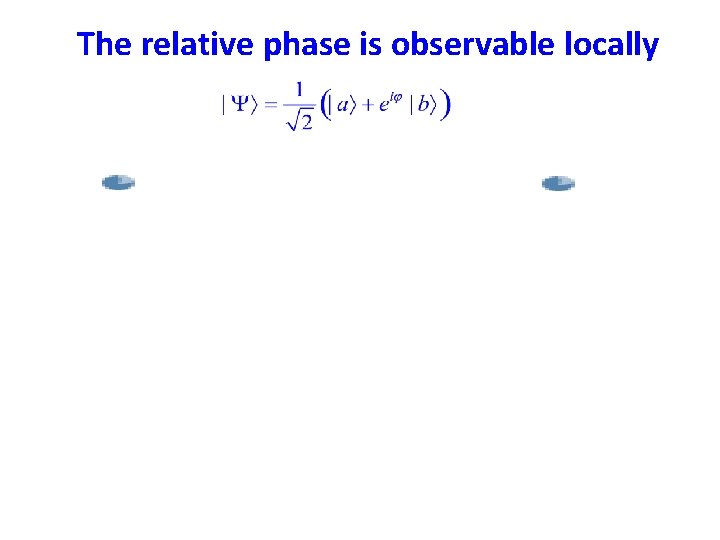
The relative phase is observable locally
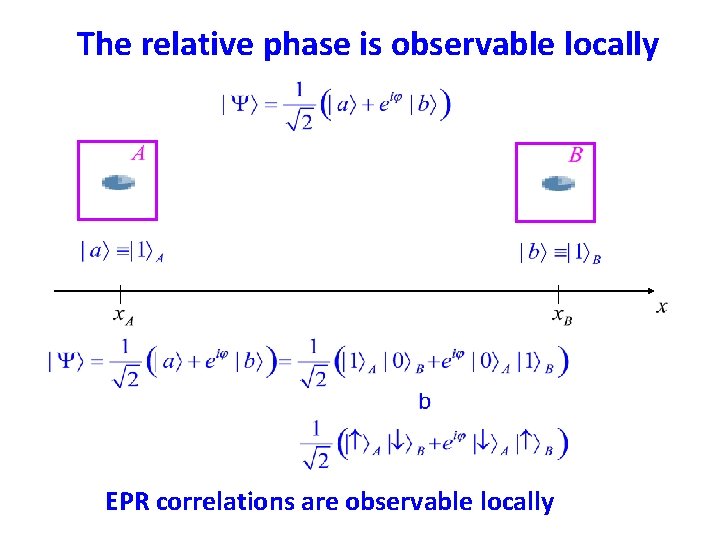
The relative phase is observable locally EPR correlations are observable locally
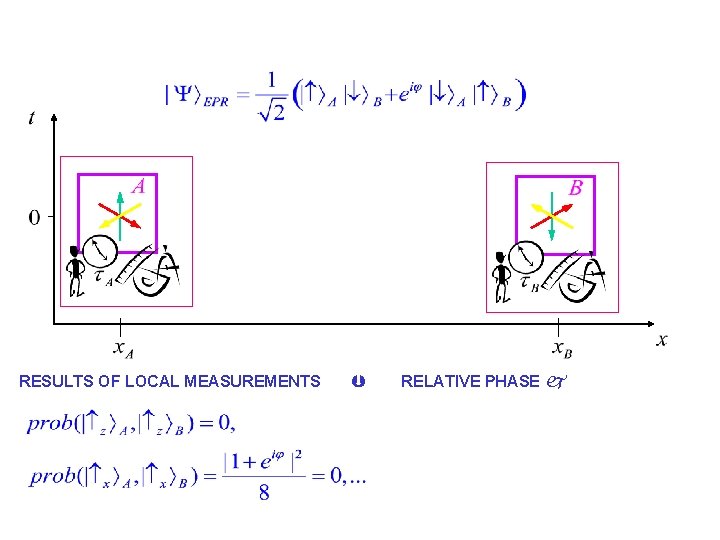
RESULTS OF LOCAL MEASUREMENTS RELATIVE PHASE
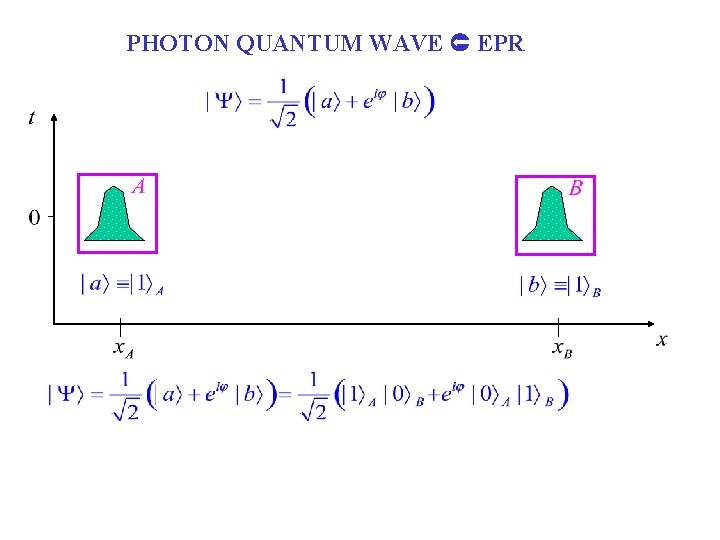
PHOTON QUANTUM WAVE EPR
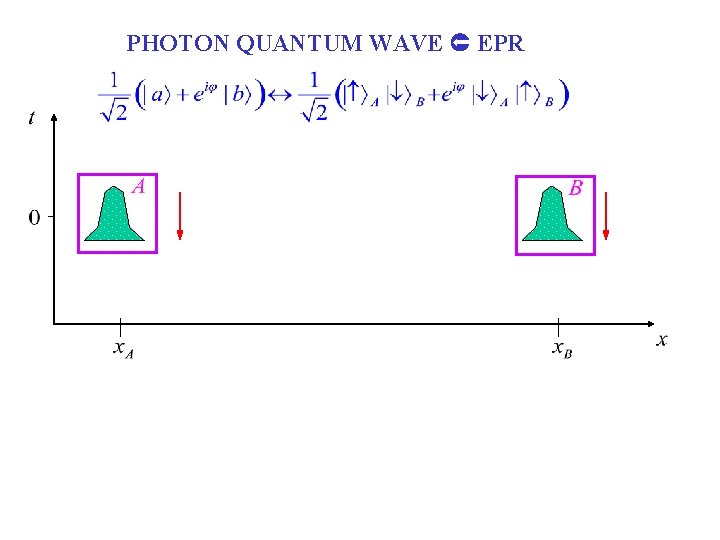
PHOTON QUANTUM WAVE EPR
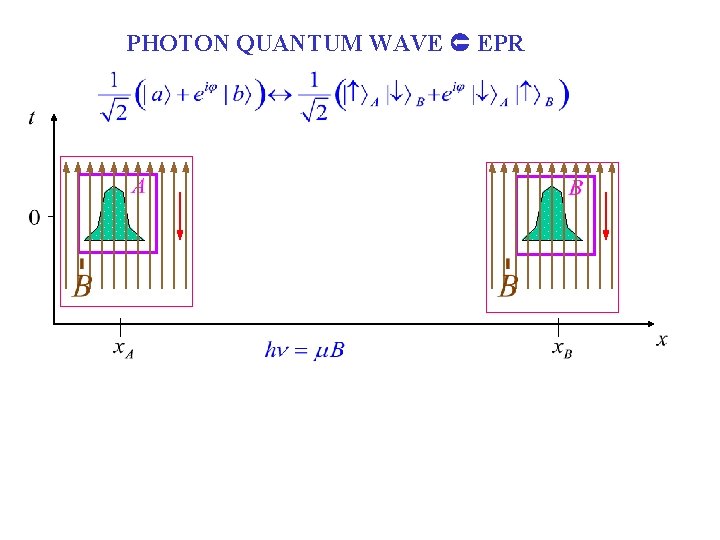
PHOTON QUANTUM WAVE EPR
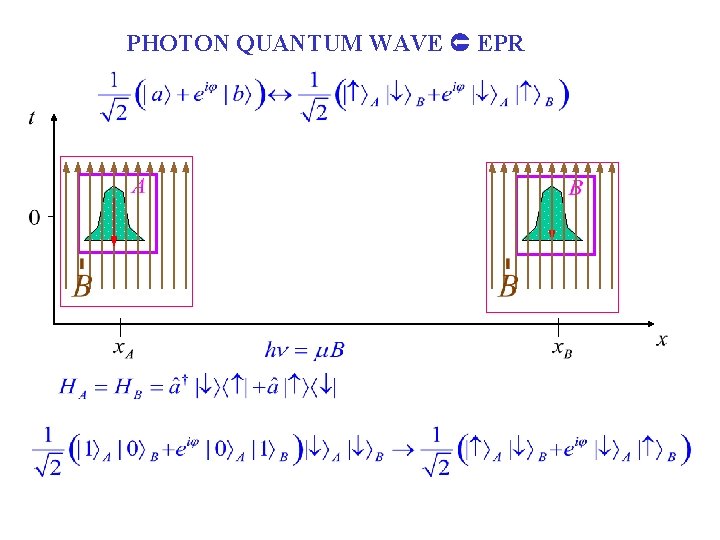
PHOTON QUANTUM WAVE EPR
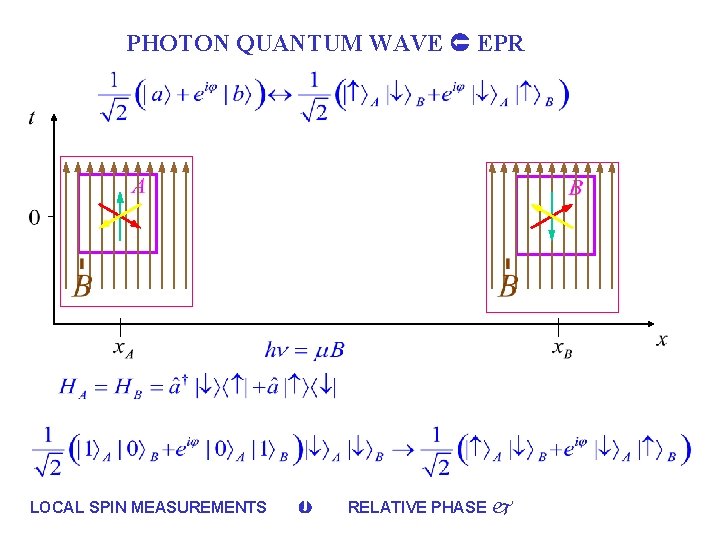
PHOTON QUANTUM WAVE EPR LOCAL SPIN MEASUREMENTS RELATIVE PHASE
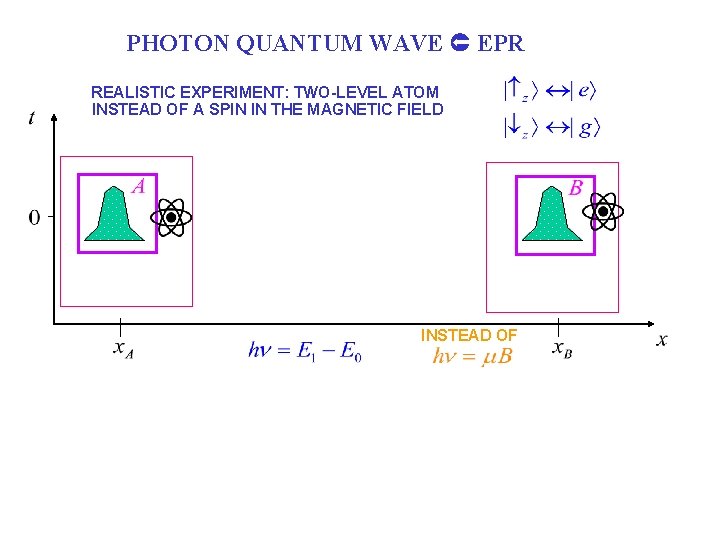
PHOTON QUANTUM WAVE EPR REALISTIC EXPERIMENT: TWO-LEVEL ATOM INSTEAD OF A SPIN IN THE MAGNETIC FIELD INSTEAD OF
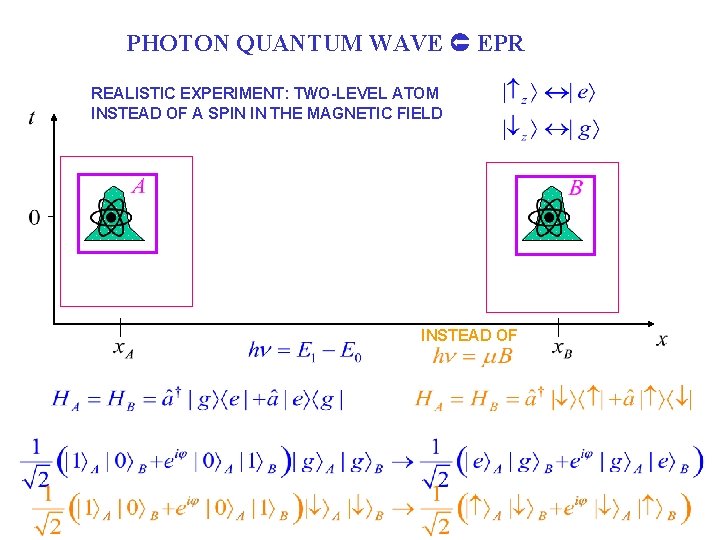
PHOTON QUANTUM WAVE EPR REALISTIC EXPERIMENT: TWO-LEVEL ATOM INSTEAD OF A SPIN IN THE MAGNETIC FIELD INSTEAD OF
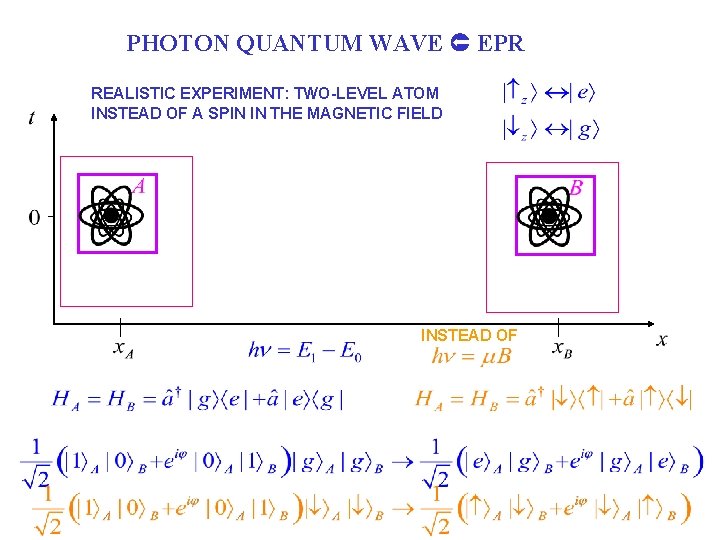
PHOTON QUANTUM WAVE EPR REALISTIC EXPERIMENT: TWO-LEVEL ATOM INSTEAD OF A SPIN IN THE MAGNETIC FIELD INSTEAD OF
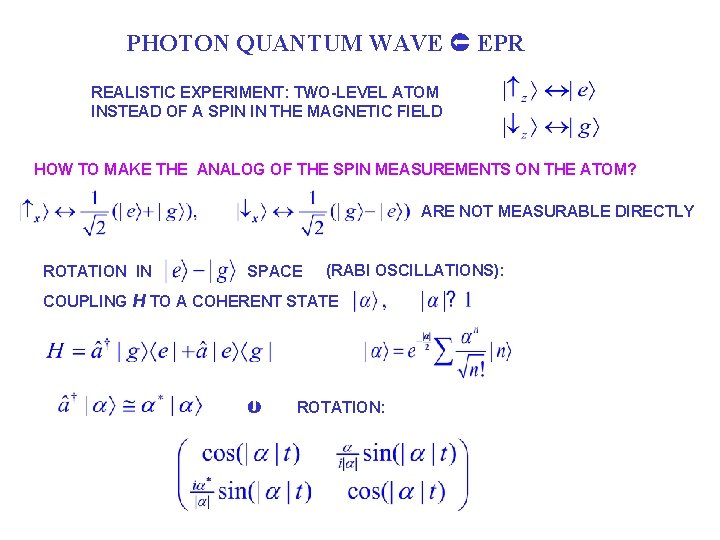
PHOTON QUANTUM WAVE EPR REALISTIC EXPERIMENT: TWO-LEVEL ATOM INSTEAD OF A SPIN IN THE MAGNETIC FIELD HOW TO MAKE THE ANALOG OF THE SPIN MEASUREMENTS ON THE ATOM? ARE NOT MEASURABLE DIRECTLY ROTATION IN SPACE (RABI OSCILLATIONS): COUPLING H TO A COHERENT STATE ROTATION:
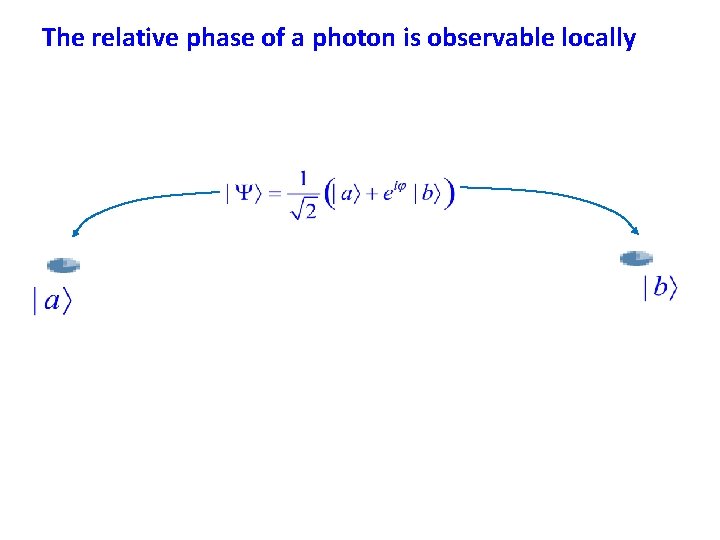
The relative phase of a photon is observable locally
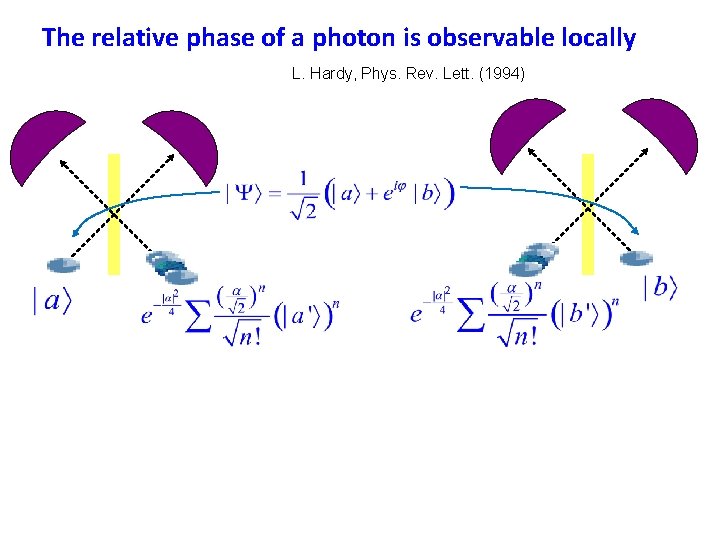
The relative phase of a photon is observable locally L. Hardy, Phys. Rev. Lett. (1994)
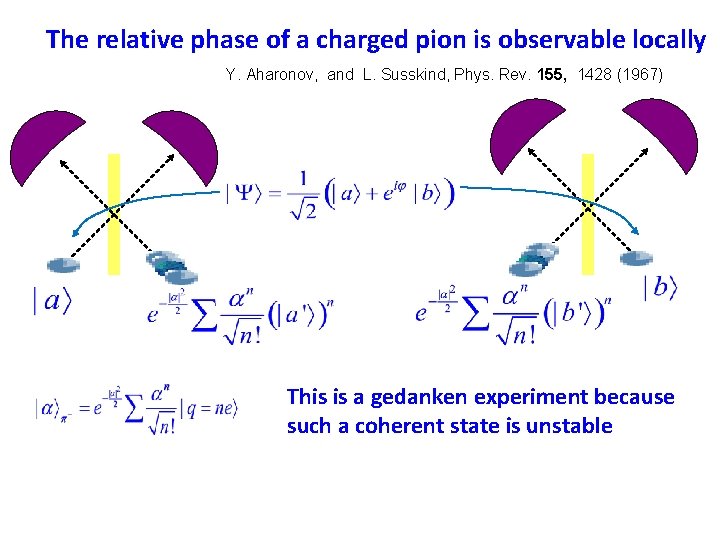
The relative phase of a charged pion is observable locally Y. Aharonov, and L. Susskind, Phys. Rev. 155, 1428 (1967) This is a gedanken experiment because such a coherent state is unstable
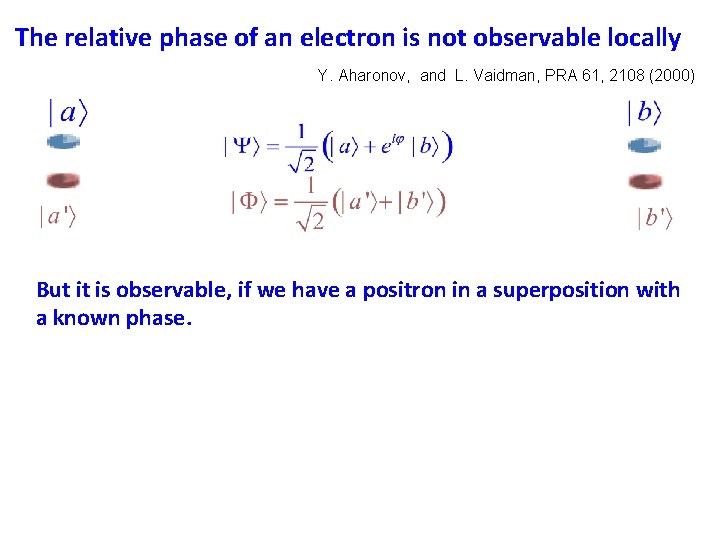
The relative phase of an electron is not observable locally Y. Aharonov, and L. Vaidman, PRA 61, 2108 (2000) But it is observable, if we have a positron in a superposition with a known phase.
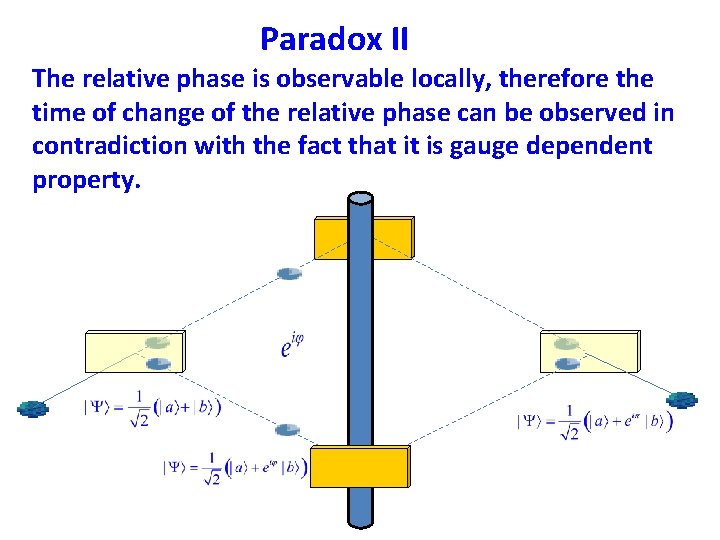
Paradox II The relative phase is observable locally, therefore the time of change of the relative phase can be observed in contradiction with the fact that it is gauge dependent property.
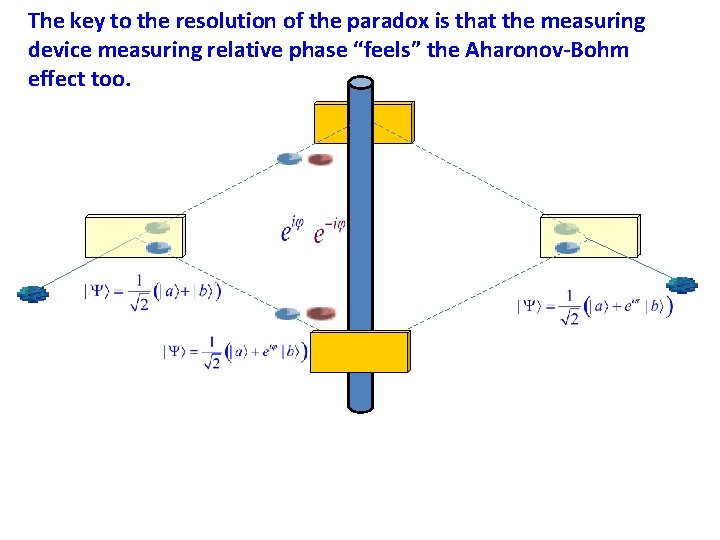
The key to the resolution of the paradox is that the measuring device measuring relative phase “feels” the Aharonov-Bohm effect too.
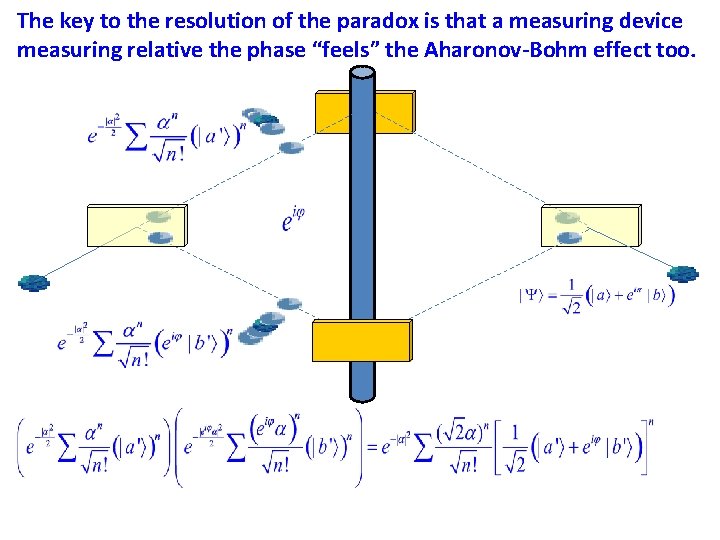
The key to the resolution of the paradox is that a measuring device measuring relative the phase “feels” the Aharonov-Bohm effect too.
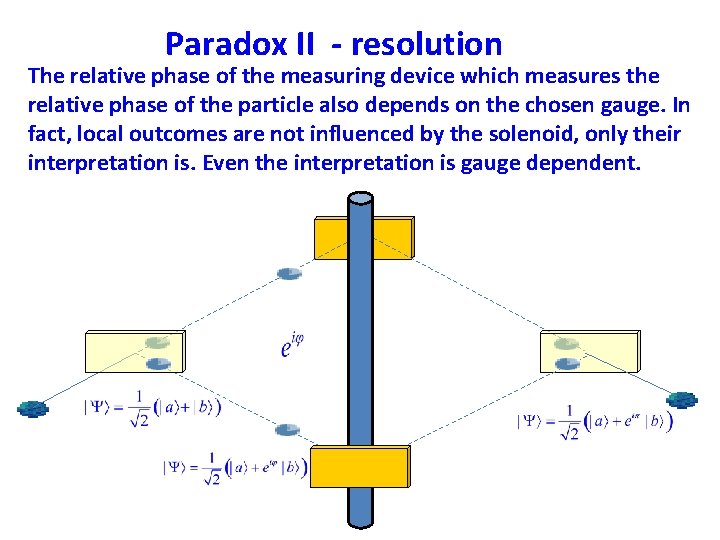
Paradox II - resolution The relative phase of the measuring device which measures the relative phase of the particle also depends on the chosen gauge. In fact, local outcomes are not influenced by the solenoid, only their interpretation is. Even the interpretation is gauge dependent.
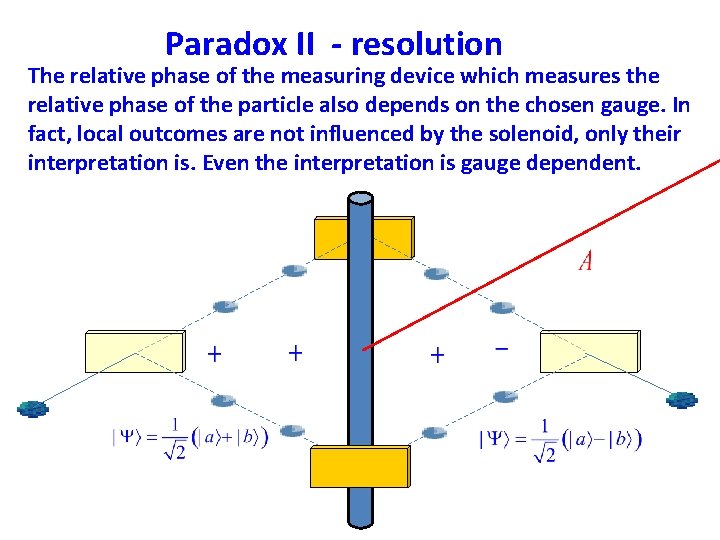
Paradox II - resolution The relative phase of the measuring device which measures the relative phase of the particle also depends on the chosen gauge. In fact, local outcomes are not influenced by the solenoid, only their interpretation is. Even the interpretation is gauge dependent.
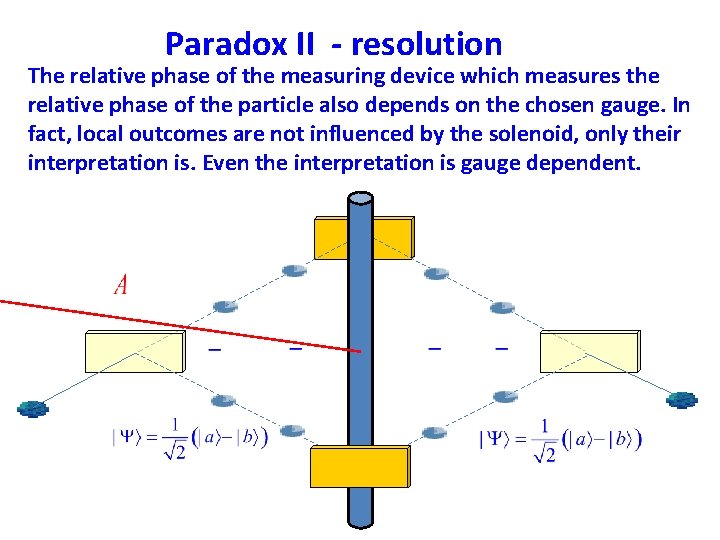
Paradox II - resolution The relative phase of the measuring device which measures the relative phase of the particle also depends on the chosen gauge. In fact, local outcomes are not influenced by the solenoid, only their interpretation is. Even the interpretation is gauge dependent.
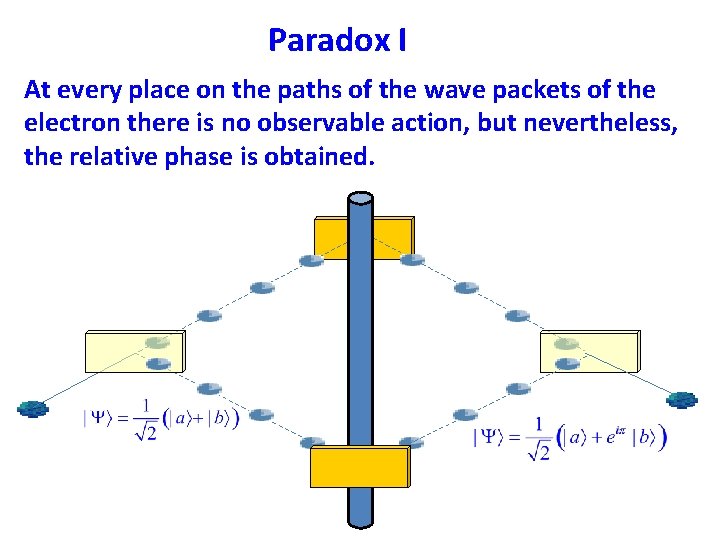
Paradox I At every place on the paths of the wave packets of the electron there is no observable action, but nevertheless, the relative phase is obtained.
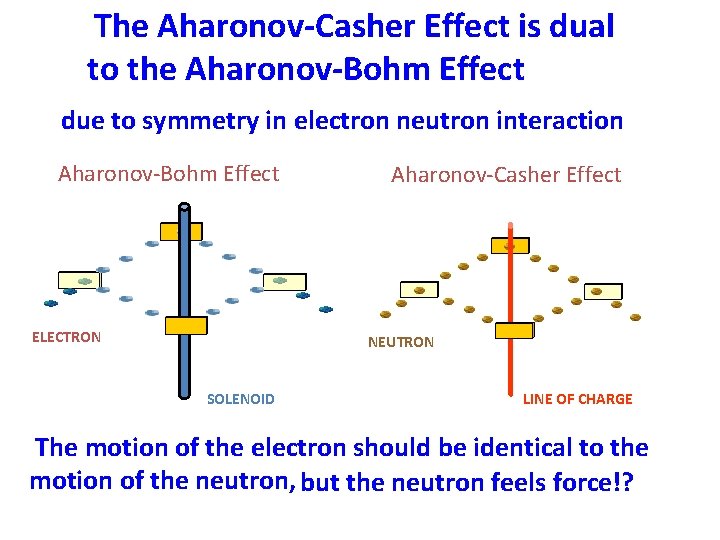
The Aharonov-Casher Effect is dual to the Aharonov-Bohm Effect due to symmetry in electron neutron interaction Aharonov-Bohm Effect ELECTRON Aharonov-Casher Effect NEUTRON SOLENOID LINE OF CHARGE The motion of the electron should be identical to the motion of the neutron, but the neutron feels force!?
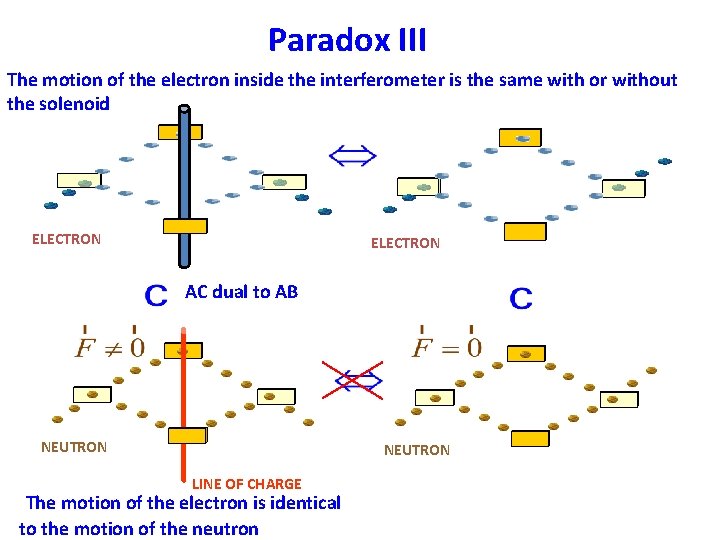
Paradox III The motion of the electron inside the interferometer is the same with or without the solenoid ELECTRON AC dual to AB NEUTRON LINE OF CHARGE The motion of the electron is identical to the motion of the neutron
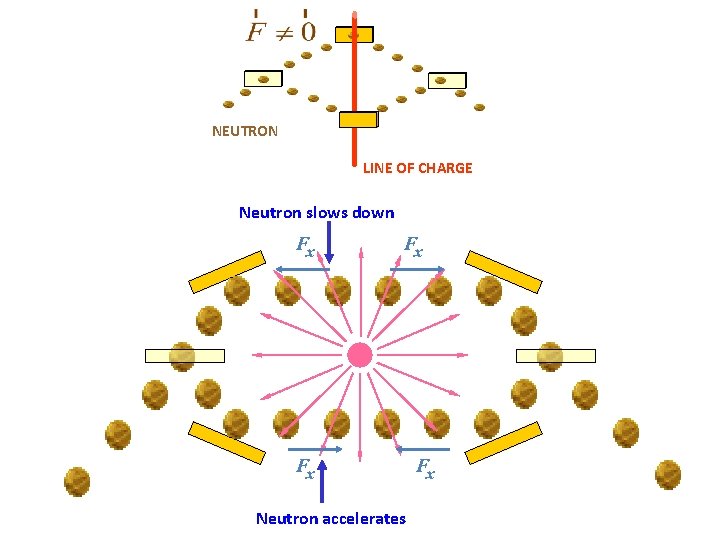
NEUTRON LINE OF CHARGE Neutron slows down Fx Fx Fx Neutron accelerates Fx
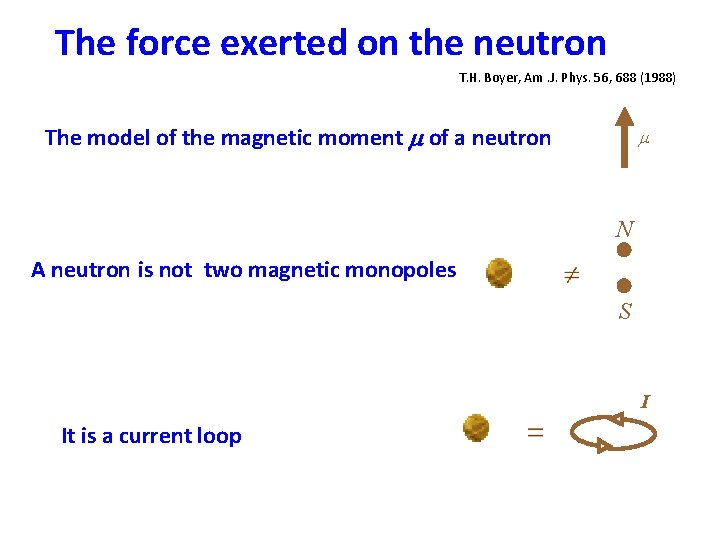
The force exerted on the neutron T. H. Boyer, Am. J. Phys. 56, 688 (1988) The model of the magnetic moment m of a neutron N A neutron is not two magnetic monopoles S I It is a current loop
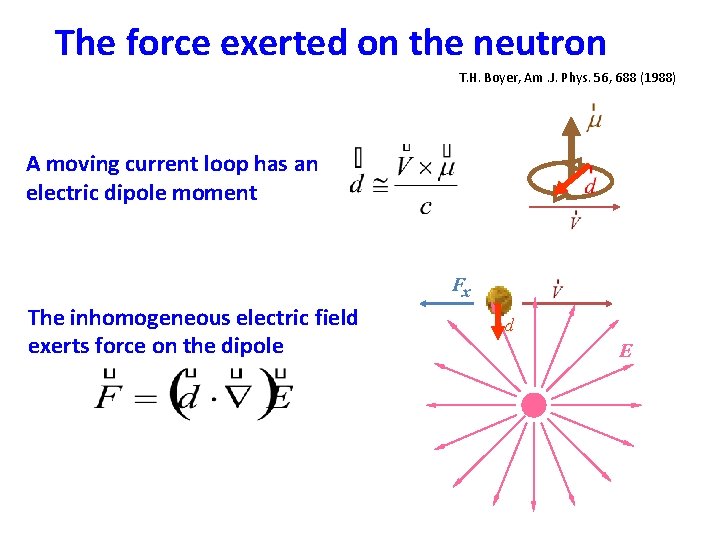
The force exerted on the neutron T. H. Boyer, Am. J. Phys. 56, 688 (1988) A moving current loop has an electric dipole moment Fx The inhomogeneous electric field exerts force on the dipole d E
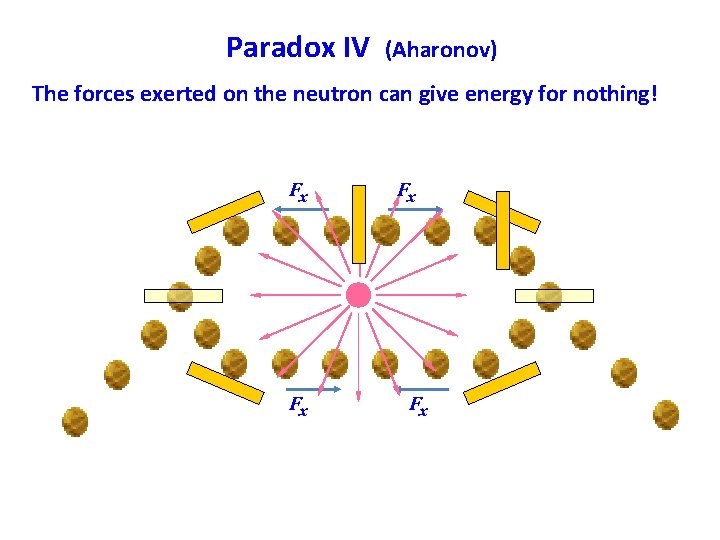
Paradox IV (Aharonov) The forces exerted on the neutron can give energy for nothing! Fx Fx
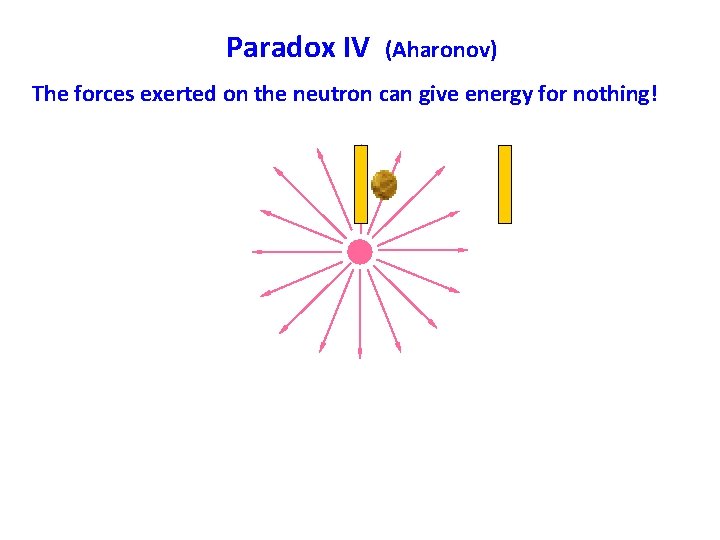
Paradox IV (Aharonov) The forces exerted on the neutron can give energy for nothing!
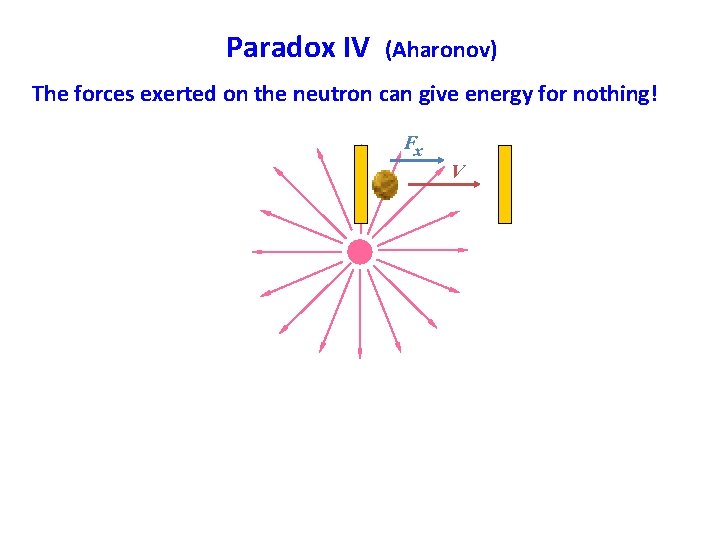
Paradox IV (Aharonov) The forces exerted on the neutron can give energy for nothing! Fx V
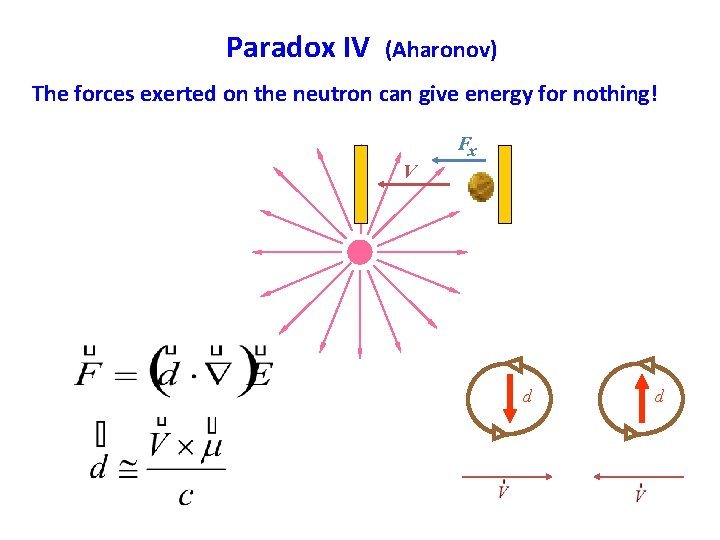
Paradox IV (Aharonov) The forces exerted on the neutron can give energy for nothing! Fx V d d
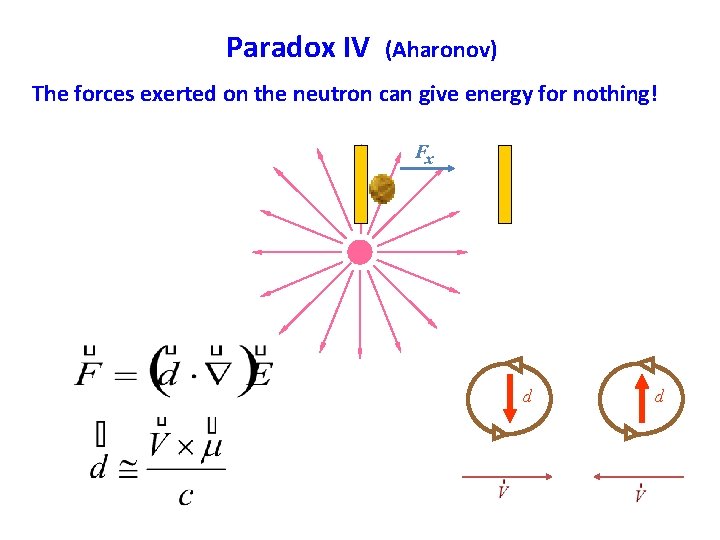
Paradox IV (Aharonov) The forces exerted on the neutron can give energy for nothing! Fx d d
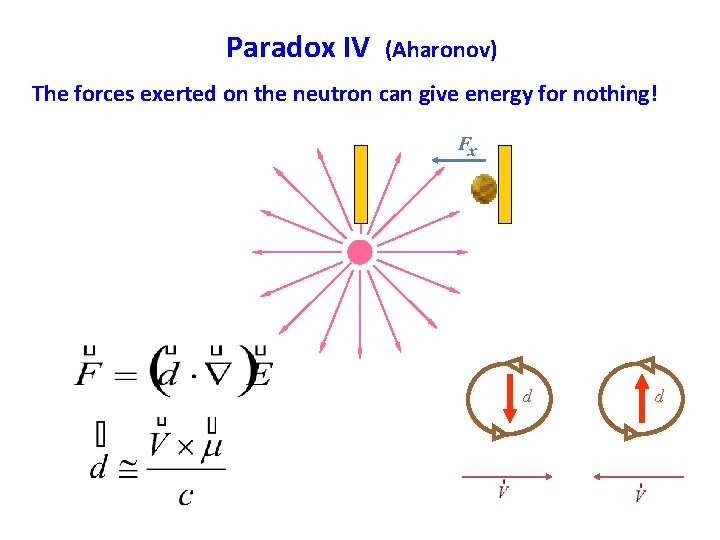
Paradox IV (Aharonov) The forces exerted on the neutron can give energy for nothing! Fx d d
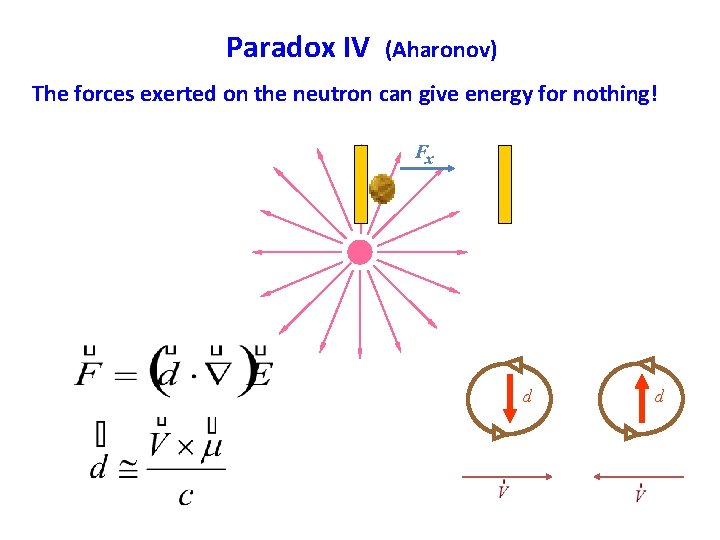
Paradox IV (Aharonov) The forces exerted on the neutron can give energy for nothing! Fx d d
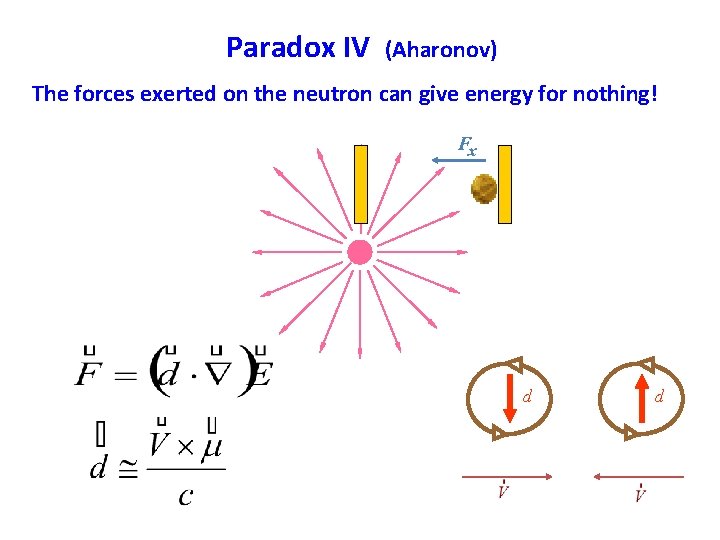
Paradox IV (Aharonov) The forces exerted on the neutron can give energy for nothing! Fx d d
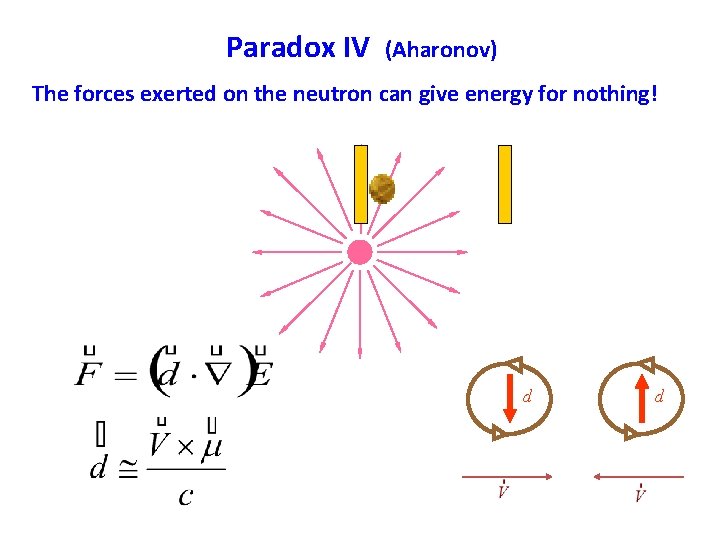
Paradox IV (Aharonov) The forces exerted on the neutron can give energy for nothing! d d
- Slides: 73