
Telemedicine Aligning Technology with High Quality Patient Care



- Slides: 29
Telemedicine: Aligning Technology with High Quality Patient Care James Coviello, MD Regional Medical Director UH Primary Care Institute S. L. Scott Esposito, Esq. Associate General Counsel Andrew Moleski, MBA Manager, Virtual and Telehealth Services
Objectives 1. To introduce telemedicine as an emerging technology in healthcare delivery. 2. To identify current State and Federal legal considerations in the use of telemedicine. 3. To understand how telemedicine aligns with current healthcare reform tenets, including quality, patient experience, and emerging insurance payment methodologies. 4. To review the UH telemedicine platform - current and future programs. 2
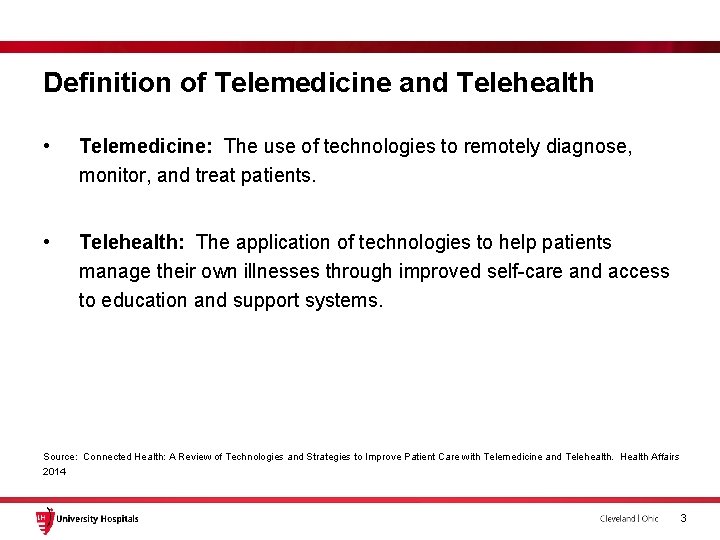
Definition of Telemedicine and Telehealth • Telemedicine: The use of technologies to remotely diagnose, monitor, and treat patients. • Telehealth: The application of technologies to help patients manage their own illnesses through improved self-care and access to education and support systems. Source: Connected Health: A Review of Technologies and Strategies to Improve Patient Care with Telemedicine and Telehealth. Health Affairs 2014 3
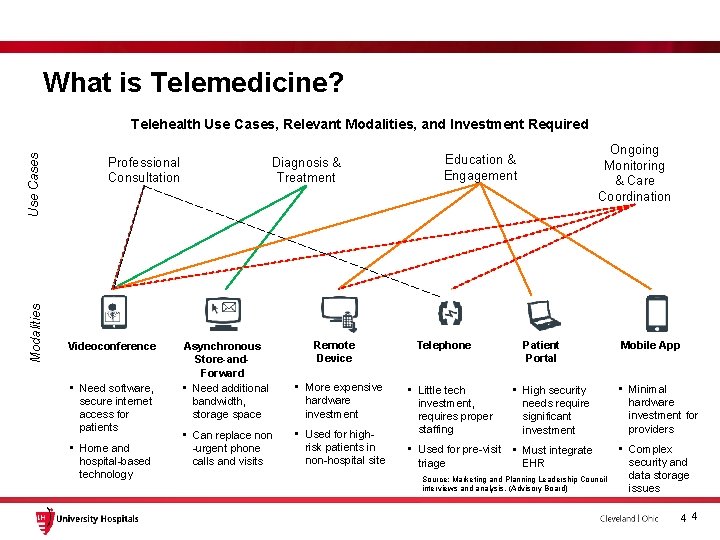
What is Telemedicine? Modalities Use Cases Telehealth Use Cases, Relevant Modalities, and Investment Required Professional Consultation Videoconference • Need software, secure internet access for patients • Home and hospital-based technology Diagnosis & Treatment Remote Device Asynchronous Store-and. Forward • Need additional bandwidth, storage space • More expensive hardware investment • Can replace non -urgent phone calls and visits • Used for highrisk patients in non-hospital site Ongoing Monitoring & Care Coordination Education & Engagement Telephone • Little tech investment, requires proper staffing Patient Portal • High security needs require significant investment • Used for pre-visit • Must integrate triage EHR Source: Marketing and Planning Leadership Council interviews and analysis. (Advisory Board) Mobile App • Minimal hardware investment for providers • Complex security and data storage issues 4 4
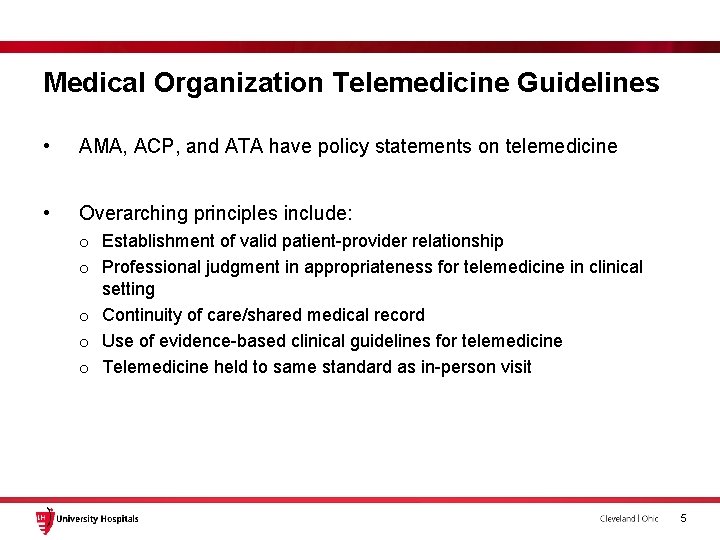
Medical Organization Telemedicine Guidelines • AMA, ACP, and ATA have policy statements on telemedicine • Overarching principles include: o Establishment of valid patient-provider relationship o Professional judgment in appropriateness for telemedicine in clinical setting o Continuity of care/shared medical record o Use of evidence-based clinical guidelines for telemedicine o Telemedicine held to same standard as in-person visit 5
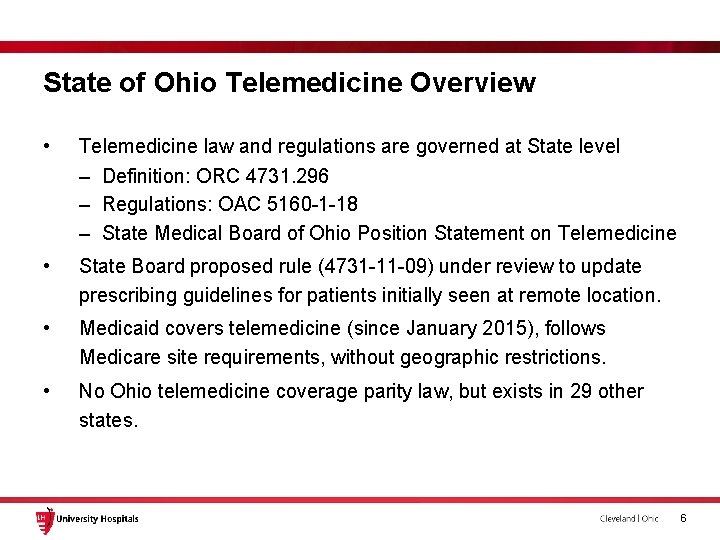
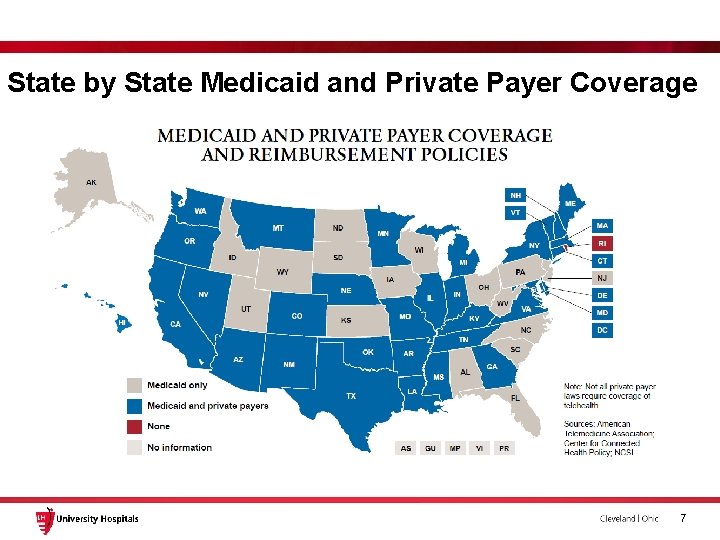
State of Ohio Telemedicine Overview • Telemedicine law and regulations are governed at State level – Definition: ORC 4731. 296 – Regulations: OAC 5160 -1 -18 – State Medical Board of Ohio Position Statement on Telemedicine • State Board proposed rule (4731 -11 -09) under review to update prescribing guidelines for patients initially seen at remote location. • Medicaid covers telemedicine (since January 2015), follows Medicare site requirements, without geographic restrictions. • No Ohio telemedicine coverage parity law, but exists in 29 other states. 6
State by State Medicaid and Private Payer Coverage 7
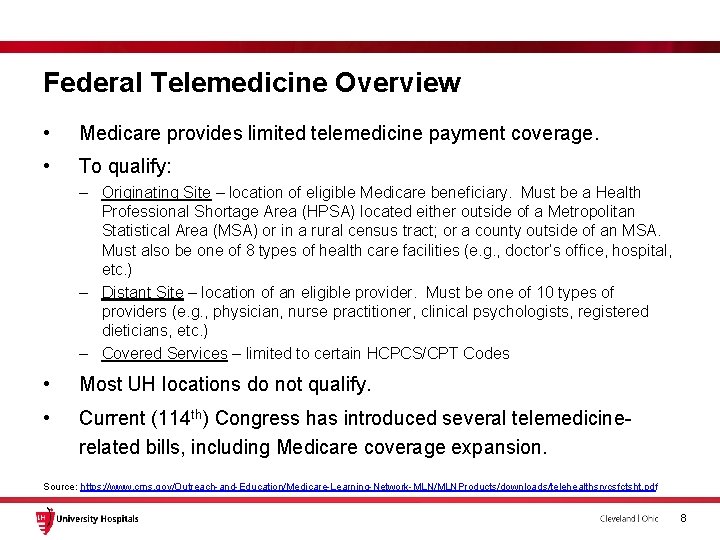
Federal Telemedicine Overview • Medicare provides limited telemedicine payment coverage. • To qualify: – Originating Site – location of eligible Medicare beneficiary. Must be a Health Professional Shortage Area (HPSA) located either outside of a Metropolitan Statistical Area (MSA) or in a rural census tract; or a county outside of an MSA. Must also be one of 8 types of health care facilities (e. g. , doctor’s office, hospital, etc. ) – Distant Site – location of an eligible provider. Must be one of 10 types of providers (e. g. , physician, nurse practitioner, clinical psychologists, registered dieticians, etc. ) – Covered Services – limited to certain HCPCS/CPT Codes • Most UH locations do not qualify. • Current (114 th) Congress has introduced several telemedicinerelated bills, including Medicare coverage expansion. Source: https: //www. cms. gov/Outreach-and-Education/Medicare-Learning-Network-MLN/MLNProducts/downloads/telehealthsrvcsfctsht. pdf 8
THE TRAIN HAS LEFT THE STATION…. . 9
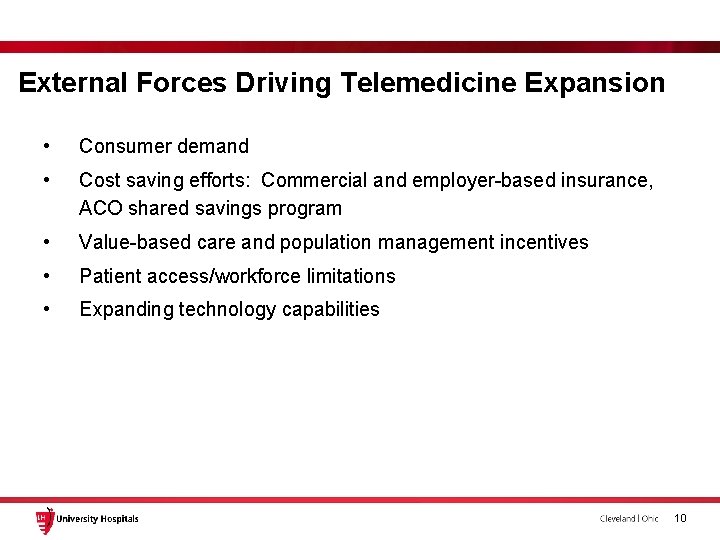
External Forces Driving Telemedicine Expansion • Consumer demand • Cost saving efforts: Commercial and employer-based insurance, ACO shared savings program • Value-based care and population management incentives • Patient access/workforce limitations • Expanding technology capabilities 10
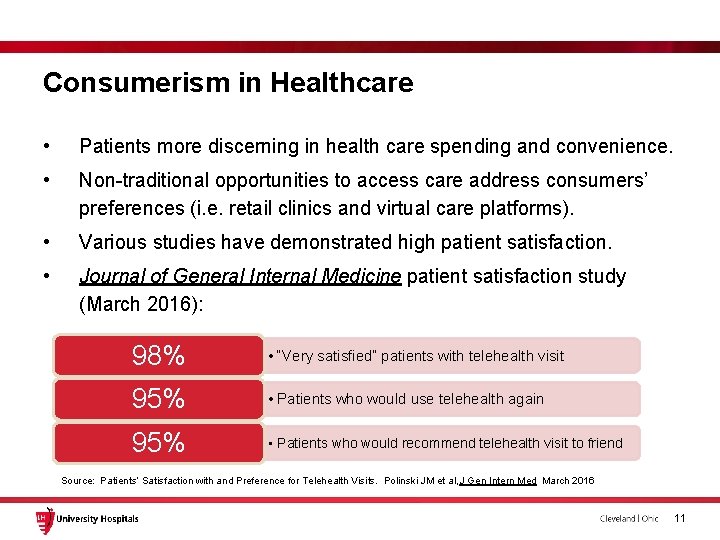
Consumerism in Healthcare • Patients more discerning in health care spending and convenience. • Non-traditional opportunities to access care address consumers’ preferences (i. e. retail clinics and virtual care platforms). • Various studies have demonstrated high patient satisfaction. • Journal of General Internal Medicine patient satisfaction study (March 2016): 98% • “Very satisfied” patients with telehealth visit 95% • Patients who would use telehealth again 95% • Patients who would recommend telehealth visit to friend Source: Patients’ Satisfaction with and Preference for Telehealth Visits. Polinski JM et al, J Gen Intern Med March 2016 11
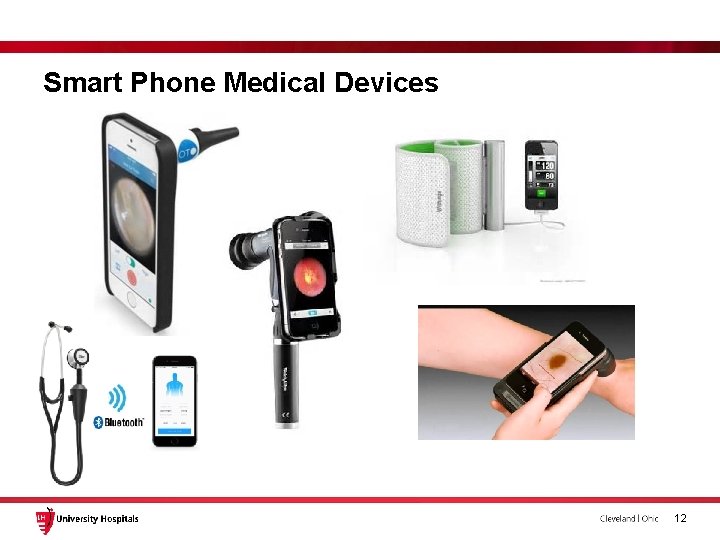
Smart Phone Medical Devices 12
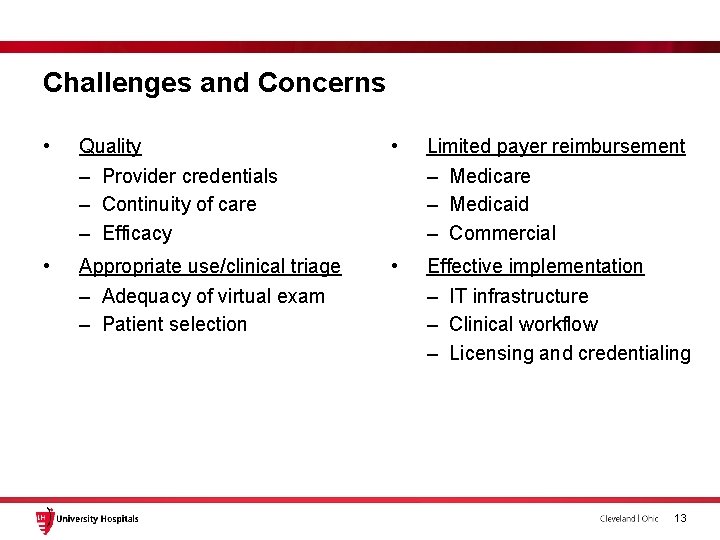
Challenges and Concerns • Quality – Provider credentials – Continuity of care – Efficacy • Limited payer reimbursement – Medicare – Medicaid – Commercial • Appropriate use/clinical triage – Adequacy of virtual exam – Patient selection • Effective implementation – IT infrastructure – Clinical workflow – Licensing and credentialing 13
HOW DID WE GET HERE? 14
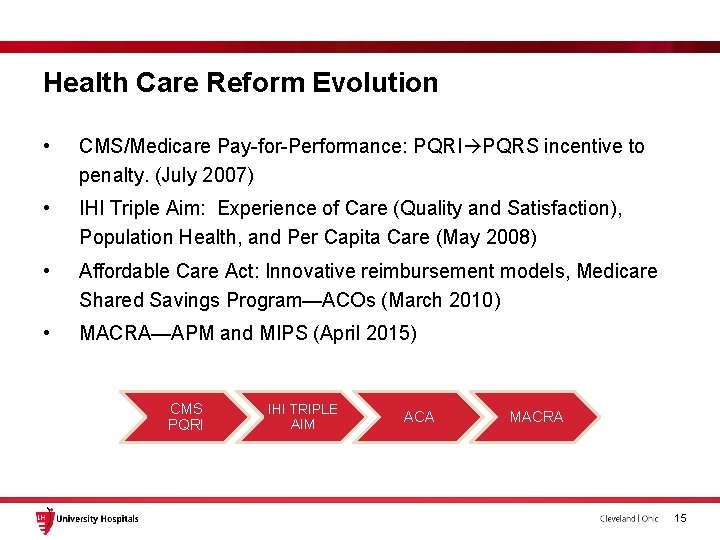
Health Care Reform Evolution • CMS/Medicare Pay-for-Performance: PQRI PQRS incentive to penalty. (July 2007) • IHI Triple Aim: Experience of Care (Quality and Satisfaction), Population Health, and Per Capita Care (May 2008) • Affordable Care Act: Innovative reimbursement models, Medicare Shared Savings Program—ACOs (March 2010) • MACRA—APM and MIPS (April 2015) CMS PQRI IHI TRIPLE AIM ACA MACRA 15
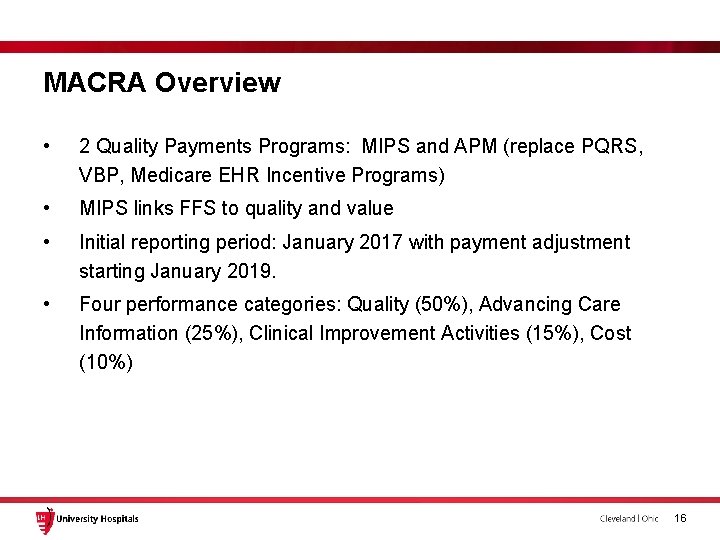
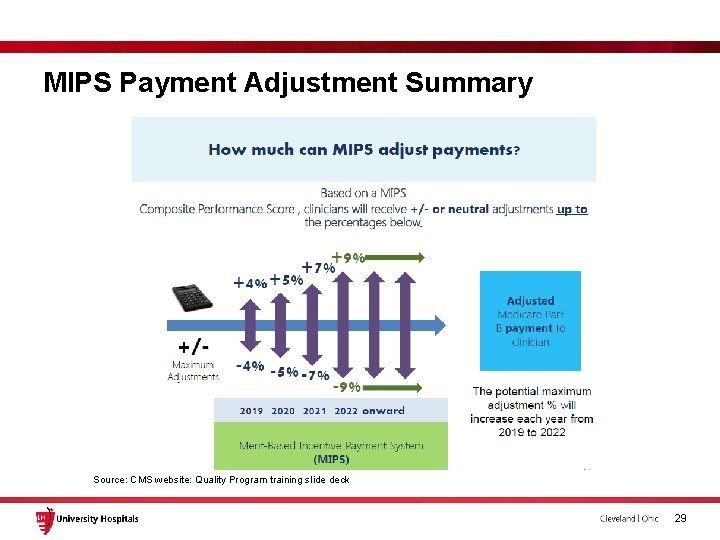
MACRA Overview • 2 Quality Payments Programs: MIPS and APM (replace PQRS, VBP, Medicare EHR Incentive Programs) • MIPS links FFS to quality and value • Initial reporting period: January 2017 with payment adjustment starting January 2019. • Four performance categories: Quality (50%), Advancing Care Information (25%), Clinical Improvement Activities (15%), Cost (10%) 16
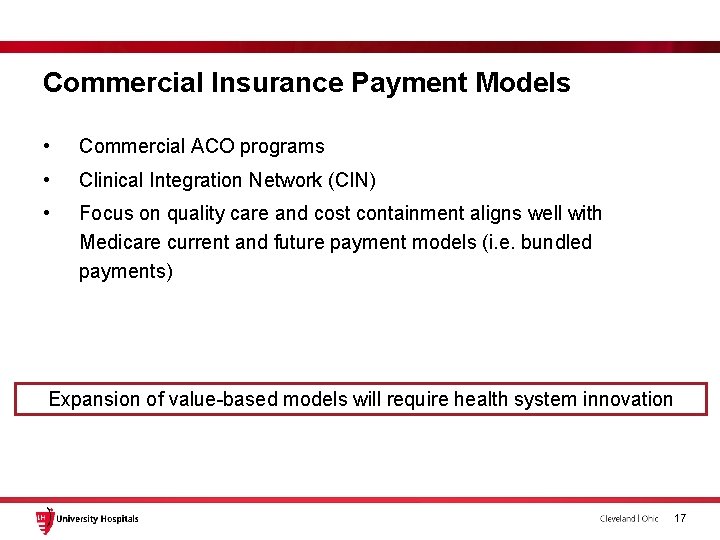
Commercial Insurance Payment Models • Commercial ACO programs • Clinical Integration Network (CIN) • Focus on quality care and cost containment aligns well with Medicare current and future payment models (i. e. bundled payments) Expansion of value-based models will require health system innovation 17
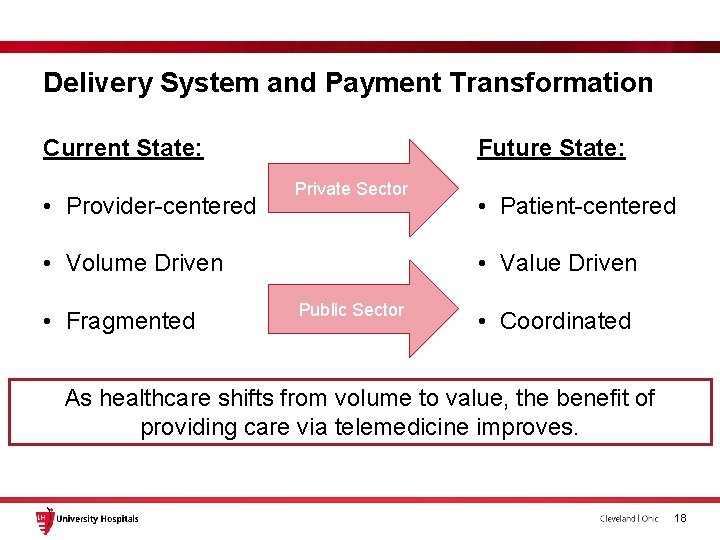
Delivery System and Payment Transformation Current State: • Provider-centered Future State: Private Sector • Volume Driven • Fragmented • Patient-centered • Value Driven Public Sector • Coordinated As healthcare shifts from volume to value, the benefit of providing care via telemedicine improves. 18
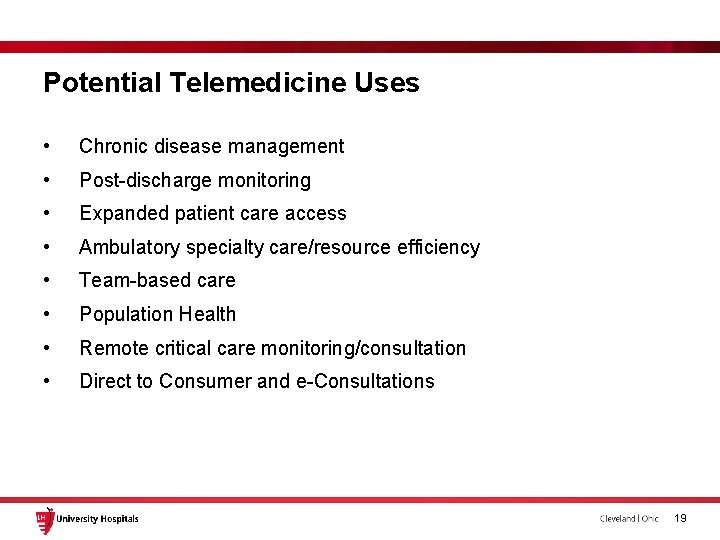
Potential Telemedicine Uses • Chronic disease management • Post-discharge monitoring • Expanded patient care access • Ambulatory specialty care/resource efficiency • Team-based care • Population Health • Remote critical care monitoring/consultation • Direct to Consumer and e-Consultations 19
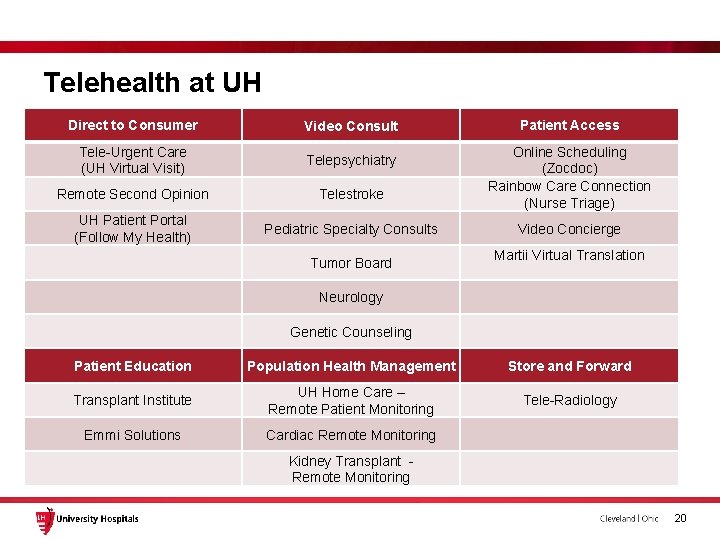
Telehealth at UH Direct to Consumer Video Consult Tele-Urgent Care (UH Virtual Visit) Telepsychiatry Remote Second Opinion Telestroke UH Patient Portal (Follow My Health) Pediatric Specialty Consults Tumor Board Patient Access Online Scheduling (Zocdoc) Rainbow Care Connection (Nurse Triage) Video Concierge Martii Virtual Translation Neurology Genetic Counseling Patient Education Population Health Management Store and Forward Transplant Institute UH Home Care – Remote Patient Monitoring Tele-Radiology Emmi Solutions Cardiac Remote Monitoring Kidney Transplant Remote Monitoring 20
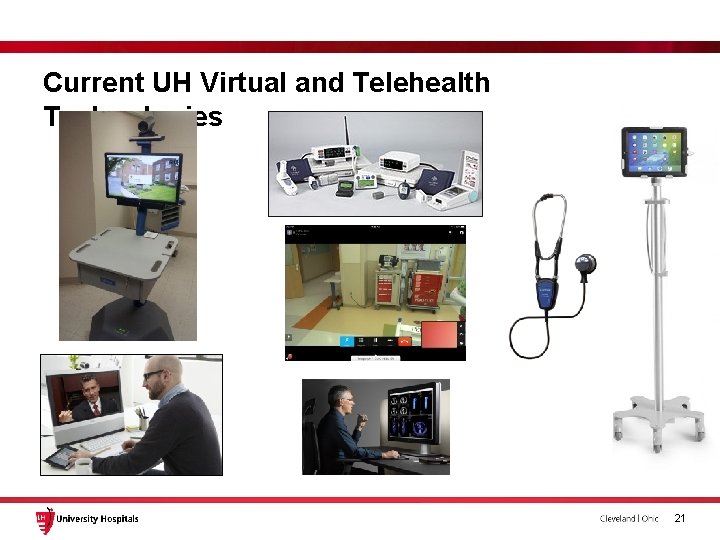
Current UH Virtual and Telehealth Technologies 21
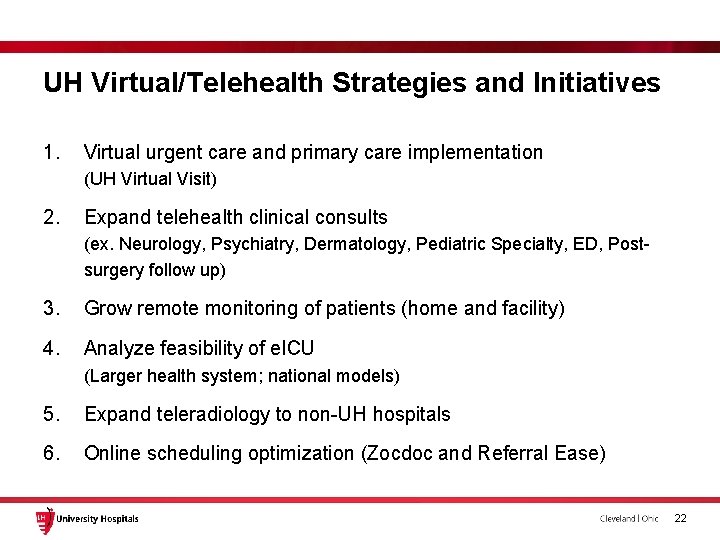
UH Virtual/Telehealth Strategies and Initiatives 1. Virtual urgent care and primary care implementation (UH Virtual Visit) 2. Expand telehealth clinical consults (ex. Neurology, Psychiatry, Dermatology, Pediatric Specialty, ED, Postsurgery follow up) 3. Grow remote monitoring of patients (home and facility) 4. Analyze feasibility of e. ICU (Larger health system; national models) 5. Expand teleradiology to non-UH hospitals 6. Online scheduling optimization (Zocdoc and Referral Ease) 22
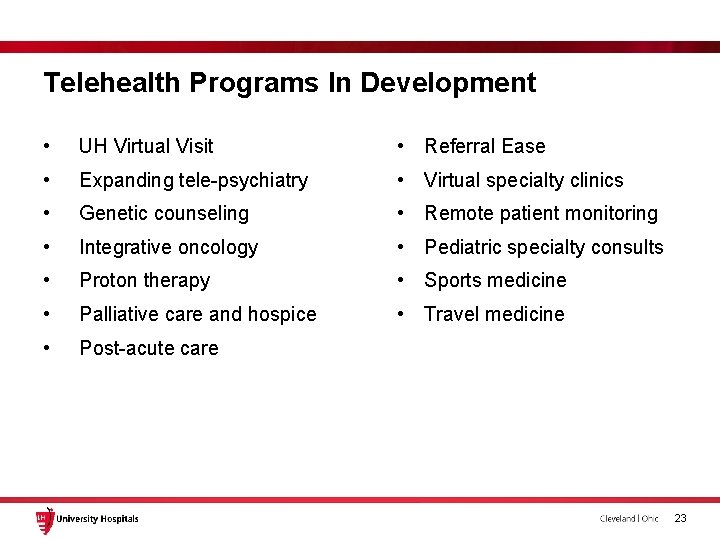
Telehealth Programs In Development • UH Virtual Visit • Referral Ease • Expanding tele-psychiatry • Virtual specialty clinics • Genetic counseling • Remote patient monitoring • Integrative oncology • Pediatric specialty consults • Proton therapy • Sports medicine • Palliative care and hospice • Travel medicine • Post-acute care 23
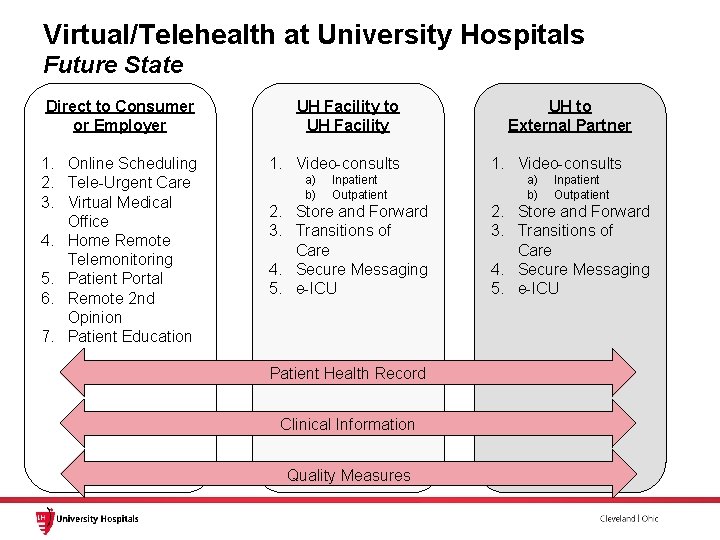
Virtual/Telehealth at University Hospitals Future State Direct to Consumer or Employer UH Facility to UH Facility 1. Online Scheduling 2. Tele-Urgent Care 3. Virtual Medical Office 4. Home Remote Telemonitoring 5. Patient Portal 6. Remote 2 nd Opinion 7. Patient Education 1. Video-consults a) b) Inpatient Outpatient 2. Store and Forward 3. Transitions of Care 4. Secure Messaging 5. e-ICU Patient Health Record Clinical Information Quality Measures UH to External Partner 1. Video-consults a) b) Inpatient Outpatient 2. Store and Forward 3. Transitions of Care 4. Secure Messaging 5. e-ICU
Contact Information James Coviello, MD Primary Care Institute James. Coviello@UHHospitals. org 216 -691 -3510 S. L. Scott Esposito, Esq. Associate General Counsel 216 -767 -8626 Salvatore. Esposito@UHHospitals. org Andrew Moleski, MBA Manager, Virtual and Telehealth Services Andrew. Moleski@UHHospitals. org 216 -286 -6007 25
Appendix 26
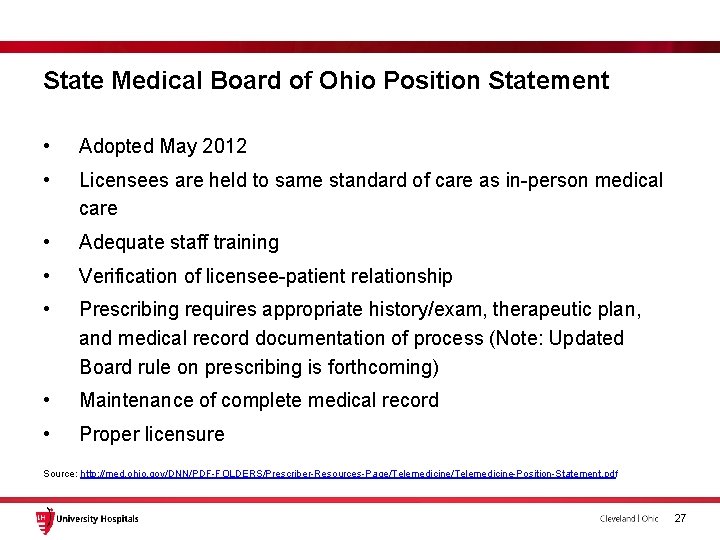
State Medical Board of Ohio Position Statement • Adopted May 2012 • Licensees are held to same standard of care as in-person medical care • Adequate staff training • Verification of licensee-patient relationship • Prescribing requires appropriate history/exam, therapeutic plan, and medical record documentation of process (Note: Updated Board rule on prescribing is forthcoming) • Maintenance of complete medical record • Proper licensure Source: http: //med. ohio. gov/DNN/PDF-FOLDERS/Prescriber-Resources-Page/Telemedicine-Position-Statement. pdf 27
Practice of Telemedicine Definition – Ohio (ORC 4731. 296) • The practice of medicine in this state through the use of any communication, including oral, written or electronic communication, by a physician located outside this state. • In-state physicians who are licensed in Ohio do not need a telemedicine certificate. • Such Ohio licensed physicians may examine and diagnose patients through the use of any communication, including oral, written, or electronic. 28
MIPS Payment Adjustment Summary Source: CMS website: Quality Program training slide deck 29