
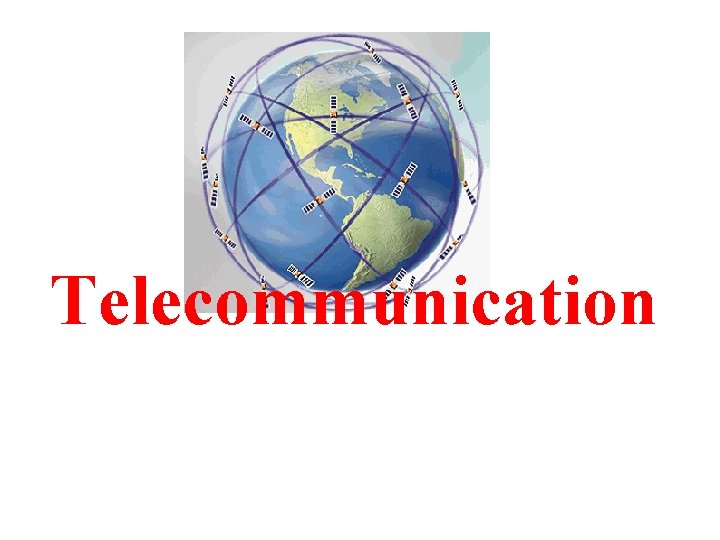
Telecommunication Telecommunications Tele greek far off Communication Exchange



- Slides: 85
Telecommunication
Telecommunications Tele ( greek) = far off Communication = Exchange of Information
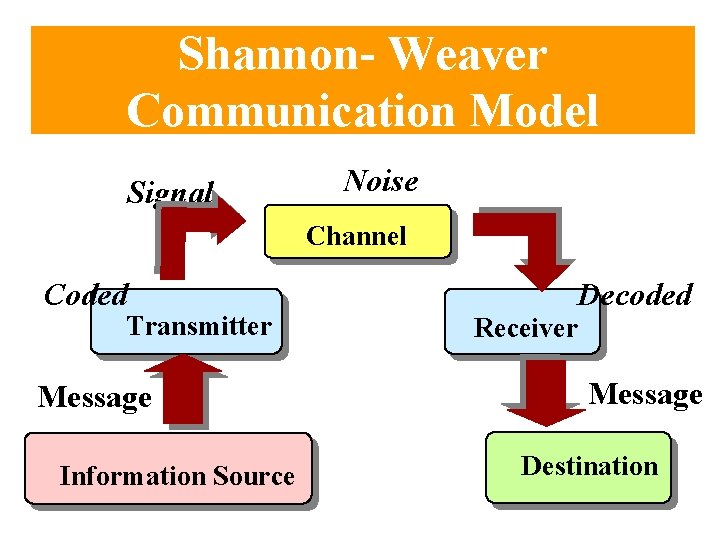
Shannon- Weaver Communication Model Signal Noise Channel Coded Transmitter Message Information Source Decoded Receiver Message Destination
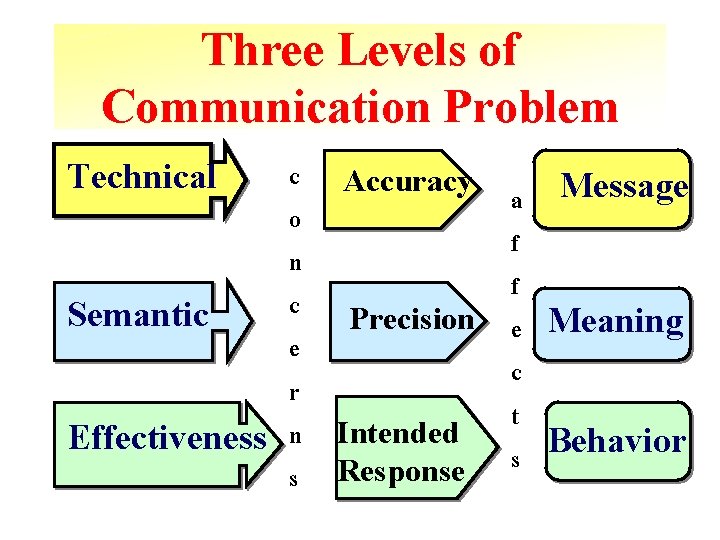
Three Levels of Communication Problem c Accuracy o n c Precision Semantic e r Effectiveness n Intended s Response Technical a Message f f e Meaning c t s Behavior
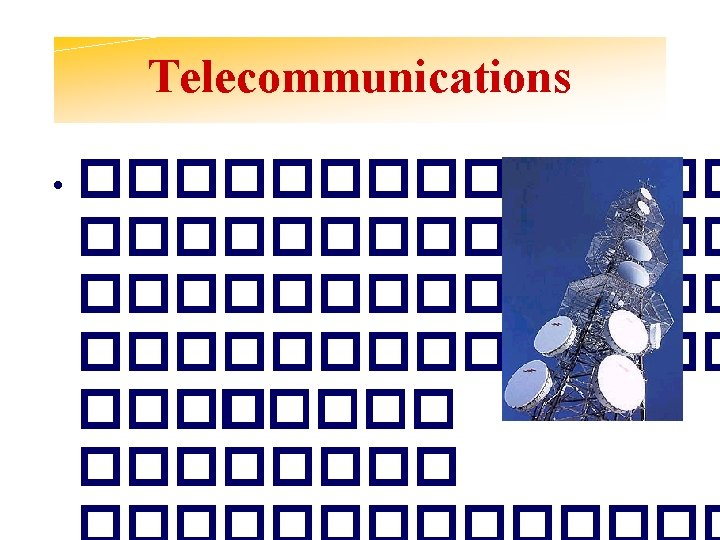
Telecommunications • Telecommunications is communications at a distance. • Telecommunications is communication of information by electronic means, usually over some distance.
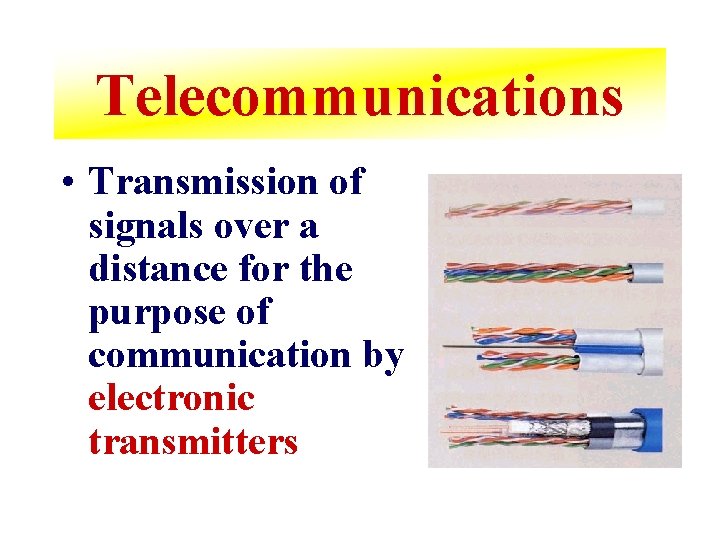
Telecommunications • Transmission of signals over a distance for the purpose of communication by electronic transmitters
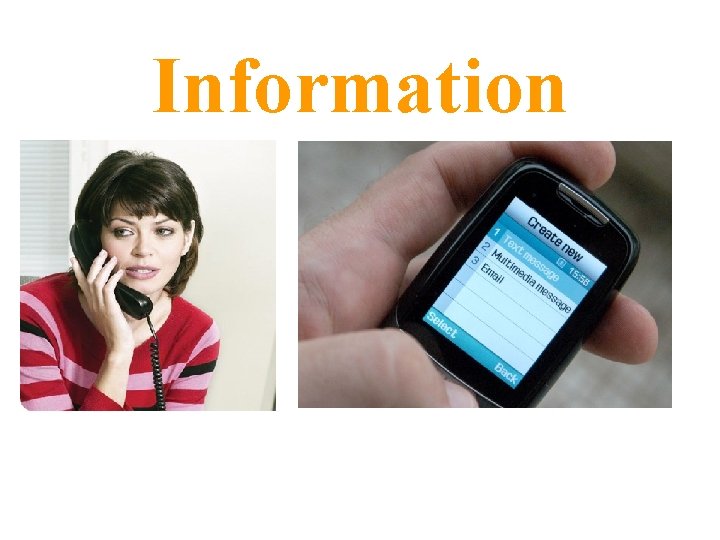
Information
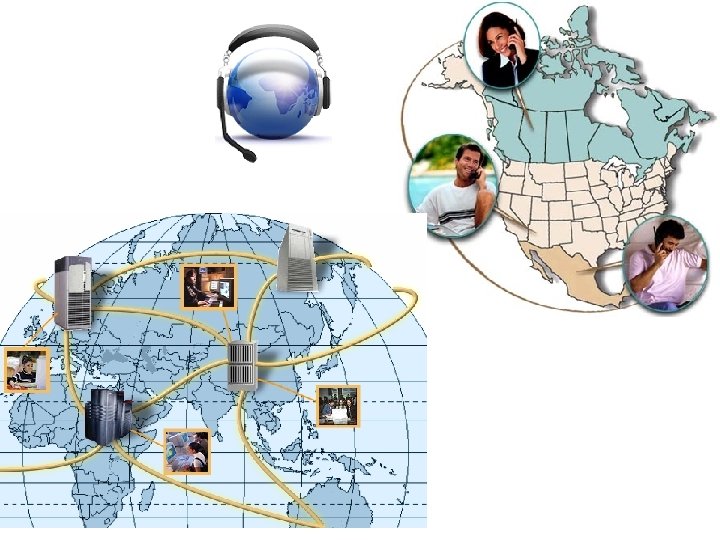
Example of Telecommunication Network Radio, Television, Telephone, Fax, and Computer Networks
Speed of Communication The speed of light 299, 000 km/sec or 186, 000 mi/sec
������ ( Telecommunication System )
Basic Elements of Telecommunication System • Transmitter ( takes information and converts it to a signal for transmission ) • Transmission Medium ( the signal is transmitted )
• Receiver ( receives and converts the signal back into usable information) • Signal • Noise
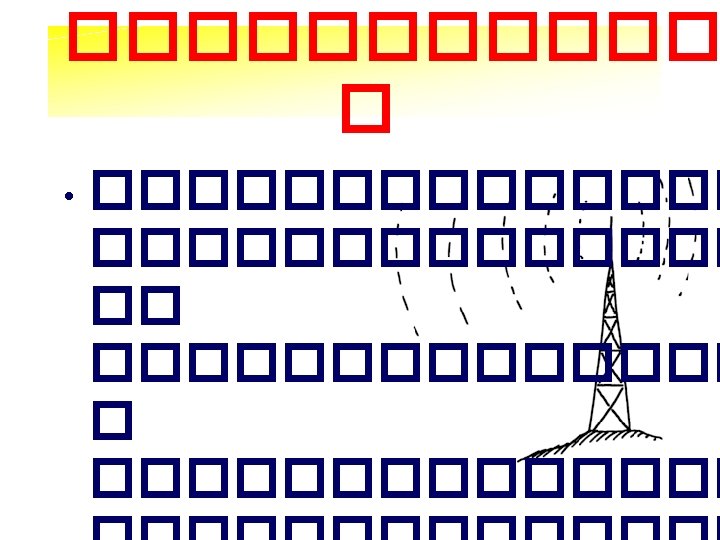
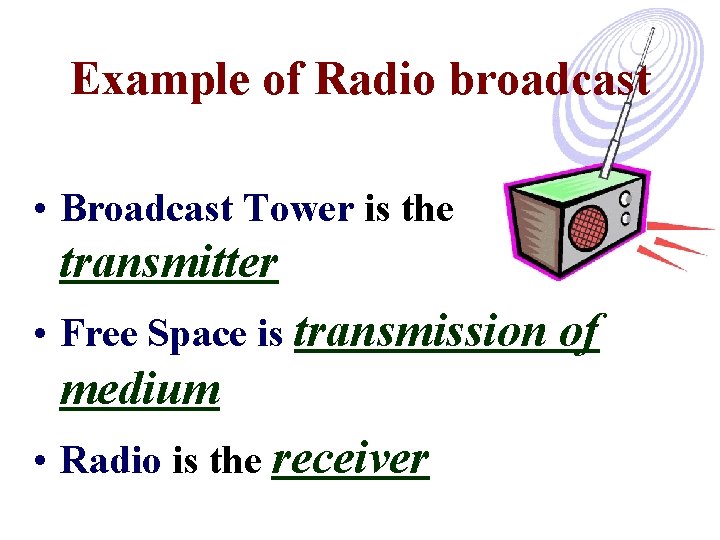
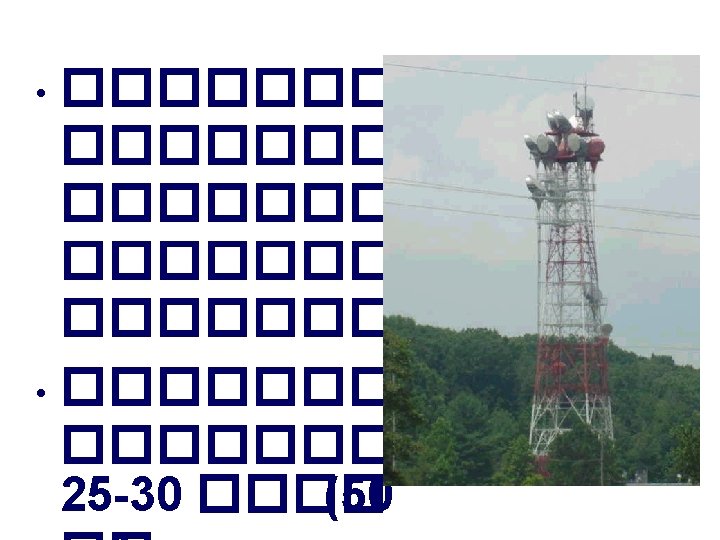
Example of Radio broadcast • Broadcast Tower is the transmitter • Free Space is transmission of medium • Radio is the receiver
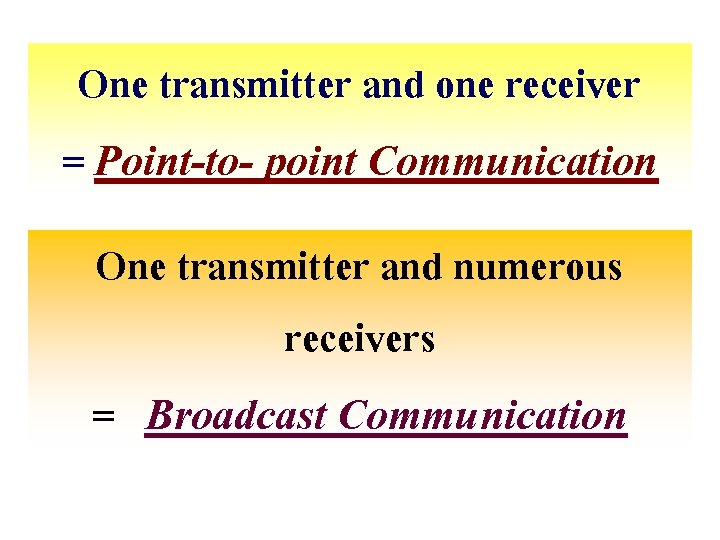
One transmitter and one receiver = Point-to- point Communication One transmitter and numerous receivers = Broadcast Communication
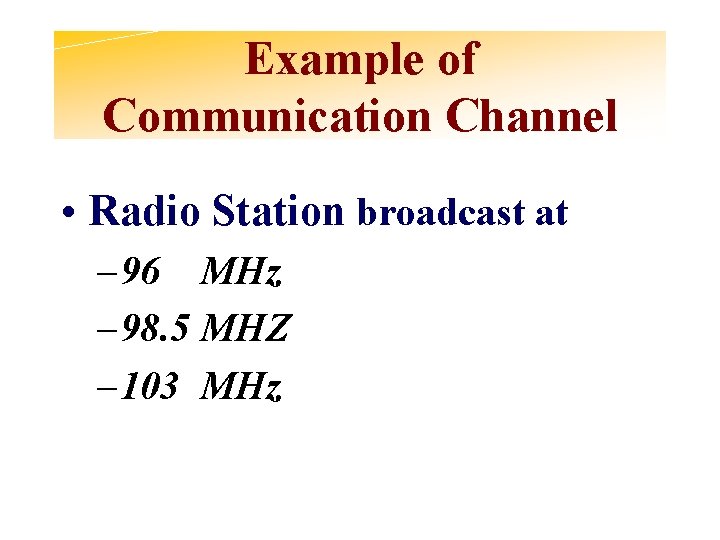
Example of Communication Channel • Radio Station broadcast at – 96 MHz – 98. 5 MHZ – 103 MHz
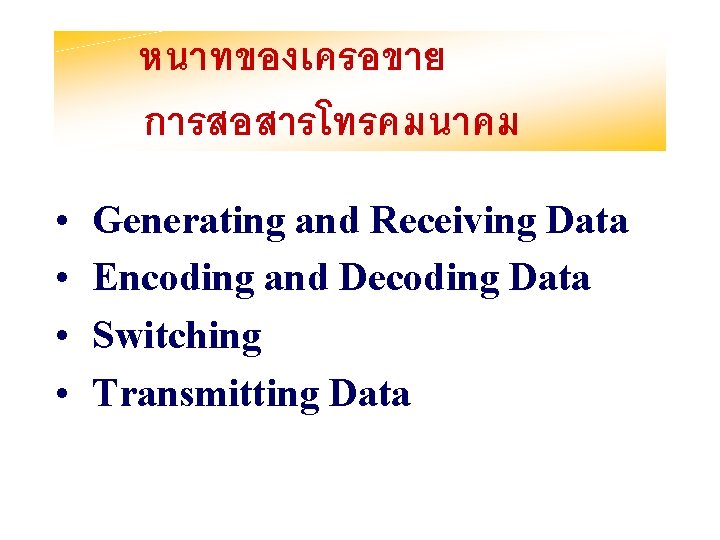
หนาทของเครอขาย การสอสารโทรคมนาคม • • Generating and Receiving Data Encoding and Decoding Data Switching Transmitting Data
Switching System • ทำหนาทตดสนวาขอม ลควรจะถกสงผานไปยงปลายท างโดยชองทางใด The earliest switches were human operators, now being replace by digital switches
������ (Types of Electronic Signals) • Analog Signal • Digital Signal
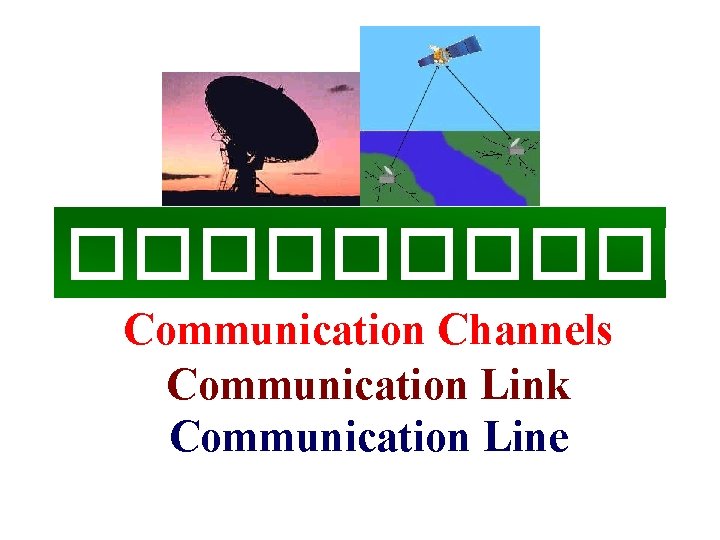
����� Communication Channels Communication Link Communication Line
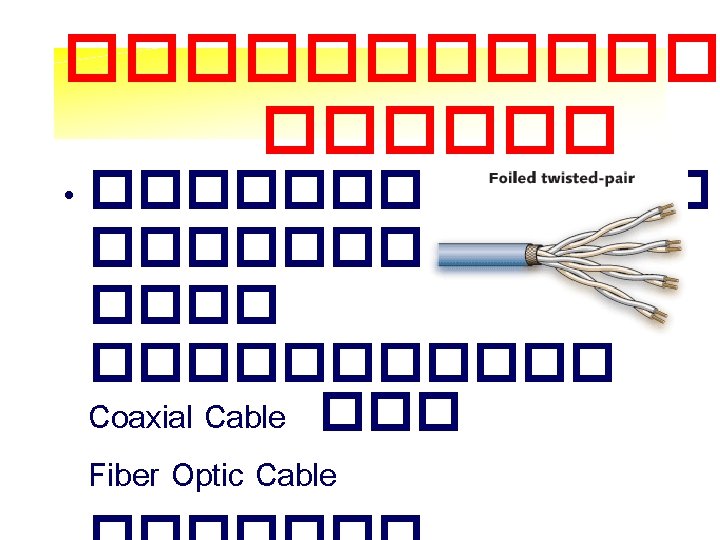
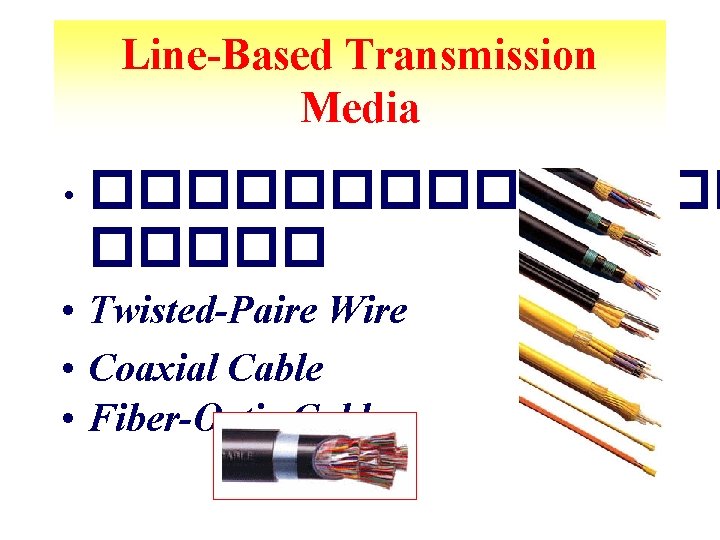
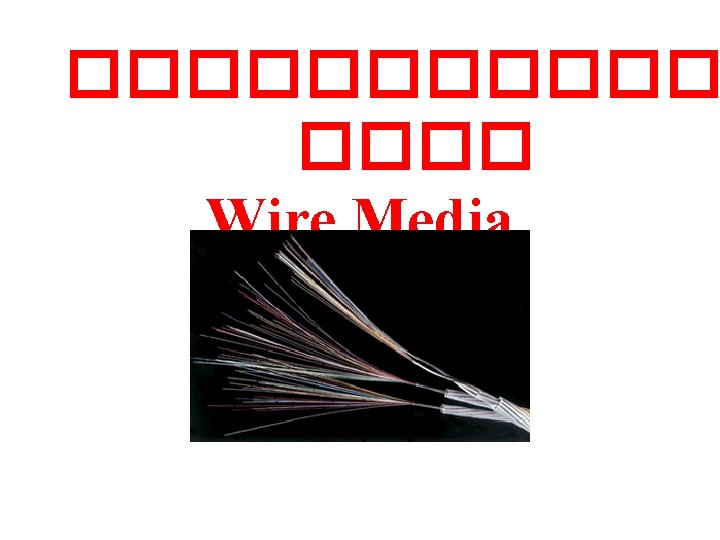
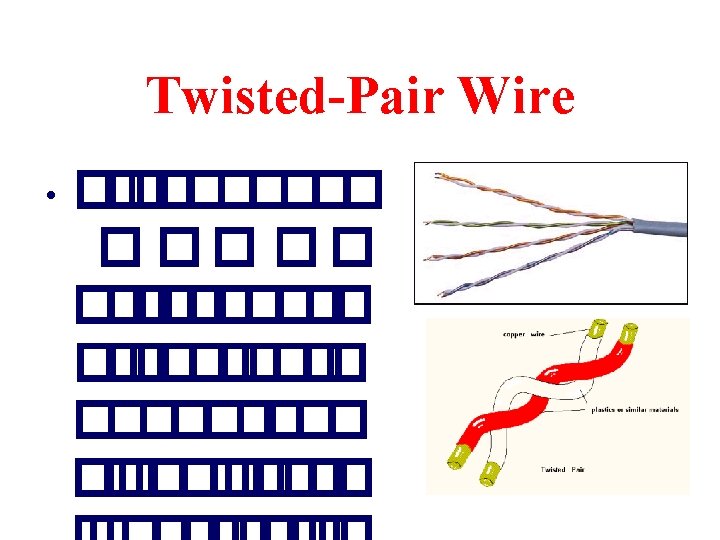
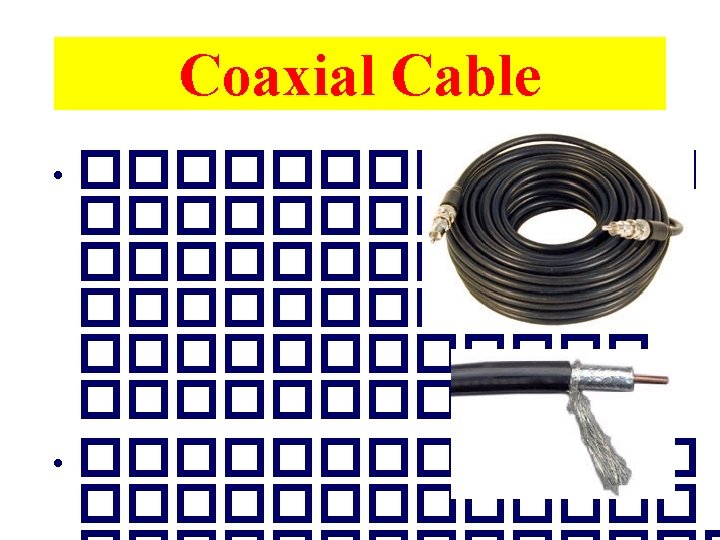
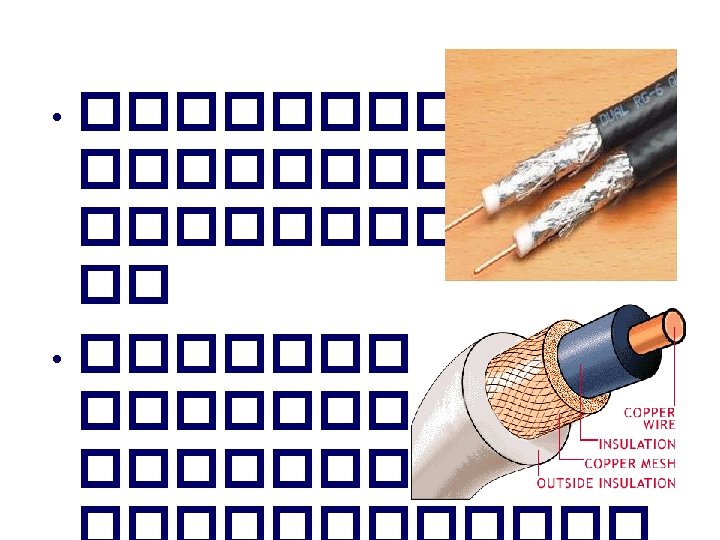
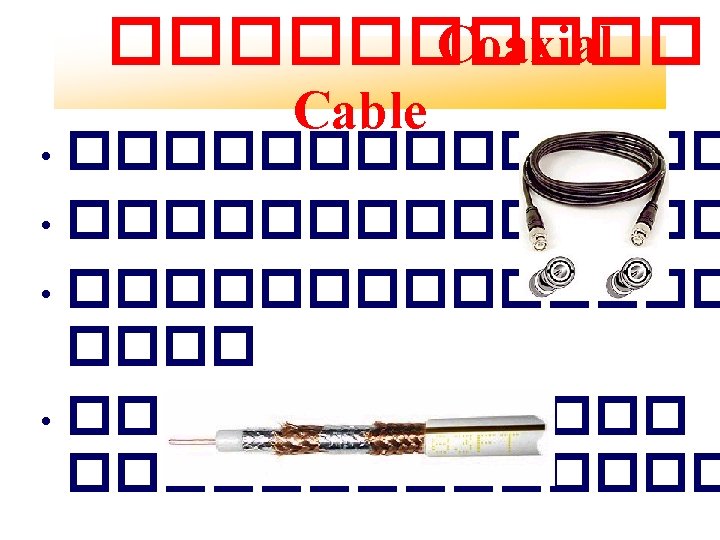
Line-Based Transmission Media • ������� • Twisted-Paire Wire • Coaxial Cable • Fiber-Optic Cable
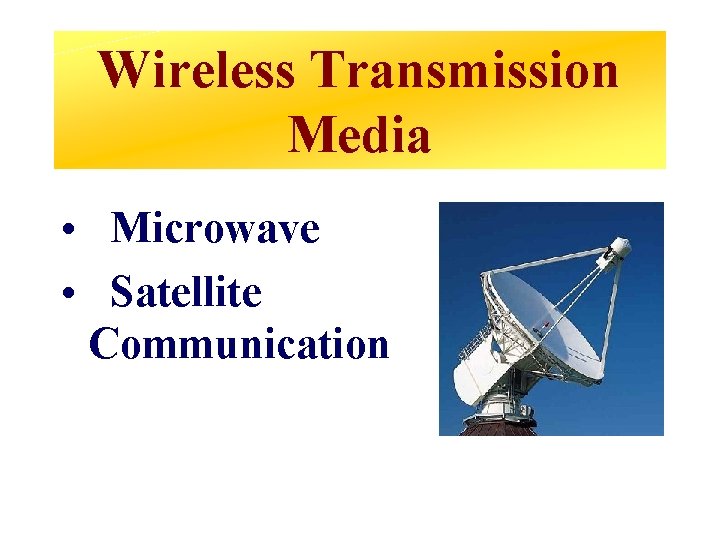
Wireless Transmission Media • Microwave • Satellite Communication
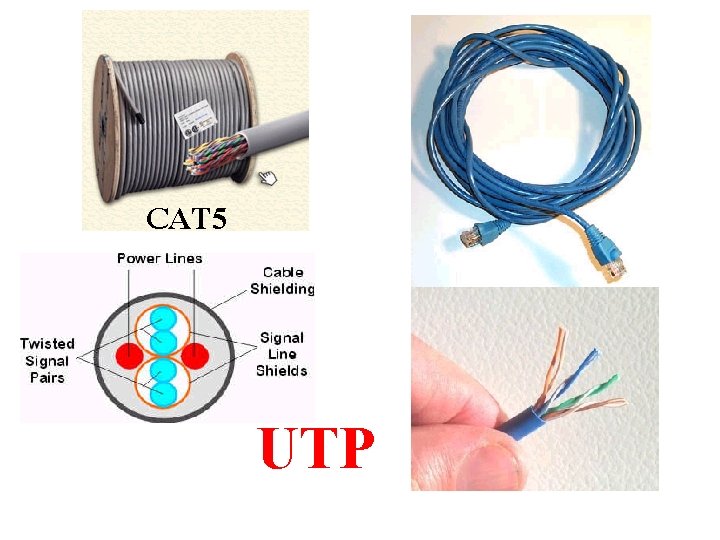
CAT 5 UTP
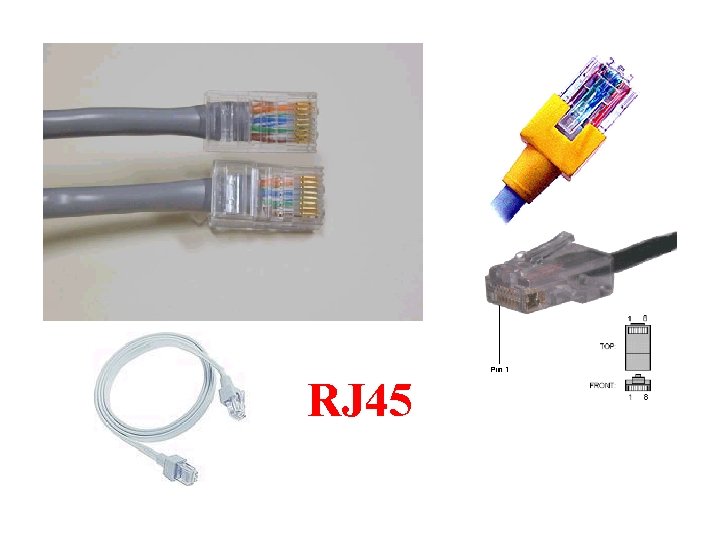
RJ 45
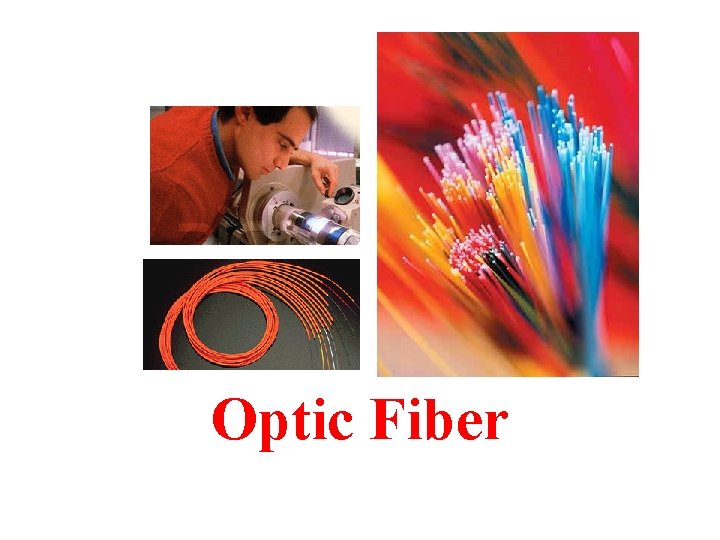
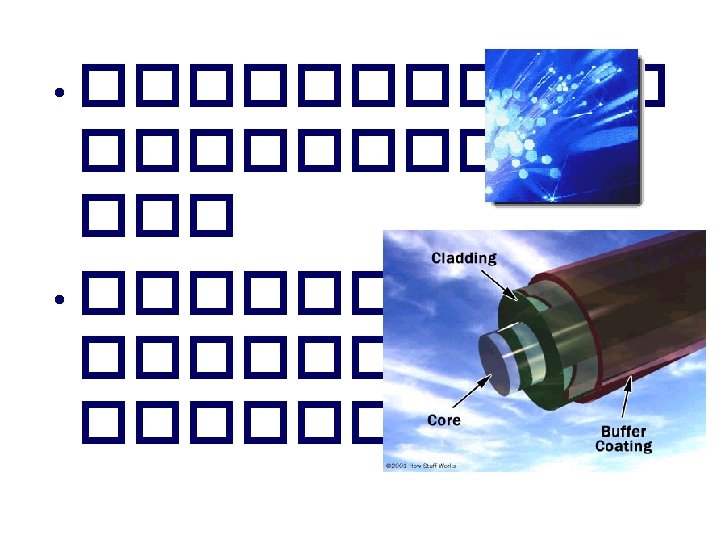
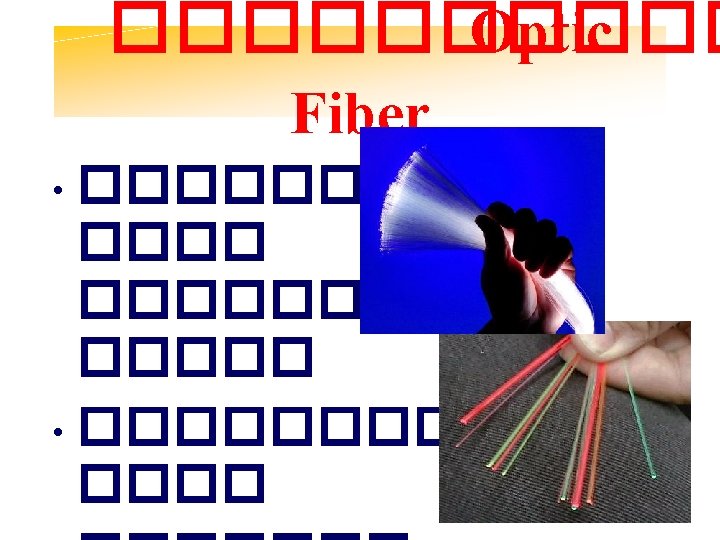
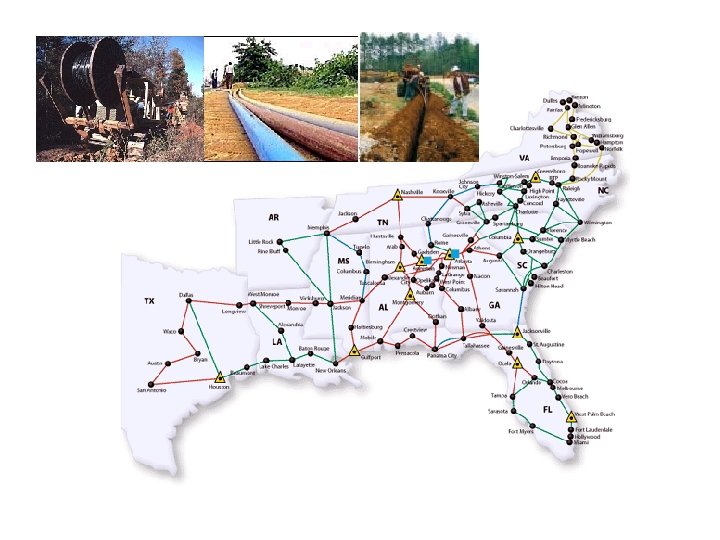
Optic Fiber
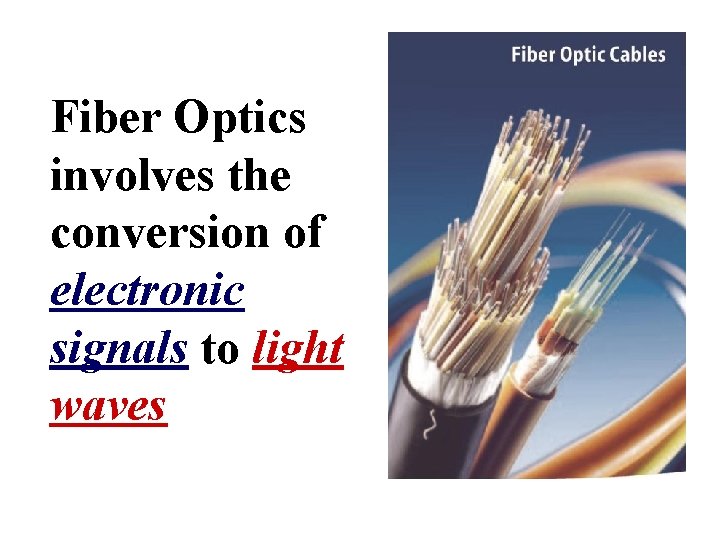
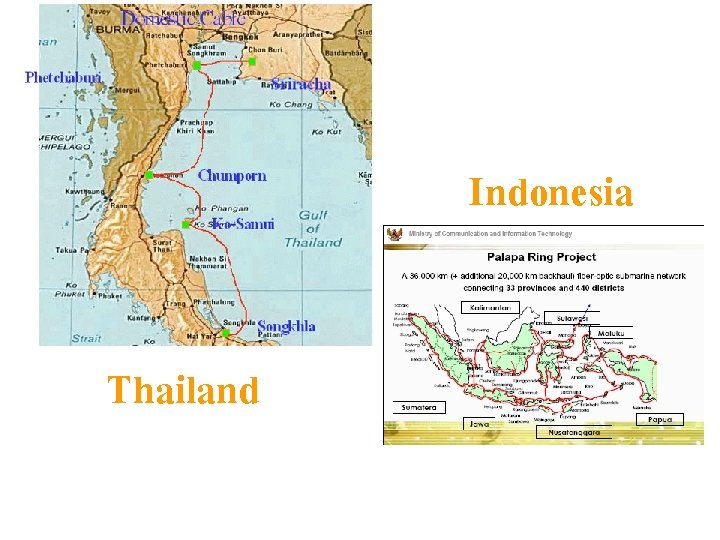
Fiber Optics involves the conversion of electronic signals to light waves
Indonesia Thailand
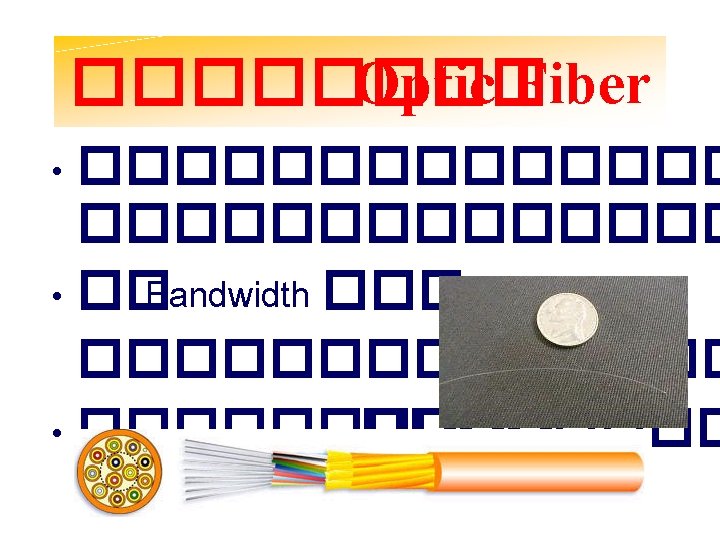
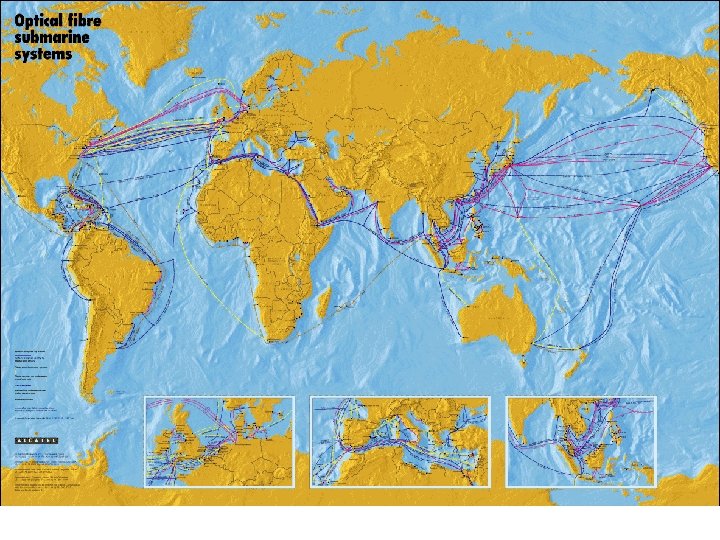
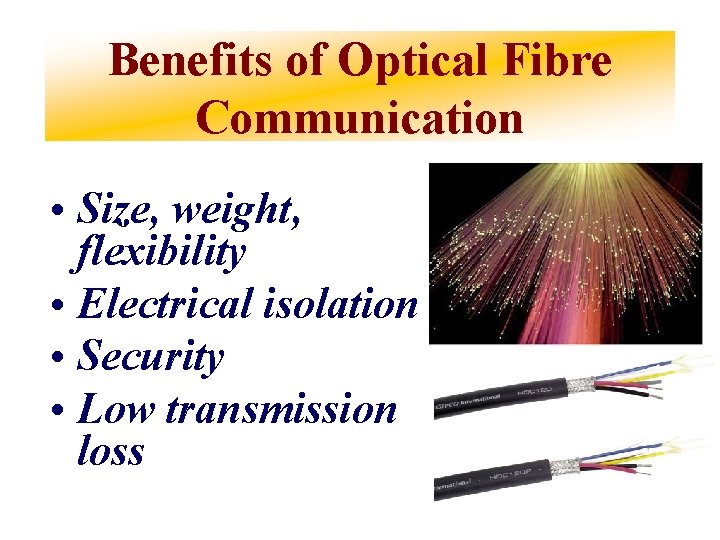
Benefits of Optical Fibre Communication • Size, weight, flexibility • Electrical isolation • Security • Low transmission loss
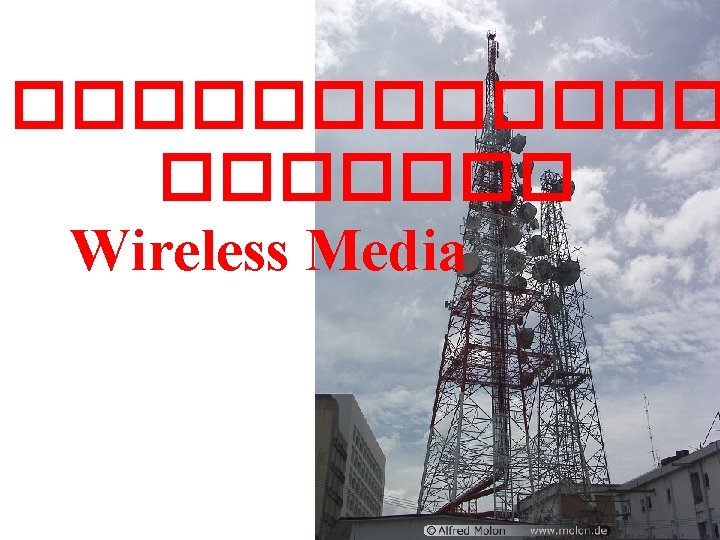
������� Wireless Media
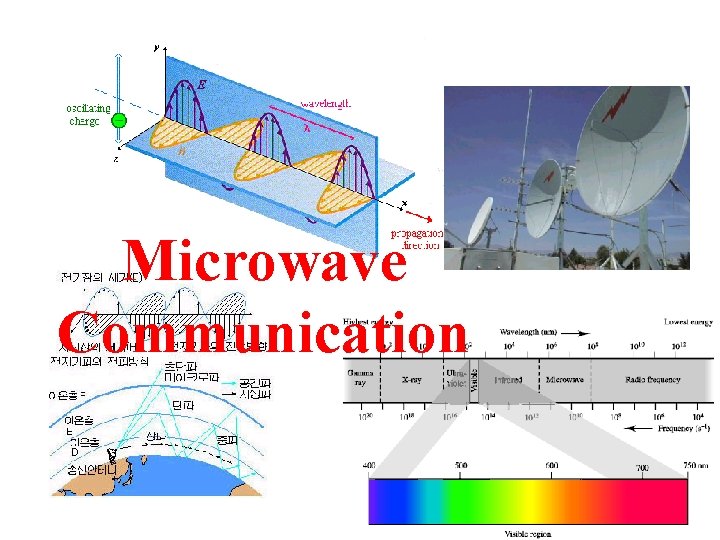
Microwave Communication
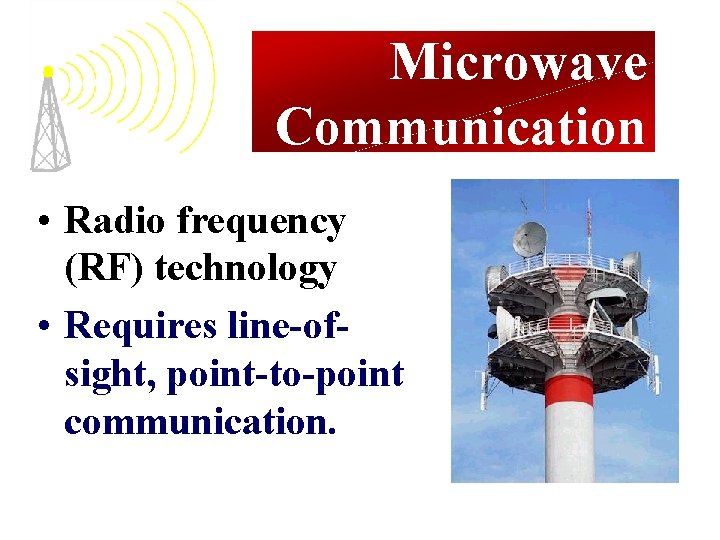
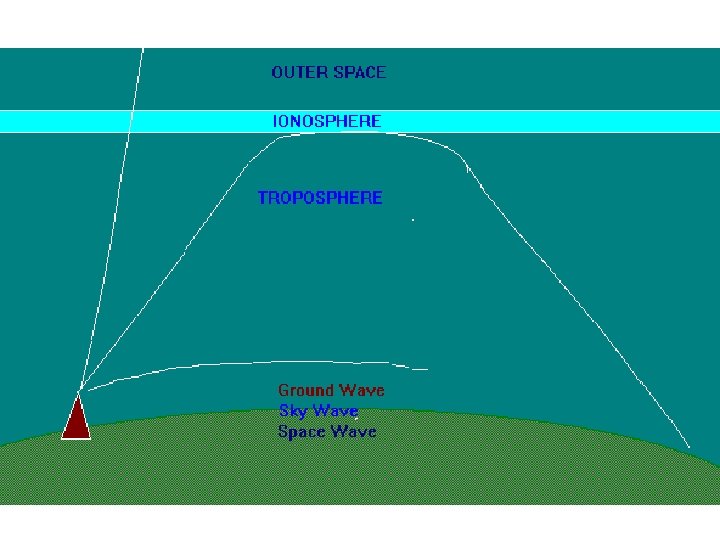
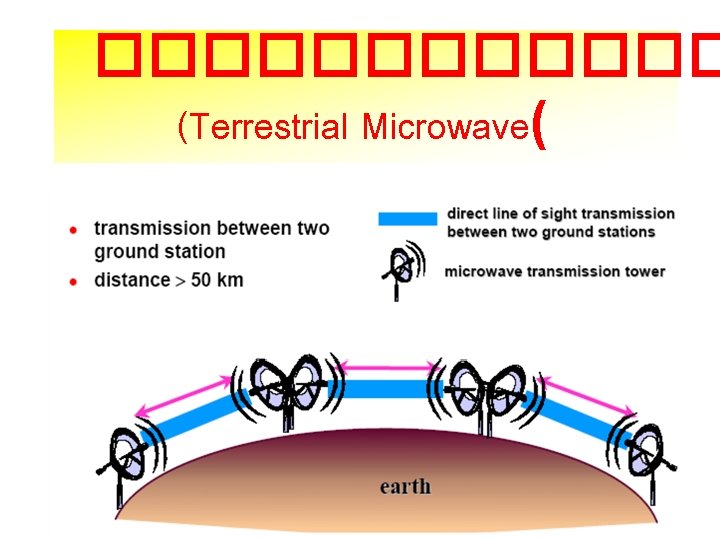
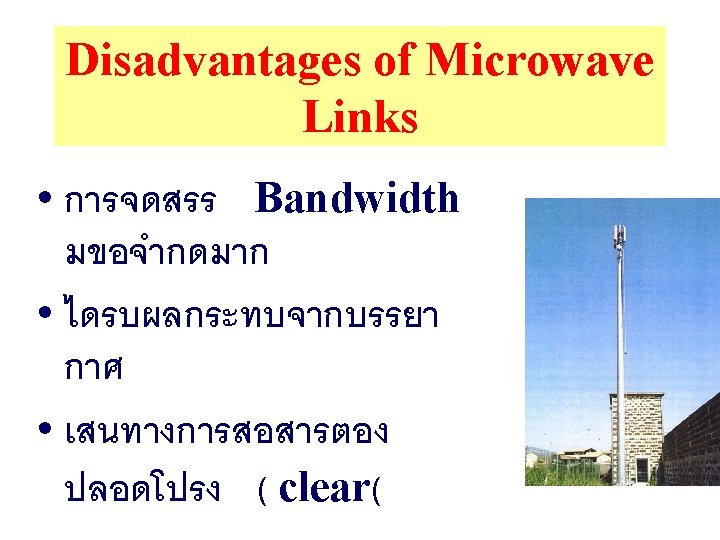
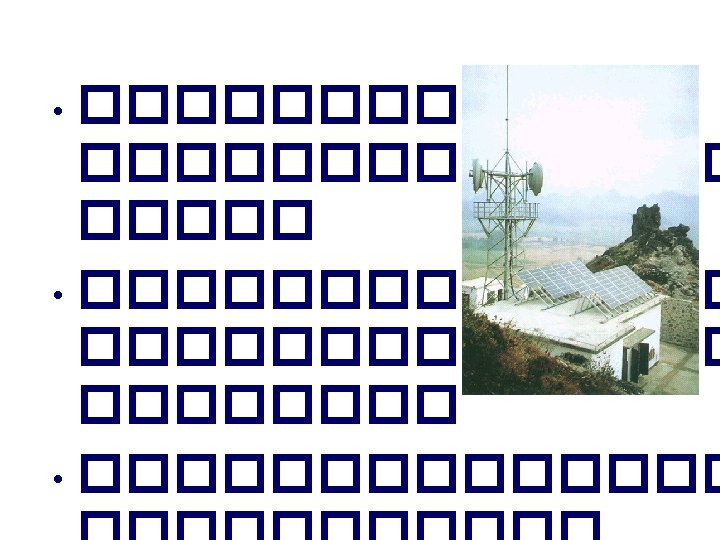
Microwave Communication • Radio frequency (RF) technology • Requires line-ofsight, point-to-point communication.
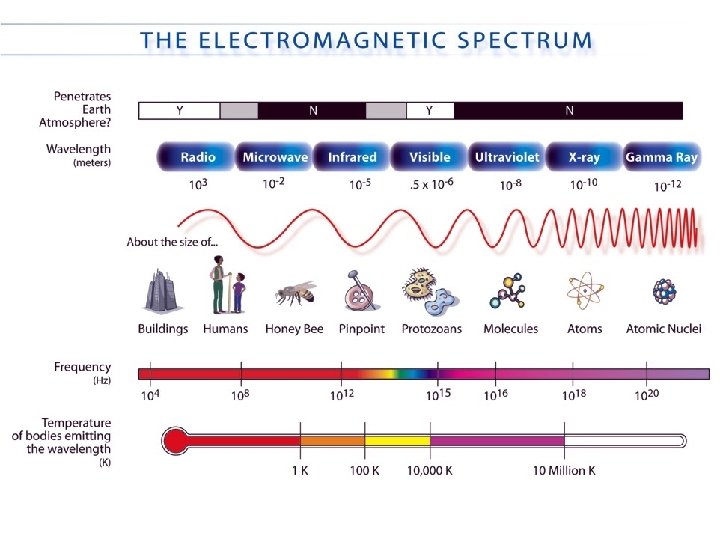
Microwave • electromagnetic energy having a frequency higher than 1 gigahertz (billions of cycles per second), corresponding to wavelength shorter than 30 centimeters
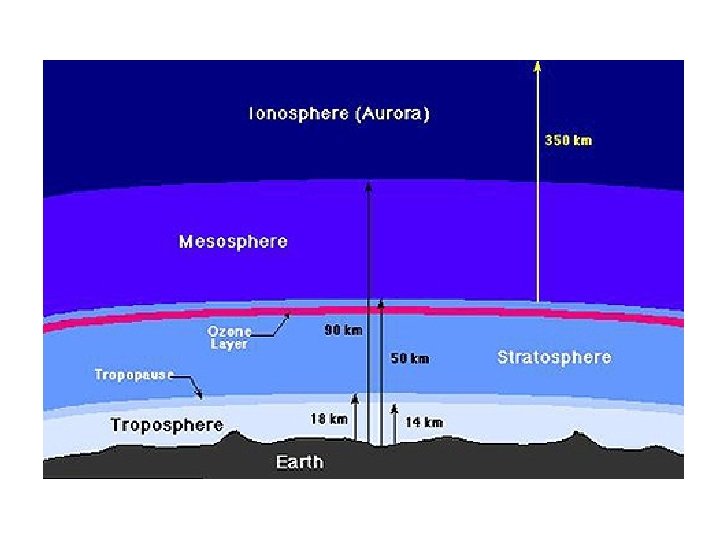
Microwave • A high-frequency line-of-sight broadcast system • Microwave signals propagate in straight lines • and are affected very little by the troposphere.
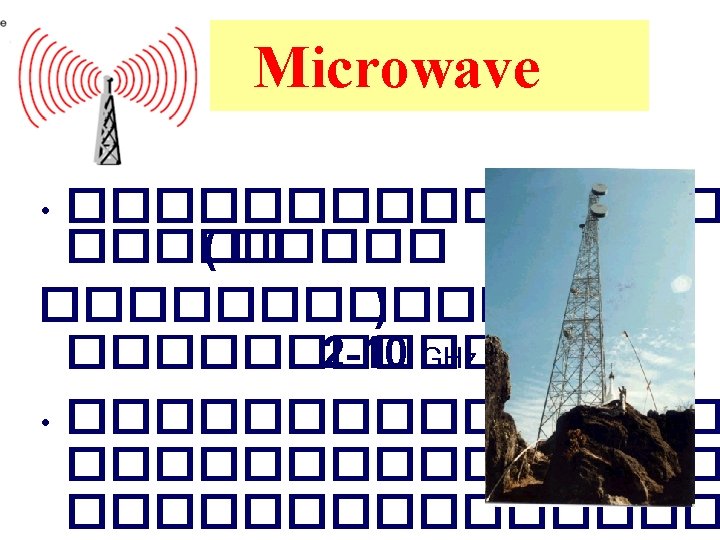
������ (Terrestrial Microwave(