
Telecom Industry Customer Churn Prediction Presented By Aakash

Telecom Industry: Customer Churn Prediction Presented By : Aakash Dwivedi

Biography • I am a second-year student in Master of Science in Business Analytics at Oklahoma State University and have been working in field of analytics for a year now. • I am currently familiar with tools such as Base Sas, Sas Enterprise Miner , Sas Viya and have used them for academic and professional projects.

Outline Introduction Methods Analysis Conclusions
Introduction The cost of acquiring a customer is five to twenty-five times more than retaining an existing one -Harvard Business Review Introduction Methods Analysis Conclusions
Introduction U. S. companies lose $136. 8 billion per year due to avoidable consumer switching. Main objective of the paper is to analyze churned customer and build a predictive model for customer Churn Introduction Methods Analysis Conclusions
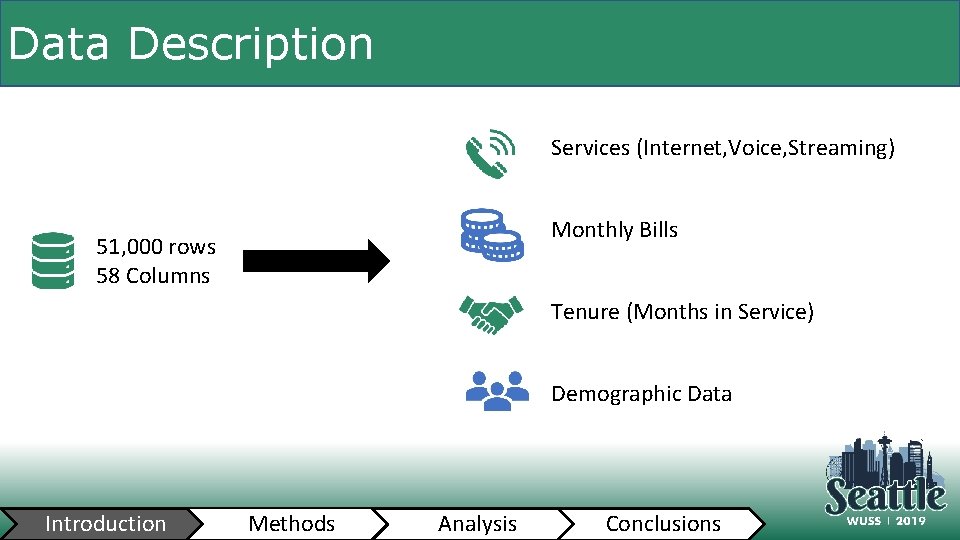
Data Description Services (Internet, Voice, Streaming) Monthly Bills 51, 000 rows 58 Columns Tenure (Months in Service) Demographic Data Introduction Methods Analysis Conclusions
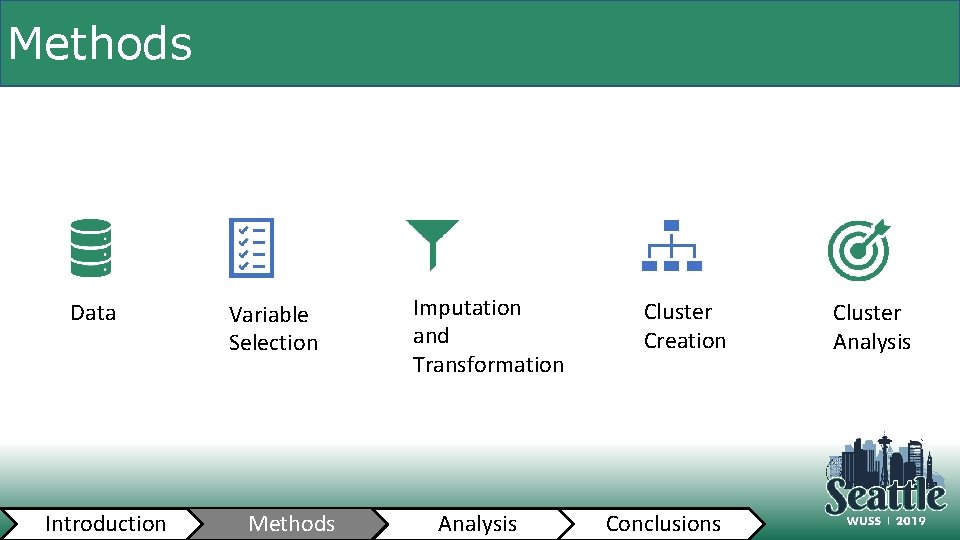
Methods Data Introduction Variable Selection Methods Imputation and Transformation Analysis Cluster Creation Conclusions Cluster Analysis
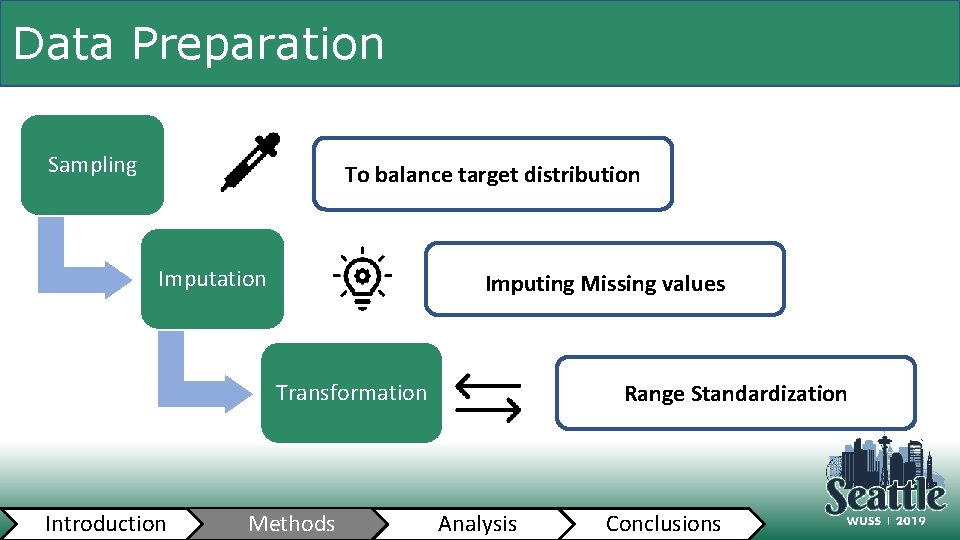
Data Preparation Sampling To balance target distribution Imputation Imputing Missing values Transformation Introduction Methods Range Standardization Analysis Conclusions
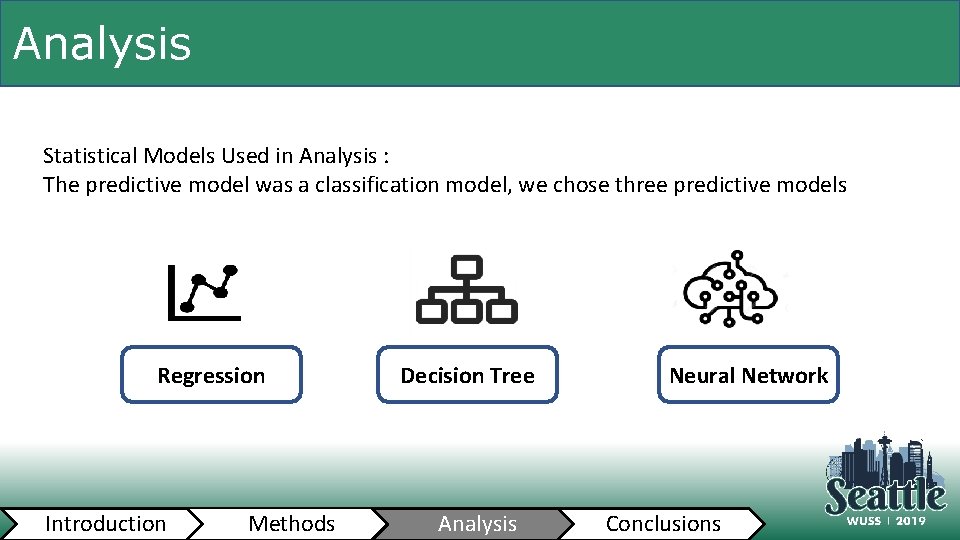
Analysis Statistical Models Used in Analysis : The predictive model was a classification model, we chose three predictive models Regression Introduction Methods Decision Tree Analysis Neural Network Conclusions
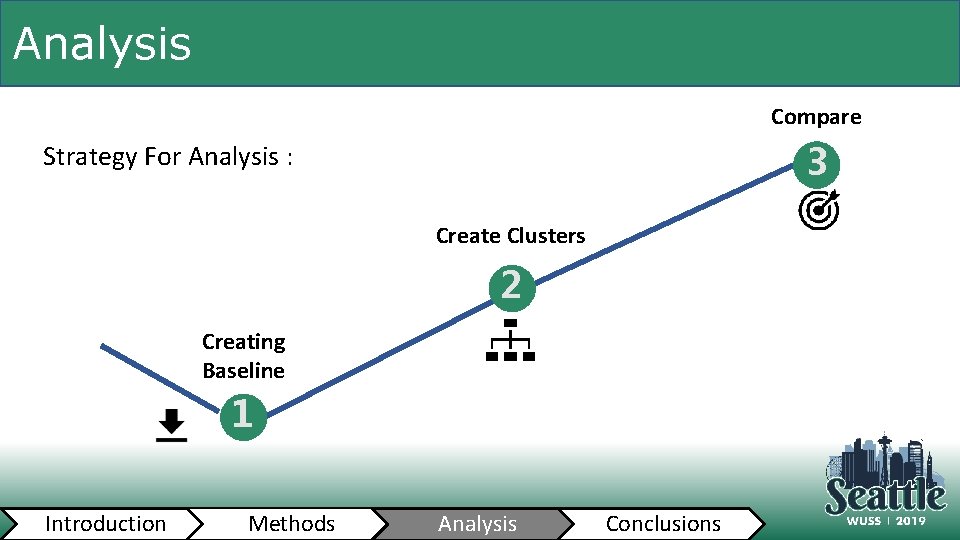
Analysis Compare 3 Strategy For Analysis : Create Clusters 2 Creating Baseline 1 Introduction Methods Analysis Conclusions
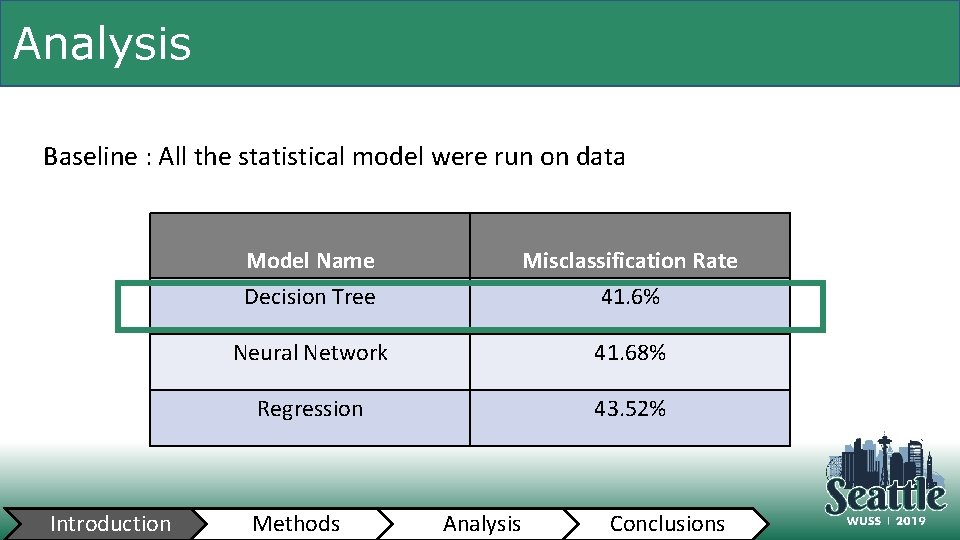
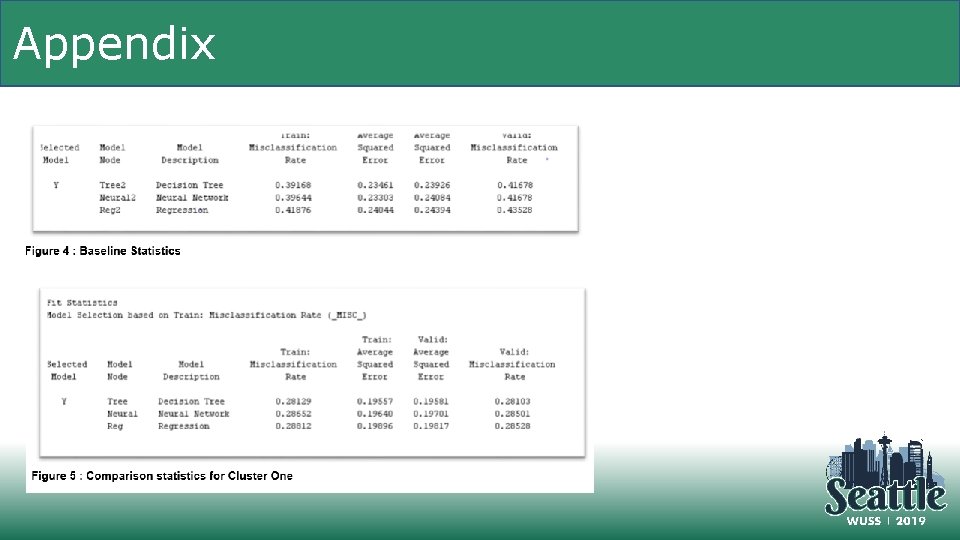
Analysis Baseline : All the statistical model were run on data Introduction Model Name Misclassification Rate Decision Tree 41. 6% Neural Network 41. 68% Regression 43. 52% Methods Analysis Conclusions
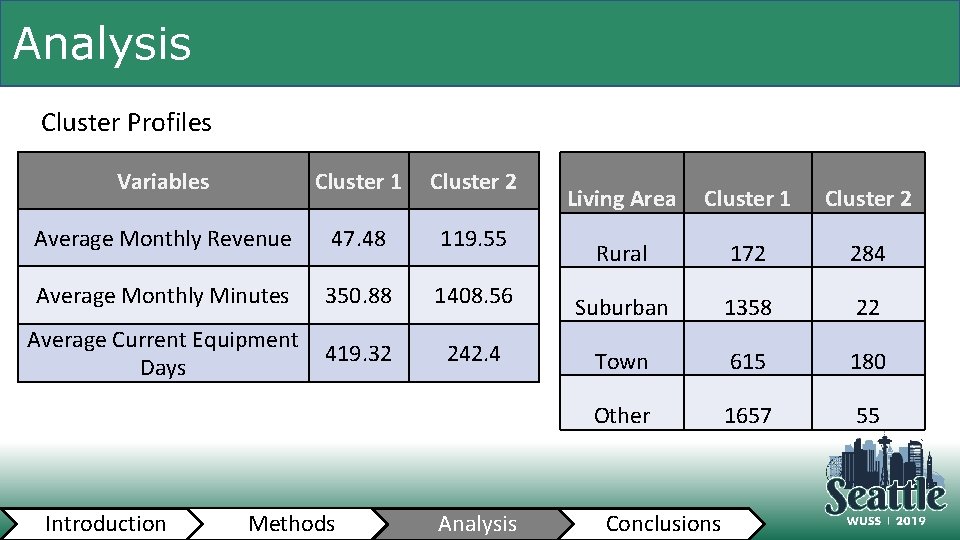
Analysis Cluster Profiles Variables Cluster 1 Cluster 2 Average Monthly Revenue 47. 48 119. 55 Average Monthly Minutes 350. 88 Average Current Equipment Days 419. 32 Introduction Methods Living Area Cluster 1 Cluster 2 Rural 172 284 1408. 56 Suburban 1358 22 242. 4 Town 615 180 Other 1657 55 Analysis Conclusions
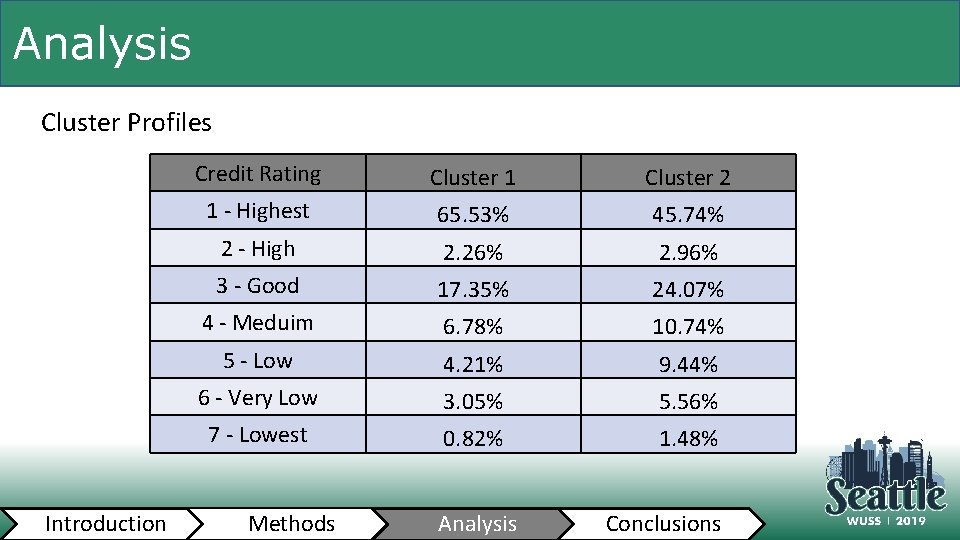
Analysis Cluster Profiles Introduction Credit Rating Cluster 1 Cluster 2 1 - Highest 65. 53% 45. 74% 2 - High 2. 26% 2. 96% 3 - Good 17. 35% 24. 07% 4 - Meduim 6. 78% 10. 74% 5 - Low 4. 21% 9. 44% 6 - Very Low 3. 05% 5. 56% 7 - Lowest 0. 82% 1. 48% Methods Analysis Conclusions
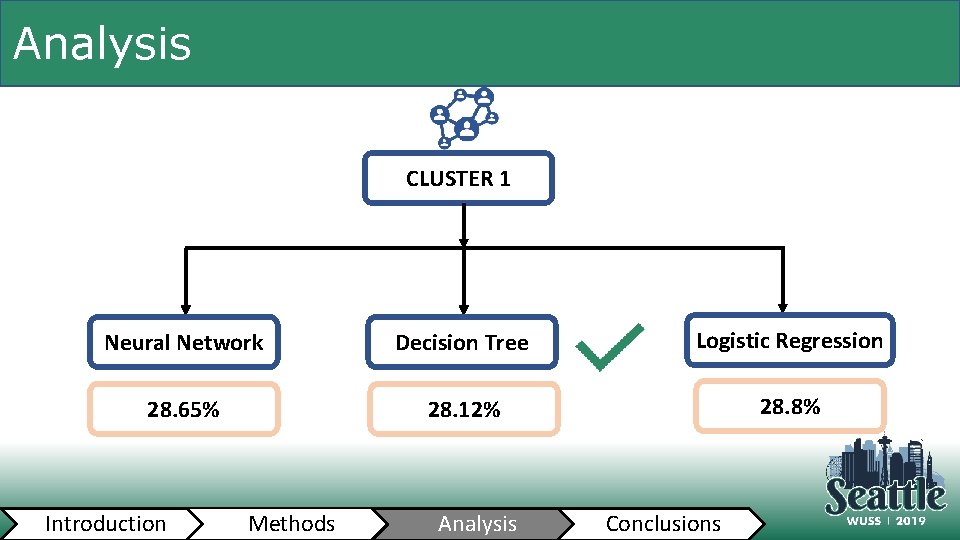
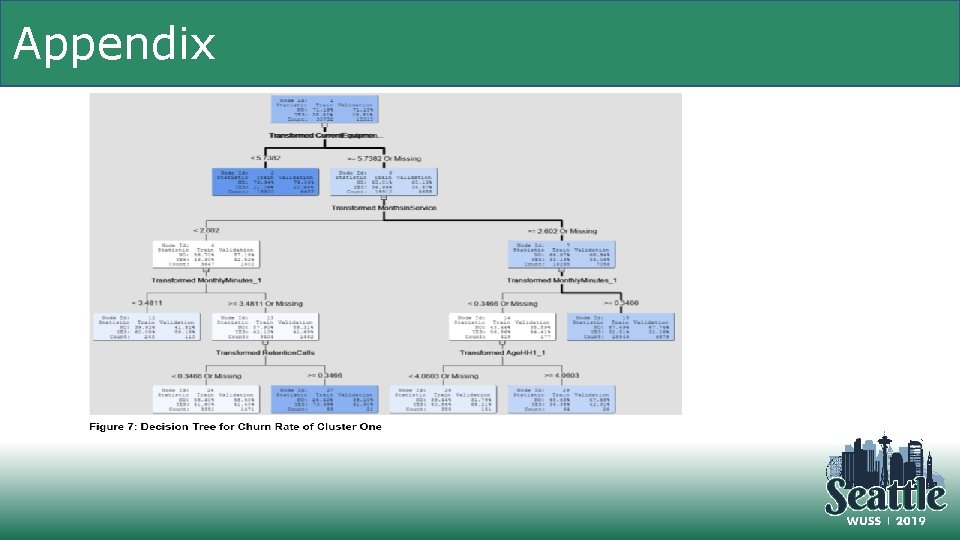
Analysis CLUSTER 1 Neural Network Decision Tree Logistic Regression 28. 65% 28. 12% 28. 8% Introduction Methods Analysis Conclusions
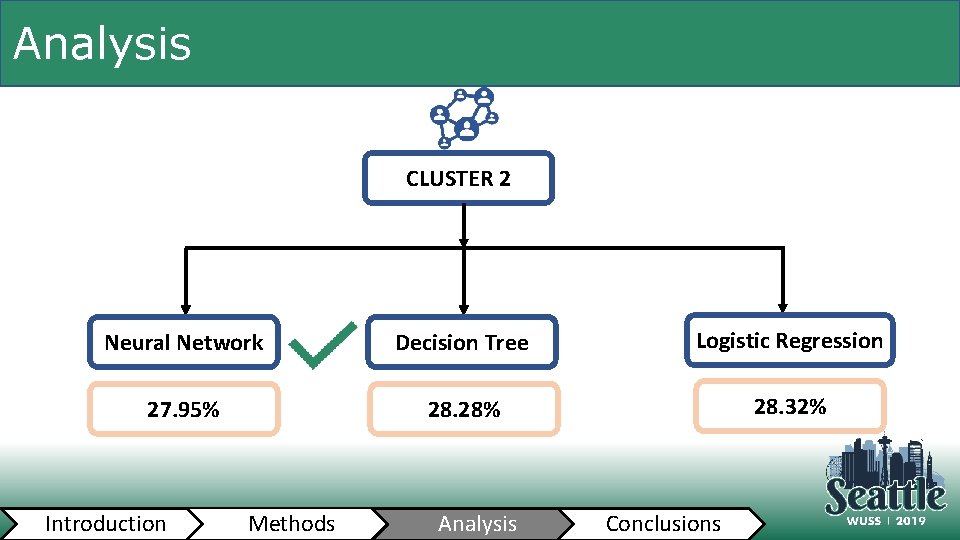
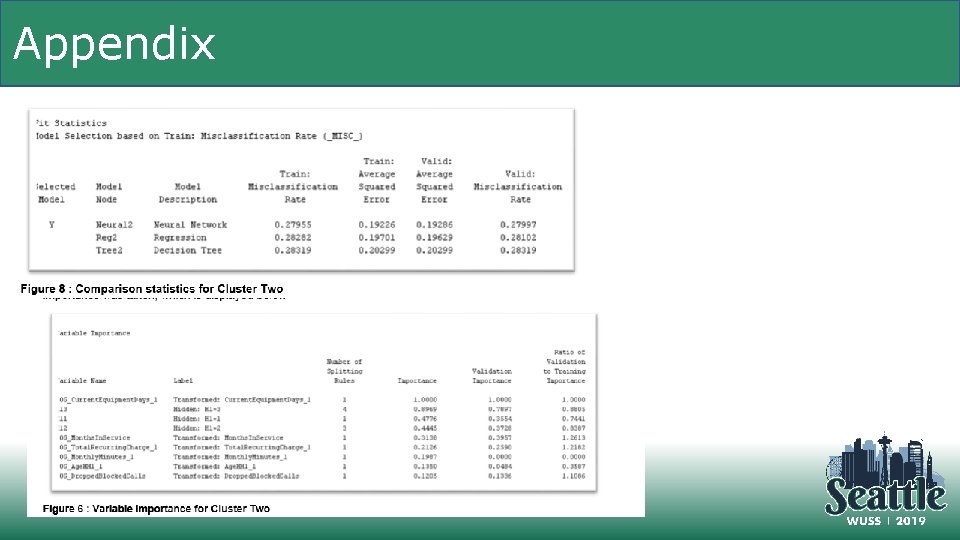
Analysis CLUSTER 2 Neural Network Decision Tree Logistic Regression 27. 95% 28. 28% 28. 32% Introduction Methods Analysis Conclusions
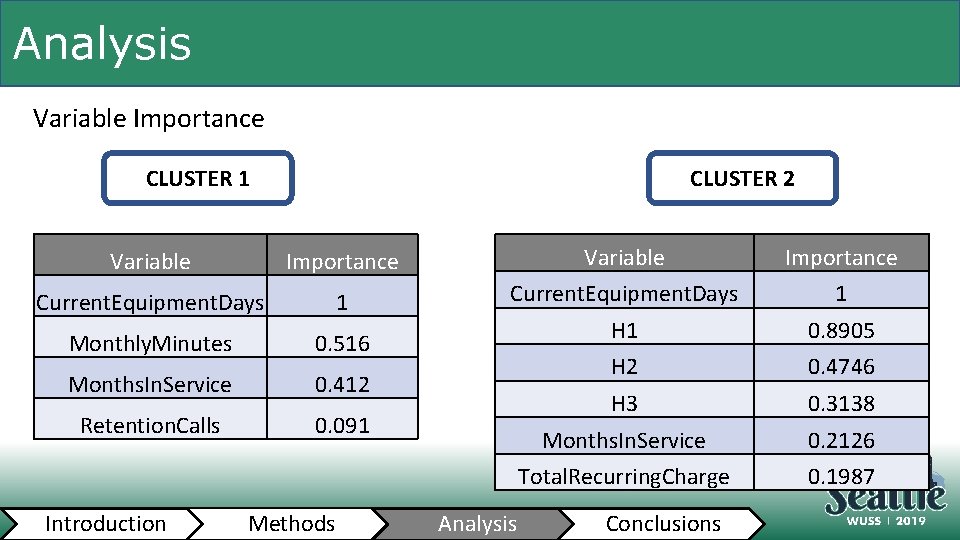
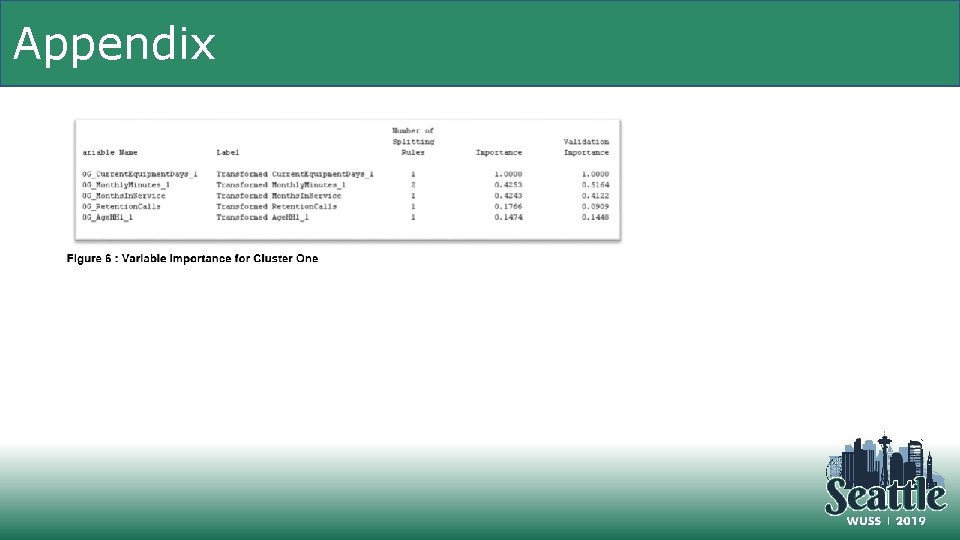
Analysis Variable Importance CLUSTER 1 CLUSTER 2 Variable Importance Current. Equipment. Days 1 Monthly. Minutes 0. 516 H 1 0. 8905 Months. In. Service 0. 412 H 2 0. 4746 Retention. Calls 0. 091 H 3 0. 3138 Months. In. Service 0. 2126 Total. Recurring. Charge 0. 1987 Introduction Methods Analysis Conclusions
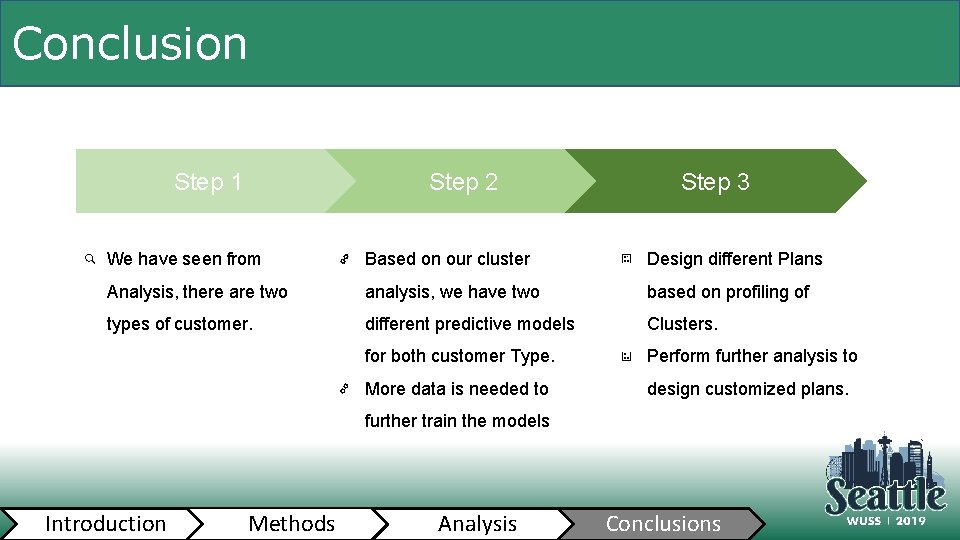
Conclusion Step 2 Step 1 Step 3 We have seen from Based on our cluster Design different Plans Analysis, there are two analysis, we have two based on profiling of types of customer. different predictive models Clusters. for both customer Type. Perform further analysis to More data is needed to design customized plans. further train the models Introduction Methods Analysis Conclusions


Contact Information Name: Aakash Dwivedi Company: Oklahoma State University City/State: Stillwater/Oklahoma Phone: 405 -334 -7693 Email: aakash. dwivedi@okstate. edu
Appendix
Appendix
Appendix
Appendix
- Slides: 23