
TEKS 8 C Calculate percent composition and empirical
- Slides: 20
TEKS 8 C: Calculate percent composition and empirical and molecular formulas. Vietnam War Anticipation Guide 1) Read each statement or question and then answer it to your best knowledge by writing your response in the BEFORE UNIT column. 2) No penalty for wrong answers! It will be used to see what your knowledge of the Vietnam War is before and after the unit is taught. 3) You will be graded based upon your participation. 4) Make sure you acknowledge each statement or question each time. WHEN YOU ARE DONE: 1) Turn it into the basket located at the front of class. 2) Grab a textbook and open it to page 724.
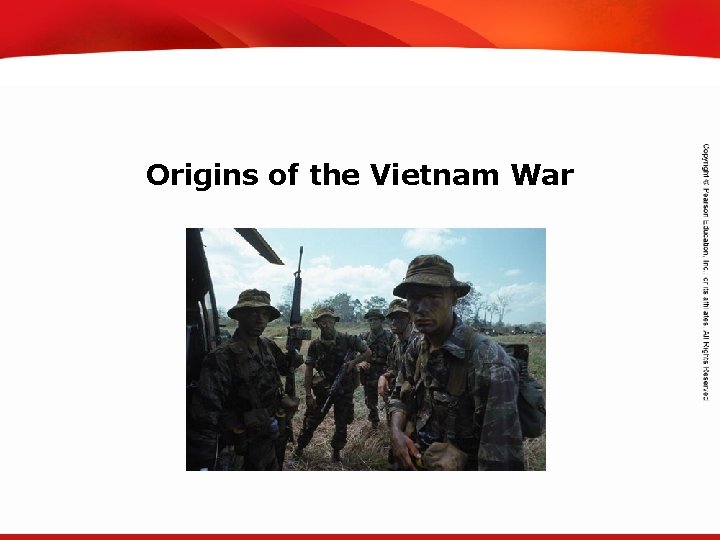
TEKS 8 C: Calculate percent composition and empirical and molecular formulas. Origins of the Vietnam War
TEKS 8 C: Calculate percent composition and empirical and molecular formulas. Objectives • Describe the reasons that the United States helped the French fight the Vietnamese. • Identify ways in which the United States opposed communism in Southeast Asia. • Analyze how the United States increased its involvement in Vietnam.
TEKS 8 C: Calculate percent composition and empirical and molecular formulas. Terms and People • Ho Chi Minh − a Vietnamese leader who demanded Vietnam’s independence from France • domino theory − the idea that if a nation fell to communism, its closest neighbors would follow • Dien Bien Phu − a French military base besieged by Vietminh troops until the French surrendered
TEKS 8 C: Calculate percent composition and empirical and molecular formulas. Terms and People (continued) • Southeast Asia Treaty Organization (SEATO) − defensive alliance aimed at preventing communist aggression in Asia • Vietcong − South Vietnamese guerrilla fighters supported by communists in North Vietnam • Gulf of Tonkin Resolution − 1964 congressional resolution that authorized President Johnson to commit American troops to South Vietnam and fight a war against North Vietnam
TEKS 8 C: Calculate percent composition and empirical and molecular formulas. Why did the United States become involved in Vietnam? Presidents Kennedy and Johnson shared a vision that the United States would emerge victorious from the Cold War. As part of this battle, the United States established a new line of defense in Vietnam.
TEKS 8 C: Calculate percent composition and empirical and molecular formulas.
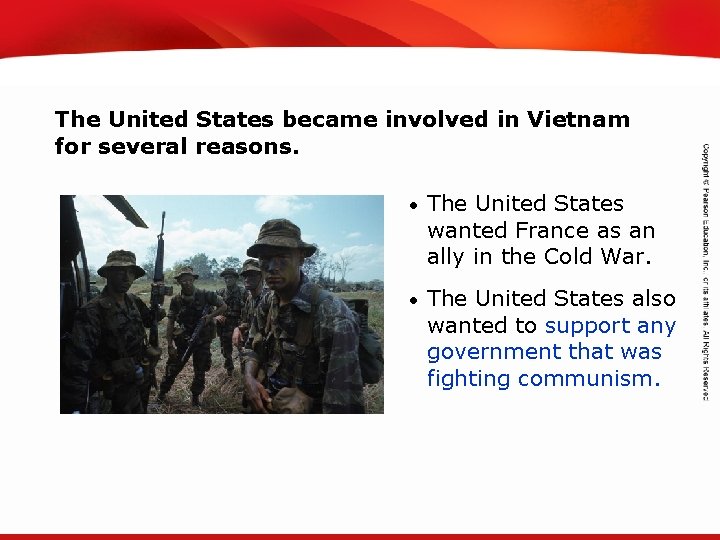
TEKS 8 C: Calculate percent composition and empirical and molecular formulas. The United States became involved in Vietnam for several reasons. • The United States wanted France as an ally in the Cold War. • The United States also wanted to support any government that was fighting communism.
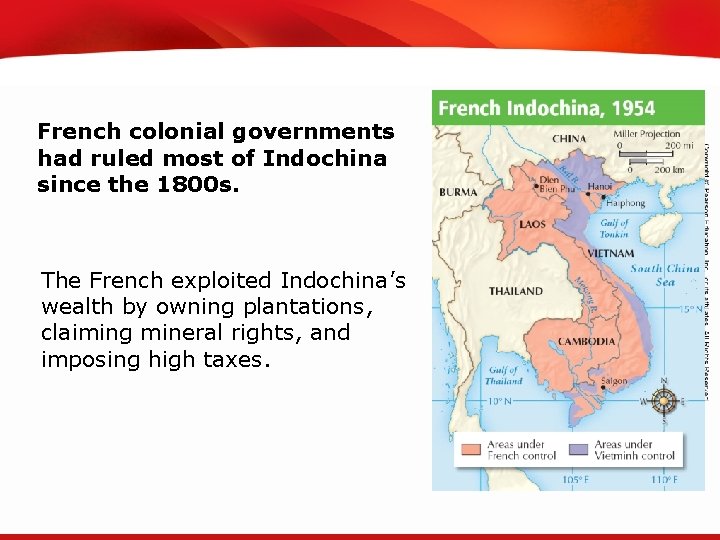
TEKS 8 C: Calculate percent composition and empirical and molecular formulas. French colonial governments had ruled most of Indochina since the 1800 s. The French exploited Indochina’s wealth by owning plantations, claiming mineral rights, and imposing high taxes.
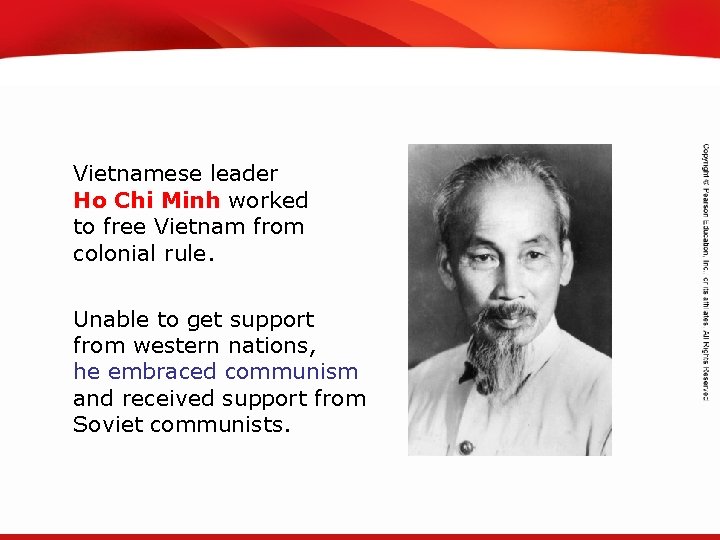
TEKS 8 C: Calculate percent composition and empirical and molecular formulas. Vietnamese leader Ho Chi Minh worked to free Vietnam from colonial rule. Unable to get support from western nations, he embraced communism and received support from Soviet communists.
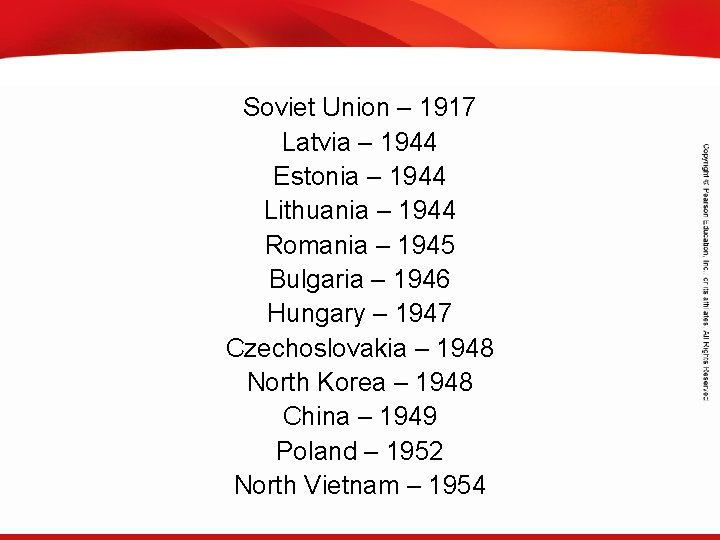
TEKS 8 C: Calculate percent composition and empirical and molecular formulas. Soviet Union – 1917 Latvia – 1944 Estonia – 1944 Lithuania – 1944 Romania – 1945 Bulgaria – 1946 Hungary – 1947 Czechoslovakia – 1948 North Korea – 1948 China – 1949 Poland – 1952 North Vietnam – 1954
TEKS 8 C: Calculate percent composition and empirical and molecular formulas. In 1954, President Eisenhower introduced the domino theory, which said that if Vietnam became communist, its closest neighbors would follow. If communism spread throughout the region, Eisenhower feared, it could threaten Japan, the Philippines, and Australia.
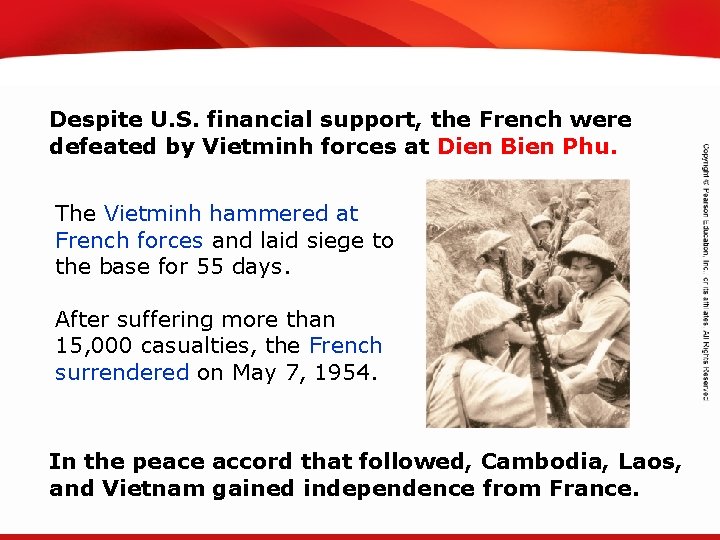
TEKS 8 C: Calculate percent composition and empirical and molecular formulas. Despite U. S. financial support, the French were defeated by Vietminh forces at Dien Bien Phu. The Vietminh hammered at French forces and laid siege to the base for 55 days. After suffering more than 15, 000 casualties, the French surrendered on May 7, 1954. In the peace accord that followed, Cambodia, Laos, and Vietnam gained independence from France.
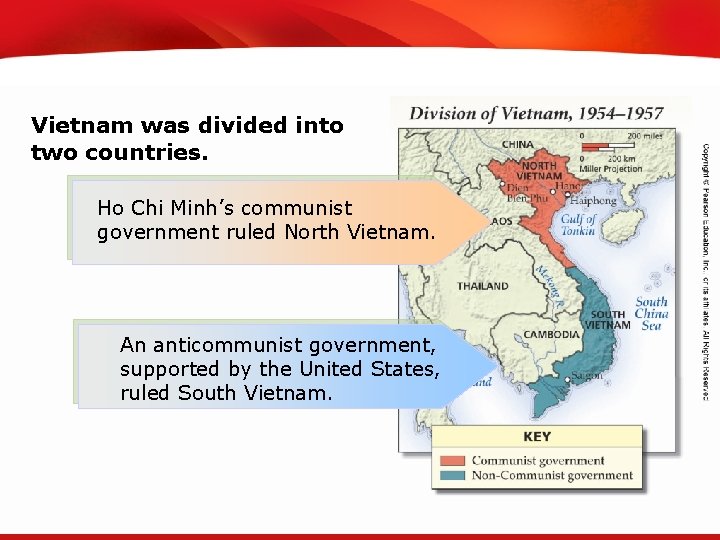
TEKS 8 C: Calculate percent composition and empirical and molecular formulas. Vietnam was divided into two countries. Ho Chi Minh’s communist government ruled North Vietnam. An anticommunist government, supported by the United States, ruled South Vietnam.
TEKS 8 C: Calculate percent composition and empirical and molecular formulas. South Vietnam’s president, Ngo Dinh Diem, was not a popular leader. A group of rebel guerilla fighters formed the National Liberation Front (NLF) to oppose the Diem government and unite Vietnam under communist rule.
TEKS 8 C: Calculate percent composition and empirical and molecular formulas. The United States supported South Vietnam in several ways. • formed the Southeast Asia Treaty Organization, which opposed communism • gave economic and military aid • sent Special Forces soldiers to “advise” South Vietnamese troops
TEKS 8 C: Calculate percent composition and empirical and molecular formulas. In 1961, President Kennedy sent Special Forces troops to help fight the Vietcong, the guerilla fighters of the National Liberation Front. The Diem government remained unpopular, however, and the Kennedy administration worked behind the scenes to remove Diem from power.
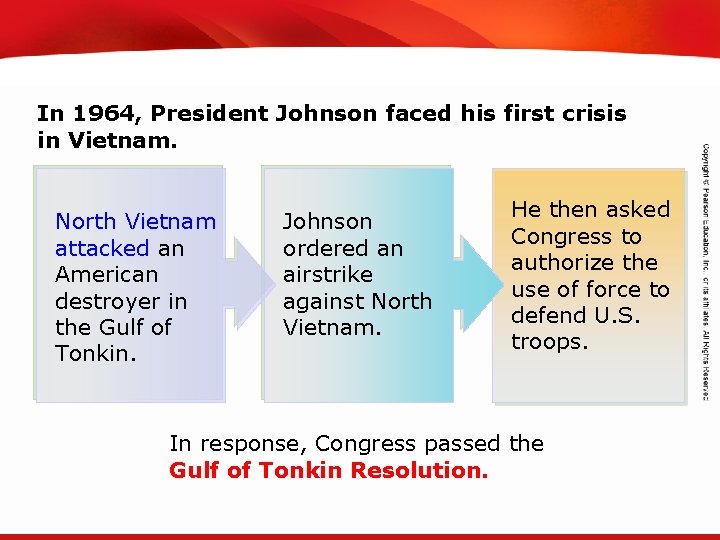
TEKS 8 C: Calculate percent composition and empirical and molecular formulas. In 1964, President Johnson faced his first crisis in Vietnam. North Vietnam attacked an American destroyer in the Gulf of Tonkin. Johnson ordered an airstrike against North Vietnam. He then asked Congress to authorize the use of force to defend U. S. troops. In response, Congress passed the Gulf of Tonkin Resolution.
TEKS 8 C: Calculate percent composition and empirical and molecular formulas. The Gulf of Tonkin Resolution gave Johnson tremendous war powers. • • It allowed him to commit U. S. troops to South Vietnam. It enabled him to fight a war against North Vietnam without asking Congress for a declaration of war.
TEKS 8 C: Calculate percent composition and empirical and molecular formulas. Review • Reasons why the United States helped the French fight the Vietnamese? • Ways in which the United States opposed communism in Southeast Asia? • How did the United States increase its involvement in Vietnam?