
Teeth This week we will be looking at
Teeth This week we will be looking at our teeth and the role they play in our digestive system. When you have finished your learning you will be able to: • Describe different types of teeth and their function. • Compare teeth in animals with different diets. • Know what we need to do to keep teeth healthy.
Go to the BBC Bitsize website to learn all about types of teeth. https: //www. bbc. co. uk/bitesize/topics/z 27 kng 8/articles/zsp 76 yc
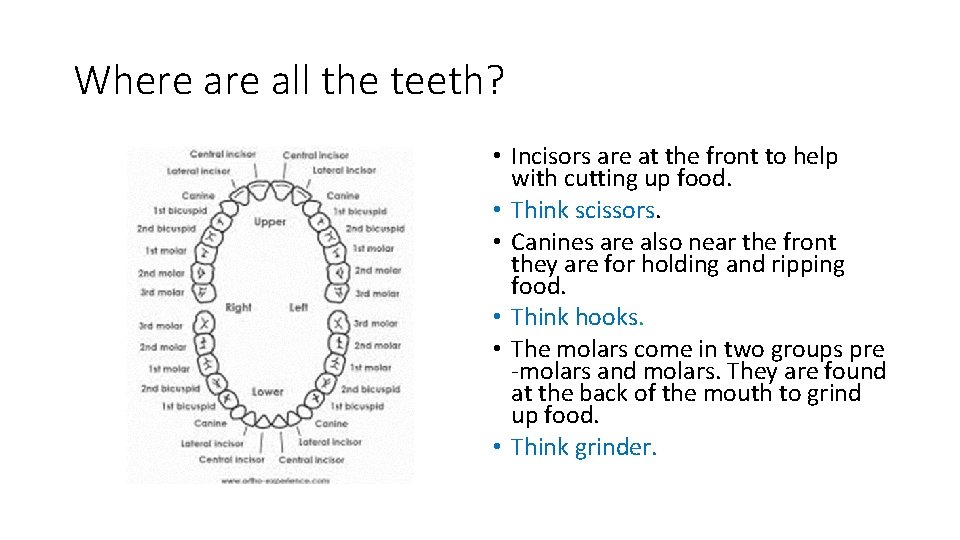
Where all the teeth? • Incisors are at the front to help with cutting up food. • Think scissors. • Canines are also near the front they are for holding and ripping food. • Think hooks. • The molars come in two groups pre -molars and molars. They are found at the back of the mouth to grind up food. • Think grinder.
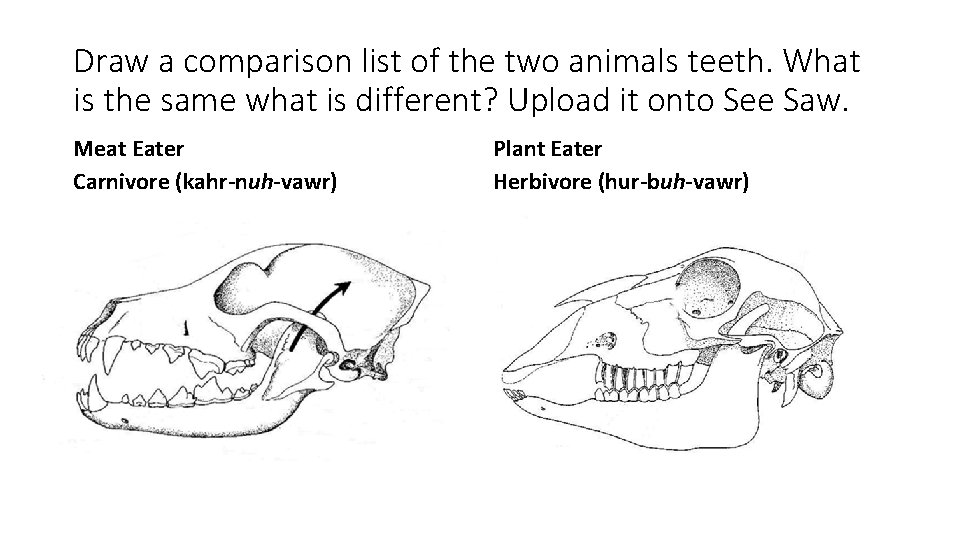
Draw a comparison list of the two animals teeth. What is the same what is different? Upload it onto See Saw. Meat Eater Carnivore (kahr-nuh-vawr) Plant Eater Herbivore (hur-buh-vawr)
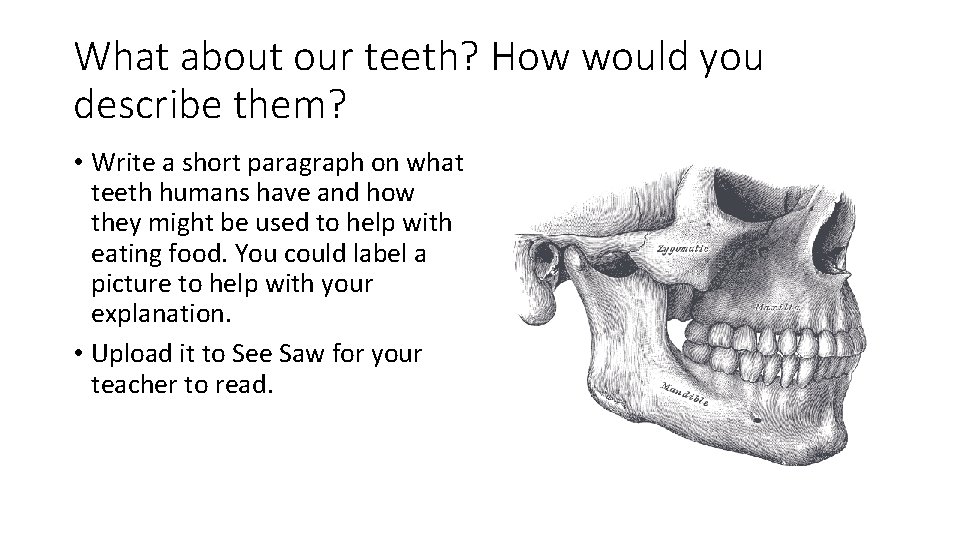
What about our teeth? How would you describe them? • Write a short paragraph on what teeth humans have and how they might be used to help with eating food. You could label a picture to help with your explanation. • Upload it to See Saw for your teacher to read.
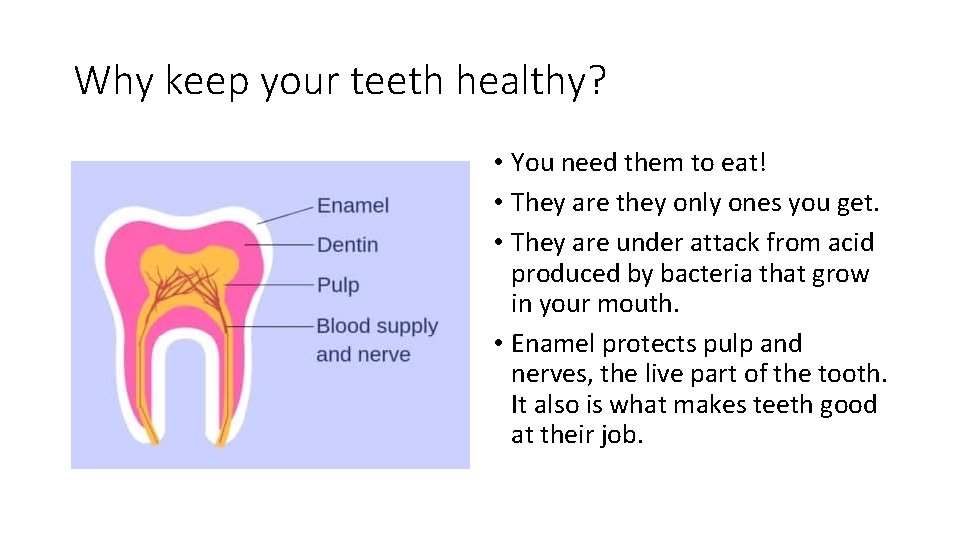
Why keep your teeth healthy? • You need them to eat! • They are they only ones you get. • They are under attack from acid produced by bacteria that grow in your mouth. • Enamel protects pulp and nerves, the live part of the tooth. It also is what makes teeth good at their job.
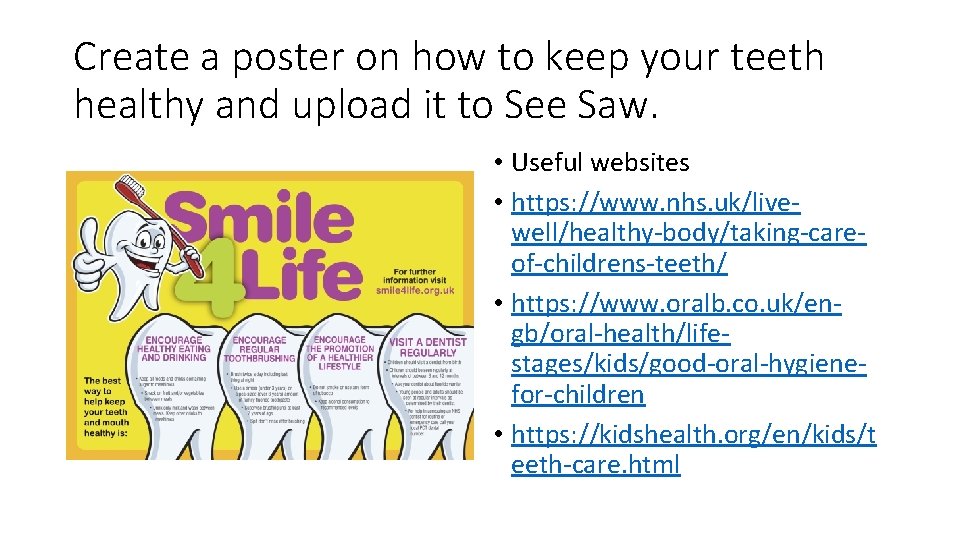
Create a poster on how to keep your teeth healthy and upload it to See Saw. • Useful websites • https: //www. nhs. uk/livewell/healthy-body/taking-careof-childrens-teeth/ • https: //www. oralb. co. uk/engb/oral-health/lifestages/kids/good-oral-hygienefor-children • https: //kidshealth. org/en/kids/t eeth-care. html
Now you should be on your way to becoming an expert it is time for a quiz. Why is it important to use a toothpaste that contains fluoride? a. Fluoride prevents crooked teeth b. Fluoride makes the toothpaste taste nice c. Fluoride sharpens the canine teeth d. Fluoride prevents tooth decay Brushing your teeth prevents. . . a. roots b. wax c. spots d. plaque
What are the teeth at the front called? a. Central incisors b. Molars c. Canines d. Wisdom teeth What is a cavity? a. A healthy tooth b. Another name for tooth decay c. A type of tooth d. Another name for bad breath
How often should you clean your teeth? a. Once a day b. Twice a day c. Three times a day d. When they feel dirty On average, how many teeth do children have? a. 16 b. 20 c. 28 d. 32
What are the molars designed to do? a. To look nice b. To show you are an adult c. To bite, tear and rip food d. To chew, crush and grind food How often should you visit a dentist? a. Twice a year b. Twice a week c. Twice a month d. When you have toothache
How many teeth do adults have? a. 20 b. 28 c. 32 d. 34 What are the sharp pointy teeth at the side called? a. Molars b. Canines c. Central incisors d. Wisdom teeth
- Slides: 12