
Teeth examination Prof Magdy K Hamam Prof of

- Slides: 10
Teeth examination Prof. Magdy K. Hamam Prof. of Oral Medicine Faculty. ksu. edu. sa/prof. Hamam Principles of Oral Diagnosis: Gary C. Coleman John F. Nelson 1 st Ed (1993)
� 2 assessment must be made on examining the teeth : - � A- assessment of each individual tooth. � B- how the tooth is a part of a larger unit. � ( cervical caries – xerostomia ) � Techniques and materials � 1 - Visual inspection , transillumination , probing , palpation , percussion and evaluation of function ) � 2 - A good light source , a mirror , a sharp explorer , and an air syringes � 3 - Additional adjuncts , ( dental floss , articulating paper , wooden pegs , heat � Ice and electrical pulp tester. � 4 - final diagnosis ( radiograph & diagnostic casts ) � 5 - examination of the gingiva supporting structures of the teeth � ( periodontal Probe )
�Examination of teeth A- visual inspection ( orientation portion ( teeth present , missing , carious , discoloration , wear & dental malformation ) B- comprehensive dental examination of each tooth by visualization & probing charting for permanent 1 2 and 5 6 for deciduous teeth 4 3 7 8 Caries ( pit & fissure / smooth surfaces , chalky spots , cavitations ( explorer No. 17→ No. 5 , transillumination light , D. floss , radiograph / bitewing , per apical ) Defective restorations ( overhanging , open contact ) Defect or alteration of enamel ( enamel hypoplasia ) • Congenital condition ( amelogenesis imperfecta ) • Trauma or infection ( turner; s tooth ) • Syphilis ( Hutchinson’s teeth and mulberry molars ) • Poor nutrition ( defeiciency in vitamins A , C, D ) • Chemicals ( tetracycline and fluoride ) • Exanthematous diseases ( measles , chicken pox & scarlet fever ) • Discoloration & staining of teeth ( extrinsic or intrinsic factors. , chromogenic bacteria )
Loss of tooth structure Attrition loss of tooth structure due to friction – facets ( physiologic - pathologic ) Attrition
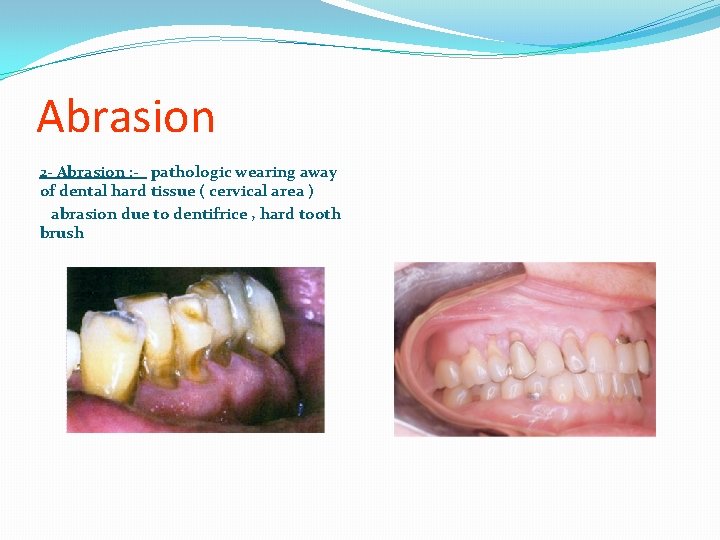
Abrasion 2 - Abrasion : - pathologic wearing away of dental hard tissue ( cervical area ) abrasion due to dentifrice , hard tooth brush
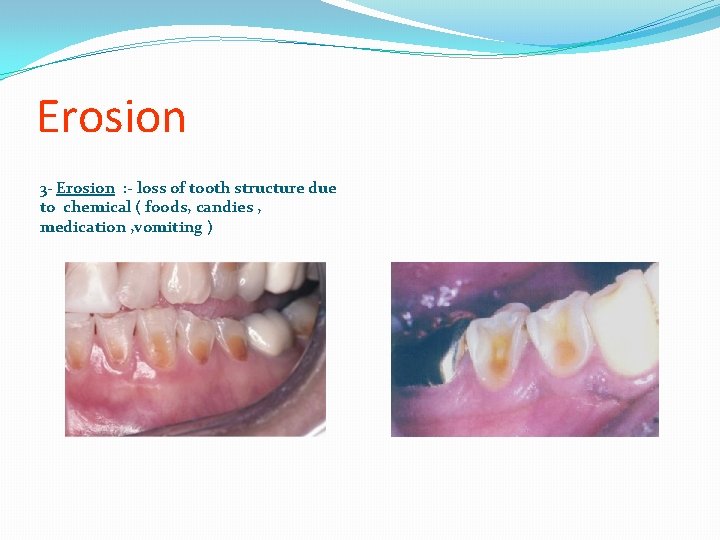
Erosion 3 - Erosion : - loss of tooth structure due to chemical ( foods, candies , medication , vomiting )
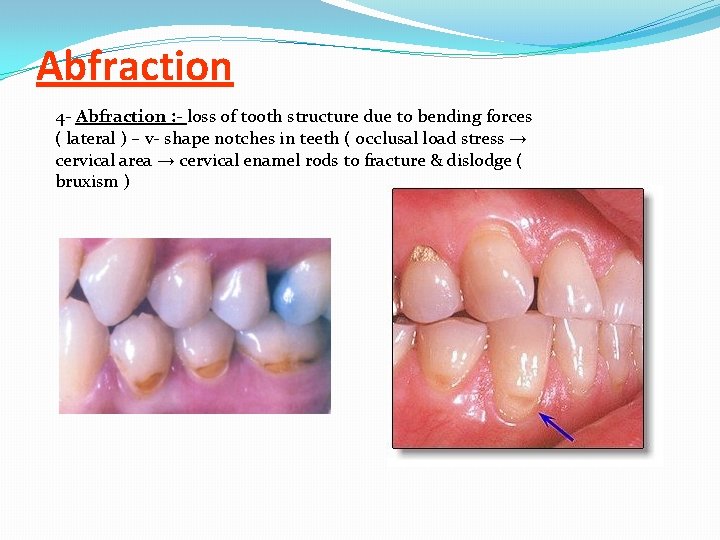
Abfraction 4 - Abfraction : - loss of tooth structure due to bending forces ( lateral ) – v- shape notches in teeth ( occlusal load stress → cervical area → cervical enamel rods to fracture & dislodge ( bruxism )
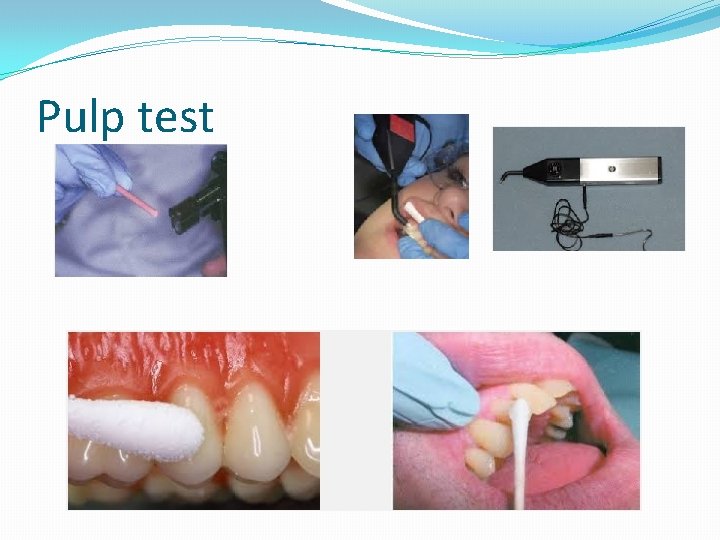
Pulp examination � A pulp examination : � A- Percussion ( hand mirror No. 17 ) ( per apical percussion , lateral percussion ) � B- Thermal testing � C- Electric pulp testing � Thermal testing � Heat ( worm gutta percha ) � Cold ( small piece of ice or cotton sprayed with ethyl chloride ) � In early pulpitis pain persists when the stimulus has been removed. � Whereas in healthy pulp , the sensation disappears within 5 seconds. � Pulp testing is difficult , communication between examiner and patient is important and the result must be interpreted carefully. � For these reasons , all three means determining pulp vitality ( electrical current , heat , & cold ) are used.
Pulp test