
Teen Nutrition Whats the Big Debate Video Copy
“Teen Nutrition, What’s the Big Debate” Video Copy on new sheet of paper • What end of the pyramid should you eat more of? • What is the 80/20 rule? • Why is it important to balance your food intake with your activity level?
Bell work/Journal • Create a meal that you frequently eat. Make sure to include drinks, sauces and be as detailed as possible. If you know your ounces Cups, teaspoons etc. include if you can. – Breakfast: • Snacks : – Lunch: • Snacks: – Dinner: • Snacks:
How much do you really know about all the sugar you are eating everyday 1. Sugar gives you an energy boost? T/F 2. The sugar in fruit is as harmful as the sugar in candy? T/F 3. How many different names for sugar can be found on food labels? a. 1 -17 b. 18 -28 c. 28+ 4. Which is healthier: Honey, White sugar, no difference 5. Sugar-free soda is just as bad for you as the regular kind? T/F 6. The best way to eat less sugar is to cut back on: desert, cereal, sweet drinks
Bell Work: This is journal #4 • Read and Answer the questions in COMPLETE sentences: • In a COMPLETE sentence how can you try to incorporate these top 10 foods into your diet. – Questions will be up in a few minutes via scholastic online and airplay
Extra Credit • List the leading causes of death and explain how they are related to nutrition and physical fitness. • What are some prevention strategies to help prevent the leading causes of death?

Journal If you and one other person could take a trip to anywhere in the world where would you go and why? Who would you bring? What are some things you and this other person would do while on this trip?

Journal • Reflect on our guest speakers, what are your thoughts and opinions. • Besides drug use what were some common themes in their stories? • How could your goals/dreams be altered because of drug use? • They handed out bracelets that had the phrase “know the Truth” on them. What do you think that means?

Journal • Tell me how you can be successful this year in school. • What do you think are some good tips or ideas for yourself to do well? What are your goals for this school year?
• The importance of healthy eating at young age
Journal • I would like you to tell me everything what you know about nutrition…. • Ideas can include but not limited to –food groups, what food groups do for you, what's healthy to eat, what's unhealthy • What are the benefits to eating healthy, is it sometimes difficult to eat healthy? Why?
Why learn about eating healthy? • • • Eating healthy helps maintain everyday body functions Disease prevention & cancer prevention Helps with a healthy body weight Nutrients in foods help protect cells and repair cells Helps build a strong immune system Helps rid toxins from your body Build muscle (protein) Gives you energy Strong Bones Brain Functioning
Does anyone have family members that have had any of these? • The USDA reports that 4 of the top 10 leading causes of death in the United States are directly influenced by diet. They are: • Heart Disease • Cancer • Stroke • Diabetes
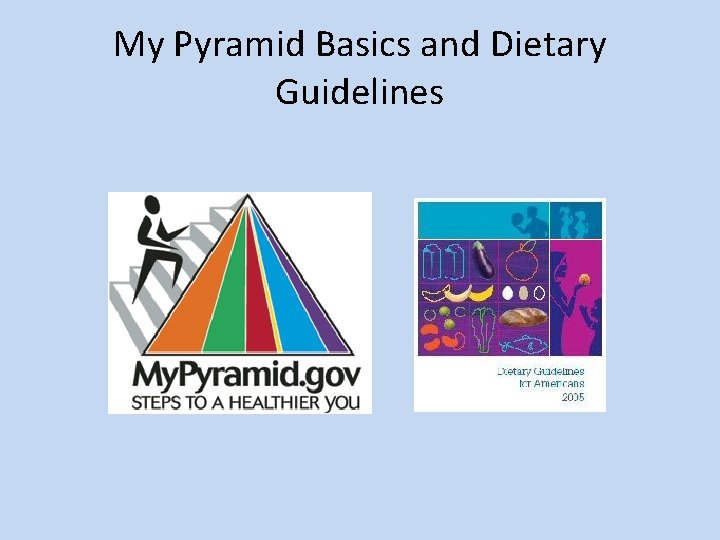
My Pyramid Basics and Dietary Guidelines

Anatomy of Mypyramid Activity is represented by the steps and the person climbing them, as a reminder of the importance of daily physical activity. Moderation is represented by the narrowing of each food group from bottom to top. The wider base stands for foods with little or no solid fats or added sugars. These should be selected more often. The narrower top area stands for foods containing more added sugars and solid fats. The more active you are, the more of these foods can fit into your diet. Personalization is shown by the person on the steps, the slogan, and the URL. Find the kinds of amounts of food to eat each day at My. Pyramid. gov Proportionality is shown by the different widths of the food group bands. The widths suggest how much food a person should choose from each group. The widths are just a general guide, not exact proportions. Check the Web site for how much is right for you. Variety is symbolized by the 6 color bands representing the 5 food groups of the Pyramid and oils. This illustrates that foods from all groups are needed each day for good health. Gradual Improvement Gradual improvement is encouraged by the slogan. It suggests that individuals can benefit from taking small steps to improve their diet and lifestyle each day.
Vocabulary • Calorie: A unit of energy, it’s the fuel you need • Empty Calories: calories from solid fats and/or added sugars. Solid fats and added sugars add calories to the food but few or no nutrients. – Solid fats and added sugars can make a food or beverage more appealing, but they also can add a lot of calories. The foods and beverages that provide the most empty calories for Americans are: • • • Cakes, cookies, pastries, and donuts (contain both solid fat and added sugars) Sodas, energy drinks, sports drinks, and fruit drinks (contain added sugars) Cheese (contains solid fat) Pizza (contains solid fat) Ice cream (contains both solid fat and added sugars) Sausages, hot dogs, bacon, and ribs (contain solid fat)
Empty Calories • Foods with some empty calories: • Foods with few or No empty Calories: – Sweetened foods – Regular ground beef – Fried chicken (fried foods) – Whole milk with solid fats – Unsweetened foods – Extra lean ground beef (95% or more) – Baked chicken without the skin – Fat free milk A small amount of empty calories is okay, but most people eat far more than is healthy. It is important to limit empty calories to the amount that fits your calorie and nutrient needs. You can lower your intake by eating and drinking foods and beverages containing empty calories less often or by decreasing the amount you eat or drink.
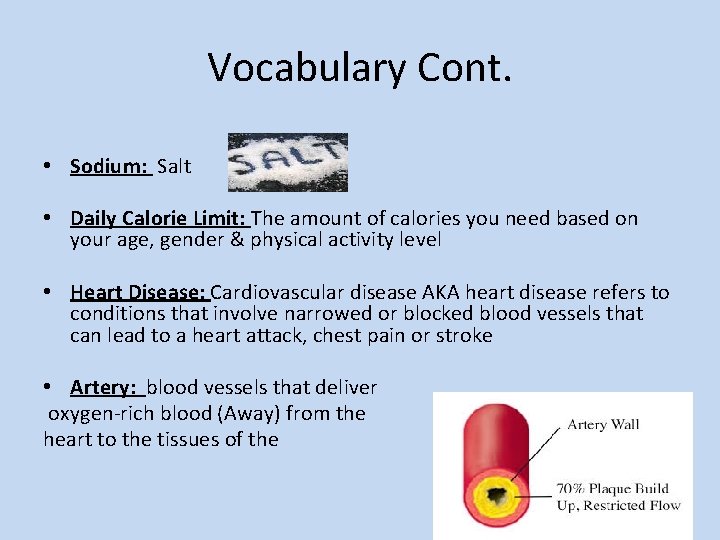
Vocabulary Cont. • Sodium: Salt • Daily Calorie Limit: The amount of calories you need based on your age, gender & physical activity level • Heart Disease: Cardiovascular disease AKA heart disease refers to conditions that involve narrowed or blocked blood vessels that can lead to a heart attack, chest pain or stroke • Artery: blood vessels that deliver oxygen-rich blood (Away) from the heart to the tissues of the
Measurements • Every food or drink that you write down, needs a measurement. • Cups (C): – yogurt, cereal, pasta, rice and ice cream • Ounces (OZ. ) – used for liquids, meats & fish • Tablespoon (TBSP): most commonly the spoon you use at home. – sauces, condiments such as ketchup • Teaspoon (TSP) – sauces, condiments such as ketchup
Food Logs • Graded on accuracy • The more accurate the easier it is to input into Super Tracker program • This activity/project is totally beneficial for YOU not me. • Creates awareness such as: – Eating too little/too much – Trends – Sugar/sodium(salt) intake
Tracking food & Exercise Meal Monday Breakfast 2 cups whole grain lucky charms with 1 cup 2% organic milk. 8 ounces Florida orange juice, pulp free. snack 1 cup blueberry Yoplait yogurt. 10 ounces of water Lunch Salami sandwich. Whole grain bread, 4 pieces of hard salami. Teaspoon of un-salted butter. 1 slice American cheese. 12 ounces of water. 1 regular sized banana. 1 chocolate chip cookie. Snack None (6 ounces of water) Dinner 3. 5 cups of whole grain spaghetti with 1. 5 cups of Paul Newman's sauce. 1 regular size whole grain breadstick. 12 ounces of 2% organic milk. Snack 1 Dairy Queen chocolate dilly bar. 8 ounces of water Exercise Walked 5, 000 steps. Golfed 9 holes with cart
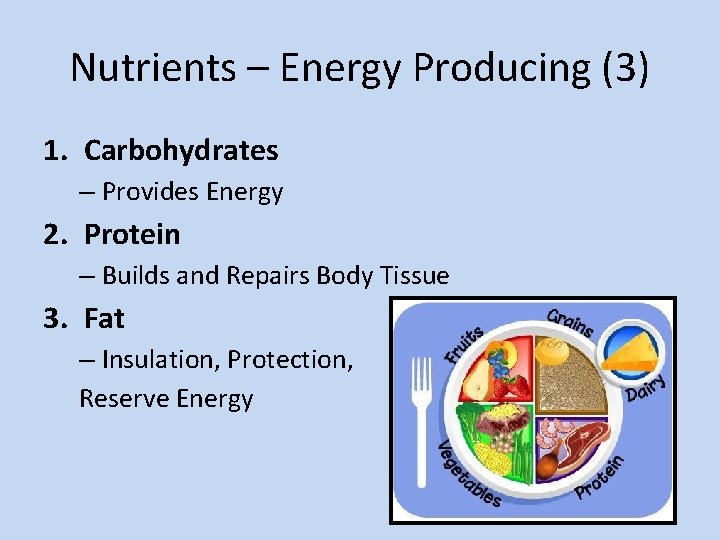
Nutrients – Energy Producing (3) 1. Carbohydrates – Provides Energy 2. Protein – Builds and Repairs Body Tissue 3. Fat – Insulation, Protection, Reserve Energy
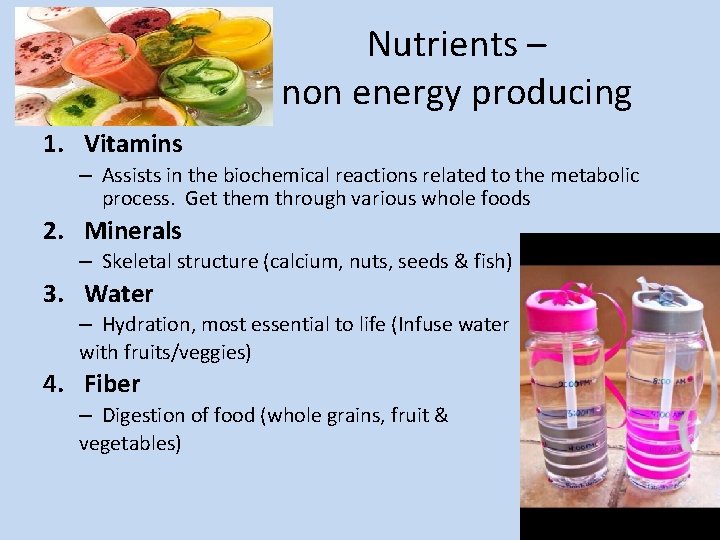
Nutrients – non energy producing 1. Vitamins – Assists in the biochemical reactions related to the metabolic process. Get them through various whole foods 2. Minerals – Skeletal structure (calcium, nuts, seeds & fish) 3. Water – Hydration, most essential to life (Infuse water with fruits/veggies) 4. Fiber – Digestion of food (whole grains, fruit & vegetables)
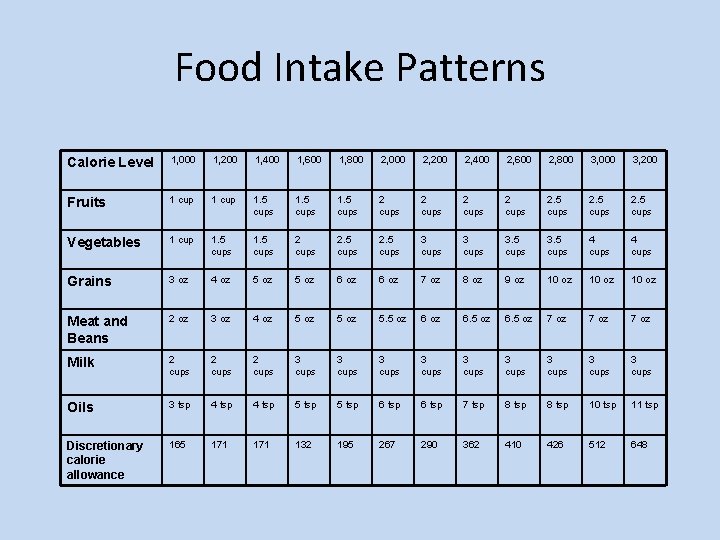
Food Intake Patterns Calorie Level 1, 000 1, 200 1, 400 1, 600 1, 800 2, 000 2, 200 2, 400 2, 600 2, 800 3, 000 3, 200 Fruits 1 cup 1. 5 cups 2 cups 2. 5 cups Vegetables 1 cup 1. 5 cups 2. 5 cups 3. 5 cups 4 cups Grains 3 oz 4 oz 5 oz 6 oz 7 oz 8 oz 9 oz 10 oz Meat and Beans 2 oz 3 oz 4 oz 5. 5 oz 6. 5 oz 7 oz Milk 2 cups 3 cups 3 cups 3 cups Oils 3 tsp 4 tsp 5 tsp 6 tsp 7 tsp 8 tsp 10 tsp 11 tsp Discretionary calorie allowance 165 171 132 195 267 290 362 410 426 512 648
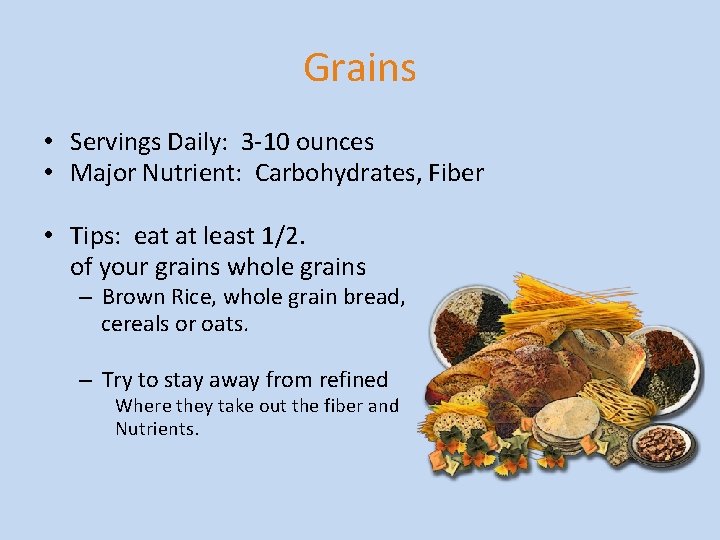
Grains • Servings Daily: 3 -10 ounces • Major Nutrient: Carbohydrates, Fiber • Tips: eat at least 1/2. of your grains whole grains – Brown Rice, whole grain bread, cereals or oats. – Try to stay away from refined Where they take out the fiber and Nutrients.
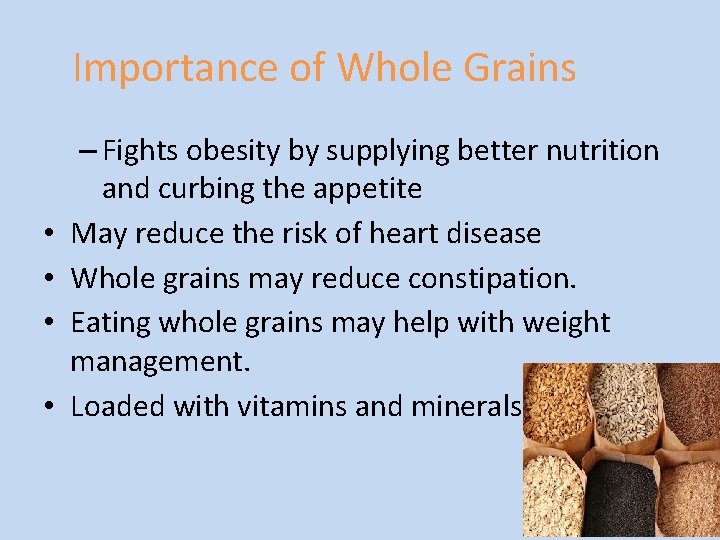
Importance of Whole Grains • • – Fights obesity by supplying better nutrition and curbing the appetite May reduce the risk of heart disease Whole grains may reduce constipation. Eating whole grains may help with weight management. Loaded with vitamins and minerals
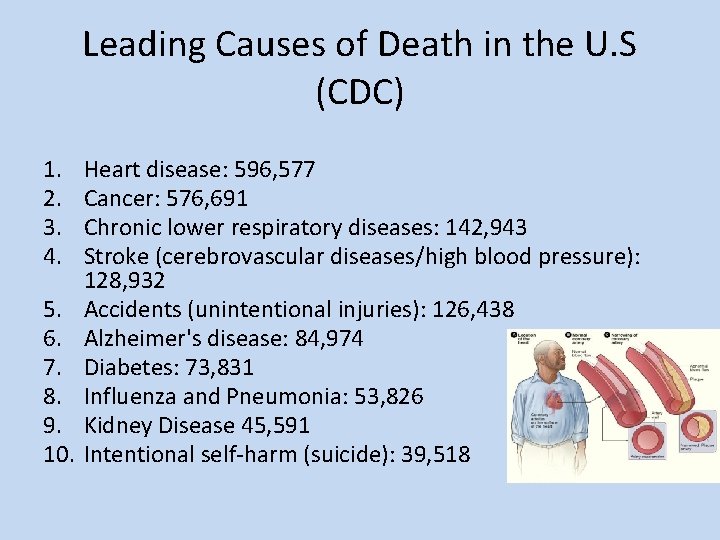
Leading Causes of Death in the U. S (CDC) 1. 2. 3. 4. 5. 6. 7. 8. 9. 10. Heart disease: 596, 577 Cancer: 576, 691 Chronic lower respiratory diseases: 142, 943 Stroke (cerebrovascular diseases/high blood pressure): 128, 932 Accidents (unintentional injuries): 126, 438 Alzheimer's disease: 84, 974 Diabetes: 73, 831 Influenza and Pneumonia: 53, 826 Kidney Disease 45, 591 Intentional self-harm (suicide): 39, 518
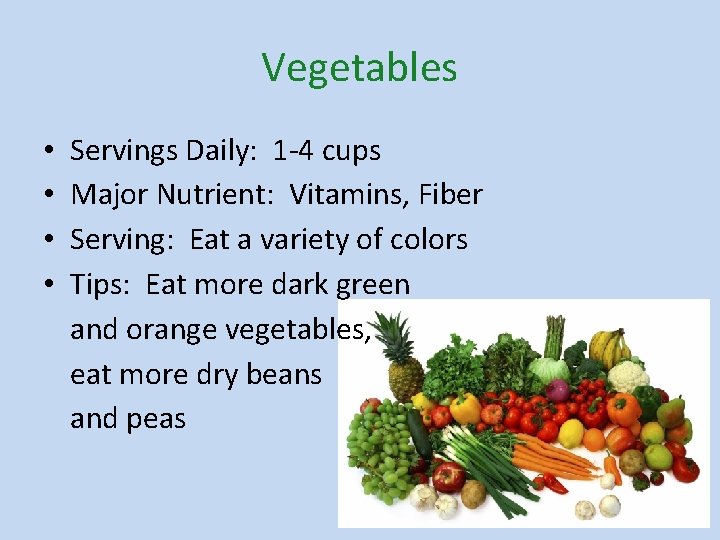
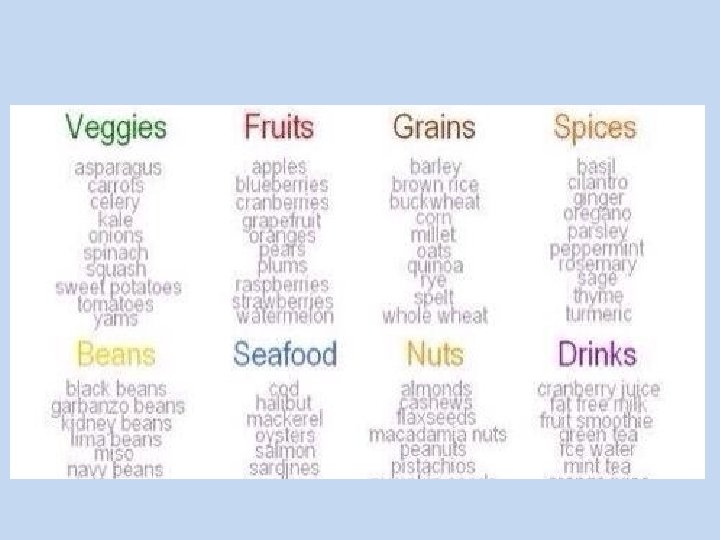
Vegetables • • Servings Daily: 1 -4 cups Major Nutrient: Vitamins, Fiber Serving: Eat a variety of colors Tips: Eat more dark green and orange vegetables, eat more dry beans and peas
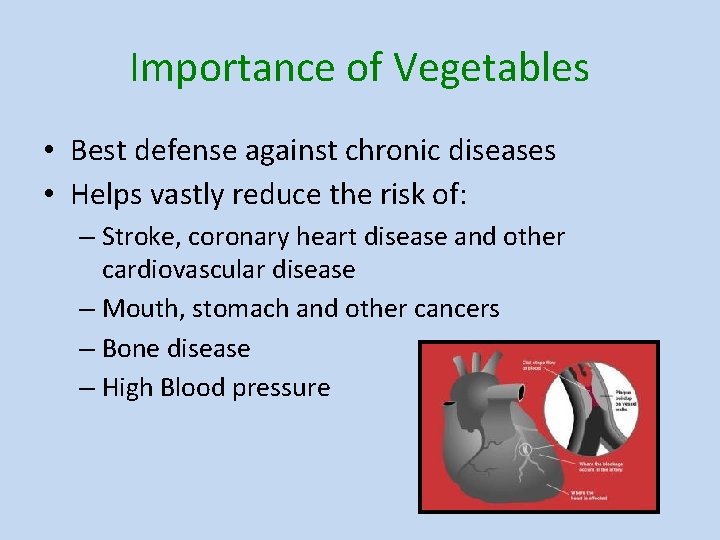
Importance of Vegetables • Best defense against chronic diseases • Helps vastly reduce the risk of: – Stroke, coronary heart disease and other cardiovascular disease – Mouth, stomach and other cancers – Bone disease – High Blood pressure
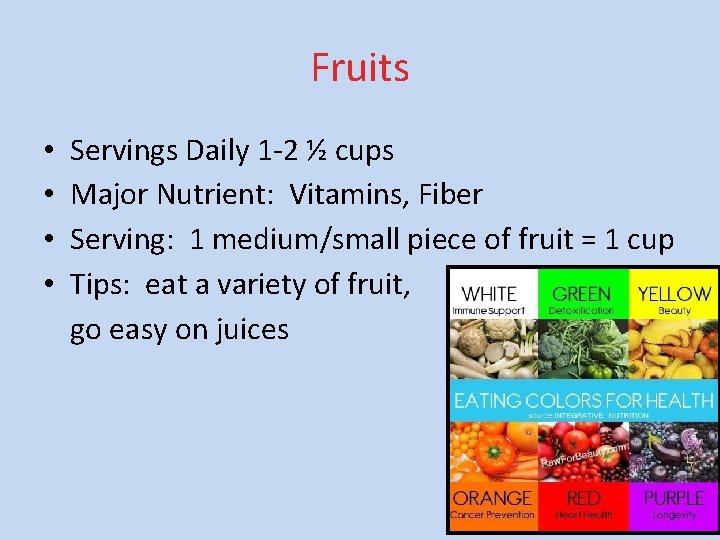
Fruits • • Servings Daily 1 -2 ½ cups Major Nutrient: Vitamins, Fiber Serving: 1 medium/small piece of fruit = 1 cup Tips: eat a variety of fruit, go easy on juices
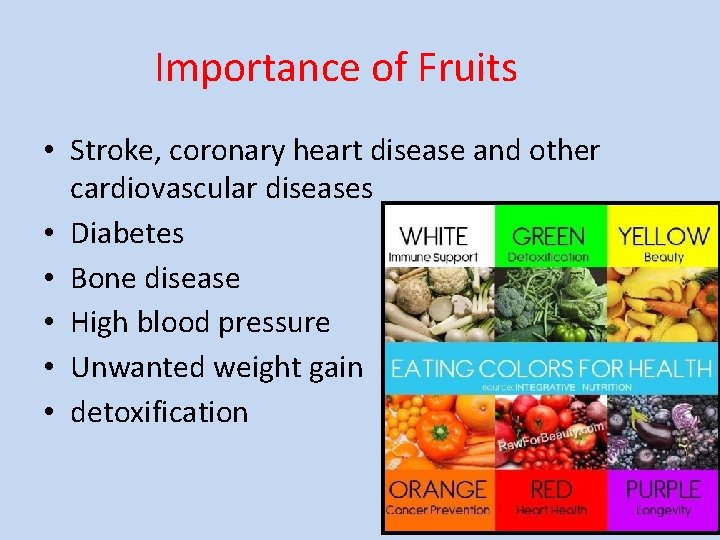
Importance of Fruits • Stroke, coronary heart disease and other cardiovascular diseases • Diabetes • Bone disease • High blood pressure • Unwanted weight gain • detoxification
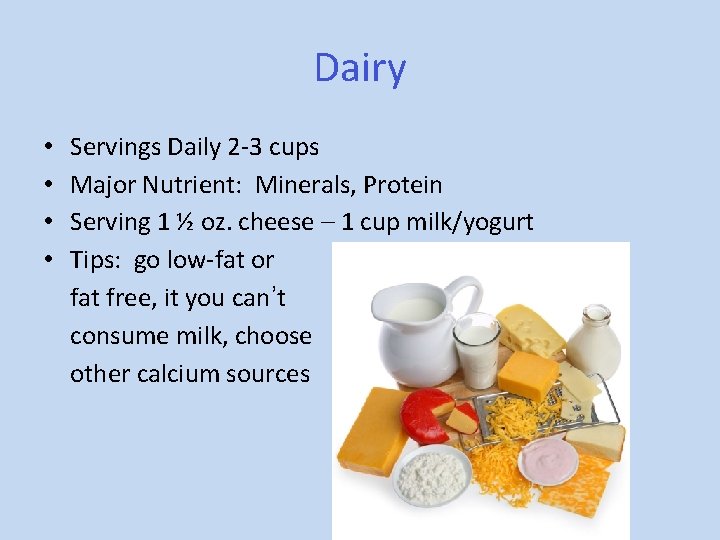
Dairy • • Servings Daily 2 -3 cups Major Nutrient: Minerals, Protein Serving 1 ½ oz. cheese – 1 cup milk/yogurt Tips: go low-fat or fat free, it you can’t consume milk, choose other calcium sources
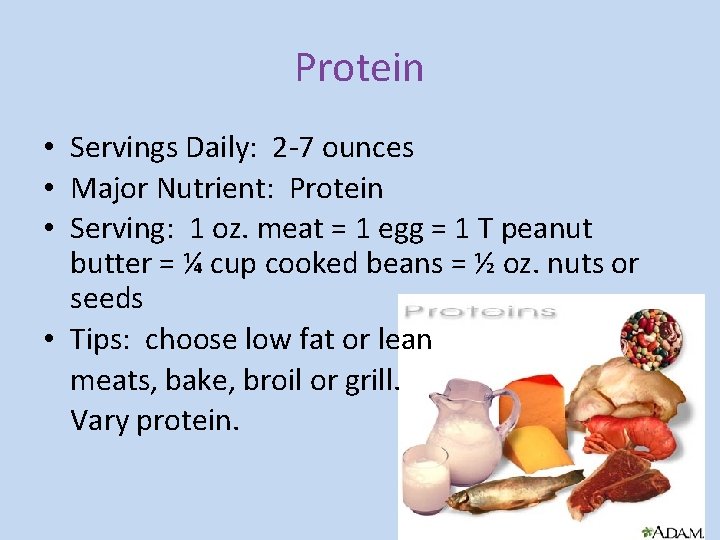
Protein • Servings Daily: 2 -7 ounces • Major Nutrient: Protein • Serving: 1 oz. meat = 1 egg = 1 T peanut butter = ¼ cup cooked beans = ½ oz. nuts or seeds • Tips: choose low fat or lean meats, bake, broil or grill. Vary protein.
Oils • Servings Daily: 3 -11 teaspoons • Major Nutrient: Fat • Serving: Watch for it in foods such as nuts, olives, mayonnaise, salad dressing • Tips: Use canola, olive, peanut, soybean, corn safflower or sunflower oil.
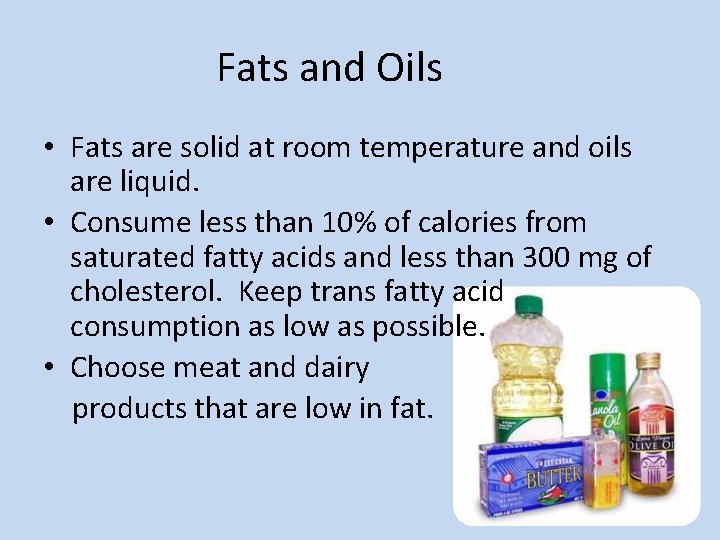
Fats and Oils • Fats are solid at room temperature and oils are liquid. • Consume less than 10% of calories from saturated fatty acids and less than 300 mg of cholesterol. Keep trans fatty acid consumption as low as possible. • Choose meat and dairy products that are low in fat.
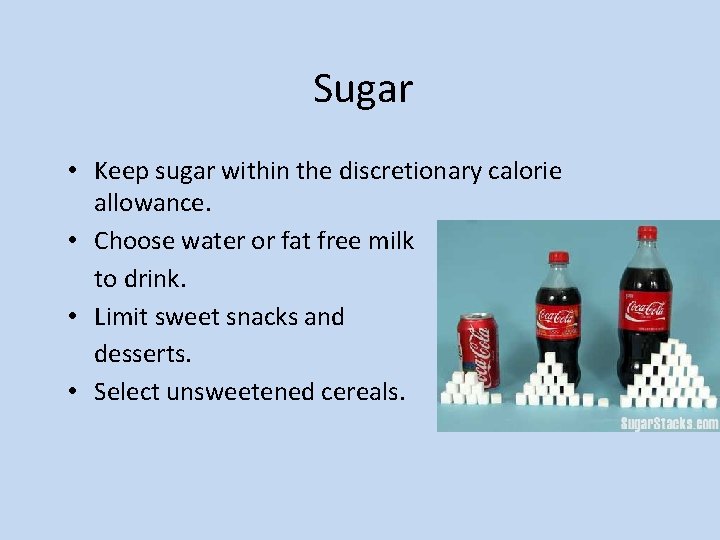
Sugar • Keep sugar within the discretionary calorie allowance. • Choose water or fat free milk to drink. • Limit sweet snacks and desserts. • Select unsweetened cereals.
The foods that are sooo good but yet bad for you…Lifestyle Choices, MODERATION!! • Soda & your body • Fast food & your body

Soda & Your Body
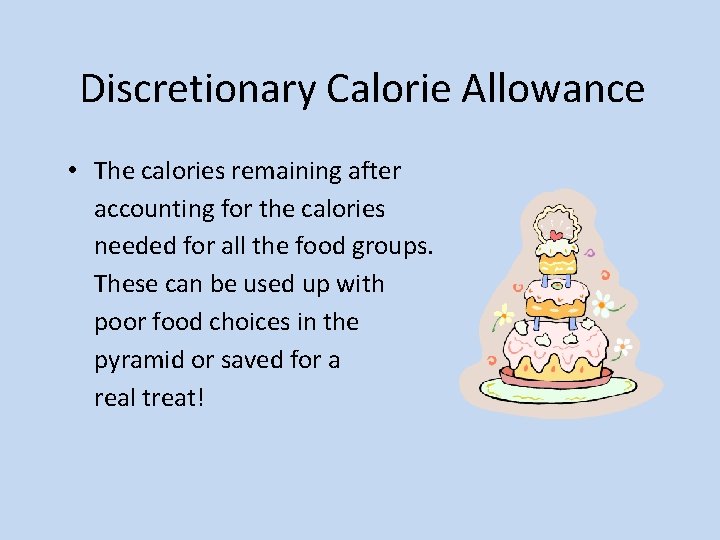
Discretionary Calorie Allowance • The calories remaining after accounting for the calories needed for all the food groups. These can be used up with poor food choices in the pyramid or saved for a real treat!
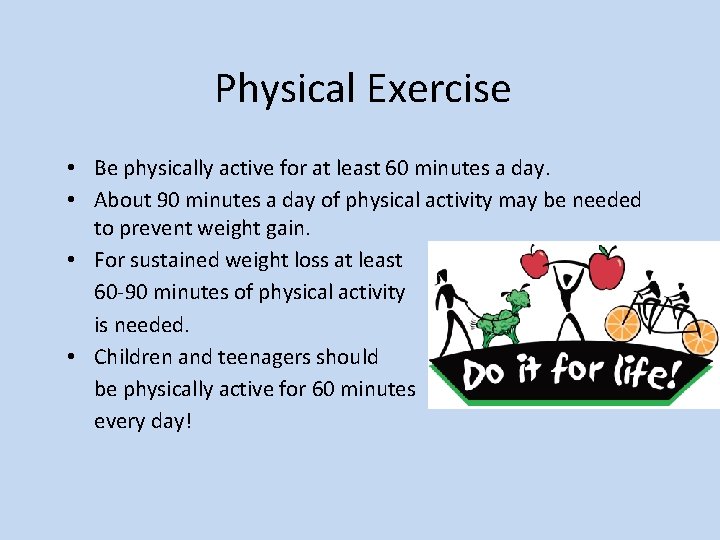
Physical Exercise • Be physically active for at least 60 minutes a day. • About 90 minutes a day of physical activity may be needed to prevent weight gain. • For sustained weight loss at least 60 -90 minutes of physical activity is needed. • Children and teenagers should be physically active for 60 minutes every day!
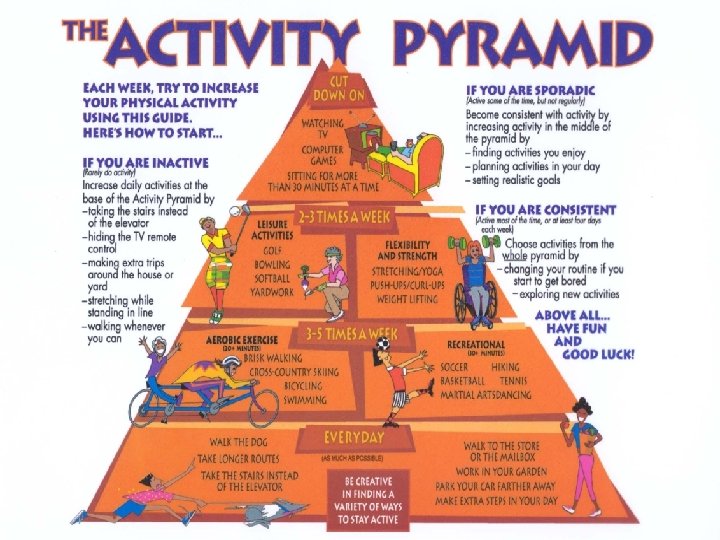
Types of Exercise • Moderate: – Moderate-intensity aerobic activity is any activity that causes a slight but noticeable increase in breathing and heart rate. • Vigorous: – Vigorous-intensity aerobic activity causes more rapid breathing and a greater increase in heart rate ***Keep in mind that what feels like moderate activity for one person may actually be very vigorous activity for another

How much water do we need? • http: //www. healthcaremagic. com/Water. Consumption. Calculator? utm_content=buffer 44 ae 7&utm_ medium=social&utm_source=twitter. com&ut m_campaign=buffer
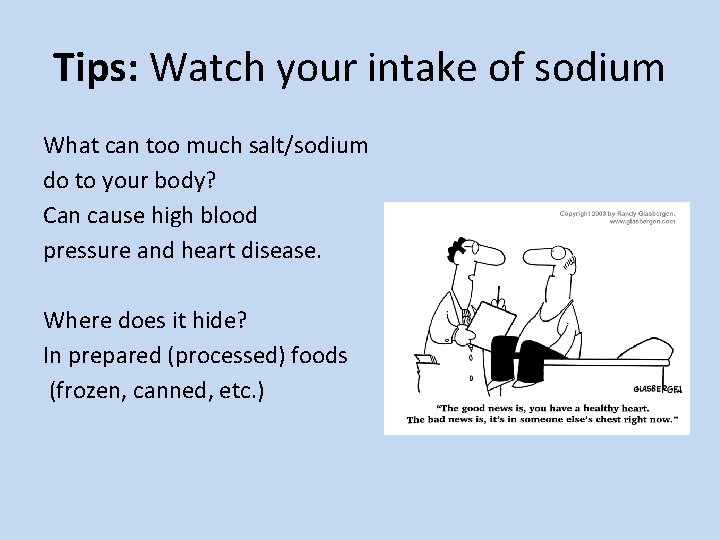
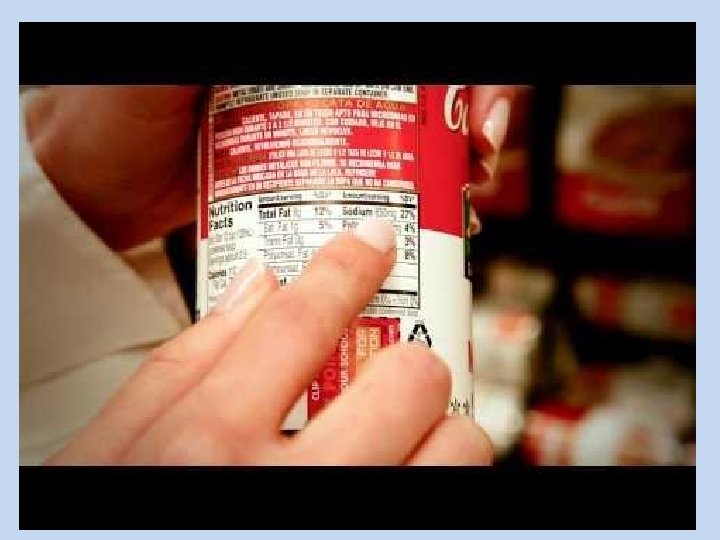
Tips: Watch your intake of sodium What can too much salt/sodium do to your body? Can cause high blood pressure and heart disease. Where does it hide? In prepared (processed) foods (frozen, canned, etc. )
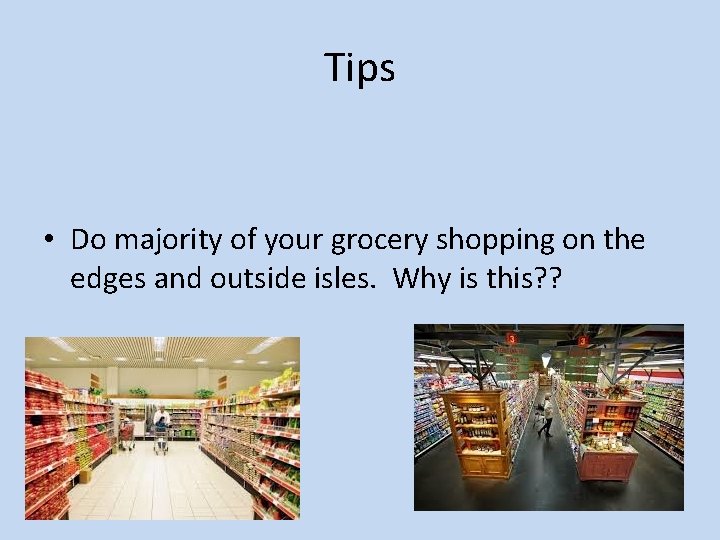
Tips • Do majority of your grocery shopping on the edges and outside isles. Why is this? ?
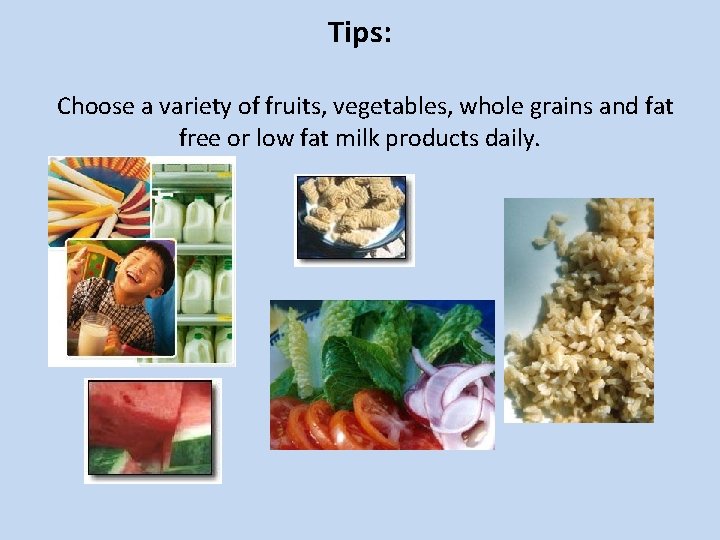
Tips: Choose a variety of fruits, vegetables, whole grains and fat free or low fat milk products daily.
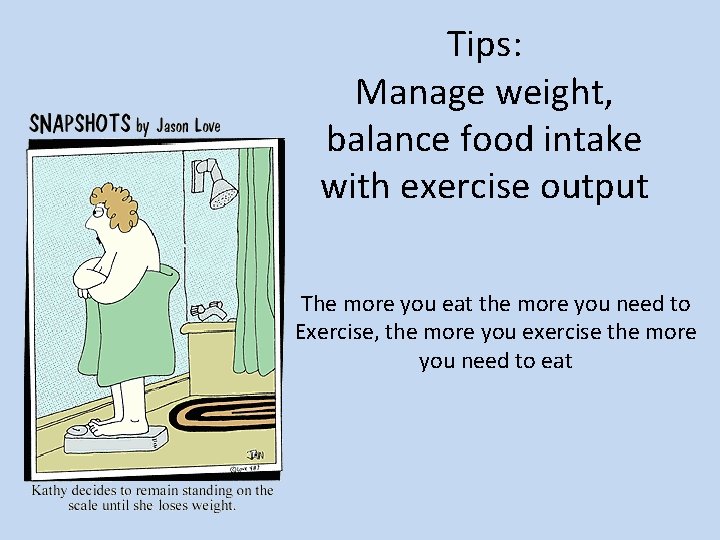
Tips: Manage weight, balance food intake with exercise output The more you eat the more you need to Exercise, the more you exercise the more you need to eat
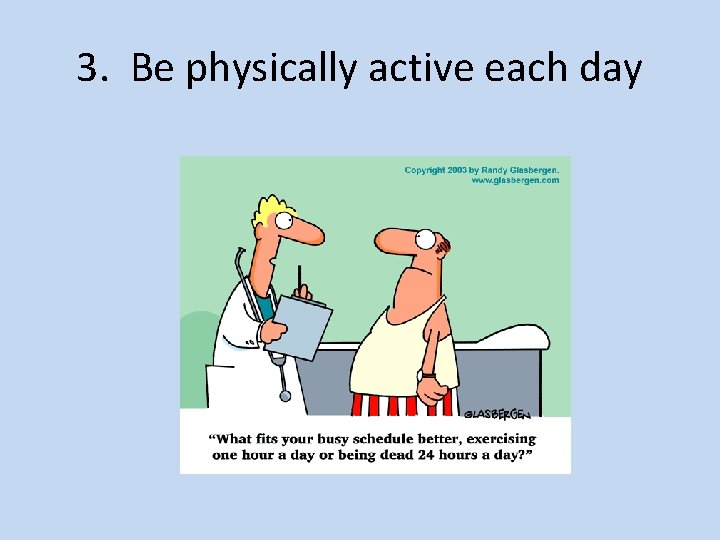
3. Be physically active each day
- Slides: 49