
Teen Numbers Partitioning MATHS YEAR 1 TERM 1
Teen Numbers Partitioning MATHS YEAR 1 TERM 1, WEEK 3, 2017
Monday - Teen Numbers WALT WILF – identify, represent and order ‘teen’ numbers. – is students to identify, sequence and represent teen number using materials.
Warm Up http: //www. youtube. com/watch? v=WGa 2 c. Vlu Gn. U (teens)

I DO Teen Numbers Today, you will find and make ‘teen’ numbers and put them in order. Teen numbers are the numbers that are between 10 and 20. They are 11, 12, 13, 14, 15, 16, 17, 18 and 19.
WE D 0 Teen Numbers In groups, sort cards numbered 11 – 19 in order. match words to the numbers. Using blocks/counters, show teen numbers to match the numerals
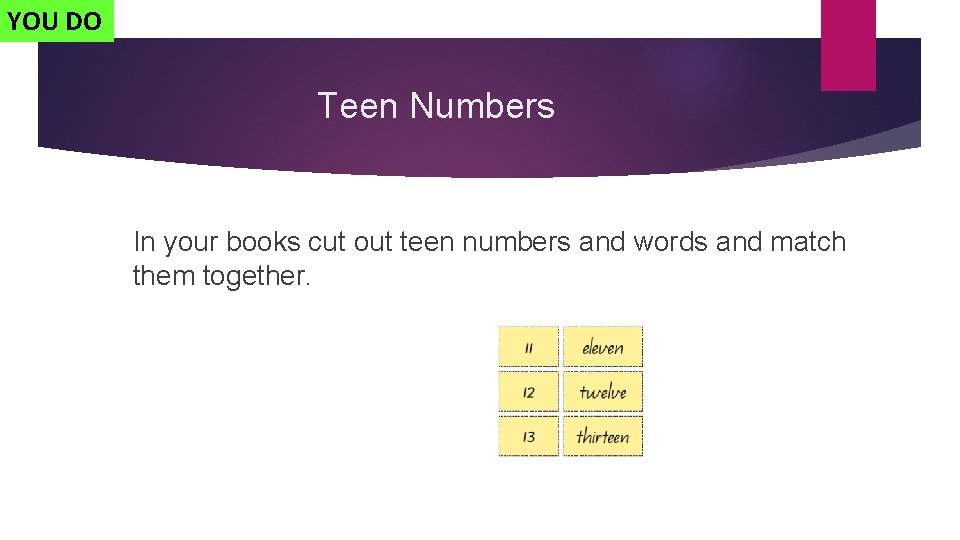
YOU DO Teen Numbers In your books cut out teen numbers and words and match them together.
Reflection/Ploughback Was I was able to count in match teen numbers in words, numerals and pictures from any starting number. Let’s check!
Tuesday - Teen Numbers WALT – use standard place value partitioning to represent ‘teen’ numbers. WILF – is students to partition teen numbers into 'tens' and 'ones’.

Warm Up Let's Get Fit | Count to 100 Song | Counting to 100 | Jack Hartmann https: //www. youtube. com/watch? v=0 Tg. Lt. F 3 PMOc Count by 2 | Dancing 2's | Skip Counting by 2 | Count to 100 | Educational Songs | Jack Hartmann https: //www. youtube. com/watch? v=OCxv. Ntrc. DIs
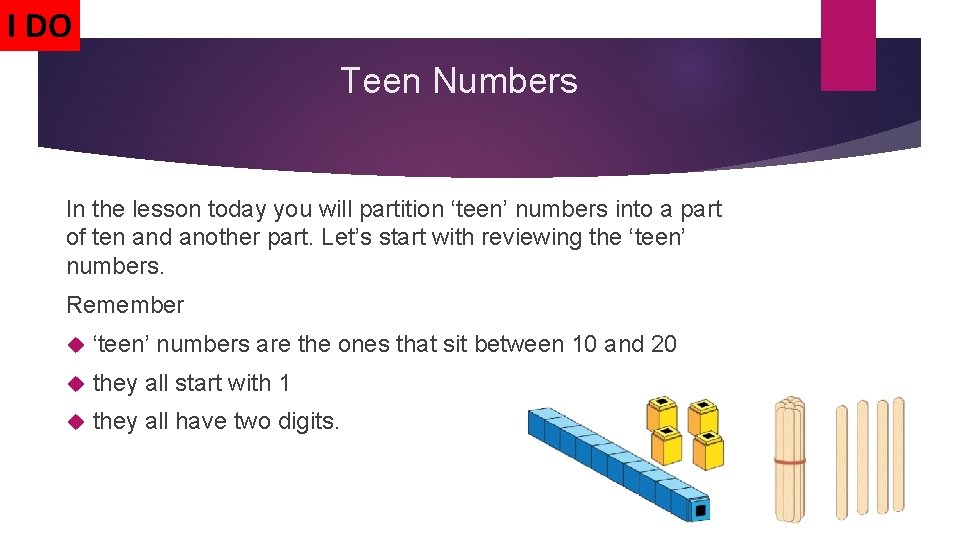
I DO Teen Numbers In the lesson today you will partition ‘teen’ numbers into a part of ten and another part. Let’s start with reviewing the ‘teen’ numbers. Remember ‘teen’ numbers are the ones that sit between 10 and 20 they all start with 1 they all have two digits.
WE D 0 Teen Numbers We are going to make teen numbers. All teen numbers have ‘ 1 ten’, so lets all make 1 ten using the same coloured blocks. Next, make another ‘ 1 ten’ of different coloured blocks. We have made 20 - 2 parts of ten. We will now make 14. We will need 1 part of ten, and another part of 4. Using your two different coloured blocks, can you show me 14?
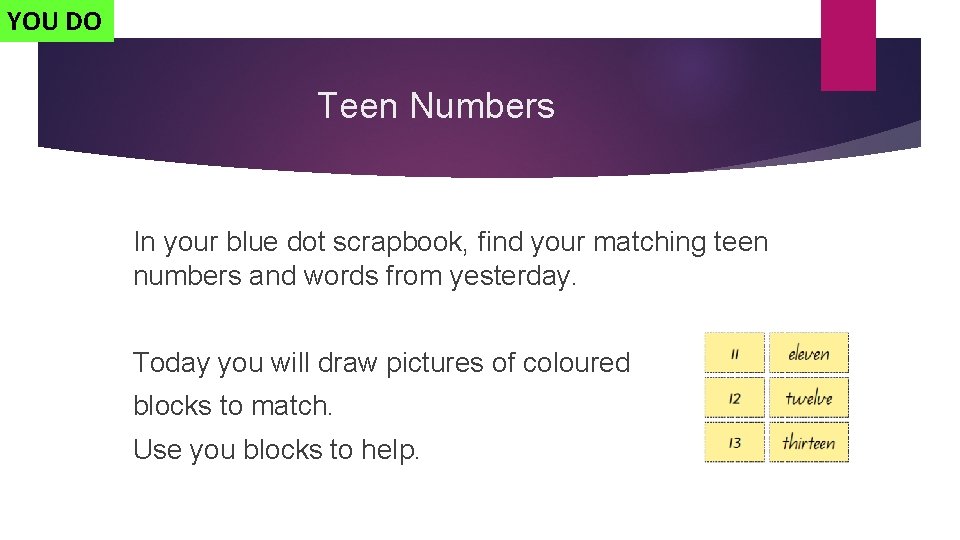
YOU DO Teen Numbers In your blue dot scrapbook, find your matching teen numbers and words from yesterday. Today you will draw pictures of coloured blocks to match. Use you blocks to help.
Reflection/Ploughback Was I was able to make teen numbers and match them to words and numerals. Let’s check!
Wednesday - Teen Numbers WALT – describe and interpret visual representations of the parts of a whole WILF – is students to partition a collection and describe the parts of a whole
Warm Up http: //www. youtube. com/watch? v=5 W 47 Gh 7 my. Y (place value)
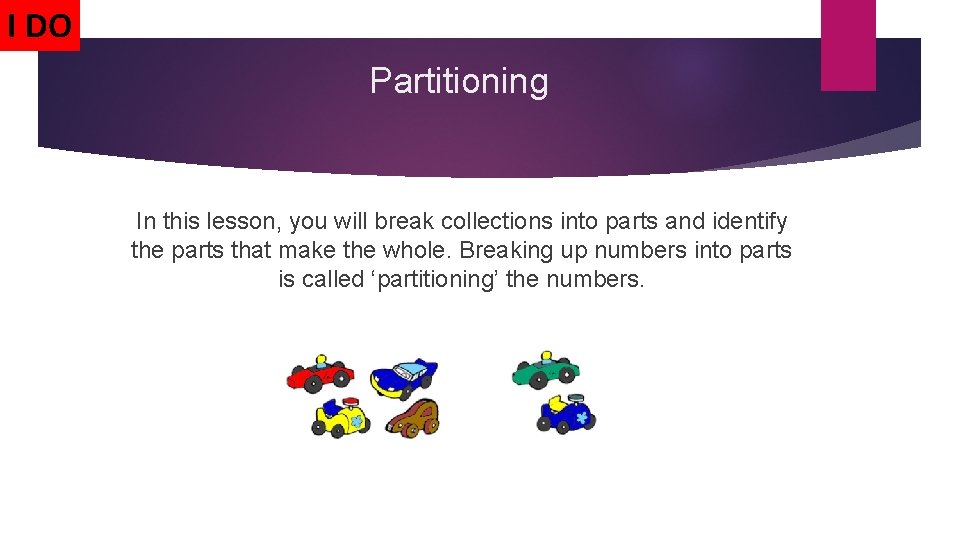
I DO Partitioning In this lesson, you will break collections into parts and identify the parts that make the whole. Breaking up numbers into parts is called ‘partitioning’ the numbers.
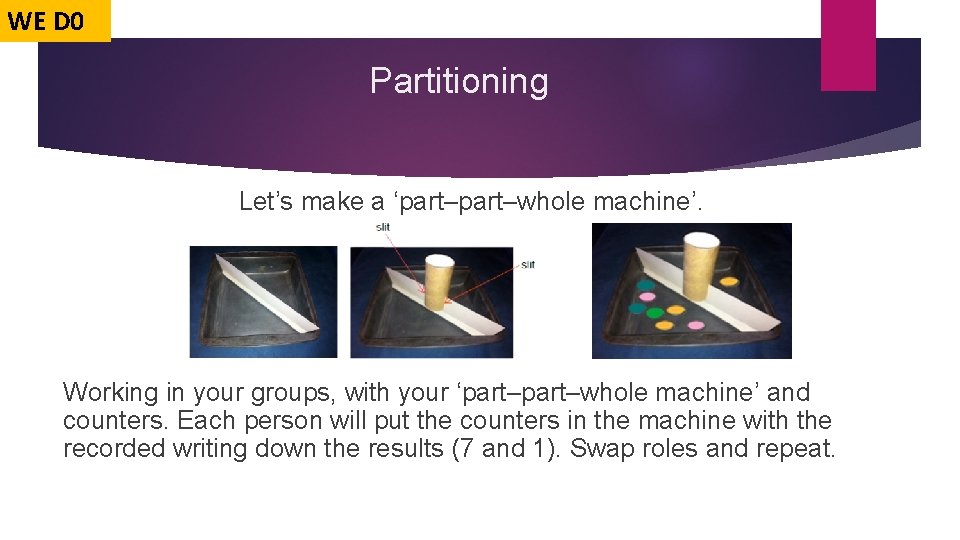
WE D 0 Partitioning Let’s make a ‘part–whole machine’. Working in your groups, with your ‘part–whole machine’ and counters. Each person will put the counters in the machine with the recorded writing down the results (7 and 1). Swap roles and repeat.
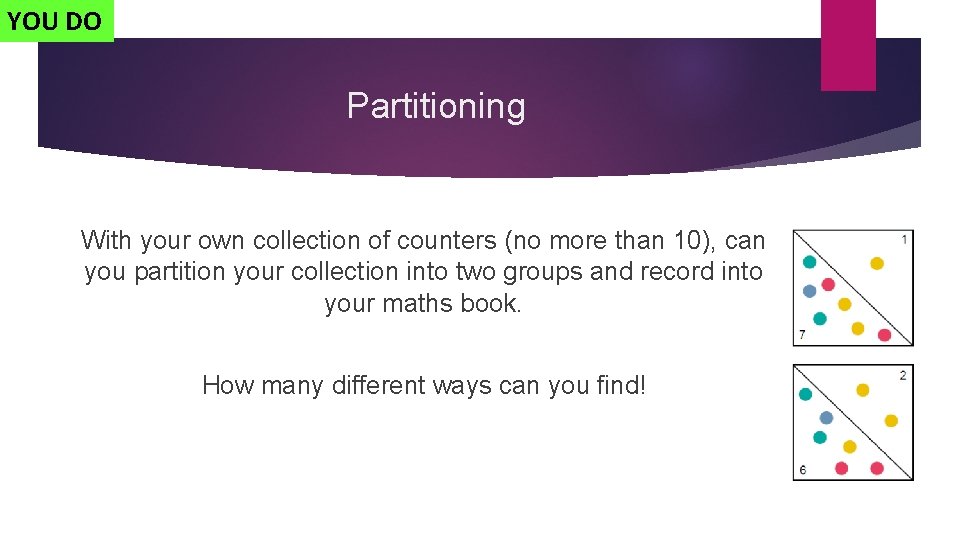
YOU DO Partitioning With your own collection of counters (no more than 10), can you partition your collection into two groups and record into your maths book. How many different ways can you find!
Reflection/Ploughback Was I was able to partition a small collection? Let’s check!
Thursday - Partitioning WALT - identify parts of a collection and describe collections by referring to the parts and the whole. WILF – use a ten frame to partition a collection
Warm Up Heads Together You will need a whiteboard, whiteboard pen and sock.
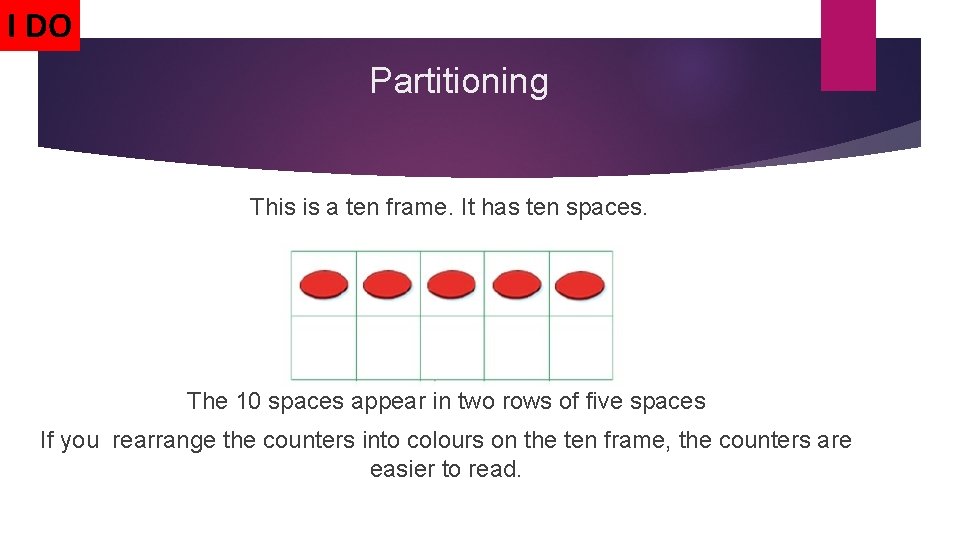
I DO Partitioning This is a ten frame. It has ten spaces. The 10 spaces appear in two rows of five spaces If you rearrange the counters into colours on the ten frame, the counters are easier to read.
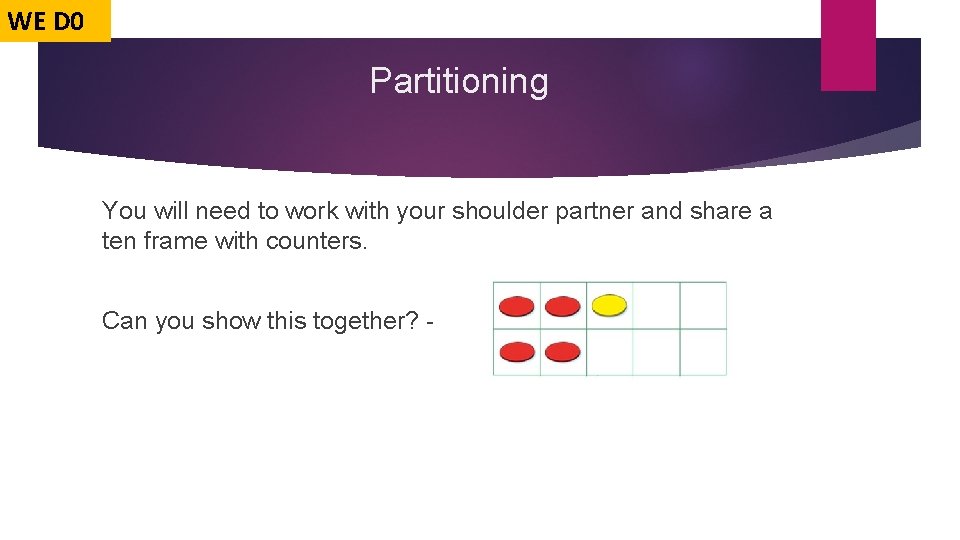
WE D 0 Partitioning You will need to work with your shoulder partner and share a ten frame with counters. Can you show this together? -
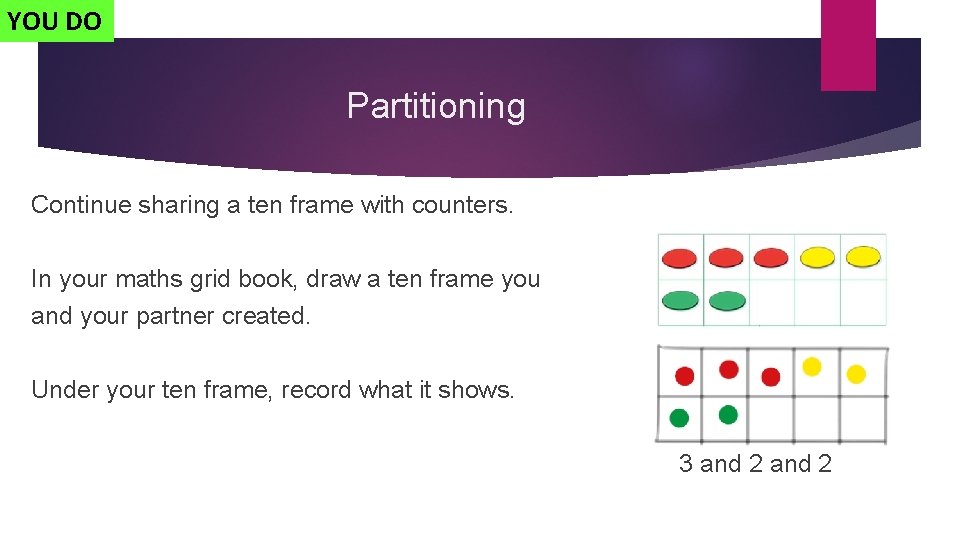
YOU DO Partitioning Continue sharing a ten frame with counters. In your maths grid book, draw a ten frame you and your partner created. Under your ten frame, record what it shows. 3 and 2
Reflection/Ploughback Was I was able to use a ten frame to partition a collection? Let’s check!
- Slides: 25