
Teen Drinking The Brain Mondays Lesson Understanding how
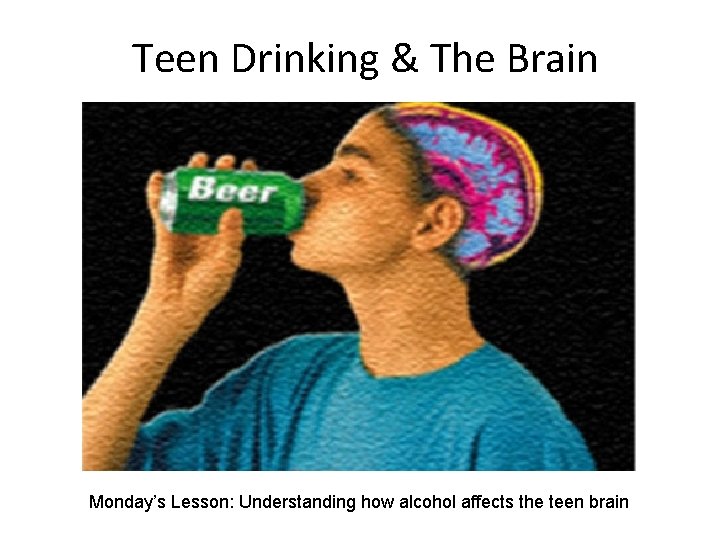
Teen Drinking & The Brain Monday’s Lesson: Understanding how alcohol affects the teen brain
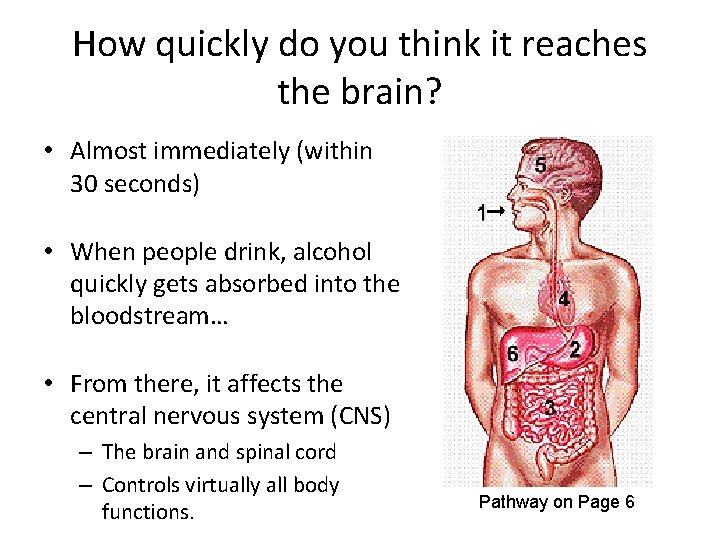
How quickly do you think it reaches the brain? • Almost immediately (within 30 seconds) • When people drink, alcohol quickly gets absorbed into the bloodstream… • From there, it affects the central nervous system (CNS) – The brain and spinal cord – Controls virtually all body functions. Pathway on Page 6
What’s the big deal? Experts now know that drinking as a teen: causes the greatest damage to the development of the brain KEEP IN MIND THE FRONTAL LOBE OF THE BRAIN IS NOT FULLY DEVELOPED UNTIL YOUR MID-20’S
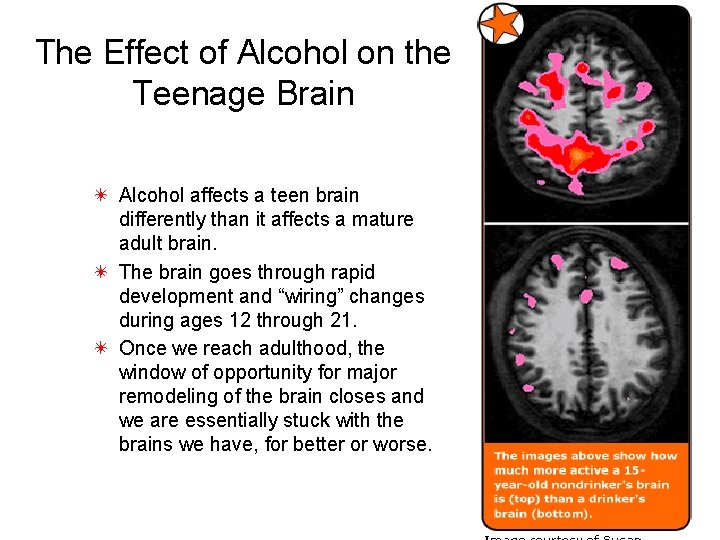
The Effect of Alcohol on the Teenage Brain ✴ Alcohol affects a teen brain differently than it affects a mature adult brain. ✴ The brain goes through rapid development and “wiring” changes during ages 12 through 21. ✴ Once we reach adulthood, the window of opportunity for major remodeling of the brain closes and we are essentially stuck with the brains we have, for better or worse.
Initial Affects… • Small amounts LOWER a person’s Inhibitions: – Definition: Their conscious or unconscious ability to hold back certain behaviors, impulses, or desires – At first it makes the person feel relaxed & more social Often leading people to drink more, and more before they realize the real affects…so why does this matter?
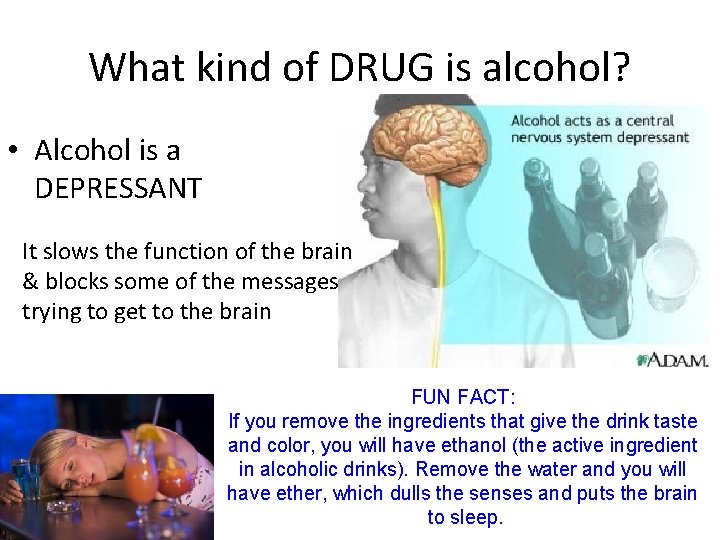
What kind of DRUG is alcohol? • Alcohol is a DEPRESSANT It slows the function of the brain & blocks some of the messages trying to get to the brain FUN FACT: If you remove the ingredients that give the drink taste and color, you will have ethanol (the active ingredient in alcoholic drinks). Remove the water and you will have ether, which dulls the senses and puts the brain to sleep.
How does it affect the Limbic System? • Emotions: – Feeling depressed • 300 suicides per year associated with drinking alcohol (people under 21) – Oversensitive • Crying • Angry • Saying things you wouldn’t normally say • Starting fights for no reason • Memory: – Blacking out and not knowing what you did while you were drinking – Affects long-term memory & process of learning • Learning: – Rewires brain’s network – Kills brain cells – overall ability to learn and retain information – Suffers the worst alcohol-related brain damage in teens (can be 10% smaller in underage drinkers)
How does it affect the Brain Stem? • • • Breathing rate is slowed Body temperature decreases Can lead to unconsciousness & coma Alcohol poisoning- vomiting Death

How does it affect the Cerebellum? • • • Balance is off Can’t stand up straight Falling and staggering Loss of coordination Slowed reaction time (can’t move as quickly)
How does it affect the cerebral cortex? • Lowers inhibitions: conscious or unconscious ability to hold back certain behaviors, impulses, or desires • Poor judgment/ decision-making: – Thinking you can drive a car (1, 900 deaths per year from drinking and driving for people under 21 years old) – Taking part in risky behaviors: falls, starting a fight, feeling invincible, unintended sexual activity (leading to unintended pregnancy), using other drugs while under the influence, etc. – Continuously drinking even after you’ve had too much (nothing telling you to stop or that you’ve had too much) • Slows ability to process and can affect reasoning • Affects senses: – Poor vision (think back to drunk goggles) – Slurred speech
✴If we take good care of our brains during adolescence, we will reap the benefits for life. ✴Unfortunately, the opposite is also true. ✴So take good care of your brain! It’s the only one you will ever have!
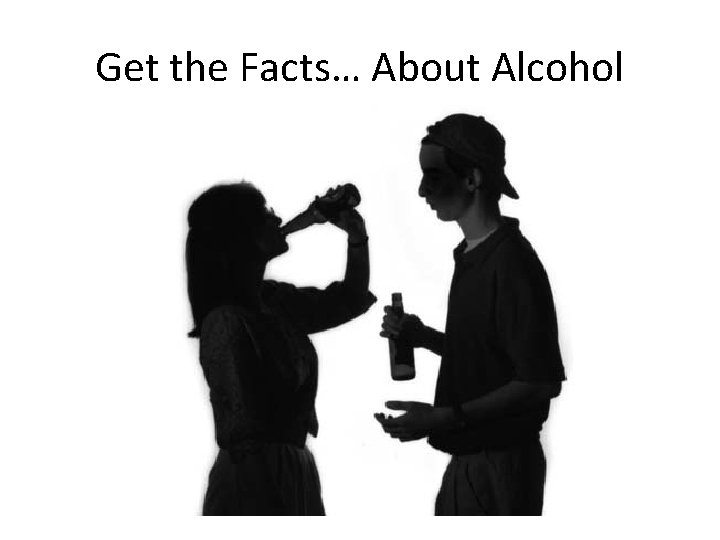
Get the Facts… About Alcohol
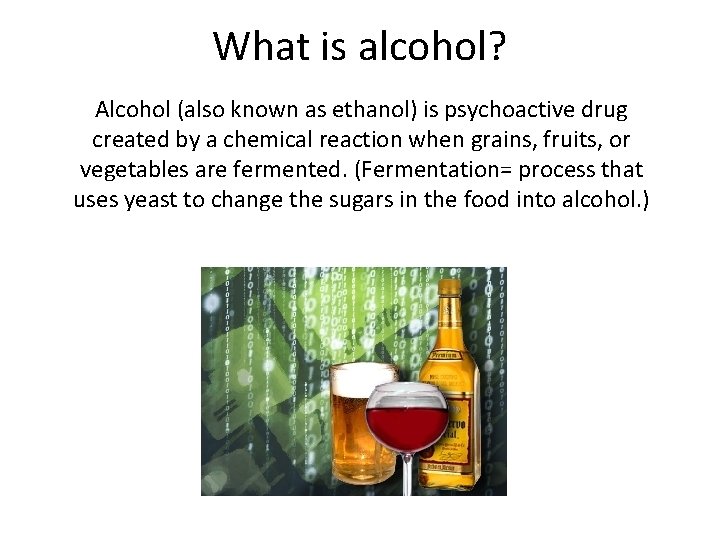
What is alcohol? Alcohol (also known as ethanol) is psychoactive drug created by a chemical reaction when grains, fruits, or vegetables are fermented. (Fermentation= process that uses yeast to change the sugars in the food into alcohol. )
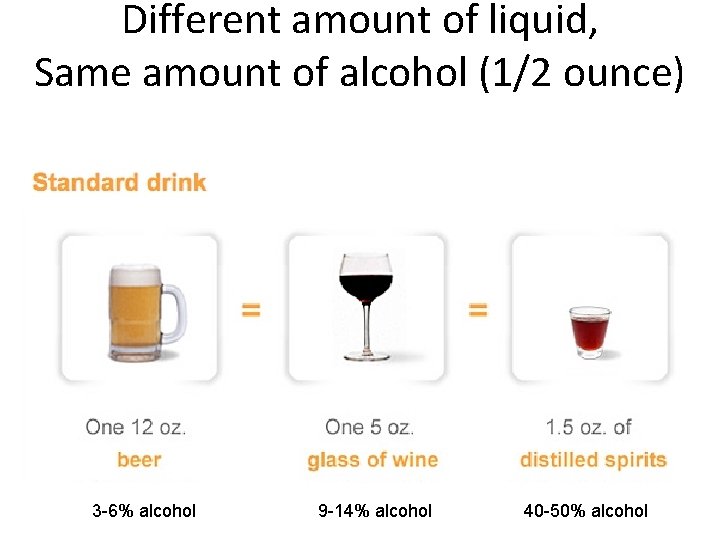
Different amount of liquid, Same amount of alcohol (1/2 ounce) 3 -6% alcohol 9 -14% alcohol 40 -50% alcohol
Even after a couple drinks someone can become…. • Intoxicated or drunk
How alcohol affects a person depends on… • Worksheet on p. 5 in packet
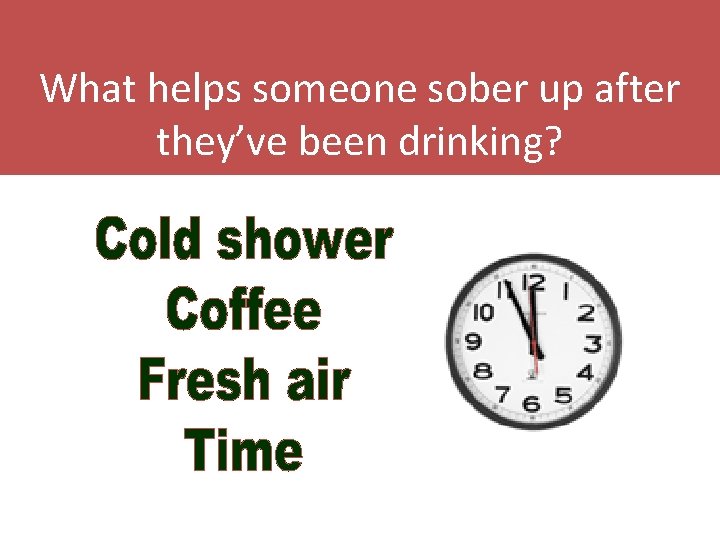
What helps someone sober up after they’ve been drinking?
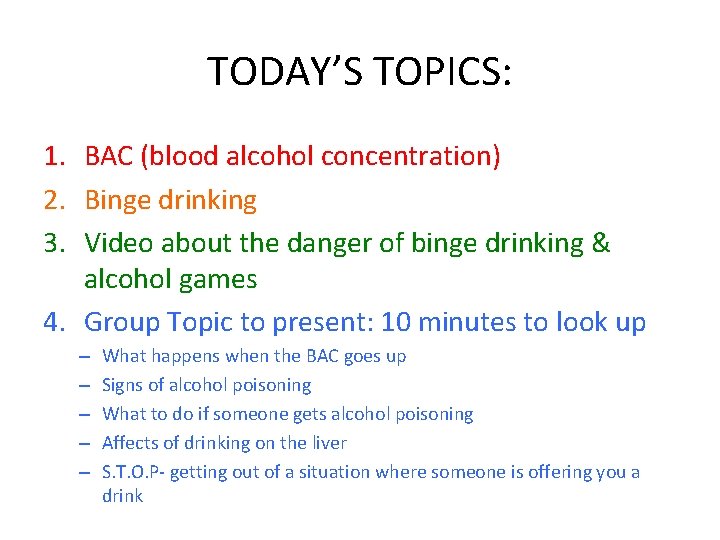
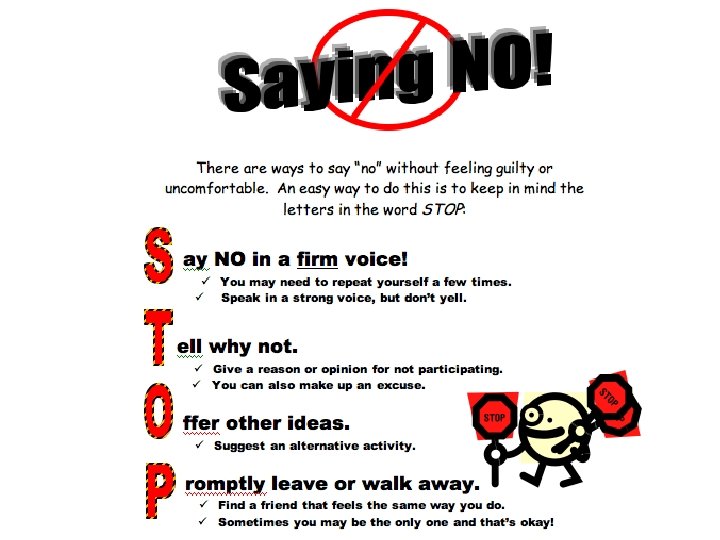
TODAY’S TOPICS: 1. BAC (blood alcohol concentration) 2. Binge drinking 3. Video about the danger of binge drinking & alcohol games 4. Group Topic to present: 10 minutes to look up – – – What happens when the BAC goes up Signs of alcohol poisoning What to do if someone gets alcohol poisoning Affects of drinking on the liver S. T. O. P- getting out of a situation where someone is offering you a drink
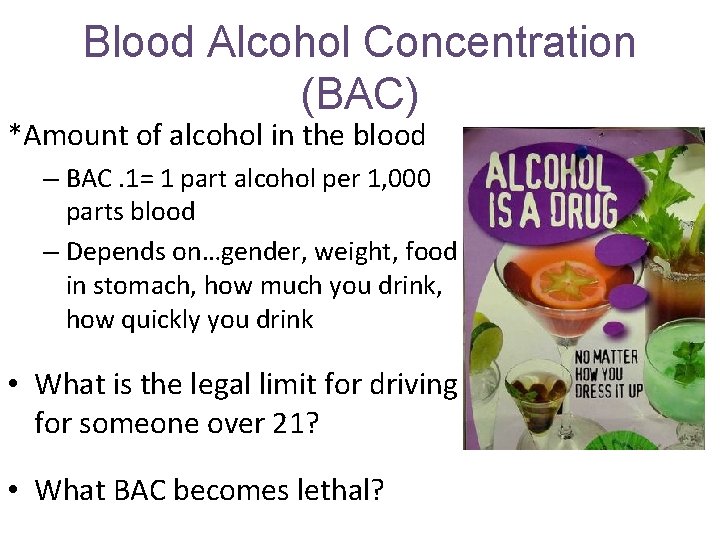
Blood Alcohol Concentration (BAC) *Amount of alcohol in the blood – BAC. 1= 1 part alcohol per 1, 000 parts blood – Depends on…gender, weight, food in stomach, how much you drink, how quickly you drink • What is the legal limit for driving for someone over 21? • What BAC becomes lethal?
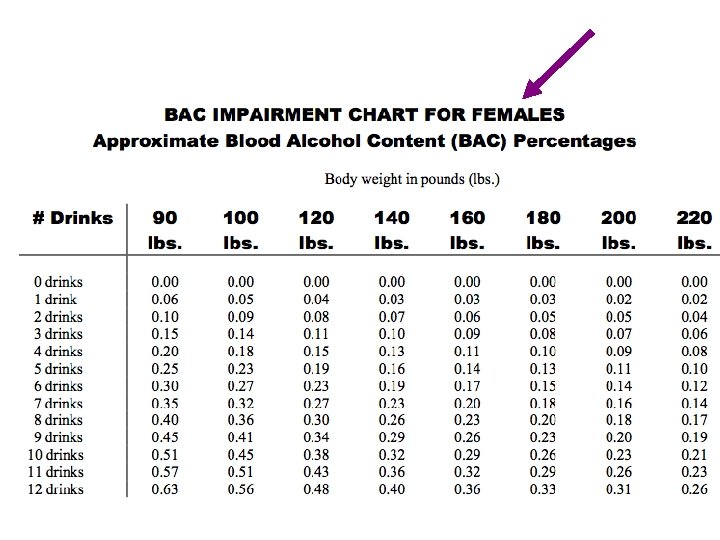
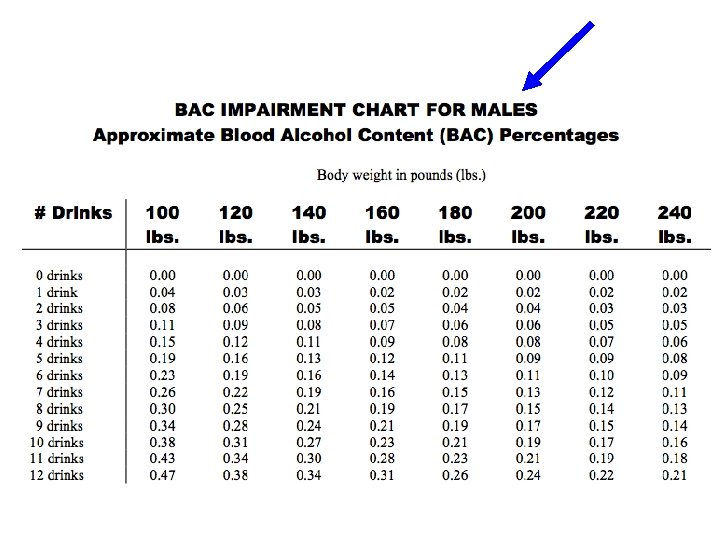
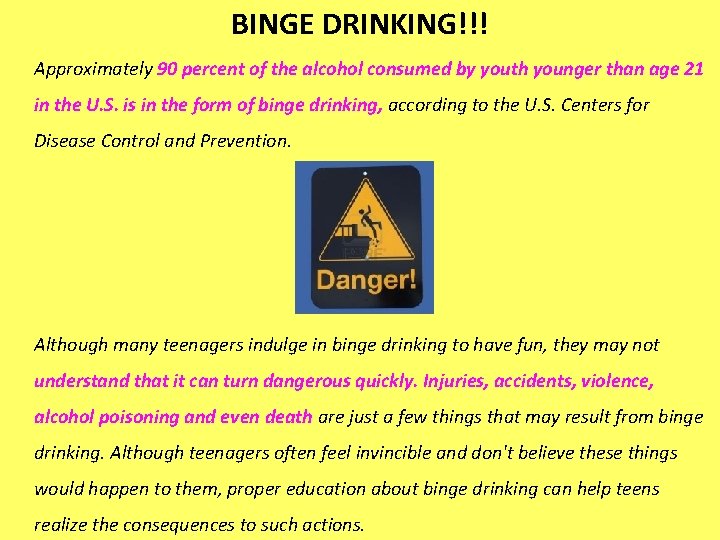
BINGE DRINKING!!! Approximately 90 percent of the alcohol consumed by youth younger than age 21 in the U. S. is in the form of binge drinking, according to the U. S. Centers for Disease Control and Prevention. Although many teenagers indulge in binge drinking to have fun, they may not understand that it can turn dangerous quickly. Injuries, accidents, violence, alcohol poisoning and even death are just a few things that may result from binge drinking. Although teenagers often feel invincible and don't believe these things would happen to them, proper education about binge drinking can help teens realize the consequences to such actions.
What is binge drinking?

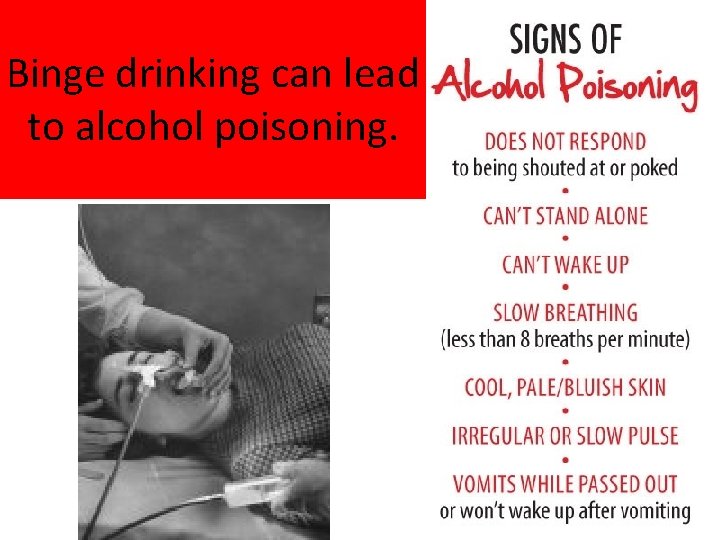
Binge drinking can lead to alcohol poisoning.
• DON’T… be afraid to call 911 because you think you or the victim will get in trouble for drinking. If you don’t act, the victim could die. • DON’T… give the victim food, coffee, or a cold shower. None of these will help sober her up. • DON’T… tell the victim to sleep it off. • DON’T… leave the victim alone.
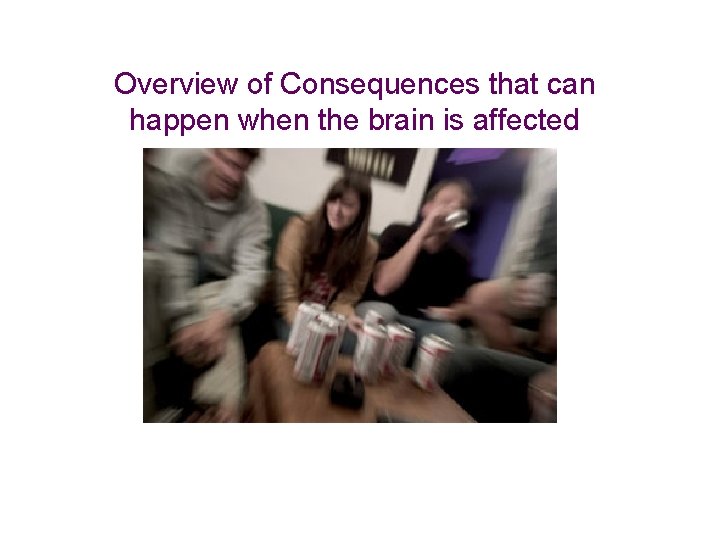
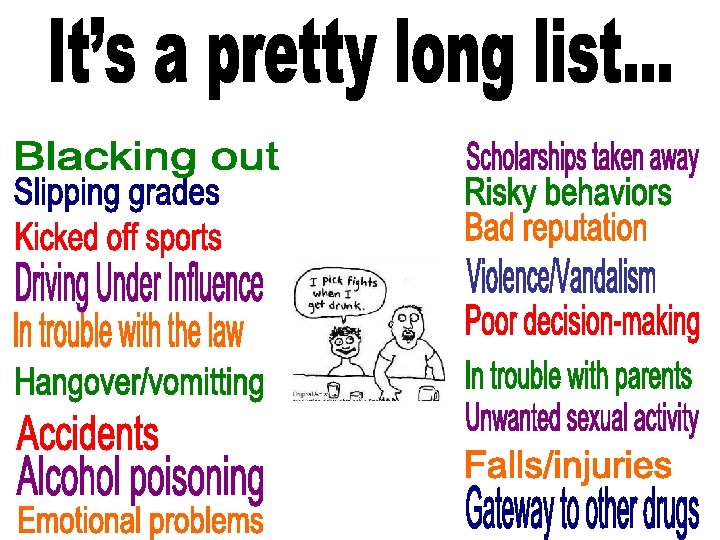
Overview of Consequences that can happen when the brain is affected
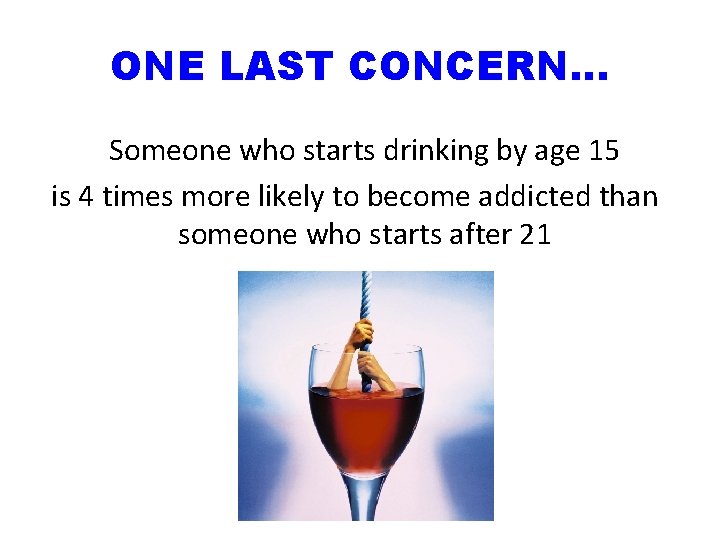
ONE LAST CONCERN… Someone who starts drinking by age 15 is 4 times more likely to become addicted than someone who starts after 21
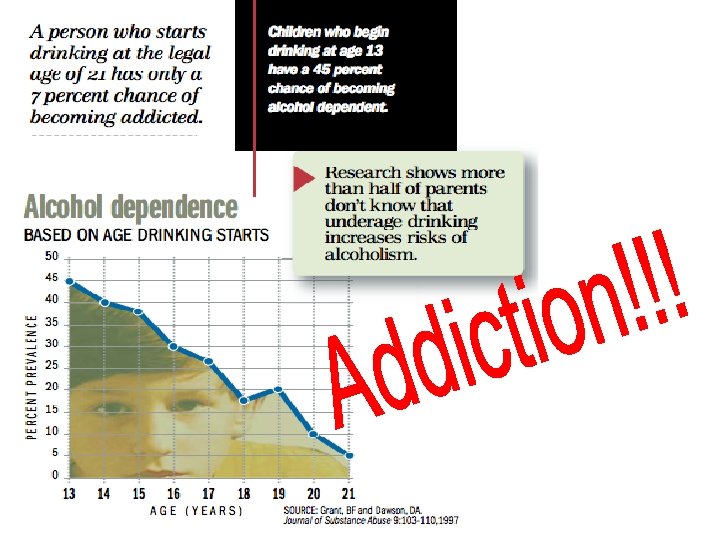
How does it get started? ? ” It starts with experimentation and occasional use [to] the actual loss of control of use. ” Imagine a person that "wants to stop doing something and they cannot, despite catastrophic consequences, "
1. A chronic, but treatable, brain disorder. 2. It physically changes the brain by taking over the “pleasure center” of the brain and acting as the chemical dopamine (which naturally leads to feelings of pleasure). 3. The drug becomes necessary for survival, it’s as powerful as that. The body cannot function without it. Living without the drug is like living without food. 4. Alcoholics cannot control their need for alcohol, even in the face of: • negative health • social or • legal consequences
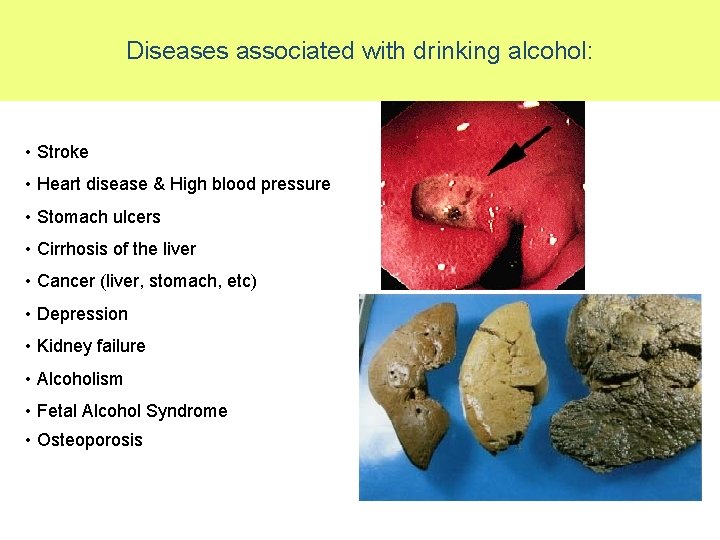
Diseases associated with drinking alcohol: • Stroke • Heart disease & High blood pressure • Stomach ulcers • Cirrhosis of the liver • Cancer (liver, stomach, etc) • Depression • Kidney failure • Alcoholism • Fetal Alcohol Syndrome • Osteoporosis
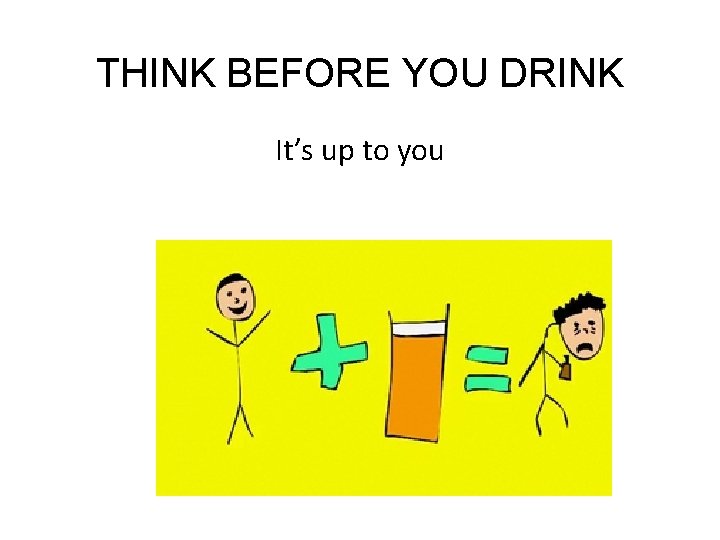
THINK BEFORE YOU DRINK It’s up to you
- Slides: 35