
Teddy Roosevelt Progressive Reformer President from 1901 to
- Slides: 18
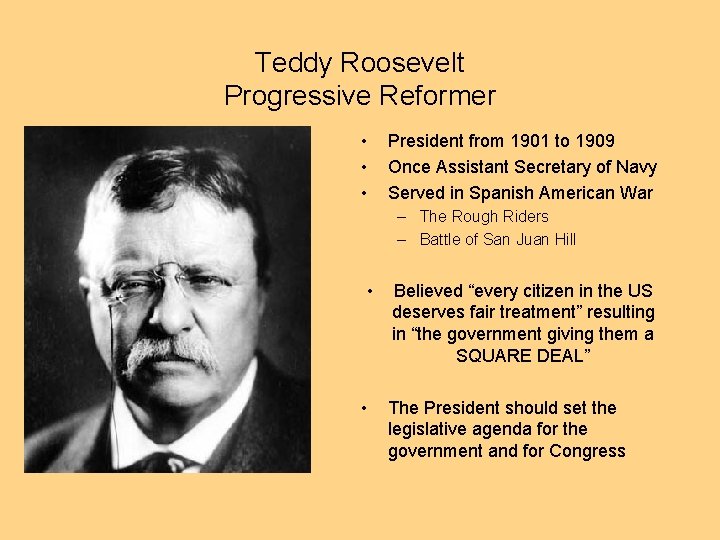
Teddy Roosevelt Progressive Reformer • • • President from 1901 to 1909 Once Assistant Secretary of Navy Served in Spanish American War – The Rough Riders – Battle of San Juan Hill • • Believed “every citizen in the US deserves fair treatment” resulting in “the government giving them a SQUARE DEAL” The President should set the legislative agenda for the government and for Congress
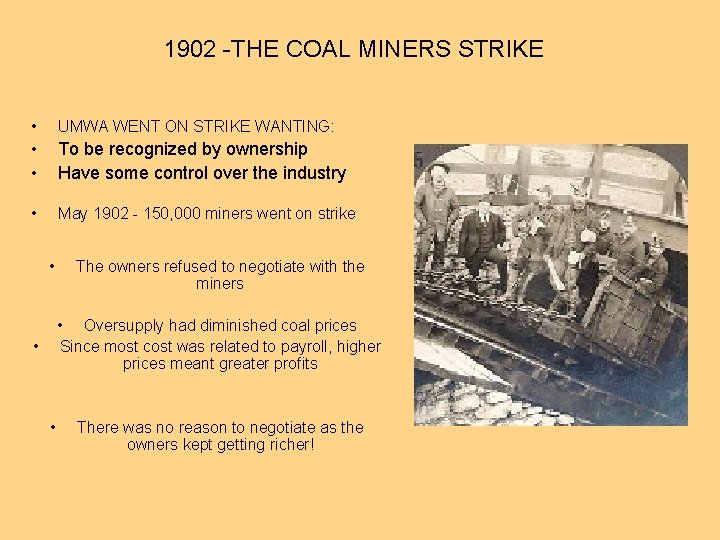
1902 -THE COAL MINERS STRIKE • UMWA WENT ON STRIKE WANTING: • • To be recognized by ownership Have some control over the industry • May 1902 - 150, 000 miners went on strike • The owners refused to negotiate with the miners • Oversupply had diminished coal prices Since most cost was related to payroll, higher prices meant greater profits • • There was no reason to negotiate as the owners kept getting richer!
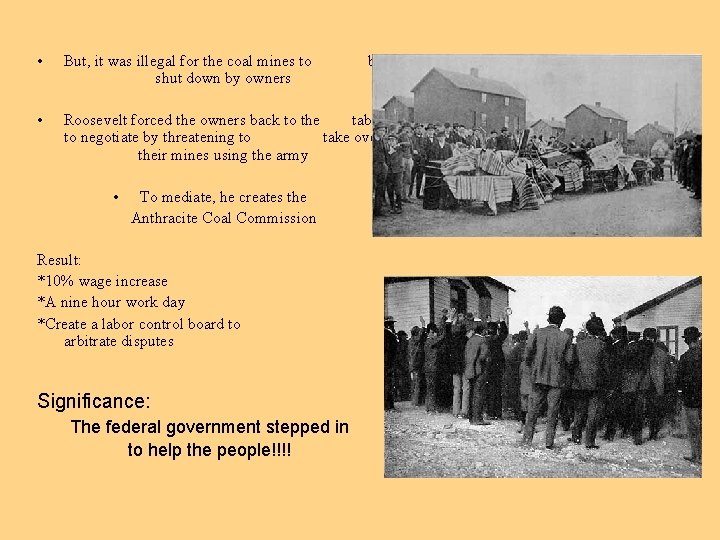
• But, it was illegal for the coal mines to shut down by owners • Roosevelt forced the owners back to the table to negotiate by threatening to take over their mines using the army • To mediate, he creates the Anthracite Coal Commission Result: *10% wage increase *A nine hour work day *Create a labor control board to arbitrate disputes Significance: The federal government stepped in to help the people!!!! be
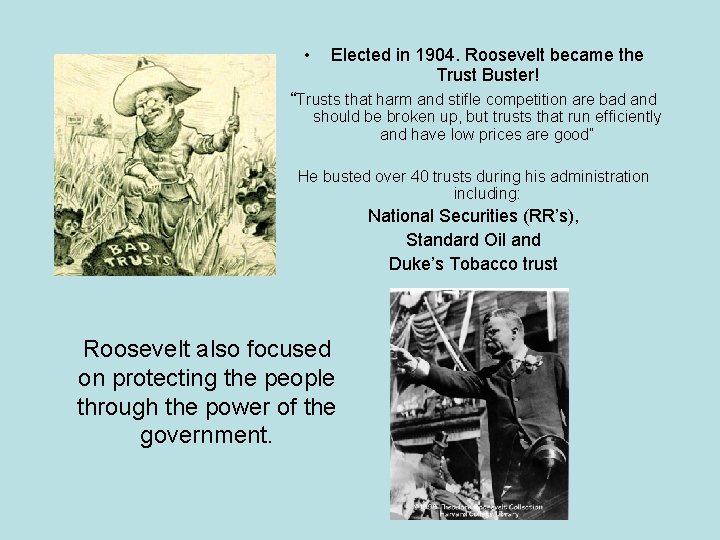
• Elected in 1904. Roosevelt became the Trust Buster! “Trusts that harm and stifle competition are bad and should be broken up, but trusts that run efficiently and have low prices are good” He busted over 40 trusts during his administration including: National Securities (RR’s), Standard Oil and Duke’s Tobacco trust Roosevelt also focused on protecting the people through the power of the government.
Consumer protection laws: • Elkins Act - prevented railroad rebates to favored customers • Hepburn Act - government could set just and reasonable rates - access to financial records for taxation • The Meat Inspection Act - Federal inspectors were allowed to inspect meat processing facilities at any time • Pure Food And Drug Act - manufacture and sale of impure drugs is forbidden - products must be tested to prove a “cure” occurs - items labeled with ingredients
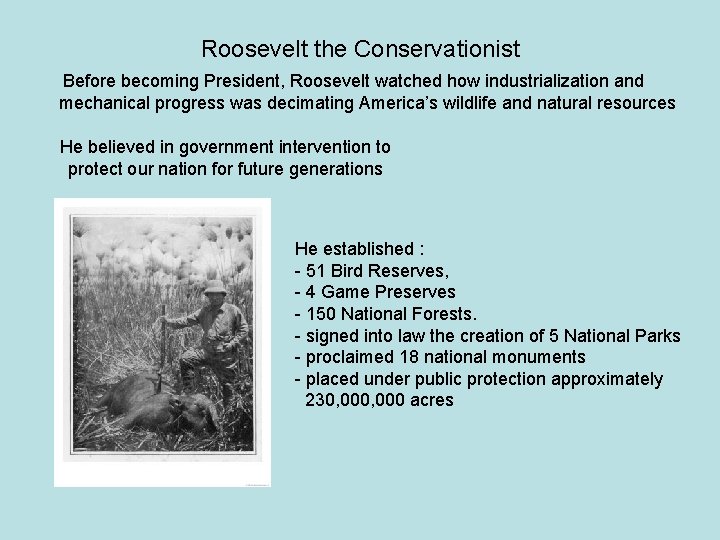
Roosevelt the Conservationist Before becoming President, Roosevelt watched how industrialization and mechanical progress was decimating America’s wildlife and natural resources He believed in government intervention to protect our nation for future generations He established : - 51 Bird Reserves, - 4 Game Preserves - 150 National Forests. - signed into law the creation of 5 National Parks - proclaimed 18 national monuments - placed under public protection approximately 230, 000 acres
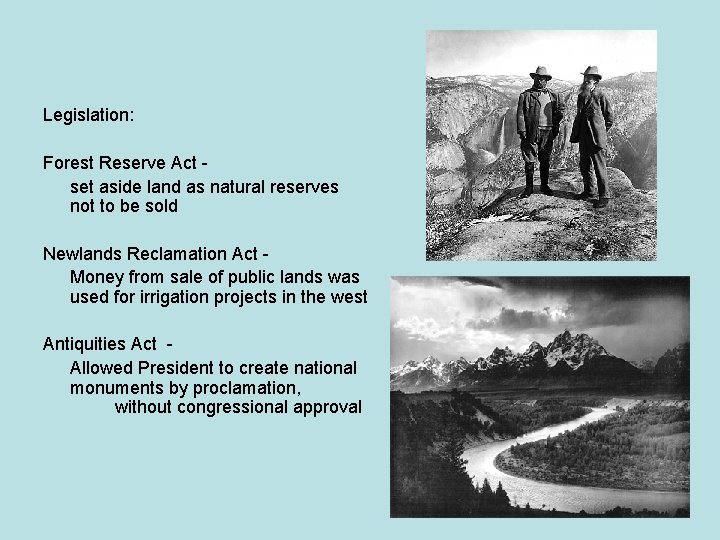
Legislation: Forest Reserve Act set aside land as natural reserves not to be sold Newlands Reclamation Act Money from sale of public lands was used for irrigation projects in the west Antiquities Act Allowed President to create national monuments by proclamation, without congressional approval
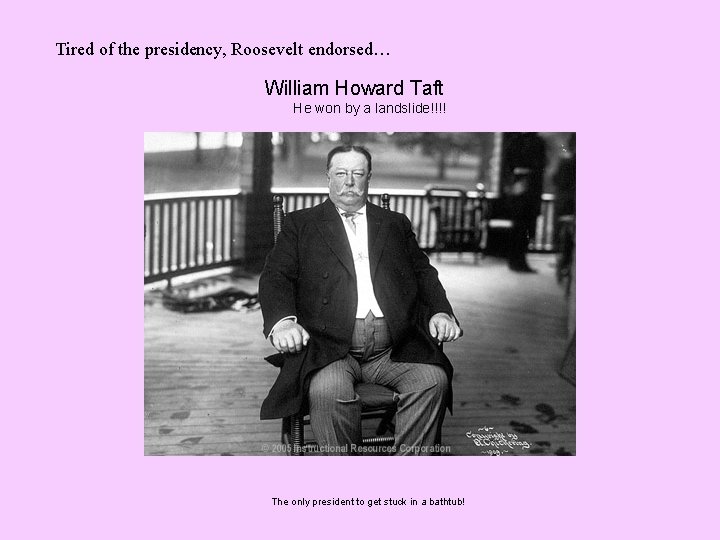
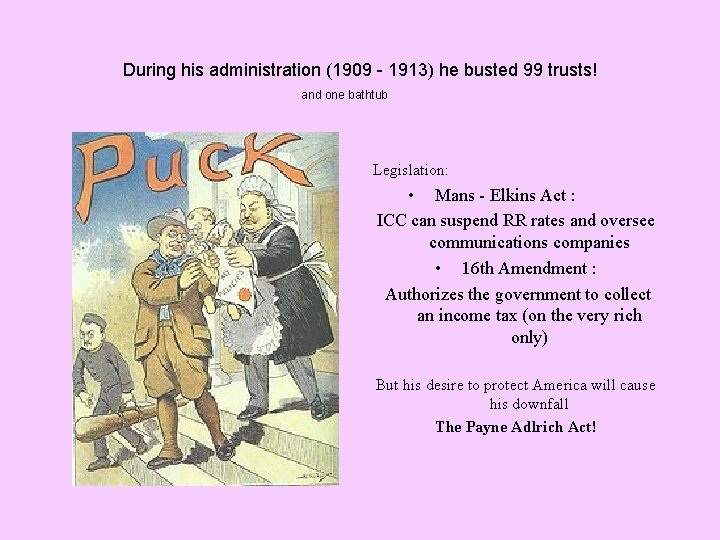
Tired of the presidency, Roosevelt endorsed… William Howard Taft He won by a landslide!!!! The only president to get stuck in a bathtub!
During his administration (1909 - 1913) he busted 99 trusts! and one bathtub Legislation: • Mans - Elkins Act : ICC can suspend RR rates and oversee communications companies • 16 th Amendment : Authorizes the government to collect an income tax (on the very rich only) But his desire to protect America will cause his downfall The Payne Adlrich Act!
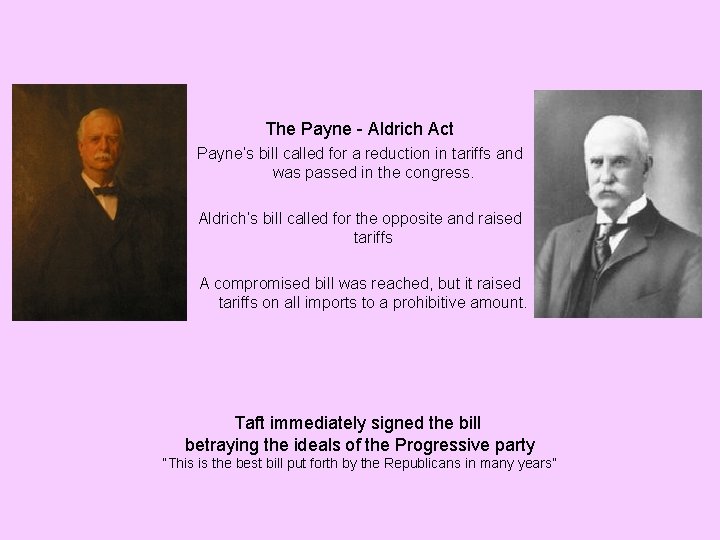
The Payne - Aldrich Act Payne’s bill called for a reduction in tariffs and was passed in the congress. Aldrich’s bill called for the opposite and raised tariffs A compromised bill was reached, but it raised tariffs on all imports to a prohibitive amount. Taft immediately signed the bill betraying the ideals of the Progressive party “This is the best bill put forth by the Republicans in many years”
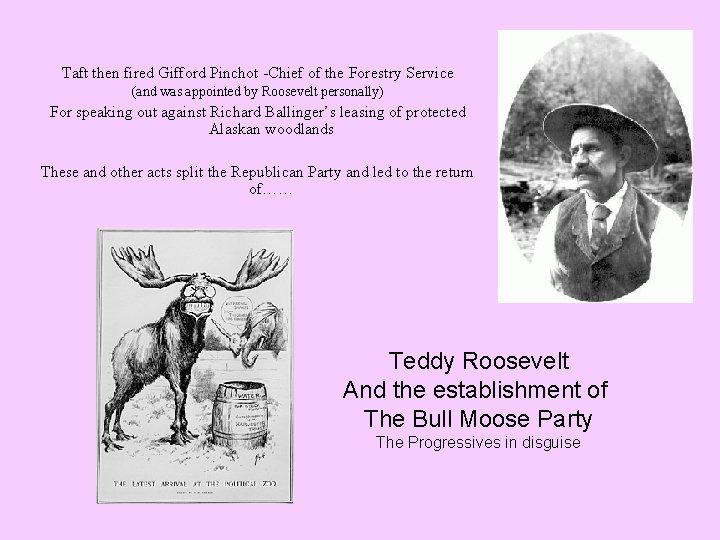
Taft then fired Gifford Pinchot -Chief of the Forestry Service (and was appointed by Roosevelt personally) For speaking out against Richard Ballinger’s leasing of protected Alaskan woodlands These and other acts split the Republican Party and led to the return of…… Teddy Roosevelt And the establishment of The Bull Moose Party The Progressives in disguise
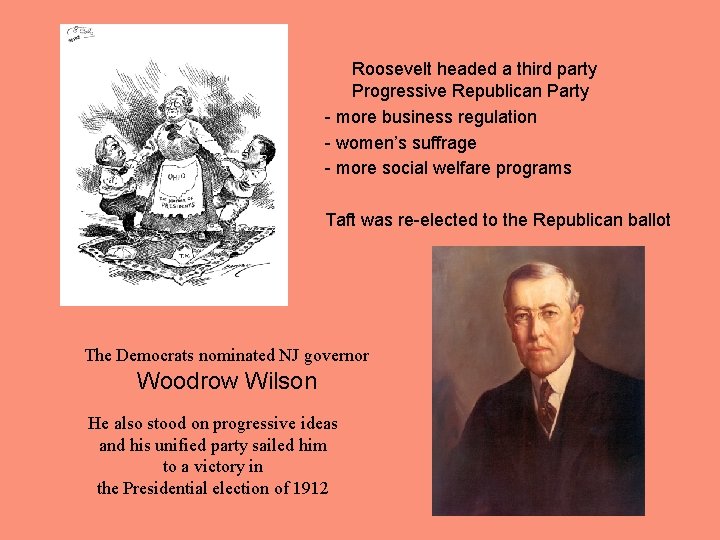
Roosevelt headed a third party Progressive Republican Party - more business regulation - women’s suffrage - more social welfare programs Taft was re-elected to the Republican ballot The Democrats nominated NJ governor Woodrow Wilson He also stood on progressive ideas and his unified party sailed him to a victory in the Presidential election of 1912
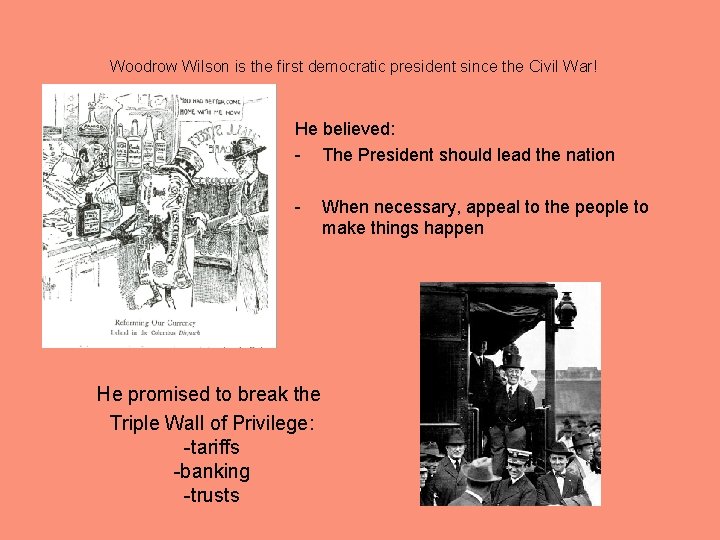
Woodrow Wilson is the first democratic president since the Civil War! He believed: - The President should lead the nation - He promised to break the Triple Wall of Privilege: -tariffs -banking -trusts When necessary, appeal to the people to make things happen
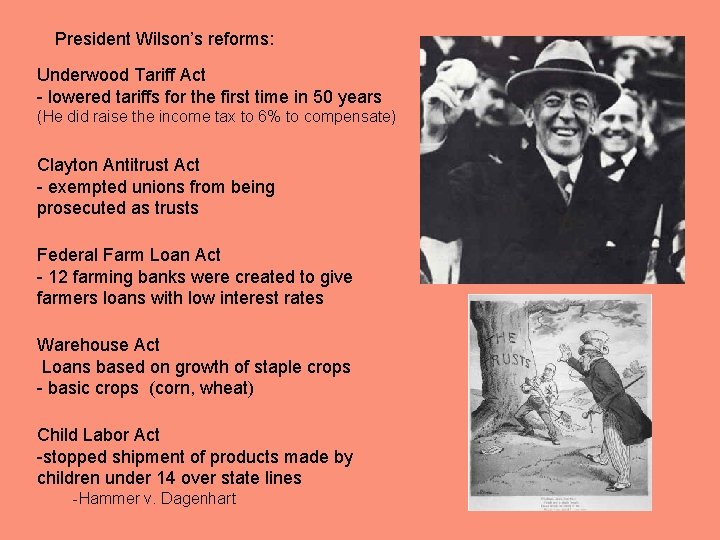
President Wilson’s reforms: Underwood Tariff Act - lowered tariffs for the first time in 50 years (He did raise the income tax to 6% to compensate) Clayton Antitrust Act - exempted unions from being prosecuted as trusts Federal Farm Loan Act - 12 farming banks were created to give farmers loans with low interest rates Warehouse Act Loans based on growth of staple crops - basic crops (corn, wheat) Child Labor Act -stopped shipment of products made by children under 14 over state lines -Hammer v. Dagenhart
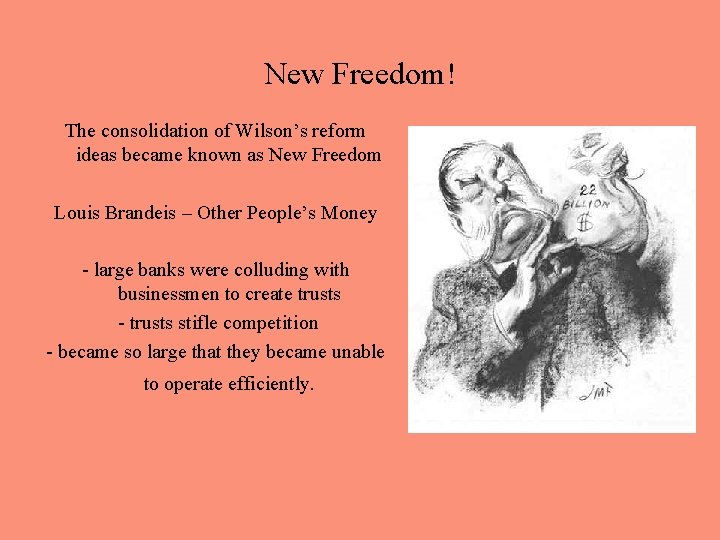
New Freedom! The consolidation of Wilson’s reform ideas became known as New Freedom Louis Brandeis – Other People’s Money - large banks were colluding with businessmen to create trusts - trusts stifle competition - became so large that they became unable to operate efficiently.
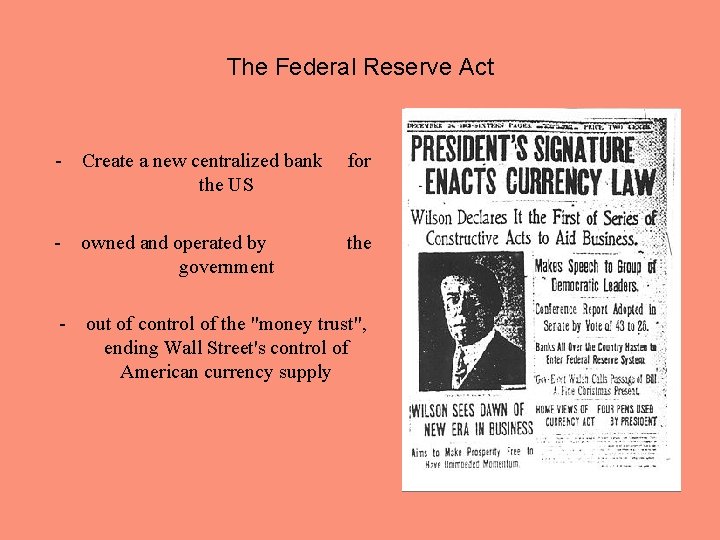
The Federal Reserve Act - Create a new centralized bank the US for - owned and operated by government the - out of control of the "money trust", ending Wall Street's control of American currency supply
• both private and public entities can be members • 12 private regional Federal reserve banks each with its own branches, board of directors and district boundaries • headed by a seven member Federal Reserve Board ( public officials appointed by the President) • a single new United States currency, the Federal Reserve note • nationally chartered banks must become members of the Federal Reserve System. • required to purchase non-transferable stock in their regional reserve bank • must set aside a stipulated amount of non-interest bearing reserves • member banks have access to discounted loans • Federal reserve banks act as fiscal agents for the United States government (loan it money).
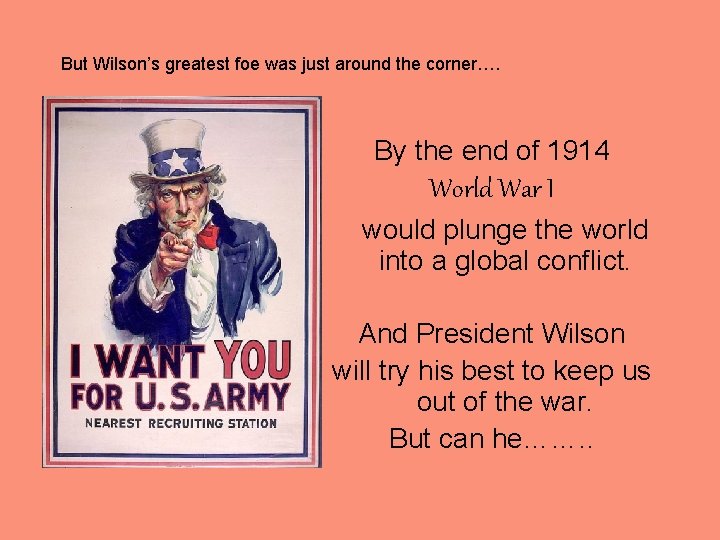
But Wilson’s greatest foe was just around the corner…. By the end of 1914 World War I would plunge the world into a global conflict. And President Wilson will try his best to keep us out of the war. But can he……. .