
Ted Hudson EVP Burnbrae Farms Grocery Specialty Food
Ted Hudson EVP Burnbrae Farms Grocery & Specialty Food West
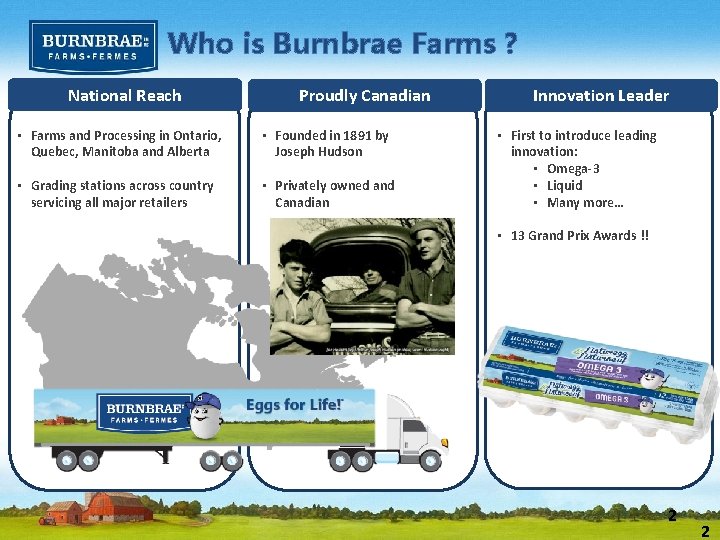
Who is Burnbrae Farms ? National Reach Proudly Canadian • Farms and Processing in Ontario, Quebec, Manitoba and Alberta • Founded in 1891 by Joseph Hudson • Grading stations across country servicing all major retailers • Privately owned and Canadian With farms in Ontario, Quebec, Manitoba and Alberta, Burnbrae Farms is one of Canada's leading egg producers and a thriving participant in its agribusiness industry. Innovation Leader • First to introduce leading innovation: • Omega-3 • Liquid • Many more… • 13 Grand Prix Awards !! 2 2
Everything you ever wanted to know about Eggs… Laying Hens Canadian Supply Management System Egg Grading Egg Breaking
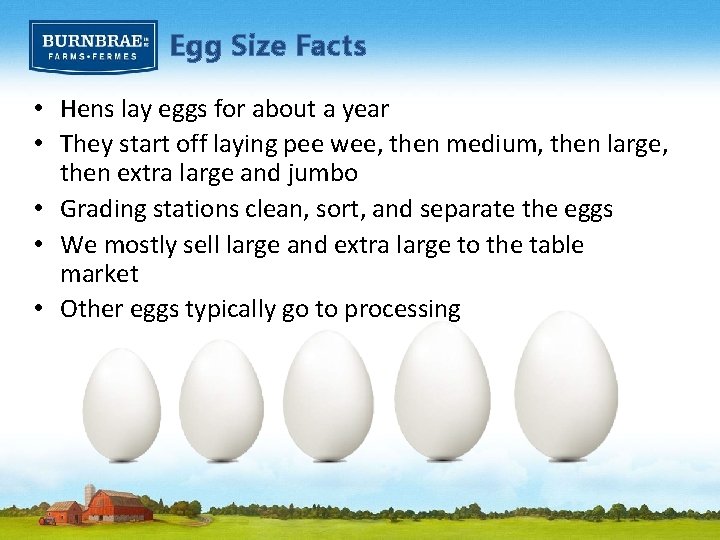
Egg Size Facts • Hens lay eggs for about a year • They start off laying pee wee, then medium, then large, then extra large and jumbo • Grading stations clean, sort, and separate the eggs • We mostly sell large and extra large to the table market • Other eggs typically go to processing
Egg Colour Facts • Egg colour is determined by the species of hen • Eggs can be white, brown, blue, speckled, or more ! • General rule for “commercial” layers: – Brown birds lay brown eggs – White birds lay white eggs • They are nutritionally identical
Hen Feed Facts • Hens are very good at putting feed nutrients into their Eggs • There are many feed options that do impact nutrition… – – Omega 3 Omega Plus Nature’s Best Organic Flax, Vitamin E Flax, Lutein, Vitamin D & B 12 Vegetarian Fed Organic • Why Eggs? Eggs are an easy way to get nutrients into your diet… most people eat eggs more frequently than foods like salmon
Eggs are Amazing !! • • • People need protein – especially at breakfast Eggs are an excellent “complete” protein (all amino acids) Excellent nutrition for early childhood, especially brain development Very affordable – only about 25¢ !! Lowest carbon footprint animal protein
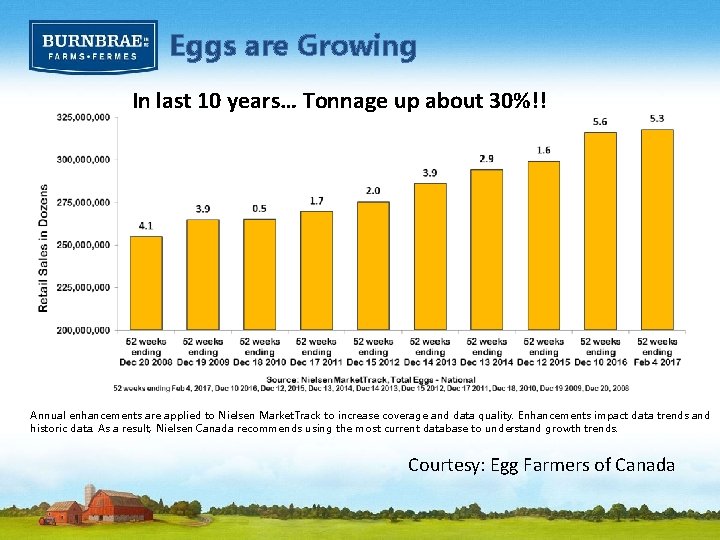
Eggs are Growing In last 10 years… Tonnage up about 30%!! Annual enhancements are applied to Nielsen Market. Track to increase coverage and data quality. Enhancements impact data trends and historic data. As a result, Nielsen Canada recommends using the most current database to understand growth trends. Courtesy: Egg Farmers of Canada
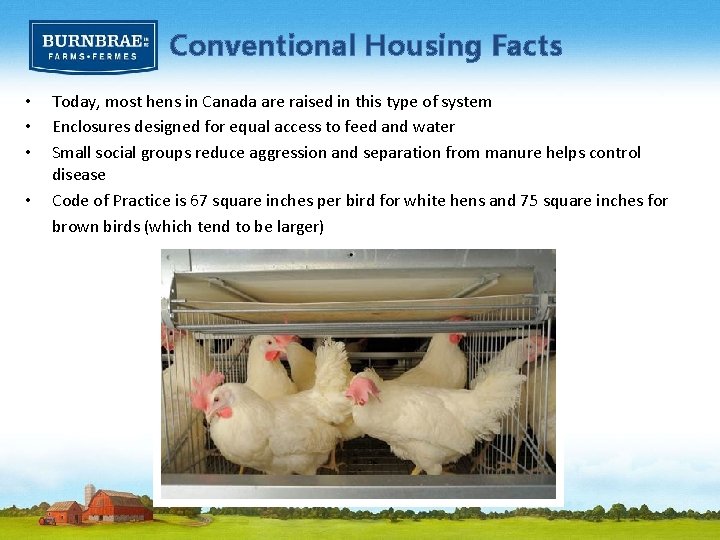
Conventional Housing Facts • • Today, most hens in Canada are raised in this type of system Enclosures designed for equal access to feed and water Small social groups reduce aggression and separation from manure helps control disease Code of Practice is 67 square inches per bird for white hens and 75 square inches for brown birds (which tend to be larger)
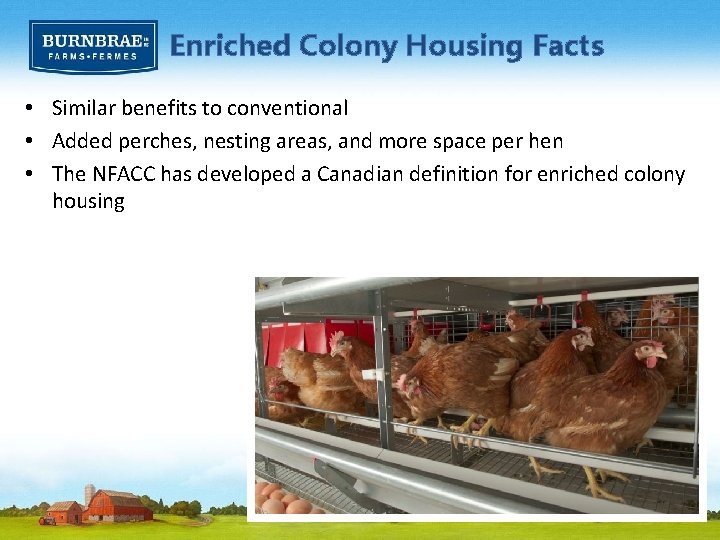
Enriched Colony Housing Facts • Similar benefits to conventional • Added perches, nesting areas, and more space per hen • The NFACC has developed a Canadian definition for enriched colony housing
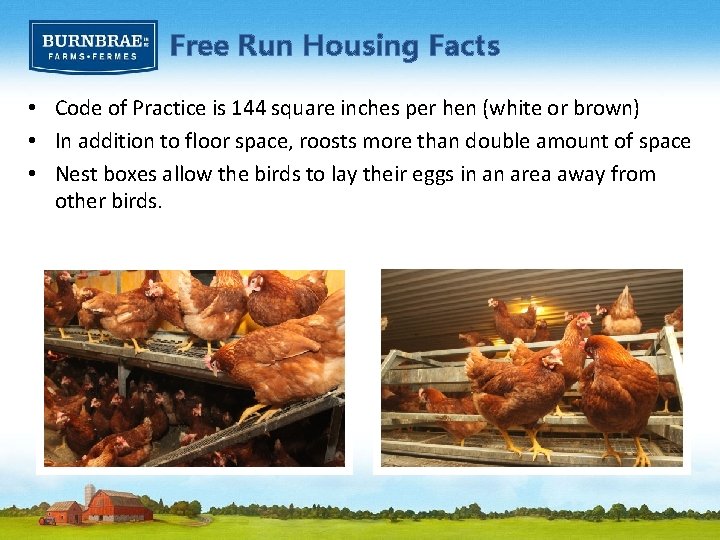
Free Run Housing Facts • Code of Practice is 144 square inches per hen (white or brown) • In addition to floor space, roosts more than double amount of space • Nest boxes allow the birds to lay their eggs in an area away from other birds.
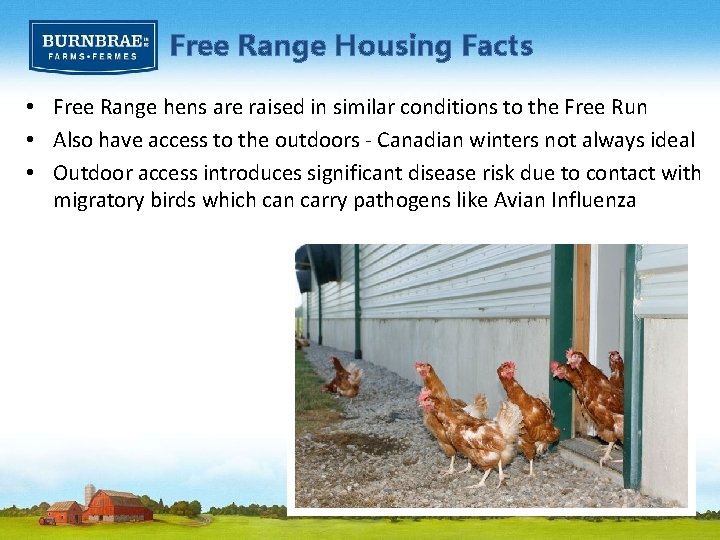
Free Range Housing Facts • Free Range hens are raised in similar conditions to the Free Run • Also have access to the outdoors - Canadian winters not always ideal • Outdoor access introduces significant disease risk due to contact with migratory birds which can carry pathogens like Avian Influenza
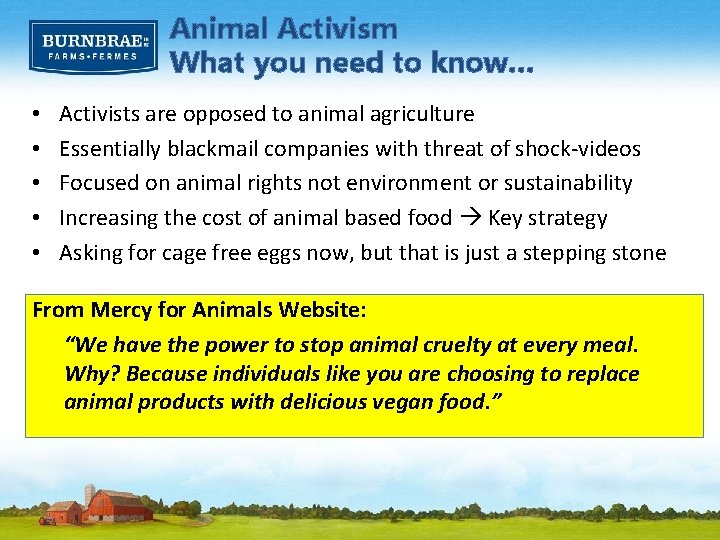
Animal Activism What you need to know… • • • Activists are opposed to animal agriculture Essentially blackmail companies with threat of shock-videos Focused on animal rights not environment or sustainability Increasing the cost of animal based food Key strategy Asking for cage free eggs now, but that is just a stepping stone From Mercy for Animals Website: “We have the power to stop animal cruelty at every meal. Why? Because individuals like you are choosing to replace animal products with delicious vegan food. ”
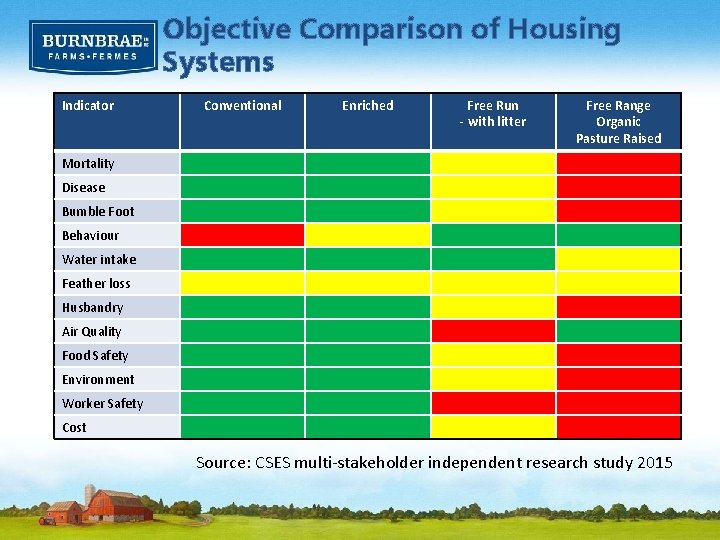
Objective Comparison of Housing Systems Indicator Conventional Enriched Free Run - with litter Free Range Organic Pasture Raised Mortality Disease Bumble Foot Behaviour Water intake Feather loss Husbandry Air Quality Food Safety Environment Worker Safety Cost Source: CSES multi-stakeholder independent research study 2015
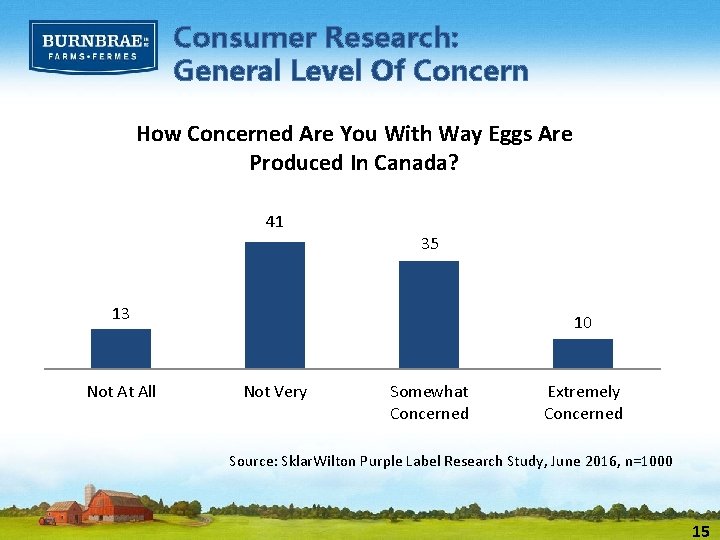
Consumer Research: General Level Of Concern How Concerned Are You With Way Eggs Are Produced In Canada? 41 35 13 Not At All 10 Not Very Somewhat Concerned Extremely Concerned Source: Sklar. Wilton Purple Label Research Study, June 2016, n=1000 15
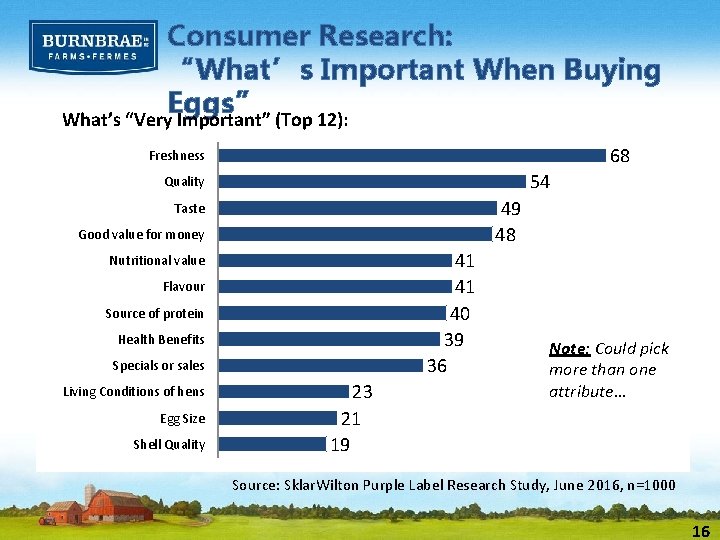
Consumer Research: “What’s Important When Buying Eggs” What’s “Very Important” (Top 12): 68 Freshness 54 Quality 49 48 Taste Good value for money 41 41 40 39 36 Nutritional value Flavour Source of protein Health Benefits Specials or sales Living Conditions of hens Egg Size Shell Quality 23 21 19 Note: Could pick more than one attribute… Source: Sklar. Wilton Purple Label Research Study, June 2016, n=1000 16
![Consumer Research: Key Purchase Drivers “Why do you purchase [your brand] most often? ”](http://slidetodoc.com/presentation_image_h2/4cba1f4ceec443b89937748fde570edb/image-17.jpg "Consumer Research: Key Purchase Drivers “Why do you purchase [your brand] most often? ”")
Consumer Research: Key Purchase Drivers “Why do you purchase [your brand] most often? ” 50 Price 11 Chickens treated humanely 8 Health/nutiriton Habit/familiar 6 Tastes better 6 Note: Could only pick the most important factor… Source: Sklar. Wilton Purple Label Research Study, June 2016, n=1000 17
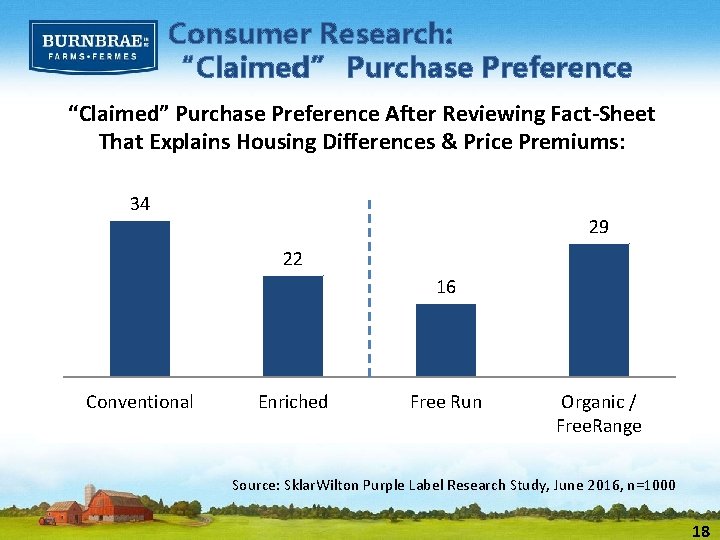
Consumer Research: “Claimed” Purchase Preference After Reviewing Fact-Sheet That Explains Housing Differences & Price Premiums: 34 29 22 16 Conventional Enriched Free Run Organic / Free. Range Source: Sklar. Wilton Purple Label Research Study, June 2016, n=1000 18
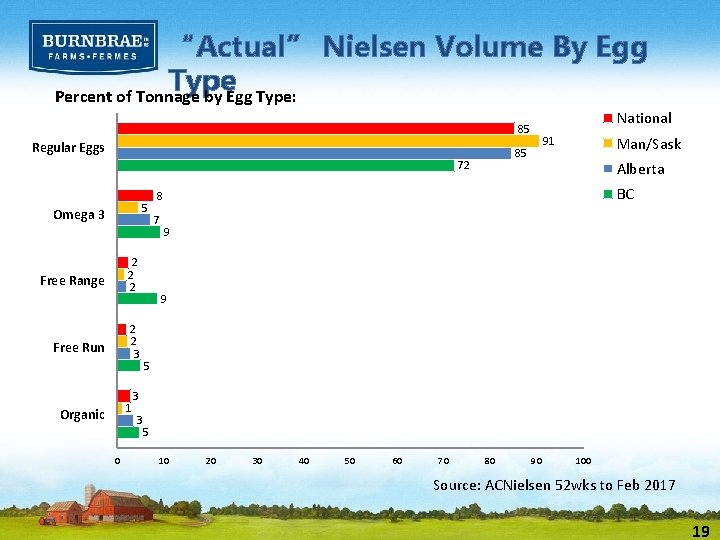
“Actual” Nielsen Volume By Egg Type Percent of Tonnage by Egg Type: National 85 Regular Eggs 72 5 Omega 3 2 2 2 Free Range 2 2 3 Free Run 1 Organic 0 Man/Sask 91 85 Alberta BC 8 7 9 9 5 3 3 5 10 20 30 40 50 60 70 80 90 100 Source: ACNielsen 52 wks to Feb 2017 19
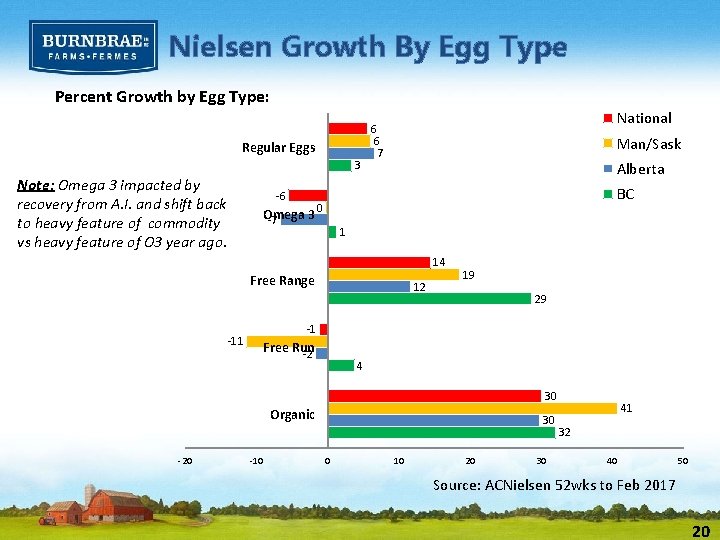
Nielsen Growth By Egg Type Percent Growth by Egg Type: Regular Eggs 3 Note: Omega 3 impacted by recovery from A. I. and shift back to heavy feature of commodity vs heavy feature of O 3 year ago. -6 Omega 3 -7 National 6 6 7 Man/Sask Alberta BC 0 1 14 Free Range 12 19 29 -1 -11 Free Run -2 4 30 Organic -20 -10 30 0 10 20 30 41 32 40 50 Source: ACNielsen 52 wks to Feb 2017 20
So… What’s Burnbrae’s perspective on Housing? • At the end of the day – Good farmers provide good hen care, regardless of the system • We support the consistent gradual phasing out of conventional cage systems • We utilize and sell eggs from all systems • We believe in transparency, consumer choice, and educating consumers on their options…
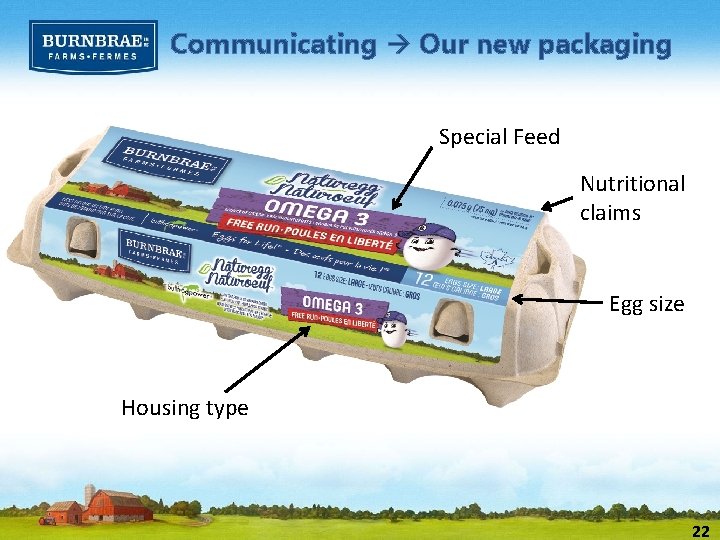
Communicating Our new packaging Special Feed Nutritional claims Egg size Housing type 22
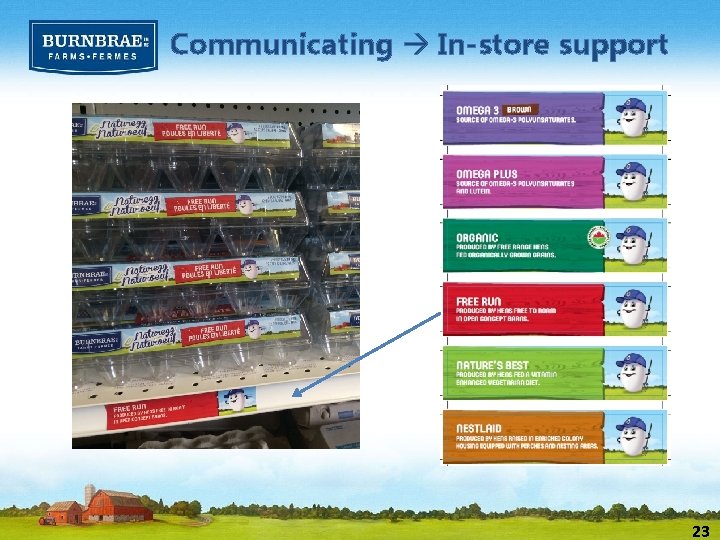
Communicating In-store support 23
Implications for Retailers 1. After growing 30% in last 10 years… Are you dedicating enough space to eggs? 2. Given differing consumer preferences… Are you offering enough choice for all? 3. We all need to better educate on choices… How clearly “shop-able” is your section? …we’d be happy to help you with this
Questions ?
- Slides: 25