
Tectonic Activity Earthquakes Global distribution why they happen
Tectonic Activity Earthquakes: Global distribution; why they happen and what their impacts can be
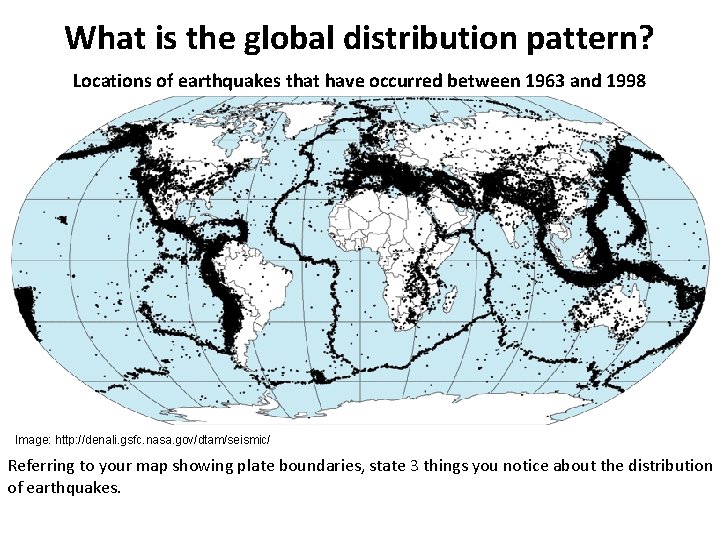
What is the global distribution pattern? Locations of earthquakes that have occurred between 1963 and 1998 Image: http: //denali. gsfc. nasa. gov/dtam/seismic/ Referring to your map showing plate boundaries, state 3 things you notice about the distribution of earthquakes.
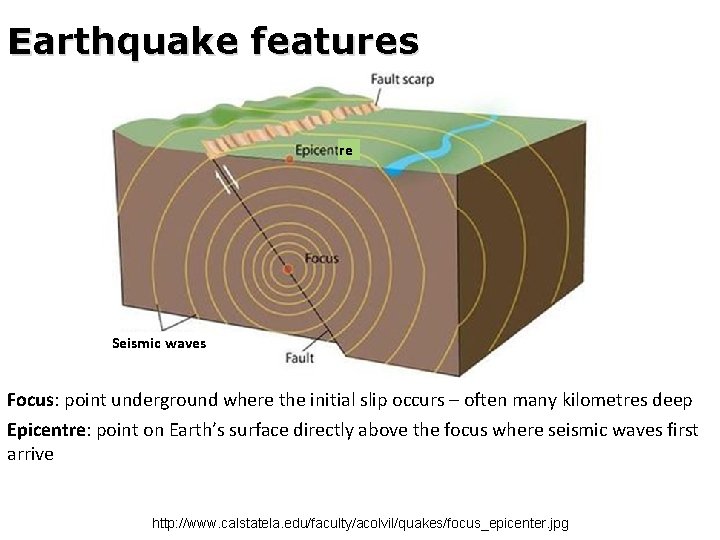
Earthquake features re Seismic waves Focus: point underground where the initial slip occurs – often many kilometres deep Epicentre: point on Earth’s surface directly above the focus where seismic waves first arrive http: //www. calstatela. edu/faculty/acolvil/quakes/focus_epicenter. jpg
What causes earthquakes? Watch the short video clip carefully – listen for information about: • relative plate movement • what happens deep in the crust compared to what happens at the surface • what causes the earthquake to eventually happen 1. Draw a series of diagrams to help you explain what causes earthquakes. 2. Why do earthquakes happen mostly at destructive and conservative plate boundaries?

How are earthquakes monitored and measured? The sudden, violent movement at the focus send out seismic waves in all directions. It is these waves that cause the ground to move – and so cause damage. The ground movements are measured using seismometers. The recorded movement is then displayed as a trace on paper (or on a screen) called a seismograph
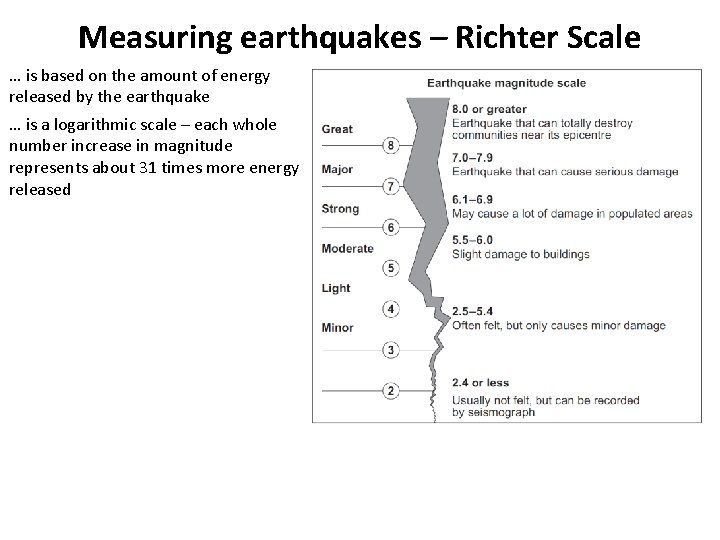
Measuring earthquakes – Richter Scale … is based on the amount of energy released by the earthquake … is a logarithmic scale – each whole number increase in magnitude represents about 31 times more energy released
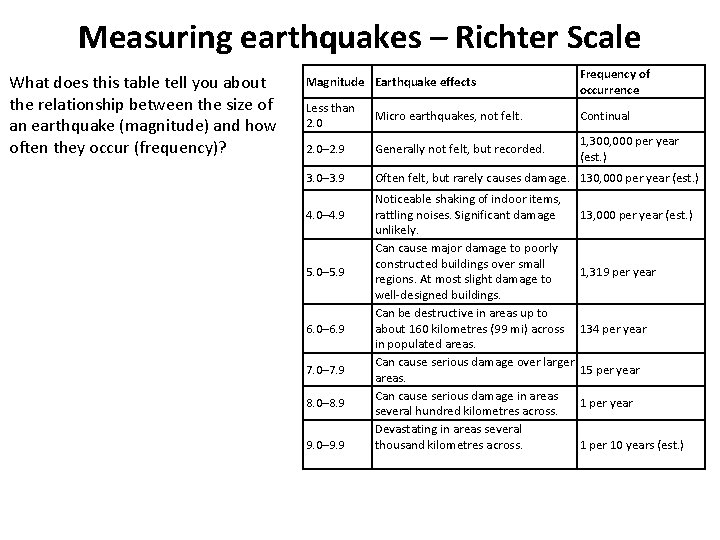
Measuring earthquakes – Richter Scale What does this table tell you about the relationship between the size of an earthquake (magnitude) and how often they occur (frequency)? Magnitude Earthquake effects Frequency of occurrence Less than 2. 0 Micro earthquakes, not felt. Continual 2. 0– 2. 9 Generally not felt, but recorded. 1, 300, 000 per year (est. ) 3. 0– 3. 9 Often felt, but rarely causes damage. 130, 000 per year (est. ) 4. 0– 4. 9 5. 0– 5. 9 6. 0– 6. 9 7. 0– 7. 9 8. 0– 8. 9 9. 0– 9. 9 Noticeable shaking of indoor items, 13, 000 per year (est. ) rattling noises. Significant damage unlikely. Can cause major damage to poorly constructed buildings over small 1, 319 per year regions. At most slight damage to well-designed buildings. Can be destructive in areas up to about 160 kilometres (99 mi) across 134 per year in populated areas. Can cause serious damage over larger 15 per year areas. Can cause serious damage in areas 1 per year several hundred kilometres across. Devastating in areas several 1 per 10 years (est. ) thousand kilometres across.
What are the effects of an earthquake? Read p 10 in Complete Geography and then complete the following tasks: 1. What is the difference between primary and secondary effects of an earthquake? Give some examples of each – make it clear what type they are! Homework: 1. There are many different reasons (factors) to explain why the impacts of earthquakes vary. i. Produce a list (you should be able to come up with at least 5) ii. Choose two of these factors and for each one, write a paragraph to explain why they can affect the impacts of earthquakes. 2. Why do you think people live in areas that suffer from earthquakes?
- Slides: 8