
Technology Transfer by electronics sector foreign direct investors
Technology Transfer by electronics sector foreign direct investors to actors within the SI: a South African analysis Venantio Mzenda University of Pretoria (Mo. T) South Africa
Outline • • Review of the sector Description of concepts Theoretical study Theoretical framework Research framework Methodology Research questions Preliminary findings
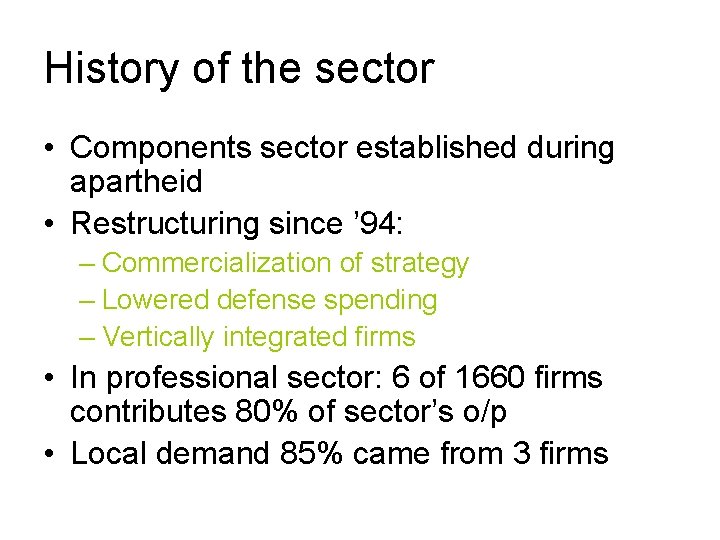
History of the sector • Components sector established during apartheid • Restructuring since ’ 94: – Commercialization of strategy – Lowered defense spending – Vertically integrated firms • In professional sector: 6 of 1660 firms contributes 80% of sector’s o/p • Local demand 85% came from 3 firms
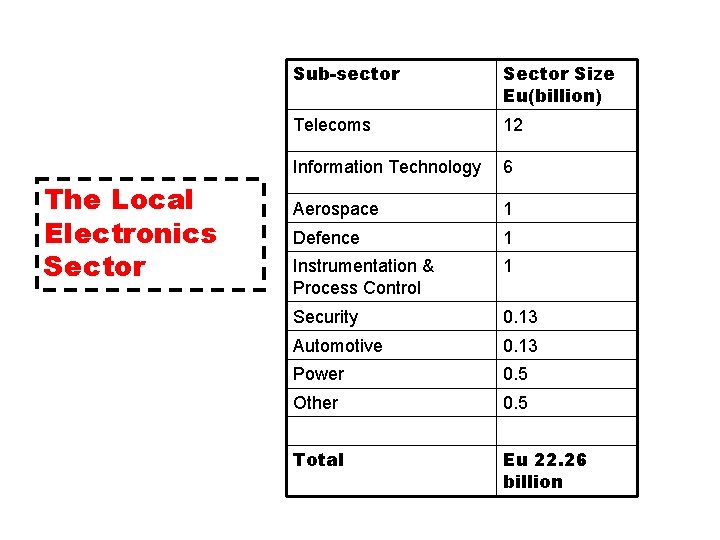
The Local Electronics Sector Sub-sector Size Eu(billion) Telecoms 12 Information Technology 6 Aerospace 1 Defence 1 Instrumentation & Process Control 1 Security 0. 13 Automotive 0. 13 Power 0. 5 Other 0. 5 Total Eu 22. 26 billion
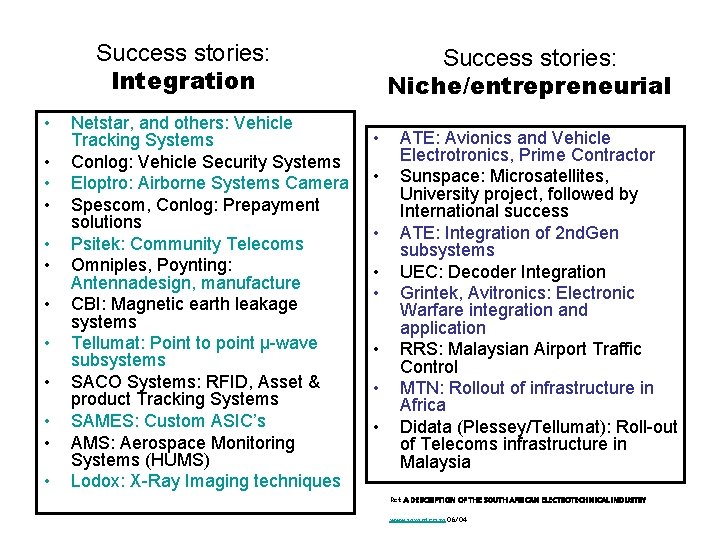
Success stories: Integration • • • Netstar, and others: Vehicle Tracking Systems Conlog: Vehicle Security Systems Eloptro: Airborne Systems Camera Spescom, Conlog: Prepayment solutions Psitek: Community Telecoms Omniples, Poynting: Antennadesign, manufacture CBI: Magnetic earth leakage systems Tellumat: Point to point µ-wave subsystems SACO Systems: RFID, Asset & product Tracking Systems SAMES: Custom ASIC’s AMS: Aerospace Monitoring Systems (HUMS) Lodox: X-Ray Imaging techniques Success stories: Niche/entrepreneurial • • ATE: Avionics and Vehicle Electrotronics, Prime Contractor Sunspace: Microsatellites, University project, followed by International success ATE: Integration of 2 nd. Gen subsystems UEC: Decoder Integration Grintek, Avitronics: Electronic Warfare integration and application RRS: Malaysian Airport Traffic Control MTN: Rollout of infrastructure in Africa Didata (Plessey/Tellumat): Roll-out of Telecoms infrastructure in Malaysia Ref: A DESCRIPTION OF THE SOUTH AFRICAN ELECTROTECHNICAL INDUSTRY www. savant. co. za 06/04
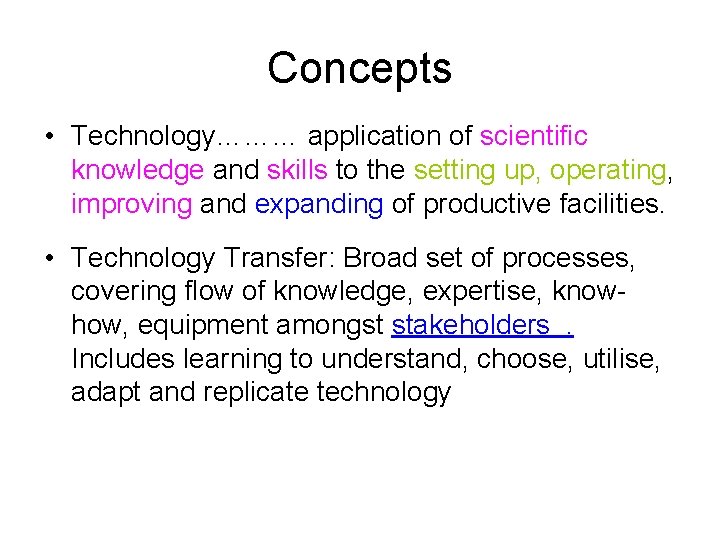
Concepts • Technology……… application of scientific knowledge and skills to the setting up, operating, improving and expanding of productive facilities. • Technology Transfer: Broad set of processes, covering flow of knowledge, expertise, knowhow, equipment amongst stakeholders . Includes learning to understand, choose, utilise, adapt and replicate technology
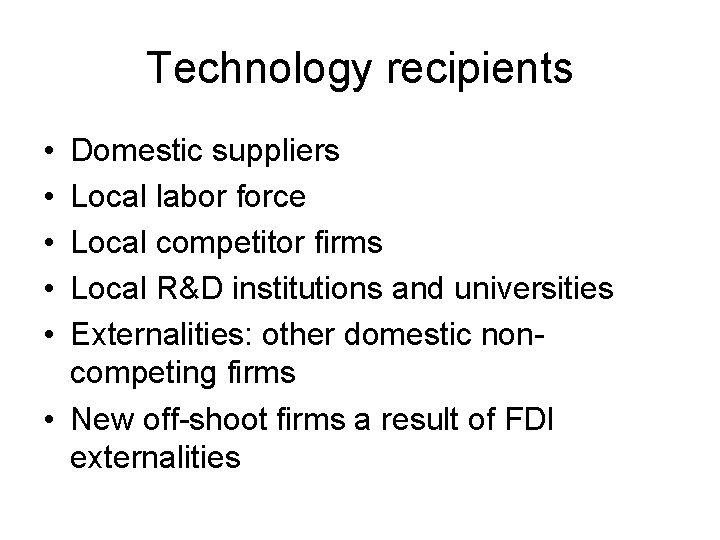
Technology recipients • • • Domestic suppliers Local labor force Local competitor firms Local R&D institutions and universities Externalities: other domestic noncompeting firms • New off-shoot firms a result of FDI externalities
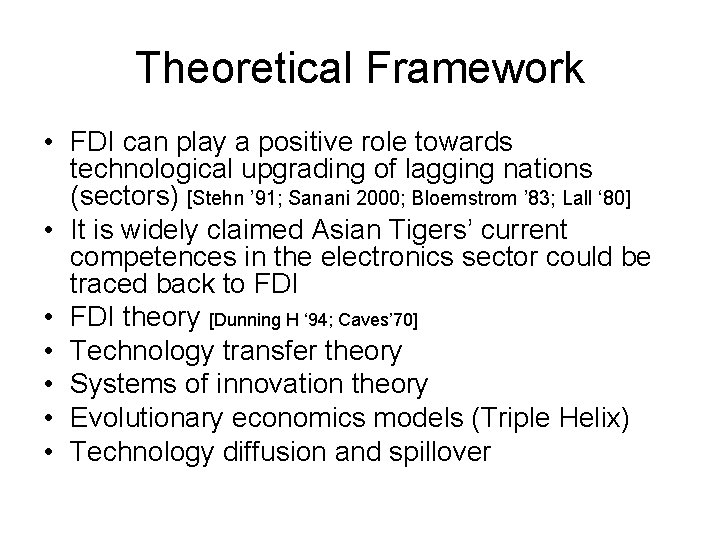
Theoretical Framework • FDI can play a positive role towards technological upgrading of lagging nations (sectors) [Stehn ’ 91; Sanani 2000; Bloemstrom ’ 83; Lall ‘ 80] • It is widely claimed Asian Tigers’ current competences in the electronics sector could be traced back to FDI • FDI theory [Dunning H ‘ 94; Caves’ 70] • Technology transfer theory • Systems of innovation theory • Evolutionary economics models (Triple Helix) • Technology diffusion and spillover
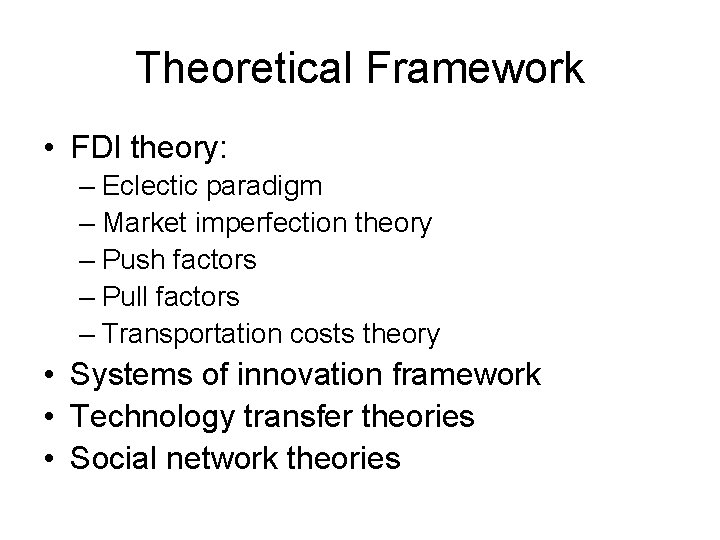
Theoretical Framework • FDI theory: – Eclectic paradigm – Market imperfection theory – Push factors – Pull factors – Transportation costs theory • Systems of innovation framework • Technology transfer theories • Social network theories
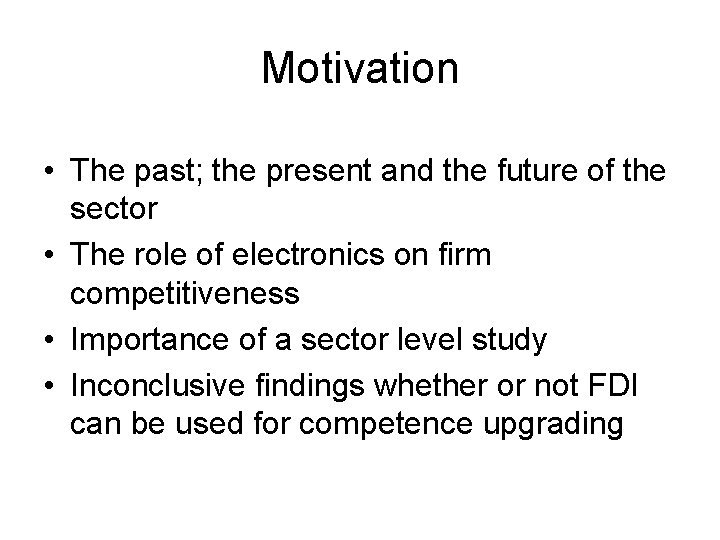
Motivation • The past; the present and the future of the sector • The role of electronics on firm competitiveness • Importance of a sector level study • Inconclusive findings whether or not FDI can be used for competence upgrading
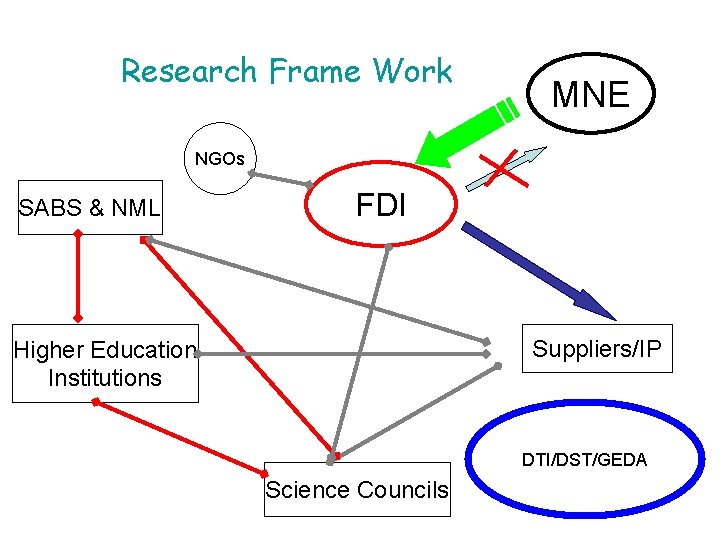
Research Frame Work MNE NGOs SABS & NML FDI Suppliers/IP Higher Education Institutions DTI/DST/GEDA Science Councils
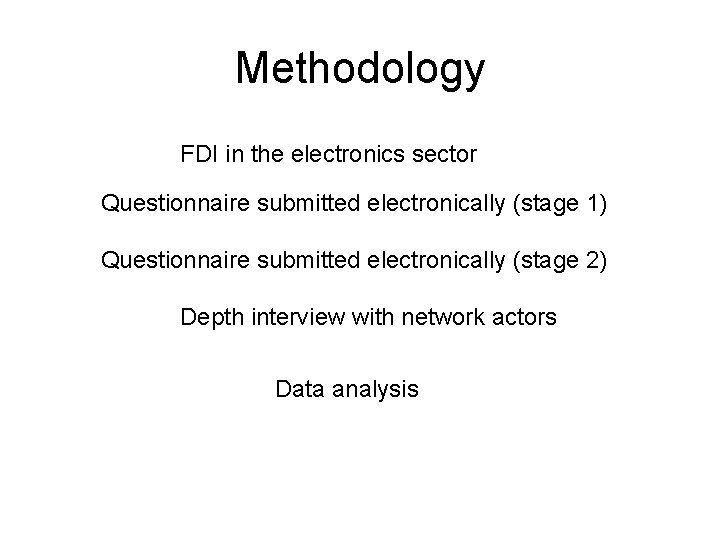
Methodology FDI in the electronics sector Questionnaire submitted electronically (stage 1) Questionnaire submitted electronically (stage 2) Depth interview with network actors Data analysis
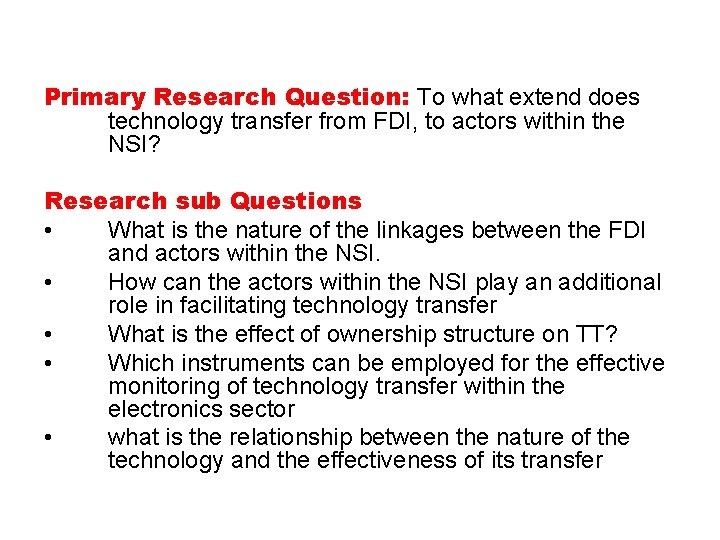
Primary Research Question: To what extend does technology transfer from FDI, to actors within the NSI? Research sub Questions • What is the nature of the linkages between the FDI and actors within the NSI. • How can the actors within the NSI play an additional role in facilitating technology transfer • What is the effect of ownership structure on TT? • Which instruments can be employed for the effective monitoring of technology transfer within the electronics sector • what is the relationship between the nature of the technology and the effectiveness of its transfer
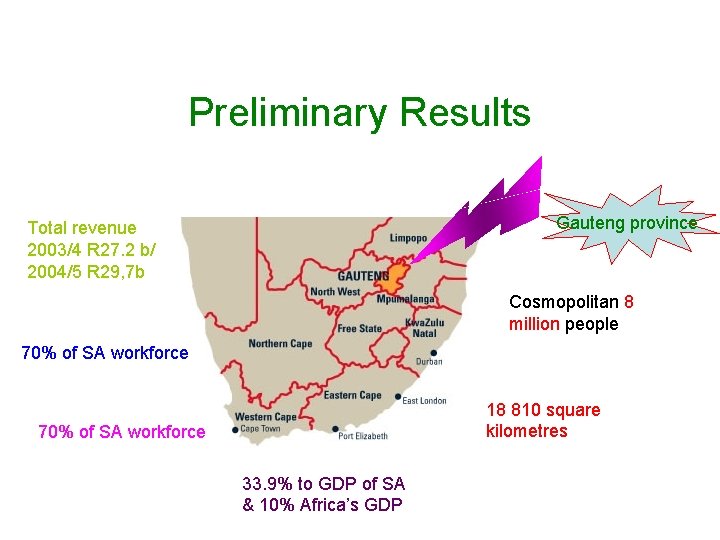
Preliminary Results Gauteng province Total revenue 2003/4 R 27. 2 b/ 2004/5 R 29, 7 b Cosmopolitan 8 million people 70% of SA workforce 18 810 square kilometres 70% of SA workforce 33. 9% to GDP of SA & 10% Africa’s GDP
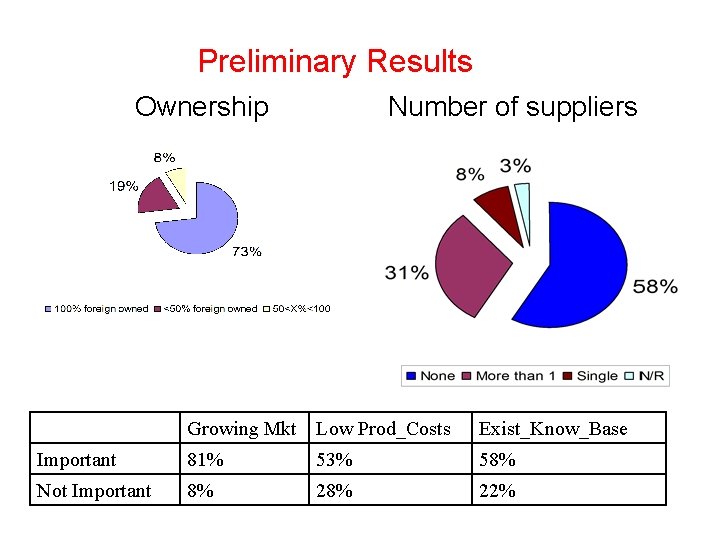
Preliminary Results Number of suppliers Ownership Growing Mkt Low Prod_Costs Exist_Know_Base Important 81% 53% 58% Not Important 8% 22%
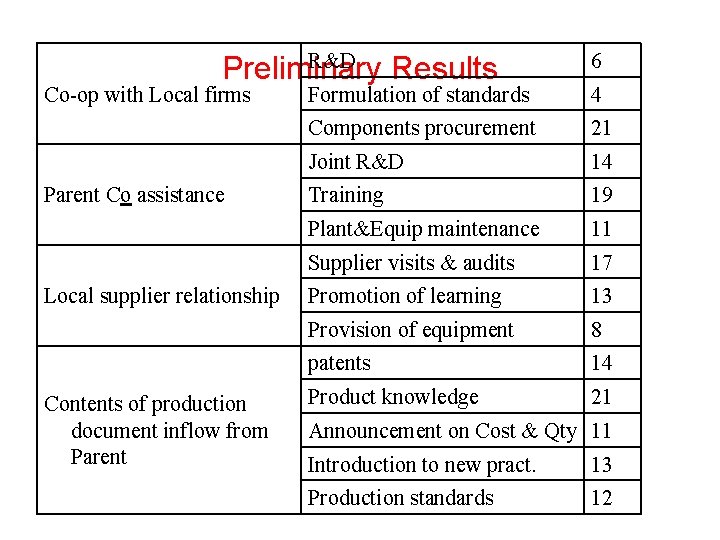
R&D Preliminary Results Co-op with Local firms Parent Co assistance Local supplier relationship Contents of production document inflow from Parent 6 Formulation of standards 4 Components procurement 21 Joint R&D 14 Training 19 Plant&Equip maintenance 11 Supplier visits & audits 17 Promotion of learning 13 Provision of equipment 8 patents 14 Product knowledge 21 Announcement on Cost & Qty 11 Introduction to new pract. 13 Production standards 12
Expected contributions • Holistic definition of the process and conditions most ideal for effective transfer of technology from FDI to the local economy: Generation of theories and models • Policy suggestions for state institutions with an influence and interest on FDI and the development of a knowledge based economy

The end
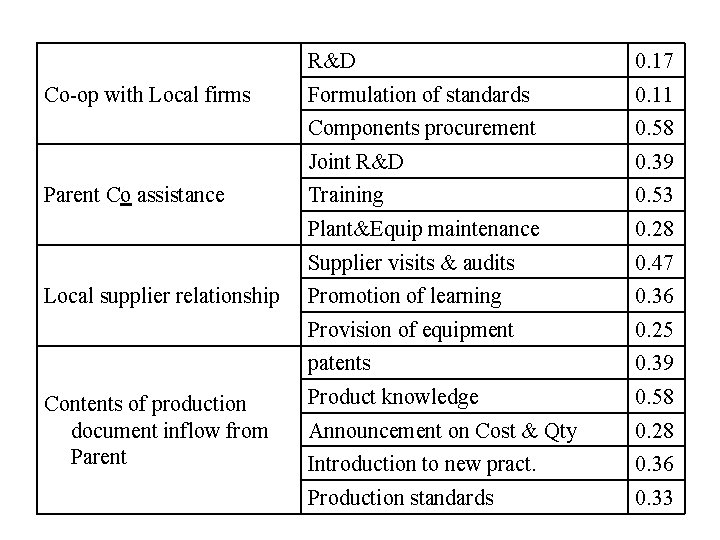
Co-op with Local firms Parent Co assistance Local supplier relationship Contents of production document inflow from Parent R&D 0. 17 Formulation of standards 0. 11 Components procurement 0. 58 Joint R&D 0. 39 Training 0. 53 Plant&Equip maintenance 0. 28 Supplier visits & audits 0. 47 Promotion of learning 0. 36 Provision of equipment 0. 25 patents 0. 39 Product knowledge 0. 58 Announcement on Cost & Qty 0. 28 Introduction to new pract. 0. 36 Production standards 0. 33
- Slides: 19