
TECHNOLOGY SCIENCE FAIR PROJECT 10 Steps to a






- Slides: 12
TECHNOLOGY
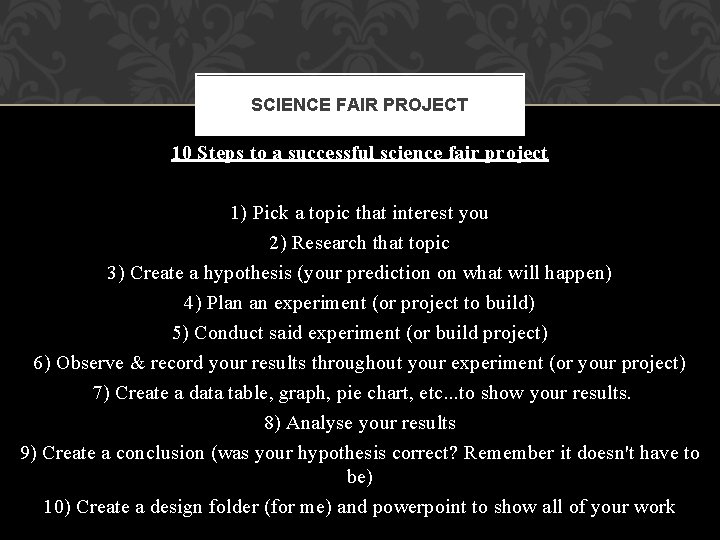
SCIENCE FAIR PROJECT 10 Steps to a successful science fair project 1) Pick a topic that interest you 2) Research that topic 3) Create a hypothesis (your prediction on what will happen) 4) Plan an experiment (or project to build) 5) Conduct said experiment (or build project) 6) Observe & record your results throughout your experiment (or your project) 7) Create a data table, graph, pie chart, etc. . . to show your results. 8) Analyse your results 9) Create a conclusion (was your hypothesis correct? Remember it doesn't have to be) 10) Create a design folder (for me) and powerpoint to show all of your work
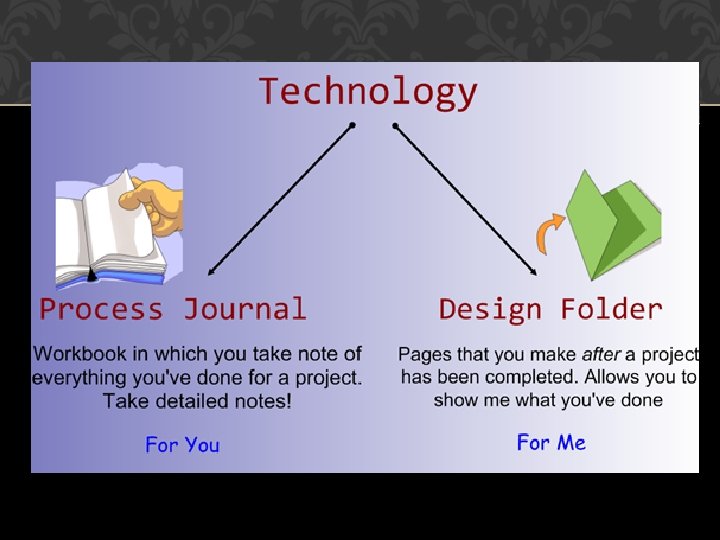
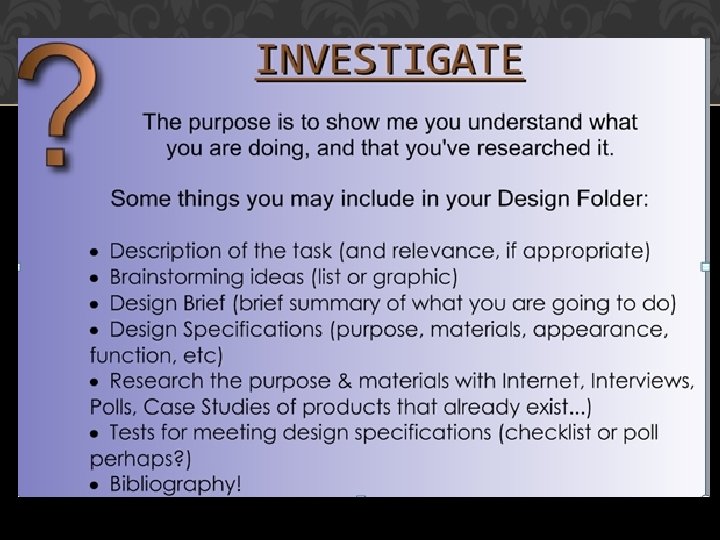
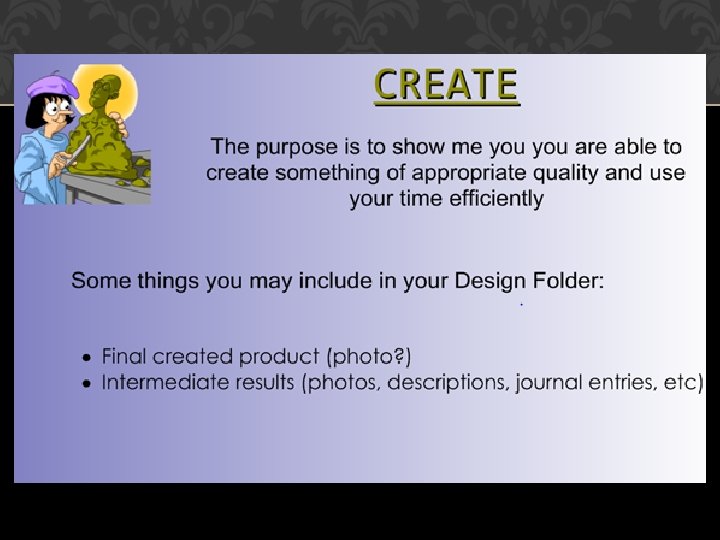
DESIGN FOLDER
THINGS TO REMEMBER A hypothesis is written in the following format : If I do (this) then (this will happen) because of (so and so reasons). Your hypothesis should be something that you can actually test, what's called a testable hypothesis. In other words, you need to be able to measure both "what you do" and "what will happen. " Example of a hypothesis : "If I make a path for a mouse to travel through with three branching ends and put two tbsp of dried corn at one end, two tbsp of shredded cheese at another end and two tbsp of sunflower seeds at the last end, then the mouse will go for the sunflower seeds the most often because mice like food that can be available to them in their own environment. " You need to be specific in your hypothesis and identify your variables. You need to conduct your experiment a few times as one experiment(trial) is not enough for valuable data. (unless you are building something) You need to take into consideration your controlled variables of your experiment. (the variable that need to remain the same). Ex. If you are using different liquids to see which causes the most plant growth the following variables would have to be the same for each trial of your experiment: the type of plant, the amount of liquid being used, the amount sun light, dirt, etc. . . Take pictures and/or videos of your experiment.
SCIENCE FAIR TUTORIAL http: //www. youtube. com/watch? v=7 e 5 XU 0 HKFLA
SCIENTISTS MADE A "TERMINATOR" POLYMER THAT CAN HEAL ITSELF LIKE MAGIC