
Technology Polymers What is Sustainability Sustainable means products
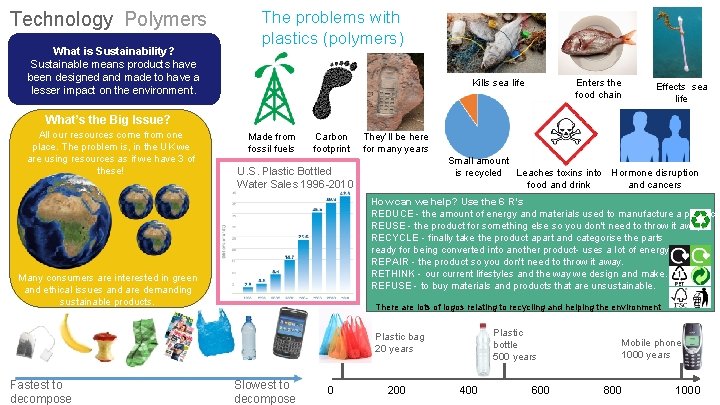
Technology Polymers What is Sustainability? Sustainable means products have been designed and made to have a lesser impact on the environment. The problems with plastics (polymers) Kills sea life Enters the food chain Effects sea life What’s the Big Issue? All our resources come from one place. The problem is, in the UK we are using resources as if we have 3 of these! Made from fossil fuels Carbon footprint They’ll be here for many years Small amount is recycled Leaches toxins into Hormone disruption food and drink and cancers U. S. Plastic Bottled Water Sales 1996 -2010 How can we help? Use the 6 R’s REDUCE - the amount of energy and materials used to manufacture a product. REUSE - the product for something else so you don't need to throw it away. RECYCLE - finally take the product apart and categorise the parts ready for being converted into another product- uses a lot of energy. REPAIR - the product so you don't need to throw it away. RETHINK - our current lifestyles and the way we design and make. REFUSE - to buy materials and products that are unsustainable. Many consumers are interested in green and ethical issues and are demanding sustainable products. There are lots of logos relating to recycling and helping the environment Plastic bottle 500 years Plastic bag 20 years Fastest to decompose Slowest to decompose 0 200 400 600 Mobile phone 1000 years 800 1000
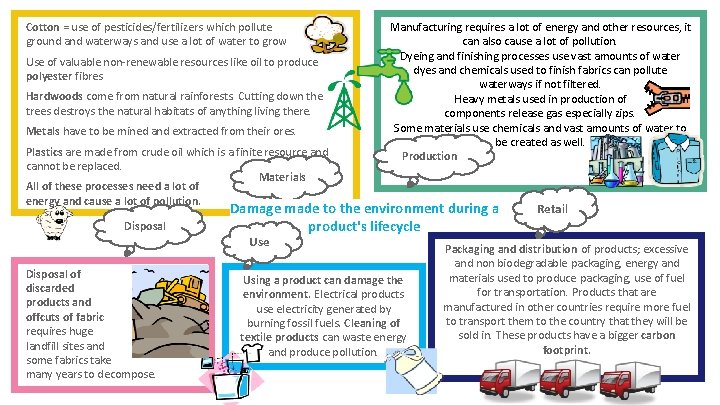
Cotton = use of pesticides/fertilizers which pollute ground and waterways and use a lot of water to grow Use of valuable non-renewable resources like oil to produce polyester fibres Hardwoods come from natural rainforests. Cutting down the trees destroys the natural habitats of anything living there. Metals have to be mined and extracted from their ores. Plastics are made from crude oil which is a finite resource and cannot be replaced. Materials All of these processes need a lot of energy and cause a lot of pollution. Disposal Manufacturing requires a lot of energy and other resources, it can also cause a lot of pollution. Dyeing and finishing processes use vast amounts of water dyes and chemicals used to finish fabrics can pollute waterways if not filtered. Heavy metals used in production of components release gas especially zips. Some materials use chemicals and vast amounts of water to be created as well. Production Damage made to the environment during a product's lifecycle Use Disposal of discarded products and offcuts of fabric requires huge landfill sites and some fabrics take many years to decompose. Using a product can damage the environment. Electrical products use electricity generated by burning fossil fuels. Cleaning of textile products can waste energy and produce pollution. Retail Packaging and distribution of products; excessive and non biodegradable packaging, energy and materials used to produce packaging, use of fuel for transportation. Products that are manufactured in other countries require more fuel to transport them to the country that they will be sold in. These products have a bigger carbon footprint.
- Slides: 2