
Technology Information Handhelds Stephen Lapinsky Mount Sinai Hospital

- Slides: 31
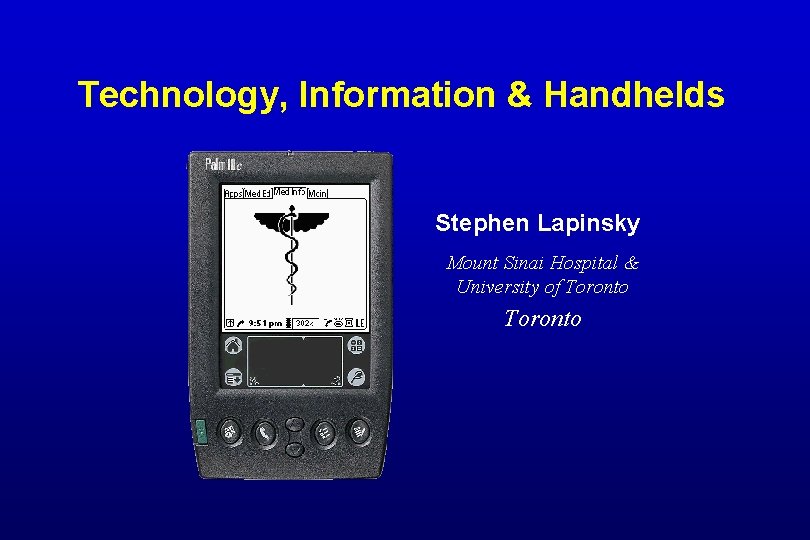
Technology, Information & Handhelds Stephen Lapinsky Mount Sinai Hospital & University of Toronto
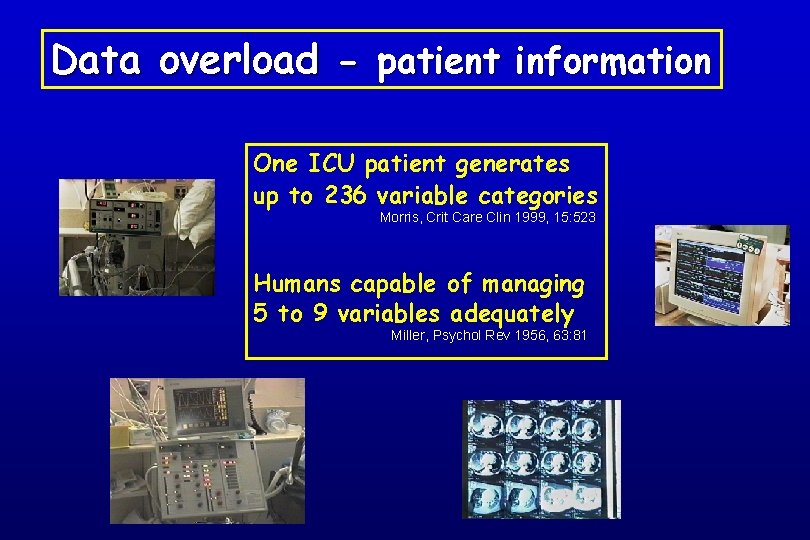
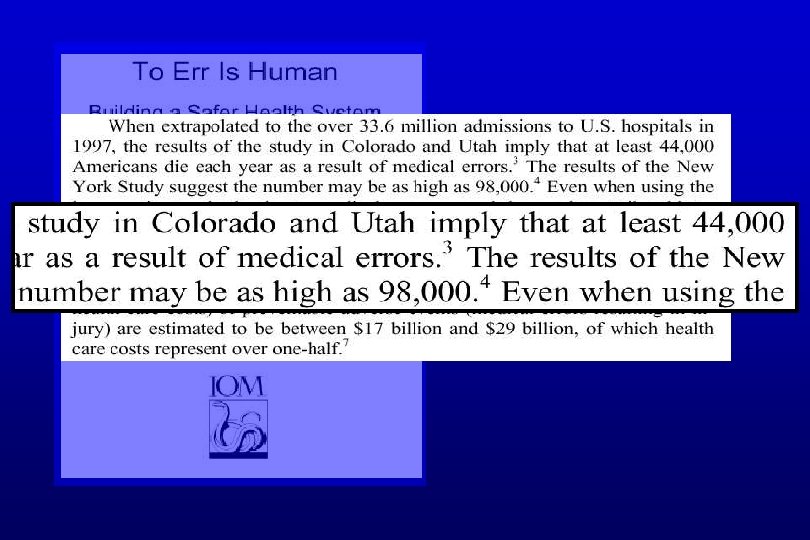
Data overload - patient information One ICU patient generates up to 236 variable categories Morris, Crit Care Clin 1999, 15: 523 Humans capable of managing 5 to 9 variables adequately Miller, Psychol Rev 1956, 63: 81
Data overload - reference information Ø Textbooks Ø Journal articles Ø Review articles Ø Association Guidelines Ø Hospital protocols Ø Pharmaceutical company information Ø Electronic Medical literature
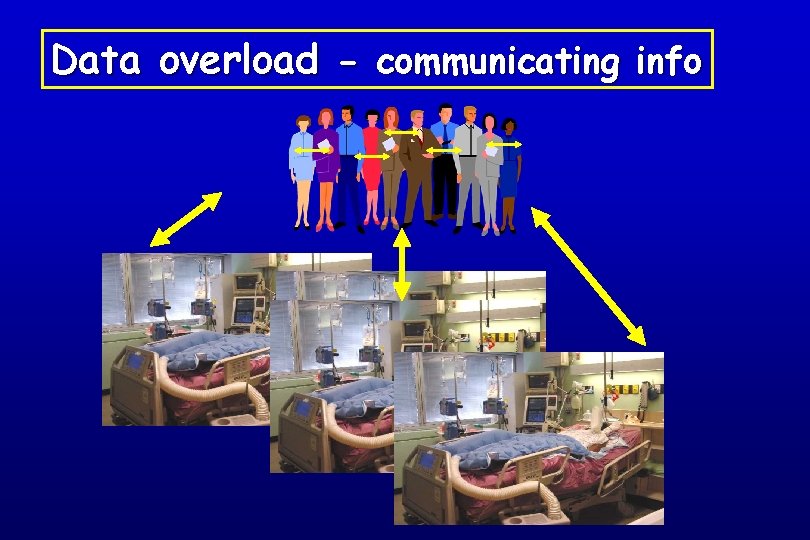
Data overload - communicating info
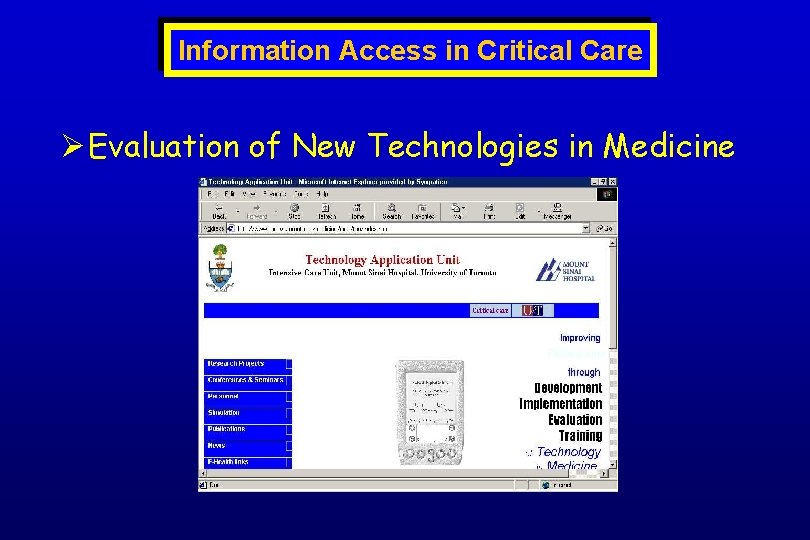
Information Access in Critical Care Ø Evaluation of New Technologies in Medicine
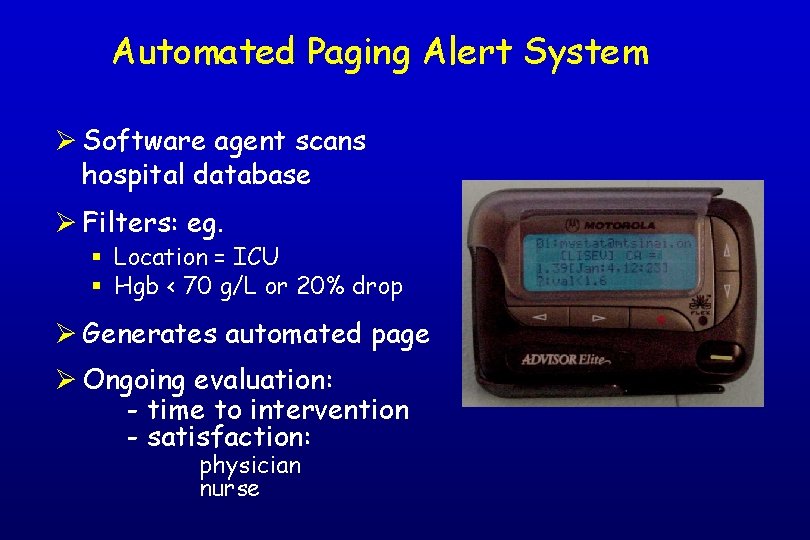
Automated Paging Alert System Ø Software agent scans hospital database Ø Filters: eg. § Location = ICU § Hgb < 70 g/L or 20% drop Ø Generates automated page Ø Ongoing evaluation: - time to intervention - satisfaction: physician nurse
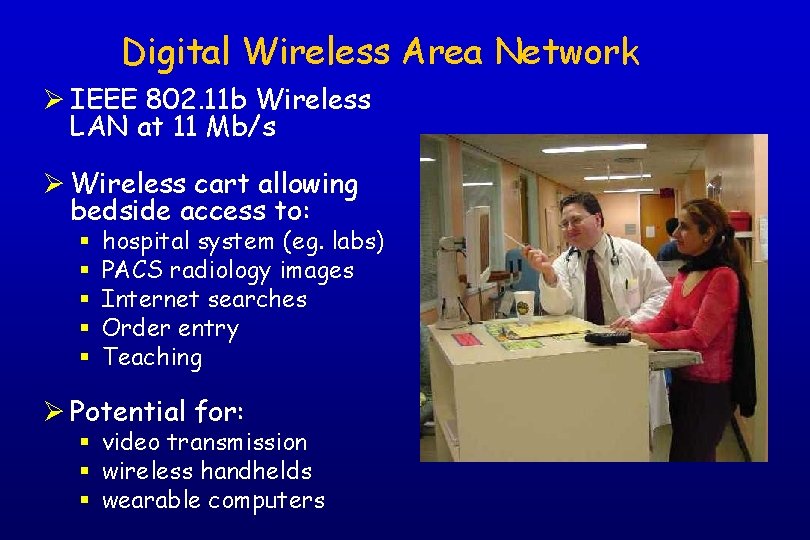
Digital Wireless Area Network Ø IEEE 802. 11 b Wireless LAN at 11 Mb/s Ø Wireless cart allowing bedside access to: § § § hospital system (eg. labs) PACS radiology images Internet searches Order entry Teaching Ø Potential for: § video transmission § wireless handhelds § wearable computers
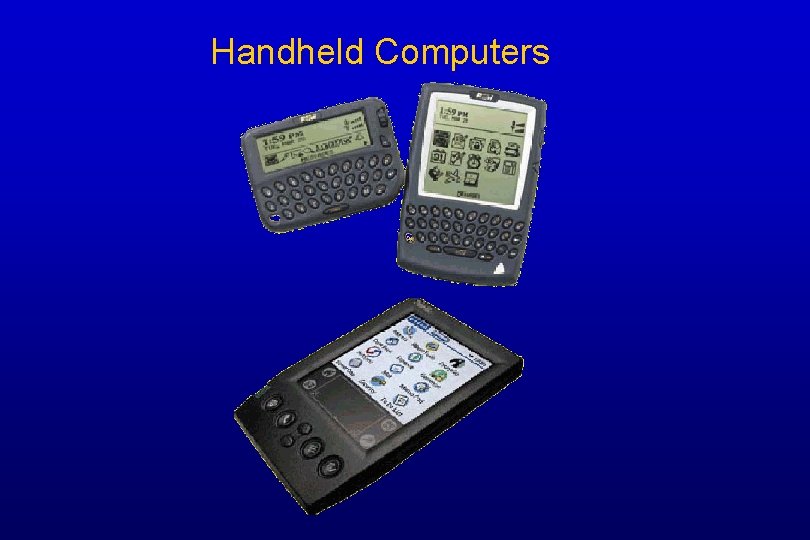
Handheld Computers
Roles for Handheld computers • access to patient information • tracking patient symptoms, signs • access to medical reference information • tracking educational experience • research data entry • scheduling, contacts • non-synchronous communication
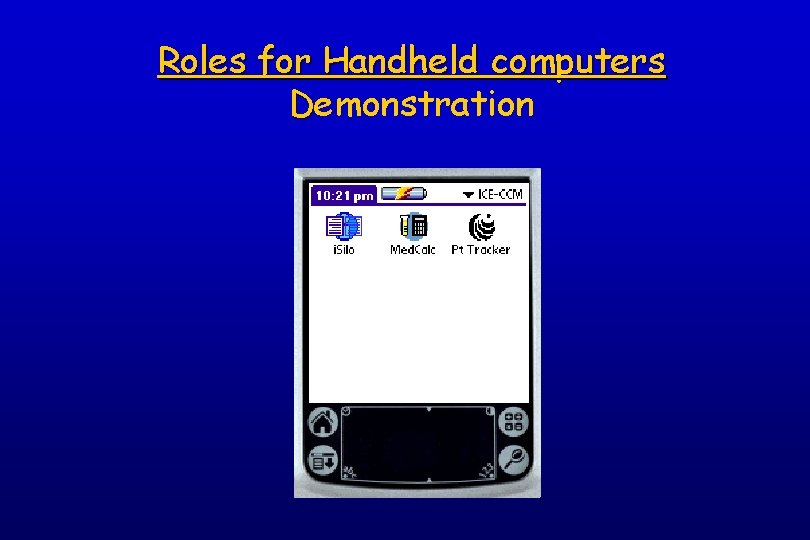
Roles for Handheld computers Demonstration
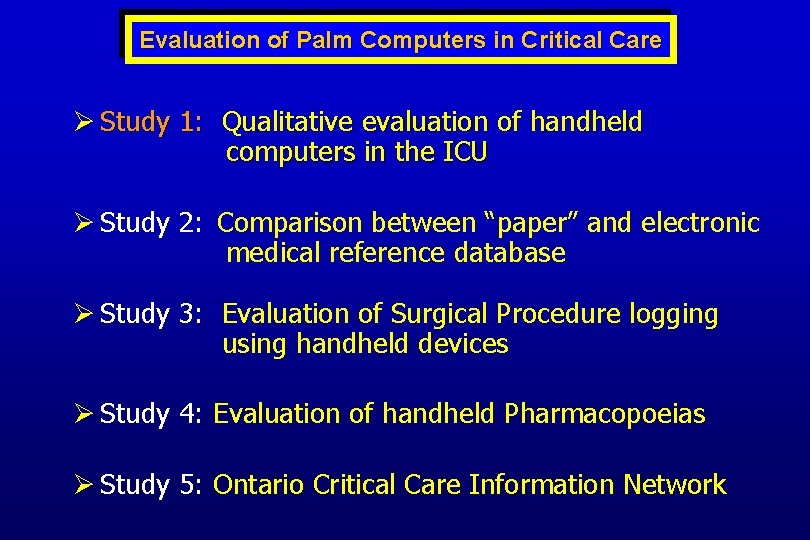
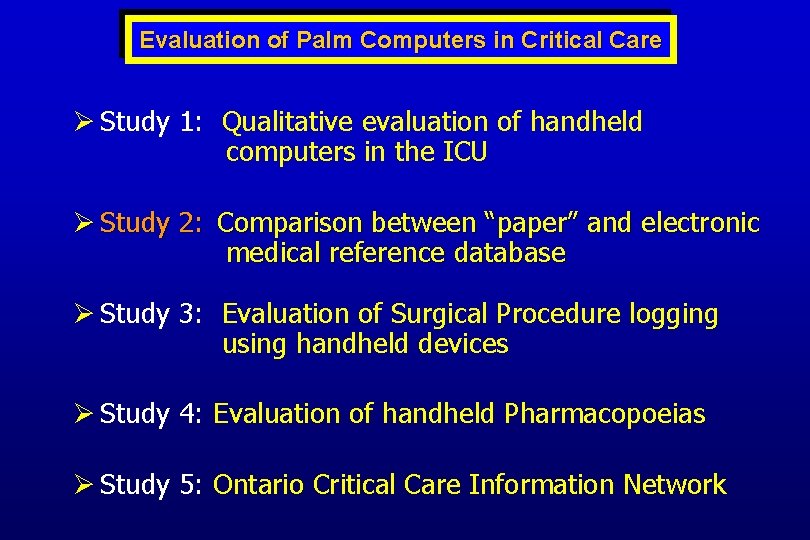
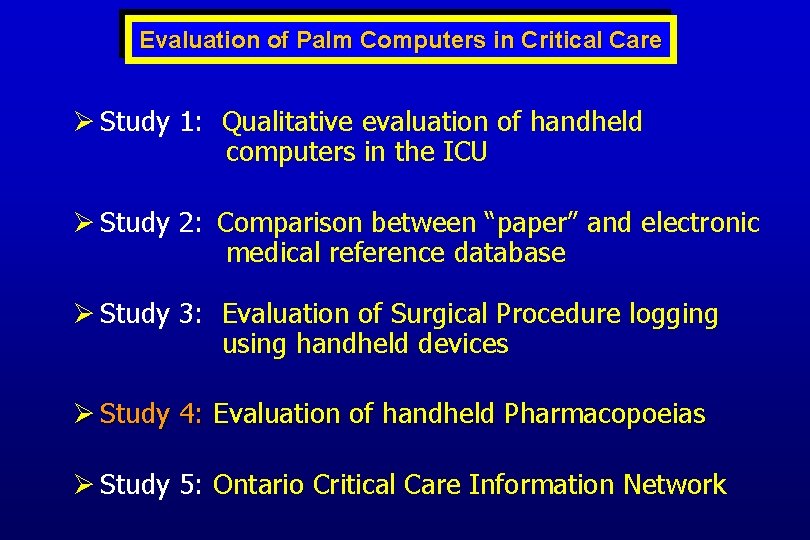
Evaluation of Palm Computers in Critical Care Ø Study 1: Qualitative evaluation of handheld computers in the ICU Ø Study 2: Comparison between “paper” and electronic medical reference database Ø Study 3: Evaluation of Surgical Procedure logging using handheld devices Ø Study 4: Evaluation of handheld Pharmacopoeias Ø Study 5: Ontario Critical Care Information Network
Evaluation of Palm Computers in Critical Care Ø Study 1: Qualitative evaluation of handheld computers in the ICU Ø Study 2: Comparison between “paper” and electronic medical reference database Ø Study 3: Evaluation of Surgical Procedure logging using handheld devices Ø Study 4: Evaluation of handheld Pharmacopoeias Ø Study 5: Ontario Critical Care Information Network
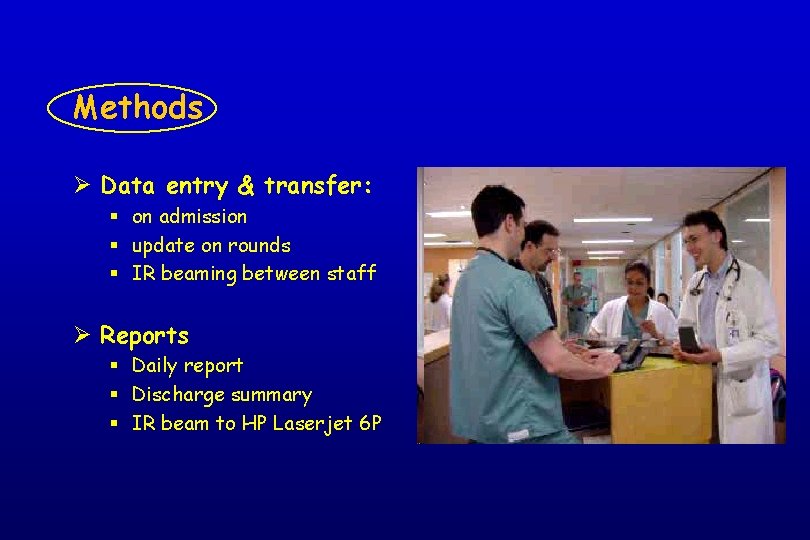
Methods Ø Data entry & transfer: § on admission § update on rounds § IR beaming between staff Ø Reports § Daily report § Discharge summary § IR beam to HP Laserjet 6 P
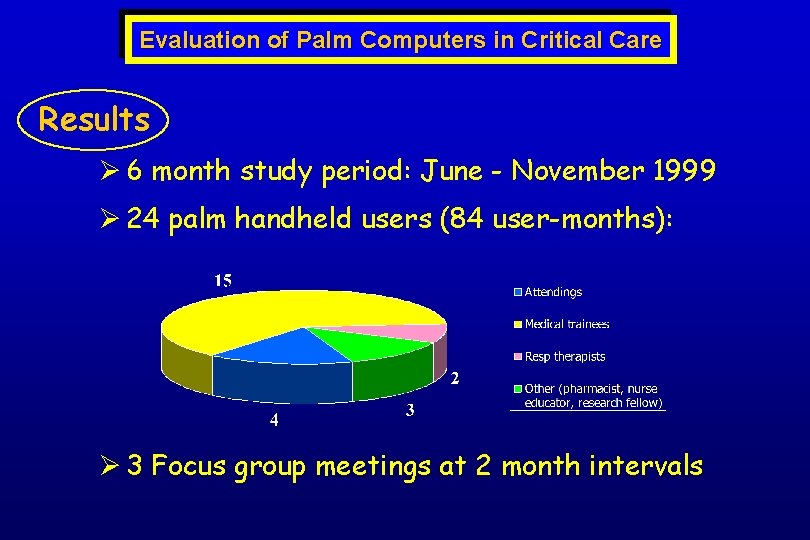
Evaluation of Palm Computers in Critical Care Results Ø 6 month study period: June - November 1999 Ø 24 palm handheld users (84 user-months): Ø 3 Focus group meetings at 2 month intervals
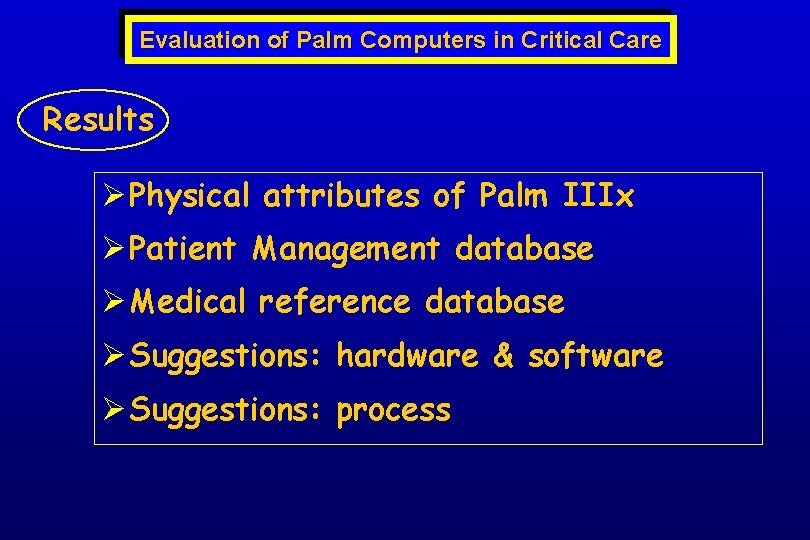
Evaluation of Palm Computers in Critical Care Results Ø Physical attributes of Palm IIIx Ø Patient Management database Ø Medical reference database Ø Suggestions: hardware & software Ø Suggestions: process
Evaluation of Palm Computers in Critical Care Ø Study 1: Qualitative evaluation of handheld computers in the ICU Ø Study 2: Comparison between “paper” and electronic medical reference database Ø Study 3: Evaluation of Surgical Procedure logging using handheld devices Ø Study 4: Evaluation of handheld Pharmacopoeias Ø Study 5: Ontario Critical Care Information Network
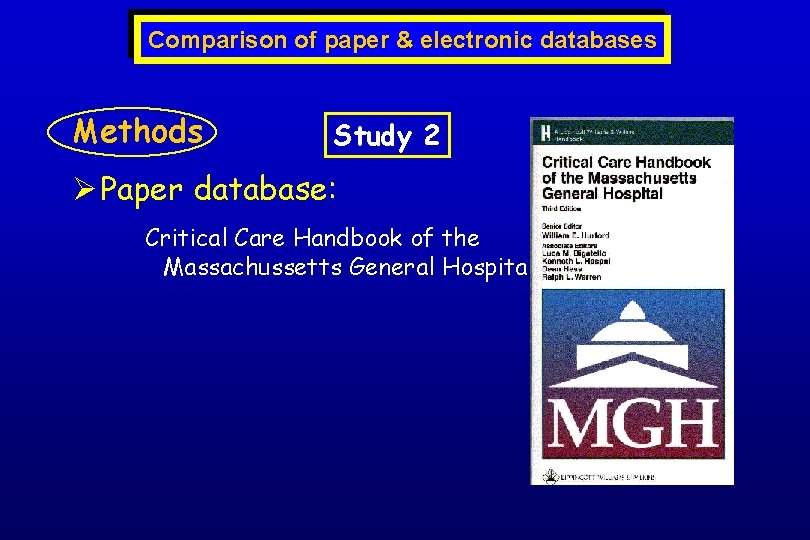
Comparison of paper & electronic databases Methods Study 2 Ø Paper database: Critical Care Handbook of the Massachussetts General Hospital
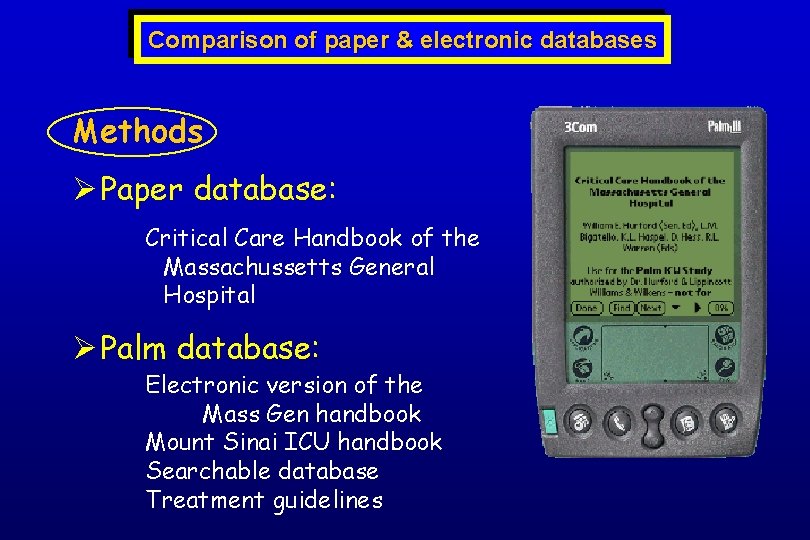
Comparison of paper & electronic databases Methods Ø Paper database: Critical Care Handbook of the Massachussetts General Hospital Ø Palm database: Electronic version of the Mass Gen handbook Mount Sinai ICU handbook Searchable database Treatment guidelines
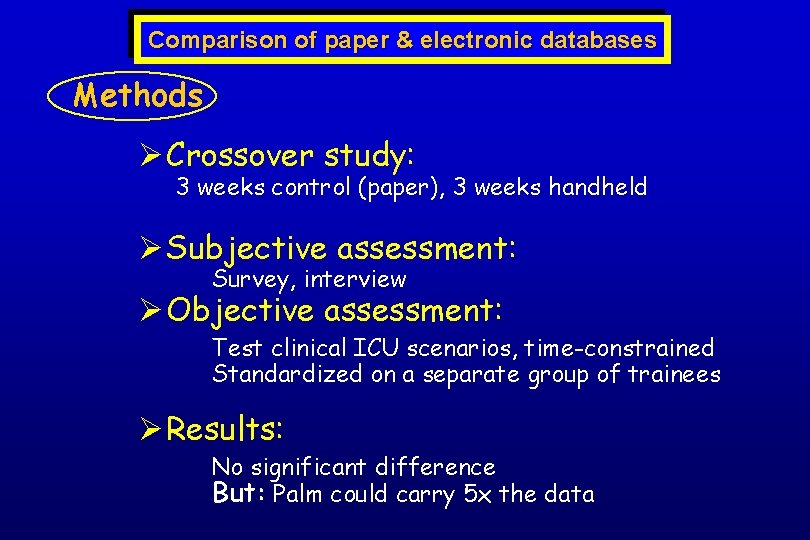
Comparison of paper & electronic databases Methods Ø Crossover study: 3 weeks control (paper), 3 weeks handheld Ø Subjective assessment: Survey, interview Ø Objective assessment: Test clinical ICU scenarios, time-constrained Standardized on a separate group of trainees Ø Results: No significant difference But: Palm could carry 5 x the data
Evaluation of Palm Computers in Critical Care Ø Study 1: Qualitative evaluation of handheld computers in the ICU Ø Study 2: Comparison between “paper” and electronic medical reference database Ø Study 3: Evaluation of Surgical Procedure logging using handheld devices Ø Study 4: Evaluation of handheld Pharmacopoeias Ø Study 5: Ontario Critical Care Information Network
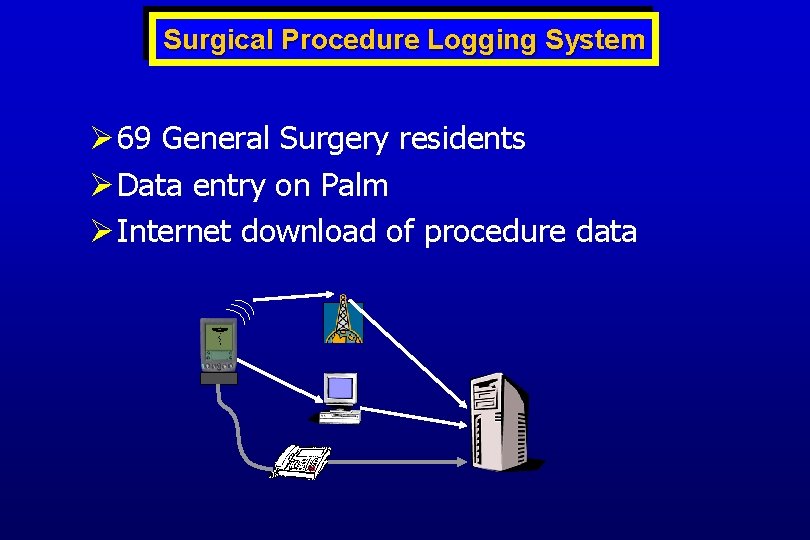
Surgical Procedure Logging System Ø 69 General Surgery residents Ø Data entry on Palm Ø Internet download of procedure data
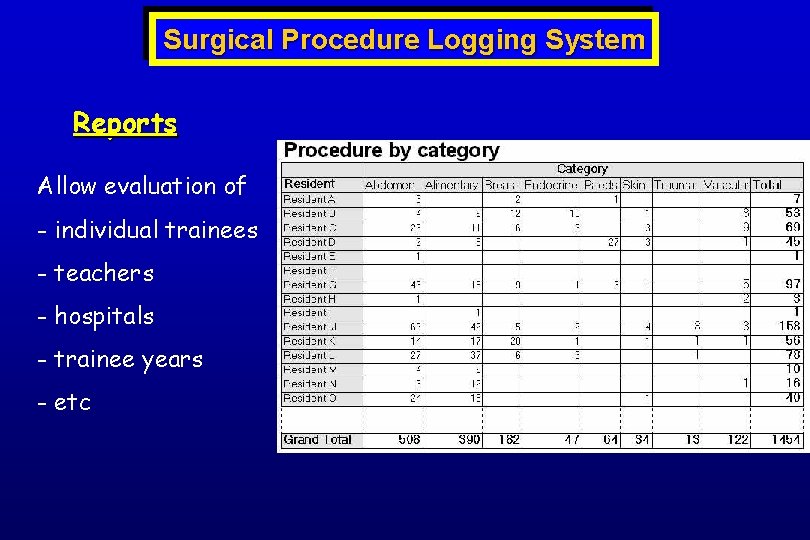
Surgical Procedure Logging System Reports Allow evaluation of - individual trainees - teachers - hospitals - trainee years - etc
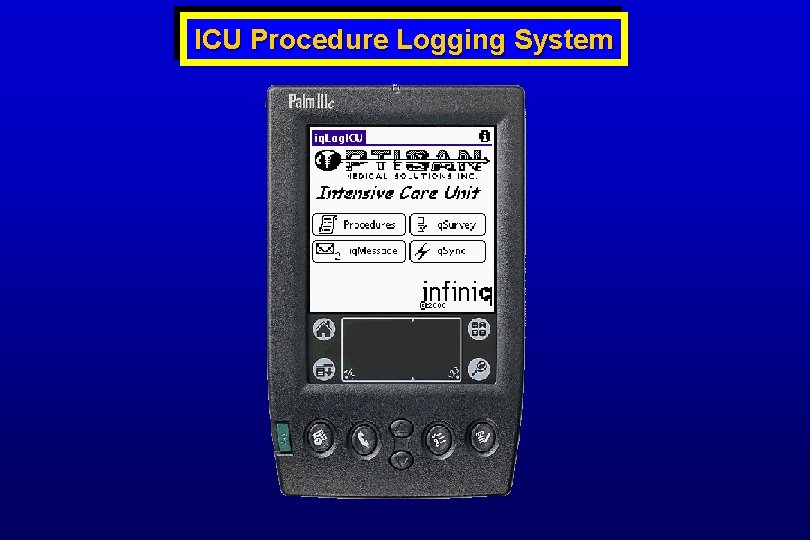
ICU Procedure Logging System
Evaluation of Palm Computers in Critical Care Ø Study 1: Qualitative evaluation of handheld computers in the ICU Ø Study 2: Comparison between “paper” and electronic medical reference database Ø Study 3: Evaluation of Surgical Procedure logging using handheld devices Ø Study 4: Evaluation of handheld Pharmacopoeias Ø Study 5: Ontario Critical Care Information Network
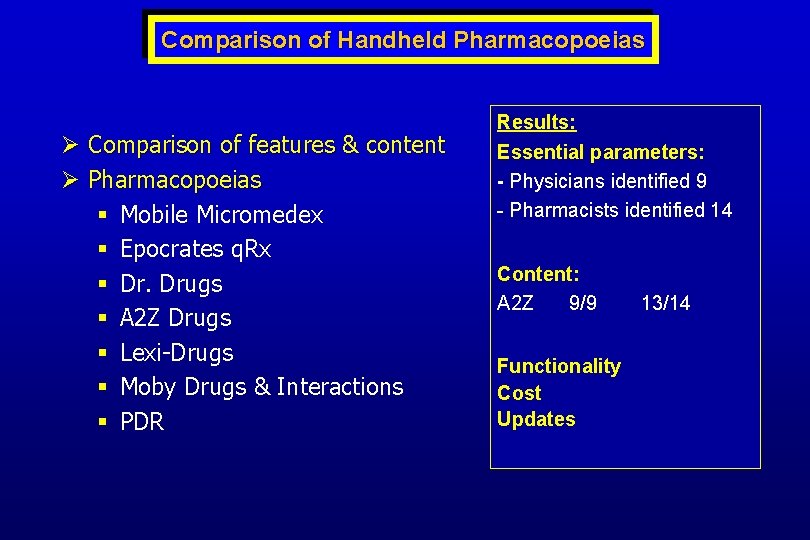
Comparison of Handheld Pharmacopoeias Ø Comparison of features & content Ø Pharmacopoeias § Mobile Micromedex § Epocrates q. Rx § Dr. Drugs § A 2 Z Drugs § Lexi-Drugs § Moby Drugs & Interactions § PDR Results: Essential parameters: - Physicians identified 9 - Pharmacists identified 14 Content: A 2 Z 9/9 Functionality Cost Updates 13/14
Evaluation of Palm Computers in Critical Care Ø Study 1: Qualitative evaluation of handheld computers in the ICU Ø Study 2: Comparison between “paper” and electronic medical reference database Ø Study 3: Evaluation of Surgical Procedure logging using handheld devices Ø Study 4: Evaluation of handheld Pharmacopoeias Ø Study 5: Ontario Critical Care Information Network
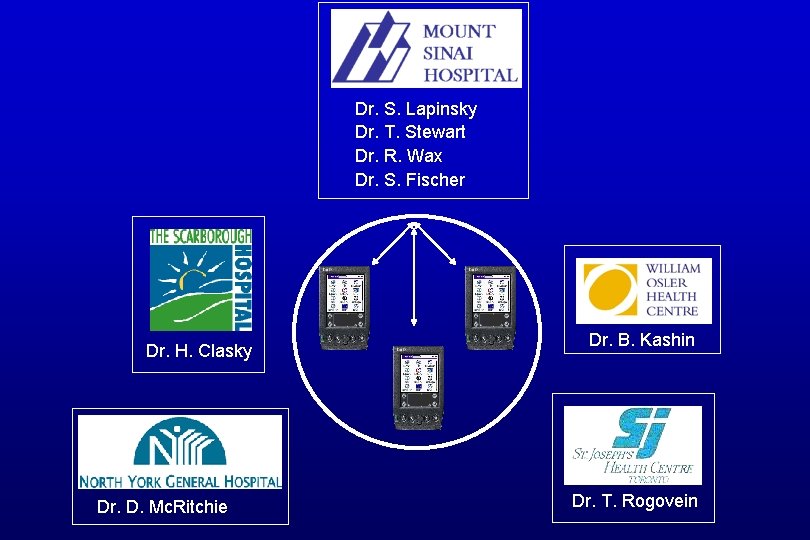
Dr. S. Lapinsky Dr. T. Stewart Dr. R. Wax Dr. S. Fischer Dr. H. Clasky Dr. D. Mc. Ritchie Dr. B. Kashin Dr. T. Rogovein
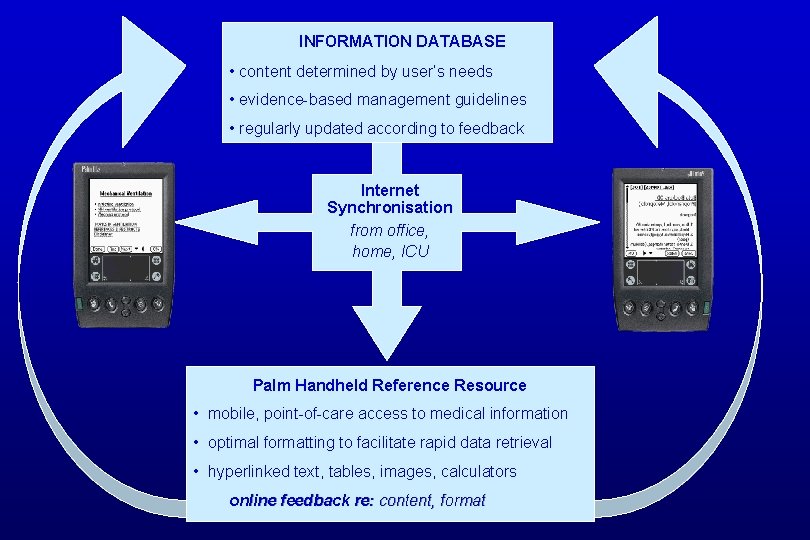
INFORMATION DATABASE • content determined by user’s needs • evidence-based management guidelines • regularly updated according to feedback Internet Synchronisation from office, home, ICU Palm Handheld Reference Resource • mobile, point-of-care access to medical information • optimal formatting to facilitate rapid data retrieval • hyperlinked text, tables, images, calculators online feedback re: content, format
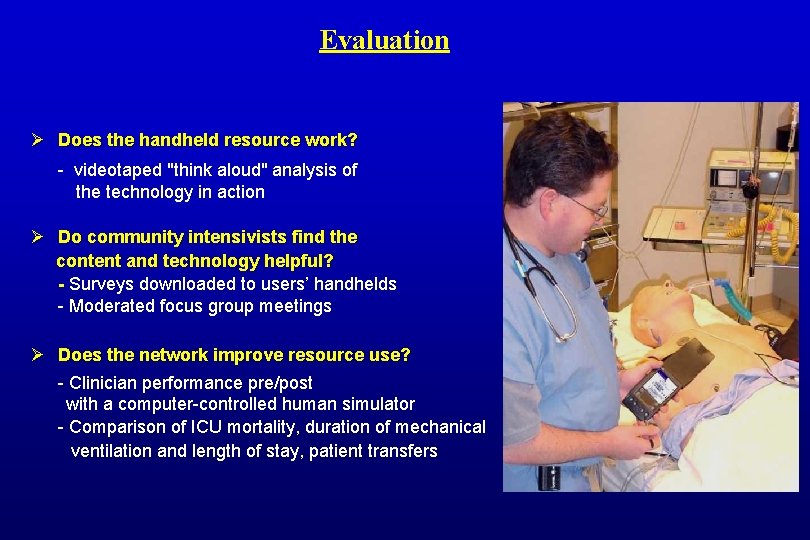
Evaluation Ø Does the handheld resource work? - videotaped "think aloud" analysis of the technology in action Ø Do community intensivists find the content and technology helpful? - Surveys downloaded to users’ handhelds - Moderated focus group meetings Ø Does the network improve resource use? - Clinician performance pre/post with a computer-controlled human simulator - Comparison of ICU mortality, duration of mechanical ventilation and length of stay, patient transfers
Acknowledgments Current studies supported by: