
Technology in Action Chapter 1 Why Computers Matter
- Slides: 24
Technology in Action Chapter 1 Why Computers Matter to You: The Importance of Becoming Computer Fluent
Chapter One Objectives • Computer fluency • Become a savvy user and consumer • Fluency helps careers • Understand challenges • Use future technologies © 2005 Prentice Hall, Inc. Why Computers Matter 2
More Objectives • Main functions of a computer • Data vs. information • Bits and bytes • Hardware • Main types of software • Different kinds of computers © 2005 Prentice Hall, Inc. Why Computers Matter 3
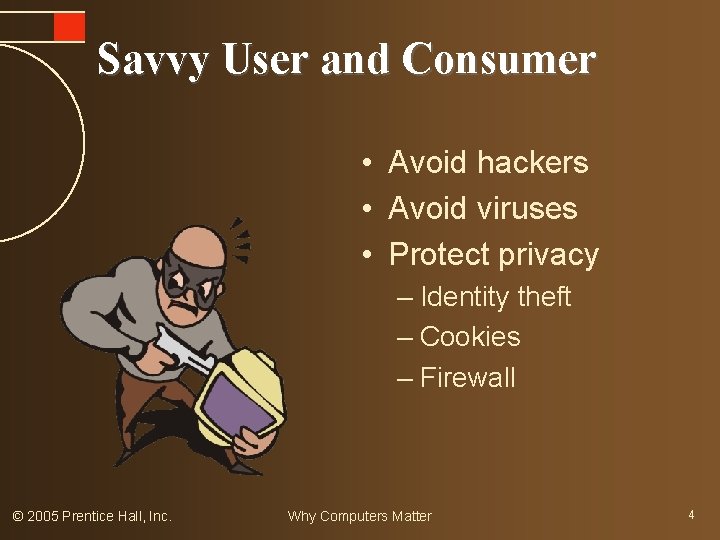
Savvy User and Consumer • Avoid hackers • Avoid viruses • Protect privacy – Identity theft – Cookies – Firewall © 2005 Prentice Hall, Inc. Why Computers Matter 4
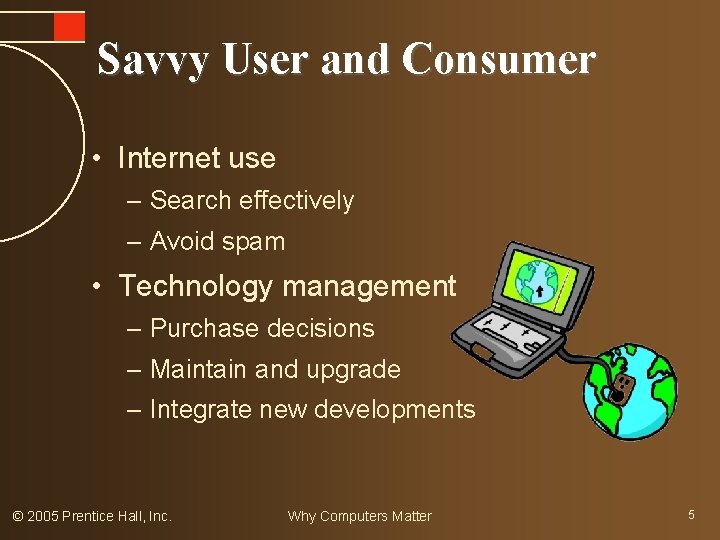
Savvy User and Consumer • Internet use – Search effectively – Avoid spam • Technology management – Purchase decisions – Maintain and upgrade – Integrate new developments © 2005 Prentice Hall, Inc. Why Computers Matter 5
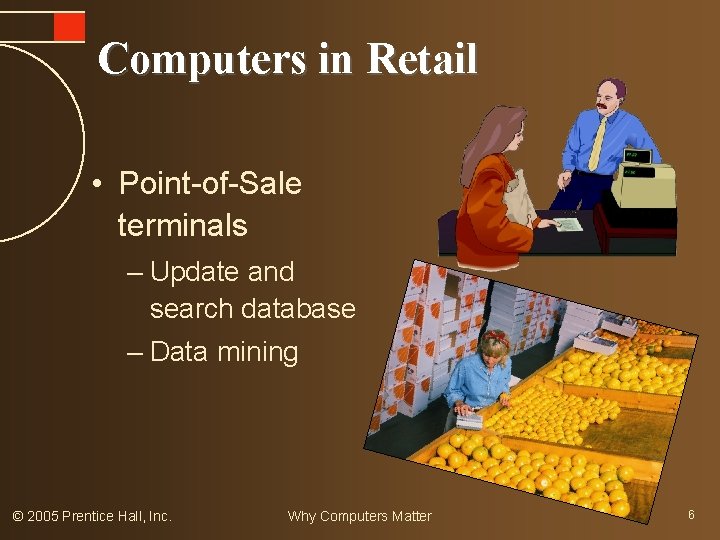
Computers in Retail • Point-of-Sale terminals – Update and search database – Data mining © 2005 Prentice Hall, Inc. Why Computers Matter 6
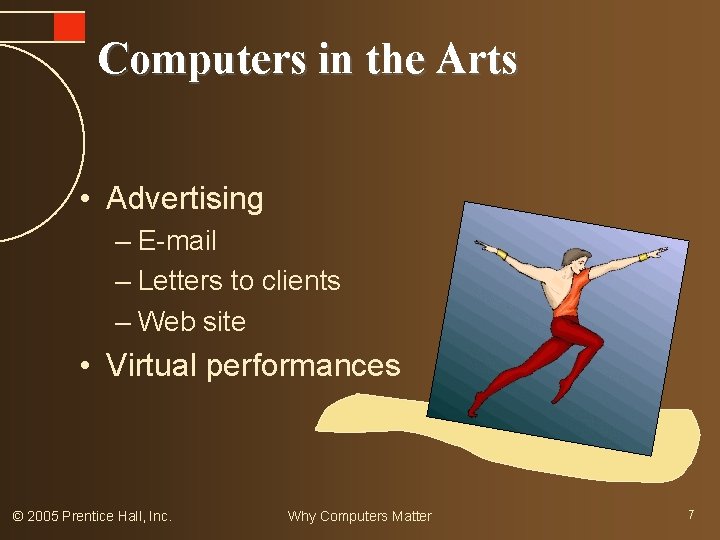
Computers in the Arts • Advertising – E-mail – Letters to clients – Web site • Virtual performances © 2005 Prentice Hall, Inc. Why Computers Matter 7
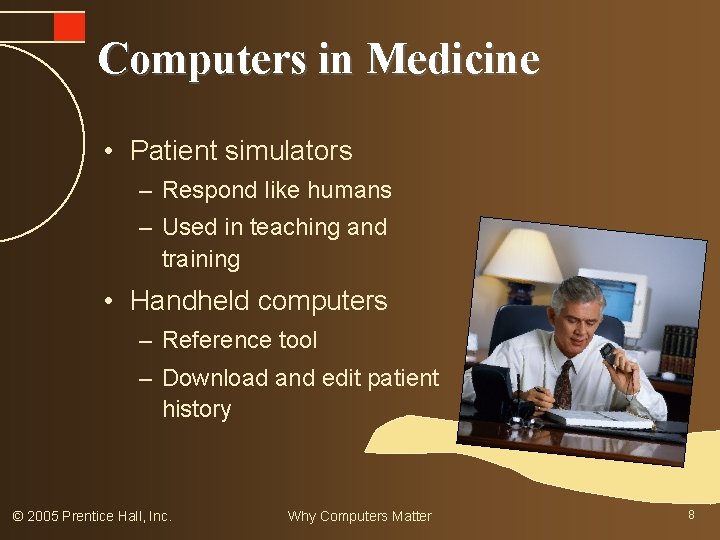
Computers in Medicine • Patient simulators – Respond like humans – Used in teaching and training • Handheld computers – Reference tool – Download and edit patient history © 2005 Prentice Hall, Inc. Why Computers Matter 8
Computers in Criminal Justice • Police and Detectives – Database searches – Computer forensics • Legal Field – Forensic animations © 2005 Prentice Hall, Inc. Why Computers Matter 9
Computers in the Classroom • Internet – Research – Virtual tours • Course Management – Blackboard – Web. CT © 2005 Prentice Hall, Inc. Why Computers Matter 10
Computers at Home • Robots • Smart devices • Keep tabs on latest products © 2005 Prentice Hall, Inc. Why Computers Matter 11
Digital Society Challenges • • • Web cams for surveillance Privacy risks Spam Copyright issues Over-reliance on computers © 2005 Prentice Hall, Inc. Why Computers Matter 12
Technologies of Tomorrow • Nanotechnology – Extremely small-scale devices • Biomedical chip implants – Veri. Chip • Artificial intelligence – Emulates human thought Computer Functions © 2005 Prentice Hall, Inc. Why Computers Matter 13
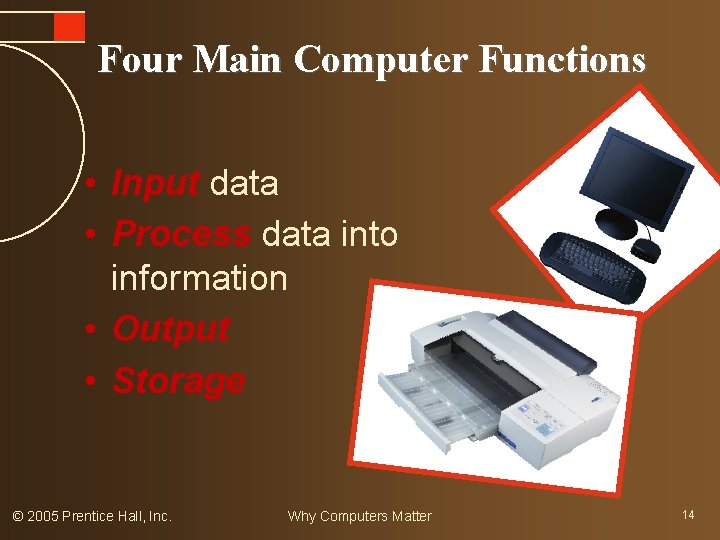
Four Main Computer Functions • Input data • Process data into information • Output • Storage © 2005 Prentice Hall, Inc. Why Computers Matter 14
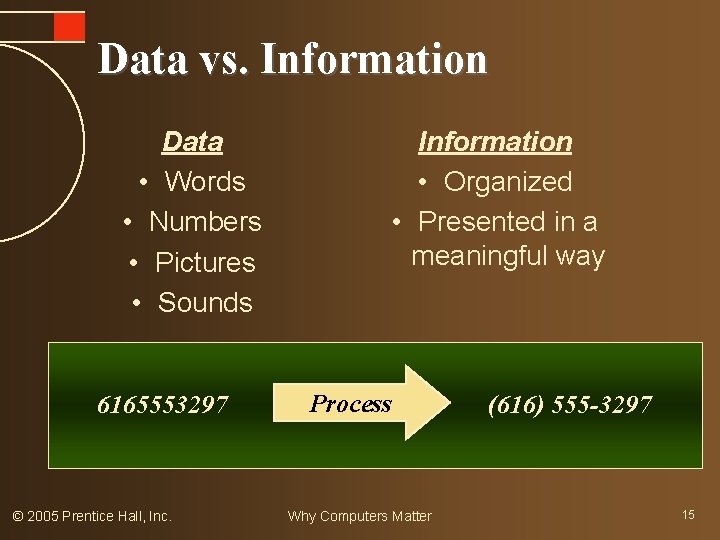
Data vs. Information Data • Words • Numbers • Pictures • Sounds 6165553297 © 2005 Prentice Hall, Inc. Information • Organized • Presented in a meaningful way Process Why Computers Matter (616) 555 -3297 15
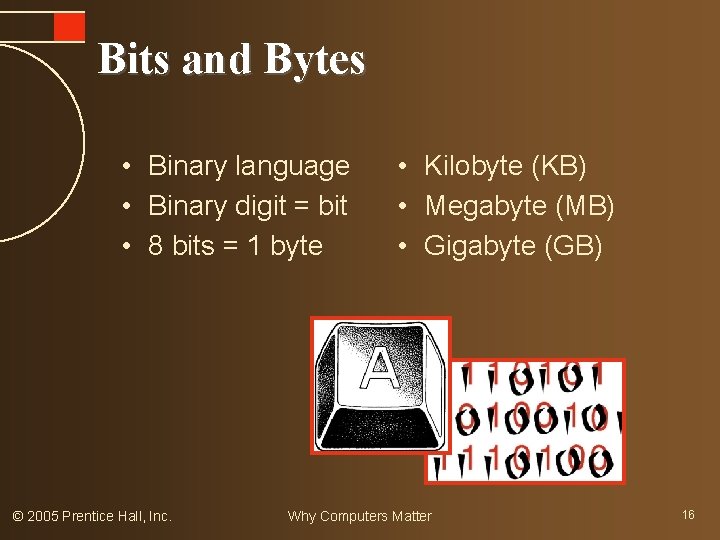
Bits and Bytes • Binary language • Binary digit = bit • 8 bits = 1 byte © 2005 Prentice Hall, Inc. • Kilobyte (KB) • Megabyte (MB) • Gigabyte (GB) Why Computers Matter 16
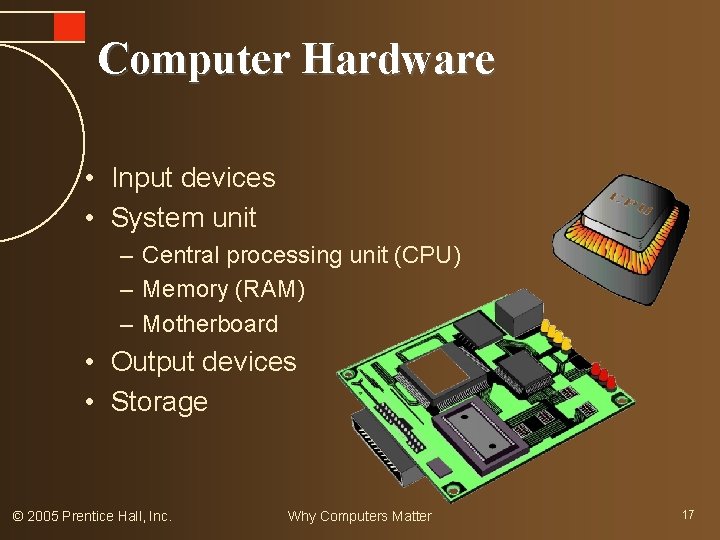
Computer Hardware • Input devices • System unit – Central processing unit (CPU) – Memory (RAM) – Motherboard • Output devices • Storage © 2005 Prentice Hall, Inc. Why Computers Matter 17
Software: Two Broad Categories • System software – Operating system • Application software – Word processor – Spreadsheets – Photo editors © 2005 Prentice Hall, Inc. Why Computers Matter 18
The Operating System • Bridge between hardware and software • Provides user interface • Platform specific • Varies between Macintosh and PC • Definition of OS © 2005 Prentice Hall, Inc. Why Computers Matter 19
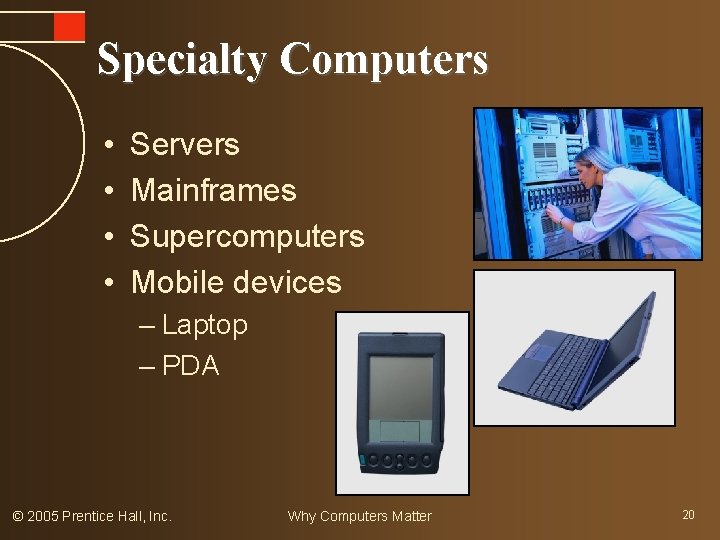
Specialty Computers • • Servers Mainframes Supercomputers Mobile devices – Laptop – PDA © 2005 Prentice Hall, Inc. Why Computers Matter 20
Using the Book © 2005 Prentice Hall, Inc. Why Computers Matter 21
Enhance Your Knowledge • Windows OS • Macintosh OS • Artist display • Acronyms © 2005 Prentice Hall, Inc. Why Computers Matter 22
Why Computers Matter Topic Summary • What is “computer fluent” • Being a savvy computer user and consumer • Computers and careers • Future technologies • Challenges © 2005 Prentice Hall, Inc. Why Computers Matter 23
Why Computers Matter Topic Summary • Four functions of a computer – Input, Process, Output, Storage • Data and information – Differences • Computer language – Bits and bytes © 2005 Prentice Hall, Inc. Why Computers Matter 24