
Technology Fee Advisory Committee Fee Request How We


- Slides: 28
Technology Fee Advisory Committee Fee Request
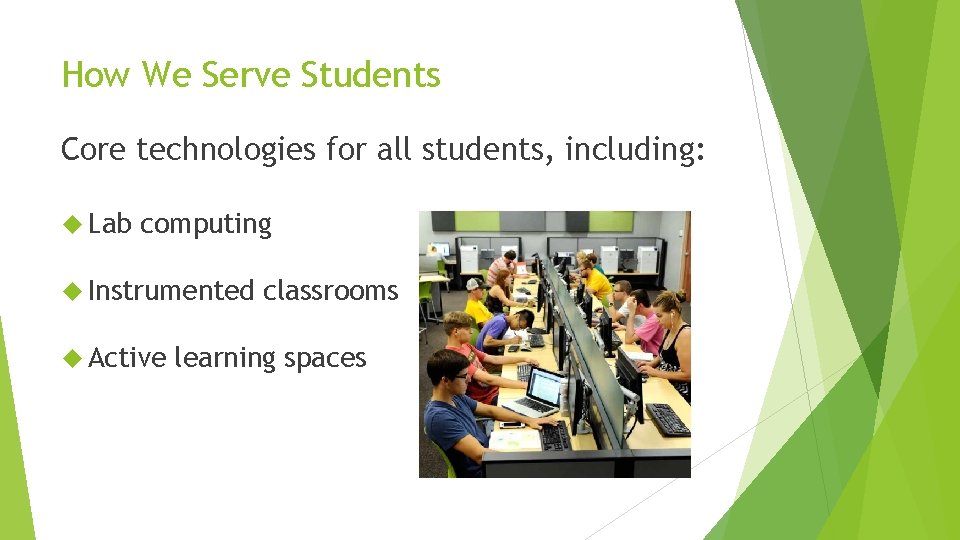
How We Serve Students Core technologies for all students, including: Lab computing Instrumented Active classrooms learning spaces
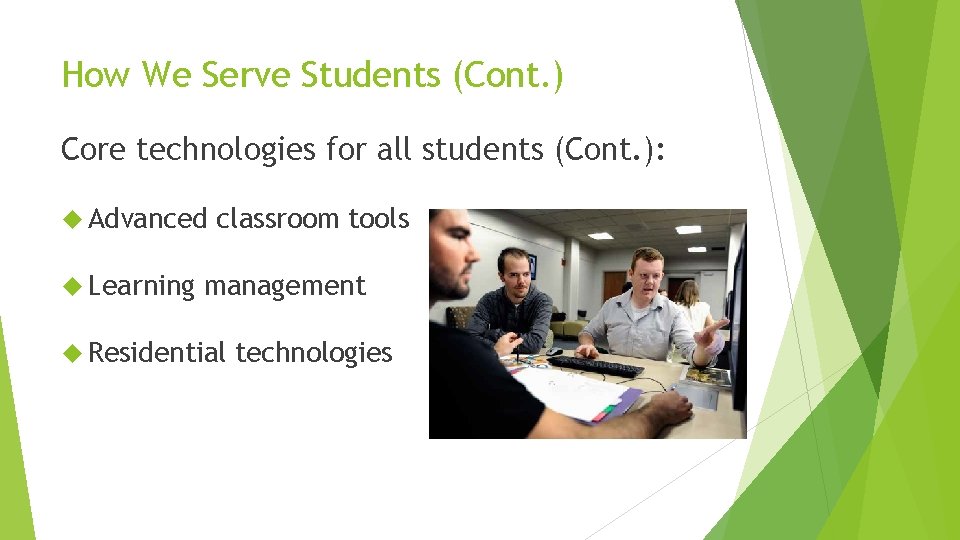
How We Serve Students (Cont. ) Core technologies for all students (Cont. ): Advanced Learning classroom tools management Residential technologies
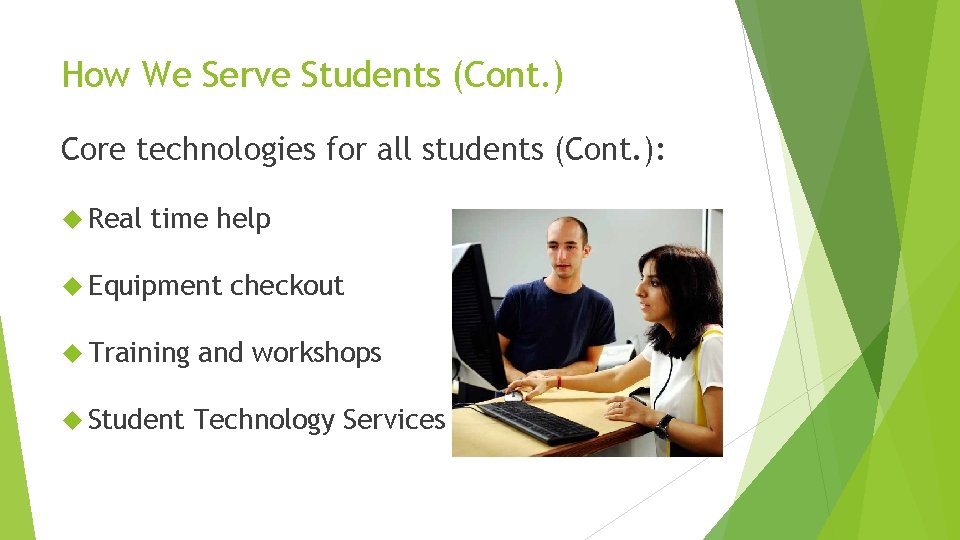
How We Serve Students (Cont. ) Core technologies for all students (Cont. ): Real time help Equipment checkout Training and workshops Student Technology Services
State of the IT Division Have continued to grow Meeting current needs with staff losses Shifting of NDUS costs to NDSU Functional Consolidation
IT Division’s Future Impact on Students Continued growth in network resources Continued growth in support and training services Classroom technology needs continue to grow Expanding possibilities integrating between classroom and outside of class services
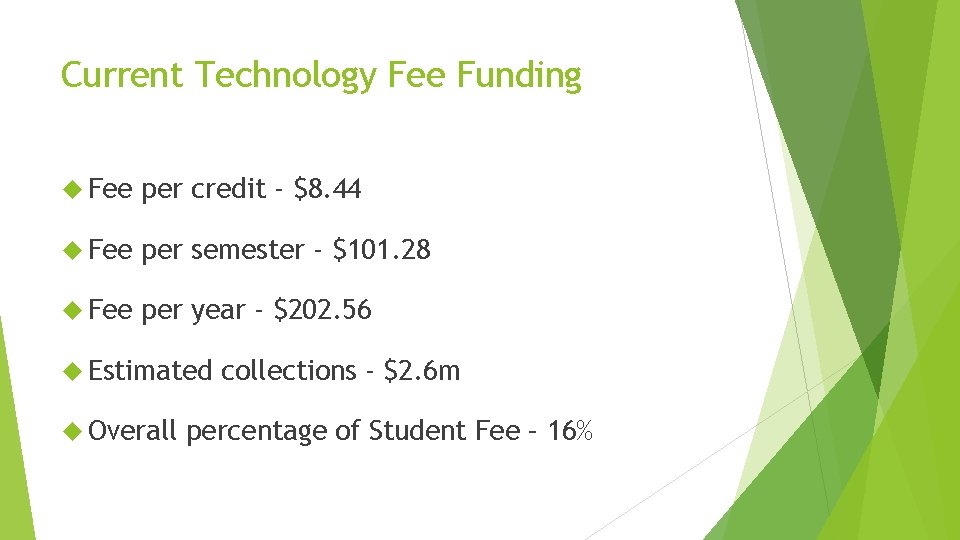
Current Technology Fee Funding Fee per credit - $8. 44 Fee per semester - $101. 28 Fee per year - $202. 56 Estimated Overall collections - $2. 6 m percentage of Student Fee – 16%
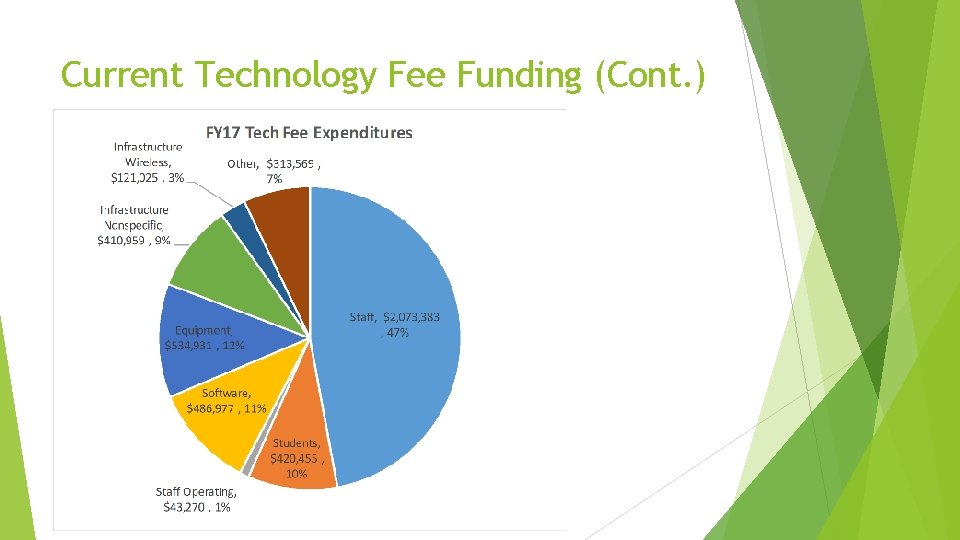
Current Technology Fee Funding (Cont. )
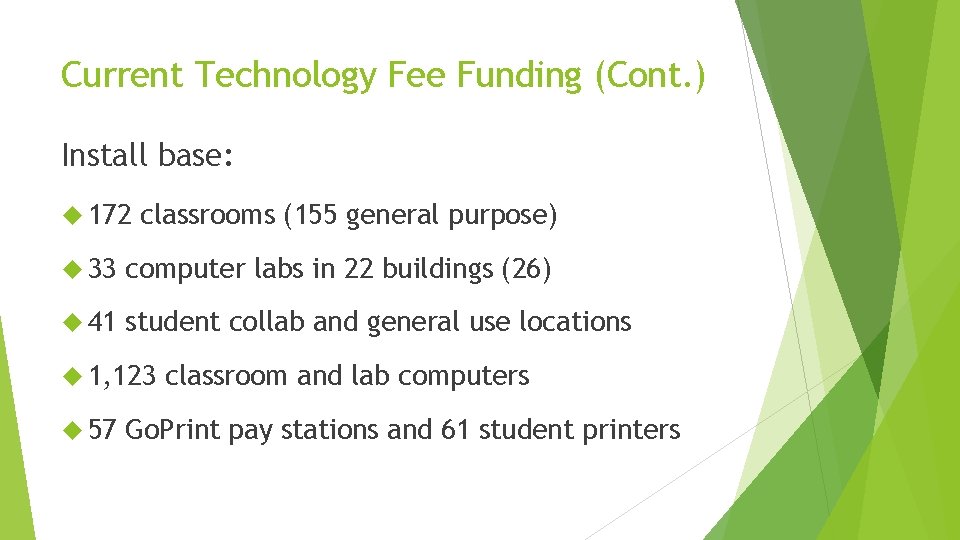
Current Technology Fee Funding (Cont. ) Install base: 172 classrooms (155 general purpose) 33 computer labs in 22 buildings (26) 41 student collab and general use locations 1, 123 57 classroom and lab computers Go. Print pay stations and 61 student printers
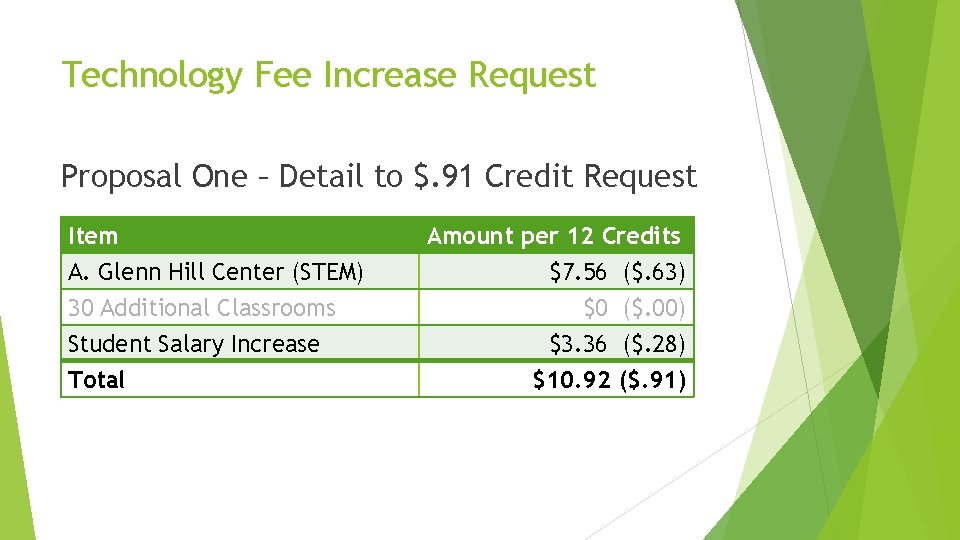
Technology Fee Increase Request Proposal One – Detail to $. 91 Credit Request Item A. Glenn Hill Center (STEM) 30 Additional Classrooms Student Salary Increase Total Amount per 12 Credits $7. 56 ($. 63) $0 ($. 00) $3. 36 ($. 28) $10. 92 ($. 91)
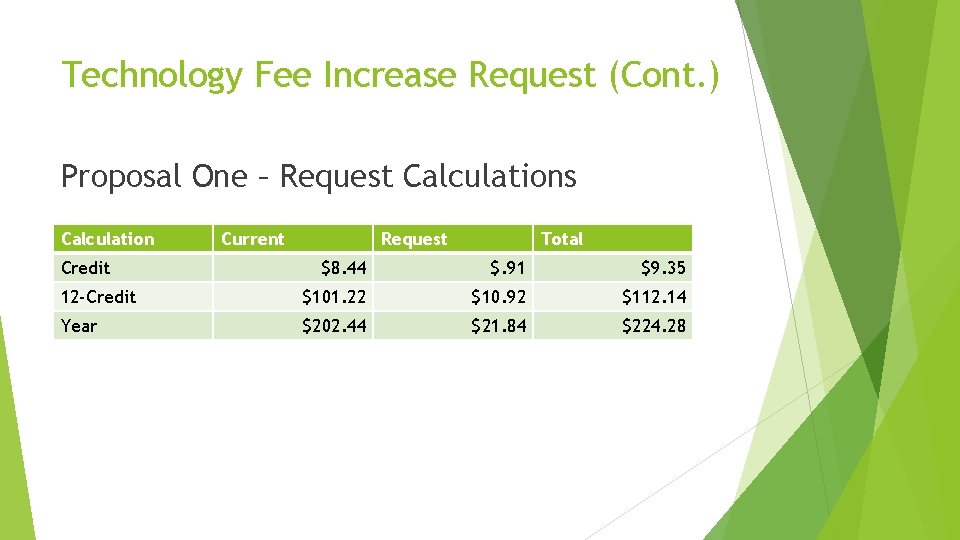
Technology Fee Increase Request (Cont. ) Proposal One – Request Calculations Calculation Credit Current Request Total $8. 44 $. 91 $9. 35 12 -Credit $101. 22 $10. 92 $112. 14 Year $202. 44 $21. 84 $224. 28
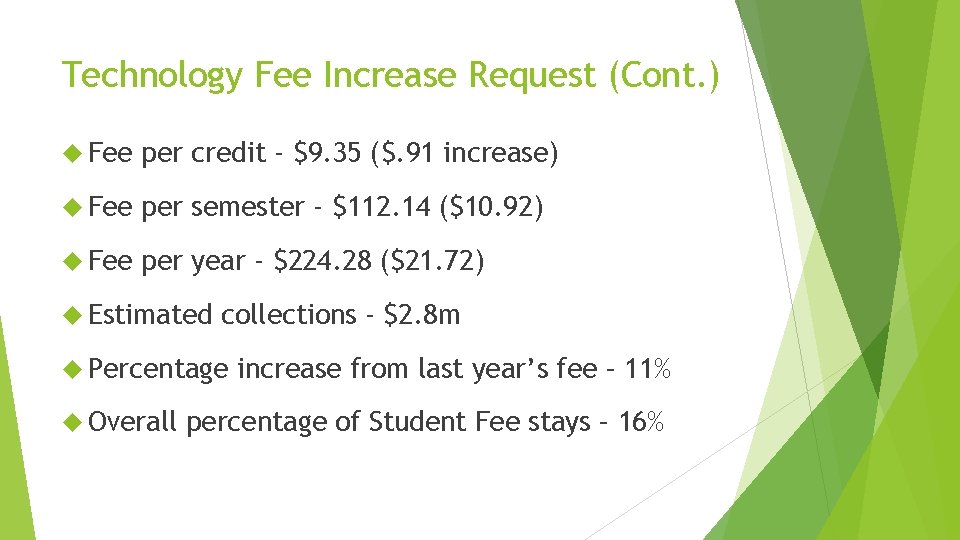
Technology Fee Increase Request (Cont. ) Fee per credit - $9. 35 ($. 91 increase) Fee per semester - $112. 14 ($10. 92) Fee per year - $224. 28 ($21. 72) Estimated collections - $2. 8 m Percentage Overall increase from last year’s fee – 11% percentage of Student Fee stays – 16%
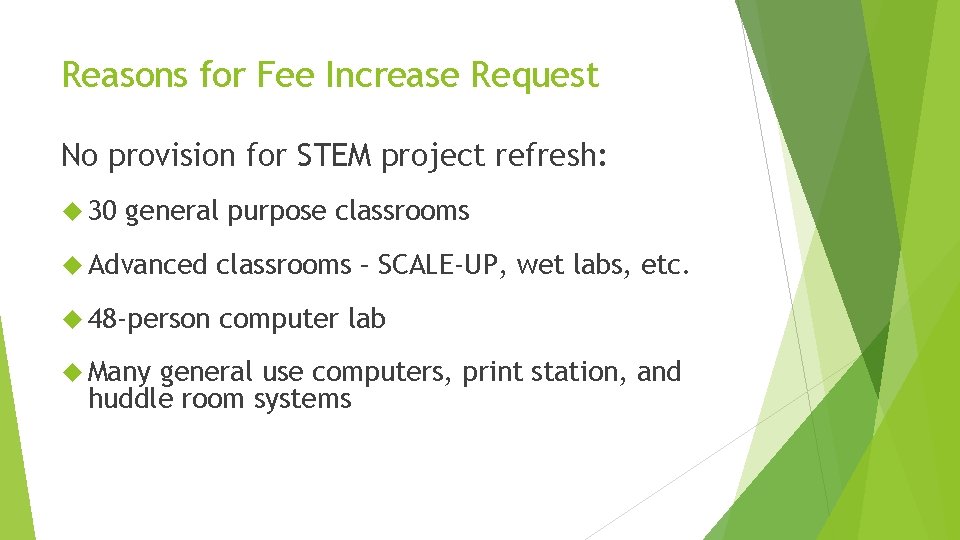
Reasons for Fee Increase Request No provision for STEM project refresh: 30 general purpose classrooms Advanced classrooms – SCALE-UP, wet labs, etc. 48 -person computer lab Many general use computers, print station, and huddle room systems
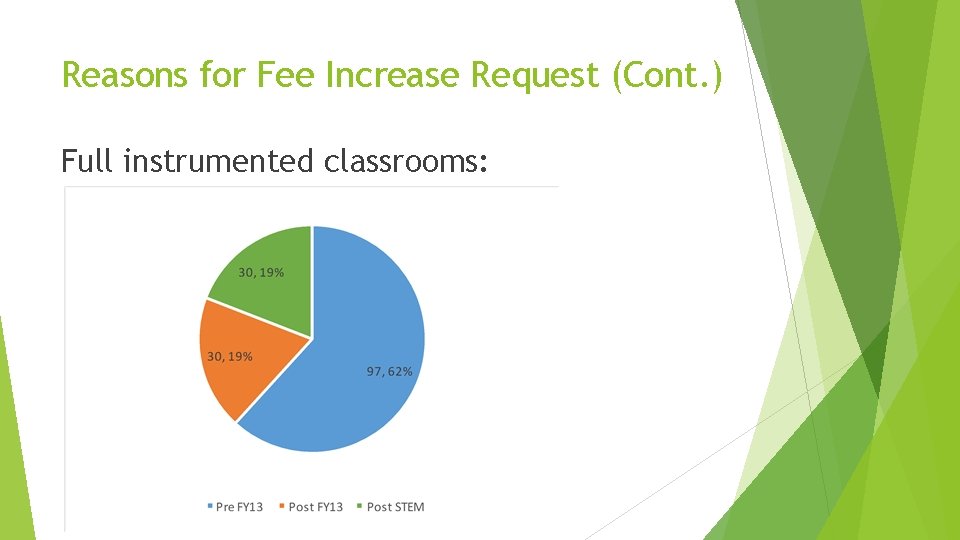
Reasons for Fee Increase Request (Cont. ) Full instrumented classrooms:
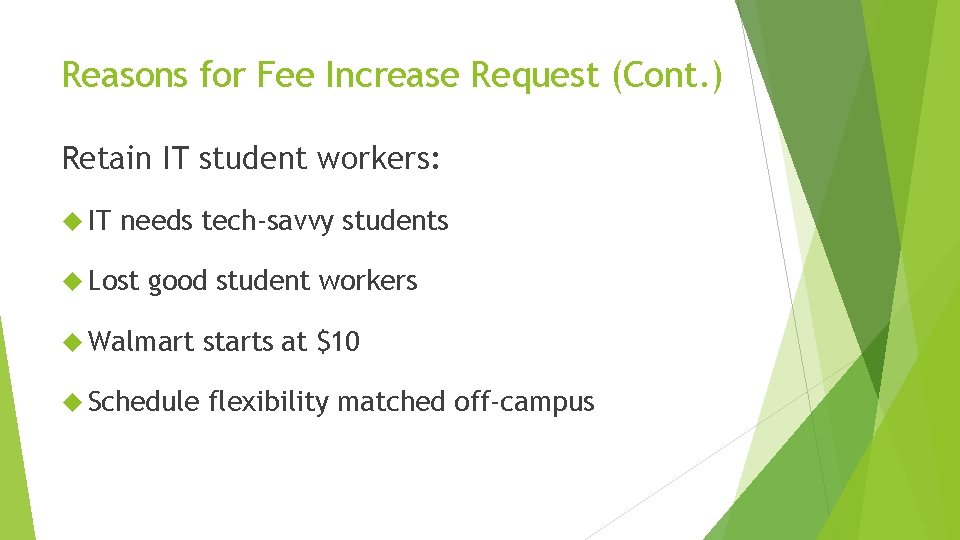
Reasons for Fee Increase Request (Cont. ) Retain IT student workers: IT needs tech-savvy students Lost good student workers Walmart starts at $10 Schedule flexibility matched off-campus
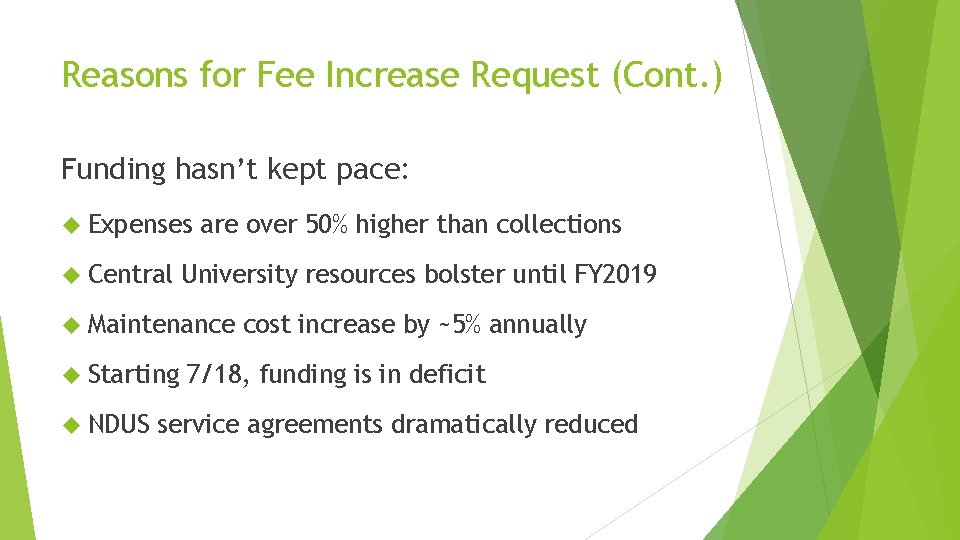
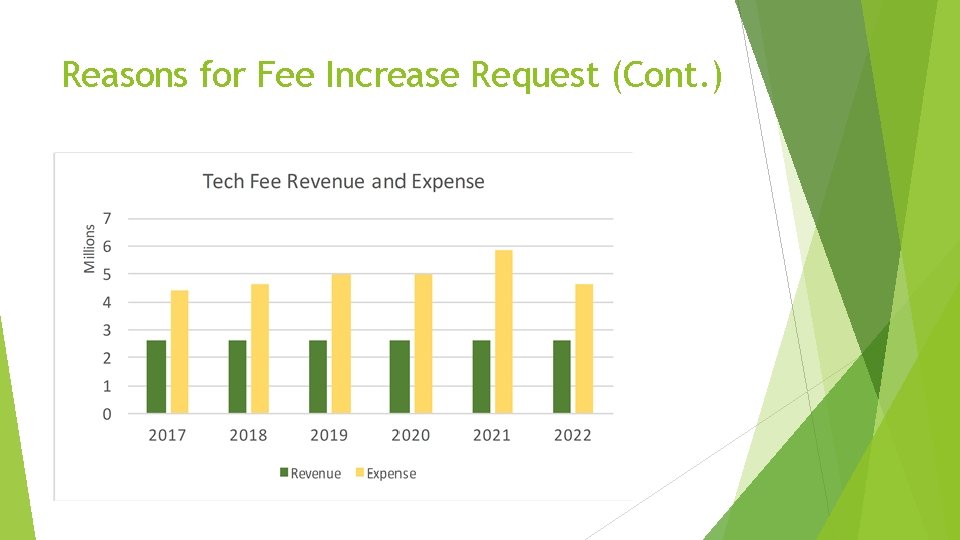
Reasons for Fee Increase Request (Cont. ) Funding hasn’t kept pace: Expenses Central are over 50% higher than collections University resources bolster until FY 2019 Maintenance Starting NDUS cost increase by ~5% annually 7/18, funding is in deficit service agreements dramatically reduced
Reasons for Fee Increase Request (Cont. )
External Factors A. Glenn Hill Center premised on technology Market realities for entry level worker rates Shifting of NDUS costs to NDSU Functional Consolidation Maintenance cost increase by ~5% annually
Impact of Technology Fee is essential for IT Division: 40% of budget which can support student technologies 100% Has of student worker funding allowed requests such as wireless to permeate more quickly
Impact of Technology Fee Other revenue sources and Tech Fee impact: Appropriated funds – diminishing and not intended to replace Technology Fee NDUS Local service agreements – diminished rapidly funds – cannot be used for anything other than intended purposes
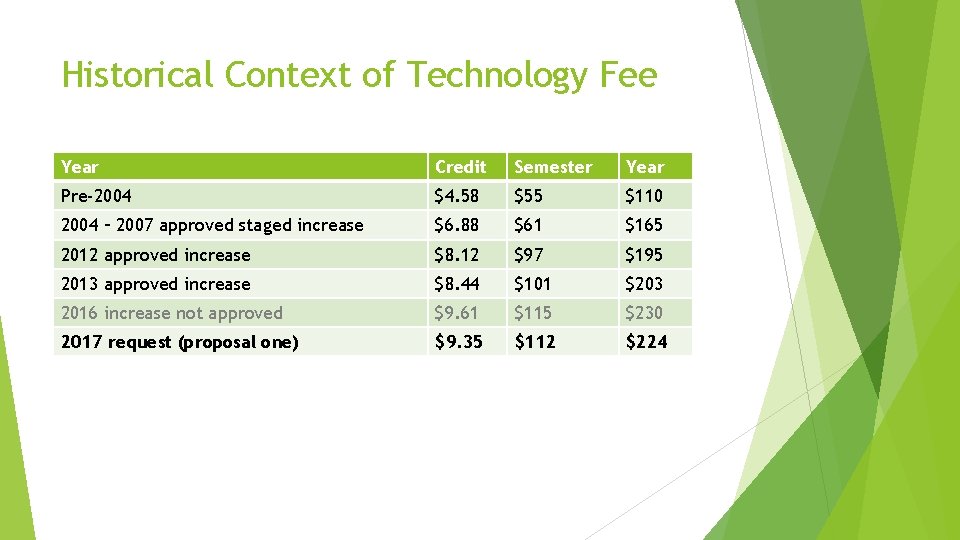
Historical Context of Technology Fee Year Credit Semester Year Pre-2004 $4. 58 $55 $110 2004 – 2007 approved staged increase $6. 88 $61 $165 2012 approved increase $8. 12 $97 $195 2013 approved increase $8. 44 $101 $203 2016 increase not approved $9. 61 $115 $230 2017 request (proposal one) $9. 35 $112 $224
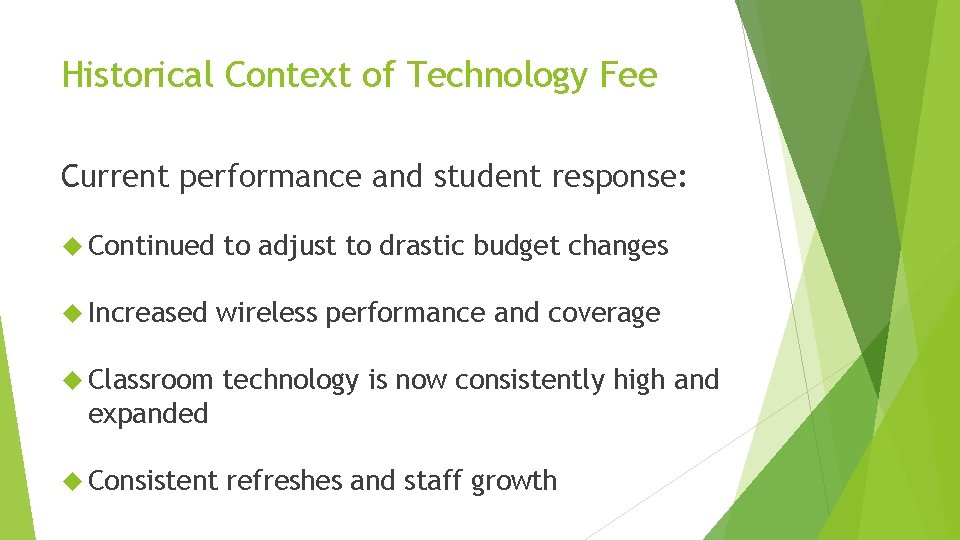
Historical Context of Technology Fee Current performance and student response: Continued to adjust to drastic budget changes Increased wireless performance and coverage Classroom technology is now consistently high and expanded Consistent refreshes and staff growth
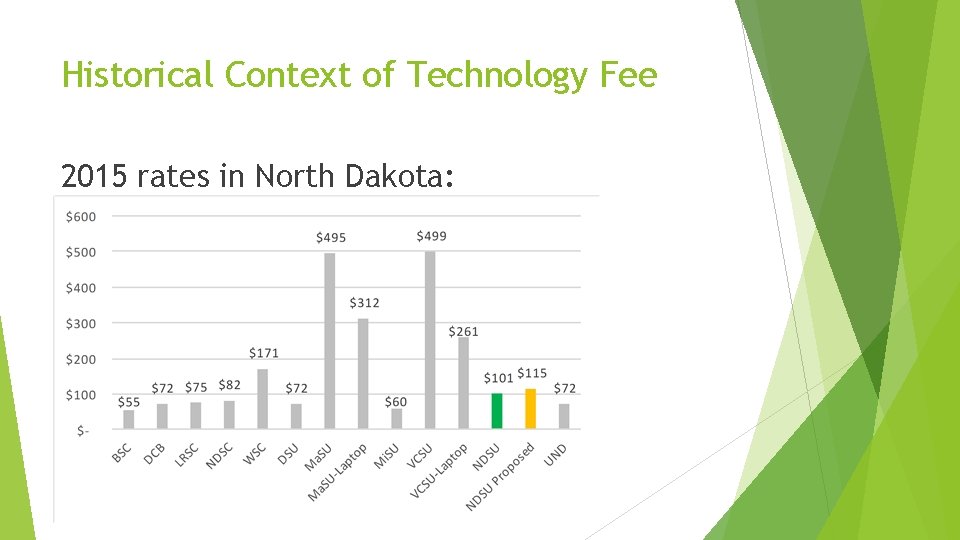
Historical Context of Technology Fee 2015 rates in North Dakota:
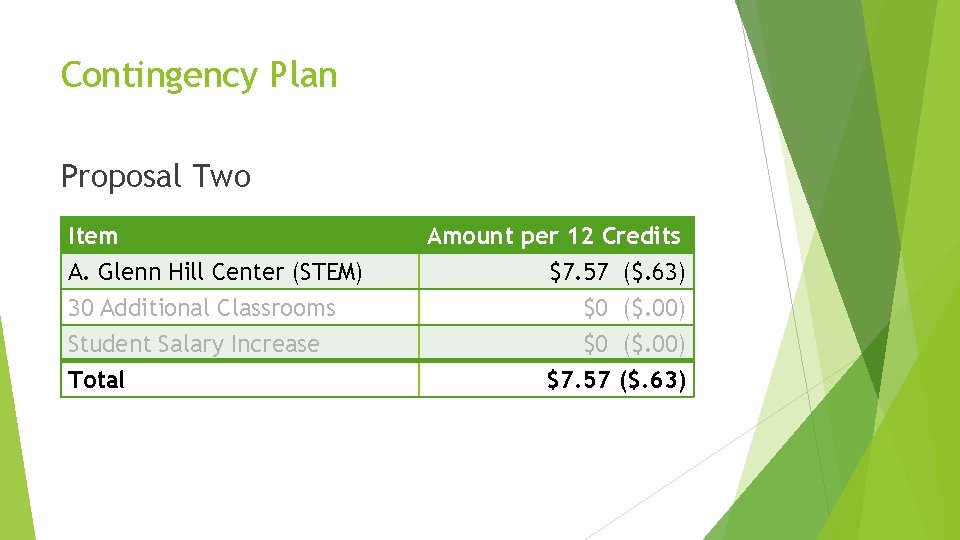
Contingency Plan Proposal Two Item A. Glenn Hill Center (STEM) 30 Additional Classrooms Student Salary Increase Total Amount per 12 Credits $7. 57 ($. 63) $0 ($. 00) $7. 57 ($. 63)
Contingency Plan (Cont. ) No additional Technology Fee funds: Continue to explore alternative funding sources Prioritize refreshes as funds available Move to break/fix model Lower standard of classroom technology
How We Plan to Improve Streamlined More focus on service People New resources extenders account management system Continued Piloting virtualization pilot emerging technology
Questions and Feedback