
Technology Evolution Transit Signal in Transit Signal Priority

- Slides: 25
Technology Evolution Transit Signal in Transit Signal Priority Applications New Technologies, New Opportunities Peter Koonce, PE APTA BRT Conference – Seattle, WA Wednesday, May 5, 2009
Today’s Message Transit signal priority relies on cities, counties, and state transportation agencies that manage infrastructure By seeking mutually beneficial solutions for transit preferential treatments we can build partnerships that deliver quality transit Implementation of TSP is predicated on the policies of these agencies
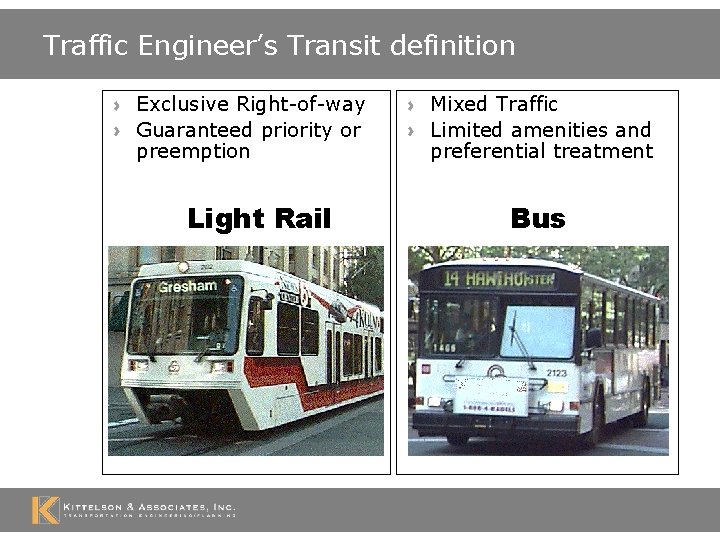
Traffic Engineer’s Transit definition Exclusive Right-of-way Guaranteed priority or preemption Light Rail Mixed Traffic Limited amenities and preferential treatment Bus
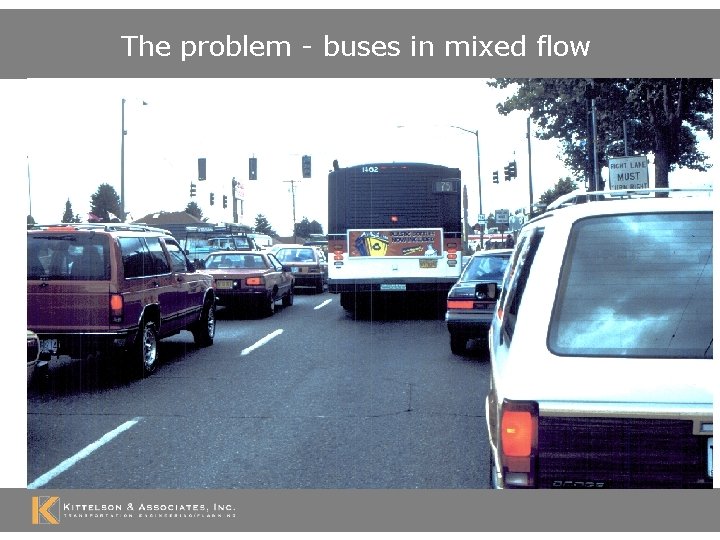
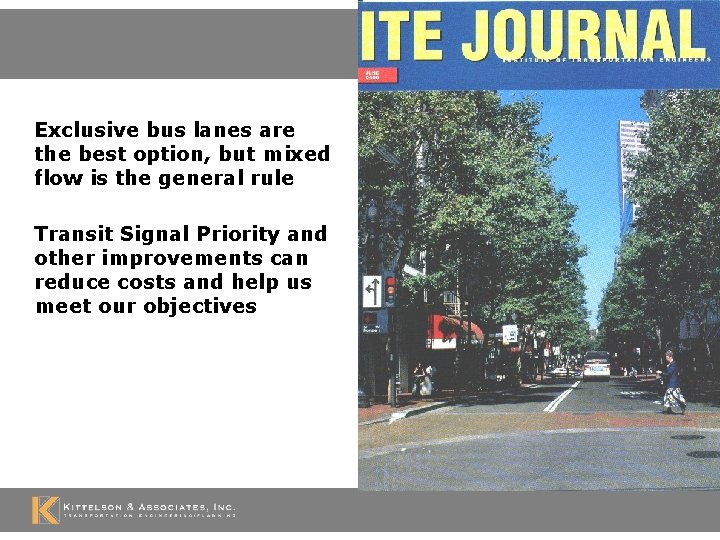
The problem - buses in mixed flow
Exclusive bus lanes are the best option, but mixed flow is the general rule Transit Signal Priority and other improvements can reduce costs and help us meet our objectives
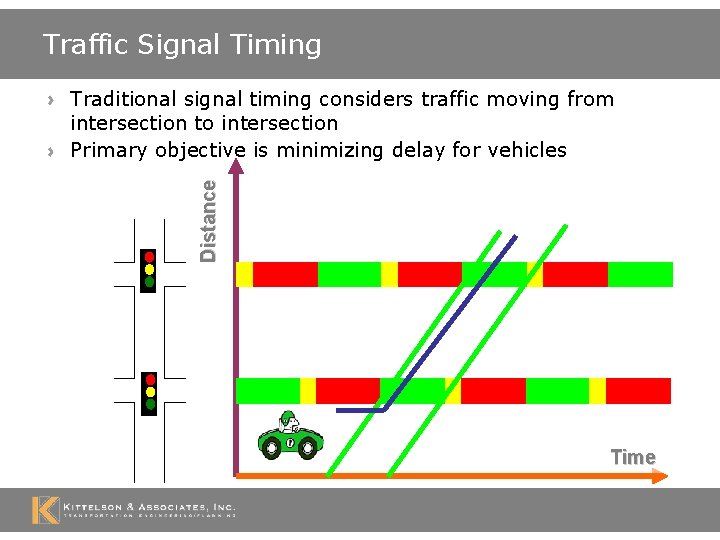
Traffic Signal Timing Distance Traditional signal timing considers traffic moving from intersection to intersection Primary objective is minimizing delay for vehicles Time
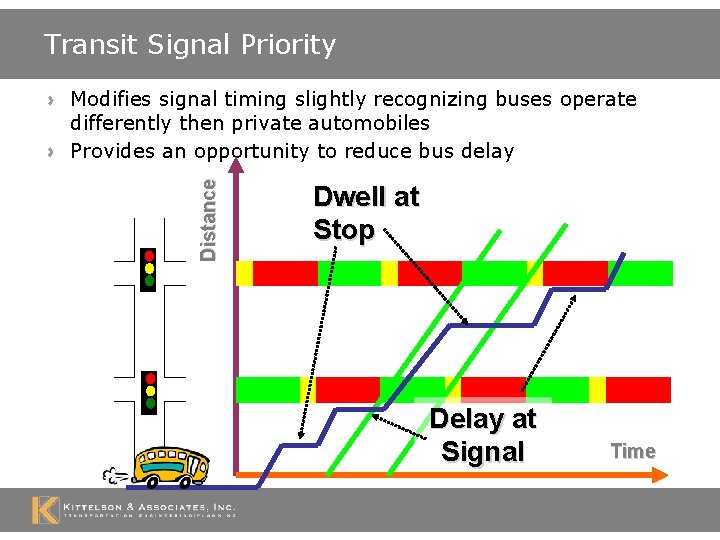
Transit Signal Priority Distance Modifies signal timing slightly recognizing buses operate differently then private automobiles Provides an opportunity to reduce bus delay Dwell at Stop Delay at Signal Time
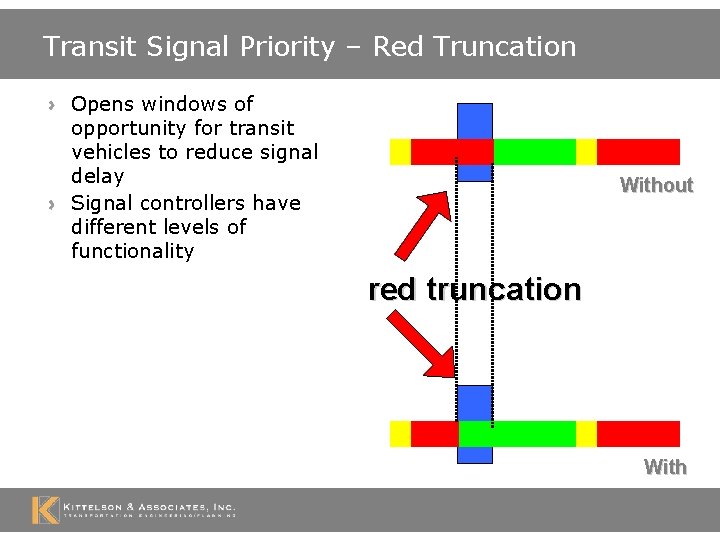
Transit Signal Priority – Red Truncation Opens windows of opportunity for transit vehicles to reduce signal delay Signal controllers have different levels of functionality Without red truncation With
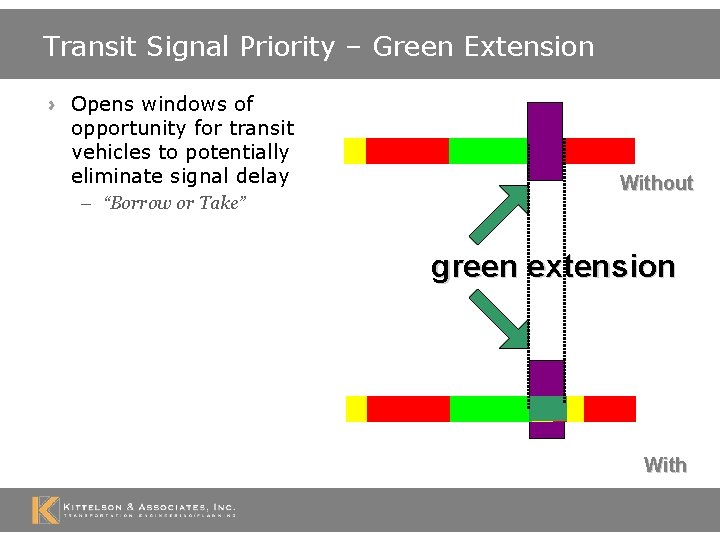
Transit Signal Priority – Green Extension Opens windows of opportunity for transit vehicles to potentially eliminate signal delay – “Borrow or Take” Without green extension With
Transit Signal Priority Application Recognize its not so important how much green for transit, but green at the right time – Shorter cycle lengths typically reduce delay for transit vehicles (passive) – Signal priority also provides greater flexibility
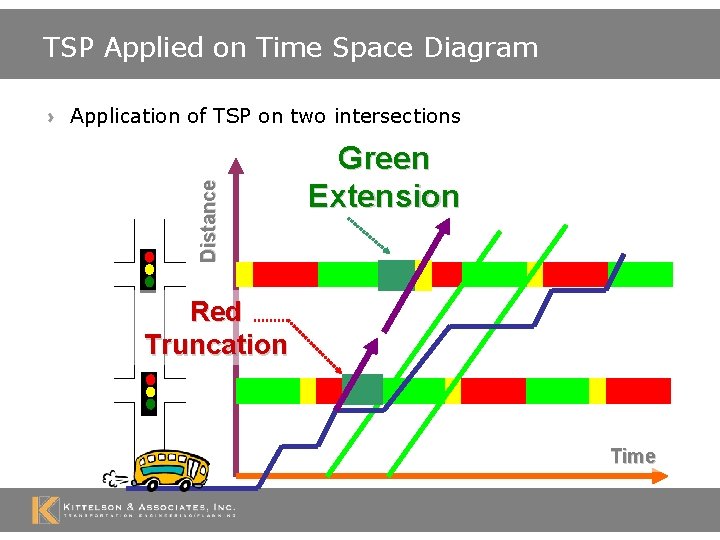
TSP Applied on Time Space Diagram Distance Application of TSP on two intersections Green Extension Red Truncation Time
Standard Approach to TSP Message Assess bus stop location Determine traffic signal capabilities Set detection range in field based on estimate of speed
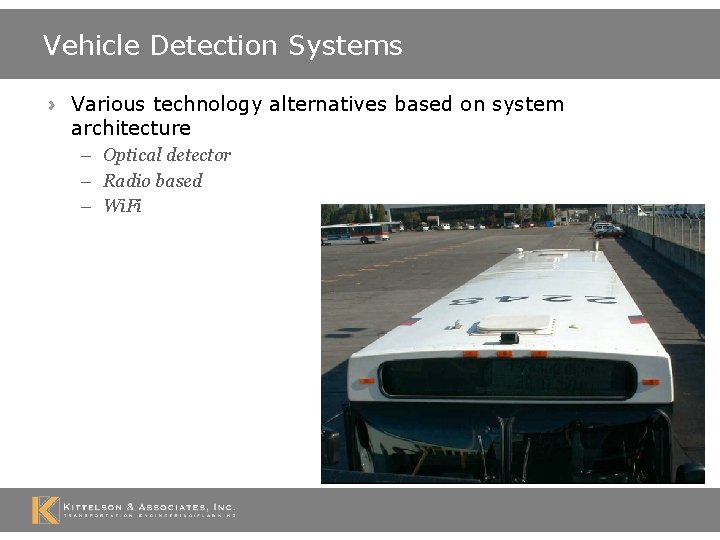
Vehicle Detection Systems Various technology alternatives based on system architecture – Optical detector – Radio based – Wi. Fi
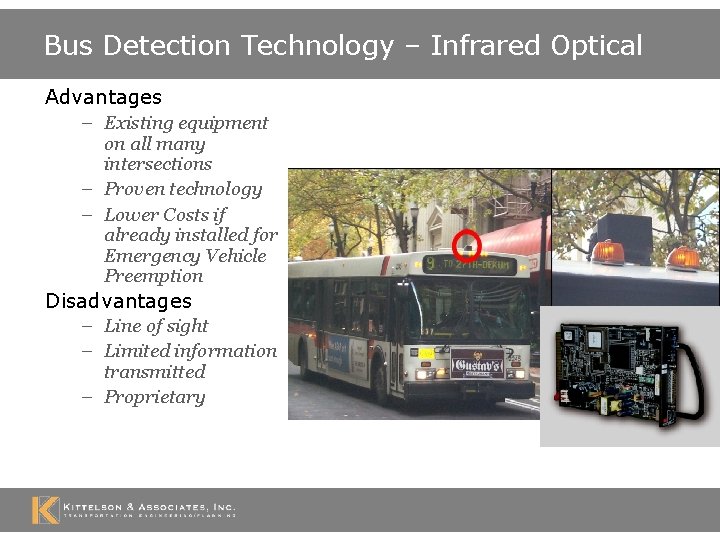
Bus Detection Technology – Infrared Optical Advantages – Existing equipment on all many intersections – Proven technology – Lower Costs if already installed for Emergency Vehicle Preemption Disadvantages – Line of sight – Limited information transmitted – Proprietary An optical emitter as installed on a bus in Portland, OR. The lens has a polarized cover that allows the infrared signal to be sent to the intersection.
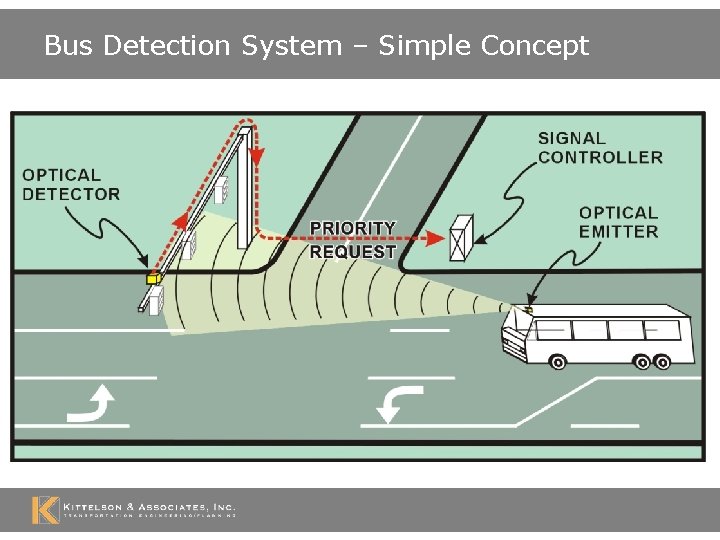
Bus Detection System – Simple Concept
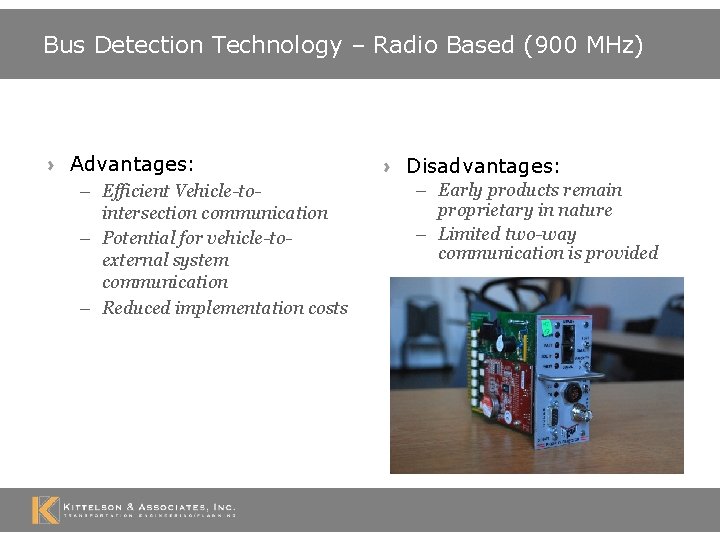
Bus Detection Technology – Radio Based (900 MHz) Advantages: – Efficient Vehicle-tointersection communication – Potential for vehicle-toexternal system communication – Reduced implementation costs Disadvantages: – Early products remain proprietary in nature – Limited two-way communication is provided
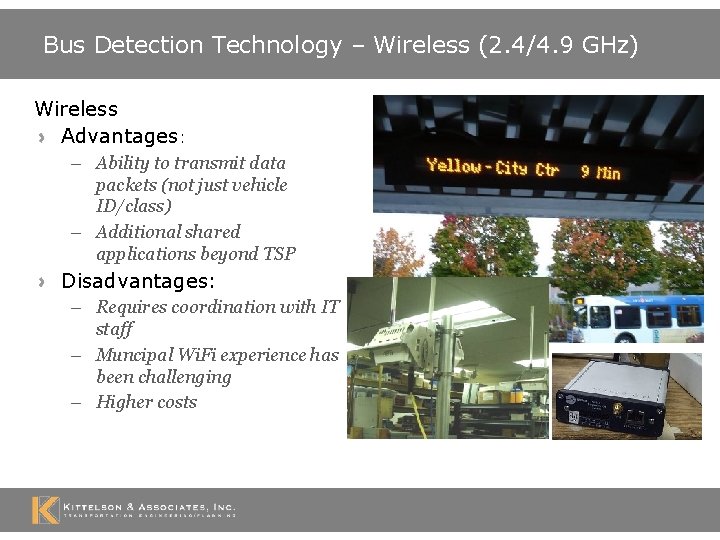
Bus Detection Technology – Wireless (2. 4/4. 9 GHz) Wireless Advantages: – Ability to transmit data packets (not just vehicle ID/class) – Additional shared applications beyond TSP Disadvantages: – Requires coordination with IT staff – Muncipal Wi. Fi experience has been challenging – Higher costs
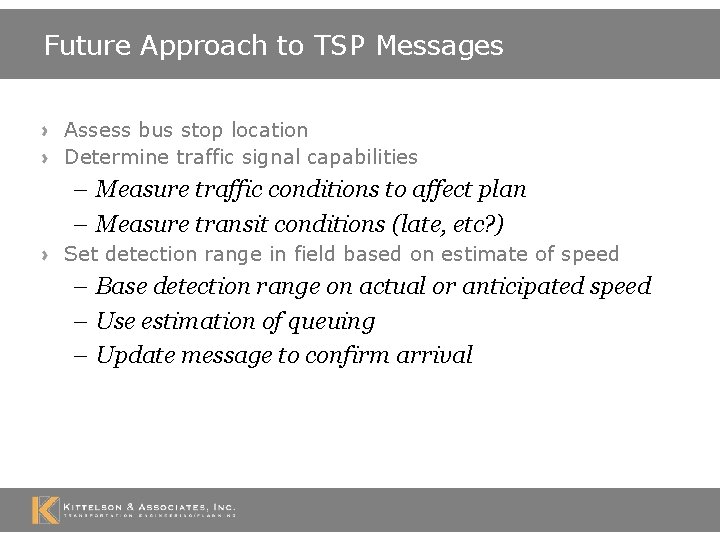
Future Approach to TSP Messages Assess bus stop location Determine traffic signal capabilities – Measure traffic conditions to affect plan – Measure transit conditions (late, etc? ) Set detection range in field based on estimate of speed – Base detection range on actual or anticipated speed – Use estimation of queuing – Update message to confirm arrival
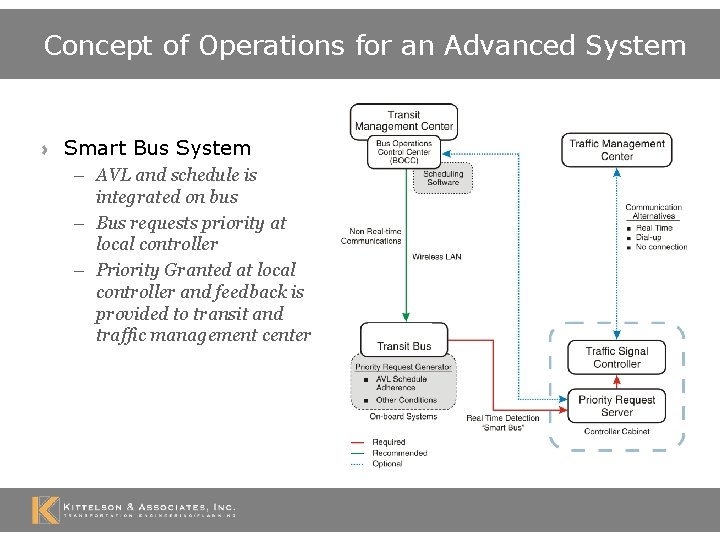
Concept of Operations for an Advanced System Smart Bus System – AVL and schedule is integrated on bus – Bus requests priority at local controller – Priority Granted at local controller and feedback is provided to transit and traffic management center
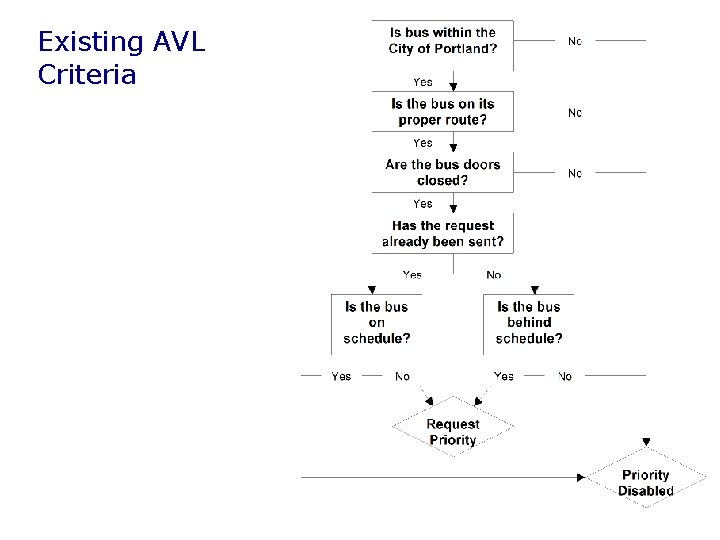
Existing AVL Criteria
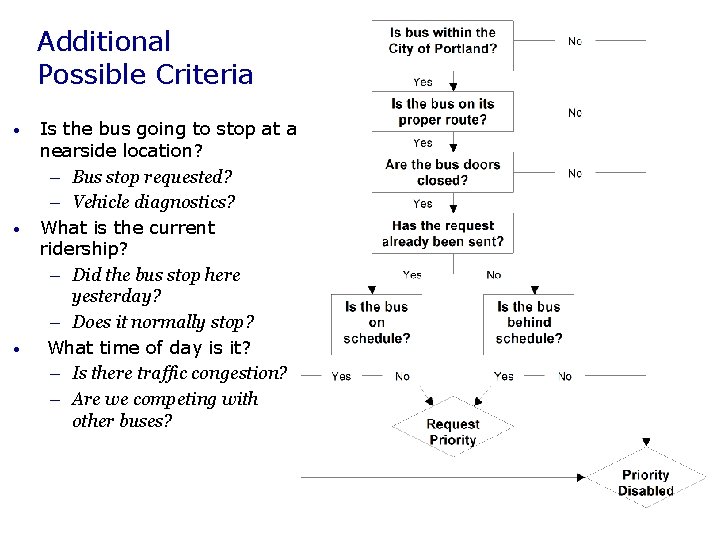
Additional Possible Criteria • • • Is the bus going to stop at a nearside location? – Bus stop requested? – Vehicle diagnostics? What is the current ridership? – Did the bus stop here yesterday? – Does it normally stop? What time of day is it? – Is there traffic congestion? – Are we competing with other buses?
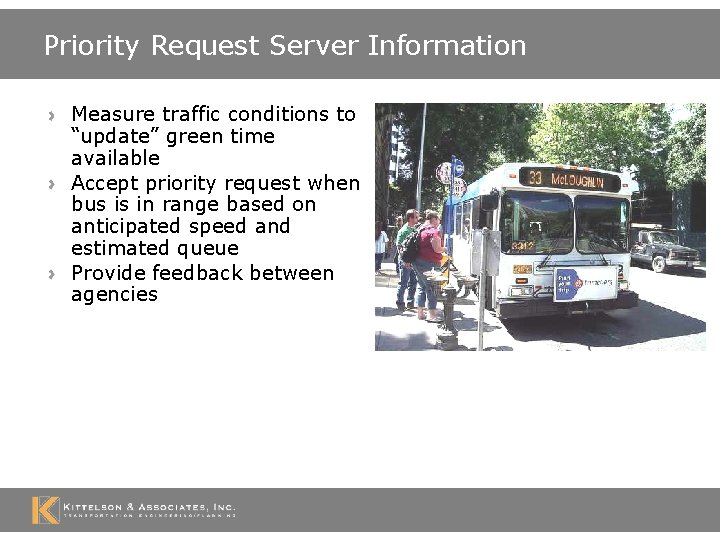
Priority Request Server Information Measure traffic conditions to “update” green time available Accept priority request when bus is in range based on anticipated speed and estimated queue Provide feedback between agencies
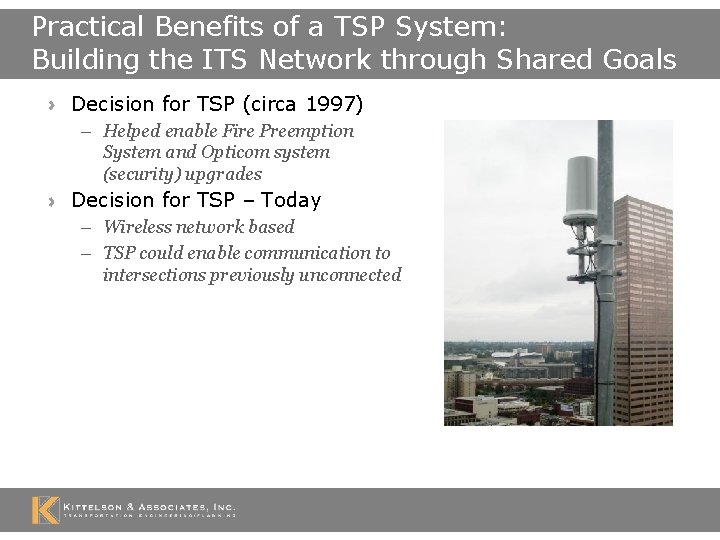
Practical Benefits of a TSP System: Building the ITS Network through Shared Goals Decision for TSP (circa 1997) – Helped enable Fire Preemption System and Opticom system (security) upgrades Decision for TSP – Today – Wireless network based – TSP could enable communication to intersections previously unconnected
Summary Partnerships are needed to build the transportation system to meet the goals of tomorrow
Questions Peter Koonce pkoonce@kittelson. com 503 -539 -6157