
Technology Enabled Enterprise CCM The How Technology Integration
Technology Enabled Enterprise CCM The How! Technology Integration Workflow Re-engineering Document Lifecycle Management October 7 th, 2014
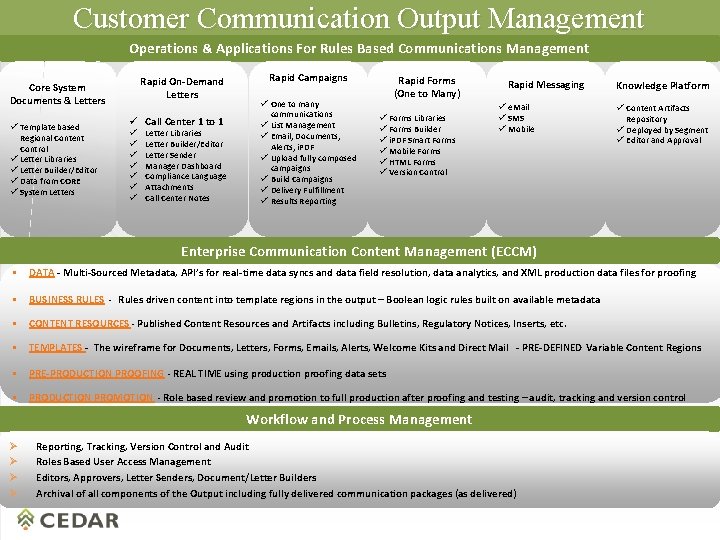
Customer Communication Output Management Operations & Applications For Rules Based Communications Management Rapid On-Demand Letters Core System Documents & Letters ü Template based Regional Content Control ü Letter Libraries ü Letter Builder/Editor ü Data from CORE ü System Letters ü Call Center 1 to 1 ü ü ü ü Letter Libraries Letter Builder/Editor Letter Sender Manager Dashboard Compliance Language Attachments Call Center Notes Rapid Campaigns Rapid Forms (One to Many) ü One to many communications ü List Management ü Email, Documents, Alerts, i. PDF ü Upload fully composed campaigns ü Build Campaigns ü Delivery Fulfillment ü Results Reporting ü Forms Libraries ü Forms Builder ü i. PDF Smart Forms ü Mobile Forms ü HTML Forms ü Version Control Rapid Messaging ü e. Mail ü SMS ü Mobile Knowledge Platform ü Content Artifacts Repository ü Deployed by Segment ü Editor and Approval Enterprise Communication Content Management (ECCM) § DATA - Multi-Sourced Metadata, API’s for real-time data syncs and data field resolution, data analytics, and XML production data files for proofing § BUSINESS RULES - Rules driven content into template regions in the output – Boolean logic rules built on available metadata § CONTENT RESOURCES - Published Content Resources and Artifacts including Bulletins, Regulatory Notices, Inserts, etc. § TEMPLATES - The wireframe for Documents, Letters, Forms, Emails, Alerts, Welcome Kits and Direct Mail - PRE-DEFINED Variable Content Regions § PRE-PRODUCTION PROOFING - REAL TIME using production proofing data sets § PRODUCTION PROMOTION - Role based review and promotion to full production after proofing and testing – audit, tracking and version control Workflow and Process Management Ø Ø Reporting, Tracking, Version Control and Audit Roles Based User Access Management Editors, Approvers, Letter Senders, Document/Letter Builders Archival of all components of the Output including fully delivered communication packages (as delivered)
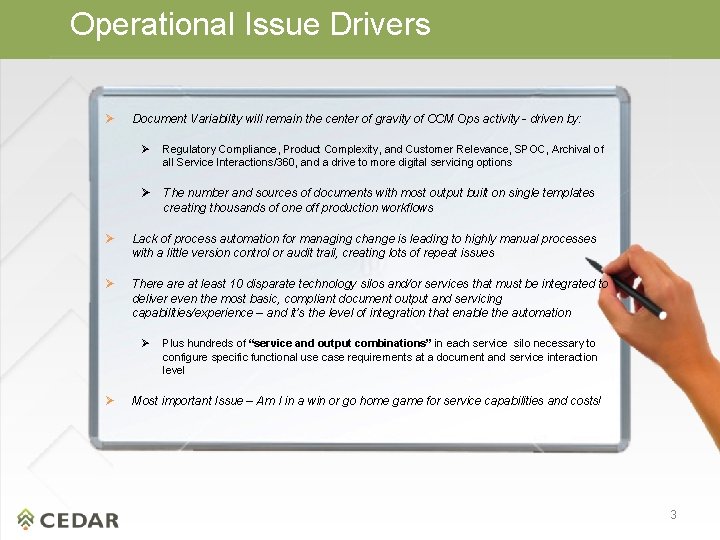
Operational Issue Drivers Ø Document Variability will remain the center of gravity of CCM Ops activity - driven by: Ø Regulatory Compliance, Product Complexity, and Customer Relevance, SPOC, Archival of all Service Interactions/360, and a drive to more digital servicing options Ø The number and sources of documents with most output built on single templates creating thousands of one off production workflows Ø Lack of process automation for managing change is leading to highly manual processes with a little version control or audit trail, creating lots of repeat issues Ø There at least 10 disparate technology silos and/or services that must be integrated to deliver even the most basic, compliant document output and servicing capabilities/experience – and it’s the level of integration that enable the automation Ø Ø Plus hundreds of “service and output combinations” in each service silo necessary to configure specific functional use case requirements at a document and service interaction level Most important Issue – Am I in a win or go home game for service capabilities and costs! 3
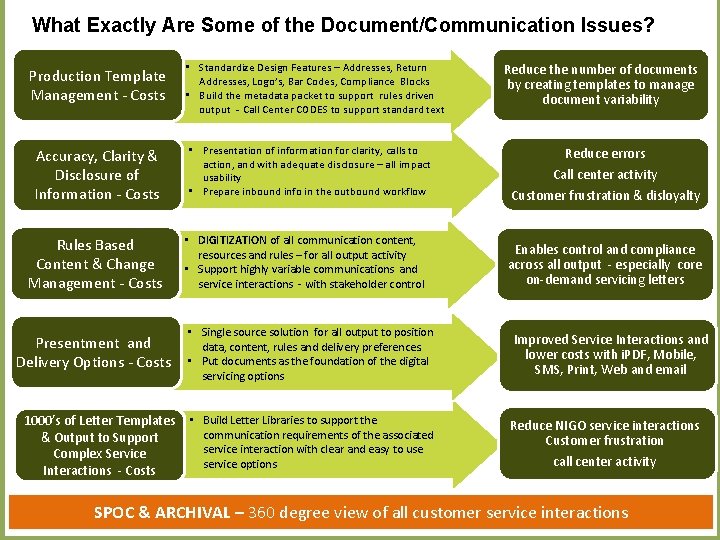
What Exactly Are Some of the Document/Communication Issues? Production Template Management - Costs Accuracy, Clarity & Disclosure of Information - Costs Rules Based Content & Change Management - Costs Presentment and Delivery Options - Costs • Standardize Design Features – Addresses, Return Addresses, Logo’s, Bar Codes, Compliance Blocks • Build the metadata packet to support rules driven output - Call Center CODES to support standard text • Presentation of information for clarity, calls to action, and with adequate disclosure – all impact usability • Prepare inbound info in the outbound workflow • DIGITIZATION of all communication content, resources and rules – for all output activity • Support highly variable communications and service interactions - with stakeholder control • Single source solution for all output to position data, content, rules and delivery preferences. • Put documents as the foundation of the digital servicing options 1000’s of Letter Templates • Build Letter Libraries to support the communication requirements of the associated & Output to Support service interaction with clear and easy to use Complex Service service options Interactions - Costs Reduce the number of documents by creating templates to manage document variability Reduce errors Call center activity Customer frustration & disloyalty Enables control and compliance across all output - especially core on-demand servicing letters Improved Service Interactions and lower costs with i. PDF, Mobile, SMS, Print, Web and email Reduce NIGO service interactions Customer frustration call center activity SPOC & ARCHIVAL – 360 degree view of all customer service interactions
POLLING QUESTION: Please indicate how many of these issues are affecting your organization? 0 -1 2 -3 4 -5
Key Benchmarks for Issues Resolution • The Technology Integration required to support rules based process automation of all servicing documents and communications all service attributes across the entire output workflow – from Output composition and Print Management to Postal Optimization, e-Delivery, SPOC, payments, mobile messaging, and more. The “Technology Backbone” • The data model – the fuel that drives the rules, content, templates, service combinations and workflows The “Data to Rules Based Service Combinations” • Leveraging Systems, Processes and People to get the work done - from requirements and deployment to production services and run management The “People, Strategy & Implementation” Ester Dyson
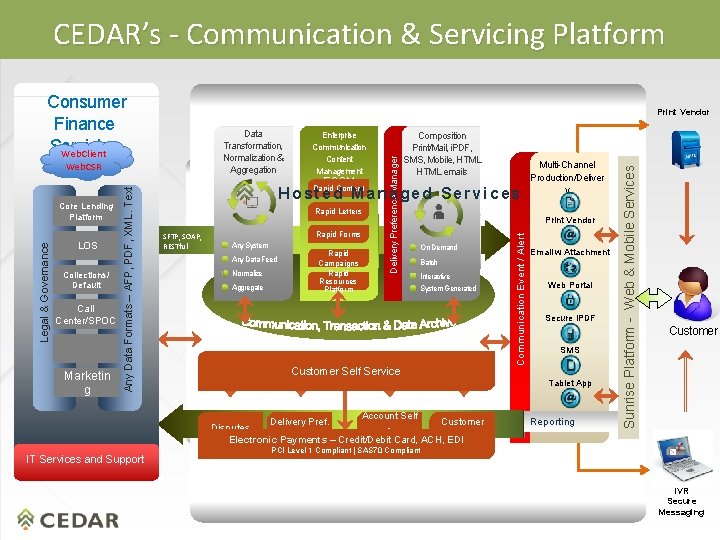
CEDAR’s - Communication & Servicing Platform Consumer Finance Servicing Web. Client LOS Collections/ Default FIS Call Center/SPOC Marketin g ECCM Composition Print/Mail, i. PDF, SMS, Mobile, HTML emails H o s. Rapid t e d. Content Managed Services Rapid Letters SFTP, SOAP, RESTful Data Normalization Any System & Aggregation Any Data Feed Normalize Aggregate Content & Rapid Forms Correspondence Rapid Management Campaigns Rapid Resources Platform Composition Engine & Print/Mail On Demand Optimization Batch Interactive System Generated Customer Self Service Email w Attachment Web Portal Multi-Channel Delivery Secure i. PDF SMS Tablet App Account Self Delivery Pref. Security Workflow Customer Disputes Management Service/Chat Management Electronic Payments – Credit/Debit Card, ACH, EDI IT Services and Support Multi-Channel Production/Deliver y Print Vendor Communication. Event/ /Alert Legal & Governance Core Lending Platform Any Data Formats – AFP, PDF, XML. Text Web. CSR Enterprise Communication Content Management HTML Email Reporting Sunrise Platform - Web & Mobile Services Data Transformation, Normalization & Aggregation DPM Delivery Preference Manager Print Vendor Customer PCI Level 1 Compliant | SAS 70 Compliant IVR Secure Messaging
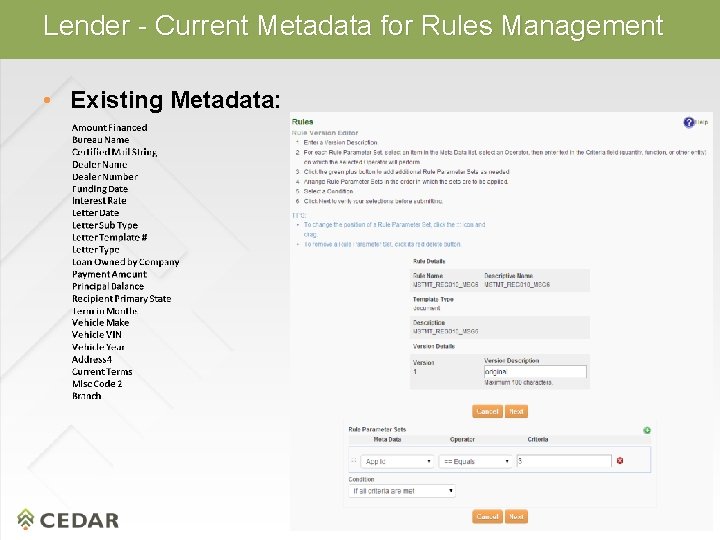
Lender - Current Metadata for Rules Management • Existing Metadata: 8
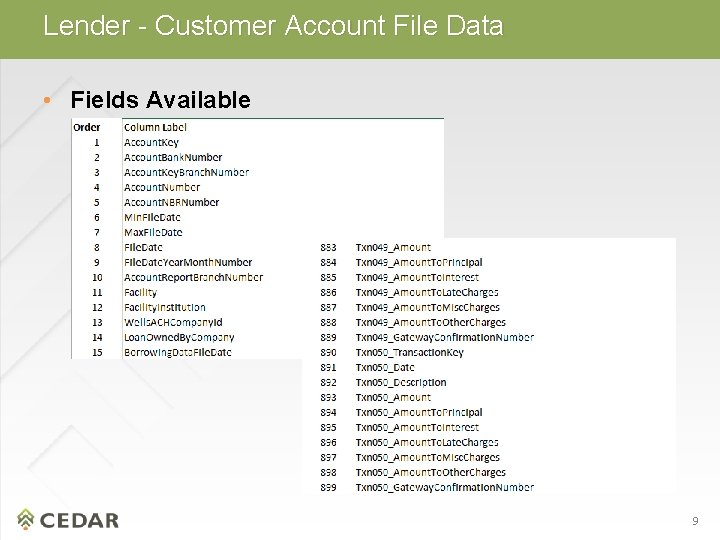
Lender - Customer Account File Data • Fields Available 9
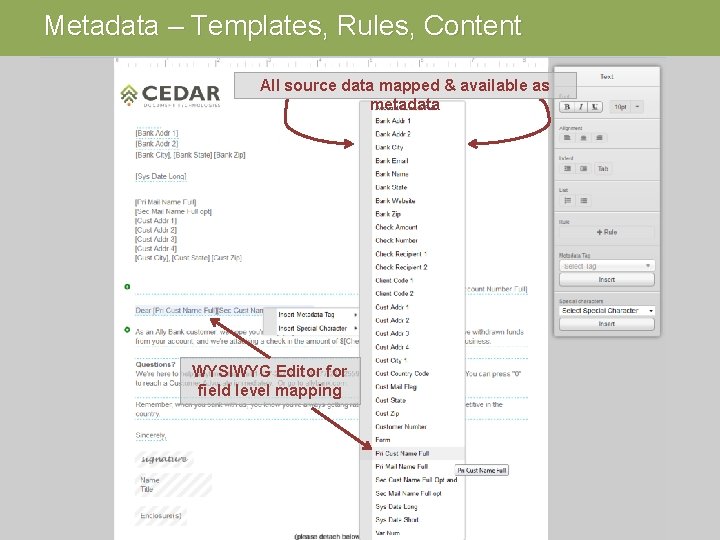
Metadata – Templates, Rules, Content All source data mapped & available as metadata WYSIWYG Editor field level mapping
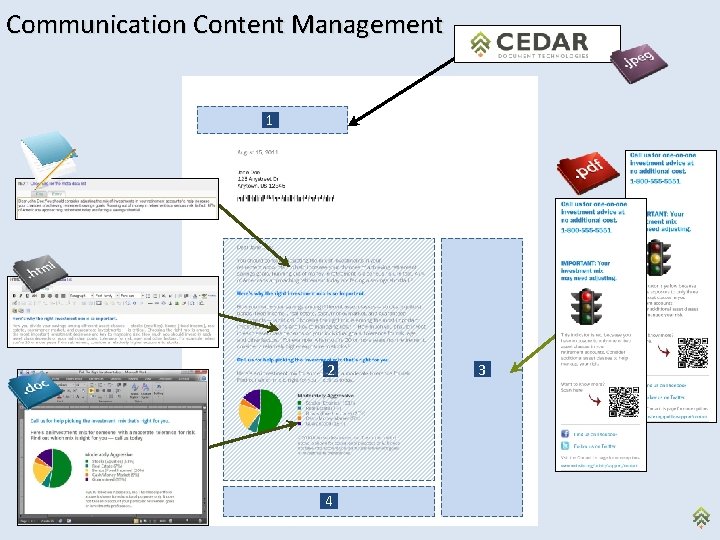
Communication Content Management 1 2 4 3
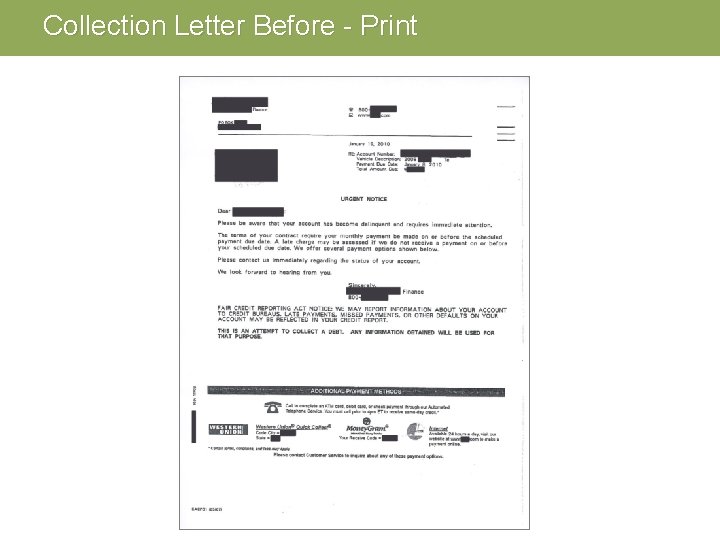
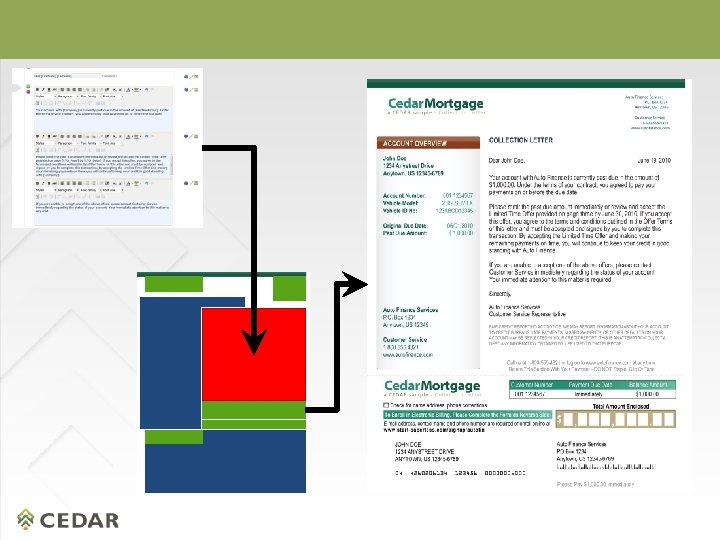
Collection Letter Before - Print Innovation | Leadership | Execution
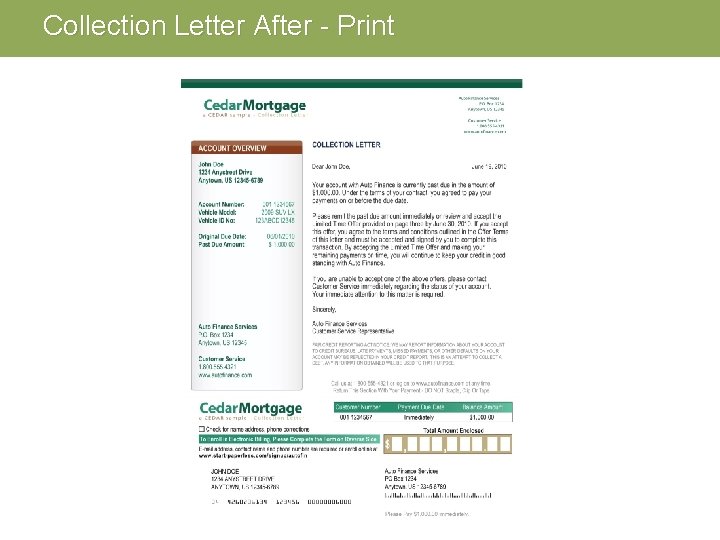
Collection Letter After - Print
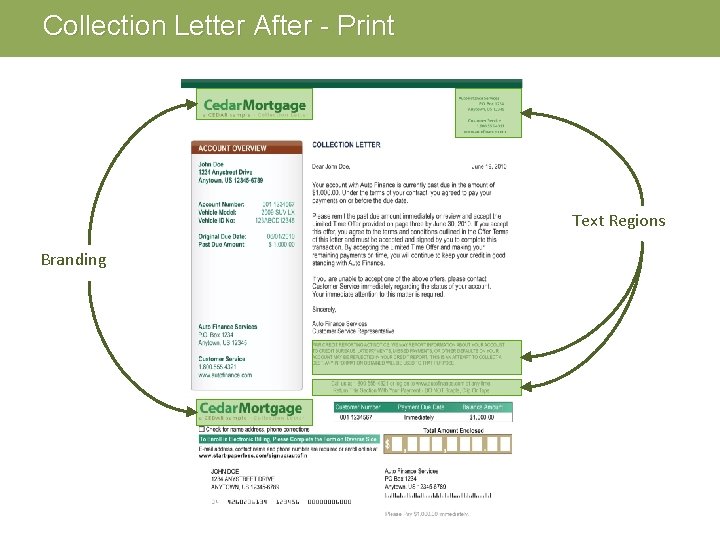
Collection Letter After - Print Text Regions Branding
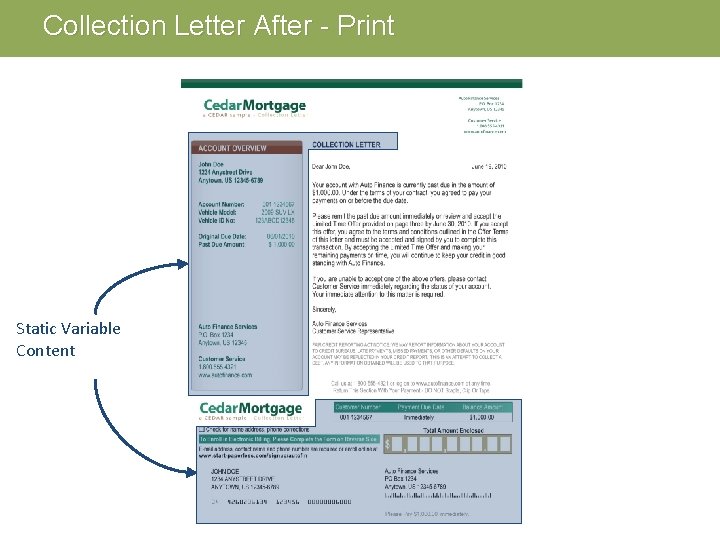
Collection Letter After - Print Static Variable Content
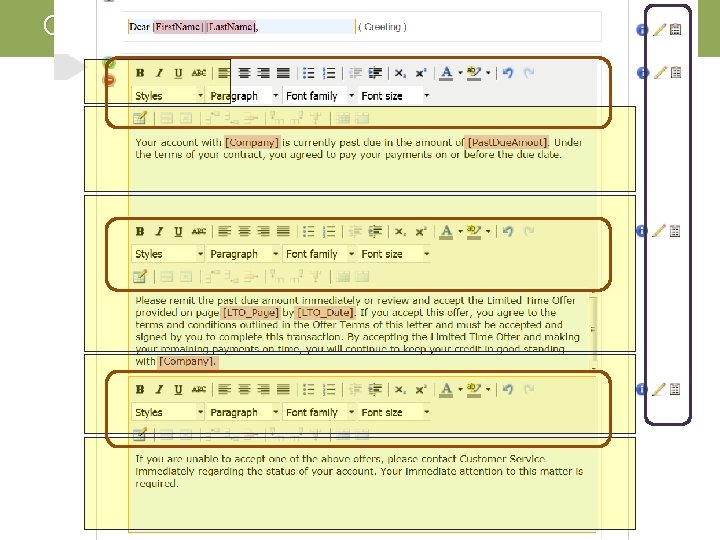
Collection Letter After - Print Rapid Letter Body
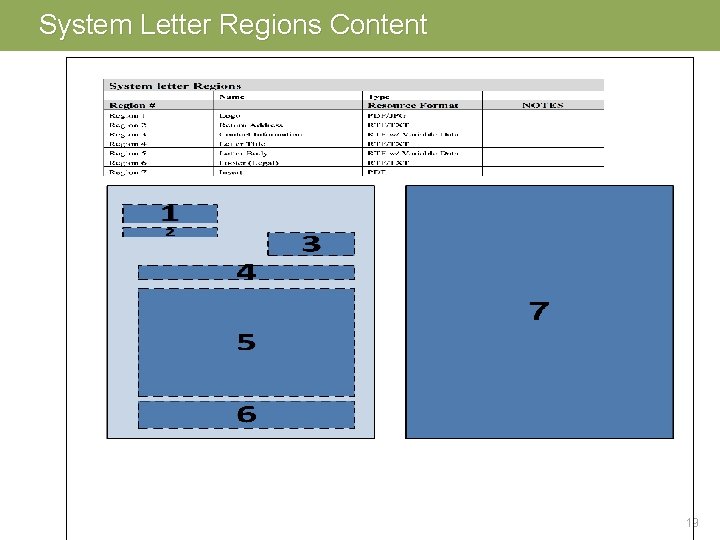
System Letter Regions Content 19
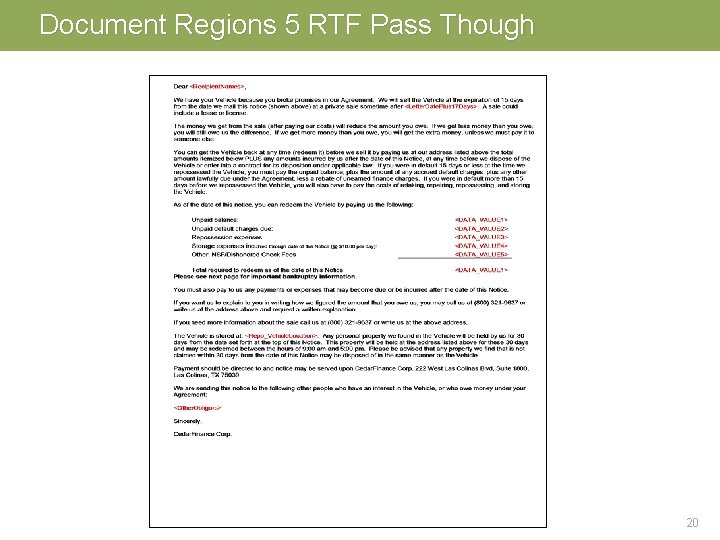
Document Regions 5 RTF Pass Though 20
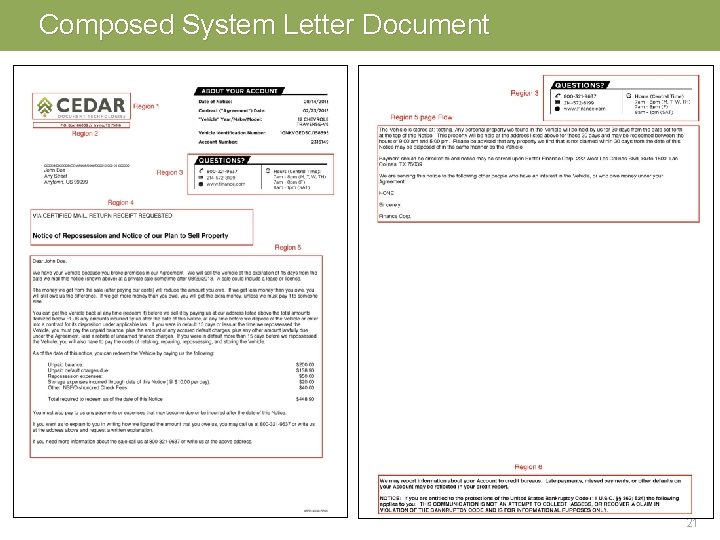
Composed System Letter Document 21
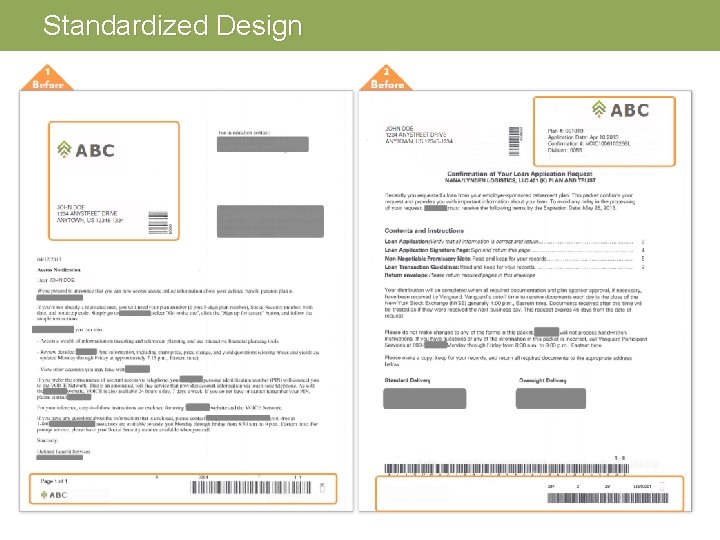
Standardized Design
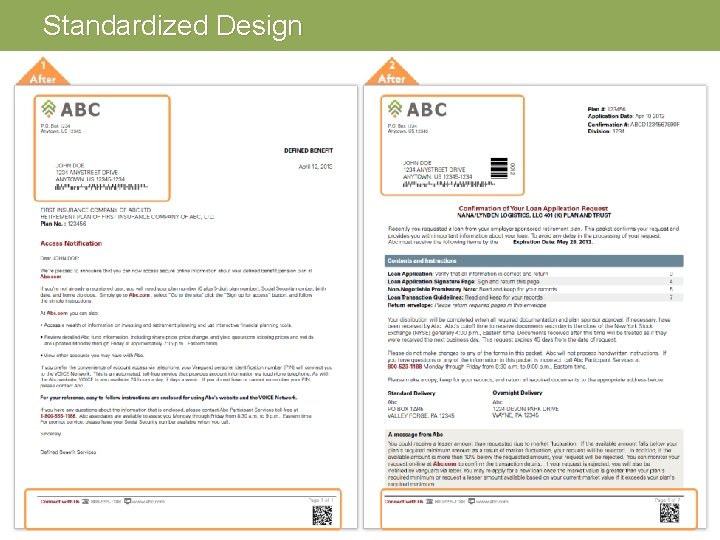
Standardized Design
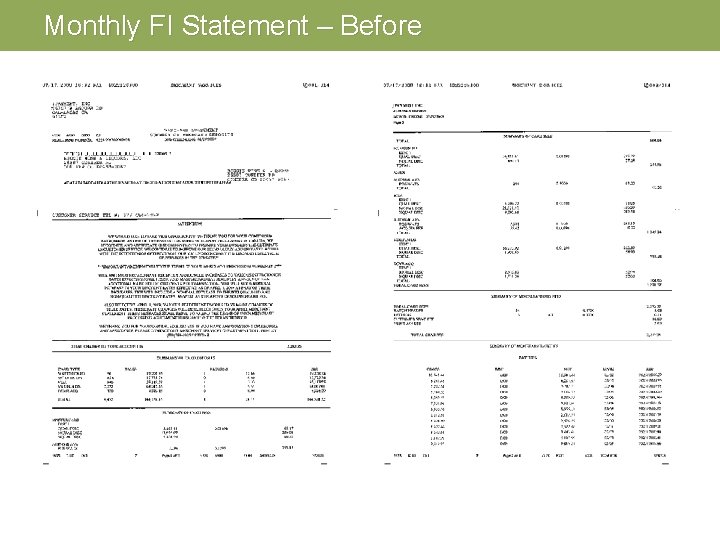
Monthly FI Statement – Before
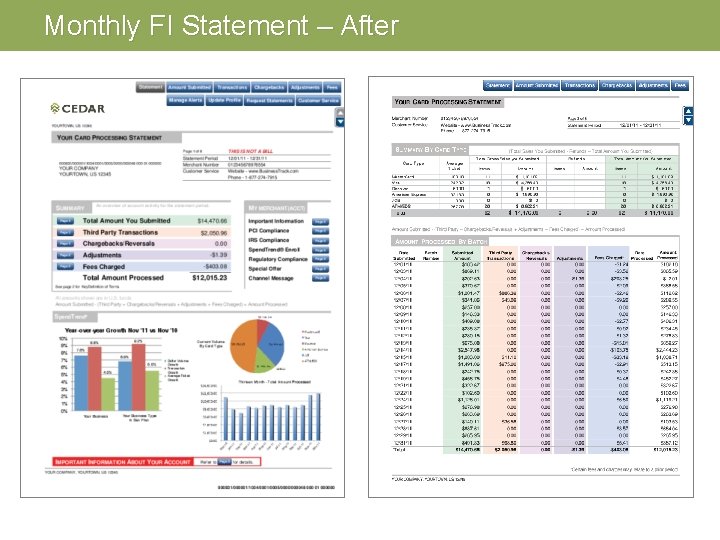
Monthly FI Statement – After
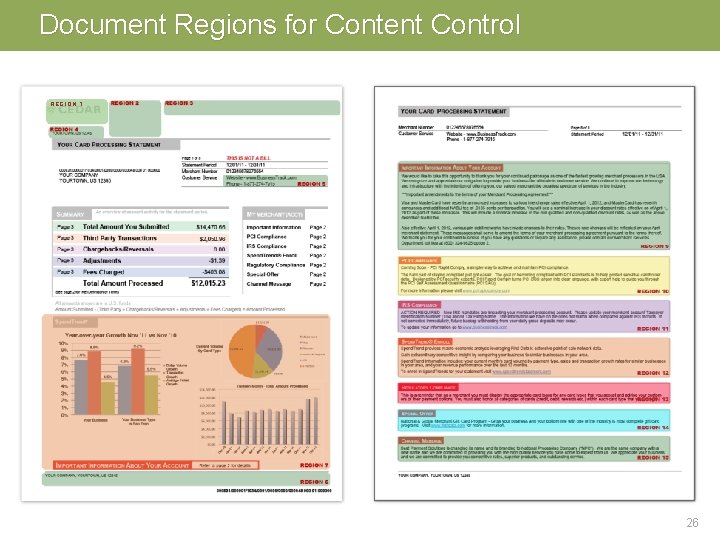
Document Regions for Content Control REGION 1 26
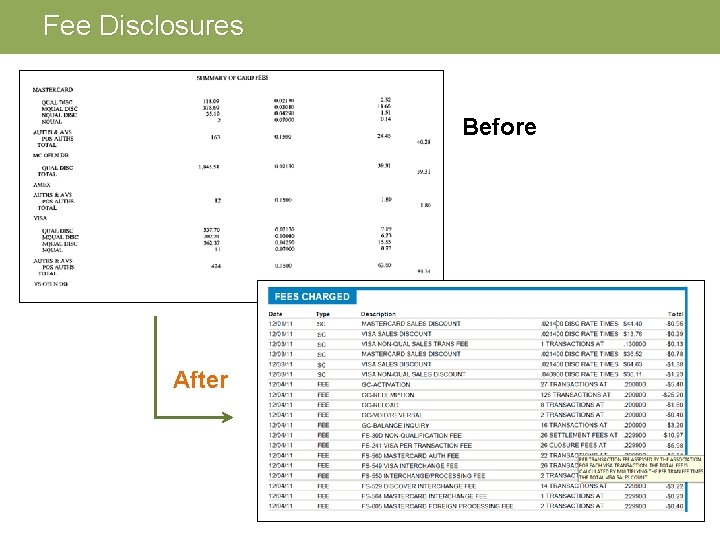
Fee Disclosures Before After
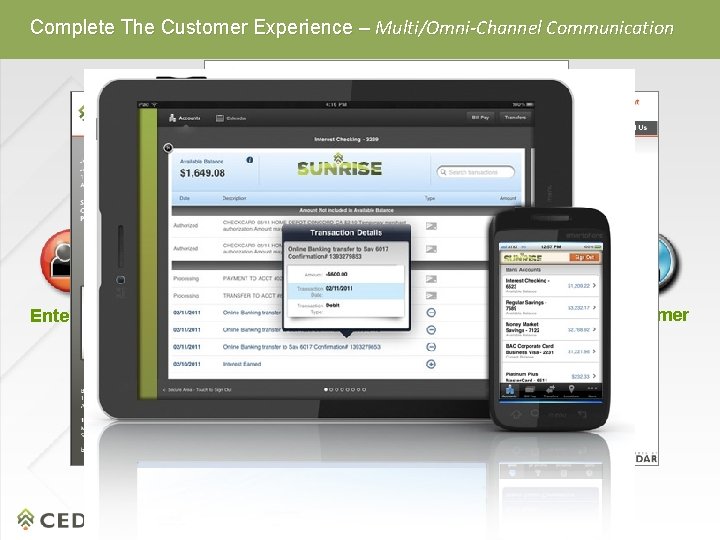
Complete The Customer Experience – Multi/Omni-Channel Communication Print & Mail Email Interactive PDF Customer Enterprise SMS Web Portal Smartphone & Tablet
Please stay for the Q&A cfocardi@towergroup. com CEB TOWERGROUP RETAIL BANKING © 2013 The Corporate Executive Board Company. All Rights Reserved. 29
SEED QUESTIONS: What do you see as the biggest challenge in document output production and management? What is the single biggest challenge facing most companies as they seek real improvement in the automating document and communication processes? If I told you there is no way my company can go with CEDAR, what would you tell me to ask other vendors to understand if they can understand my problems and take me to the next level of communication capabilities?
- Slides: 29